

 SA
SA
 KW
KW
 IE
IE AU
AU UAE
UAE UK
UK USA
USA
 CA
CA DE
DE
 QA
QA ZA
ZA
 BH
BH NL
NL
 MU
MU FR
FR
















Everyone has heard of ChatGPT by now. But what can it actually do today, and how can businesses and professionals make the most of it?
In this guide, we’ll cover everything you need to know about modern ChatGPT, from its deep research feature to its integration with apps like Canva, Sora, and other productivity tools.
By the end, you’ll see how ChatGPT has grown from a simple chatbot into a powerful AI assistant. So, let’s start…
Also Read: Agentic AI vs Generative AI: Understanding the Future of Intelligent Systems for Businesses
What Can ChatGPT Do Today: Features, Tools, and Real-World Use Cases
ChatGPT, like most AIs, is trained on a large amount of data and deep learning from the Internet. But it has grown far beyond a conversational chatbot. It now functions as a multimodal AI assistant capable of handling text, images, files, web data, and third-party tools. Instead of only answering questions, it actively helps users research, design, shop, analyze, and automate tasks across industries.
Below are the major capabilities of ChatGPT:
ChatGPT can now do deep research, not just quick answers
Earlier, ChatGPT was mainly used to answer short questions.
Now, it can handle deep research and complex topics with much more accuracy.
Today, ChatGPT can collect information from multiple sources and turn it into structured insights. It can summarize long articles, research papers, and reports in simple language. It can also compare data, highlight key points, and explain difficult ideas in an easy way.
This makes ChatGPT useful for market research, content research, and business analysis.
Instead of reading dozens of web pages, users can ask ChatGPT to create a clear research brief in minutes.
With advanced GPT models and reasoning abilities, ChatGPT can:
- Analyze large documents
- Break down technical topics
- Create research summaries
- Generate reports and outlines
- Support decision-making with structured answers
This feature is widely used in AI-powered research tools and generative AI applications.
ChatGPT can generate images from simple text prompts
ChatGPT is no longer limited to text.
It can now create images from simple written instructions. This is known as AI image generation.
Users can describe what they want in plain language.
For example, a product image, a marketing banner, or a concept sketch.
ChatGPT then turns that description into a visual image within seconds.
This feature is powered by generative AI models that understand both language and visuals.
It allows users to create original graphics without using complex design software.
ChatGPT can generate:
- Social media images
- Marketing creatives
- Blog and website visuals
- Concept art and illustrations
- UI and product mockups
This makes it useful for content creation, branding, and digital marketing.
ChatGPT can analyze files like PDFs, docs, and Excel sheets
ChatGPT can now work with uploaded files instead of only plain text.
Users can upload PDFs, Word documents, and Excel sheets and ask questions about them.
It can read large documents and extract important information.
It can summarize reports, highlight key points, and explain complex data in simple words.
For spreadsheets, ChatGPT can analyze rows and columns, find patterns, and interpret numbers.
It can also help clean data and turn it into readable insights.
This makes ChatGPT useful for document analysis and data interpretation tasks.
ChatGPT can:
- Summarize long PDF reports
- Extract key details from documents
- Analyze sales and financial data
- Create explanations from raw numbers
- Support business reporting
This feature is commonly used in AI-powered document management systems and business automation tools.
ChatGPT can browse the web for real-time information
Earlier, ChatGPT could only answer based on its training data.
Now, it can browse the web to find real-time and updated information.
This means users can ask about current news, latest trends, or recent product updates.
ChatGPT can search online, read web pages, and summarize the findings in simple language.
It helps users avoid outdated data and get answers based on what is happening now.
This is useful for market research, competitor analysis, and trend tracking.
ChatGPT can use web browsing to:
- Find the latest news and reports
- Compare products and services
- Check current prices and features
- Research industries and competitors
- Support real-time decision-making
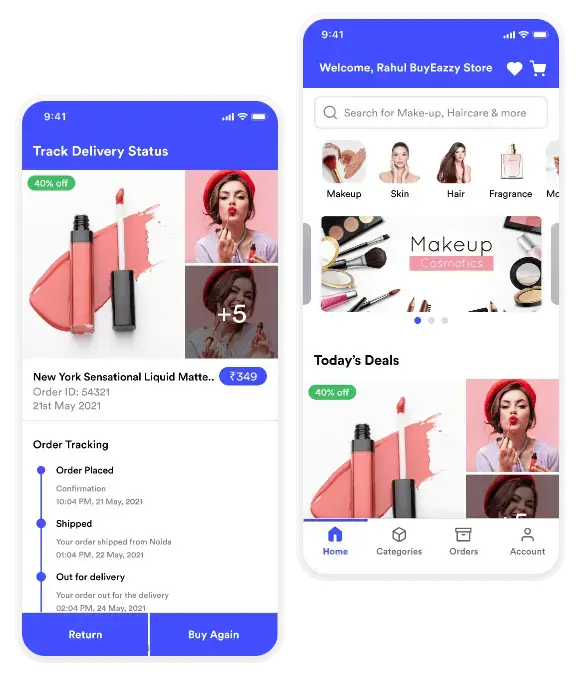
ChatGPT can help users shop online and compare products
ChatGPT is now being used as a shopping assistant, not just a chatbot.
It can help users find products based on their needs, budget, and preferences.
Users can describe what they want to buy.
For example, a laptop for work, a phone under a certain price, or skincare for a specific skin type.
ChatGPT can then suggest suitable options and explain the differences between them.
With web access and product data, ChatGPT can:
- Compare products by price and features
- Recommend items based on user requirements
- Summarize product reviews and ratings
- Help users make better buying decisions
- Guide users to relevant product listings
This creates a more natural way of shopping through conversation instead of browsing many websites.
ChatGPT can work with design tools like Canva
ChatGPT can now connect with design tools such as Canva and other creative platforms.
This allows users to create visual content directly from text instructions.
Users can describe what they need.
For example, a social media post, a presentation slide, or a marketing banner.
ChatGPT can then help generate layouts, design ideas, and ready-to-use visuals through integrated tools.
This reduces the need for complex design software or advanced skills.
It also speeds up the content creation process.
With design tool integrations, ChatGPT can:
- Create social media graphics
- Design presentation slides
- Generate posters and banners
- Support branding and visual identity
- Automate repetitive design tasks
Also Read: AI in UX/UI Design: 10 Ways to Transform User Experience (With Real Examples)
ChatGPT can create and edit videos using Sora
ChatGPT can now help with video creation using models like Sora.
This means users can generate videos from simple text descriptions.
You can describe a scene in words.
For example, a product demo, a short story, or an explainer clip.
ChatGPT can turn that idea into a video with visuals, motion, and scenes.
It can also help plan and improve videos.
It can write scripts, suggest shots, and refine storytelling.
This makes video production faster and more affordable.
With Sora integration, ChatGPT can support:
- Promotional and marketing videos
- Product explainer videos
- Concept and storyboard videos
- Educational and training clips
- Creative short-form content
This feature connects generative AI with video production workflows.
ChatGPT can write, edit, and optimize marketing content
ChatGPT is widely used for content creation and digital marketing.
It can help businesses produce high-quality content faster and at scale.
Users can ask ChatGPT to write blogs, emails, ad copies, and product descriptions.
It can also rewrite existing content to make it clearer, shorter, or more engaging.
ChatGPT can optimize content for SEO by adding keywords naturally and improving structure.
It can suggest better headlines, meta descriptions, and call-to-action lines.
With advanced GPT models, ChatGPT can:
- Write blog posts and articles
- Create website and landing page content
- Generate email marketing campaigns
- Produce social media captions
- Draft ad copy and product descriptions
- Edit and proofread marketing content
ChatGPT can help developers write and debug code
ChatGPT is also used as an AI coding assistant for software development.
It helps developers write code faster and understand complex logic more easily.
Developers can describe what they want to build in simple language.
ChatGPT can generate code snippets, functions, and even full modules based on those instructions.
It can also review existing code and find errors.
If a program is not working, developers can paste the code and ask for help.
ChatGPT can explain what went wrong and suggest fixes.
With modern GPT models, ChatGPT can:
- Write code in different programming languages
- Debug errors and improve logic
- Explain complex algorithms
- Generate APIs and scripts
- Create technical documentation
This supports AI-powered software development tools and custom AI chatbot solutions.
ChatGPT can automate business tasks and workflows
ChatGPT is increasingly used for business automation and daily operational tasks.
Instead of doing the same work again and again, teams can use ChatGPT to handle routine processes.
It can respond to common questions, organize information, and generate structured outputs.
When connected with internal systems, it can support automated workflows across departments.
ChatGPT can help automate:
- Customer support responses
- Lead qualification and follow-ups
- Internal documentation
- Meeting notes and summaries
- Data entry and report generation
This reduces manual effort and improves productivity.
It also helps businesses scale without adding large teams.
With AI-powered automation, ChatGPT is used in:
- Customer service systems
- CRM and helpdesk platforms
- HR and onboarding tools
- Operations and admin workflows
- Enterprise software solutions
ChatGPT can act as a multimodal AI assistant (text, image, and files together)
ChatGPT is no longer limited to text-based conversations.
It can now understand and work with text, images, and files at the same time.
This is known as multimodal AI.
Users can upload an image, attach a document, and ask a question in one request.
ChatGPT can analyze all inputs together and give a single, clear response.
For example, a user can upload a product image and ask for a description.
They can upload a report and ask for a summary.
They can combine text instructions with visuals to get better results.
With multimodal capability, ChatGPT can:
- Interpret images and screenshots
- Read and summarize documents
- Combine visual and text data
- Generate outputs in multiple formats
- Support complex workflows in one place
This makes it useful for AI-powered assistants and intelligent automation systems.
ChatGPT is now used in customer support and virtual assistants
ChatGPT is widely used in customer support systems and virtual assistants.
Businesses use it to answer customer questions quickly and at any time of day.
Instead of fixed replies, ChatGPT can understand user intent and respond in natural language.
It can handle common queries, guide users through processes, and provide instant help.
This improves response time and reduces the workload on human support teams.
It also helps businesses offer consistent support across channels.
ChatGPT is used in:
- Website chatbots
- Mobile app support systems
- Helpdesk and ticketing tools
- Voice and text-based virtual assistants
- Self-service support platforms
With AI-powered customer service, ChatGPT can answer FAQs, resolve basic issues, and route complex cases to human agents. It can also collect user information and support multilingual communication as well.
Also Read: AI Chatbots in Hotels & Restaurants
ChatGPT helps startups build ai-powered apps and MVPs
ChatGPT is now a valuable tool for startups and product teams.
It can assist in building AI-powered applications and minimum viable products (MVPs) quickly.
Startups can use ChatGPT to:
- Generate app ideas and feature lists
- Write code snippets or prototypes
- Create marketing content and product descriptions
- Design user flows and mockups
- Test functionality and improve user experience
By integrating ChatGPT into development workflows, startups can save time and reduce costs. It also allows small teams to build smarter products without large technical staff.
ChatGPT is becoming a daily productivity tool for professionals
ChatGPT is no longer just a chatbot or research tool.
It is becoming a daily productivity assistant for professionals across industries.
Users can rely on ChatGPT to handle repetitive tasks, organize work, and generate content.
It can draft emails, create reports, summarize meetings, and even brainstorm ideas.
With integrations and AI tools, it can also manage documents, visuals, and workflows in one place.
This helps professionals save time, stay organized, and focus on higher-value work.
It also supports collaboration by providing consistent outputs and actionable insights.
Who benefits from this use case:
- Business executives and managers
- Marketing and content teams
- Consultants and analysts
- Designers and creative professionals
- Entrepreneurs and startup teams
By acting as a personal AI assistant, ChatGPT helps professionals work smarter, not harder. It’s now an essential part of AI-driven productivity tools in the workplace.
More Information on ChatGPT:
1. Conversational communication
GPT-3 was issued previously, which led to a variety of problems within the organizations. Artificial Intelligence (AI) was unable to answer some questions and could not make up facts. The prompt is the text that the AI provides to the user. However, they still have to cue it.
However, theoretically speaking, it would be more beneficial if the AI could communicate with you. Therefore, AI should just ask you if it is not understood in a conversational manner rather than rephrasing the query to help it comprehend what you are looking for and respond appropriately. Therefore, the direction is now toward this product with Chat GPT.
2. Use Reinforcement learning to respond more dynamically
GPT-3’s conversational approach will allow it to respond to more dynamic interactions, and make it more likely that it will respond rather than asking. GPT-3, unlike Chat GPT, which was specifically trained for this purpose, is used by the end-user to initiate interaction. It uses reinforcement learning from human intelligence.
3. Technique used
These tactics have had amazing results in games such as chess, poker, go, and Atari games. Even though the game may have set rules and prizes, a conversation doesn’t. Therefore, customer interaction is essential in this situation.
The process involved asking the model a question and sampling the answers. Finally, a human would manually rank the answers. These ranks were used as training data for a reward model. Further training of a fine-tuned language model through reinforcement learning will improve the output of this reward model.
These strategies are particularly effective in specialized games. While there are rules and rewards that are set for each game, they are not applicable to conversations. Human feedback is, therefore, crucial. This was done by asking the model a question and selecting some of the responses from the pool. Then, a human hand ranked the results.
These ranks were then used as training data for a reward model. To maximize the output of this reward model, a refined language model with reinforcement learning will be used to respond to questions.
4. Sibling Model to InstructGPT
ChatGPT can respond to follow up inquiries, admit its mistakes, refute false assumptions and reject unsuitable suggestions thanks to the dialogue style. ChatGPT is a sibling model of InstructGPT. It is trained to follow prompts and to respond in-depth.
5. Answers to all
Intelligent chatbots that have been trained to engage and converse with humans. OpenAI claims that ChatGPT can respond to any type of writing using the dialogue model. This includes mathematical solutions and theoretical essays. In addition, the company claims that ChatGPT can answer any follow-up questions, and can admit to making mistakes.
6. Change the way people use search engines
It can provide customers with more than just links to browse through. This could change the way people use search engines, delivering solutions to complicated problems. It can not only be a great debugging partner but also help you fix any bugs that may arise when you ask a question.
7. Use and build on GPT-3.5 language technology
The AI-powered chatbot was made available to the public on OpenAI’s website on November 30th. It is still under research, but users can sign up to test it for free.
ChatGPT uses the GPT-3.5 language technology created by OpenAI. This advanced artificial intelligence model was trained with a large chunk of text data taken from various sources.
8. Elon Musk puts an end to the practice
Elon Musk discovered that OpenAI was using Twitter’s database to train ChatGPT. He immediately stopped the practice. OpenAI is now closed-sourced and not-for-profit and should eventually be able to pay for this knowledge.
9. Human replacement
ChatGPT’s ability to create complex Python code and write college-level essays as a response to a prompt is the most striking feature. However, this raises concerns about whether such technology will replace journalists and programmers.
What are ChatGPT’s Limits?
ChatGPT is not perfect, but it does look impressive. ChatGPT’s limitations include the inability to correctly answer specific questions, which means that it will need to be rewritten to make the input question understandable. The model’s inability to deliver quality responses is another limitation. These can sometimes sound plausible but may not make sense or be too verbose. The model does not ask for clarification on an ambiguous question, but instead makes a guess about what you are asking. This can lead to incorrect responses. This has already led StackOverflow, a developer question-and answer site, to at least temporarily stop chat-GPT generated answers to questions.
ChatGPT answers have a high error rate, but they look good and are easy to produce,” Stack Overflow moderators stated in a post. However, critics claim that the tools can’t understand or interpret the meaning of the statements they make.
In short,
- occasional incorrect or incomplete responses
- biases and ethical considerations
- context and length constraints
- limited real-time awareness
- multimodal input limitations
So, it is better to always fact-check critical information and break complex questions into smaller steps. Always combine ChatGPT with human review or other specialized tools, and use multimodal capabilities within supported formats only.
Build Your Own ChatGPT-Like Assistant with Techugo
ChatGPT, a highly advanced chatbot, has the potential to simplify lives and assist with tedious tasks such as sending emails, generating content, or searching the internet for answers.
It can enhance customer engagement and streamline business operations. At the same time, AI models need careful training and fine-tuning to ensure accuracy and responsible usage.
While AI isn’t taking over the world yet, experts like OpenAI’s Sam Altman note that human-like intelligence in AI is approaching reality. As society navigates the ethical and technical challenges of AI, the potential for innovation remains immense.
Want to build an AI assistant like ChatGPT or integrate its capabilities into your app?
Techugo’s team of AI and app development experts can help you create custom AI-powered solutions tailored to your business needs. From chatbots and virtual assistants to multimodal AI applications, we make AI work for you.
Get in touch with Techugo today and bring the power of AI into your products!

Get in touch
We'd love to hear from you.