

 SA
SA
 KW
KW
 IE
IE AU
AU UAE
UAE UK
UK USA
USA
 CA
CA DE
DE
 QA
QA ZA
ZA
 BH
BH NL
NL
 MU
MU FR
FR










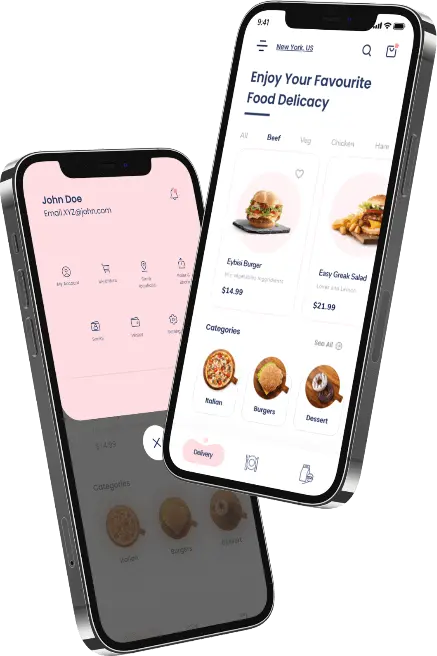





It’s 2 AM. You are watching your favorite match and suddenly craving noodles. What do you do…
Step out to buy it or just place an order and get it delivered in minutes?
That small decision reflects a much bigger shift happening in how we shop today.
In 2026, convenience is no longer a luxury—it is an expectation. From groceries and medicines to food and daily essentials, everything is now available on-demand, delivered within minutes through hyperlocal platforms. This instant access mindset is exactly what is fueling the rapid rise of the hyperlocal delivery ecosystem.
What once took hours or even days is now happening in real time, powered by nearby stores, dark warehouses, and fast-moving delivery networks.
This is how hyperlocal delivery is quietly becoming the backbone of modern urban shopping.
What is the Hyperlocal delivery model?
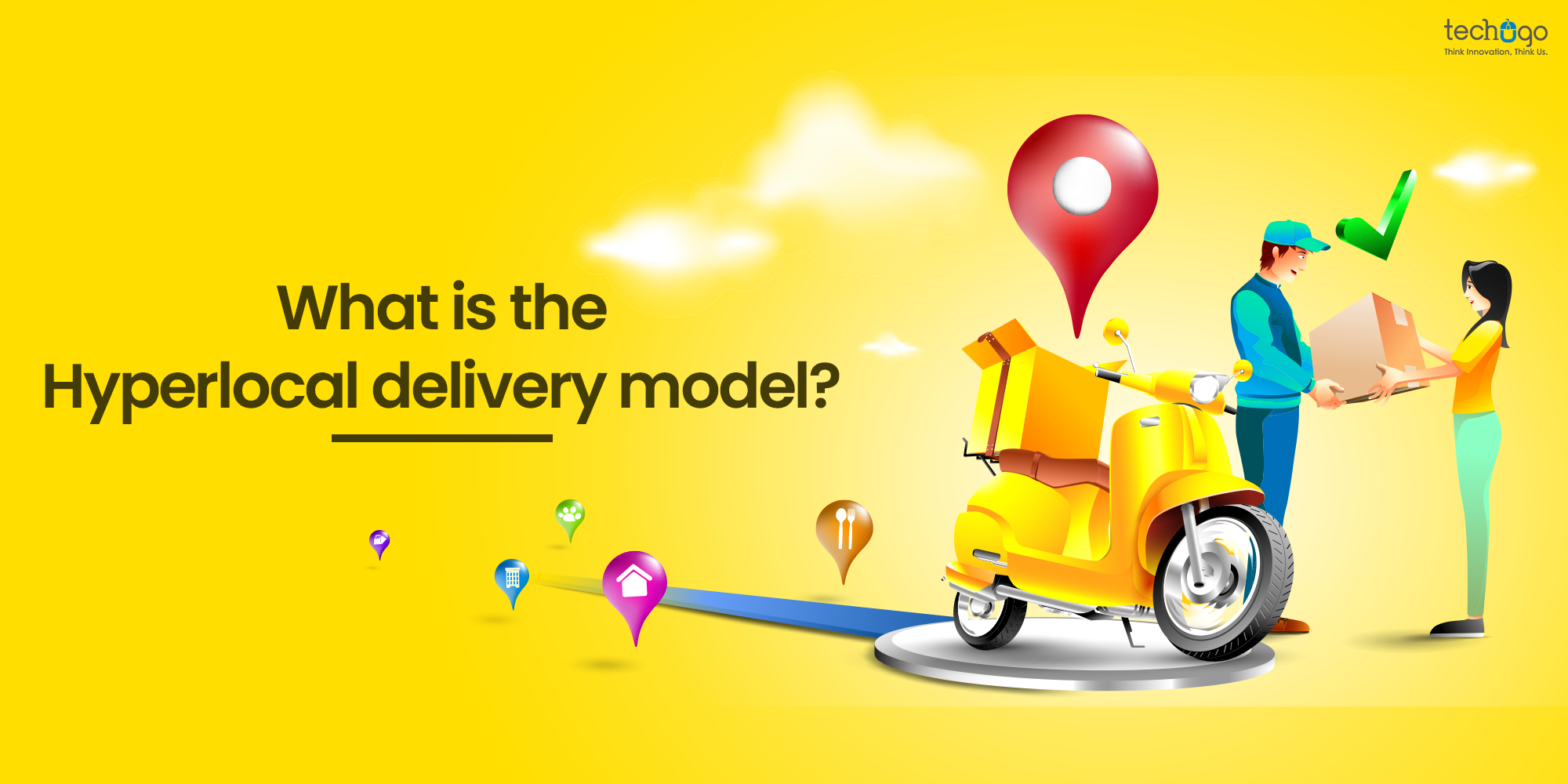
As the name suggests, the term ‘hyperlocal’ refers to ‘a small area’ or ‘a very specific demography.’ In this mode, the service providers take the product request and deliver the same to the customer in the same geographical area. The main benefit of this model is to facilitate the swift delivery of goods within a shorter time duration.
Excited to build a hyperlocal solution?
Keep reading this post, to understand the steps involved to build a scalable app solution. Let’s dive in.
Steps to build a hyperlocal delivery network
As we know that a hyperlocal delivery model is defined as an online business model, where customers’ on-demand requirements are met through local offline shops through a digital platform. To start building this delivery app, there are few essential steps to be considered, such as:
Select your niche
In our daily necessities, there are several products and items that are required, you need to pick the products you want to deliver, which can be dietary food, daily grocery, or packaged food. The varieties are many, you only need to identify the demand and resources available around you to pick from.
Choose the target audience
Hmm, there is an audience for every product, and this is where you need to focus on. You can target busy professionals looking for gourmet food or hungry office-goers/ students who live away from their families, and love to order late at night to serve their hunger pangs.
Build a partnership
After selecting the niche and audience type, the next big thing on your plate is to build a partnership. You can make the partnership on the basis of a home delivery partner/ agency and local merchants. This can be a direct partnership where your partners work as an aggregator of local grocery stores. Once you have ample delivery orders, then you can collaborate with local stores, to earn a commission, here local stores’ delivery executive will carry out the doorstep delivery for customers and will remove the clutter of delays.
Create a revenue model
When you partner with local stores, they pay you a commission every time you pick their stuff. But in this type of model, you need to restrict yourself to a particular merchant within a specific locality. In another revenue model, you can charge a convenience fee over the delivery charges from the customer. This can be done extra bigger size, ay special recommendation or packaging.
Get a hyperlocal mobile app
Once you are sorted with the above-mentioned steps, now the next big thing comes is to get a hyperlocal mobile app, with different portals like drivers, merchants, and customers.
Features required for a Hyperlocal app
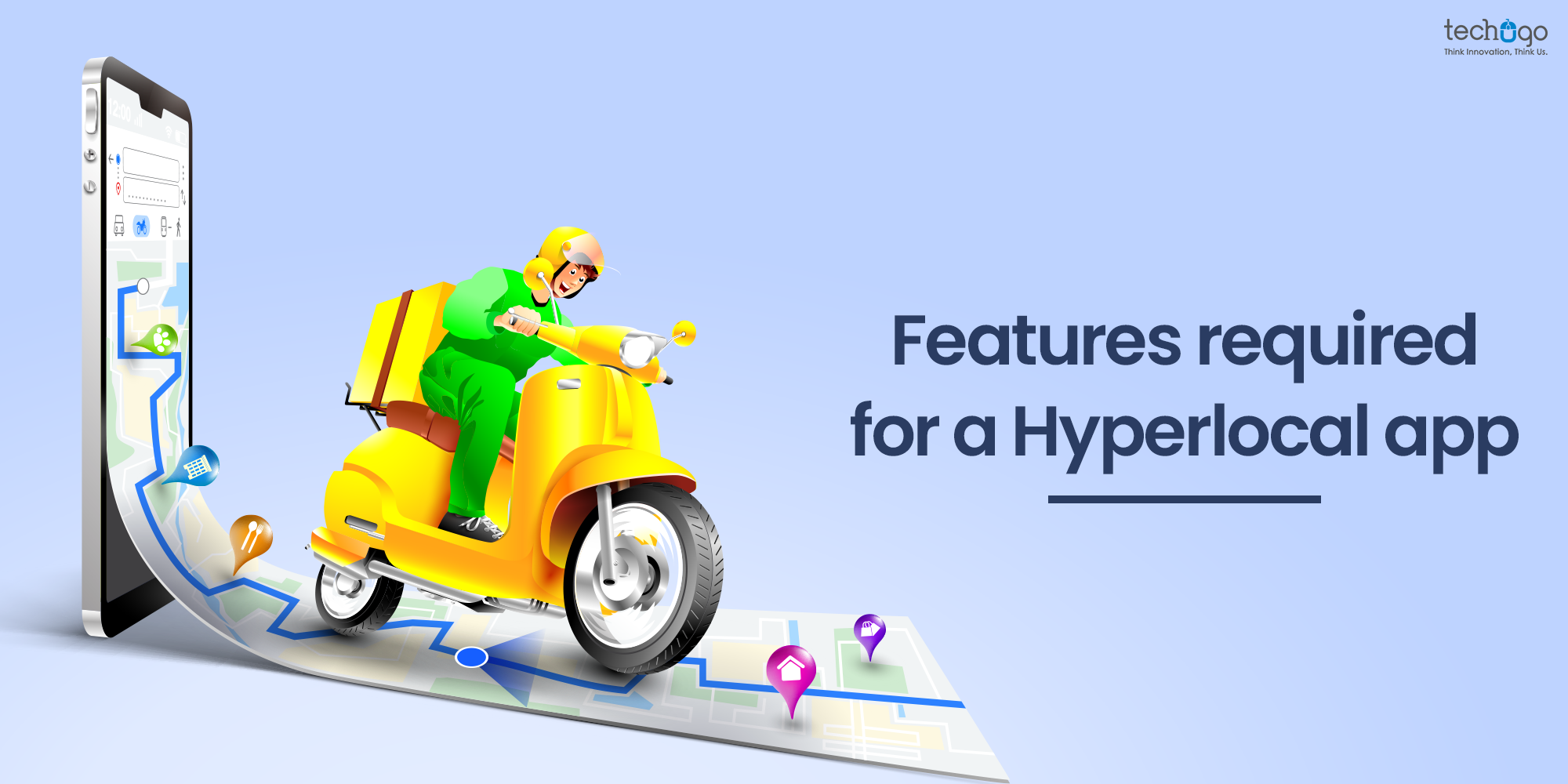
Let’s take a look at the core features that should be there in an on-demand hyperlocal delivery app.
Core Features
Sign-up/ Login
This is the most basic feature which is common in every app panel. You can make the login process as easy as possible, and give them an option to register through social media credentials as well.
GPS-Location
It is the main feature of this type of app that connects customers with nearby service providers.
Store/Service Provider/Seller Selection
In this feature, customers get the option to select the store or seller first and view the products/services offered specifically.
Filter based on location
This feature lets the customers get the products and services available around their precise GPS location.
Fast Shipping Method
With this feature, customers can get their products delivered fastly, and they chose different modes of transportation/logistics, along with the date and time selection. To avail of this service, customers need to pay an extra surcharge.
Delivery slot selection
This is quite similar to Amazon, where customers get the option to pick the delivery slot as per their convenience.
Delivery tip
This is an engaging feature that has gained attention during the pandemic, wherein customers can some percent of the order amount to the delivery boy. It is an encouraging feature helping the delivery person earn some extra money.
Seller dashboard panel
New Seller
It allows new sellers to register themselves and create a seller account to start offering products and services to customers.
Product Management
Here seller gets the option to add new products/services, upload pictures, edit a product description.
View Orders
This feature enables sellers to view complete order information and manage it. And further, assign it to the delivery agent to fulfill the order.
Analytics
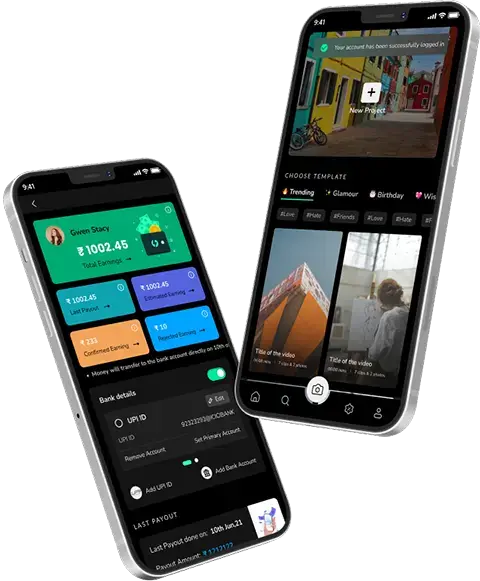
With this feature, sellers can view the latest orders, total revenues in the form of graphs and charts.
Customer panel
Live Chat System
This feature lets customers get a live chat communication system, and get a solution to their queries.
Push Notifications
It helps customers to get the information about any updates related to their order.
Order History
Customers get the information to view last order, transaction history, refunds, and other details through the app portal.
Order tracking
This feature allows customers to get real-time information and GPS location about the delivery agent and track the package
Multiple Payment Methods
- In this feature, customers get the option to pay through different payment methods, they can pay through eWallet, debit card, credit card, Apple Pay, Google Pat, or COD, to simplify the payment process.
Reviews & Ratings
With this feature, customers can leave feedback and reviews.
How does a hyper-local marketplace work?
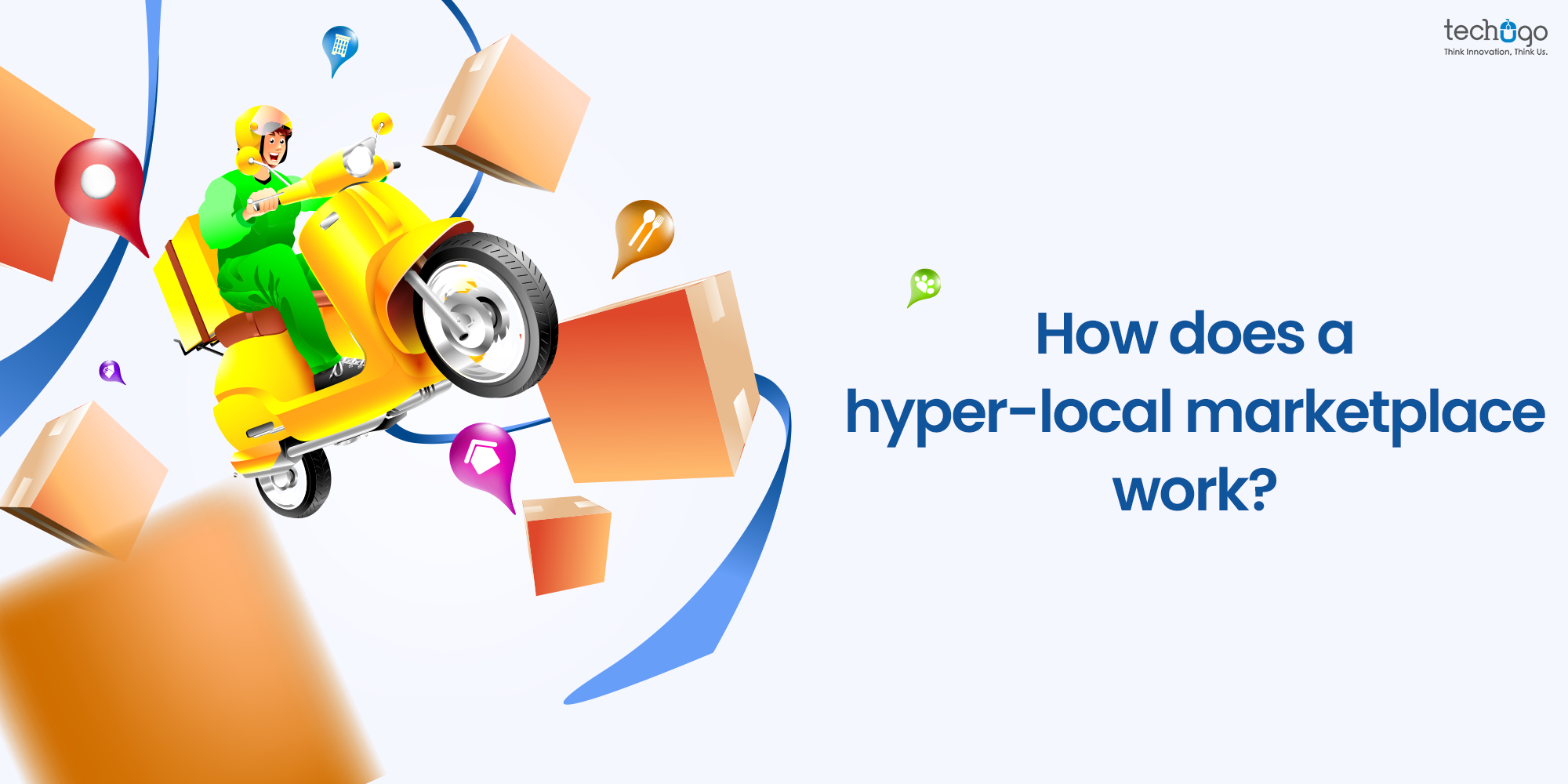
Well, it is very easy to understand the mechanism of the hyper-local marketplace, it works along with the infrastructure and elements already existing in the current local markets. And the two broad categories it works upon are:
- Hyperlocal services – It consists of the service sector, offering services, such as laundry, medical, plumbing, logistics, among many others.
- Hyperlocal delivery – It includes delivery of food essentials, groceries, electronic gadgets, home appliances, and other necessities.
Why Users Prefer AI-Driven Hyperlocal Delivery Apps
As we already know, AI is everywhere today and has quietly become part of our daily life. Most of the time, we don’t even realize it, but many of the things that feel “instant” or “smart” in hyperlocal delivery apps actually work because of AI running behind the scenes.
Here are some simple benefits that make the experience better:
- Shows what you are likely to need without searching
- Speeds up delivery by assigning the right rider instantly
- Improves product availability with smart predictions
- Gives accurate delivery time updates
- Handles queries quickly with instant responses
- Reduces errors and keeps orders smooth and hassle-free
In simple words, AI is what makes hyperlocal delivery apps feel fast, smooth, and almost effortless for users.
The Ultimate Question: What’s the Cost?
Now comes the ultimate question—how much does a hyperlocal delivery app actually cost?
You might be thinking that with all these advanced features, AI capabilities, and real-time systems, the cost must be very high. But that’s not always the case.
The truth is, you can start with a basic hyperlocal delivery app at an estimated cost of $20,000 to $40,000. This typically includes essential features like user login, product listing, order management, and basic delivery tracking.
As you move towards more advanced features like AI integration, real-time analytics, and multi-panel systems, the cost can go up to $80,000 to $150,000+, depending on complexity and scalability.
However, the overall cost can be optimized significantly if you choose the right hyperlocal delivery app development company. An experienced and cost-efficient development partner can help you prioritize features, avoid unnecessary expenses, and build a scalable solution within your budget.
Are you ready to wave the flag at your users?
The constant demand has made hyperlocal one of the hottest buzzwords in the on-demand delivery industry! The pandemic impact has let customers, retailers, entrepreneurs, and the economy to embrace this delivery model with open arms.
In a nutshell
To establish yourself as strong and successful app builder in the hyperlocal space, having the right technology and good team makes all the difference. Collaborating with a trustworthy hyprlocal delivery app development company makes your vision into a scalable and high-performing product.
Now, you’re probably wondering — why us?
- Proven Expertise
- Scalable Solutions
- Customer-Oriented Approach
Bring your idea to market with the right strategy and technology to build a market-ready app. Get in touch with our experts today and make the first move in creating your hyperlocal delivery platform.
Click on the “Connect Now” button to get started.
FAQ
1. How long does it take to develop a hyperlocal delivery app?
It typically takes around 3 to 6 months, depending on the features, complexity, and level of customization required.
2. How does a hyperlocal delivery app generate revenue?
Revenue is usually generated through commissions from sellers, delivery charges, subscription plans, and in-app promotions.
3. Why should I invest in hyperlocal delivery app development in 2026?
Because consumer demand for instant delivery is rapidly growing, making hyperlocal apps a high-potential and scalable business opportunity.
4. Can I integrate multiple payment options in the app?
Yes, you can offer options like UPI, debit/credit cards, wallets, and cash on delivery to enhance user convenience.
5. How do I attract users to my hyperlocal delivery app?
You can use strategies like discounts, referral programs, targeted marketing, and seamless user experience to attract and retain users.

Get in touch
We'd love to hear from you.