

 SA
SA
 KW
KW
 IE
IE AU
AU UAE
UAE UK
UK USA
USA
 CA
CA DE
DE
 QA
QA ZA
ZA
 BH
BH NL
NL
 MU
MU FR
FR
















📌 Key Takeaways
- Understanding the fintech app development process helps reduce risks and accelerate product launches.
- Selecting the right fintech niche is the foundation of a successful and scalable application.
- Security, regulatory compliance, and data protection are critical for gaining user trust.
- AI, automation, and embedded finance will be key drivers of fintech innovation in 2026.
- Building an MVP first allows businesses to validate ideas and optimize development costs.
Fintech is one of the fastest-growing and highest-revenue industries in the world, combining two powerful domains – FINTECH and TECHNOLOGY. It is transforming how money is managed, transferred, and invested globally.
Unlike traditional financial systems that depended on manual processes such as:
- Visiting banks for transactions
- Using cash or cheques for payments
- Waiting in long queues for approvals
- Physical paperwork for financial services
Today’s digital era has completely changed the way we handle money.
Think about it….
when was the last time you used cash to buy clothes or pay for everyday needs? Most transactions now happen through mobile apps, online banking, and digital wallets. This shift shows how fintech has become a part of our daily lives.
If you want to enter this fast-growing industry, this guide is for you. Whether you are:
- A beginner in fintech
- A startup founder with an app idea
- A business exploring digital finance solutions
- A curious learner about fintech app development
This simple guide will help you understand everything about fintech app development step by step.
What Exactly is a Fintech App in 2026?
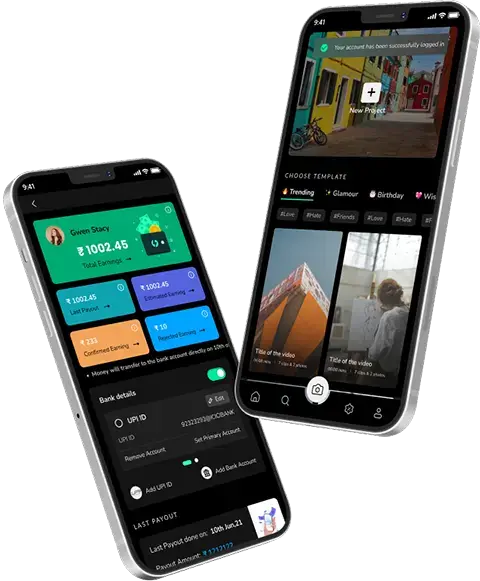
A fintech app is a digital application that combines finance and technology to help users manage money in a faster, safer, and more convenient way. In simple terms, it enables users to perform financial activities without relying on traditional banking methods.
With a fintech app, users can:
- Send and receive money instantly through digital payments and mobile wallets
- Check account balances and track transactions in real time
- Apply for loans or credit without visiting a bank branch
- Invest in stocks, mutual funds, or cryptocurrencies through mobile platforms
- Pay bills, recharge services, and manage expenses digitally
- Access secure banking services anytime, anywhere
In 2026, fintech apps are powered by advanced technologies like artificial intelligence, blockchain, cloud computing, and data analytics, which make financial services more personalized, secure, and efficient.
Unlike traditional financial systems that require physical paperwork and long waiting processes, fintech apps offer a fully digital, user-friendly, and instant experience.
What Are The Advantages Of Fintech App Development?
Take a look at the following advantages of financial technology.
- Convenience– Mobile connectivity boosts fintech services.
- Efficiency– The streamlined process allows for enhanced efficiency of the process.
- Security– These systems are highly secure to ensure the safety of the user’s personal information.
- Personalization– Having an app for finances means every user can relish personalized services.
- Lower cost– As compared to the traditional firms, they cost less.
What Are The Major Features Of Fintech App Development?
In 2026, fintech apps are expected to deliver more than just basic financial services—they need to be fast, secure, and extremely user-friendly. Here are the must-have features with a more engaging and conversational touch:
1. User-Friendly Onboarding
A fintech app should allow users to sign up quickly using email, phone, or social login with smooth KYC verification. It should be in –
- Sign up via email, phone, or social login
- Fast KYC verification
- Minimal form filling
- Instant app access
- Simple and trust-building experience
2. Smart Dashboard
A clean and smart dashboard brings complete financial transparency by showing balance, transactions, savings, and investments in one place.
Wouldn’t it feel like a dream if your entire financial life was visible on a single screen? With seamless fintech app development, it’s not just a dream—it’s reality.
- All finances in one place
- Clear view of balance and spending
- Real-time transaction tracking
- Easy access to savings and investments
- Full financial transparency at a glance
3. Real-Time Notifications
Users get instant alerts for payments, transfers, and account activity to stay updated at all times.
In today’s world, waiting for updates is outdated—real-time is the new normal.
4. Strong Security & Compliance
Fintech being a risky industry, so security ends up being the priority. For apps to earn users’ trust, they must be completely transparent and protected with robust security checks on all fronts. Features such as encryption, biometric login, and fraud detection make financial transactions safe and dependable.
5. Multiple Payment Options
I’m sure you want to build your app to serve the masses, and for the same, you need to provide multiple payment options. The more general the target audience, the greater the flexibility of the payment system should be. There is also support for UPI, cards, wallets and bank transfers, so users can pay in their preferred way, hassle-free.
6. Offline Mode (Limited Functionality)
The ability to have even some functionality for the user without an internet connection is important, as it may be the case that users need their financial information but don’t have access to the internet. Even when you’re offline, providing you with access to past transactions or saved records can help keep the experience pleasant and reliable.
7. AI-driven Personalization
Crypto Exchange today is Topic #38038 – Page 2 It’s a must have feature as AI is aware about the behaviour and provides smart financial suggestions to users as per their needs. It can even direct your spending, saving and investing decisions, helping your app really stand out from the crowd.
8. Transaction History & Reports
Users can easily monitor and review their financial activities at any time for free. A transparent history with easy-to-use filters enable them to see where their money is going and to plan their finances more effectively.
9. Customer service (Chatbot & Live Chat)
Fast help is a must in fintech apps – AI chatbots and live chat makes sure the users receive help instantly . Nobody likes waiting when it’s about money.
10. Multi-currency & Crypto Support
This is a win for everyone and is more so in a global digital economy. Your app will have multi-currency and cryptocurrency support to make it accessible to a wider range of local and global users with no limits on financial liberty.
Popular Marketspace For Fintech App Development
The growth and expansion of fintech in multiple markets worldwide is still accelerating due to the consistent influence of digital payments, AI technology, and the desire for a smooth financial experience. Here are the areas that will have the most impact on the industry by 2026:
Digital Banking App Development
Digital banking has replaced much of the in-branch model, with companies now focused on mobile-first offerings. They want to be able to manage an account, make transfers or take out loans right away via apps.
Sample: Revolut, Monzo
Digital Wallet App Development
As a result of the development of cashless societies and instant payment systems such as UPI, NFC and QR-based payments, digital wallets are expanding globally.
Samples: PayPal, Apple Pay
WealthTech App Development
WealthTech platforms are demystifying investing for everyday users, empowering them to trade stocks, mutual funds and manage their portfolios.
For example: Robinhood, eToro
InsurTech App Development
InsurTech is revolutionizing the insurance industry by making policy purchase, policy management and claims submission faster and completely digital.
Samples: Lime ade, Metromile
P2P Payment App Development
P2P payment applications have become the fastest means of delivering payments from one user to another without the delay traditionally associated with banking.
For example: Venmo, Cash App
Crypto & Blockchain App Development
The development of “crypto fintech” apps is increasing rapidly with the worldwide adoption of digital currencies and decentralized finance ecosystems. Examples: Coinbase, Binance
RegTech App Development
RegTech solutions are increasingly vital to holding the financial services industry to account in terms of compliance, fraud detection, and regulatory reporting.
Examples: ComplyAdvantage, Chainalysis
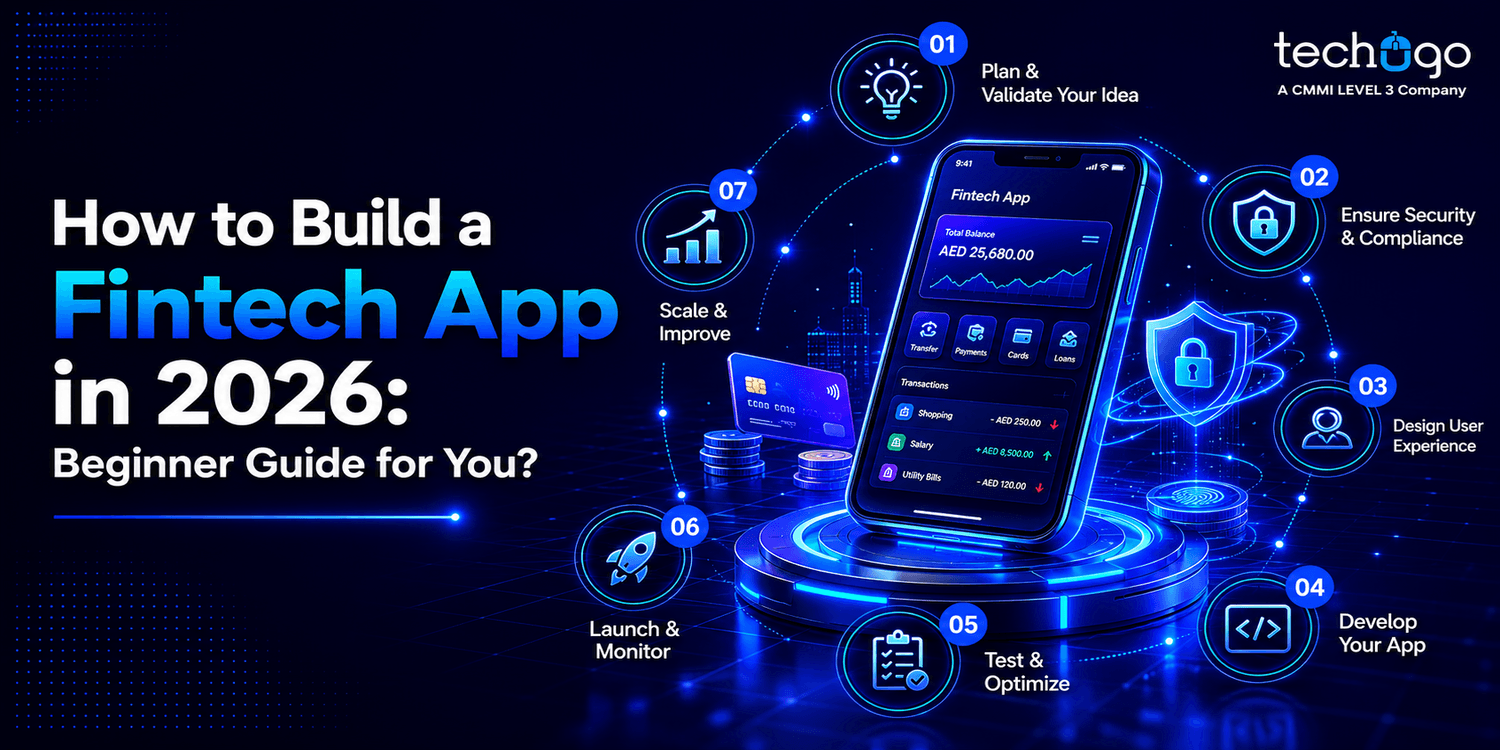
A Simple Look at How Fintech Apps Are Created
To develop a profitable fintech application, you need to have a well-defined and organized development process that incorporates idea validation, market research, designing, developing, testing, and launching.
For a layman, FinTech app development company is the sensible option, since they have the expertise to make your idea into a robust product that can be used and sold.
How to make –
Idea & Planning – Define the concept and key features
Research – Understand market needs and competitors
Design – Create simple and user-friendly app screens
Development – Build frontend and backend functionalities
Security Setup – Add encryption, login security, and compliance
Testing – Fix bugs and check performance
Launch – Release the app on platforms
Updates – Improve and maintain the app regularly
So, How Much Does a Fintech App Actually Cost?
This is probably the most common and critical question—what does it actually cost to build a fintech app? Well, the honest answer is that it depends. The cost is not fixed because it varies based on features, complexity, security level, design, and the type of fintech solution you want to build.
However, to give you a clear idea, here is a simple breakdown of the typical cost range based on different types of fintech apps in 2026:
Fintech App Cost Breakdown
| Type of Fintech App | Cost Range (Approx.) | What It Includes |
| Basic Payment App | $15,000 – $30,000 | Simple transactions, wallet, and basic UI |
| Digital Wallet App | $25,000 – $60,000 | UPI payments, QR scan, money transfers |
| Banking App | $40,000 – $100,000 | Account management, transfers, secure login |
| WealthTech App | $50,000 – $120,000 | Investments, trading, portfolio tracking |
| Crypto/Blockchain App | $60,000 – $150,000+ | Crypto wallets, trading, blockchain features |
| Enterprise Fintech Platform | $100,000 – $250,000+ | Advanced AI, high security, large-scale systems |
How To Find The Right App Development Company For Your Fintech Project?
For fin-tech projects, it is not easy to find a team that can carry out the development process smoothly. So here are a few tips to find your perfect match. Take a good look!
- Experience– Don’t forget to take a look at the total experience that they have got.
- Creative side– Check if they have a creative side or they just work in a mechanical way.
- Design– Download their created app and see how their designing process is.
- Review– For better understanding, make sure to take a good look at the reviews given by their clients.
- Social standing– Check how your team interacts with its audience on a social media platform. This will tell you a lot about their culture.
Conclusion
We have listed all the necessary information that you must know about the Fintech-app development process. But still, there are a few technicalities that you need to learn. If your aim is to walk hand in hand with this emerging trend, then reach out to the best professionals for in-depth information. Only then you would be able to reap the advantages of this popular trend.
Like financial technology, there are many other technologies that offer a great business opportunity, and at the same time pushes the world towards a better future.
So what is your decision? Do you want to become the pioneer of bringing the inevitable transformation that the world is seeking? Whatever your views are, drop them below in the comment section and let us know. Until the next update, stay tuned to this space for more exciting news from around the world.
Happy reading!!!
FAQ
1. How much does it cost to build a digital wallet app?
The cost depends on features, security, and complexity. A digital wallet app can typically range from $40,000 to $120,000 or more based on advanced banking and security integrations.
2. Can you integrate AI features into a fintech app?
Yes, AI can be integrated to offer smart insights, fraud detection, personalized recommendations, and automated customer support, making the app more intelligent and user-friendly.
3. What kind of post-launch support do you provide?
A good development company offers ongoing support including bug fixes, security updates, feature enhancements, and performance optimization after the app is launched.
4. What features are essential in a banking app like Citi Mobile?
Key features include account management, fund transfers, bill payments, transaction history, secure login, real-time alerts, and customer support integration.
5. Can you build a fully secure and compliant fintech app?
Yes, fintech apps can be built with strong security measures like encryption, biometric authentication, and compliance with standards such as KYC and AML to ensure safe financial operations.
“`html
“`

Get in touch
We'd love to hear from you.