

 SA
SA  KW
KW  IE
IE AU
AU UAE
UAE UK
UK USA
USA  CA
CA DE
DE  QA
QA ZA
ZA  BH
BH NL
NL  MU
MU FR
FR 













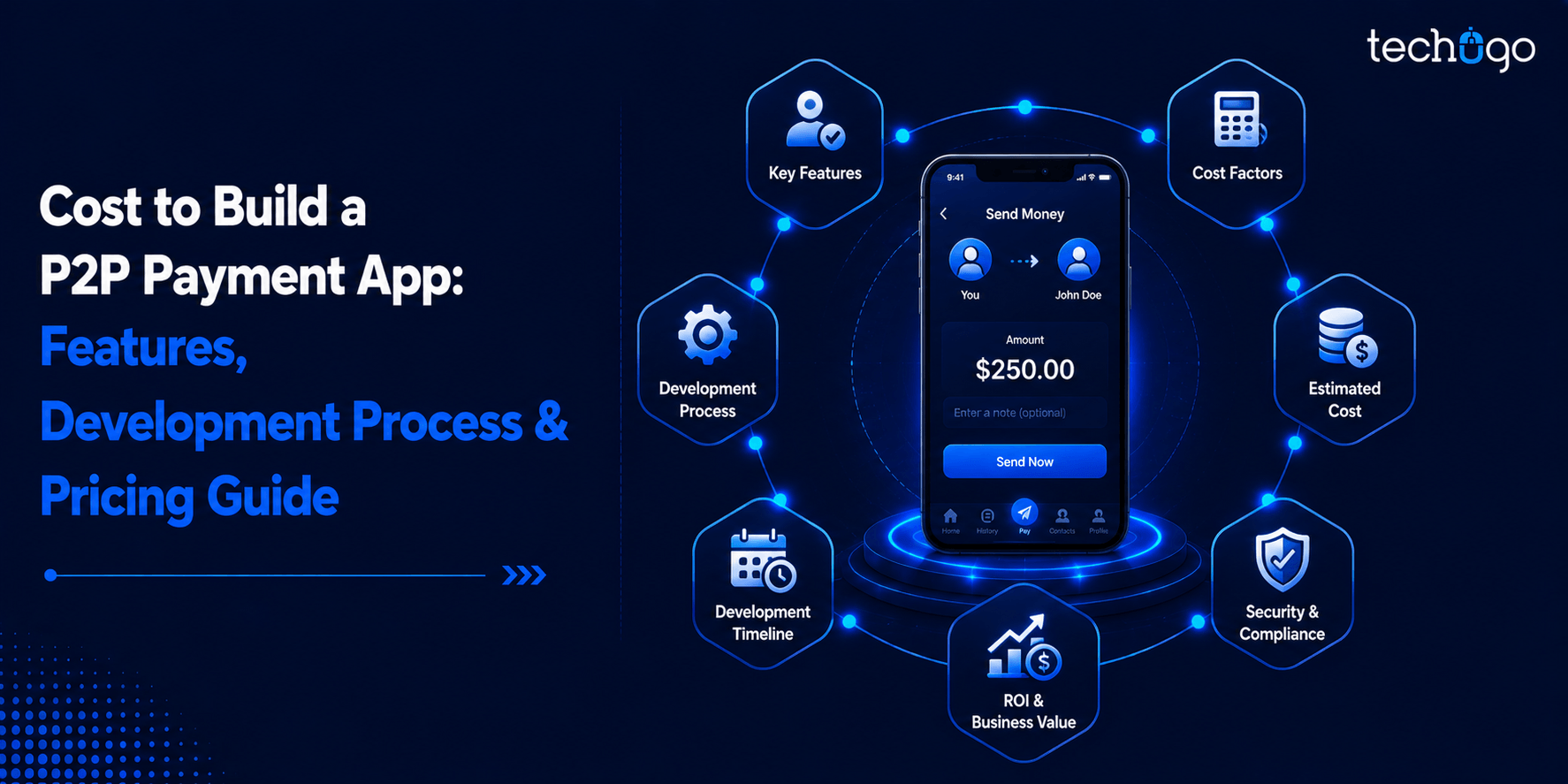


📌 Key Takeaways
- P2P payment app cost depends on features, security, and integrations.
- Digital wallets, instant transfers, and transaction history are core features.
- Strong security and KYC verification are essential for fintech apps.
- AI and automation improve payment app functionality and user experience.
- Scalability and compliance play a major role in long-term app success.
In 2026, P2P payment app development is no more a fantasy that people crave for, but it is a reality, letting people across the globe choose it for various reasons.
It is a popular option for users to stay card-free, encourage a cashless economy, and enjoy one-click payment experiences. With the growing adoption of digital transactions, mobile payment app development has become a key focus for businesses worldwide.
The Peer-to-Peer (P2P) payment apps are here to give a boost and optimize mobile payments for different use cases.
Are you willing to get a P2P payment app for your business?
Then you must read this post reflecting core features, development process, and cost to build a successful P2P payment app.
Why businesses are investing in P2P payment app development?
According to Statista, the global digital payments market is projected to surpass $14 trillion by 2027, which highlights massive growth and opportunity in this space.
Why the surge in investment?
- Rising demand for instant, real-time transactions
- Shift toward a cashless and mobile-first economy
- Increasing user preference for convenience and one-click payments
- Growth of digital wallets and fintech ecosystems
- Opportunities for transaction fees and monetization
- High adoption among Gen Z and millennials
- Expansion of cross-border and peer payments
What is a P2P payment app?
P2P stands for Peer to Peer or Person to Person. As the name suggests, this type of app helps users transfer funds from their bank account to the bank account of another person. In simple terms, it is a digital solution that enables instant money transfers between individuals.
For example, if you want to split a dinner bill with a friend or send money to a family member, a peer-to-peer payment app allows you to do it instantly using your mobile device.
The constant evolution in app technology has even enabled users to pay rent installments, cab fares, utility bills, and split expenses, all through P2P payment apps.
Types of P2P payment apps
P2P payment apps can be categorized based on how they operate and who provides the service:
Bank-based P2P apps
Offered by banks, allowing direct transfers between linked bank accounts.
Standalone P2P apps
Independent platforms that store money in wallets and enable quick transfers.
Social payment apps
Combine messaging or social features with payments, making transactions more interactive.
Cryptocurrency-based apps
Allow users to send and receive payments using digital currencies.
How does the P2P payment app work?
Well, no rocket science runs behind this system—it is one of the simplest processes in P2P payment app development. Every user needs to follow a few simple steps to set up a peer-to-peer payment app account and start making instant money transfers.
- Sign up for an account on the P2P payment app
- Link a bank account, debit card, or digital wallet to the app
- Add personal details, security questions, and set authentication credentials
- To send or receive money, choose a recipient, enter the amount, and add a note (optional)
- The app securely processes and confirms the transaction in real time
- Click on the send button and receive instant notifications (SMS or in-app) once the payment is completed
That’s it. This simple flow is what makes mobile payment apps fast, convenient, and widely adopted.
Top 5 P2P payment apps in 2026
With the rapid growth of digital payments and P2P payment app development, several apps have emerged as global leaders based on adoption, scale, and performance.
PayPal (Founded: 1998)
One of the earliest digital payment platforms, with 106 million downloads in 2022–23 alone, making it a global leader in money transfer apps.
Venmo (Founded: 2009)
A widely used social payment app that processed over $230 billion in transactions in a single year, highlighting its strong user engagement.
Cash App (Launched: 2013)
A fast-growing P2P payment platform, consistently ranking among the top downloaded fintech apps globally with tens of millions of installs.
PhonePe (Founded: 2015)
One of India’s leading UPI apps with over 600 million registered users, dominating the digital payment ecosystem.
Google Pay (Launched: 2017)
A globally recognized payment app with over 82 million downloads in 2022–23, driven by strong adoption in UPI markets like India.
Must-have features of a P2P payment app
Yeah, you cannot think of skipping this section at any given cost, to create a reliable P2P payment app. Let’s find out the features that help your app to stand long-lasting in the market.
Sign in/Sign up
Although it is a very simple and much-required step for any app, in this type of app, you need to keep it as simple as possible, where users can log in through a security pin or other verification methods.
Adding a card or bank account
Your P2P app must allow users to send a payment using a card or bank account. Here users need to verify their information to tackle the security process.
Real-time notification
Most payment apps have push messages, but with P2P you need to provide real-time information to the users, so they won’t be hassled by the wrong information. Your app needs to provide information about every activity on the app. Also, give users a free-will to receive or decline this service, and help them to get the information as per their convenience.
Face ID and Touch ID security
App security is the major concern in this type of app, as it deals with the money, and other vital credentials and bank details. Here, integrating the biometric app protection, that involves the use of fingerprint and facial recognition, is a significant feature to be included, and helps in reducing the global transaction fraud.
Transaction History
Transaction history helps your users to get an instant summary of their spending and helps them cross-check any aspect that could lead to some misuse.
Unique ID or OTP
A unique ID or OTP is required for users to verify a transaction before a deduction is made. This helps users to increase the security on the P2P payment app and its offered features.
Bank Transfer
You must ensure that your P2P payment app is flexible enough to allow the transfer of money to a bank account from the app.
Buy & Sell Cryptocurrency
Cryptocurrency is leading the world of financial transactions, and letting your P2P app not use it would be a futile decision. You must let your users efficiently and seamlessly buy and sell cryptocurrency from the app, however the security compliance your app must adhere to.
Advanced features of a P2P payment app in 2026
Modern P2P payment app development goes beyond basic money transfers. Users now expect intelligent, secure, and seamless experiences powered by advanced technologies.
AI-powered fraud detection
This feature of AI-powered fraud detection uses artificial intelligence and machine learning to monitor user behavior and detect suspicious activities in real time. It helps prevent fraud, reduces chargebacks, and builds trust by ensuring secure transactions across the P2P payment app ecosystem.
QR code & contactless payments
QR code scanning and NFC-based payments allow users to make instant transactions without entering details manually. This feature enhances convenience and speeds up payments, making it a key component of modern mobile payment app development.
Biometric authentication
Biometric security, such as fingerprint and facial recognition, adds an extra layer of protection to the app. It ensures secure login and transaction approval, reducing the risk of unauthorized access in peer-to-peer payment apps.
In-app chat & social payments
This feature combines messaging with payments, allowing users to send money while chatting. It enhances engagement and simplifies use cases like bill splitting, making the app more interactive and user-friendly.
Multi-currency & cross-border payments
Supporting multiple currencies allows users to send and receive money globally. Real-time currency conversion and international payment capabilities make the app scalable and suitable for businesses targeting a wider audience.
Recurring payments & subscriptions
Users can automate regular payments such as rent, utility bills, or subscriptions. This improves convenience and ensures timely transactions, making it a valuable addition to any advanced P2P payment app.
Voice-enabled payments
Voice technology allows users to initiate payments using simple voice commands. This feature enhances accessibility and convenience, especially for users who prefer hands-free interactions with mobile apps.
Expense tracking & analytics
This feature provides users with insights into their spending patterns, transaction history, and financial habits. It helps users manage finances better while adding value beyond just money transfers.
Compliance & security requirements
In P2P payment app development, security and compliance are critical. Since these apps handle sensitive financial data, following global regulations and implementing strong security measures is essential to build trust and ensure safe transactions.
KYC (Know Your Customer)
KYC requires users to verify their identity using documents like ID proof or phone verification. This helps prevent fraud, ensures transparency, and is mandatory for most fintech apps to comply with financial regulations and onboard genuine users.
AML (Anti-Money Laundering)
AML regulations help detect and prevent illegal financial activities such as money laundering or fraud. P2P payment apps must monitor transactions, flag suspicious behavior, and report unusual activities to comply with legal and financial standards.
PCI-DSS Compliance
Payment Card Industry Data Security Standard (PCI-DSS) ensures that all card-related data is securely stored and processed. Following this standard is crucial for any app handling debit or credit card information within mobile payment app development.
Two-Factor Authentication (2FA)
2FA adds an extra layer of security by requiring users to verify their identity using OTPs, biometrics, or authentication apps. It significantly reduces the risk of unauthorized access and protects user accounts during transactions.
End-to-End Data Encryption
Encryption ensures that all data transferred between users and servers remains secure and unreadable to unauthorized parties. It protects sensitive information like bank details and transaction data from cyber threats.
Secure APIs & Payment Gateway Integration
Integrating trusted and secure payment gateways ensures safe transaction processing. APIs must be well-protected to prevent data breaches, making this a crucial part of building a reliable peer-to-peer payment app.
How to build an AI-powered P2P payment app in 2026
Building an AI-powered P2P payment app requires a strategic approach that combines fintech expertise, advanced technologies, and strong security practices. Here’s a step-by-step process followed in modern P2P payment app development:
Step 1: Define your app concept and target audience
Start by identifying your niche, target users, and core use cases such as bill splitting, cross-border payments, or digital wallets. A clear product vision helps in deciding the right features and development approach.
Step 2: Choose essential and AI-driven features
Along with basic features like money transfer and account linking, integrate AI capabilities such as fraud detection, smart transaction categorization, and predictive analytics to enhance user experience and security.
Step 3: Select the right technology stack
Choose scalable technologies like React Native or Flutter for frontend and Node.js or Python for backend. AI models and cloud platforms play a key role in building intelligent and scalable mobile payment apps.
Step 4: Ensure compliance and security integration
Implement KYC, AML, encryption, and secure APIs from the beginning. AI can also be used to monitor suspicious activities and strengthen the overall security of the peer-to-peer payment app.
Step 5: Design a seamless user experience (UI/UX)
Focus on a simple, intuitive interface that allows users to send and receive money effortlessly. Smooth navigation and fast transactions are critical for user retention in fintech apps.
Step 6: Develop and test the app
Build the app in phases and conduct thorough testing, including security testing, performance testing, and real-time transaction validation to ensure reliability and scalability.
Step 7: Launch and continuously improve
After deployment, monitor user behavior, collect feedback, and use AI insights to improve features, fix issues, and scale the app based on user demand.
AI is transforming P2P payment app development by making apps smarter, faster, and more secure, giving businesses a competitive edge in the evolving fintech landscape.
What would be the development cost of a P2P payment app in 2026?
This is the question that creates many fears and doubts in the mind, and you are left scratching your head to get one perfect answer.
So the answer is – there is no perfect answer to this question when it comes to P2P payment app development cost or the overall cost to build a P2P payment app.
Feeling bad?
Well, you might be, but our job is to give you the real picture and not set your expectations high with wrong stats and information. App development companies claiming to give a sure-shot figure are often just trying to close a deal.
Because the fact is, not a single mobile app development company in the world can give you an exact numerical figure without understanding and assessing your app concept in detail.
The cost of P2P payment app development depends on multiple factors such as features, technology stack, OS platforms, functionalities, security requirements, and the location of the development team. Developing a secure and scalable app requires expertise in fintech solutions and real-time payment integrations.
Still, to give you a rough estimation, the cost to build a P2P payment app can range from $20,000 to $100,000+ in 2026, while more advanced apps with AI features, cross-border payments, and high-end security can go up to $150,000 or more.
Estimated cost & timeline overview
| App Complexity | Key Features Included | Estimated Cost (USD) | Timeline |
| Basic P2P App | Account setup, bank linking, transfers | $20,000 – $40,000 | 3 – 5 months |
| Mid-Level App | Notifications, security layers, UI/UX | $40,000 – $80,000 | 5 – 8 months |
| Advanced P2P App | AI, analytics, multi-currency, scalability | $80,000 – $150,000+ | 8 – 12+ months |
To get a more accurate P2P payment app development cost estimate, you need to share your app idea with an experienced fintech app development team that can analyze your requirements and provide a tailored pricing structure.
All of the above seems rather complicated… you’re unlikely to know where to start, right?
No reason to worry, because we’re here to help you.
Techugo is your trusted partner in FinTech app development, delivering secure, scalable, and high-performing digital payment solutions.
Why partner with Techugo for P2P payment app development?
Techugo is a hub of technology and innovation, and stands out as a globally-renowned fintech app development company. Our creative team specializes in P2P payment app development. We ensure to build a custom P2P money transfer app that meets all your business requirements. Our experienced development team is equipped to turn your idea into a successful digital product.
- Fintech expertise – Strong experience in building secure and scalable mobile payment apps
- Security-first approach – Implementation of KYC, AML, encryption, and advanced fraud detection
- Custom app development – Tailored solutions based on your business model and user needs
- Scalable architecture – Apps built to handle growing users and high transaction volumes
- End-to-end support – From ideation to launch and post-deployment maintenance
If you have any questions related to P2P payment app development cost, features, or process, get in touch with us NOW.
FAQs
Q 1: How much does it cost to build a P2P payment app?
The cost of building a P2P payment app depends on features, integrations, security requirements, and app complexity. Basic apps cost less, while advanced fintech solutions require higher investment.
Q 2: What features should a P2P payment app include?
Key features include user registration, digital wallet, instant money transfer, payment history, notifications, KYC verification, and security features.
Q 3: How long does it take to develop a P2P payment app?
Development timelines vary based on app complexity and features. A basic P2P payment app may take a few months, while advanced apps require longer development cycles.
Q 4: Why is security important in P2P payment apps?
Security is crucial because P2P payment apps handle financial transactions and sensitive user data, requiring encryption, authentication, and fraud prevention measures.
Q 5: Which technologies are used to build P2P payment apps?
Technologies such as AI, blockchain, cloud computing, APIs, payment gateways, and biometric authentication are commonly used in P2P payment app development.

Get in touch
We'd love to hear from you.