

 SA
SA  KW
KW  IE
IE AU
AU UAE
UAE UK
UK USA
USA  CA
CA DE
DE  QA
QA ZA
ZA  BH
BH NL
NL  MU
MU FR
FR 














📌 Key Takeaways
- AI & ML can predict early death risks by analyzing health data, biomarkers, and patient history.
- Healthcare is one of the biggest beneficiaries of AI, especially in diagnosis, preventative care, and patient monitoring.
- Wearables and smart health devices like Fitbit and Apple Watch help AI systems track real-time health conditions.
- AI-based systems can sometimes detect risks earlier than doctors, improving treatment decisions and reducing medical negligence.
- Death prediction technology is still evolving, but it highlights the future potential of AI-powered healthcare and personalized medicine.
Would you ever want to travel in the future or past if given a chance?
Most people would say yes, if only to catch a glimpse of what lies ahead. For years, this idea has lived in science fiction, far from reality.
But what if the future wasn’t entirely out of reach anymore?
With rapid advancements in AI in healthcare, researchers are now exploring something far more unsettling – the possibility to predict death using AI. Not in a dramatic, time-machine way, but through data, patterns, and intelligent algorithms that can estimate health risks before they fully surface.
Sounds unreal? Maybe. But AI death prediction is already making its way into modern healthcare and it’s changing how we understand life, risk, and time itself.
Human deaths can now be predicted: Here’s how

The fact is not hidden that Artificial Intelligence and Machine Learning are a boon to the tech-savvy industries trying to acquire a competitive edge, especially in AI death prediction and healthcare innovation.
ESPECIALLY HEALTHCARE.
Now that technologies like wearable devices and healthcare app development are at their peak, these are leveraged with AI and ML to successfully predict the risk of cardiac arrest, heart attacks, and other critical conditions. This makes it possible to predict death using AI through early risk detection.
The twist was encountered when AI algorithms began advancing toward AI death prediction, after identifying patterns linked to early death risk.
Unbelievable, right?
Therefore, if you’re intrigued to learn more, let’s dig deep into the idea for acquiring more insights into the same.
How AI models analyze data to predict mortality risk
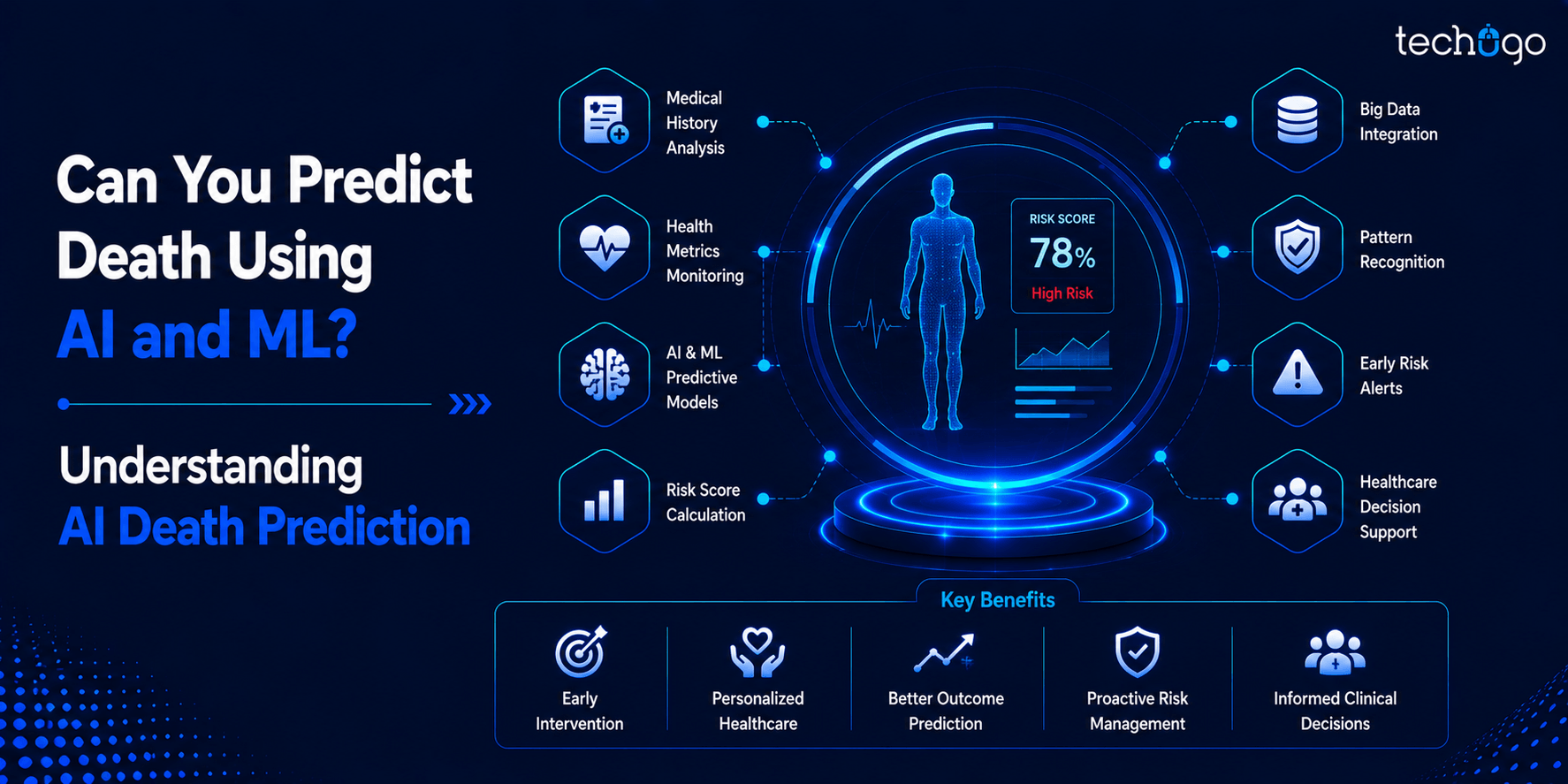
AI death prediction is not about guessing outcomes. It is a structured process built on data, patterns, and probability.
1. data collection from multiple sources
To predict death using AI, models rely on large and diverse datasets. These include electronic health records, lab results, medical imaging, genetic data, and inputs from wearable devices. Even small indicators such as sleep patterns or heart rate variability are captured and analyzed.
2. Pattern recognition through machine learning
Once the data is processed, machine learning algorithms begin identifying hidden patterns. These patterns are often too complex for human analysis. Subtle correlations between biomarkers, lifestyle factors, and medical history start to emerge.
3. Risk scoring and predictive modeling
AI models then compare current patient data with historical cases. Based on similarities, they assign a risk score. This is where AI death prediction comes into play, estimating the probability of severe health outcomes rather than predicting an exact event.
4. Continuous learning and model improvement
The accuracy of these models improves over time. As more data is introduced, algorithms refine their predictions. This makes AI in healthcare more reliable for early detection and preventive care.
In reality, AI does not predict the exact moment of death. Instead, it helps identify early warning signs, making it possible to act before conditions become critical.
Why are doctors stunned at the idea of AI death prediction?
For most of us, death is a haunting thought, and knowing the time we have left only adds to the discomfort. The idea that technology could predict such outcomes makes it even more unsettling.
The concept of healthcare apps leveraged with AI tech isn’t new; however, advancements in AI death prediction have now begun to surprise even medical professionals.
WHY?
While doctors rely on clinical reports and visible symptoms, AI and ML algorithms can go a step further, analyzing deeper data patterns to predict early death risk. This makes it possible to predict death using AI through probabilities and risk signals that may not be immediately visible.
Notably, AI can efficiently monitor subtle and risky elements in the human body that may otherwise be considered normal. For instance, a case study revealed that AI detected heart-related issues in a patient that were initially marked safe by healthcare experts.
Did you know?
A study by the University of Nottingham found that an AI model could predict the risk of premature death more accurately than traditional statistical methods, by analyzing lifestyle factors, medical history, and routine health data.
Additionally, researchers from Google Health and DeepMind have demonstrated that AI models can predict patient deterioration and mortality risk in hospitals with significant accuracy, often outperforming conventional clinical tools.
Real-world innovations: Tools and technologies behind AI death prediction
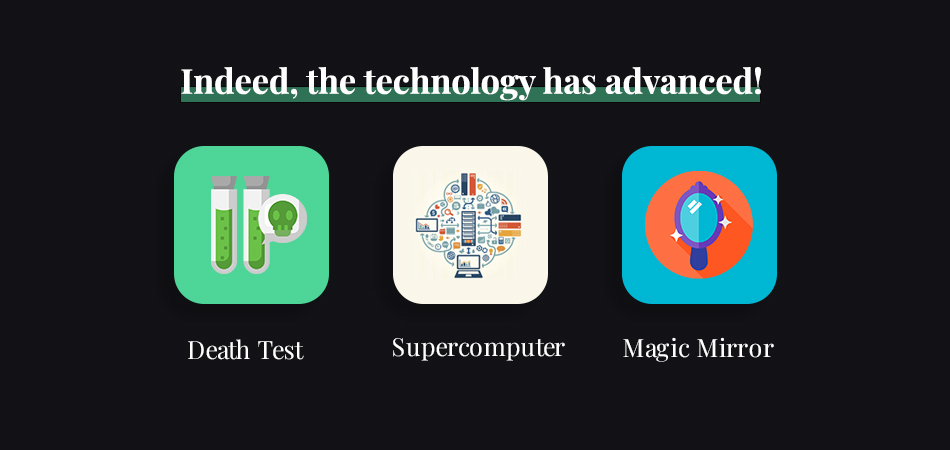
To know exactly when and how your life ends sounds scary enough. However, new tech-based gadgets and methods are being developed for those interested in knowing their expiration date—driven by advancements in AI death prediction.
Note: People with a weak heart shouldn’t read further.
Just kidding, here’s more for you to know:
Death Test
Sounds like a fiction movie?
Guess what? IT IS NOT.
‘Death Test’ is for real and can be performed by scientists. Professionals take a sample of your blood to detect specific biomarkers that help estimate mortality risk within a certain time frame. For instance, research published in journals like Aging Cell has shown that biomarkers related to metabolism and immune function can indicate long-term health risks.
Sure, death tests are not entirely in their advanced phase, but the concept is actively being explored to predict death using AI and biological data.
Supercomputer
Our lives are already highly influenced by technology and computers, and here comes another addition to the potential it possesses.
Confused?
Boston’s Beth Israel Deaconess Medical Center developed AI-powered systems that can analyze patient data and predict survival outcomes after surgeries or treatments. In fact, studies using ICU data (like the widely used MIMIC dataset) have shown that machine learning models can predict patient mortality risk with notable accuracy.
Magic Mirror
Apps and filters that show us what we’ll look like in the future are going viral. Therefore, Face My Age is planning to use similar technology to explore health predictions based on facial data.
It’ll enable users to click a few selfies, and the system will analyze visual health indicators. While still experimental, such tools reflect how AI death prediction is expanding beyond clinical settings into consumer-facing applications.
Examples of AI predicting health risks and patient outcomes
AI death prediction is already being applied across multiple healthcare scenarios—not to predict an exact moment, but to assess risk and improve outcomes.
1. Cardiovascular risk prediction
AI models are widely used to predict heart-related conditions such as cardiac arrest and stroke. By analyzing ECG data, lifestyle patterns, and medical history, these systems can identify early warning signs.
For instance, researchers at Mayo Clinic developed an AI model that can detect hidden heart conditions, like asymptomatic left ventricular dysfunction, using ECG data—often before symptoms appear.
2. ICU mortality prediction
In critical care environments, AI is helping doctors assess survival probabilities more accurately. Machine learning models trained on ICU datasets can predict whether a patient is likely to recover or face complications.
Studies using data from Beth Israel Deaconess Medical Center (via the MIMIC database) show that AI models can outperform traditional scoring systems in predicting patient mortality risk.
3. Cancer prognosis and survival rates
AI is also being used in oncology to predict cancer progression and survival outcomes. By analyzing imaging, genetic data, and treatment history, models can estimate how a disease may evolve.
Research from Google Health has demonstrated that AI can assist in predicting breast cancer risk and improving early diagnosis accuracy.
4. Hospital readmission and deterioration risk
AI systems are increasingly used to predict whether a patient might deteriorate or require readmission after discharge. These predictions help hospitals take preventive actions.
For example, tools developed by DeepMind have been used to detect early signs of acute kidney injury, enabling timely intervention.
Each of these examples reflects how AI death prediction is practically applied—not as a fixed outcome, but as a probability-driven system designed to improve patient care and decision-making.
AI & ML in healthcare: Core use cases beyond prediction
1. Artificial Intelligence
Pre-screening
AI in patient pre-screening can help understand the patient’s condition even before they arrive at the healthcare center. It may be in the form of a questionnaire that asks numerous questions to the patients to learn about their health.
Patient Diagnosis
One of the top-notch use cases of AI in healthcare is patient diagnosis since the tech can analyze a patient’s condition in a manner that healthcare professionals cannot.
Additionally, Deep Learning (DL) is emphasized in the process to amalgamate ‘human-like’ thinking for diagnosis and medical imaging.
Preventative Healthcare
Can a disease be cured even before its detection?
Indeed, it can be done via preventative care. In healthcare, wearable fitness and other medical devices like Fitbit, Apple Watch, etc., support the same.
2. Machine Learning
Clinical Decision Support Systems
Large volumes of data have to be analyzed before the identification of a disease, deciding on valuable treatments, monitoring potential issues, etc., in healthcare.
Therefore, machine learning efficiently helps with the same when incorporated with healthcare mechanisms.
Record Keeping
Keeping a record of thousands of patients is a challenging activity; however, it is a vital task for improved patient care.
Here’s when ML has an impressive role to play.
ML’s Optical Character Recognition (OCR) tech in healthcare can be used to detect physicians’ handwriting to make data entry a hassle-free process.
Personalized Medicine
Every case has different medical requirements; thus, needed to be treated differently. An effective treatment plan is a must for every patient, and ML uses the patient’s history to produce a personalized medicine routine.
Benefits of AI death prediction and predictive healthcare systems
AI death prediction is not about creating fear. It is about enabling better decisions, earlier interventions, and improved patient outcomes.
- Early risk detection
One of the biggest advantages is the ability to identify health risks at an early stage. AI models can detect subtle changes in data long before symptoms become visible. This allows healthcare providers to act early and reduce the chances of critical conditions. - Improved clinical decision-making
Doctors are often required to make fast and complex decisions. Predictive healthcare systems support them with data-backed insights. By using AI death prediction, clinicians can prioritize high-risk patients and plan treatments more effectively. - Personalized treatment plans
Every patient is different. AI systems analyze individual health data, history, and lifestyle patterns to recommend tailored treatments. This improves the accuracy of care and increases the chances of better outcomes. - Reduced hospital readmissions
Predictive models help identify patients who are at risk of complications after discharge. Hospitals can take preventive measures, reducing unnecessary readmissions and improving overall care quality. - Efficient resource allocation
Healthcare systems often face resource constraints. AI helps in identifying which patients need urgent attention. This ensures better utilization of ICU beds, medical staff, and treatment resources. - Shift toward preventive healthcare
Perhaps the most important benefit is the shift from reactive to preventive care. Instead of treating diseases after they occur, AI enables healthcare systems to prevent them. This is where the true value of predictive healthcare systems lies.
According to Accenture, AI applications in healthcare could save the industry billions annually while improving patient outcomes through early diagnosis and intervention.
Can AI really predict death? (Reality check) No.
AI cannot predict the exact time or cause of death. It estimates mortality risk, not a fixed outcome.
AI death prediction works by analyzing large volumes of health data such as medical records, lab results, imaging, and wearable data to identify patterns linked to serious conditions. Based on these patterns, models assign a probability score indicating the likelihood of adverse outcomes such as cardiac arrest, organ failure, or clinical deterioration.
This means when we say “predict death using AI,” we are actually referring to risk prediction. The output is not a date or certainty. It is a statistical estimate that helps clinicians make informed decisions.
Accuracy depends on three factors:
- Data quality and completeness
- Model design and training
- Clinical context and interpretation
In real-world settings, AI is used to:
- Predict ICU mortality risk
- Identify early signs of patient deterioration
- Estimate disease progression
However, limitations remain. AI models can produce errors, reflect bias in training data, and cannot account for unpredictable human or environmental factors.
In short, AI does not predict death. It predicts the likelihood of health outcomes, enabling earlier intervention and better clinical planning.
Ethical concerns around AI death prediction in healthcare
- Data Privacy & Security: Sensitive health data is required, raising risks of misuse or breaches.
- Bias in Algorithms: Models trained on limited datasets can produce unfair or inaccurate predictions.
- Psychological Impact: Mortality risk insights can cause anxiety or distress for patients.
- Lack of Transparency: Many AI models operate as “black boxes,” making decisions hard to explain.
- Over-Reliance on AI: Excess dependence may weaken clinical judgment.
AI death prediction must be used with strict ethical safeguards, clinical oversight, and clear patient consent.
In a nutshell
AI and ML are transforming healthcare with data-driven precision and faster decision-making.
Concepts like AI death prediction are not about predicting exact outcomes, but about identifying risks early and enabling better care.
As these technologies evolve, healthcare is steadily moving toward a more predictive and preventive model.
What do you think?
For more information on integrating AI into healthcare solutions, connect with Techugo for a detailed discussion.
Sounds good?
FAQs
1. Can AI really predict the risk of death?
AI and ML models can analyze health records, lifestyle patterns, and medical data to identify potential health risks and predict mortality probabilities.
2. How does AI help in healthcare predictions?
AI processes large amounts of patient data to detect patterns, support early diagnosis, improve treatment planning, and reduce medical errors.
3. Which devices provide data for AI-based health predictions?
Wearables like smartwatches, fitness trackers, and health monitoring devices provide real-time health data for AI analysis.
4. Is AI more accurate than doctors in predicting health risks?
AI can sometimes detect hidden patterns faster than humans, but it is designed to support doctors rather than replace medical professionals.
5. What is the future of AI in predictive healthcare?
AI-driven predictive healthcare is expected to improve personalized medicine, preventative care, remote monitoring, and early disease detection.

Get in touch
We'd love to hear from you.