


 SA
SA  KW
KW  IE
IE AU
AU UAE
UAE UK
UK USA
USA  CA
CA DE
DE  QA
QA ZA
ZA  BH
BH NL
NL  MU
MU FR
FR 



















We all are aware of Artificial Intelligence and know about its awe-inspiring potential. What was confined to our imagination, sci-fi movies and related fantasies – everything is coming to life.
The wondrous applications of this technology are becoming a favourite not only because they are scientifically advanced, but also because they find use in every domain.
AI is offering practical and feasible solutions to us, hence, becoming a common favourite across the planet. It is no longer just about automation, or business efficiency, or even convenience. It is being used where it actually matters such as – climate change, environmental damage, and sustainability. And that changes the conversation.
Because for years, technology was often seen as part of the problem. More consumption, more energy use, more waste. But now, things are slightly different. AI is helping monitor, predict, and even prevent environmental damage in ways that were not possible before.
In fact, according to a report by PwC, AI applications in environmental use cases could contribute up to $5.2 trillion to the global economy by 2030, while also reducing greenhouse gas emissions by 4%. That’s not small.
So yes, AI is not just “advanced tech” anymore. It is becoming a tool for survival, almost and the world is witnessing a seamless integration of tech and solutions to real-world problems.
The intent here is to make readers know about AI’s great and immensely helpful applications in tackling real environmental challenges like global warming, biodiversity loss, energy inefficiency, etc.
Let’s get into it.
Why Businesses Are Investing in AI for Sustainability
Sustainability has slowly become something that businesses can’t really ignore anymore, because the pressure is coming from everywhere — the regulators, the customers, and even the rising operational costs. So, AI starts to make more sense here, not suddenly, but gradually… and then all at once.
Companies are not just experimenting now, they have been investing in AI because it helps them in ways that are both practical and necessary:
- Reduce operational costs, because energy usage and resources can be optimized, and therefore waste is lowered
- Meet ESG and regulatory requirements, but without adding too much manual effort or confusion
- Predict risks early, so that climate disruptions or supply chain issues don’t turn into bigger problems later
- Improve brand perception, because consumers are becoming more aware, and they prefer businesses that are responsible
It is not just about responsibility anymore, but also about efficiency… and how businesses are trying to survive in the long run, which, honestly, has become equally important.
And this is where working with an experienced AI app development company comes in, because it helps you turn these ideas into something real, whether it is through intelligent systems, or even chatbot development that was once simple but is now being used for awareness and engagement.
So yes, this shift has been growing, and it is aligning closely with global sustainability goals, which we will explore next.
How AI Supports Sustainable Development Goals (SDGs)
Don’t worry, we won’t bore you with the definition of AI, we know that you are aware, but for those who don’t know about SDGs (Sustainable Development Goals), allow us to brief you. For those who know, you can skip the following two lines.
So, SDGs are 17 interlinked goals to be achieved by 2030. These goals were set up by UNGA (United Nations General Assembly) in 2015.
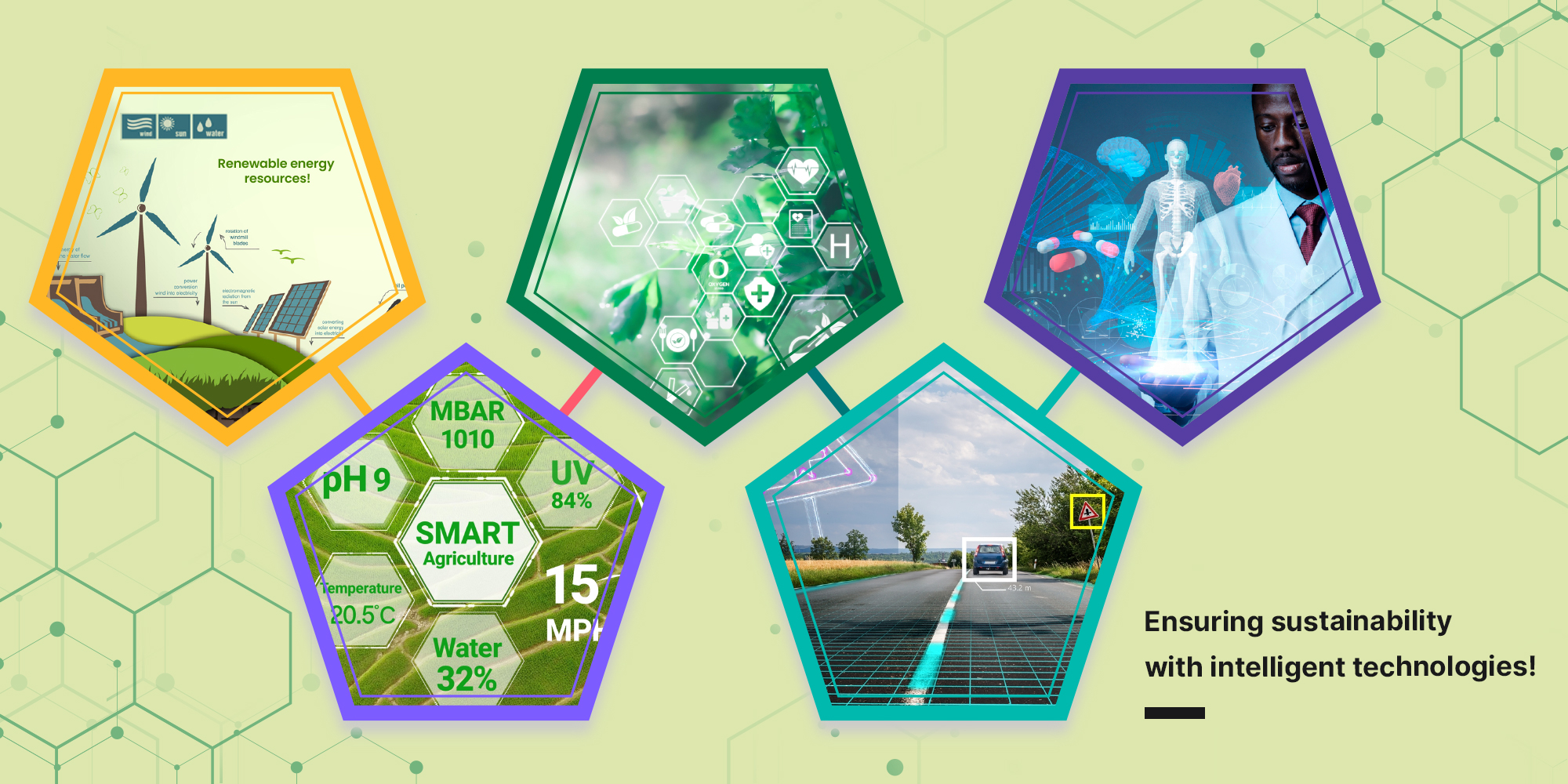
Now that AI has been added in the sub-heading, you are right; it has an important role in achieving the SDGs. The following sections would explain this claim clearer – let’s learn and see how AI has been used to tackle different environmental problems.
AI in Climate Change & Energy Optimization
- Using Machine Learning technology can optimize energy demand and generation, that too in real-time.
- Smart grid systems with increased predictability are used for enhanced efficiency and the use of renewable energy resources!
- Smart meters, sensors, etc. are deployed in buildings to collect data. This data can then be monitored, analyzed, in less time with intelligent solutions. This further optimizes energy usage and consumption in buildings.
- AI/ML algorithms are being used in AI-enabled smart transport to increase safety, provide information about traffic and congestion, optimize navigation, etc. Google Maps, Waze, Nexar are relevant examples here.
In real-world scenarios, this has already helped reduce energy waste at scale, and in many cases, organizations are seeing noticeable drops in operational costs and carbon emissions… not over years, but much faster than expected.
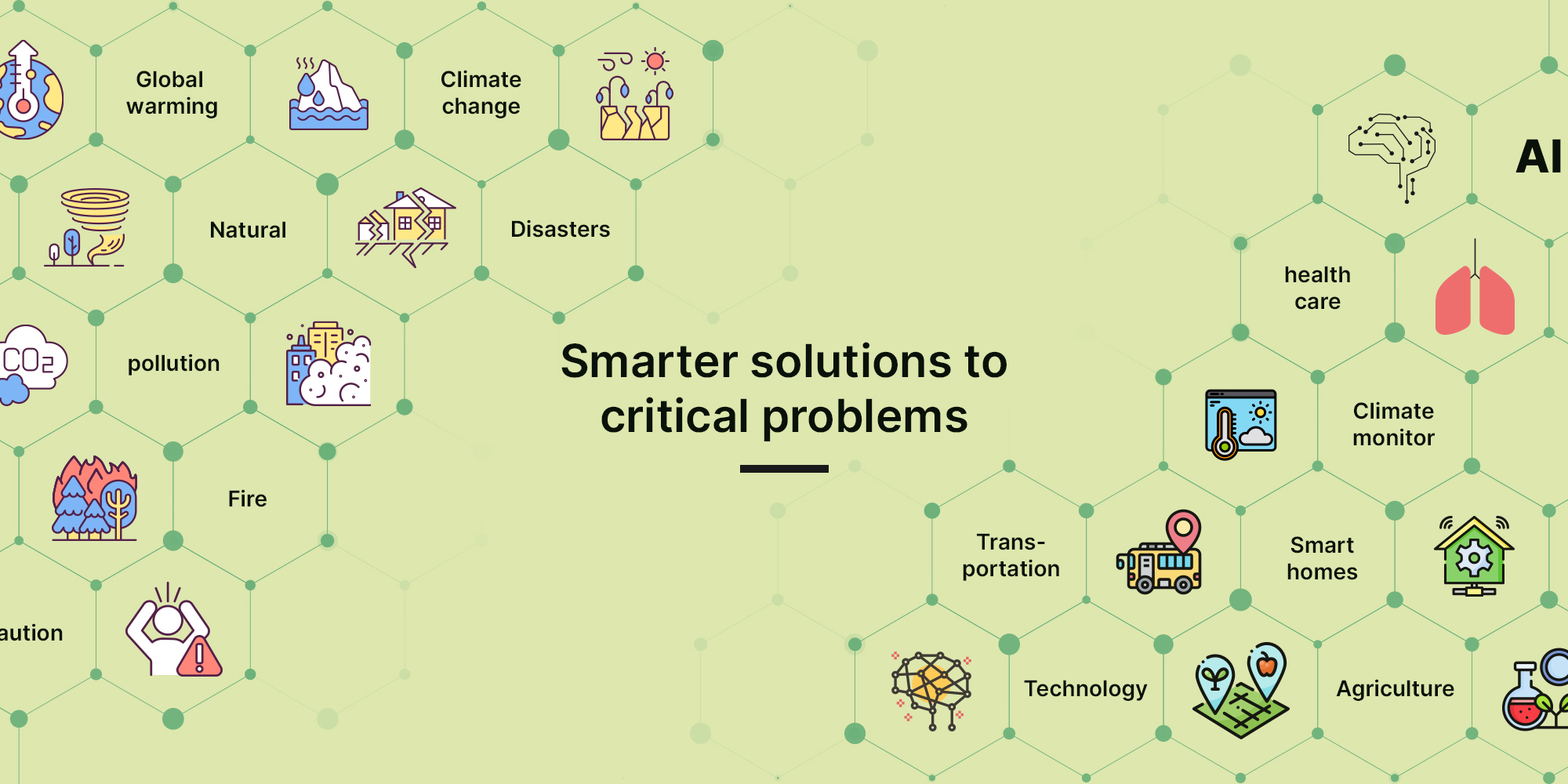
AI for Disaster Prediction and Resilience
- The offering of AI in the form of predictive analytics is a boon! This tech, along with advanced sensors, drones, etc., can monitor natural hazards like floods, rain patterns, windstorms, sea-level changes – to name a few.
- Predictive analysis can help governments and organizations across the planet to take timely actions, enable early evacuations and prevent damages to lives and property.
- A number of meteorological institutions, insurance companies, tech giants like IBM are combining traditional physics-based modelling methods with AI to gauge and model impacts of weather events. This analysis of extreme natural occurrences on infrastructure and other systems can help in preparing more strong disaster management strategies.
This kind of early intervention has been critical, because even a few hours of advanced warning can significantly reduce damage, and in many cases, save thousands of lives.
AI for Air, Water, and Ocean Sustainability
- Artificial Intelligence can gather data from oceanic places that are far off and very tough to reach. This helps not only in distant yet thorough analysis but also in protecting species and habitats.
- Illegal fishing can be tracked using the same!
- Artificially Intelligent robots can be used to monitor ocean health, the pollution level in the water, sea-surface temperatures, pH, etc.
All this also helps in conserving corals – very important and highly fragile ecosystems in the world!
- AI is used to make weather forecasts in different geographical locations by water scientists. This helps governments to come up with informed policies to help people.
- Not only weather, the technology is used to forecast subsurface water, soil, and predict drought occurrences based on rainfall patterns!
- There are artificially intelligent air purifiers that record air quality in real-time and adapt efficiency in filtration.
- The wonderfully intelligent technology can use data from radar sensors, vehicles, etc. and help with air pollution – pollution detection is quick and accurate.
At scale, this means better environmental monitoring systems that are not just accurate, but also continuous… helping authorities take faster and more informed actions.
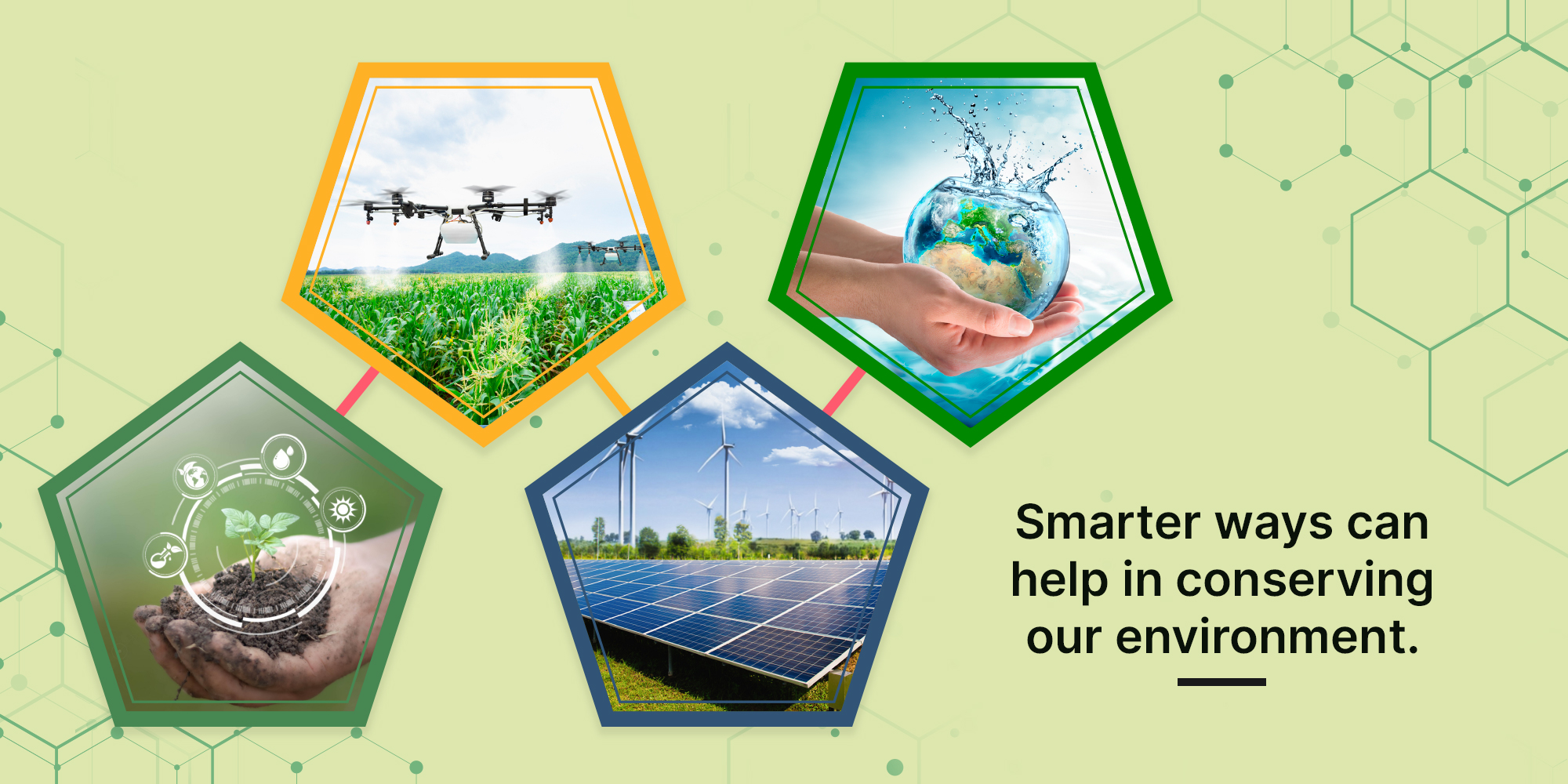
AI in Biodiversity and Wildlife Conservation
- Biodiversity conservation is possible with the titular tech!
- Changes in land use, vegetation cover, forest cover, etc., can be detected easily by combining them with satellite imagery!
It is all about using and analysing data in hand – in almost no time!
- It is possible to monitor invasive species, their presence and growth. It thus becomes possible to stop the spread and save the native species. A company named Blue River Technology is doing the same!
- Predictive software has been developed. They are helping in bringing activities that harm the animal population, like poaching, to a halt.
This has already started making a difference, because conservation efforts are becoming more proactive rather than reactive, and that shift is crucial for protecting fragile ecosystems.
The Future of AI in Environmental Sustainability
AI is slowly moving into something more active where decisions are being made in real-time, and actions are taken almost instantly.
With the rise of edge computing, satellite intelligence, and more advanced AI models, systems are now able to respond to environmental changes as they happen, not just report them later. This shift is important, because it changes AI from being reactive… to something that is more adaptive, and in some cases, even autonomous.
For example, AI-powered drones are being used to monitor forests, detect illegal activities, and even plant trees in areas that are difficult to access. And this is where the role of an AI-powered drone app development company becomes more relevant, because these solutions are not simple, they require precision, scale, and constant data processing.
At the same time, governments and organizations are using AI to simulate climate scenarios, so that better decisions can be made, not after damage happens, but before it.
So, the future of AI in sustainability is not just about better insights… It is about faster actions, and systems that can think, respond, and evolve with the environment.
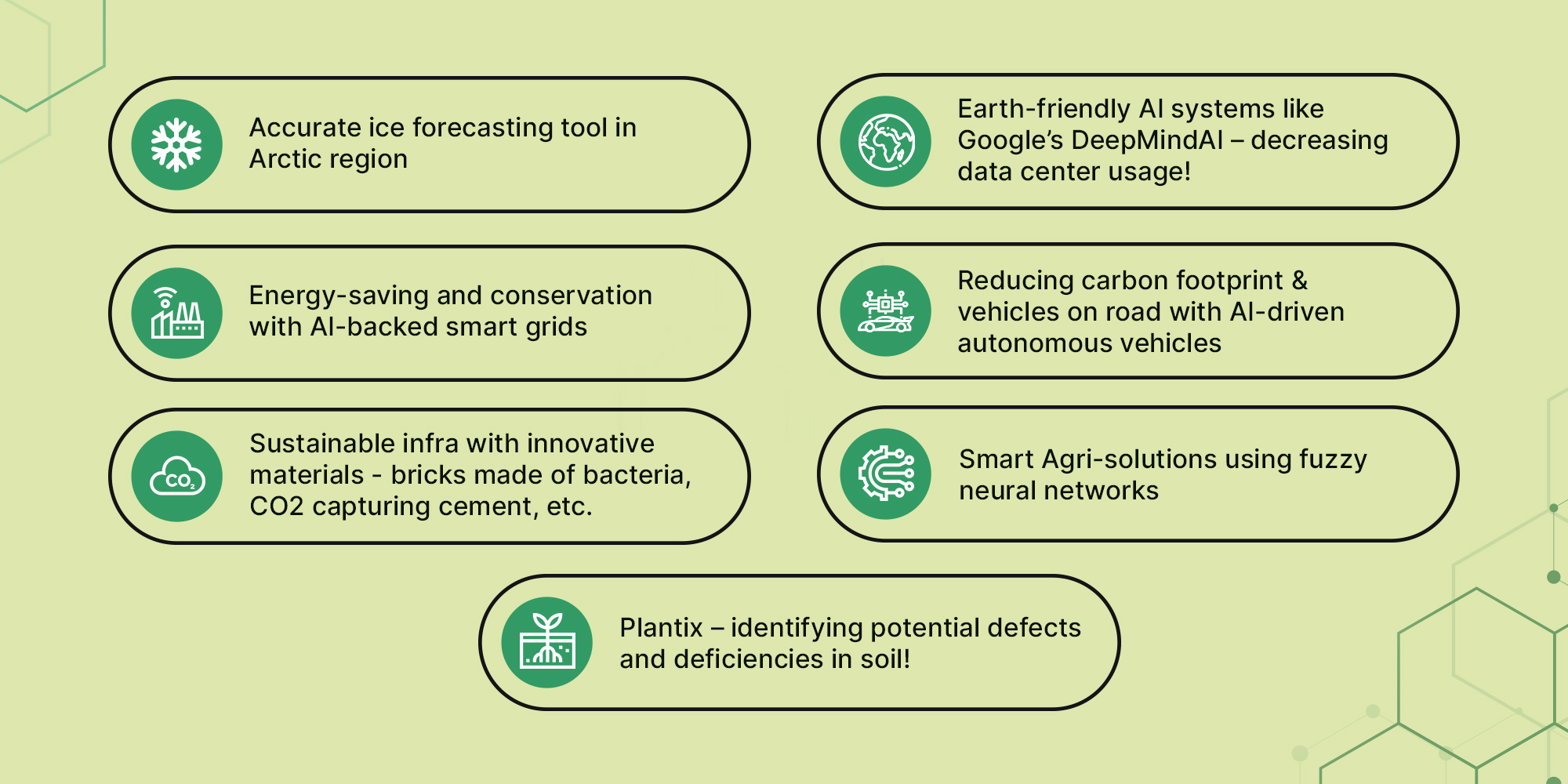
Come, Build Awe-Inspiring Solutions – IT’S NEEDED, now more than ever!!
Researchers and scientists are coming up with more innovative solutions every day. What comes up as a common factor is this – using digital devices to consume and use that information.
Clearly, an application, if built to cater to such needs, can be revolutionary!! So, put on your thinking hat to present to the world a solution that isn’t just brilliant but also supports the environment and reduces the carbon foot-print.
Just imagine how wonderful it would be if we could get important information about our daily tasks that make us more mindful as a human race and aim for sustainable development and lifestyle, right!!
So, don’t wait any longer and connect with us at Techugo!
We are known for delivering the best and unique solutions. Start your journey of tackling climate change with Machine Learning and AI.
Let’s aim and deliver sustainable jaw-dropping solutions.

Get in touch
We'd love to hear from you.