

 SA
SA
 KW
KW
 IE
IE AU
AU UAE
UAE UK
UK USA
USA
 CA
CA DE
DE
 QA
QA ZA
ZA
 BH
BH NL
NL
 MU
MU FR
FR
















📌 Key Takeaways
- GPS apps are in high demand across industries like logistics, healthcare, and eCommerce.
- Advanced features matter — real-time traffic, voice navigation, AR maps, and predictive routing improve user experience.
- Proper planning is essential — research, MVP development, UI/UX, and testing help build a successful app.
- Location accuracy is the key factor for user trust and app performance.
- Choosing the right tech stack like Google Maps APIs, geofencing, and real-time tracking ensures scalability and smooth navigation.
Planning your next road trip or traveling to a new destination, the trend of geolocation through the app is a densely entrenched idea. The days of running from one corner to another, to seek the right street and location, without technology integration, is a kooky idea.
We all live in a digital world, where technology binds and connects us with the right services, without wasting our time or effort. Today location-based apps or GPS navigation apps, a core part of GPS navigation app development, have brought radical changes in transportation, social networking, and gaming sectors respectively.
As per a report, over 90% of smartphone owners use apps to get the location. And brands rely heavily on GPS navigation apps to send relevant offers and personalized messages through location-based app development solutions.
Indeed, GPS location-based apps have made our lives easier, and act as our personal assistant to guide us to reach our destinations.
Considering the popularity, it is quite obvious for you to consider developing a GPS app. Hence to help you develop a mobile app that fits your market and carve a niche in your market, we have brought this post for you today on how to build a GPS navigation app. Below, we’re going to share some of that knowledge with you, let’s scroll further…
Market size & growth of GPS navigation apps
According to Grand View Research, the global location-based services market (core to GPS navigation app development) was valued at $59.65 billion in 2024 which is likely to reach $236.34 billion by 2033. This has been growing by 16.7% annually.
The mapping & navigation segment dominates the market, fueled by apps like Google Maps and Waze, widely used for real-time routing and traffic updates.
The growth is largely driven by:
- Increasing smartphone adoption
- Expansion of logistics and delivery services
- Rise of real-time navigation and fleet tracking
- Demand for location-based advertising and personalization
GPS and positioning systems market itself is also expanding, expected to reach $440.91 billion by 2033, reinforcing the long-term demand for navigation-based applications. (Source: Grand View Research)
What are GPA navigation apps?
GPS navigation apps are mobile applications that use the Global Positioning System (GPS) to determine a user’s location and provide real-time directions, route planning, and traffic updates. These apps help users navigate from one place to another efficiently, often offering features like turn-by-turn guidance, ETA predictions, and nearby place suggestions.
Types of GPS navigation apps you can build
When planning your GPS navigation app development, it is important to understand the different types of apps you can build based on your business goals and target audience.
Navigation apps
These apps provide real-time directions, traffic updates, lane assistance, and route optimization. Advanced apps also offer live traffic alerts and alternate route suggestions. Best examples are Google Maps and Waze.
Ride-sharing apps
These apps connect drivers and passengers using real-time location tracking for ride booking, tracking, and fare estimation. Best examples are Uber and Lyft.
Delivery & logistics apps
Designed for tracking shipments, managing fleets, and optimizing delivery routes with real-time updates. Best examples are Uber Eats and Dunzo.
Fitness & tracking apps
These apps use GPS to monitor activities like running, cycling, and walking, tracking distance and performance metrics. Best examples are Strava and Nike Run Club.
Social networking apps
Platforms that use geolocation for check-ins, nearby connections, or location sharing among users. Best examples are Snapchat (Snap Map) and Tinder.
Travel & exploration apps
These types of apps help users discover nearby attractions, restaurants, and experiences based on their location. Best examples are Tripadvisor and Airbnb.
On-demand service apps
Apps that enable users to book services like taxis, food delivery, or home services using real-time location tracking. Best examples are Zomato and Urban Company.
Gaming apps (AR-based)
These apps combine GPS with augmented reality to create immersive, location-based gaming experiences. Best examples are Pokémon GO and Ingress.
Industries getting benefited from the GPS app
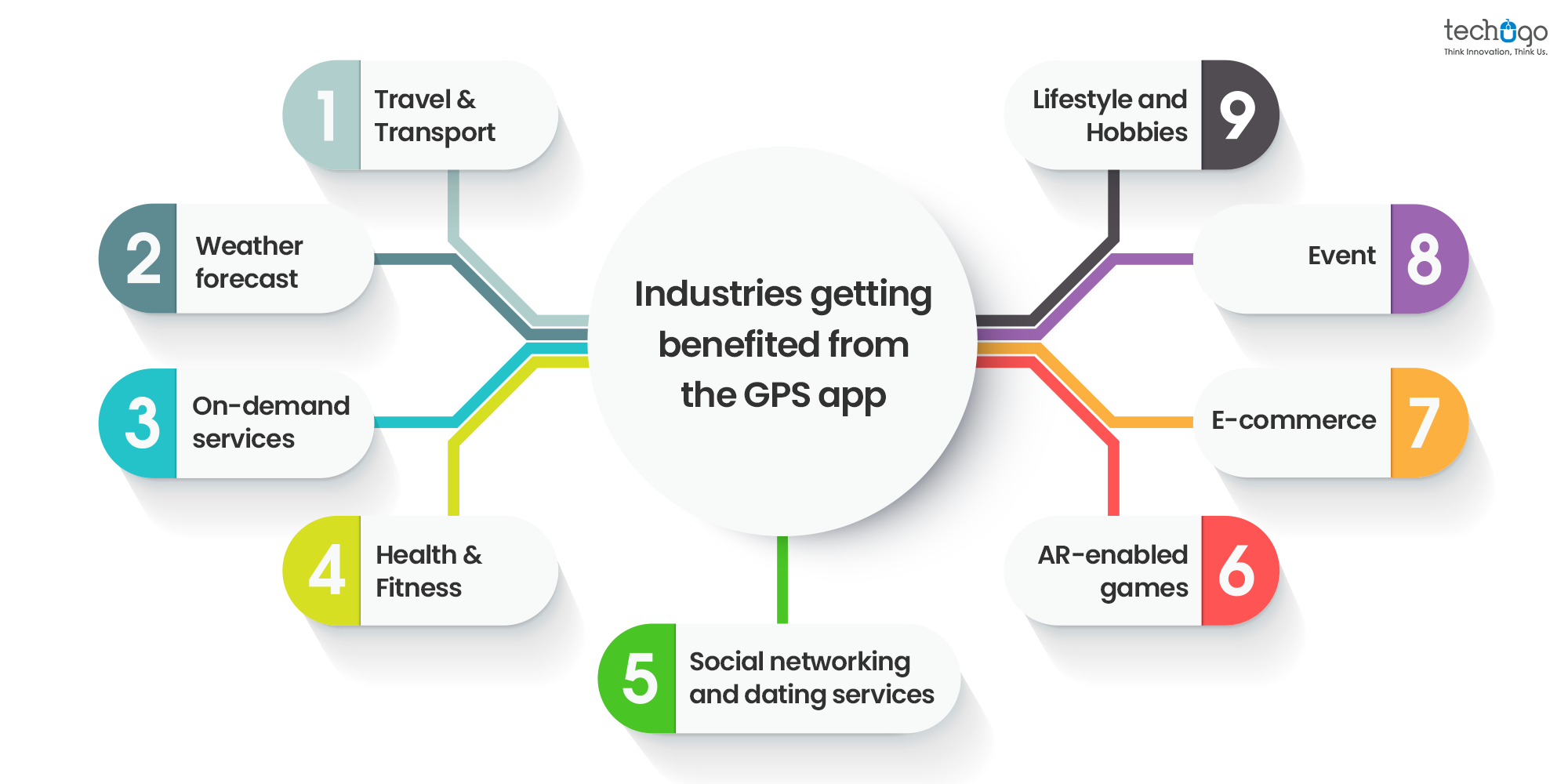
GPS navigation apps and location-based app development solutions are transforming multiple industries by enabling real-time tracking, personalization, and seamless navigation experiences.
- Travel & Transport – Real-time navigation, route optimization, and traffic updates using apps like Google Maps
- Weather Forecast – Location-based weather updates and alerts for precise forecasting
- On-Demand Services – Accurate location tracking for ride-hailing and delivery apps like Uber
- Health and Fitness – Activity tracking, distance monitoring, and route mapping in fitness apps
- Lifestyle and Hobbies – Location tagging, travel journaling, and exploration-based apps
- Event – Geo-targeted event discovery and navigation to venues
- Social Networking and Dating Services – Location-based matching and nearby connections
- E-commerce – Real-time order tracking and location-based offers
- AR-enabled Games – Interactive gaming experiences powered by geolocation, like Pokémon GO
Features required for GPS app development
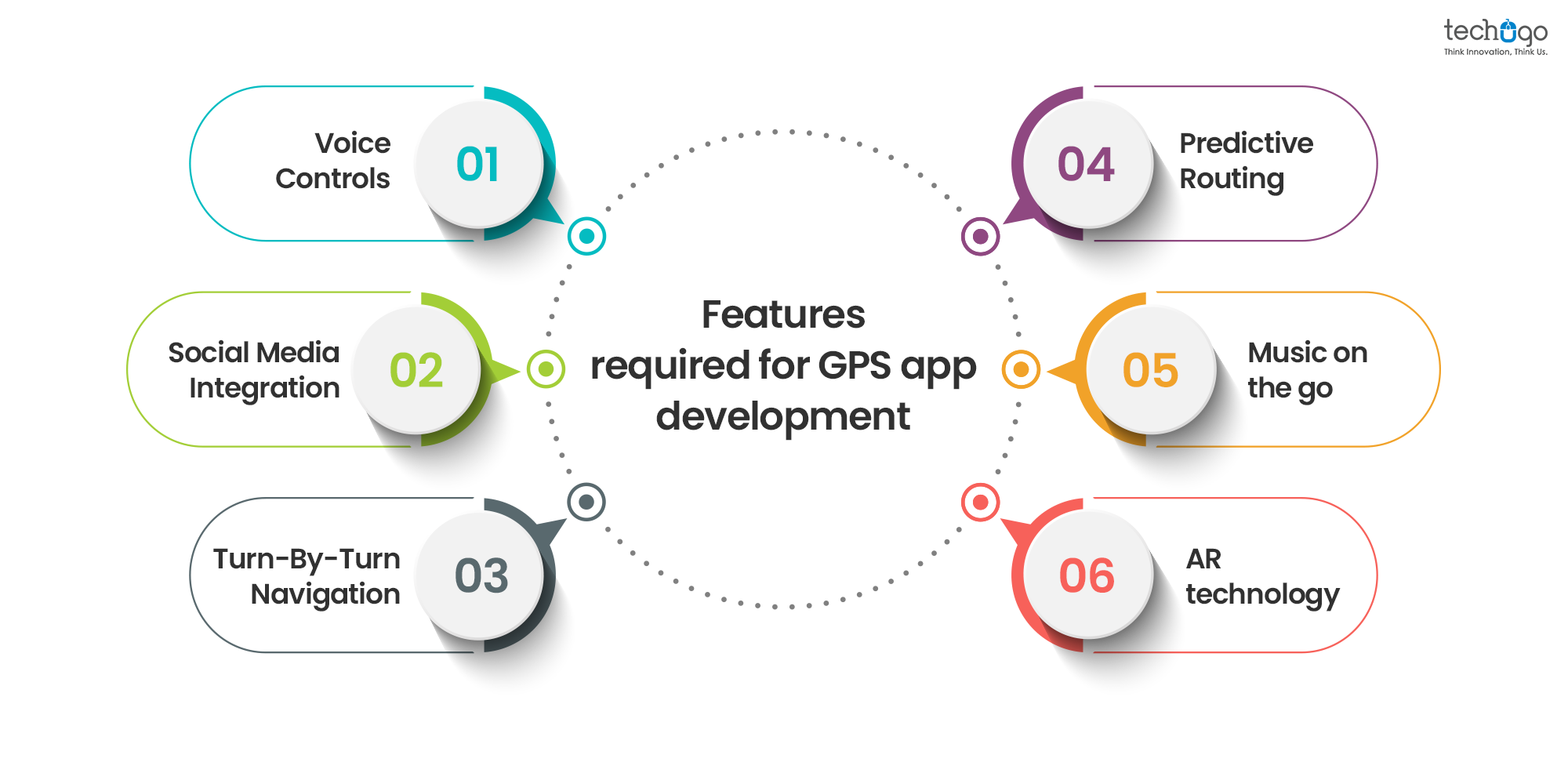
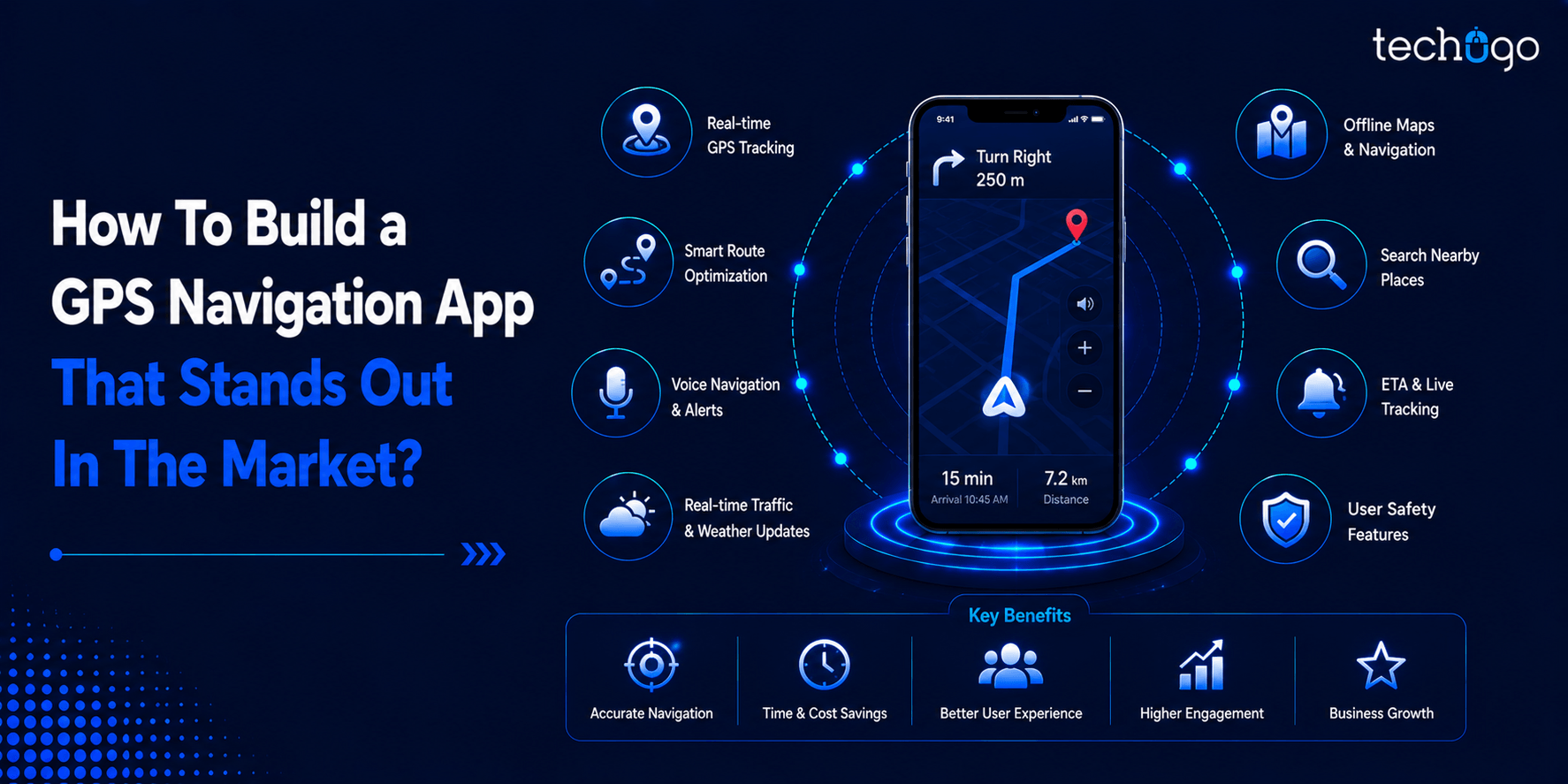
A GPS app doesn’t become powerful with a map service only, but there are other features as well, that helps in running the powerful map service with an efficient navigation system.
Here are a few features that are required to build a GPS app, let’s take a look…
Voice Controls
Voice-activated controls are helping to search and get voiced instructions in GPS navigation apps. They provide a hands-free option for every action and paves a smooth way for the users.
Social Media Integration
Social media sharing is an integral part of the traveling navigation apps. This feature allows your app to function through community-driven and helps other users to pick the right route in the event of traffic jams, or any other unfavorable condition.
Turn-By-Turn Navigation
The turn-by-turn navigation feature is used for making smart suggestions, in case the driver moves in the wrong direction or if there is an accident on the road. The feature must have the potential to remodel the route and offer the quickest and safest route to the users.
AR technology
Augmented Reality is on the rise and assisting different industries to carve a niche for themselves. In this run, location apps can utilize the AR navigation for those areas which have Google Street View. This enables navigation to become digitized and make it more interactive and detailed.
Music on the go
Adding a music feature is a great user-engagement agent, letting users listen to music while stuck in traffic or simply during the ride. You must allow users to groove on music through streaming services.
Predictive routing
This feature allows apps to collect data from speed cameras, and this is popularly known as predictive routing. Here, satellites collect the images and a street view option enables better precision in navigation. It lets users improve the calculation of the ETA (estimated time of arrival) and help them plan their trips better.
If you think that how your GPS navigation app will stand out in the 2026 competitive market, then you’re right to think that way. We’ve answer to your question. To make your GPS navigation app stand out in 2026, you must focus on personalization, real-time alerts, clean UI/UX, hyperlocal data, and most importantly, integration with wearables.
How to build a GPS navigation app that stands out in 2026? A step-by-step guide
To create a successful GPS navigation app, many ingredients come into the picture and cook a broth that helps users to navigate the route. Below we have brought a location-based app with a step-by-step guide for GPS navigation app development that aligns with current market trends.
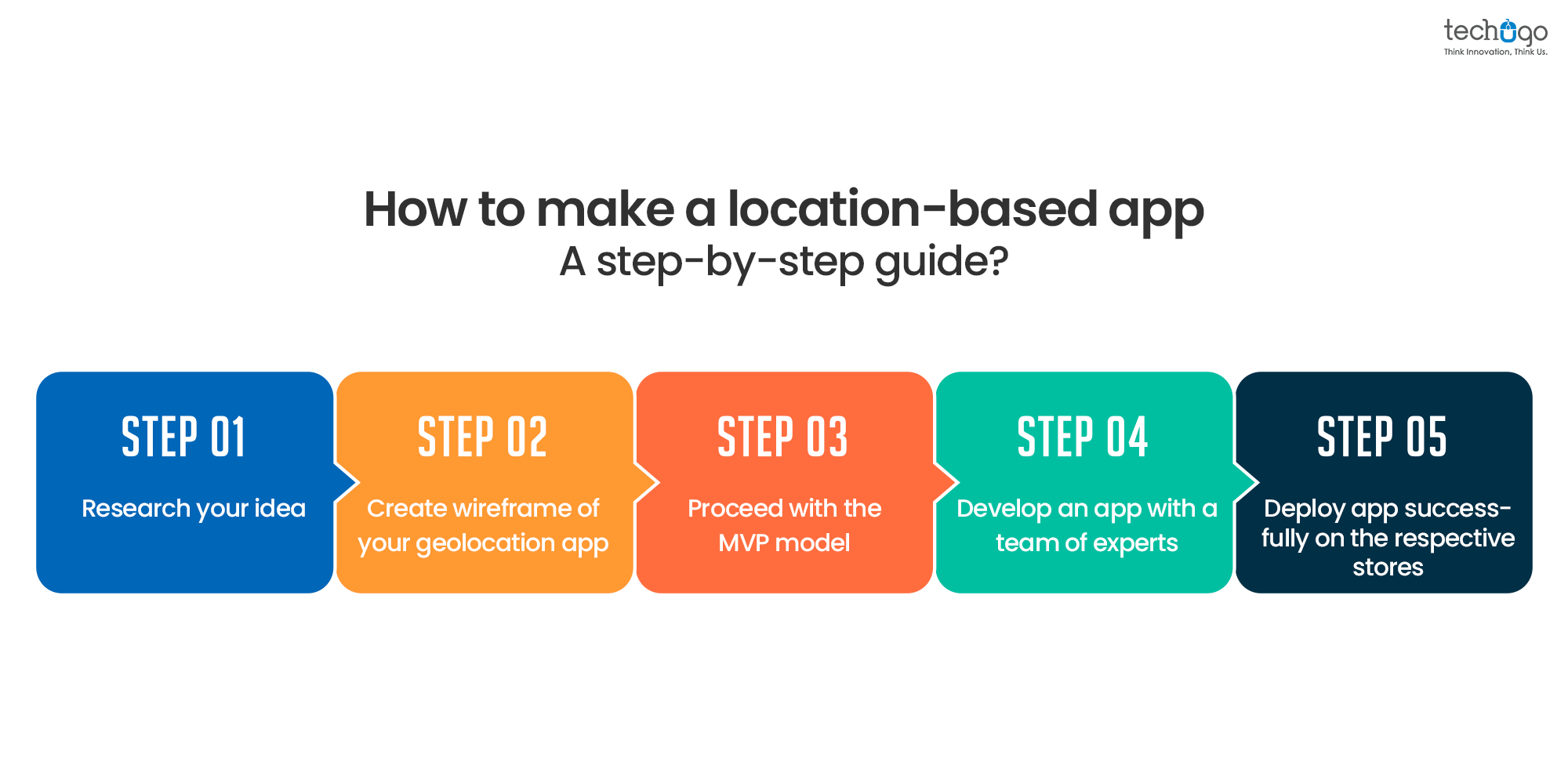
Step # 1- Research your idea
Start by validating your idea and understanding your target audience. Analyze competitors like Google Maps and Waze to identify gaps, trends, and user expectations in location-based app development.
Step # 2- Create wireframe of your geolocation app
Design a structured wireframe to map out user journeys, navigation flow, and interface elements. A well-planned wireframe ensures better usability and a smoother experience in your GPS navigation app.
Step # 3- Proceed with the MVP model
Build a Minimum Viable Product (MVP) with core features like maps, real-time tracking, and basic navigation. This approach helps you test your geolocation app development idea, gather feedback, and reduce initial development risks.
Step # 4- Develop an app with a team of experts
Choose the right tech stack and collaborate with experienced developers to build scalable and high-performance features. This step includes integrating APIs, GPS tracking systems, and backend infrastructure required for GPS navigation app development.
Step #5- Deploy app successfully on the respective stores
Launch your app on platforms like Google Play Store and Apple App Store. After deployment, focus on updates, performance optimization, and user feedback to ensure long-term success.
Relevant technologies to build a GPS app
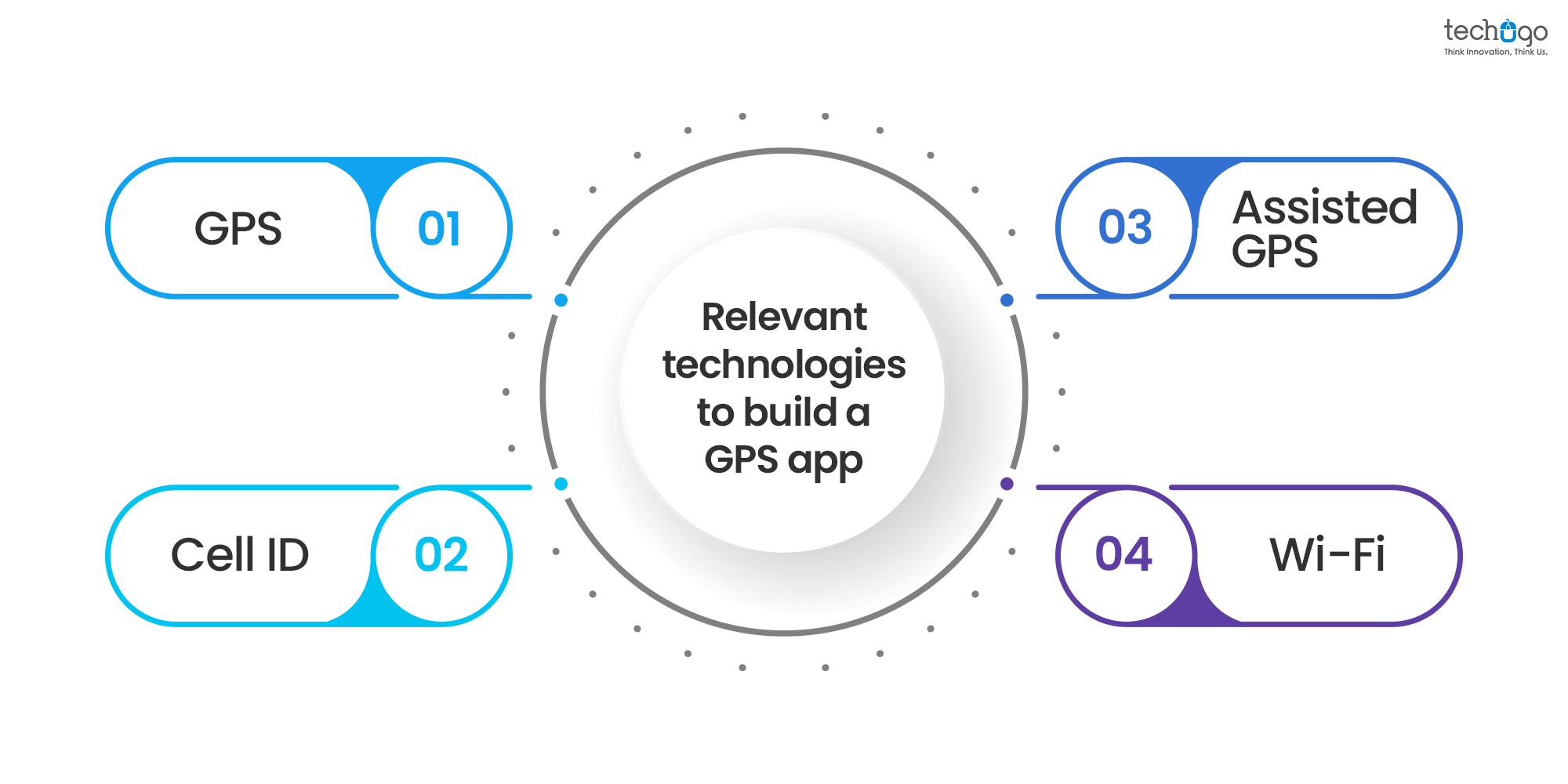
To ensure successful GPS navigation app development, it is important to choose the right set of technologies that enable accurate positioning, real-time tracking, and seamless user experience.
GPS
Well, today, every smartphone is equipped with a GPS-Global Positioning System chip inside. It utilizes the location information and timing that satellites send from space. On the other hand, a smartphone requires data from a minimum of four satellites to determine position with about 60 feet accuracy. And this is where GPS steps in, and covers the gap, making it a core component of geolocation app development.
Cell ID
In the event of the unavailability of the GPS signal, information can be taken from cell towers. The inclusion of mobile networks further helps in determining the cell used by the customer and comparing it with a base-stations database. It is indeed a great choice to proceed in the areas where a major number of cells are used, such as metropolitan cities, supporting reliable location-based app development.
Assisted GPS
This is a combined approach of GPS and Cell ID tools and offers much précised and accurate information.
Wi-Fi
With Wi-Fi, it becomes easy to determine the position of the user in a much-précised manner within the smaller areas. Once the user’s location is captured, the usage of services like Google Maps geolocation or some Map Kit Framework enables them to put it on a real map. Google Maps APIs for iOS and Android devices provide the performance of geolocation apps, including all information about the location, detailed maps, and search for places in the vicinity.
Indoor geolocation technologies
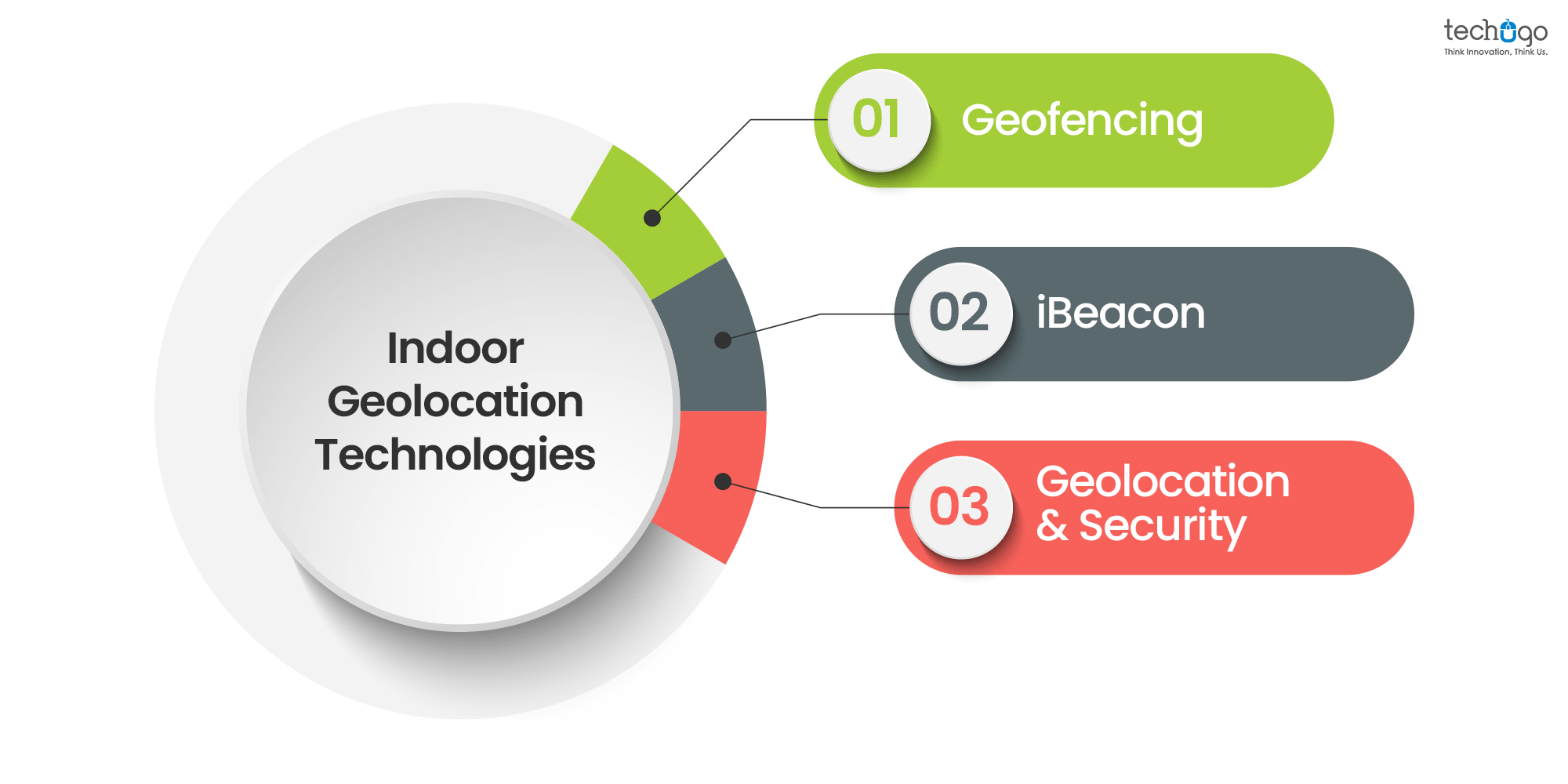
Geofencing
Geofencing is a great tool to encourage customers to a specific shop or market from the street or parking. It determines how close mobile devices are to a particular point, and sends offers or coupons to consumers, making it highly useful for marketing-driven GPS navigation app development.
iBeacon
iBeacons help businesses to trigger customers’ purchase behavior. This technology uses BLE- Bluetooth Low Energy signals to assess whether the mobile user is in the area of their performance.
Geolocation & Security
Indeed, security is a stumbling block that needs to be addressed through technology. In modern location-based app development, technological advancements help decrease privacy concerns and offer valuable benefits to users by ensuring data protection, secure APIs, and controlled access to location data.
Latest trends in GPS navigation app development
The landscape of GPS navigation app development is evolving rapidly in 2026, driven by AI, real-time data, and connected ecosystems. Here are the key trends shaping the future:
-
AI-powered predictive navigation
Modern navigation apps are becoming smarter with AI integration. Instead of only reacting to current traffic, they analyze historical patterns, user behavior, and live data to predict congestion and suggest optimized routes in advance. This improves ETA accuracy and overall user experience.
-
AR-based navigation experiences
Augmented Reality is transforming how users interact with maps. By overlaying directions on real-world views through the camera, apps offer a more intuitive and immersive navigation experience. This is especially useful in complex areas like city streets or large public spaces.
-
Multi-GNSS for high accuracy
Instead of relying solely on GPS, modern apps use multiple satellite systems like GLONASS and Galileo. This improves location accuracy, reduces signal loss, and ensures better performance in urban environments with tall buildings.
-
5G & IoT integration
With the rise of 5G and IoT, GPS apps can process and transmit data faster than ever. This enables real-time updates, seamless tracking, and better connectivity between devices, vehicles, and infrastructure, especially in smart mobility solutions.
-
Hybrid indoor + outdoor navigation
Navigation is no longer limited to outdoor environments. By combining GPS with Wi-Fi, Bluetooth, and indoor positioning systems, apps can provide seamless navigation inside malls, airports, hospitals, and other large indoor spaces.
-
Voice & conversational navigation (AI assistants)
Voice-enabled navigation is becoming more advanced with AI-powered assistants. Users can interact with apps through natural language, receive voice-guided directions, and even get personalized travel suggestions without needing to manually interact with the screen.
-
Smart city & connected mobility integration
GPS navigation apps are increasingly integrated into smart city ecosystems. They help in managing traffic flow, optimizing public transportation routes, and supporting urban planning with real-time location data.
-
Enhanced security & privacy controls
As location data becomes more sensitive, modern apps are focusing on stronger security measures. Features like data encryption, permission-based access, and anonymization ensure that user information remains protected while maintaining functionality.
How much does it cost to build a GPS navigation app in 2026
The cost of GPS navigation app development in 2026 depends largely on app complexity, features, and the development approach. On average, building a location-based app can range widely based on what you aim to create.
| App Type | Estimated Cost (USD) | Timeline | What’s Included |
| Basic GPS App (MVP) | $15,000 – $30,000 | 2 – 4 months | Map integration, basic navigation, simple UI |
| Mid-Level GPS App | $30,000 – $75,000 | 4 – 7 months | Real-time tracking, route optimization, user accounts |
| Advanced GPS App | $75,000 – $150,000+ | 7 – 12 months | AI routing, AR navigation, real-time data processing |
| Enterprise-Grade Solution | $150,000 – $400,000+ | 10 – 18+ months | Scalable architecture, multiple integrations, high security |
Key cost factors
- Features & Complexity – GPS/maps alone may cost $5,000–$15,000, while AI or AR features can add $20,000–$80,000+ to the budget.
- UI/UX Design – Custom design can take 10–25% of the total budget depending on complexity.
- Backend Infrastructure – Scalable backend systems can cost anywhere between $8,000 to $120,000 depending on architecture.
- Development Team – Costs vary 3–5x based on location and expertise.
- Platform Choice – Native (iOS + Android) is more expensive than cross-platform solutions
Hidden costs to consider
- Third-party APIs (maps, analytics, payments)
- App maintenance (15–20% annually)
- Cloud hosting and server costs
- Regular updates and feature enhancements
Now, when you have narrowed down the focus area of the development journey, the next thing that comes your way is to avoid the pitfalls of development with an efficient team that has experience in the navigation application field.
To serve your needs, nothing fits the demand better than the Techugo team!
Why work with Techugo for GPS navigation app development?
Choosing the right partner for your GPS navigation app development journey can make all the difference between an idea that struggles and a product that scales. As a leading mobile app development company in USA, UAE, and India, Techugo has an expert team for location-based app development and the team has been working for more than 10 years. The team has a strong product mindset and offers end-to-end development support to its clients. Moreover, Techugo offers AI-driven & future-ready solutions and scalable & secure architecture.
You’ve got an idea for a GPS navigation app and are unsure of what to do NEXT?
Get in touch to talk to our experts about your next project. We’d be happy to assist you in your journey.

Get in touch
We'd love to hear from you.