


 SA
SA  KW
KW  IE
IE AU
AU UAE
UAE UK
UK USA
USA  CA
CA DE
DE  QA
QA ZA
ZA  BH
BH NL
NL  MU
MU FR
FR 




















Economic uncertainty can disrupt even the fastest-growing startups. During downturns, funding slows, customer spending drops, and businesses struggle to maintain growth. In fact, economic instability is one of the major reasons startups fail globally.
According to recent reports, nearly 90% of startups fail, and economic downturns accelerate that risk due to reduced funding and declining consumer spending.
This is why founders must focus on startup survival strategies during economic downturns to protect their business and maintain stability.
Stagnation can be complicated and unpredictable. Financial experts frequently speculate about when the next recession might begin, however, we can not always expect the timeline to be true. Businesses that prepare early are often the ones that survive the toughest periods.
Imagine your business performing well, only to face a sudden economic slowdown that disrupts operations and revenue. This is why the saying “expect the best, but prepare for the worst” holds true for startups trying to safeguard everything they have built.
While there is no universal rulebook for surviving an economic downturn, a few proven strategies can help startups reduce risks, adapt to market changes, and stay resilient when uncertainty strikes.
So, let’s dive deep into the pool of information without further delay.
Also Read: AI, IoT & Climate Resilience: What Businesses Learned From Hurricane Erin 2025
Smart Strategies for Small Businesses to Survive Economic Downturns or Recession
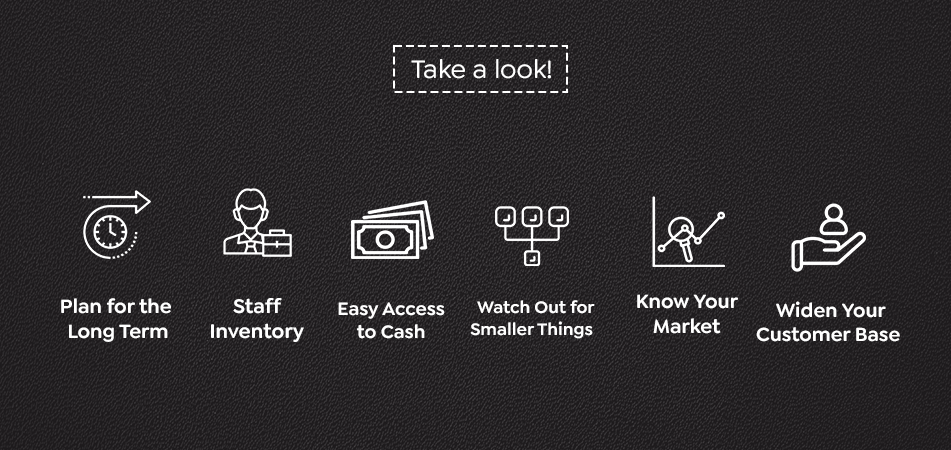
1. Build a Long-Term Startup Survival Strategy
It goes without saying that anyone would go after solving the most visible issues first. While many would say it’s reasonable, stop and step back for a bit
Did you think about its impact in the long run? No, right?
While the solutions that are in front of you seem exceptionally perfect to work on the economic crisis, it is equally essential to understand the benefit it has to offer in the near future. It is time to understand the business’s ecosystem and determine how its strengths and weaknesses will play a role.
In a situation of economic crisis, study how your products or services fit into the marketplace currently, and how the stagnation has impacted your sales. Then, determine whether your business model is able to adapt to the dynamic environment and figure out the best alternatives that’ll save you from the recurring situation in the future.
2. Optimize Your Startup Team and Resources
Undoubtedly, payroll is one of the primary costs a small business has to manage. Thus, every startup would expect the money to go to the right place in exchange for efficiency and higher productivity.
A company must conduct regular reviews on the staff to ensure that a team with an accurate skillset is put together. Notably, a focus on hiring inexpensive employees is one of the worst decisions a startup could make since an inexperienced individual might hamper the overall productivity of the firm.
3. Maintain Strong Cash Flow During Economic Uncertainty
It is vital for startups or small businesses to make sure that the organization has access to cash, especially during times of crisis. One of the smartest moves is to understand the requirements to obtain a loan from the bank and open a line of credit for short-term cash-flow issues.
Remember, a business must not rely on loans itself. Instead, it should have other back-up options and potential sources of capital, including savings, stock holdings, etc.
4. Avoid Small Mistakes That Can Cost Startups Millions
Earlier, we mentioned that looking at the bigger picture is mandatory! However, it doesn’t mean that you’ll ignore minor bumps on your way. On the contrary, smaller things that might have adverse consequences are also harmful and might put a massive dent in the company’s reputation.
For instance, a mobile app startup might overlook developing an MVP product; however, it may lead to a loss of millions or billions in the later stage.
5. Never Compromise on Product or Service Quality
Have you ever come across a restaurant business or, say, a pizzeria that initially offered delicious pizza’s; however, their quality has now decreased?
It is probably because the restaurant is experiencing a dry spell, and the owner is now trying to earn profits by using cheap ingredients. Sure, the pizzeria may earn profits for some time; however, the strategy is most likely to backfire when customers start realizing the deteriorating quality of food.

6. Widen Your Customer Base
Indeed, an economic crisis can occur anytime, and any business unprepared to tackle the situation will have to face repercussions. Many times, a business might prioritize bagging a few but big clients, which might misfire upon the loss of clients. Therefore, it is essential to not only have big clients, but a large customer base for protection.
7. Understand Market Trends During Economic Downturns
A businessman who has been a part of the industry for quite a while will always have an idea about the downturn. Therefore, if you’re one of them, it is time for you to use your knowledge and prepare for the recession in advance.
Sure, new players in the market might lack knowledge and experience; however, it is vital to learn from the situation and work things out for the future.
How Economic Downturns Impact Startups and Businesses
The effects of a recession will vary depending on the size of a business. For instance, while a small company might face cash flow issues due to payment delays from the clients, a Fortune 500 company might have to terminate employment to save money.
Undoubtedly, it is of utmost importance to learn how a recession will impact your business to make sure that it does not become a casualty in the next one.
Do you agree?

1. Credit Impairment and Bankruptcy
One of the foremost effects on businesses is the restricted credit condition, since lenders become selective of their choices considering the risks. Notably, an economic crisis may bloat a business’s finance as liquidity issues impact the supply chain. Therefore, there’s also a delay in payments from the customer’s side, which may force the business to slow down its mechanism.
2. Declined Sales
During a recession, nothing is worse than declined sales for a business! While manufacturing and energy industries tend to experience declines, technology suppliers or a mobile app development company may face disproportionate revenue.
As the demand declines, the expected Return on Investment also decreases, due to which cost cutting has to be done to maintain the budget.
3. Perk Reductions and Layoffs
Due to the reduced demand that businesses face, the most common step taken by a company is to undertake layoffs for cost cutting. Many times, workers accept the payment even if they get half of what was initially given, only to save their jobs.
How Technology Helps Startups Survive Economic Downturns
When the economy slows down, startups often find themselves in a difficult position because funding becomes limited, customer spending drops, and operational pressure increases. But technology has gradually become one of the strongest tools that helps startups remain stable during uncertain periods. The use of digital solutions, automation, and data systems allows businesses to operate efficiently and respond faster to changing market conditions. Therefore, startups that adopt technology are often better prepared to manage disruptions and continue growing even when economic conditions are unstable.
1. Automation and AI Reduce Operational Costs
One of the biggest reasons startups adopt technology during economic downturns is because automation helps reduce operational costs. Tasks that previously required manual effort such as responding to customer queries, managing data, or running marketing campaigns, can now be handled by automated systems and AI tools.
According to the DigitalOcean Currents report, around 79% of organizations are already using AI tools in some form, and many businesses rely on them to improve internal operations and enhance products. The adoption of AI has therefore increased because companies want to scale operations without significantly increasing their workforce.
For startups especially, automation helps save both time and resources. It allows smaller teams to manage larger workloads, and therefore maintain productivity even when budgets are limited.
2. Digital Transformation Improves Efficiency
Another way technology helps startups survive economic downturns is through digital transformation. Businesses that rely on digital platforms and cloud-based systems often find it easier to streamline their operations and reduce unnecessary expenses.
When processes are digitized, manual tasks are reduced and productivity improves. Teams can collaborate remotely, manage projects more efficiently, and access business data in real time. Because of these advantages, startups are able to allocate their resources more strategically.
Studies on digital transformation have also shown that companies that modernize their operations through technology tend to perform more efficiently during economic disruptions. The reason is simple: digital systems allow businesses to adapt quickly when market conditions change.
3. Data Analytics Enables Smarter Decisions
Economic downturns often create unpredictable business environments. Customer behavior changes, demand fluctuates, and startups must adjust their strategies quickly. This is where data analytics becomes extremely valuable.
Modern analytics tools allow startups to study customer trends, monitor performance metrics, and forecast potential risks. Instead of making decisions based only on assumptions, founders can rely on real-time data to guide their strategies.
As a result, businesses are able to refine their pricing models, optimize marketing campaigns, and identify new growth opportunities. Therefore, startups that use data-driven insights are usually better positioned to navigate economic uncertainty.
4. Digital Platforms Expand Market Reach
Technology also allows startups to reach a broader audience beyond their immediate geographic location. Mobile applications, e-commerce platforms, and online marketplaces have made it possible for businesses to serve customers across multiple regions.
Global reports on digital payments and online commerce suggest that non-cash digital transactions have been growing at an estimated 12% compound annual growth rate between 2020 and 2025. This trend shows how quickly digital platforms are transforming the way businesses interact with customers.
For startups, this expansion is important because it reduces reliance on a single market. When local demand slows down, businesses can still generate revenue from customers in other regions through digital channels.
5. Technology Encourages Innovation During Crisis
Interestingly, economic downturns often encourage innovation rather than stopping it. Many companies start exploring new technologies and business models because traditional approaches no longer deliver the same results.
Global research shows that worldwide research and development spending reached nearly $3 trillion in 2023, demonstrating that organizations continue investing in innovation even during uncertain economic conditions.
Startups that embrace technology therefore have an opportunity to experiment with new ideas, create innovative products, and discover untapped markets. Over time, these innovations can help them build a stronger competitive advantage.
In the end, technology does not completely eliminate the challenges that startups face during economic downturns. But it certainly provides tools that help businesses become more resilient. Automation, analytics, digital platforms, and innovation strategies have been helping startups operate more efficiently and adapt to market shifts. And therefore, startups that invest in technology today are often better prepared to survive and grow during periods of economic uncertainty.
The Bottom Line
Recessions are a periodic phenomenon that interrupts economic growth to a large extent, and businesses, especially startups often feel the pressure first. Therefore, they have to make adjustments in their strategies and adopt smarter digital solutions so that they can reduce risks and remain stable during uncertain times.
Being aware of what’s coming next or preparing for it can save your hardship going down the drain. Businesses that focus on innovation, operational efficiency, and strong digital infrastructure are usually better positioned to navigate economic disruptions. And this is where working with the right technology partner becomes important.
A reliable AI development company can help startups build scalable digital products, automate operations, and reach wider customer bases through AI and modern platforms.
Companies like Techugo have been helping startups and enterprises transform their ideas into powerful digital solutions through mobile app development services, startup app development, and AI-driven digital platforms.
These technologies allow businesses to improve efficiency, strengthen customer engagement, and maintain growth even when the market becomes unpredictable.
Economic downturns will come and go, but businesses that prepare for them, invest in innovation, and adopt the right technology solutions are far more likely to survive and eventually thrive.
Frequently Asked Questions
Q. What should startups do during a recession?
Startups should reduce unnecessary costs, focus on cash flow, retain customers, and invest in scalable technology.
Q. How do startups survive economic downturns?
By maintaining strong financial planning, diversifying customers, and improving operational efficiency.
Q. Do startups fail more during recessions?
Yes, economic downturns reduce funding and customer spending, which increases startup failure rates.
Q. Can technology help startups survive economic uncertainty?
Yes, digital tools, automation, and mobile apps help startups reduce costs and scale efficiently.

Get in touch
We'd love to hear from you.