

 SA
SA  KW
KW  IE
IE AU
AU UAE
UAE UK
UK USA
USA  CA
CA DE
DE  QA
QA ZA
ZA  BH
BH NL
NL  MU
MU FR
FR 













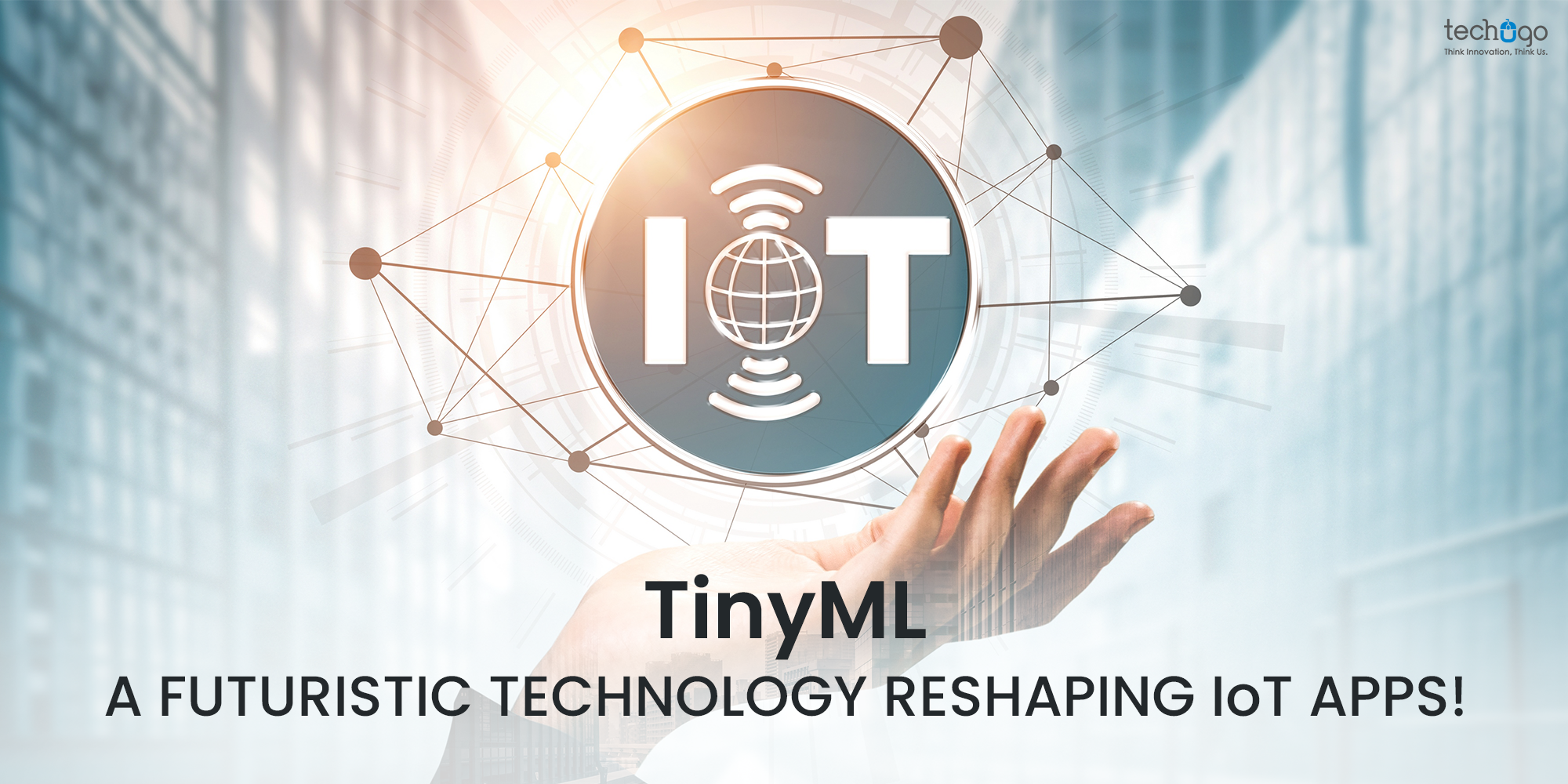


TinyML has the potential to run powerful learning models based on artificial neural networks. According to ABI Research, TinyML devices are expected to reach 2.5 billion by 2030.
TinyML is one of the most efficient technologies for performing on-device data analytics for vision, audio, and motion in TinyML in IoT and edge AI systems.
Technology has surpassed imagination and has introduced fast-paced, wide-ranging value additions to modern life. The rise of the Internet of Things (IoT) has enabled connected devices that can communicate and interact with each other, transforming environments and operations across industries through advanced IoT applications and smart ecosystems.
Any guesses which technology is being discussed here?
Yes, it is IoT. The concept of IoT creates a powerful ecosystem of connected devices and remains one of the most defining technologies in today’s digital transformation landscape.
Today, IoT apps and connected solutions powered by embedded intelligence and TinyML are no longer limited to basic automation. They are now being used for complex industrial processes, predictive systems, and real-time decision-making.
However, there is often concern around the high cost and complexity of optimizing these applications. But IoT systems can be made more efficient, scalable, and cost-effective without heavy infrastructure dependency.
This becomes possible with TinyML (Tiny Machine Learning for IoT devices).
TinyML may sound unfamiliar at first. However, its role in IoT, embedded systems, and on-device machine learning is rapidly expanding and reshaping how smart applications are built and deployed.
What is TinyML?
As the name suggests, TinyML (Tiny Machine Learning) is a lightweight version of machine learning algorithms that can be embedded directly within IoT devices and edge systems. These models work in a similar way to traditional ML algorithms but are optimized to run on low-power hardware such as microcontrollers.
TinyML plays a key role in TinyML in IoT applications, helping make IoT systems more efficient by enabling on-device machine learning and real-time data processing. It improves energy efficiency while also strengthening data privacy and security, since data does not always need to be sent to the cloud for processing.
VOILA!!!
That is powerful. Yes, it is, and there are many other benefits associated with it. TinyML helps accelerate IoT solution performance, embedded intelligence, and edge-based analytics without requiring heavy infrastructure or significantly increasing operational costs.
How TinyML Works in IoT Ecosystems
TinyML works by embedding lightweight machine learning models directly into IoT devices and edge hardware, such as microcontrollers and smart sensors, and it enables processing to happen closer to where data is generated. Instead of sending large amounts of data to cloud servers for processing, it reduces that dependency and allows on-device machine learning and real-time decision-making.
In a typical IoT ecosystem powered by TinyML, data is collected through sensors, and it is processed locally within the device, but only relevant insights are sent forward when needed, so that unnecessary communication is reduced. This makes the system faster, and it also improves efficiency, because cloud dependency is lowered.
This approach plays a key role in TinyML in IoT applications and edge AI development, where speed, latency, and privacy are important, and they have been critical factors for modern connected systems. Since processing happens at the source, devices are able to respond instantly, and they do not have to wait for network communication, which was often a limitation in traditional IoT setups.
As a result, TinyML for IoT devices has been enabling:
- Faster response times in connected systems, and it improves real-time behavior
- Reduced bandwidth usage, because less data is transmitted
- Improved data security and privacy, since data stays on-device
- Efficient real-time analytics at the edge, so that systems become more intelligent
In simple terms, TinyML shifts intelligence from the cloud to the device itself, and it makes IoT applications smarter, faster, and more efficient through embedded machine learning and edge computing, therefore changing how modern IoT systems have been designed and deployed.
TinyML vs Traditional Machine Learning in IoT
| Aspect | TinyML | Traditional Machine Learning |
| Processing Location | On-device (edge / IoT hardware) | Cloud or remote servers |
| Latency | Very low, real-time response | Higher due to data transfer |
| Internet Dependency | Minimal or optional | Required for most operations |
| Power Consumption | Very low, optimized for microcontrollers | High, needs strong computing resources |
| Data Privacy | High, data stays on device | Lower, data sent to cloud |
| Hardware Requirement | Lightweight devices (IoT sensors, MCUs) | High-performance GPUs/servers |
| Cost Efficiency | More cost-effective at scale | Higher operational cost |
| Best Use Case | Real-time IoT, edge AI, wearables | Complex model training and large-scale analytics |
TinyML and traditional machine learning are both used in IoT systems, but they work in very different ways, and this difference matters a lot when you are designing smart connected devices.
Traditional machine learning models usually run on powerful cloud servers or high-performance computing systems. Data from IoT devices is first collected, and then it is sent to the cloud for processing, and only after that insights are returned back to the device. This approach works, but it often creates delays, and it depends heavily on continuous internet connectivity, because without it, the system performance can drop.
TinyML, on the other hand, is designed for efficiency and runs directly on IoT devices themselves. It uses lightweight models that are optimized so that they can work on low-power hardware like microcontrollers, and therefore it removes the need to constantly send data to the cloud. This makes it more suitable for real-time IoT applications where speed and instant response are important.
So, while traditional ML systems are powerful and scalable, they are also resource-heavy, and they require more bandwidth and energy. TinyML reduces this dependency, and it brings intelligence closer to the device, which makes IoT systems more responsive and cost-efficient.
In simple terms, traditional ML is cloud-first, but TinyML is device-first, and this shift has been changing how modern IoT applications, embedded systems, and edge AI solutions are being developed today.
Real-World Applications of TinyML
TinyML is already being applied across multiple industries, and it is becoming an important part of modern IoT applications and edge AI systems, because it enables intelligence directly on devices without depending heavily on cloud computing.
Smart Homes
In smart home systems, TinyML is used in devices such as thermostats, security cameras, and voice assistants. It helps them detect patterns, recognize activity, and respond in real time, so that home automation becomes smoother, faster, and more efficient.
Healthcare Devices
In healthcare, wearable devices like fitness trackers and health monitors use TinyML to track heart rate, oxygen levels, and other vital signs. It processes data instantly on the device itself, and therefore it supports quicker alerts and improved patient monitoring.
Industrial IoT
In industries, TinyML is used for predictive maintenance and machine monitoring. Sensors installed on machines analyze performance in real time, and they help detect failures before they happen, which reduces downtime and operational costs.
Automotive Systems
In the automotive sector, TinyML supports driver monitoring systems, gesture recognition, and safety alerts. It helps vehicles respond quickly to changes, and it improves overall driving safety and user experience.
Agriculture
In agriculture, TinyML-powered sensors are used to analyze soil conditions, weather patterns, and crop health. This helps farmers make better decisions, and it improves productivity while reducing resource wastage.
For businesses looking to adopt these innovations, partnering with an experienced IoT app development company can help integrate TinyML in IoT applications and edge AI solutions effectively, ensuring scalable, efficient, and future-ready smart systems.
In short, TinyML in IoT ecosystems and edge AI applications is no longer experimental, and it is already shaping real-world intelligent systems across industries.
Why Businesses Are Adopting TinyML in IoT Apps
It is very likely in the coming years; our world will gradually turn into a nexus of devices. Hence implementing the IoT apps in our business models, is not a choice but vocal out the hour of the need. Currently, there are 250 billion microcontrollers in the world today and this number is growing by 30 billion annually.
Surprised???
It is the fact, and it is all possible because TinyML model consists of smallest architecture, that can fit into almost any environment.
Here, including TinyML within the IoT apps would benefit in certain ways, which are briefed out further in this post:
Energy efficiency gets enhanced
Machine Learning involves a complex ecosystem, which leaves behind the carbon footprint of AI technology. This further leads to a compromise in the accuracy and reliability of data. With the integration of TinyML, the algorithms used result in a decreased number of carbon footprint to a large extent. And worth mentioning but it doesn’t let the algorithm’s reliability get compromised at any given cost.
Provides relevant data
Data is one of the most vital assets for a business, but not every data collected is relevant. Henceforth, there needs to be a system that only picks the required and pertinent data, and this demand is well addressed by the TinyML. It can be programmed to collect data that fits the requirements set by the programmer.
Offers an additional layer of data privacy and security
IoT devices collect relevant data, which is sent further to servers located in the cloud, where it gets processed as per the business needs. In this journey, there are multiple places where data can be compromised and bring security issues. Here TinyML brings that additional layer of security and lets the security feature remain intact with every data processing.
Data sharing time gets reduced
Within an IoT device, one of the biggest concerns is to manage the time lag of sending and receiving the data. The TinyML creates an algorithm, which further removes the dependency of the device on the network speed, leading to a reduced time frame of sharing data to and for.
The Challenges
Yes, there are still a few challenges when it comes to integrating TinyML in IoT devices and edge systems, and they need to be considered carefully before implementation.
One of the key challenges is the technical limitation in computing resources, because TinyML models are designed to run on very low-power hardware, and therefore optimizing accuracy while maintaining efficiency can be difficult.
Another challenge is the gap between development and deployment environments. There is a clear difference between how models are trained in web-based or cloud systems and how they are executed on embedded devices, and this makes deployment more complex in real-world IoT applications and TinyML use cases.
Because of these constraints, careful model optimization and system design are required so that TinyML can perform effectively within limited device capabilities.
TinyML and Edge AI: The Future of Smart Computing
TinyML and Edge AI are shaping the next phase of intelligent systems by moving computation closer to where data is generated. Instead of relying on centralized cloud servers, these technologies enable on-device machine learning and real-time decision-making, which makes systems faster, more efficient, and more reliable.
Together, they reduce latency, improve data privacy, and lower bandwidth usage, because data is processed locally on devices rather than being constantly sent to the cloud. This shift is especially important for IoT applications, smart devices, and connected ecosystems, where instant response is critical.
As industries move toward automation and real-time intelligence, TinyML in IoT and Edge AI development will continue to power everything from smart homes and healthcare devices to industrial automation and autonomous systems. In simple terms, they are redefining how computing works by making intelligence more distributed, efficient, and accessible.
In a nutshell
This was a synopsis of TinyML, a futuristic technology that is steadily gaining a strong foothold in the industry, although it is still in a relatively nascent stage. With ongoing advancements in TinyML in IoT applications, edge AI, and embedded machine learning, there are still improvements required to better support more complex machine learning models on resource-constrained devices.
However, with the rapid pace of technological evolution, it is expected that mainstream adoption of TinyML will soon be seen across multiple industries, especially in areas driven by IoT apps, smart devices, and real-time analytics systems.
For businesses planning to step into this transformation, it is important not to delay the adoption of IoT-driven solutions and intelligent applications.
Partnering with an experienced mobile app development company like Techugo can help you integrate TinyML and IoT-based innovations into your digital ecosystem, enabling smarter, scalable, and future-ready business solutions.
Get in touch with us to include this avant-garde technology in your business model.

Get in touch
We'd love to hear from you.