

 SA
SA  KW
KW  IE
IE AU
AU UAE
UAE UK
UK USA
USA  CA
CA DE
DE  QA
QA ZA
ZA  BH
BH NL
NL  MU
MU FR
FR 









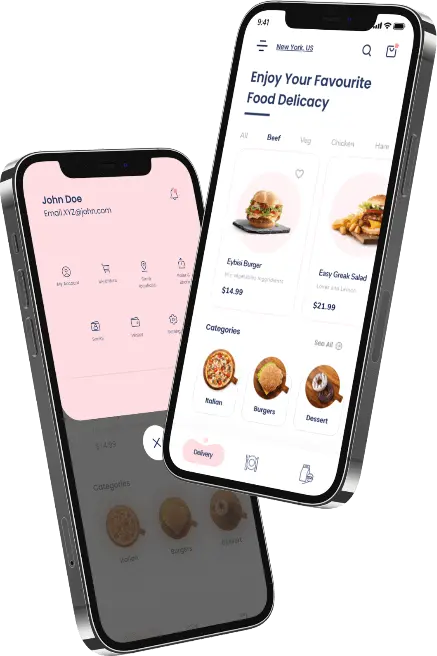

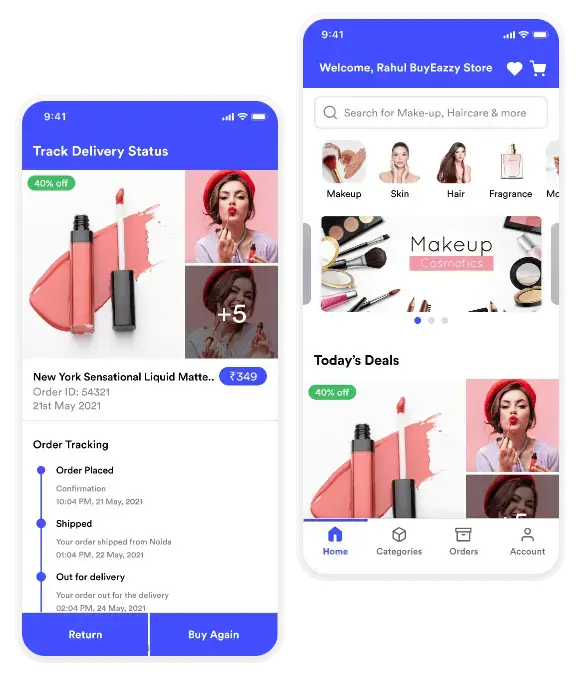


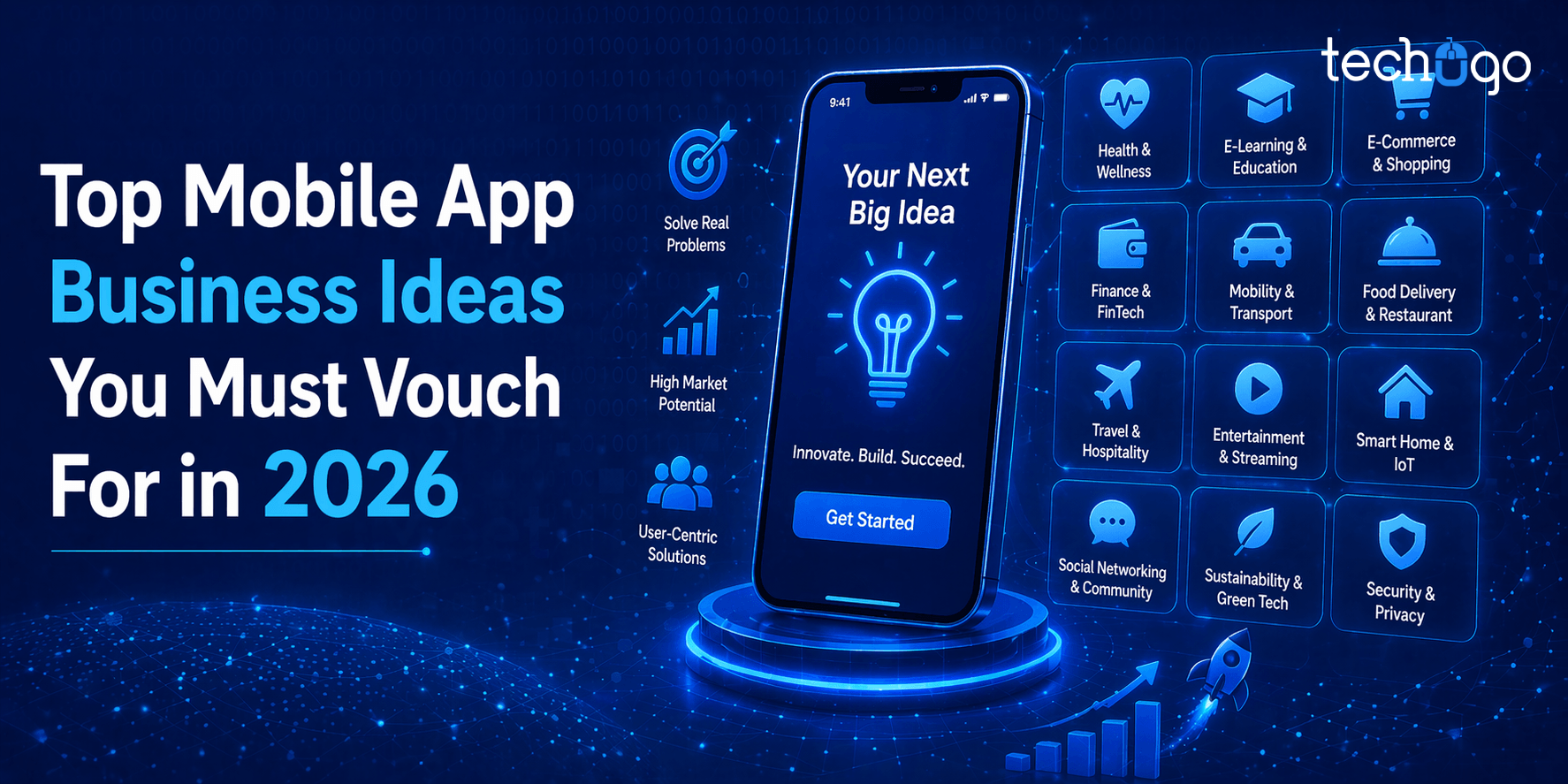


Business growth today is not really tied to physical spaces anymore, and it has shifted into a mobile-first world where apps are the center of how people shop, learn, work, and even connect.
From companies like Amazon, Uber, and Zomato, it was clear that mobile platforms are not just supporting tools but full business models and therefore, the shift was already happening faster than most people realized.
This is why there have been so many opportunities for entrepreneurs, because exploring mobile app business ideas is now one of the most practical ways to build something scalable, and cost-efficient, and also fast to launch in today’s digital economy.
A mobile app business, therefore, is not just a trend anymore, it is something you build so that you can reach users directly, but also adapt quickly when markets change (which they always do, right).
The real question now is not why build an app, but which idea actually works, and how you turn it into something real that people use every day.
Let’s look at some strong ideas for 2026.
Top Mobile App Business Ideas That Are Profitable in 2026
The mobile app industry in 2026 is not just growing anymore, it has already become a massive ecosystem, and you can clearly see that in how people behave daily. Global app revenue is expected to cross $600+ billion, and this shift is happening because users are now spending more time on apps than on anything else (Source: industry estimates, 2026 reports).
And because of this, entrepreneurs are actively searching for mobile app business ideas, so that they can build something scalable, and also profitable, but still simple enough to launch without huge infrastructure. A mobile app business today is therefore not just a product, it is a complete ecosystem, and it was never this accessible before.
1) AI-Powered Mobile App Business Ideas You Can Build
AI is not just a trend anymore, it has already become the core of modern apps, and therefore, almost every new mobile app business idea today is influenced by AI in some way. But the real opportunity is not “AI apps in general”… it is niche-focused AI solutions. So let’s break it down properly.
1.1 AI Finance & Money Management Apps
This niche is growing fast because people want control over money, but they don’t always know how to manage it properly. These apps:
- track expenses automatically
- suggest savings plans
- analyze spending habits
And it works because users don’t want complex dashboards… they just want clarity. Apps like Cleo or Plum (UK-based fintech tools) already show how AI budgeting tools can scale globally when positioned correctly. So yes, this is a strong mobile app business idea, especially if you target freelancers, students, or small business owners.
1.2 AI Productivity & Personal Assistant Apps
This is one of the fastest-growing niches right now, because users are overloaded with tasks, and they want automation. These apps can:
- manage emails and replies
- schedule meetings automatically
- create daily task plans
- summarize long documents
And tools like ChatGPT, Notion AI, and Motion are already proving that people are willing to pay for productivity. Therefore, a mobile app business in this niche is highly scalable, but only if it focuses on simplification, not complexity.
1.3 AI Content Creation & Marketing Apps
This niche is booming because businesses now need content every single day, and not everyone can hire large teams. These apps include:
- AI copywriting tools
- social media post generators
- video script creators
- ad creative builders
For example, tools like Jasper AI and Copy.ai already dominate this space, but there is still room for niche-specific tools (like real estate content, eCommerce ads, or local business marketing). So if you are looking for mobile app business ideas 2026, this is one of the strongest categories.
1.4 AI Health & Mental Wellness Apps
Health is becoming more personalized, and AI is making it even more precise. These apps can:
- track sleep patterns
- suggest fitness routines
- provide meditation guidance
- detect stress signals using usage behavior
Apps like Calm and Headspace already show how wellness apps scale when they focus on emotional consistency rather than features. And therefore, this niche is not just emotional; it is also highly profitable.
1.5 AI Education & Learning Apps
Education has shifted heavily to mobile, and AI is making it even more personalized. These apps can:
- create personalized learning paths
- generate quizzes automatically
- explain complex topics in simple language
- support language learning with real-time feedback
Platforms like Duolingo already use AI-driven learning models to improve retention, and that proves how powerful this category is. So yes, this is another strong mobile app business idea for long-term scaling.
2) On-Demand Mobile App Business Models That Still Dominate
On-demand apps have been around for a while, but in 2026 they are still one of the strongest and most reliable mobile app business ideas, and the reason is simple – people don’t like waiting anymore, and businesses don’t want idle resources sitting unused.
So this model works because it connects demand and supply instantly, and therefore it creates value on both sides at the same time. A mobile app business built on this model is usually service-driven, fast-moving, and highly scalable if executed properly. Let’s break down the key niches where this model is actually working right now.
2.1 Food & Grocery Delivery Apps
This is the most familiar category, but also one of the most powerful ones. These apps connect restaurants or stores with customers directly, reduce delivery time significantly, and offer real-time tracking and payment integration.
Apps like Zomato, Swiggy, and Uber Eats have already proven that this model can scale into billion-dollar ecosystems, but what is interesting is that even smaller hyperlocal delivery apps are now growing in tier-2 and tier-3 cities.
And that is why food and grocery delivery remains a strong mobile app business idea, especially if you focus on a specific region or niche audience instead of going too broad.
2.2 Home Services & Local Service Apps
This category has quietly become one of the fastest-growing segments because people now prefer booking services through apps instead of calling local providers. These apps usually offer:
- plumbing and electrician services
- cleaning and maintenance
- beauty and salon at home
- appliance repair services
Platforms like Urban Company show how powerful this model can be when trust, ratings, and convenience are combined. So if you are exploring mobile app business ideas 2026, this niche is extremely strong because demand is daily, and repeat usage is high.
2.3 Ride-Hailing & Transportation Apps
Transportation apps are one of the original success stories of the on-demand economy. These apps match drivers with passengers instantly, optimize routes using GPS, and offer dynamic pricing models.
Uber is the global example here, but what is interesting is how this model has expanded into logistics, courier services, and even shared mobility. And therefore, even today, this remains a powerful mobile app business model, especially in emerging cities where public transport is limited or inconsistent.
2.4 Freelance & On-Demand Talent Apps
This niche has grown massively after remote work became normal. These apps allow users to hire freelancers instantly, find short-term skilled workers, and connect businesses with professionals globally.
Platforms like Fiverr and Upwork already dominate this space, but there is still huge opportunity in micro-niches like:
- only designers
- only developers
- only marketing freelancers
- or even region-specific talent marketplaces
And that makes it one of the most flexible mobile app business ideas because you can target very specific industries and still scale globally later.
2.5 Healthcare & Doctor Consultation Apps
Healthcare on-demand apps have become extremely important because users now expect medical support without physical visits unless necessary. These apps provide:
- instant doctor consultation
- online prescriptions
- lab test bookings
- emergency health advice
Apps like Practo and Teladoc already show how digital healthcare is growing, especially in post-pandemic digital adoption trends. And therefore, this is not just a convenience model anymore, it is becoming a necessity-based mobile app business idea, especially in urban and semi-urban regions.
The real strength of on-demand mobile app business ideas is not just speed, it is accessibility because users feel like everything they need is just one tap away, and that behavior is only growing stronger in 2026.
So if you are building a mobile app business, this model still offers some of the most reliable, proven, and scalable opportunities but only if you focus on a clear niche instead of trying to build everything at once. And in many cases, partnering with an on-demand app development company can help you shape, structure, and scale the idea in a more practical and execution-ready way.
3) SaaS-Based Mobile App Business Ideas for Recurring Revenue
SaaS-based apps have quietly become one of the most stable and predictable mobile app business ideas, and the reason is not complicated… users don’t just pay once here, they keep paying again and again, because they are getting continuous value, updates, and access.
And therefore, a mobile app business built on SaaS is usually less risky in the long run, but at the same time it requires clarity, consistency, and a very focused problem-solving approach.
Let’s break it down into real, working niches that are actually shaping SaaS growth in 2026.
3.1 CRM & Customer Management Apps for Small Businesses
This is one of the strongest SaaS categories because every business, whether small or large, needs to manage customers, leads, and sales pipelines. These apps typically help with:
- tracking customer interactions
- managing leads and conversions
- automating follow-ups
- improving sales reporting
Tools like HubSpot and Zoho CRM have already proven that businesses are willing to pay monthly, because it directly impacts revenue. And that is why CRM-based SaaS is still a powerful mobile app business idea, especially if you target small businesses that cannot afford enterprise-level tools but still need automation.
3.2 Finance, Billing & Subscription Management Apps
This niche is growing fast because freelancers, startups, and small companies now operate digitally, and they need simple systems to manage money. These apps usually include:
- invoice generation
- expense tracking
- subscription billing
- tax calculation support
Apps like FreshBooks and QuickBooks already dominate globally, but there is still space for niche-focused tools for example, apps designed only for creators, agencies, or regional businesses. So if you are planning a SaaS-based mobile app business, finance automation is still a very strong entry point.
3.3 Project Management & Team Collaboration Apps
Remote work has made this category even more important, and it continues to grow because teams now work across different time zones and locations. These apps help users:
- manage tasks and deadlines
- assign work across teams
- track productivity
- centralize communication
Platforms like Trello, Asana, and Notion have already shown how powerful this category is when simplicity meets flexibility. And therefore, project management tools remain one of the most scalable mobile app business ideas for entrepreneurs, especially if you focus on niche industries like construction, marketing, or software teams.
3.4 Industry-Specific SaaS Mobile Apps
This is where a lot of new opportunities are emerging, because instead of building generic tools, startups are now focusing on niche industries.
Examples include:
- SaaS apps for real estate management
- SaaS tools for healthcare clinics
- SaaS systems for logistics tracking
- SaaS platforms for education institutes
The advantage here is that – you are not competing with global giants directly, but instead solving specific industry problems. And many startups in this category often collaborate with AI app development services to add automation, predictive insights, and smarter workflows into their SaaS platforms. This combination of SaaS + AI is becoming one of the most powerful mobile app business models in 2026.
3.5 AI-Powered SaaS Mobile Apps (Fastest Growing Segment)
This is currently one of the most in-demand directions in SaaS. These apps integrate AI to:
- automate workflows
- generate insights from data
- reduce manual effort
- personalize user experiences
Examples include AI-powered HR tools, marketing automation systems, and even AI-based sales assistants. And this is where AI app development services are becoming essential, because building intelligent SaaS products now requires machine learning integration, data processing systems, and continuous model improvement.
So if you are exploring modern mobile app business ideas 2026, this is arguably one of the highest-growth areas right now.
SaaS-based mobile app business ideas are powerful because they are not built for one-time usage, but for long-term relationships.
And whether it is CRM tools, finance apps, or AI-driven platforms, the real strength of this model is recurring revenue because it keeps the business stable even when user acquisition slows down.
So in 2026, a SaaS mobile app business is not just a product idea—it is a long-term revenue system if built with the right niche focus and the right technology support, especially when combined with mobile app development services.
Cost of Building a Mobile App Business in 2026
When you plan a mobile app business, the cost is not fixed—it changes based on how simple or advanced your idea is, and how you choose to scale it. Most successful apps don’t start big; they evolve in stages, and so does the investment.
In 2026, building a mobile app business idea usually falls into three clear stages.
| Stage | Type of App | Key Features Included | Estimated Cost |
| MVP Stage | Basic Startup Apps | Core functionality, simple UI, basic backend, limited features | $5,000 – $25,000 |
| Growth Stage | Scalable Business Apps | Advanced UI/UX, payments, analytics, push notifications, multi-platform support | $25,000 – $80,000 |
| Advanced Stage | High-End / Intelligent Apps | Complex architecture, automation features, real-time systems, high scalability | $80,000 – $250,000+ |
The cost of a mobile app business in 2026 depends more on how far you want to scale than just the initial idea. Most mobile app business ideas start small at the MVP stage, then grow step by step as users, revenue, and demand increase because building gradually is what actually keeps the business sustainable in the long run.
How to Start a Mobile App Business in 2026
Starting a mobile app business in 2026 is less about having a big idea and more about solving a real problem in a simple, focused way. Most successful founders don’t start with complexity—they start with clarity, and then build step by step. If you are exploring mobile app business ideas, the process usually follows a practical path rather than a straight line.
Identify a Real Problem
Start by observing daily frustrations or gaps in a specific industry. A strong mobile app business idea always comes from solving something people already struggle with.
Validate the Idea
Before building, test demand through surveys, landing pages, or early user feedback so that you don’t invest blindly.
Build an MVP
Create a basic version with only core features. This helps you launch faster and understand real user behavior.
Focus on Monetization Early
Decide how your mobile app business will earn—subscriptions, commissions, or service fees.
Scale Gradually
Once users start engaging, improve design, add features, and expand your reach step by step instead of building everything at once.
A successful mobile app business in 2026 is built through validation, not assumption. If your mobile app business idea solves a real problem and you scale it carefully, it has a strong chance of long-term success.
Food for thought
A few decades ago, ideas about digital transformation, AI-driven systems, and app-based businesses sounded futuristic and far-fetched. But today, things have completely changed and what once felt distant is now shaping everyday life.
We are now living in an era where technologies like AI, IoT, AR/VR, and Blockchain are not future concepts anymore. They are actively powering products, services, and new-age startups across industries.
And because of this shift, opportunities around mobile app business ideas have expanded faster than ever before. Businesses are no longer built only on physical presence; instead, they are built on digital experiences that scale quickly and reach users instantly.
So, if you are planning a mobile app business, this is the right time to act—because the market is already moving toward app-first ecosystems where innovation, speed, and user experience decide success.
The real advantage today is simple: those who start early and focus on solving real problems with the right mobile app business ideas, build a stronger foundation for long-term growth.
Get in Touch with Techugo
Turning a simple idea into a successful mobile app business takes more than just vision—it needs the right strategy, the right technology, and the right execution partner who understands how products actually scale in real markets.
At Techugo – a leading startup app development company, we help startups and enterprises bring their mobile app business ideas to life through end-to-end product development, from ideation and design to development and deployment. Whether you are building an MVP to validate your concept or scaling an advanced digital product, our team focuses on building apps that are not just functional, but future-ready.
If you are ready to explore your idea, refine it, or build something impactful in 2026, we are here to help you take the next step.
Let’s build your mobile app business together.

Get in touch
We'd love to hear from you.