


 SA
SA
 KW
KW
 IE
IE AU
AU UAE
UAE UK
UK USA
USA
 CA
CA DE
DE
 QA
QA ZA
ZA
 BH
BH NL
NL
 MU
MU FR
FR







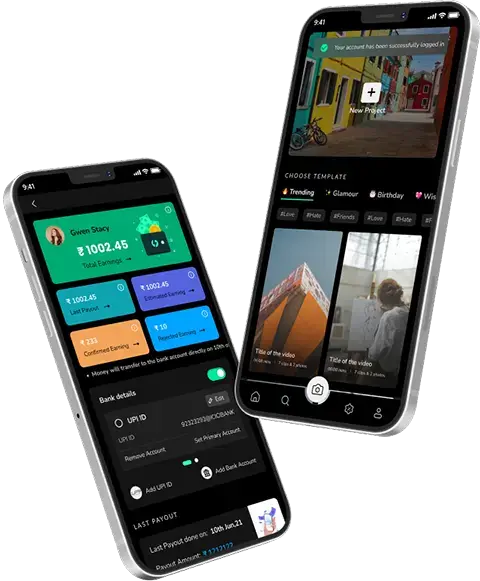





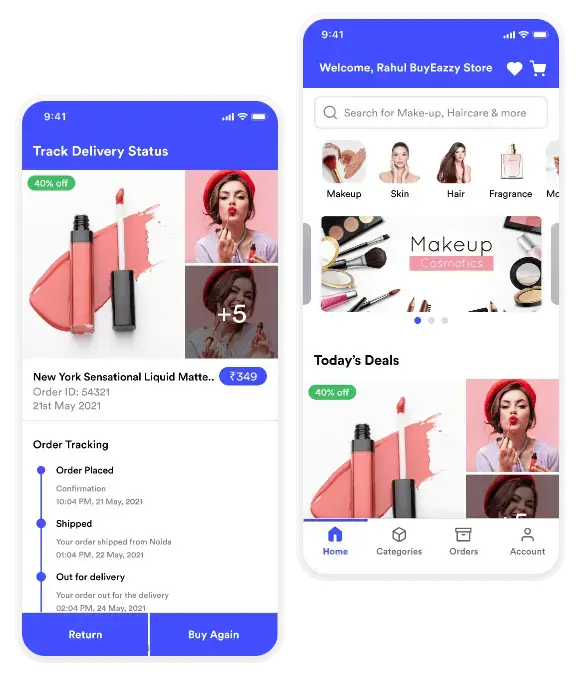






React and Vue are the most promising frameworks in the JavaScript world today. They both are efficient JavaScript technologies and very useful for both small and large scale applications.
According to the 2025 Stack Overflow Developer Survey, React remains the most popular front-end framework, used by over 40% of developers worldwide, while Vue is favored by around 18%, especially for startups and small-to-medium projects.
React offers flexibility, and is as stable as Vue, powering apps like Facebook, Instagram, Netflix, and TikTok. On the other side, Vue is more structured, easier to figure out and set up, resulting in reduced project duration. It is behind apps like GitLab, Grammarly, Nintendo, and Alibaba’s front-end interfaces.
However, the challenging part for most of us out there is to decide whether to pick React or Vue. They both are similar in a couple of ways: they use a Virtual DOM and possess a reactive and component-based structure. But there are important differences between Vue 3 and React 18 that can influence your project’s timeline, scalability, and performance.
Before rushing into the decision, read this post, it will articulate the strong-points and shortcomings of these two technologies.
Let’s go through a brief comparison. Just scroll this post further…
What is React (React 18)?
React debuted in May 2013 from the cocoon of Facebook. Since its inception, it has turned out to be one of the most popular JS frameworks maintained by individual developers and various organizations. It is used for developing efficacious Single-Page Applications (SPAs).
Brands using React Native
- Codecademy
- Netflix
- New York Times
- Yahoo! Mail
Pros of React
- Offers maximum flexibility and responsiveness.
- It uses virtual DOM, for a browser-friendly arrangement of documents in HTML, XHTML, or XML format.
- The flexible structure and scalability make it an ideal choice for large-scale apps.
- React developers can develop native-rendered apps for iOS and Android using the same code.
If you are looking to hire a React Native development company, this framework ensures fast, scalable, and high-performance applications.
Cons of React
- Requires deep knowledge to build an app;
- Comes with a complex setup process, properties, functions, and structure.
What is Vue (Vue 3)?
It was developed by Evan You in February 2014. It was initially used in China, but now this very JavaScript framework is globally recognized to be one of the best options for building intuitive web user interfaces as well as SPAs.
Brands using Vue
- BuzzFeed
- EuroNews
- GitLab
- Grammarly
- Nintendo
- Trustpilot
Pros of Vue
- Utilizes standard HTML-based templates;
- An ideal choice to use and revamp an existing application;
- Provides seamless integration of smaller parts without leaving an impact on the whole system.
- Comes with a simple and efficient structure, along with reusable templates;
- Doesn’t require any additional knowledge to implement the technology, but HTML and JavaScript will fulfill the job.
Cons of Vue
- Has small market share compared to React;
- It is not an ideal choice for large-scale app development.
React vs Vue: Key Differences You Must Know in 2026
Now, let’s delve deeper into the differences between Vue and React Native.
| Feature / Aspect | React 18 | Vue 3 |
| Initial Release | May 2013 | February 2014 |
| Current Version | React 18.x | Vue 3.x |
| Developer | Evan You & Community | |
| Architecture | Component-based, uses JSX | Component-based, uses templates or JSX |
| Learning Curve | Steeper, requires JSX understanding | Gentle, HTML-based templates make it beginner-friendly |
| State Management | setState(), React Context API, Redux, MobX | Vuex (centralized store), Composition API for state handling |
| Performance | Fast runtime; optimized with concurrent rendering | Slightly better memory usage & startup times; supports Composition API for better modularity |
| Scalability | Excellent for large SPAs and multi-page apps | Great for SPAs and small-to-medium apps; can scale with plugins |
| Mobile App Development | React Native for iOS/Android; 99% code reuse | Frameworks like Quasar, NativeScript-Vue; web-first approach |
| Community & Ecosystem | Huge, lots of tutorials, packages, libraries, StackOverflow support | Growing community; fewer packages but steadily expanding ecosystem |
| File Size (Core + DOM) | 100 KB | 60 KB |
| Best Suited For | Large-scale apps, enterprise SPAs, complex UI | Smaller projects, incremental integration, startups, fast MVPs |
1. Syntax
This is one of the biggest differences between Vue 3 and React 18 and that is the way in which the view layer is built. Vue utilizes HTML templates, with an option to write in JSX. This helps front-end developers to create Web applications. Whereas, React is solely dependent on JSX, which combines HTML and CSS together into JavaScript. This XML-like syntax allows developers to build self-contained UI components with view-rendering instructions included.
2. Framework background
Facebook built React native to answer the specific needs of the development cycle. With strong backing, and continued investment from the parent organization, it clearly vouches for stability in the future and ensures that it will continue to grow with long-term support.
Also, React Native has huge community support with third-party libraries, packages, tools, and extensions. It has great support from all major IDEs and has more tutorials, online courses, articles, and many questions on Stackoverflow.
Vue, on the other hand, was built by one developer, Evan You, to improve existing JS tools. It is an open-source project, relying on the community, contributors, and crowdfunding to move forward. And worth mentioning Vue is relatively less popular than RN, but its community is constantly evolving. It offers fewer resources, packages, and third-party libraries as compared to React.
3. State Management
React can take care of state management from within using setState() to set a component’s state. For mobile apps with complex nature, developers need to use packages Redux, Mobx, and the React Context API to manage state. With Vue, developers use a `store pattern` for state management when the app is built. It offers a Flux architecture called Vuex with a centralized store.
4. Performance
A mobile app’s speed is determined by start-up time and runtime performance. And here Vue 3 and React 18 both offer excellent performance. Although compared to React Native, Vue certainly has a better memory allocation and startup times while React is a little faster at runtime. These both libraries offer SSR- Server-Side Rendering, Tree shaking, and Bundling. Also, they both use a virtual DOM that helps in modifying the resource-intensive task.
5. Nature of framework
React Native works along with other libraries, whereas Vue is a standalone framework. React developers need to depend on external solutions such as Flux/Redux for routing and state management. This can easily be debugged which results in a more streamlined ecosystem.
Vue holds lesser libraries and doesn’t require the local state to modify data. using the data property of a Vue object. However, you will need an external library for state management for larger apps (e.g., Vuex). Just like Redux, it has one way to alter the state using handler functions called mutations. The Vue team maintains and supports the core frameworks like Vuex and Vue-router for routing.
6. Scalability
When it comes to scalability, no doubt React Native is a lightweight framework that can be used for multi-page applications. Here developers can import the library and start to add JS features with React components. It makes it a perfect choice for large SPAs and Facebook’s ad console is the best instance for it.
On the other hand, with Vue, developers require a little customization, but at the same time, it offers a great range of templates. Don’t forget, there is no option to import your own or community-created templates. It is also an excellent choice to create interactive multi-page apps, as there is a good option to quickly import the core library and inject Vue into existing pages.
7. Documentation
React’s documentation is quite basic following the concept of native, with an inclusion of some advanced concepts. It is not that well-structured, and lacks the detailed overview of the React ecosystem. On the flip side, Vue has an incredible set of docs, with efficient API references. Indeed, it is well-written, clear, and accessible, dealing with everything required to build a Vue app.
8. Mobile app development
In the cross-platform development field, React Native has won the battle, letting developers re-use 99% of codes. This further helps in creating companion apps for Android/iOS with native look and performance. On the other hand, Vue fails to compete with RN, but its component-based architecture enables developers to write code that can easily be rendered on the web, iOS, and Android.
9. Size
No doubt, React is considered lightweight, but Vue is even smaller. As per the latest GitHub and npm data, React 18 + React DOM has a file size of approximately 100 KB, while Vue 3 comes in around 60 KB, making it slightly more compact for faster load times.
When to Choose React for Your Project
React is ideal when your project demands high scalability, flexibility, and complex functionality. If you are building a large-scale web application, a single-page application (SPA), or an enterprise-level app, React gives you the tools to manage heavy state, reusable components, and dynamic content efficiently.
It’s also the best choice if your team plans to leverage React Native for mobile app development, as it allows cross-platform apps with nearly 99% code reuse. For projects where long-term support, strong ecosystem, and a large developer community are important, React is the safest pick.
When to Choose Vue for Your Project
Vue is perfect for projects where speed, simplicity, and ease of integration matter. It works well for startups, MVP apps, and small-to-medium web applications. With its HTML-based templates and reusable components, Vue lets you quickly revamp or extend existing applications without disrupting the whole system.
If your goal is to build an app from a website or launch a lightweight interactive web application, Vue provides a gentle learning curve and fast setup. It’s also efficient for mobile app developers who prefer simplified state management with Vuex or the Composition API.
Vue 3 vs React 18: Which Framework Should You Choose in 2026?
Both React and Vue are impeccable choices for modern app development. The right choice depends on your project’s size, complexity, budget, and timeline.
Choose React for large-scale SPAs, enterprise projects, or cross-platform mobile apps. Choose Vue for startups, MVPs, or projects that need quick deployment and easy integration.
For businesses looking to hire a mobile app development company, understanding your project requirements and team expertise is key.
With the right strategy, both Vue and React can help you build interactive, high-performance applications tailored to your business needs.
Final Thoughts
Honestly, Vue 3 and React 18 both are impeccable choices for a modern application and are great tools for building interactive user interfaces. However, when it comes to selecting which one is better for your next project, there are numerous factors that must be considered, such as your specific business needs, environment, developer availability, budget, and time constraint.
Still have some questions???
To identify the right technology, you can always rely on Techugo.
Get in touch with our team of technocrats to make your development choice clear.
Book your FREE 30 min app consultation now.

Get in touch
We'd love to hear from you.