


 SA
SA  KW
KW  IE
IE AU
AU UAE
UAE UK
UK USA
USA  CA
CA DE
DE  QA
QA ZA
ZA  BH
BH NL
NL  MU
MU FR
FR 



















70% of startups fail within their first 10 years, and common causes are a lack of market need, cash flow problems, and team-related challenges. (Source: CB Insights)
Tech startups are booming all across the globe, but most face early-stage failure. In fact, two-thirds of startups never show positive returns because they jump on the bandwagon unprepared.
So, understanding why startups fail, from funding mistakes to flawed products, can save you and your business, not just in 2026, but beyond.
Today, with the help of this blog post, we will be unraveling some of the top reasons tech startups fail and how to prevent them.
If you are planning to start your own business or are thinking of launching a product with the help of a reliable startup app development company, then here are some things you cannot ignore.
Top 10 Reasons Tech Startups Fail
1. Poor Investment Choices
Just like any other business, investors are the primary entity for tech startups. Here are two examples for you to understand how poor investment decisions can lead a startup to its failure.
Even after planning the finances, a lot of startups often go through a rough phase. At this point, the brands start looking for investors. The urgent need to settle the finances forces a lot of founders to collaborate with the investors they don’t share the same values with. Lack of basic understanding behind the values derived may result in added complications.
Why?
The second example is investing in the wrong team. The skills of employees are the biggest strength of any establishment, so smart investment in that area would go a long way. Before hiring make sure you set two non-negotiable criteria ideal for a powerful team- values and skillset.
2. An Unfriendly Application/Product
For a startup or even an established organization, it is important to tap into the market with an app or product that thoroughly resonates with the target audience. Since the customer is king, all of the efforts must be destined to provide user satisfaction.
But it isn’t easy for a newly established company to completely understand the user’s needs. The major reason behind it is the lack of protocols or case studies. This can be a major setback as, by the time one learns about their users’ minds, they might have already been launched in the market.
But fret not as this can easily be avoided by startups if they focus on customer feedback from the beginning.
3. Unfocused Marketing
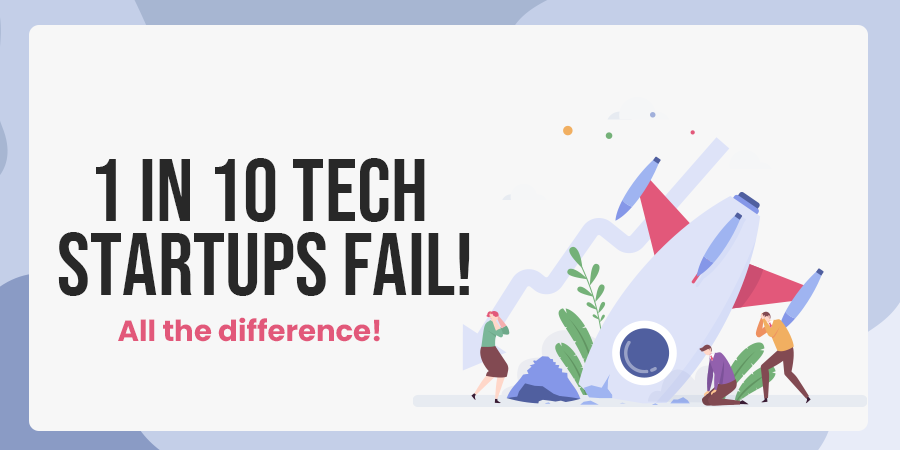
The popularity of a startup says a lot about its marketing techniques. Do you know that only 10% of the startups are able to celebrate their 10 year anniversary? On the outside, we may think that we all are following the same strategy, but the difference in the performance of those 10% startups speaks for itself.

It is the only reason why the best performing tech-based companies continue to invest in their marketing even after ranking No.1 in their respective domain.
A focused marketing strategy leads to a productive sales closure. Startups need to prioritize their understanding of the market and create a plan that offers substantial growth to their presence.
4. Fault In Business Model
Even after good investment choices, smart products, and on-point marketing choices, a tech startup may fail.
Mostly it is because of the lack of a strong business model. Having all the infrastructure in place with a highly trained team cannot make up for a poor business model.
Startups need to develop a scalable way to acquire targeted customers and monetize them. The best way to do it is to test the ideas for improving the business model before implementing it.
5. Lack of Vision & Passion
Do you know how Dubai transformed from barren deserts to one of the world’s wealthiest countries?
It is because of the vision of their leaders. One who can visualize the success of their brand can come up with solutions to sustain it. It is important to not fear the problems but to tackle them instead in a way that supports the vision.
With the vision of the leader, the passion of the team plays an important role to move forward.
6. Ignoring Market Research
Startups often skip detailed market research to save time or costs, but this leads to launching products with low demand. Always analyze competitors, target audience needs, and market trends before scaling.
7. Cash Flow Problems
Many startups underestimate expenses or overestimate revenue. Running out of cash is one of the top reasons startups fail. Ensure proper budgeting, maintain runway, and track financial health continuously.
8. Overexpansion or Scaling Too Quickly
Rapid growth without infrastructure leads to operational chaos. Startups should scale gradually, ensuring that team, processes, and tech stack can support expansion.
9. Poor Team Dynamics & Leadership
A talented team can still fail if there’s misalignment, poor communication, or weak leadership. Build a culture of transparency, accountability, and collaboration.
Example: Many tech startups fail when founders hire based on availability rather than skill or culture fit.
10. Lack of Adaptability
The market is constantly changing. Startups that fail to pivot or adapt to customer feedback, competition, or tech trends are at risk. Flexibility is as important as planning.
Example: Blockbuster failed because it didn’t adapt to digital streaming.
How to Avoid Startup Failure: Actionable Tips from Techugo
Failing doesn’t have to be inevitable, and you can take steps so that your startup has a better chance. By learning from common mistakes, and noticing what others have been through, you can save a lot of time and money. Here are some practical tips you should consider:
Validate Your Idea Early
You might think your idea is great, but unless there’s real demand, it won’t matter. So, conduct surveys, run small pilot launches, or even just ask potential customers what they think. This way, you know you are not building something that nobody actually wants.
Invest in the Right Team
Skills are important, but values and collaboration are equally crucial. Hiring people who align with your vision and culture was, and always will be, key. A strong team can overcome challenges that seem impossible, and sometimes, it’s the difference between survival and failure.
Build a Customer-Centric Product
Listen to your users, and not just once. Gather feedback, iterate, change things. It’s not easy, but focusing on usability and satisfaction ensures your product actually solves real problems, and avoids becoming just another app that nobody cares about.
Develop a Scalable Business Model
Even with a great product, you need a business model that works and grows. Test revenue strategies, pricing, and operations before going all-in. Because without scalability, even the best ideas can collapse when growth happens faster than you planned.
Plan Cash Flow Carefully
Money problems were the downfall of many startups. Track your expenses, forecast revenue, and make sure you have enough runway. Don’t overspend too early on marketing, infrastructure, or hiring, because it can be tempting but dangerous.
Focus Your Marketing Strategy
Marketing isn’t just posting online; it’s reaching the right people, at the right time, through the right channels. Measure performance, adjust campaigns, and keep learning. Focused marketing leads to awareness, engagement, and eventually sales but unfocused efforts just waste time.
Stay Flexible and Adaptable
Markets change, tech evolves, and customer needs shift. If you’re rigid, your startup will struggle. Be ready to pivot strategies, change products, or tweak operations when needed. Adaptability was, and still is, a hallmark of successful startups.
Learn From Mistakes
Every misstep carries a lesson, so take notes and avoid repeating errors. It’s okay to fail but failing the same way twice is avoidable. Keep iterating, reflecting, and adjusting, and your approach will get stronger over time.
Prioritize Vision and Passion
Your vision guides decisions, and your team’s passion drives them forward. You need both to persist through challenges. Without them, it’s easy to lose direction; with them, even tough problems feel solvable.
Leverage Expert Guidance
Mentors, advisors, or professional consultants can save you countless mistakes. You don’t have to do it alone. And tech partners like Techugo can help implement solutions, streamline operations, and guide your strategy so that your startup stands a better chance.
Wrapping Up!
These are the top reasons why a tech startup fails. If you are experiencing similar inconsistencies with your own company, then we would be happy to assist you with related technicalities.
Whether you are looking to build a new app or optimize your product, our mobile app development company can guide you through every step.
For more information, you can fill up our contact us form and we will get back to you as soon as possible.
But until then, keep innovating!

Get in touch
We'd love to hear from you.