


 Trusted by






Delivering Digital Solutions For Leading Enterprises

Legacy Application Modernization Services That Help You Move Forward
Our legacy application modernization services in USA are built to help you modernize legacy applications, improve performance, and reduce the risks that come with outdated technology, so that your business is ready for what comes next.
Modernize Your AppIndustries We Modernize With Our Legacy Software Modernization Services
Every industry has either systems, websites, or applications that were built years ago. They may still work but as technology changes, it becomes harder to maintain and expand them. Our legacy system transformation solutions help you upgrade the systems, websites, and apps you already have, so that they continue to support your business and future growth.
- Patient portals
- EHR systems
- Hospital management software
- Telemedicine platforms
- Healthcare applications
- Banking systems and payment platforms
- Insurance software
- Digital banking applications
- Wealth management solutions
- eCommerce platforms
- POS systems
- Inventory management software
- Order management applications

Logistics & Supply Chain
- Fleet management systems
- Warehouse platforms
- Shipment tracking software
- Supply chain applications
- ERP systems
- Production management software
- Factory automation platforms
- Industrial applications
- Property management software
- CRM systems
- Real estate marketplaces
- Property investment applications
- Learning management systems
- Student information systems
- Online learning applications
- Campus management software
- Educational applications
Government & Public Sector
- Citizen service portals
- Document management systems
- Tax and revenue platforms
- Public administration software
- Enterprise government applications
- Video streaming platforms
- Content management systems
- OTT applications
- Digital media platforms
- EV charging platforms
- Connected vehicle applications
- Fleet management systems
- Battery management software
- Automotive enterprise applications
- Hotel management systems
- Booking engines
- Travel portals
- Reservation platforms
- Customer loyalty applications
Advanced Technologies Behind Our Legacy Application Modernization Solutions
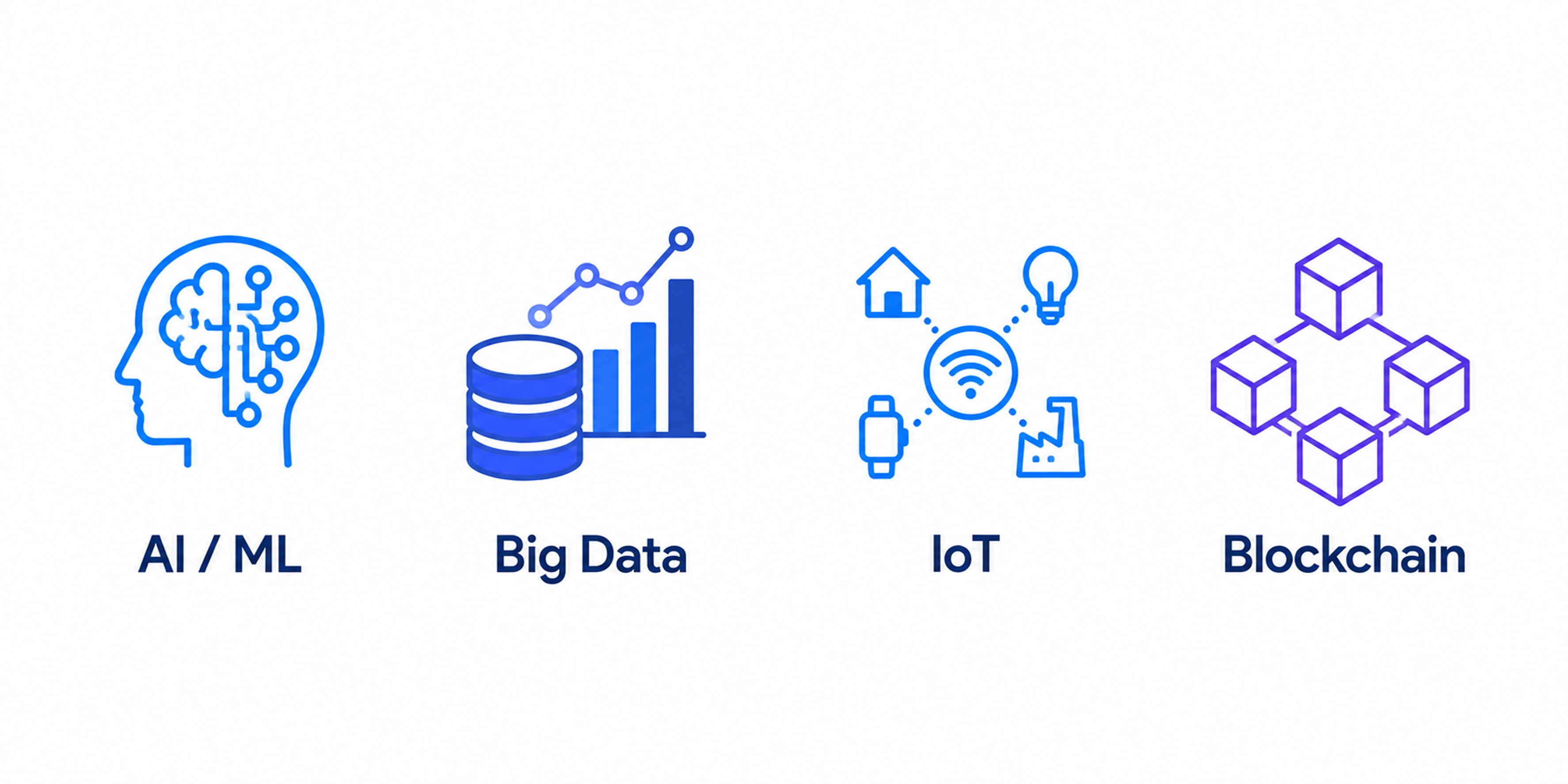
Modern legacy app modernization services are not only about upgrading systems but also about extending them with newer capabilities, and intelligence, so that your existing applications are not just running, but actually doing more, because business needs have been changing for years and systems were not always built for that.

Generative AI (GenAI)
GenAI is used to enhance legacy applications, and it helps with content generation, workflow automation, and intelligent outputs… but it also depends on how your system was originally structured.
Large Language Models (LLMs)
LLMs are integrated so that systems are able to understand queries, documents, and business data better, and therefore it becomes easier for users to interact with legacy systems that were earlier rigid and slow.
AI Chatbots
We build AI chatbots and connect them into legacy platforms so that users can get support, answers, and service access faster, and it reduces dependency on manual teams, which have been overloaded in many enterprises.
AI Agents / Agentic AI
AI agents are introduced where workflows are multi-step, and they can act on rules, make decisions, and execute tasks… so that systems are not just passive, but actually active in operations.
Cloud Services
Cloud services are integrated because legacy applications were not always designed for scale, and therefore moving parts of the system to cloud makes it more flexible, secure, and easier to maintain.
Data Science & Analytics
We connect analytics layers so that data from legacy systems can be used better, and insights can be generated, even if earlier that data was just sitting unused or scattered across systems.
Internet of Things (IoT)
IoT integration happens when legacy systems are connected with devices and sensors and it is often required in logistics and manufacturing industries where real-time data matters.
Blockchain
Blockchain is used where transparency and secure transactions are required, and therefore it becomes useful in systems where trust and traceability are important.
AR, VR, and MR
We integrate AR, VR, and MR when the user experience needs to be more immersive. And it is often used in training, visualization, and advanced operational environments where traditional interfaces are not enough.
Our Step-By-Step Process to Enterprise Application Modernization
We do not treat enterprise app modernization as a simple upgrade thing, because systems are not simple in real life; they are layered, connected, and sometimes messy and therefore we work in a way that follows how they actually run in production, not just how they were documented (or were not documented at all).
Understanding Systems the Way They Actually Run
We start by looking at how the system is running in real environments and not just what was written in diagrams. And it was often found that dependencies exist across services, batch jobs, APIs, integrations, reporting flows… all mixed, some visible, some not. You see it clearly only when you trace it end-to-end, so that nothing is missed.
Mapping Business and Operational Context
Then we map business rules, access models, data handling rules, and ownership structures because every application was built with different assumptions at different times. Therefore, modernization steps are tied back to these controls, and it helps avoid gaps in compliance, audit, and operational responsibility… which otherwise have been issues in legacy environments.
Incremental Modernization in Live Environments
We do not switch everything at once, but instead we move in phases so that legacy and modern components are running side by side. It is important because you need to observe behavior in real time, and validate data consistency, and then only move forward. So that risk stays low, and stability remains.
Testing Beyond Functional Behavior
Testing is not just checking screens or buttons, it was never only that. We test integrations, downstream reports, logs, security behavior, performance under load, failure scenarios… and sometimes even edge cases that are not obvious at first glance. Because issues are usually not where you expect them.
Continuous Review With Stakeholders
Findings are reviewed continuously with engineering, security, operations, and business teams, and it happens early, not late. Therefore rework is reduced, and decisions are aligned better, because everyone is seeing the same system reality at the same time.
Stabilization and Post-Release Support
After deployment it does not just end, it continues… monitoring, validation, and support are still active so that the system stays stable. And we stay with it until it is actually working as expected in production environments, not just on paper or in test setups.
Technology Stack We Use for Legacy Application Modernization
The technology stack we utilize includes the latest and most dependable technologies to provide legacy application modernization services in USA. The selection of tools and technology depends on the type of your existing architecture and legacy application and what your goal is for modernization.
Security and Compliance for Modernizing Legacy Apps
When modernizing legacy apps, we may deal with business-critical data, customer data, and other systems that connect to your enterprise; hence, our legacy application modernization solutions focus on security, user privacy, and meeting the regulatory requirements so businesses can proceed with confidence.
- GDPR
- CCPA
- DPDP Act, 2023
- PIPEDA
- PCI DSS
- Tokenization
- 3D Secure
- PSD2 / SCA
- ISO/IEC 27001
- SOC 2
- OWASP Top 10
- Secure Coding Practices
- HIPAA
- FINRA / SEC
- COPPA
- FCC / Telecommunications Standards
Why Choose Techugo for Legacy Application Modernization
Enterprise application modernization is not just about upgrading systems, it is about managing change inside enterprise environments where stability, compliance, and business continuity all are happening at the same time… and therefore every move has to be controlled, checked, and aligned with how the business actually runs, not just how it looks on paper.
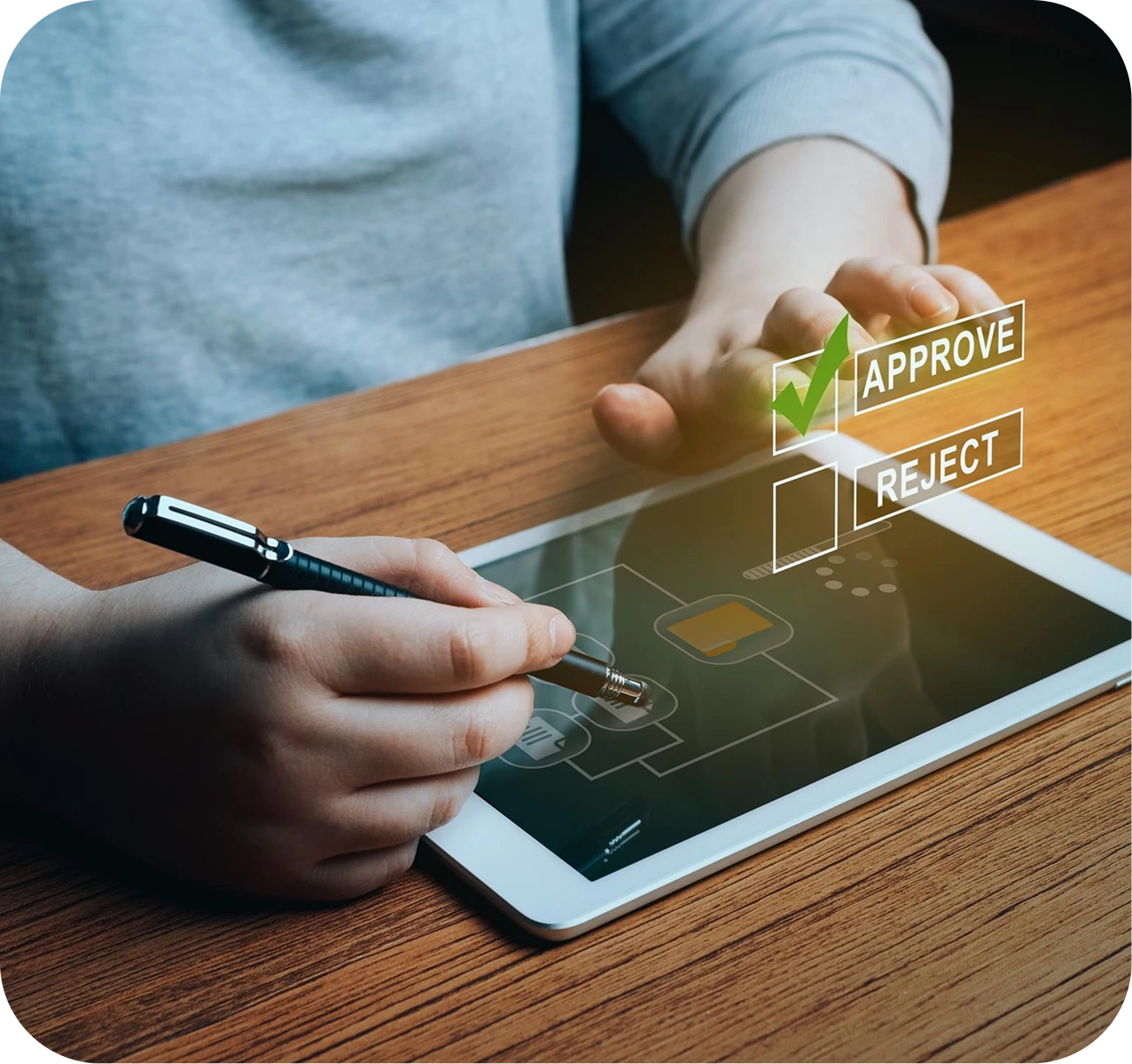
We work as a legacy application modernization company inside environments where governance rules, compliance checks, access controls, and audit requirements are already active, and they have been there for years. So every change is mapped carefully, because you cannot afford gaps, and therefore audit visibility stays intact even while systems are being changed step by step.
Instead of replacing everything at once, we modernize legacy applications slowly, in phases, and sometimes legacy and modern parts run together… because that is safer, and it allows you to see how systems behave in real conditions before anything is fully moved or retired.
Every change in our legacy application modernization services is tracked, documented, and reviewed, and it is often seen that small undocumented changes create big issues later. Therefore we keep logs, approvals, and traceability in place so that you always know what was changed, why it was changed, and how it is working now… or was working earlier.
We introduce cloud, automation, and AI only where they actually make sense, not everywhere just because they are available, but because they solve a real problem. So systems evolve, but still remain understandable, controlled, and aligned with business operations that have been running for years.
Flexible Engagement Models To Hire Legacy Application Modernization Company
Discover our flexible engagement models that will help you hire app modernization experts depending on the scope, timelines, and operational requirements of the project. These models are here to support a structured and efficient modernization journey.
Dedicated Development Team
DDT is an innovative IT outsourcing model that empowers the client to hire a dedicated team of legacy app modernization specialists who work exclusively on your project and help you modernize legacy applications to meet your business goals.
Team Extension Model
Secondly, we offer our clients Team Extension model, which lets you extend your existing team with experienced developers, architects, and consultants who bring the right technical expertise for your ongoing modernization initiatives.
Project-Based Model
Our project-based engagement model is all about offering complete end-to-end legacy application modernization services. Under this, our team will manage everything from assessment to deployment based on your business objectives and timelines.
Clients love us!
Here’s what makes us go the extra mile!

“Techugo has been our technology partner for more than a year. While we were explaining to them our requirements, their team was easily able to comprehend every technicality & helped us to visualise the product better.”
 Play Video
Praveen Parmeswar
(Lifology)
“Techugo delivered high quality and accountability through effective project management & exceptional communication.”
Gavin Lund
(Strekla)

“I love their creativity, their designs are really fresh and modern. Right from the onboarding process to the Managerial Skills, I am highly impressed.”
Xenia Ghali
(Mynt)

“I want to thank the Techugo Team for developing Gyan Fresh app. With a 100% digital milk home delivery model, we can now punch above our weight and successfully compete with the giants.”
Utkarsh
(GyanFresh)

“You fully understood our Agro-science vision and built an innovative product for the agriculture sector.”
Robin
(Indhan)
“Techugo was a true partner throughout the journey, delivering excellent support and a great product.”
Abdullah Alsaid
(Wagif)
“Their professional approach, constant communication, and responsiveness made the collaboration seamless.”
Ajuka
(Book My Jet)
“Techugo’s skilled team delivered exceptional work on time, making the entire experience seamless.”
Amin Rasti
(McGillivray Group)

“Techugo was a reliable partner, delivering on time and providing effective solutions to every challenge.”
Aniket Tiwari
(Bagpackar)

“A cost-effective and reliable partner that provided regular updates and implemented changes efficiently.”
CTO
(Ava Technologies)

“Techugo combined affordability, expertise, and agility to deliver a seamless development experience.”
Arthur Kautz
(Chatkazam)
“Their quick communication and commitment to resolving issues made them an outstanding partner.”
Tajudeen Raji
( Reachout Wellness)
Frequently Asked
Questions
Have a project in mind ?
Book a free callModernizing legacy applications is the way to enhance out-of-date software and systems or architecture in order to have better performance, scalability and be able to work alongside today’s technologies.
Modernizing a legacy system can
-
Help reduce maintenance costs
-
Improve operational efficiency
-
Strengthen security
-
Prepare businesses for future growth without relying on outdated systems.
Common strategies include rehosting, replatforming, refactoring, rearchitecting, rebuilding, and replacing applications, depending on business and technical requirements.
If your application is hard to maintain, too costly to operate, lacks scalability, and/ or cannot be integrated into current systems of technology, this could be an indication that it’s time to modernize.
The average cost of legacy application modernization services often falls between $35,000 to $50,000 but this can go even further and cross $500,000 depending on multiple things such as application, technology stack, and integrations.
Modernizing a legacy app takes around 3 to 6 months to complete but if the project is small. The application that is based on enterprise-level, generally takes up to 6 to 18 months and is usually delivered in phases to minimize disruption in business.
Yes. A step-by-step approach for legacy app modernization lets legacy and modern systems to operate together, while changes are tested and validated.
Cloud computing, AI, Generative AI, LLMs, IoT, containerization, APIs, data analytics, and modern development frameworks are commonly used to enhance legacy systems.
Yes. By integrating APIs and modernizing systems, legacy applications can connect with cloud platforms, enterprise software, and third party services.
Look for a partner with experience in modernizing complex systems, a structured modernization process, industry expertise, and the ability to deliver secure and scalable solutions.
Let's have a Quick
Chat with you!
Have a question or a project idea? Reach out to us. We're here to help you navigate your journey with expert guidance and innovative solutions tailored to your needs.

Email us
sales@techugo.com
