

 SA
SA
 KW
KW
 IE
IE AU
AU UAE
UAE UK
UK USA
USA
 CA
CA DE
DE
 QA
QA ZA
ZA
 BH
BH NL
NL
 MU
MU FR
FR















📌 Key Takeaways
- Web3 apps give users more control over their data, identity, and digital assets.
- It takes around 2 to 4 months to build a basic Web3 app. On the other hand, advanced apps can take 7-12+ months.
- Features like smart contracts, wallets, decentralized identity & blockchain transactions make Web3 apps more secure & transparent.
- AI can make Web3 apps more useful through personalised recommendations, smarter search, fraud detection and AI-powered support.
Lately, dating apps have been moving beyond the usual swipe-and-match experience. Yet users still deal with many of the same issues: fake accounts, privacy worries, and a lack of trust. That’s where Web3 could offer a different approach. A Web3 dating app can give users more control over their personal information and identity, provide blockchain-based verification, and use decentralized technologies to create a more transparent experience.
However, merely adding a crypto wallet or token to a dating app isn’t enough to make it successful. Web3 app development requires the right combination of blockchain technology, user-friendliness, security – and features that enhance the dating experience. In this guide, we’ll explore the key features, development process, tech stack, costs and more to consider before creating a Web3 dating platform.
What Is Web3 App Development?
So, what is a Web3 app, exactly? In simple terms, it’s an application built on blockchain and decentralized technologies that puts more control back in the user’s hands – over their data, their identity, and their digital assets.
Unlike a traditional app where everything sits on a company’s server, a Web3 app can connect people directly to blockchain networks and digital wallets (depending on what the platform actually needs).
How Do Web3 Apps Work?
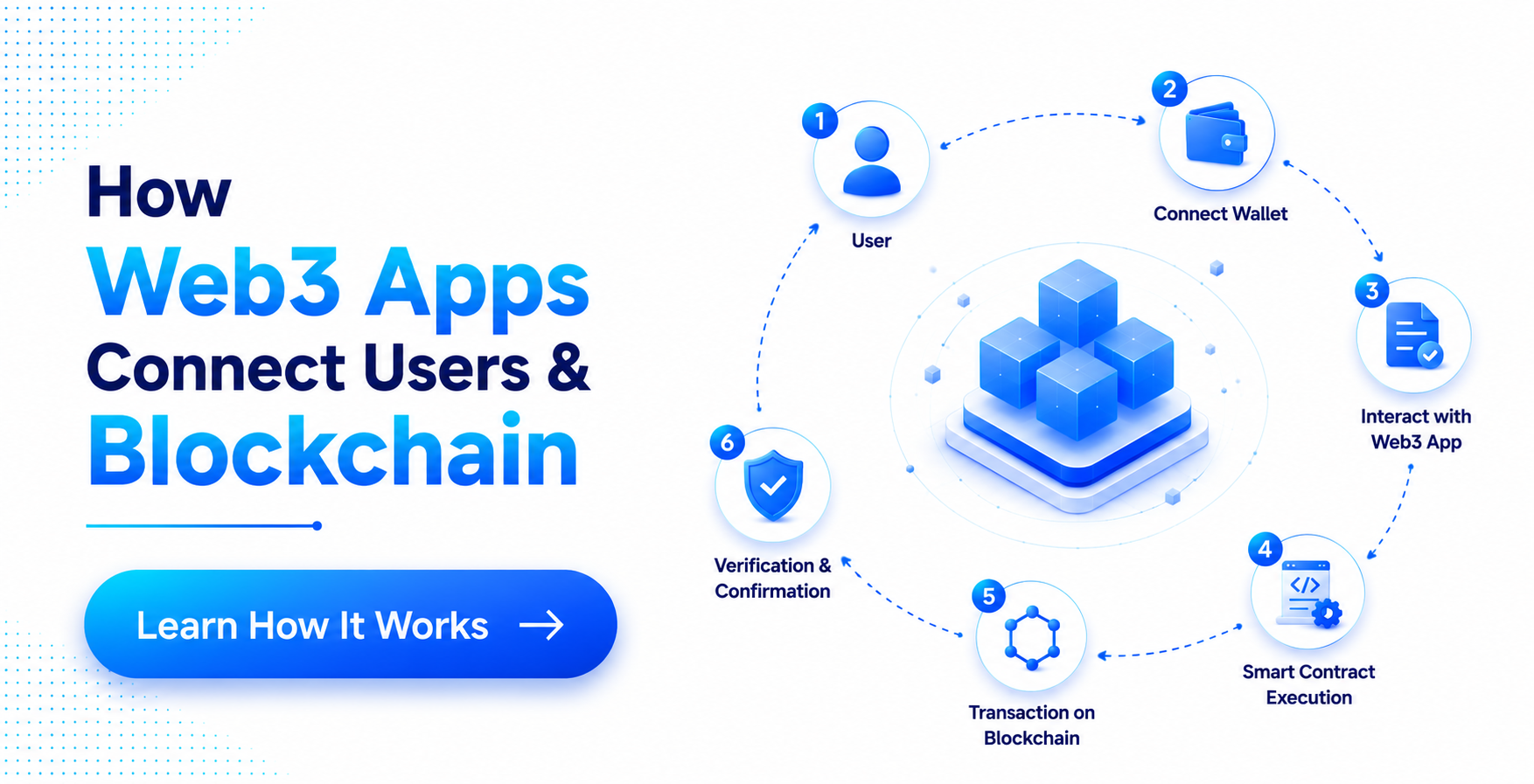
What happens when someone uses a Web3 app?
Well, it’s not as complicated as it might sound. For the user, the experience isn’t that different from what you would expect from a regular dating app.
Here’s how it works:
User opens the app → Connects wallet / creates profile → Identity gets verified → Blockchain handles selected data or transactions → AI finds relevant matches → Users connect & chat → Smart contracts handle rewards or payments
In Web3 application development, blockchain is typically integrated only when it’s relevant. Identities, verification, ownership and transactions could be managed via decentralised infrastructure, and features such as matching and messaging could be managed with traditional back-end systems.
That’s basically what blockchain development services are for. They connect the blockchain pieces to the rest of the app, so users never have to think about wallets or gas fees just to swipe on someone.
Web3 Apps vs. Traditional Web2 Apps: What’s the Difference?
On the surface, a Web3 application could seem like a typical Web2 application. The difference is all beneath the surface.
Let’s compare the two.
| Aspect | Web2 Apps | Web3 Apps |
| Data ownership | Data is usually controlled and stored by the platform | Users can have greater control over their data and digital assets |
| Infrastructure | Relies mainly on centralized servers | Uses blockchain and decentralized infrastructure |
| User identity | Usually managed through email, phone numbers, or social logins | Can use wallets and decentralized identities |
| Payments | Typically uses banks, cards, and payment gateways | Can support cryptocurrency and blockchain-based payments |
| Digital ownership | Assets are generally controlled by the platform | Users can own and transfer certain digital assets |
| Transparency | Platform controls how data and transactions are managed | Certain transactions and records can be publicly verifiable on-chain |
| Security | Security depends largely on the platform’s infrastructure | Can use blockchain-based security alongside traditional security measures |
| User experience | Usually familiar and straightforward | Can require wallets or other Web3 interactions, depending on the app |
So, to sum it up, Web2 apps that are typically dependent on centralized servers and rely on platforms to control and manage user data, Web3 apps can leverage blockchain technology and decentralized systems to provide users with greater autonomy and ownership of their data.
Key Components of Web3 App Development
There’s a lot more to building a Web3 app than choosing a blockchain. A few things need to be done to make it an actual useful app. This configuration will depend on your project but here are some of the key elements to keep in mind:
Blockchain Network: Serves as the structure for transactions, ownership and all other actions taking place on the chain.
Smart Contracts: Automate payments, rewards, transactions and digital ownership. Users should be able to access the app and interact with digital assets via Web3 Wallets..
Web3 Wallets: Allow users to access the app and manage digital assets..
Decentralized Identity: Provides users greater control over the verification of their identity and credentials..
Decentralized Storage: Some data or digital assets can be stored on IPFS without being completely dependent on centralized servers..
Backend & APIs: Traditional backend systems can also support features like matching, messaging, notifications, user preferences, etc..
Security: Encryption and authentication methods, along with smart contract audits, safeguard users and their transactions..
Now when you look at some of the best Web3 apps out there, you’ll notice they don’t put everything on the blockchain. They are built smarter than that. They use Web3 tech where it actually adds value, and they keep the rest of the experience simple. That’s a big part of what good Web3 app development really is.
Types of Web3 Apps You Can Build
Web3 opens up more possibilities than just crypto wallets and NFT marketplaces. From dating and gaming to finance and social platforms, there’s a lot of room to experiment, with smart contract development making features like payments, rewards, and digital ownership possible.
Here are a few common types:
Web3 Dating Apps – let people build profiles, verify who they actually are, match with others, and even manage certain digital assets along the way.
DeFi Apps – help users lend, borrow, trade, or manage assets without leaning entirely on traditional banks or financial middlemen.
NFT Marketplaces – give people a place to buy, sell, trade, and show off their digital assets.
Web3 Gaming Apps – merge gaming with real digital ownership, in-game assets, rewards, and blockchain-driven economies.
Decentralized Social Apps – hand users more control over their identity, their content, and how they show up online.
Must-Have Features for a Successful Web3 App
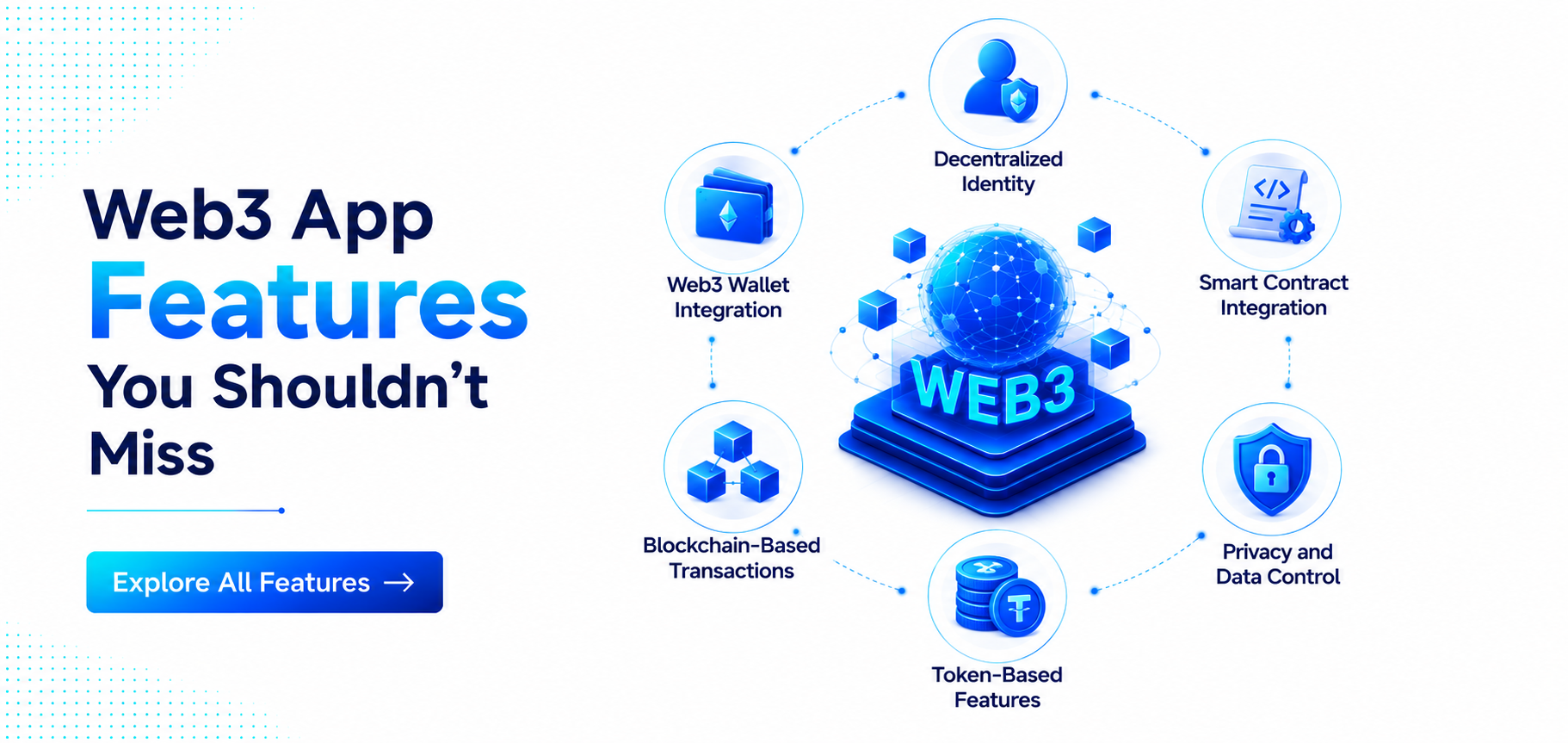
1. Decentralized Identity
Provide users greater choice over who they are and what information they will provide. This could be beneficial to applications where there is a need for identity or credential verification but not a need to have all the data in a single centralized system.
2. Web3 Wallet Integration
Allow users to connect their wallets to access the digital assets and confirm transactions as necessary. It shouldn’t be too complicated either, or the user will be pressured to use their wallet for each and every task.
3. Smart Contract Integration
Smart contracts can facilitate payments, rewards, transactions and digital ownership. Their key objective in Web3 app development is to utilize them where they are beneficial and not to place everything on-chain.
4. Blockchain-Based Transactions
If your app deals with payments, transfers, rewards or even digital assets… blockchain can help you record those transactions in a way that’s transparent. This is one of the reasons a lot of popular Web3 apps still rely on a combination of on-chain and off-chain systems instead of forcing everything through the blockchain.
5. Privacy and Data Control
You can give users more say over what personal information they share and how it is used. Privacy and data control features give users greater choice over what they share and how their information is handled.
6. Token-Based Features
Tokens can add utility to a Web3 app in several ways:
- User Rewards
- In-App Payments
- Premium Access
- Loyalty Programs
- Digital Ownership
Benefits of Web3 App Development for Businesses
There’s clearly a growing business opportunity here. The global Web3 market was valued at $2.25 billion in 2023 and is expected to reach $33.53 billion by 2030 (source – Grand View Research).
Let’s see how Web3 can benefit your business.
1. Greater User Ownership
Web3 can give users more control over their identities, digital assets, and certain types of data too. And this can help businesses build platforms where users have a stronger sense of ownership – and participation, because that’s what people want now.
2. New Revenue Opportunities
New revenue opportunities exist with token-based payments, digital assets, memberships, and rewards. For instance, DeFi development can enable businesses to develop financial products based on lending, trading, payments, and other decentralized services.
3. Global Payments
With blockchain payments, it’s easier to support users from all over the world, without relying entirely on traditional payment systems (it can be a big plus for businesses that serve an international customer base).
4. Better Transparency
Certain transactions and ownership records can be verified on-chain, which gives users and businesses a clearer view of what has happened.
5. Mobile Accessibility
With Web3 mobile app development, businesses can bring blockchain-powered experiences directly to smartphones. This means users can easily access:
- Digital wallets
- Digital assets
- Blockchain payments
- Other Web3 features
6. Scalable Growth
It doesn’t have to be a one-shot deal. Starting with a focused MVP, using existing Web3 infrastructure and keeping only essential functions on-chain can be the fastest way to launch a scalable Web3 app.
How to Build a Web3 App: Step-by-Step Process
1. Define the App’s Purpose
Figure out what the app actually does before anything else. Is it a wallet? A marketplace? A gaming platform? A social app? Find out the core use case and only build features that actually support it.
2. Choose the Right Blockchain
Next, choose a blockchain that fits the needs of your app. Look at factors such as transaction speed, fees, scalability, security and the type of assets or transactions your app will handle.
3. Plan the User Experience
For those not well-versed in cryptocurrencies, Web3 may seem daunting. A lot of seed phrases, gas fees, wallet pop-ups. Your task is to get all of that to seem inconsequential, if not easy. Be mindful of onboarding, wallet connections and presentation of transactions to prevent users being left confused.
4. Develop the App
During web3 app development, the team can work on the frontend, backend, smart contracts, wallet integration, APIs – and other required components.
If you want to bring the experience to Apple users, Web3 iOS app development can help you create a mobile version while integrating the blockchain features that your platform needs.
5. Test Everything
Test the app before launch. Smart contracts, transactions, wallet connections, security, performance and the overall user experience have to function smoothly. Web3 apps also have to undergo rigorous security testing due to the irreversible nature of blockchain transactions.
6. Launch and Keep Improving
After testing and completion, you can start using the app and gather real user feedback. You can then resolve bugs, refine your existing features and enhance new functionality as your Web3 application expands.
Best Blockchain Platforms for Web3 App Development
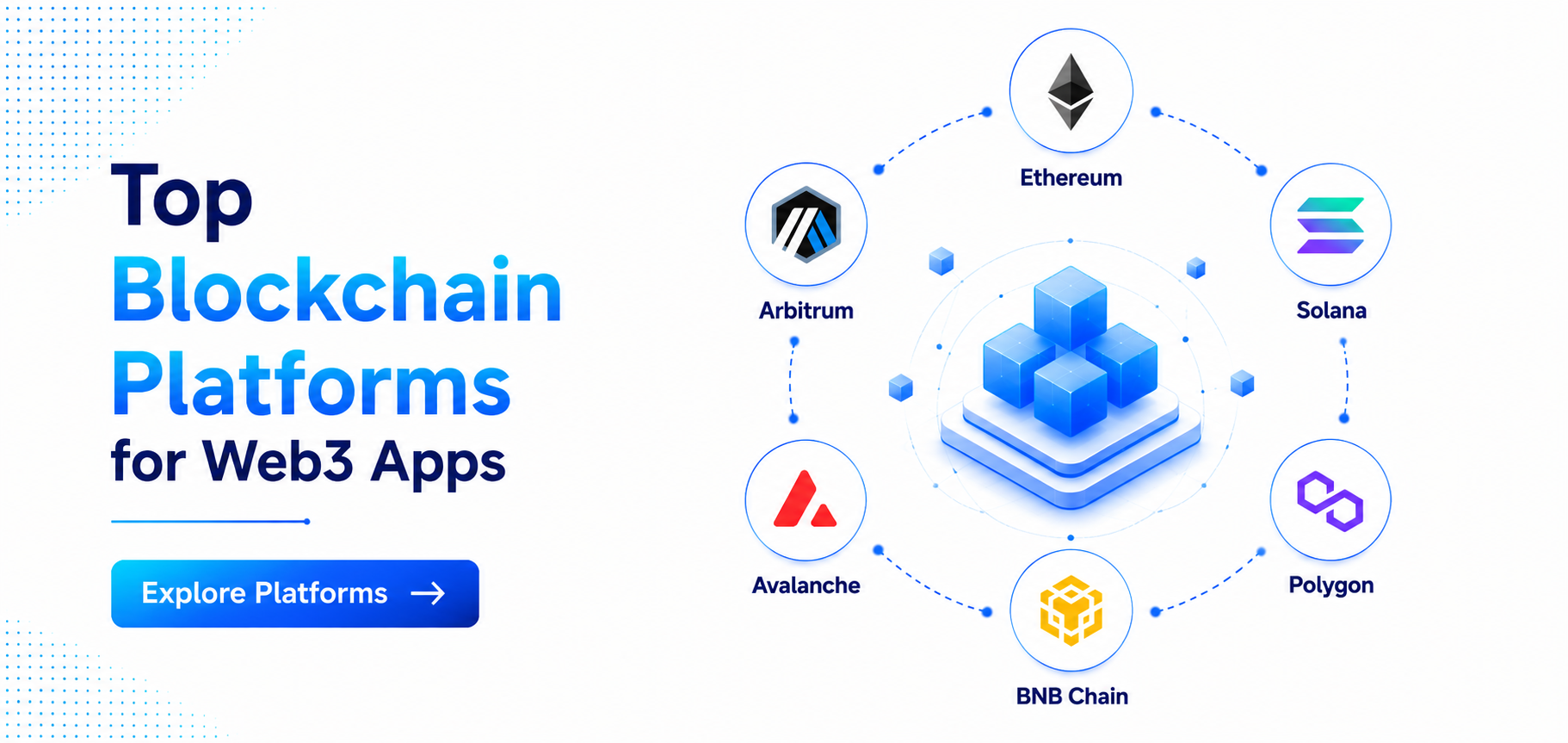
You’ve got quite a few blockchain platforms to choose from. But don’t worry, you don’t have to go through every single one. Let’s look at a few popular options and what they’re good at.
1. Ethereum
A well-established option with strong smart contract support. It’s widely used for DeFi, NFTs, marketplaces, and other Web3 apps.
2. Solana
If speed matters, Solana is worth considering. It offers fast transactions and relatively low fees, which makes it a good choice for apps with frequent transactions.
3. Polygon
Polygon gives you the benefits of Ethereum compatibility without the same level of transaction costs. It’s a practical option for businesses building cost-efficient Web3 apps.
4. BNB Chain
A popular option for applications that need affordable transactions and smart contract functionality.
5. Avalanche
Avalanche focuses on speed and scalability, making it suitable for apps that may need to handle growing activity.
6. Arbitrum
Arbitrum helps Ethereum-based apps reduce transaction costs while still benefiting from the Ethereum ecosystem.
Technologies Used in Web3 Mobile App Development
Based on what your app needs to do, the tech stack can look a little different.
For a Web3 mobile app, the stack can look like this:
| Technology | Common Options | Purpose |
| Mobile Development | Flutter, React Native, Swift, Kotlin | Building the iOS and Android app |
| Blockchain | Ethereum, Solana, Polygon, BNB Chain | Managing transactions and digital assets |
| Smart Contracts | Solidity | Handling on-chain logic and transactions |
| Backend | Node.js, Python | Managing APIs, databases, and app logic |
| Wallet Integration | WalletConnect, wallet SDKs | Connecting users’ wallets to the app |
| Web3 Integration | Ethers.js, Web3.js | Connecting the mobile app with blockchain networks |
| Storage | IPFS, AWS, Firebase | Storing digital assets and other app data |
The Latest Web3 Application Development Trends in 2026
Web3 apps are straying from crypto and digital tokens. More projects are aiming to make blockchain “useful in ways that people can see and use” in 2026. The following are a few trends to be aware of.
1. Smarter AI Integration
AI and Web3 are coming together. AI can enhance the usability and value of Web3 apps by creating more personalised experiences.
2. More Practical Digital Ownership
Digital ownership has become more prevalent in more common use cases. This encompasses gaming resources, memberships, digital collectibles and NFT marketplace development, with users being able to purchase, sell and handle digital assets.
3. Better User Experiences
There is no need to be intimidated by Web3. Developers are focusing more on simplifying onboarding, connecting wallets and improving transactions. This focus on usability can make it easier for more people to interact with the best Web3 apps (without getting into the intricacies of the technology).
4. Cross-Chain Support
And why stick to just one blockchain?
Apps are also becoming more connected across different blockchain networks. This means users can have more flexibility, while businesses can reach a wider Web3 audience without keeping everything tied to just one network.
How Much Does It Cost to Build a Web3 App? (A Quick Breakdown)
The cost can be pretty different from one Web3 app to another. For a general idea, here’s what the range can look like:
| Type of Web3 App | Estimated Cost | Estimated Timeline |
| Basic Web3 App | 20,000–50,000 | 2–4 months |
| Mid-Level Web3 App | 50,000–100,000 | 4–7 months |
| Advanced Web3 App | 100,000–200,000+ | 7–12+ months |
These are rough estimates, of course. Your final cost will depend on factors like the features, blockchain, smart contracts, security, design, and integrations. If you don’t need everything right away, you can also start with an MVP and add more features as your app grows.
AI Features You Can Add to a Web3 App
While Web3 app development opens up new ways for people to use digital platforms, AI can make the experience easier to navigate. Here are a few ways you can bring it into your app –
1. Personalised Suggestions
AI can analyze user behavior and preferences to recommend suitable NFTs, digital assets, games, or other content. The idea is that rather than having users work through everything, the app can show items of more interest to the user.
2. Smarter Search
With a busy app, the right asset or information might be tricky to find. AI can interpret user intent and enhance search results (even if they are not searching for the exact terms).
3. Fraud and Risk Detection
Web3 deals with real cash, so it’s important to be able to spot suspicious activity. AI can scan for any unusual transaction activity and alert users to potentially suspicious transactions.
4. AI-Powered Support
Many users don’t understand wallets, gas fees or blockchain transactions when they first encounter them. An AI assistant can:
- answer questions
- explain confusing terms
- guide users to different sections of the app
5. Automated Content and Asset Management
AI can also be used to streamline and handle digital assets. It can categorize content, create descriptions, detect patterns and handle repetitive tasks.
Key Challenges to Consider Before Building a Web3 App
While Web3 application development is advantageous, it does have its share of challenges that can be overcome before the app is launched.
Here are a few challenges that deserve your attention:
1. Security and Smart Contract Risks
Security is crucial for Web3 apps which frequently involve digital assets, transactions, and wallets. Smart contract vulnerabilities can also create serious security risks, especially when contracts aren’t properly tested and audited.
2. User Experience
For newcomers to Web3, blockchain can be a complex concept to understand. Wallet connections, gas fees, and transaction steps can be difficult to understand so the app should be as user-friendly as possible.
3. Scalability and Performance
As more people start using the app (and hopefully they do ), it has to handle more transactions. Therefore, picking the right blockchain network matters. And so does planning the architecture properly from the start.
4. Compliance and Regulations
The regulations governing Web3 can differ from one market to another and keep changing. Depending on the app and the target group, you need to take into account the demands regarding digital assets, payment, data and user verification.
How to Choose the Right Web3 Development Company?
Relevant experience: Look for a company with proven experience in Web3 app development and projects similar to yours.
Technical expertise: If your app is going to incorporate blockchain integrations, smart contracts and cryptocurrency wallet development, ensure that the team you hire has the necessary expertise.
Portfolio: Go through their work and make sure that the products they have created are similar to what you expect.
Security practices: Inquire about the security measures for smart contracts, wallets, and transactions.
Post-launch support: Make sure that there is a team to maintain and make your app better after it’s launched.
Clear communication: A development partner should make technical decisions as transparently as possible and inform you of them along the way.
Why Partner With Techugo for Web3 app Development?
If the right team is involved from the beginning, the whole development process can be much smoother.
Techugo is that team for you.
Techugo has a long history in the app development industry. With 11+ years of experience in app development, our team has the technical expertise to build secure, scalable and user-friendly Web3 solutions. Be it blockchain integration, smart contracts, wallets or dApps – our expert team will work with you to understand your idea, choose the right approach, and build a product that fits your needs.
Got questions, ideas, or just a rough concept? Bring them our way. Get in touch with our team!
FAQs
1. How much does it cost to build a Web3 app?
A Web3 app can cost around $20,000 to $200,000+. However, the ultimate cost depends on its features, blockchain network, integrations, security requirements and overall complexity.
2. How long does it take to build a Web3 app?
It really depends on the scope. A basic app can take a few months, while a more feature-rich product will naturally take longer.
3. Can I integrate a cryptocurrency wallet into my app?
Absolutely! You can either connect to wallets that already exist or build your own from scratch if you want more control over how the whole experience feels.
4. Which blockchain should I use for my Web3 app?
It entirely depends on what you’re building. You should consider factors like transaction fees, speed, scalability, security – and the features your app needs before choosing a blockchain for your Web3 app.

Get in touch
We'd love to hear from you.