

 SA
SA
 KW
KW
 IE
IE AU
AU UAE
UAE UK
UK USA
USA
 CA
CA DE
DE
 QA
QA ZA
ZA
 BH
BH NL
NL
 MU
MU FR
FR

















📌 Key Takeaways
- Custom software modernization helps improve existing software without replacing everything.
- Software modernization can improve performance, security, maintenance and scalability.
- Businesses can choose from different modernization approaches based on their needs.
- The overall cost depends on the software’s size, complexity and modernization requirements.
- Proper planning before development can help reduce unnecessary costs and project risks.
“As businesses grow, their older software can start showing its limits. You may have noticed the signs.
- Performance may drop
- Maintenance can become harder
- The system may struggle to support new requirements.”
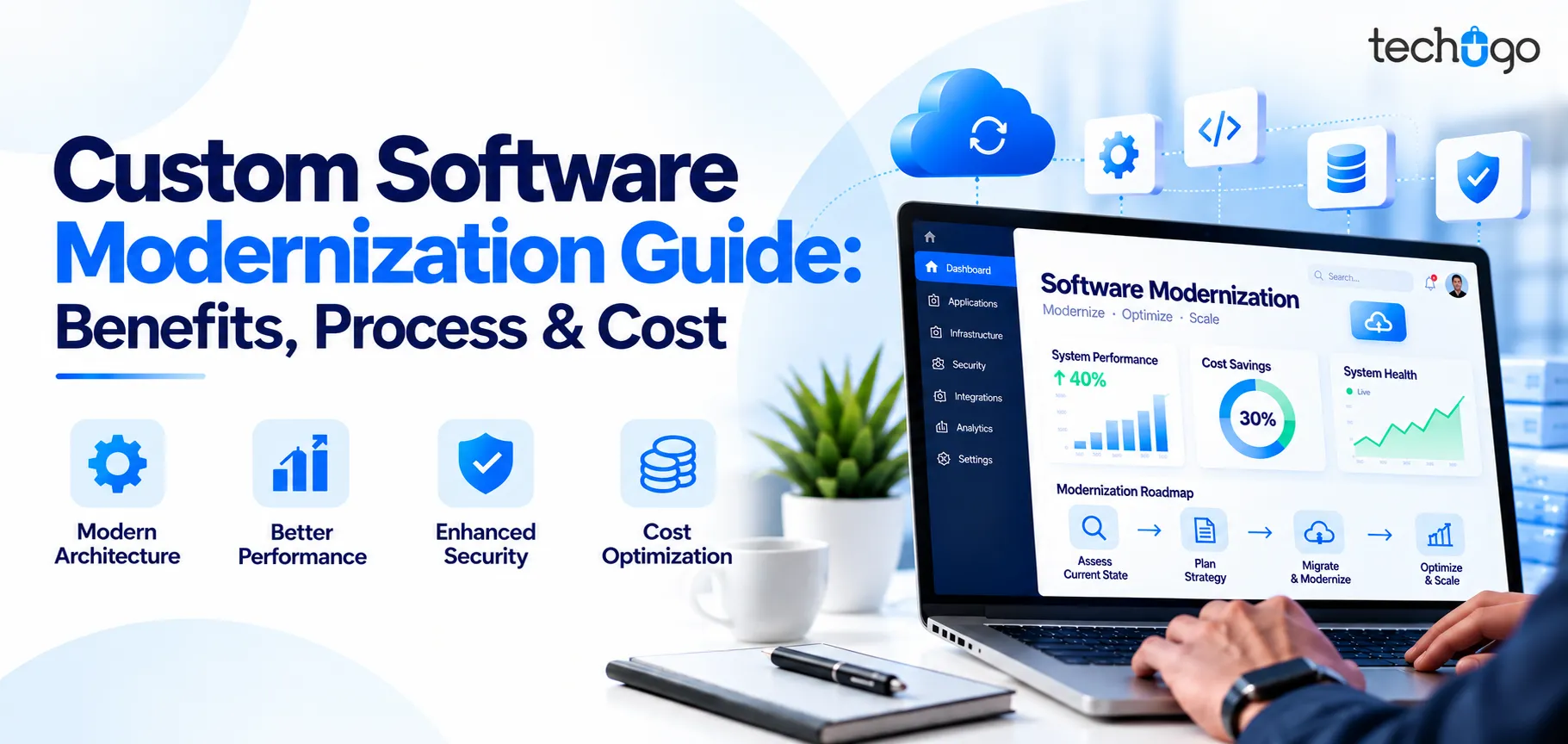
But that does not mean the entire software needs to be replaced. Custom software modernization gives businesses a chance to improve the software they already have – without getting rid of what still works. It can mean updating old technology, fixing performance issues, adding features or making the software easier to scale as the business grows.
So, in this guide, we will be covering the main benefits of custom software modernization, how the process works, the different approaches businesses can take, how much it can cost and everything that you need to know.
What Is Custom Software Modernization?
The modernization of custom software refers to the practice of revitalizing an already existing software solution so that it meets the modern needs of a business. The business still uses the system (even if it doesn’t quite meet current needs).
This often leads businesses to consider legacy software modernization. Old technology, slow performance, security gaps or trouble working with newer tools can all become reasons to modernize.
In some instances, the changes are minor, which may mean replacing an old module and adding some functionality to the software. In other cases, larger parts of the system will need to be rebuilt or moved to up-to-date technologies.
Looking to Modernize Your Existing Software?
Get the right strategy for updating your software while keeping the features and functionality that still work for your business.
Reasons Businesses Need Custom Software Modernization
92% of organisations surveyed said they are burdened with some form of technical debt.
Older software may struggle to keep up as business requirements evolve. For some businesses, modernization becomes less of a choice and more of a practical need.
Here are some common reasons businesses start looking into custom software modernization –
1. Limited technical support
Finding developers who still work with older technologies can become difficult. And this is one of the major reasons businesses may turn to a custom software modernization firm.
2. Outdated technology
Older frameworks and technologies can become difficult to maintain or support over time.
3. Changing business needs
The software may no longer support new workflows, users, features or business requirements.
4. Integration issues
Connecting older software with newer tools, platforms, APIs, or cloud services can become more complicated.
5. Security concerns
Older systems may have vulnerabilities that are harder to address without updating parts of the software.
Business Benefits of Custom Software Modernization
Custom software modernization can improve how your software works, how easily it can be managed and how well it supports your business.
“The biggest benefits include:”
1. Better performance
Older software can get slow, crash more often or just become frustrating to use. Modernizing it can make everyday tasks quicker & easier for your team.
2. Easier maintenance
Small changes should stay small. With software modernization solutions, your team can make updates without having to work around outdated technology every time.
3. Room for future growth
Your software needs to keep up. Your business is constantly evolving and so are your software requirements. As your business grows, you may need new features or changes to the system. Custom software development can help you add them when needed. A custom software modernization consultancy can also help you figure out which parts of the system should be updated first.
4. Easier integration
Your tools need to work together. Modernization can help connect your existing software with APIs, cloud platforms and other tools – making it easier to use newer technologies alongside your current system.
5. Stronger security
There’s also the security side. Updating older components can help address vulnerabilities and give your business stronger protection as the software continues to be used.
Common Approaches to Custom Software Modernization
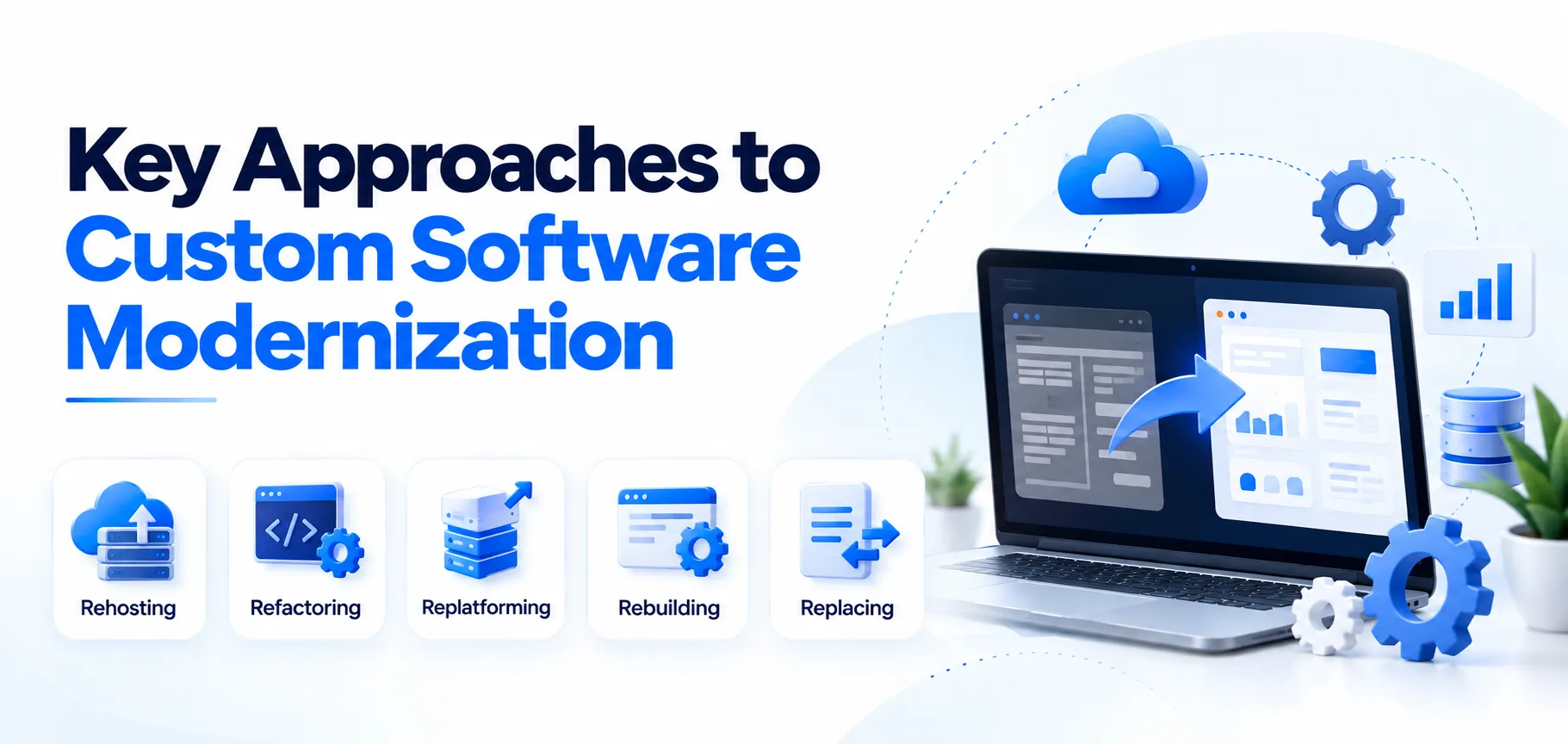
There are several ways to modernize software and the right choice depends on what your existing system needs.
1. Rehosting
Also called “lift and shift,” this means moving the software to a new environment, usually the cloud, with minimal code changes.
2. Refactoring
This is centred on modifying old code without altering the software’s existing functions.
3. Replatforming
The software moves to a newer platform with some changes, allowing businesses to use newer technology without rebuilding everything.
4. Rebuilding
When bigger changes are needed, businesses can create a new version while keeping useful features from the original system. Custom software modernization development services can help you with this.
5. Replacing
Sometimes, starting with a completely new system makes more sense. This can also be part of broader digital transformation solutions.
How the Custom Software Modernization Process Works
The process starts with a close look at the existing software. This helps identify what needs to be updated, improved or replaced. Here’s what the process usually looks like:
1. Assess the existing software
The team reviews the current system, its technology, performance, security and integrations. This helps a custom software modernization agency decide what needs to change (and what can stay).
2. Plan the modernization
Next, the team decides on the right modernization approach, whether that means refactoring, replatforming, rebuilding or replacing parts of the system. If moving to the cloud is part of the plan, cloud migration services may also be involved.
3. Develop and test
The required updates are then made while keeping the software’s existing requirements in mind. The modernized system is tested to catch performance, security and integration issues before launch.
4. Deploy and maintain
Once everything is ready, the updated software is deployed. Custom software modernization does not necessarily end there. Your software will still need updates to keep up with changing business needs and new requirements.
Technology Stack for Custom Software Modernization
There’s a lot to consider when modernizing software, and the technology stack is a big part of it. You need to look at what the existing system is built with, what needs to be updated and how the new technology will work with the rest of the system.
“The main technologies used in modernization include:”
| Technology | Commonly used for |
| Cloud platforms | AWS, Microsoft Azure and Google Cloud for cloud-based modernization |
| Programming languages | Java, Python, JavaScript, .NET and other modern languages |
| Databases | PostgreSQL, MySQL, MongoDB and other modern database systems |
| APIs | Connecting modernized software with existing tools, platforms and third-party services |
| Containers | Docker and Kubernetes for flexible deployment and application management |
| DevOps tools | CI/CD tools for automated testing, deployment and updates |
| Security tools | Identity management, encryption, monitoring and other security technologies |
Challenges to Consider During Software Modernization
1. Outdated systems
Older software can be difficult to understand and update, especially when the technology is no longer widely supported.
2. Data migration
Moving existing data into a new system takes planning. Different formats, duplicate records, or missing data can create problems if the process is rushed.
3. Integration issues
Existing tools and databases cannot simply be left behind. The new software still needs to connect with them properly.
4. Business disruption
Modernization happens while the business is still running, so even small issues can affect daily operations.
5. Unexpected costs
Technical problems can push the budget higher. With custom software modernization, proper planning helps avoid unnecessary work, while custom software development for digital modernization can focus investment on the areas that need it most.
Custom Software Modernization Costs by Project Type
Software modernization can mean a few changes or a complete system overhaul. Naturally, the cost can look very different depending on the size and complexity of the project.
Here’s a quick breakdown of what those costs can look like at different project levels.
| Project Type | Estimated Cost | Typical Scope |
| Basic | $20,000–$50,000 | Small updates, UI improvements and basic integrations |
| Mid-level | $50,000–$100,000 | System upgrades, data migration and multiple integrations |
| Advanced | $100,000–$250,000 | Complex modernization, cloud migration and custom development |
| Enterprise | $250,000+ | Large-scale systems, multiple platforms, security and ongoing modernization |
Several factors can affect the final cost, so getting the right software consulting services can help you plan the modernization budget more accurately.
The main cost factors include:
1. System complexity – Older systems can take more time and effort to update.
2. Technology stack – Outdated technology may need extra development work.
3. Data migration – If there is a lot of old or messy data, migration can take more time & effort.
4. Custom development – New features can increase the overall budget.
5. Security – Strong security and compliance requirements may add costs.
6. Cloud migration – Moving to the cloud can require additional resources.
7. Testing – Larger systems need more testing before they go live.
Calculate Your Software Modernization Costs
Talk to our team about your existing software and get guidance on the scope, approach and budget for modernization.
How to Choose a Custom Software Modernization Agency
1. Check their experience
Start by looking at the company’s experience with similar projects. A custom software modernization firm that has worked with legacy systems, outdated technology and complex integrations will have a better idea of what your project may involve.
2. Understand their process
Don’t hesitate to ask about their process. Ask how they handle planning, development, testing and deployment. It helps you know what’s coming next & how the team plans to deal with any issues along the way.
3. Check security and ongoing support
Security issues should be considered from the start, especially when the software handles sensitive business information. Plus – it is important to check whether there will be ongoing support and maintenance provided by the developers after the modernization process is complete.
4. Look at their technical skills
The right partner should have experience with the technologies your project depends on. This may include cloud migration, data migration, API integrations and AI development services. They should also be able to recommend the right software modernization development solution based on your existing setup.
5. Review their past work
Finally, look at case studies, previous projects and client feedback. This can give you a better sense of the team’s experience and whether they are a good fit for your project.
Future Trends That Will Impact Software Modernization
1. AI will become part of more modernization projects
AI is beginning to make its way into software modernization and this trend will likely continue to grow. The development of AI software allows developers to work with old code more efficiently by correcting errors and even accelerating certain processes. Companies can also add AI features to their current software rather than creating a new software system from scratch.
2. More businesses will move to the cloud
Cloud migration is becoming a common part of modernization. Moving older software to the cloud can make it easier to scale, manage and update. It can also give businesses more flexibility when their needs change.
3. Integrations will matter more
Most businesses have an existing set of tools they depend on. Modernized software should connect with these tools and fit into the current workflow. This means APIs and other integration methods will continue to play an important role.
4. Security will become a bigger priority
Older software can have security weaknesses that are difficult to fix without making wider changes. Modernization gives businesses a chance to address these gaps while updating the rest of the system.
5. Automation will be built into more systems
Companies prefer using software that can automate tedious work without needing constant human intervention. Custom software modernization development services can help automate traditional systems while still retaining the working capabilities of the existing components.
Modernize Your Software with Techugo
If your existing software is slowing things down, Techugo can help you modernize it without losing sight of what already works. Our team works with businesses to update legacy systems, improve performance, strengthen security and connect software with newer technologies.
We also have expertise in enterprise software development, cloud solutions, AI and custom software development, so you can build upon your current system rather than starting from scratch. We can assist you throughout the process – from planning and migration to development, support and beyond. So if you’re planning to modernize your software, get in touch with our team.
FAQs
1. What is custom software modernization?
Custom software modernization means updating an existing software system to improve its performance, security and compatibility with newer technologies.
2. How much does custom software modernization cost?
Most projects fall somewhere between $20,000 and $250,000+, although the actual cost depends on the project requirements.
3. Can existing software be modernized without replacing it?
Yes. Businesses can update specific parts of the system while keeping components that still work well.
4. What technologies are used in software modernization?
Common technologies include cloud platforms, APIs, AI, modern frameworks and updated databases.

Get in touch
We'd love to hear from you.