 SA
 KW
 IE
 AU
 UAE
 UK
 USA
 CA
 DE
 QA
 ZA
 BH
 NL
 MU
 FR







 Android
 iOS













📌 Key Takeaways
- Define your website goals, features, budget and timeline before contacting agencies.
- Compare agencies, freelancers and in-house teams to choose the right development model.
- Review agency portfolios, technical skills, client feedback and previous project experience before shortlisting.
- Check pricing, project scope, communication, ownership terms and post-launch support before signing a contract.
- Look for experience with Arabic and English websites, RTL layouts, mobile usability and UAE compliance requirements.
- Choose a web development agency that can manage planning, design, development, testing, deployment and ongoing maintenance.
Choosing the right agency is an important decision because it directly affects your website’s launch timeline, development costs, and overall performance. Who should you choose as a website developer? This decision has a major impact on your brand’s online presence, growth, and performance. A professional agency brings together skilled developers, designers, and technical experts to build a website that aligns with your business goals.
The importance of having a strong digital presence is particularly evident in the UAE, where 11.3 million people were using the internet at the end of 2025, representing 99% internet penetration, according to DataReportal’s Digital 2026 report. This makes choosing the right development partner an important consideration for businesses looking to establish and strengthen their online presence.
However, with so many agencies offering different services, pricing, and expertise, the process of hiring a web development agency in Dubai becomes more challenging. So, to help you make an informed decision, this guide will explain how to evaluate and hire a web development agency while avoiding some key mistakes.
At Techugo, we aim to deliver the standards businesses expect from the top web development companies in Dubai, turning digital ideas into custom web solutions built around business goals, user expectations, and growth requirements.
Define Your Requirements Before Choosing a Web Design & Development Agency in Dubai
Before approaching an agency, define your website’s goals, target audience, required features, design preferences, technical needs, budget and timeline. Clear requirements help developers recommend suitable technologies, estimate costs and plan delivery while reducing scope changes and delays.
The Project Management Institute (PMI) reports that 47% of unsuccessful projects fail to meet their goals due to poor requirements management. Its 2021 Pulse of the Profession report (page 33) also identifies poor requirements gathering as a contributing cause of project failure, selected by 40% of respondents.
These findings highlight why defining project expectations before development begins is important.
What Should You Define Before Hiring a Web Development Agency?
- Website Purpose and Business Goals
- Target Audience and User Experience
- Website Features and Functionality
- Design, Content and Language Requirements
- Technology and Integration Requirements
- Budget, Timeline and Future Growth
Web Development Agency vs. Freelancer vs. In-House Team: Understanding Your Options
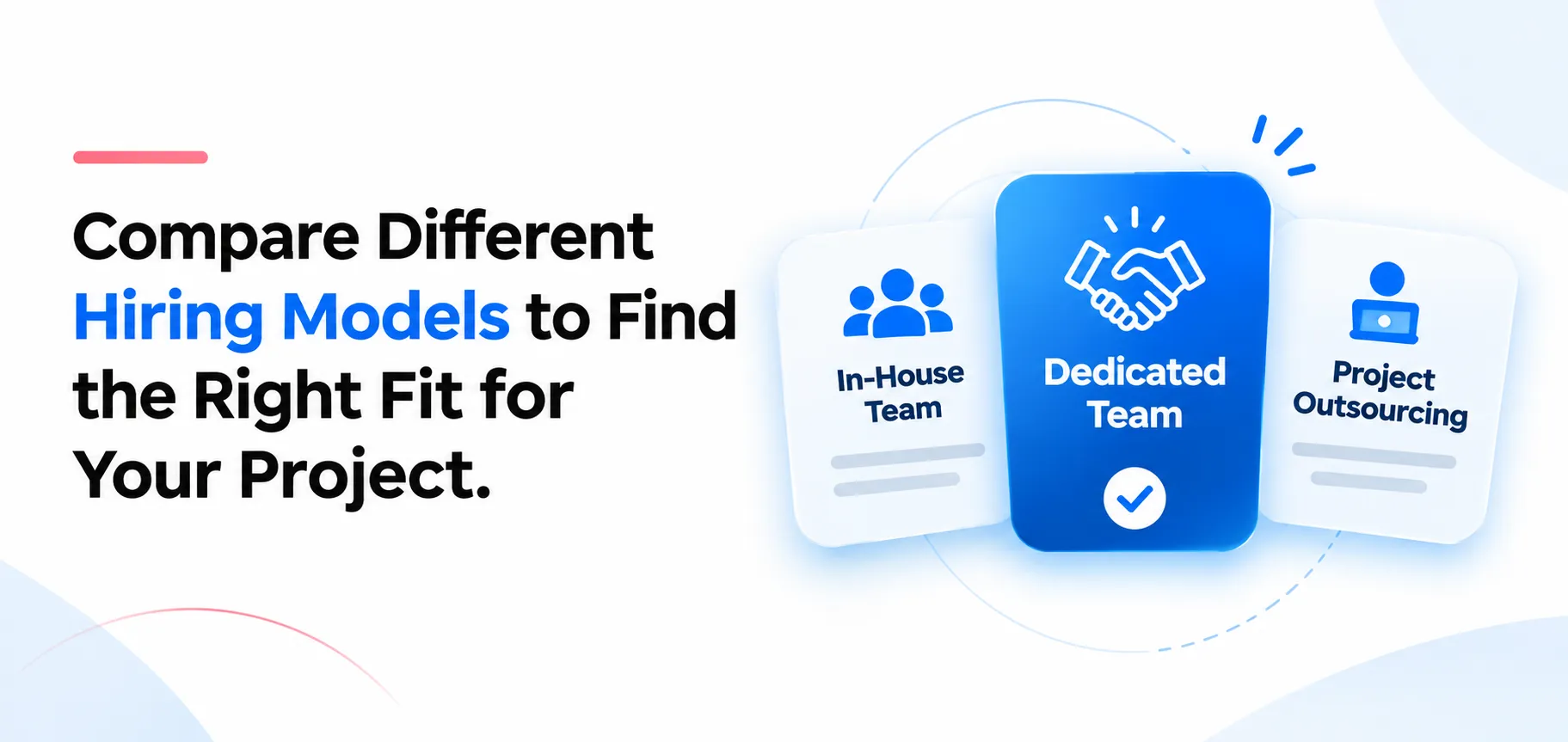
Businesses in Dubai can hire web developers through an agency, work with an independent freelancer or build an in-house development team. Each option offers a different level of technical expertise, project control, cost and ongoing support. The right choice depends on your website requirements, project complexity and long-term development needs.
Before choosing a web development agency in Dubai, compare these three hiring options to understand which one fits your business.
Which Hiring Option Should You Choose?
Your choice should depend on the amount of development work, technical expertise and management involvement your project requires.
1. Choose a web development agency if you need multiple technical skills, coordinated project delivery and support from planning to launch.
2. Hire a freelance web developer if you have a small, clearly defined project that one specialist can manage.
3. Build an in-house team if website development is a continuous business activity that requires dedicated internal resources.
Example: A Dubai-based retail business planning a bilingual eCommerce website may need UI/UX design, frontend and backend development, Arabic RTL support, payment gateway integration and quality testing. Hiring an agency can bring these different skills under one project arrangement. However, a business that only needs a few landing page updates may find a freelancer more suitable.
How Can You Find and Shortlist the Best Website Development Companies in Dubai?
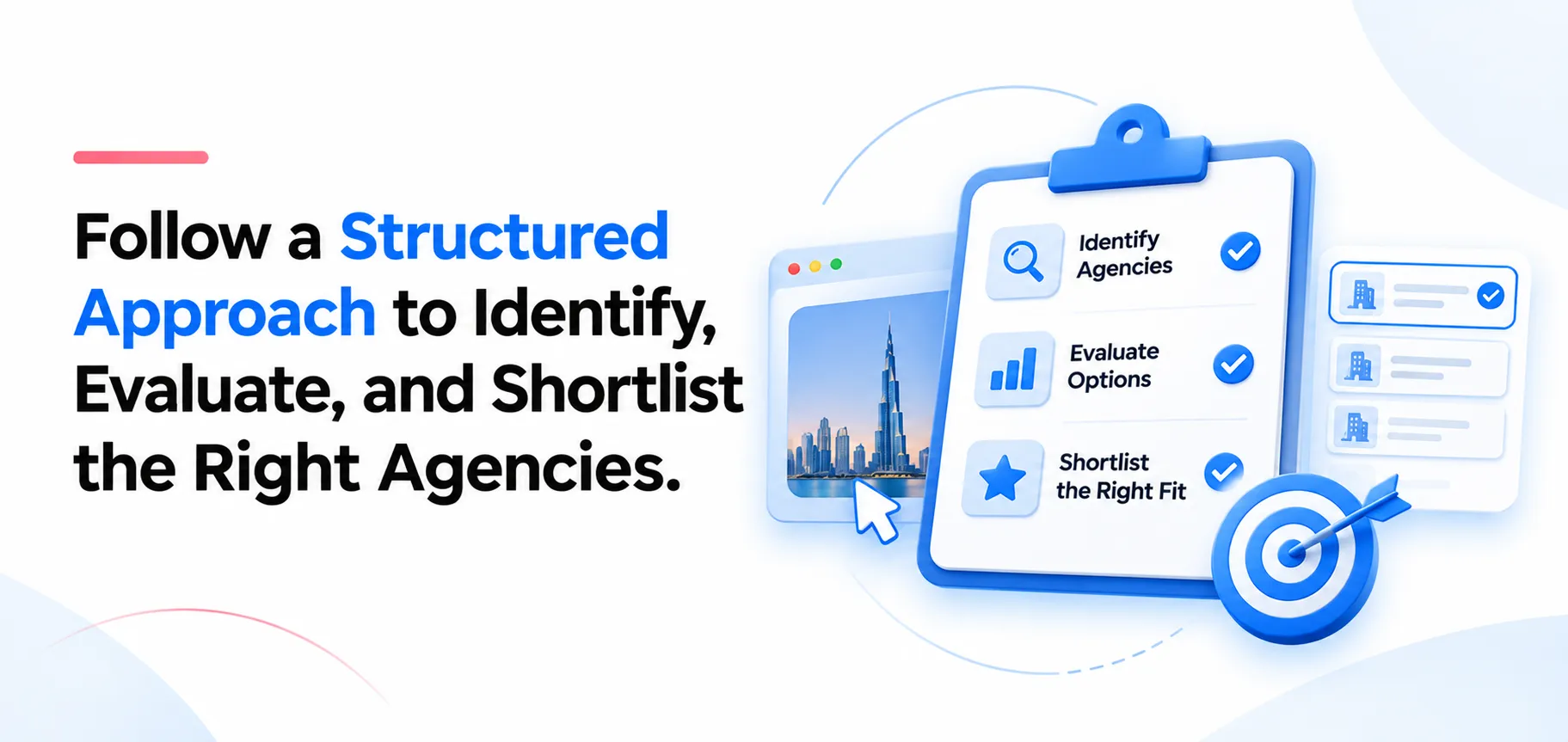
To find the best web development agency in Dubai, start by identifying companies that match your project requirements, reviewing their completed work, checking their technical expertise and comparing their proposals. Instead of choosing an agency based on advertisements or the lowest quotation, follow a structured shortlisting process to assess its actual capabilities, experience and ability to deliver your website.
A little due diligence at this stage can help you avoid unsuitable agencies, unclear commitments and unexpected project costs. Here are six practical stages to help you shortlist the right development partner.
Stage 1: Build a List of Potential Web Development Agencies
Start by identifying companies that offer services relevant to your project rather than contacting every agency you find.
- Search for web development agencies in Dubai through Google and local business directories.
- Explore LinkedIn, professional networks and recommendations from other businesses.
- Look for agencies offering the type of development you need, such as eCommerce, corporate websites or custom web applications.
- Check whether their services cover design, development, integration and ongoing support.
Tip: Prepare an initial list of around 8–10 agencies before moving to the next stage.
Stage 2: Review Portfolios and Relevant Project Experience
An agency’s portfolio gives you an idea of the projects it has handled and the quality of its work. However, focus on project relevance rather than the number of websites displayed.
- Look for projects similar to your business requirements and website complexity.
- Visit live websites instead of judging work through screenshots alone.
- Check mobile responsiveness, navigation, loading speed and overall user experience.
- Review experience with eCommerce platforms, enterprise websites or custom applications, depending on your needs.
- Ask for case studies explaining the client’s requirements and the agency’s contribution.
Example: If you operate a Dubai-based retail business, an agency with experience in eCommerce development, payment integration and inventory management may be a better fit than one whose portfolio mainly contains basic corporate websites.
Stage 3: Evaluate Technical Capabilities and Development Skills
A visually attractive portfolio does not always reflect an agency’s ability to handle complex development requirements. Check whether its technical team has the skills needed to build, test and maintain your website.
- Frontend development: React, Angular, Vue.js, HTML and CSS.
- Backend development: Node.js, Python, PHP and .NET.
- CMS and eCommerce: WordPress, Shopify, Magento and custom CMS solutions.
- Database management: MySQL, PostgreSQL and MongoDB.
- Integration capabilities: REST APIs, CRM, ERP and payment gateway integrations.
- Quality and security: Testing, performance monitoring, data protection and deployment practices.
Also, ask how the agency handles Arabic and English websites, right-to-left layouts and integrations commonly required by UAE businesses.
Stage 4: Understand the Team and Communication Process
The people handling your project can directly affect its development and delivery. Before shortlisting an agency, understand who will work on your website and how the team will manage communication.
- Ask whether the project will be handled by in-house developers, dedicated resources or an extended team.
- Identify the project manager or primary point of contact.
- Understand how frequently you will receive progress updates.
- Check how the agency collects feedback and handles design or development changes.
- Ask whether you can communicate directly with the technical team when required.
A transparent workflow makes it easier to track progress, resolve issues and keep development aligned with your expectations.
Stage 5: Check Client Reviews, References and Business Credibility
Client feedback can help you understand how an agency works beyond its marketing claims.
- Read Google reviews and feedback on relevant business directories.
- Look for detailed reviews that mention project delivery, communication and technical support.
- Ask the agency for references from previous clients with similar projects.
- Verify its business details and relevant UAE trade licence.
- Check whether its website provides clear company information, contact details and service descriptions.
Do not rely entirely on star ratings or testimonials published on the agency’s own website. Look for feedback that you can independently verify.
Stage 6: Compare Proposals and Shortlist Your Final Candidates
Once you have reviewed potential agencies, request proposals from the strongest candidates using the same project brief. This makes it easier to compare their understanding, pricing and delivery commitments.
| Evaluation criteria | What to check |
| Project understanding | Does the agency understand your business goals and requirements? |
| Development scope | Are features, integrations and deliverables clearly mentioned? |
| Technical approach | Has it recommended suitable technologies for your project? |
| Pricing | Are development costs and additional charges explained? |
| Timeline | Are milestones and expected delivery dates realistic? |
| Ownership | Will you receive the website source code, design files and account access? |
After comparing these details, narrow your list to three to five agencies that demonstrate relevant experience, technical capabilities and clear project commitments.
For example, if you are comparing a Website Design and Development Company with a specialised web application agency, consider whether your project needs mostly design and standard website functionality or more complex backend development and integrations. Choose according to the actual scope of work.
The final shortlist should include agencies that can demonstrate their capabilities through real projects, explain their development approach and provide a clear proposal. This gives you a stronger starting point for interviews and final negotiations.
Looking for the Right Technical Partner?
Discuss your project goals with our team and find the right approach to build your business website.
What Technical Skills Should a Web Development Agency Have?
A professional web development agency brings together different technical specialists to handle every stage of website development. From designing user-friendly interfaces to building secure backend systems and connecting third-party applications, these skills help businesses develop websites that meet their functional and technical requirements.
Here are the key skills and expertise you should expect from a web development agency:
| Skills and expertise | Technologies and tools | What they bring to your project |
| Frontend Development | HTML, CSS, JavaScript, React, Angular, Vue.js | Builds interactive website interfaces that work across different devices and browsers. |
| Backend Development | Node.js, Python, PHP, .NET, Java | Handles server-side logic, databases, user authentication and business functionality. |
| Full-Stack Development | MERN, MEAN, LAMP and related stacks | Connects frontend and backend development to build complete web solutions. |
| UI/UX Design | Figma, Adobe XD, Sketch | Creates user-friendly layouts, navigation and website experiences. |
| CMS Development | WordPress, Drupal, Joomla | Helps businesses manage website pages, blogs, images and other content. |
| eCommerce Development | Shopify, Magento (Adobe Commerce), WooCommerce | Develops online stores with product catalogues, shopping carts and payment functionality. |
| API Development and Integration | REST APIs, GraphQL, Postman | Connects websites with CRM, ERP, payment gateways and other business applications. |
| Database Management | MySQL, PostgreSQL, MongoDB | Stores, manages and retrieves website and customer information. |
| Quality Assurance and Testing | Selenium, Cypress, Playwright | Identifies bugs and checks website functionality, compatibility and performance. |
| DevOps and Cloud Deployment | AWS, Microsoft Azure, Docker, CI/CD | Supports website deployment, hosting, infrastructure management and reliable updates. |
| Website Security | SSL/TLS, OAuth, secure authentication, access controls | Helps protect website data, user accounts and application functionality. |
| SEO-Friendly Development | Schema markup, XML sitemaps, Core Web Vitals tools | Supports search engine crawling, website performance and technical SEO requirements. |
What Questions Should You Ask Before Hiring a Web Development Agency in Dubai?
Before finalising an agency, ask questions that help you understand its experience, development process, pricing and project responsibilities. These discussions can help you set clear expectations before development begins.
1. Project Experience: Have you worked on projects similar to mine?
2. Development Team: Who will manage and develop my website?
3. Technology: Which technologies do you recommend for my project and why?
4. Project Timeline: What is the expected development timeline?
5. Communication: How will you share project updates and manage feedback?
6. Pricing: What is included in the quotation, and are there any additional charges?
7. Maintenance: Do you provide post-launch support and website maintenance?
10 Factors to Consider When Choosing a Web Development Company in Dubai
Evaluate the essential factors that influence your agency selection decision.
When comparing web development companies in Dubai, look beyond website designs and development prices. Choose a partner who understands your business goals, has the right technical skills and can deliver a website that meets your customers’ needs. Evaluate these factors to determine whether an agency is the right fit for your project.
1. Relevant Industry Experience and Project Portfolio
An agency’s previous work helps you understand whether it can handle your website requirements.
- Check projects similar to your business type and website complexity.
- Review live websites and relevant client case studies.
- Look for experience with corporate, eCommerce or enterprise websites.
2. Strong Technical Expertise and Technology Stack
The right technical skills ensure your website is developed using technologies suited to its features and future needs.
- Check expertise in frontend technologies such as React, Angular and Vue.js.
- Review backend capabilities in Node.js, Python, PHP or .NET.
- Ask about CMS platforms, databases and custom development experience.
3. UI/UX Design and Mobile Responsiveness
A website should be easy to navigate and provide a consistent experience across different devices.
- Review the agency’s UI/UX design process.
- Check how its websites perform on mobile phones, tablets and desktops.
- Look for clear navigation, readable content and accessible design.
4. Custom Development and Integration Capabilities
Your website may need features that standard templates or ready-made platforms cannot provide.
- Check its ability to develop custom portals, dashboards and business applications.
- Ask about CRM, ERP and third-party API integrations.
- Evaluate experience with business-specific workflows and functionality.
5. SEO-Friendly Development Practices
A website should be built with search visibility in mind, not treated as an afterthought.
- Check whether the agency considers clean URLs, metadata and crawlable website structures.
- Ask about page speed, Core Web Vitals and mobile performance.
- Look for experience with schema markup, redirects and technical SEO basics.
6. Website Security and Data Protection
Security protects your website, business information and customer data from potential risks.
- Ask about SSL, secure authentication and access controls.
- Check how the agency manages backups, software updates and security testing.
- Understand how it addresses applicable UAE data protection requirements, including the PDPL where relevant.
7. Clear Communication and Project Management
Regular communication helps keep development aligned with your expectations and reduces misunderstandings.
- Identify your project manager or primary contact.
- Ask how progress, feedback and project changes are managed.
- Check whether the agency follows clear milestones and reporting practices.
8. Transparent Pricing and Project Scope
A clear quotation helps you understand the cost to build a website, what you are paying for, and avoid unexpected expenses.
- Request a breakdown of design, development, testing and deployment costs.
- Check whether third-party tools, hosting and licences are included.
- Confirm payment milestones, revision limits and additional charges.
9. Quality Assurance and Testing Process
Testing helps identify functional issues before your website goes live and customers start using it.
- Ask whether the agency performs browser and device compatibility testing.
- Check testing of forms, payments, integrations and user journeys.
- Understand its approach to performance, security and accessibility testing.
10. Website Maintenance and Support
A website needs regular attention after launch to remain secure, functional and up to date.
- Check whether the agency provides ongoing maintenance and technical support.
- Ask about bug fixes, backups, updates and performance monitoring.
- Confirm support availability, response times and maintenance charges.
Expert tip: Do not judge an agency by its portfolio or pricing alone. Ask for evidence of its technical work, project responsibilities, ownership terms and support commitments. Comparing these factors across three shortlisted agencies can help you make a more informed hiring decision.
What Should You Look for in an Enterprise Web Development Partner?
Enterprise web development involves building large-scale websites and web applications that support complex business operations, multiple users, high traffic and connected business systems. When hiring a web development agency in Dubai for an enterprise project, look beyond basic custom website development and check whether it can handle the following requirements:
1. Scalable Architecture: Build a website that can handle growing traffic, users, data and new business features without requiring a complete rebuild.
2. Complex System Integrations: Connect enterprise websites with existing ERP, CRM, HRMS, inventory management and other business systems.
3. Role-Based Access and Permissions: Set different access levels for employees, administrators, customers and business partners to protect sensitive information.
4. Advanced Data Management: Handle large volumes of business data through suitable databases, data structures and secure information management practices.
5. High Availability and Performance: Use suitable cloud infrastructure, caching, load balancing and monitoring to maintain website performance during heavy traffic.
6. Enterprise-Level Security: Implement secure authentication, access controls, encryption, regular security testing and audit practices based on business requirements.
7. Multi-Location and Multilingual Support: Support different business locations, languages, currencies and regional website experiences, including Arabic and English with RTL layouts where needed.
8. Cloud and Deployment Management: Manage cloud hosting, development environments, automated deployments, backups and disaster recovery planning.
9. Ongoing Technical Support: Provide regular updates, performance monitoring, security maintenance and technical assistance as business requirements evolve.
Dubai’s Digital Landscape: Local Website Requirements and Business Considerations
Dubai’s digital market brings specific considerations when planning a business website. Local customers expect convenient online experiences, while businesses may need to account for bilingual content, digital accessibility, eCommerce regulations and data protection requirements. The UAE’s Digital Economy Strategy aims to increase the digital economy’s contribution to national GDP from 9.7% in 2022 to 19.4% by 2031. When hiring a web development company in Dubai, look for a team that understands these local expectations and can account for relevant requirements during development.
1. UAE’s Growing Digital Economy and Online Customer Expectations
The UAE’s digital economy strategy reflects the growing role of digital services in business and everyday activities. A business website should make it easy for local customers to understand services, find relevant information and complete actions online.
Before hiring an agency, discuss how it will:
- Structure website content around the needs of your UAE audience.
- Make important business information easy to find.
- Support customer enquiries, bookings or online transactions.
- Keep the website experience consistent across digital touchpoints.
The agency should understand your customers’ online needs rather than simply reproduce a standard website layout.
2. Mobile Usage and Website Experiences in the UAE
The UAE ranked highly in global internet usage and mobile broadband indicators in the 2025 Sustainable Development Report. This makes mobile usability an important consideration for businesses serving customers in the country.
When reviewing an agency’s local project experience, check whether it considers:
- Easy navigation on mobile screens.
- Short and convenient enquiry or registration forms.
- Readable content without excessive scrolling or zooming.
- Simple browsing and checkout journeys for mobile users.
Ask the agency to demonstrate how it tests website journeys on different mobile devices, particularly if customers are likely to access your services through smartphones.
3. Arabic, English and Right-to-Left Website Experiences
Businesses serving Dubai’s diverse population may need websites in both Arabic and English. Arabic content also requires right-to-left (RTL) layouts, which affect more than text alignment. Navigation, menus, icons, forms and page structure may need adjustments to maintain a consistent experience.
Discuss these requirements with the agency before development:
- Separate Arabic and English content with a clear language switch.
- Correct RTL layouts for Arabic pages.
- Consistent navigation and functionality across both language versions.
- Proper testing of translated content, forms and page elements.
Dubai Law No. 9 of 2022 also sets language requirements for entities within its scope that provide digital services. Its applicability depends on the entity and service involved, so businesses should assess their obligations rather than assume every website has identical requirements.
4. Dubai’s Digital Accessibility Requirements
Accessibility matters when a website provides digital services to customers, including people of determination. Dubai Law No. 9 of 2022 addresses accessibility and user-friendly digital services for entities covered by the law.
When discussing accessibility with a potential development partner, ask how it approaches:
- Keyboard navigation and accessible forms.
- Clear text, labels and page structure.
- Suitable colour contrast and readable content.
- Alternative text for meaningful images.
- Compatibility with assistive technologies.
The agency should be able to explain how accessibility is considered during design, development and testing, particularly where the business has applicable legal obligations.
5. UAE eCommerce Regulations and Local Payment Requirements
Businesses selling products or services online in the UAE need to consider the country’s eCommerce rules. Federal Decree-Law No. 14 of 2023 covers trading through websites, applications, social media platforms and other digital channels. Depending on the business activity, appropriate licences and approvals may be required.
For an eCommerce project, discuss whether the agency can support:
- Integration with a payment provider suitable for the UAE market.
- Secure online checkout and transaction handling.
- Clear product details, prices and business information.
- Digital invoices and relevant customer notifications.
- Website requirements that support the business’s applicable eCommerce obligations.
The agency can help implement the website’s technical requirements, but the business remains responsible for obtaining the licences and approvals applicable to its activities.
6. UAE Personal Data Protection Law and Website Compliance
Websites that collect customer information through contact forms, account registrations, subscriptions or online transactions need to consider how personal data is handled. The UAE’s Federal Decree-Law No. 45 of 2021 on the Protection of Personal Data establishes requirements for covered personal data processing activities, subject to its scope and exceptions.
Before hiring an agency, discuss how the project will address:
- Secure collection and transmission of personal information.
- Appropriate access controls for customer and administrative data.
- Privacy notices and consent mechanisms where required.
- Data storage, retention and deletion requirements.
- Security measures for website forms and user accounts.
Businesses operating in specific jurisdictions, such as the DIFC, may also need to consider separate data protection rules. Confirm which regulations apply to your organisation before finalising the website requirements.
Hiring Pitfalls to Watch For When Selecting a Web Development Company
1. Not Checking the Portfolio: Review live websites, relevant projects and client feedback instead of relying only on screenshots.
2. Trusting Unrealistic Promises: Be cautious of guaranteed results, unusually short timelines or claims without a clear delivery plan.
3. Choosing the Cheapest Quote: Check whether the price includes design, development, integrations, testing and support.
4. Ignoring Project Scope: Clearly define website features, deliverables, exclusions and additional development costs before starting.
5. Overlooking Payment Terms: Link payments to agreed milestones and clarify deadlines and delay-related terms.
6. Not Confirming Website Ownership: Confirm ownership of source code, design files, content, domain, hosting and other project assets.
7. Skipping Quality Testing: Ensure the agency tests website functionality, mobile usability, browser compatibility, performance and security.
8. Ignoring Data Security: Check confidentiality terms, data access controls and how customer information will be protected.
9. Not Verifying the Development Team: Confirm who will work on your project, manage communication and handle outsourced tasks.
10. Ignoring Post-Launch Support: Clarify maintenance costs, bug fixes, updates, backups, support timelines and website handover terms.
How Web Development Agencies Turn Business Requirements into a Successful Website
A professional agency follows a structured website design and development process to turn business ideas into a functional website. Each stage focuses on a specific requirement, from understanding business goals and designing the interface to development, testing and final deployment. Here is how agencies typically manage the complete process.
1. Understanding the Business Vision and Project Scope
The agency discusses your business goals, target audience, website requirements, expected features, budget and delivery timeline to prepare a clear project scope.
2. Mapping the User Journey and Website Structure
The team plans the website architecture, page hierarchy, navigation and user journeys to make important information and features easy to access.
3. Creating the Visual Experience and Interface Design
UI/UX designers prepare wireframes and design mockups to establish the website’s layout, branding, visual elements and responsive design before development begins.
4. Bringing the Design to Life Through Development
Frontend and backend developers build the website, implement required features, configure databases and connect third-party services such as CRM systems and payment gateways.
5. Putting Every Functionality Through Quality Checks
The QA team tests website features, forms, integrations, browser compatibility, mobile responsiveness, security and performance to identify issues before launch.
6. Moving the Website from Development to Live Deployment
The agency configures hosting, domain settings, SSL certificates and production environments before deploying the approved website.
7. Keeping the Website Ready for What’s Next
After launch, the agency can provide bug fixes, security updates, backups, performance monitoring and feature improvements to keep the website working as business needs change.
What Should a Web Development Contract Include?
A web development contract defines the responsibilities of the agency and the client. It helps prevent misunderstandings about project scope, payments, ownership and delivery expectations. Before signing, make sure the agreement covers these important points:
1. Project Scope: Website features, functionalities, integrations and agreed deliverables.
2. Payment Terms: Total development cost, payment milestones and additional charges.
3. Project Timeline: Development stages, milestones and expected delivery dates.
4. Ownership Rights: Ownership of source code, design files, content and other project assets.
5. Confidentiality and Data Protection: Terms for handling business information and customer data.
6. Revision and Change Requests: Process for requesting changes beyond the agreed scope.
7. Maintenance and Support: Post-launch services, bug fixes, updates and support duration.
8. Termination Terms: Conditions for ending the agreement and handling pending payments or deliverables.
How Much Does It Cost to Hire a Web Development Agency in Dubai?
The cost of hiring a web development agency in Dubai depends on your website type, design requirements, features, integrations and technical complexity. Here is an estimated cost breakdown for different types of websites.
| Website Type | Estimated Development Cost |
| Basic Business Website | AED 5,000–15,000 |
| Corporate Website | AED 12,000–45,000 |
| eCommerce Website | AED 10,000–60,000+ |
| Custom Web Application | AED 50,000–60,000+ |
Note: These are indicative estimates. Actual costs vary depending on project scope, functionality, technology and agency pricing.
Planning a Website for Your Business in Dubai?
Discuss Your ProjectShare your website requirements with Techugo and get guidance on the development approach, features and estimated costs.
Why Choose Techugo as Your Web Development Partner in Dubai?
At Techugo, we build web solutions around your business requirements, from customer-facing websites to platforms with custom features and integrations. Our experience includes projects such as ALBA Cars, a pre-owned car marketplace in the UAE, and Waqti, an e-commerce platform for the Middle East.
1. Business-Focused Approach: We start by understanding your goals, target audience and required website features.
2. Custom Web Development: We build websites and web applications with the functionality, integrations and user experience your business needs.
3. End-to-End Support: We support you throughout planning, design, development, testing and deployment.
Explore Techugo’s portfolio to see our work across different industries. Whether you are starting a new project or upgrading an existing website, we can help you choose the right development approach.
Conclusion
Hiring the right web development agency in Dubai requires more than comparing quotations or reviewing website designs. You need a partner who understands your business goals, has relevant technical experience, communicates clearly and can support your website beyond its launch.
Before making a decision, compare agencies based on their portfolio, development approach, technical capabilities, project ownership terms, security practices and post-launch support. Also, make sure your project scope, timeline and payment milestones are documented.
If you are planning a new website, custom web application or enterprise platform, Techugo can help you evaluate your requirements and identify a suitable development approach.
Have a web development project in mind? Contact Techugo to discuss your requirements and explore the right solution for your business.
FAQ
1. Can I Hire a Web Development Agency in Dubai for an Existing Website Redesign?
An expert web development company can redesign your existing website by improving its layout, navigation, loading speed, mobile experience and functionality. It can also review your current content, SEO structure and technical issues before suggesting changes.
2. Can a Web Development Agency in Dubai Develop a Custom Website From Scratch?
A web development agency can build a custom website based on your business goals, design preferences and required features. The process typically includes planning, UI/UX design, frontend and backend development, testing and deployment.
3. What Documents and Information Should I Prepare Before Starting a Website Development Project?
Prepare a brief covering your business goals, target audience, website features, design preferences, content, budget and expected timeline. Also share your brand guidelines, existing website details, required integrations and any relevant technical or legal requirements. This helps the agency understand your expectations and prepare an accurate proposal.
4. How Much Does It Cost to Hire Web Developers in Dubai Through an Agency?
The cost of website development in Dubai depends on the website type, features and development requirements. A basic business website may cost around AED 5,000–15,000, while a corporate website can range from AED 12,000–45,000. eCommerce website development may cost AED 10,000–60,000 or more, depending on the store’s features and integrations. Custom web applications may start at AED 50,000–60,000. The final quotation depends on the design, functionality, integrations, and project complexity.