


 SA
SA
 KW
KW
 IE
IE AU
AU UAE
UAE UK
UK USA
USA
 CA
CA DE
DE
 QA
QA ZA
ZA
 BH
BH NL
NL
 MU
MU FR
FR















📌 Key Takeaways
- Plan for around OMR 3,800 to OMR 50,000+ when budgeting for mobile app development in Oman.
- Basic apps can take 2–3 months to develop, while larger projects may take 5–12 months or more.
- Start with the features your users actually need instead of trying to pack everything into the first version.
- You can choose native or cross-platform development when building for iOS and Android.
Customers are used to getting things done from their phones.
For businesses in Oman, that creates an opportunity to make services easier to access, transactions simpler and customer interactions more convenient.
But building a successful app takes more than having a good idea. You have to implement that idea (in the right way). You need to decide what the app should do, which features it needs, how it will be built and what it will take to maintain it after launch. The mobile app development company you choose can also affect the cost, timeline and overall performance of your application.
This complete guide covers mobile app development in Oman from start to finish. We’ll look at the cost, development process, essential features, benefits, technology choices and other important factors to consider before building your app.
Know what your app needs before you build it
Get expert guidance on the features, technology and development process that can work for your mobile app.
Why is mobile app development important for businesses in Oman?
“The best reason to build an app is not that everyone else is building one. It is that there is something your customers could do more easily with one. That could mean making a popular service easier to use, reducing steps in a common process or giving customers a better way to interact with the business.”
Here’s why this matters for businesses in Oman –
1. Make things easier for customers
An app lets customers browse products, place orders, book services and make payments from one place.
2. Build a direct business channel
An app gives businesses their own way to stay connected with customers, without depending too much on other platforms. Legacy app modernization can also help bring an older app up to date.
3. Make daily tasks simpler
Businesses can manage bookings, orders, payments and customer requests through an app, making routine work easier to handle.
4. Stay connected with customers
Notifications, offers and loyalty programmes give businesses more ways to stay connected. A mobile app development company in Oman can help build these features around customer needs.
How Much Does It Cost to Build a Mobile App in Oman?
The cost of building an app can start at a few thousand Omani rials and go much higher for complex projects.
Here’s a quick look at the expected cost and timeline.
| App Type | Estimated Cost in Oman | Estimated Timeline |
| Basic app | OMR 3,800–7,600 | 2–3 months |
| Mid-level app | OMR 7,600–15,000 | 3–5 months |
| Complex app | OMR 15,000–30,000+ | 5–8+ months |
| Enterprise app | OMR 30,000–50,000+ | 8–12+ months |
The mobile app development cost in Oman mainly depends on factors like –
1. App complexity and features required
2. UI/UX design and customisation
3. Platform and technology used
4. Third-party integrations such as payment gateways
5. Backend development and data requirements
6. Maintenance and updates after launch
7. The experience and location of the team you hire to develop the app
Expert tip: Ask for a clear breakdown of what’s included in the quoted price before you hire mobile app developers.
Types of mobile apps businesses can develop in Oman
There are different types of apps businesses in Oman can build, depending on their industry, customers and what they want the app to do.
Some common options are –
1. E-commerce apps for online shopping, product browsing and digital payments.
2. Banking and fintech apps for payments, transfers, account management and financial services.
3. Healthcare apps for appointments, consultations, prescriptions and patient support.
4. Logistics and delivery apps for order tracking, deliveries and fleet management.
5. Travel and booking apps for hotels, tickets, tours and other travel services.
6. Education apps for online courses, learning materials, assessments and student services.
7. On-demand apps for services such as home maintenance, food delivery and transportation.
8. Customer service apps for support, communication and managing customer requests.
Essential Mobile App Features for the Oman Market
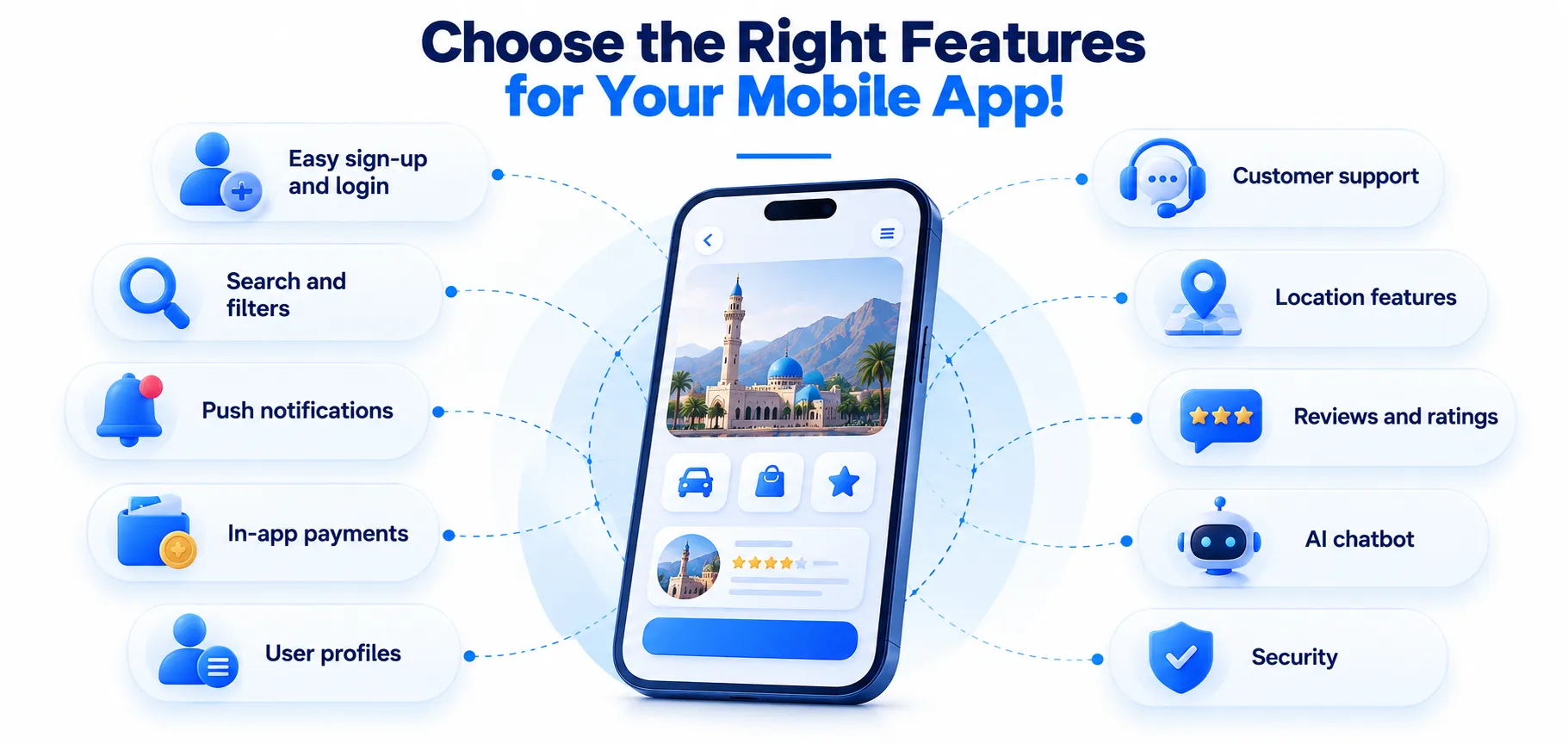
An app’s purpose plays a big role in deciding which features to include.
For instance, an online shopping application will require an entirely different set of features from a financial app or a medical app. If you’re planning web and mobile app development, some of the features worth considering include:
1. Easy sign-up and login
Make it simple for users to create an account and get started without going through too many steps.
2. Search and filters
Help users find the product, service or information they need without having to scroll through the entire app.
3. Push notifications
Use notifications to share order updates, reminders, offers and other information that users may need.
4. In-app payments
Let customers pay for products or services directly through the app using their preferred payment method.
5. User profiles
Give users a place to manage their personal details, preferences, saved items and account settings.
6. Customer support
Make it easy for users to contact your business, ask questions or get help when something goes wrong.
7. Location features
GPS and location-based features can be useful for deliveries, bookings, navigation and services available nearby.
8. Reviews and ratings
Let customers share their experience and give your business useful feedback about what is working and what may need improvement.
9. AI chatbot
From answering questions to helping users find information – an AI chatbot can take care of many basic support requests.
10. Security
Protect user accounts, personal information and payment details with appropriate security measures.
Which technologies are used for mobile app development in Oman?
When building an app, businesses need to choose technologies that fit their requirements (as well as the target platforms). This could mean native development or a cross-platform approach like Flutter app development.
Different projects call for different technologies. Some of the common options are:
| Technology | Common use |
| Flutter | Building apps for Android and iOS from a single codebase |
| React Native | Developing cross-platform mobile apps with native-like performance |
| Swift | Building apps specifically for Apple devices |
| Kotlin | Developing native Android applications |
| Node.js | Building the backend and APIs that support mobile apps |
| Python | Backend development, data processing and AI-based features |
| Firebase | User authentication, databases, notifications and app analytics |
| AWS | Cloud storage, backend infrastructure and other scalable app services |
Mobile app development process in Oman: Key steps to follow
There are several things to decide before development can get underway.
You first need to be clear about what the app is for, who will use it and what you want it to help them do. The process usually looks something like this –
1. Start with the app idea
The first step is to work out the app’s purpose and target users. From there, the development team can plan the project around those needs.
2. Decide on the features and design
Next, work out which features the app needs and how users will move through it. The screens, layout and overall user experience are planned at this stage.
3. Build the app
Once the plan and designs are ready, developers start building the app. The technology used will depend on the features, platforms and requirements of the project.
4. Test everything
Before the app reaches users, it needs to be tested properly. This helps find bugs, broken features and performance issues that need to be fixed.
5. Launch and keep improving
After testing, the app can be launched. The work doesn’t necessarily stop there. Updates, fixes and new features may be needed as users start using the app.
This is what the journey can look like when you’re figuring out how to build a mobile app.
Ready to Get Your Mobile App Development Project Started?
Have an app idea in mind? Let’s work through the features, technology and development steps needed to get it moving.
Factors to consider before hiring a mobile app development company in Oman
Building an app is a massive project, so the selection of a development team becomes crucial.
But before you choose one, there are a few things you should check.
1. Experience and expertise
See what kind of projects the company has worked on before. Look at the apps they’ve built, the technologies they use and whether they have experience with custom mobile app development.
2. Portfolio and client reviews
Go through their portfolio to see the type of apps they have built. If you’re planning iOS app development, check whether they have experience building and launching apps for Apple devices.
3. Development process
Ask how they approach planning, design, development, testing and launch. A clear process can make the project easier to manage.
4. Post-launch support
App development does not end at launch. Check whether the company provides maintenance, updates and technical support after the app goes live.
How can businesses monetise their mobile apps?
An app can do more than help you reach customers. If it is planned properly, it can also become another way for your business to make money. The right approach depends on what your app does, who uses it and what you’re offering.
Well, here are a few ways businesses can monetise their apps:
1. In-app purchases
You can let users buy extra features, digital products or premium content directly through the app. This works well when the basic version is free but users can pay for more.
2. Subscriptions
Users pay a set amount regularly to keep using certain features or content. Monthly and yearly plans are common options.
3. In-app advertising
You can display ads inside the app and earn revenue from them. This can work well for free apps with a large user base, as long as the ads don’t make the app difficult to use.
4. Freemium model
Give users the basic features for free and charge for advanced ones. This gives people a chance to try the app before deciding whether they want to pay.
5. Commission-based model
If your app connects customers with sellers or service providers, you can earn a commission from transactions made through the platform.
“Your monetisation strategy should be considered early, alongside decisions about features, technology & mobile app development services. For example, businesses planning React Native app development can build the app around the features and payment options their revenue model requires.”
Upcoming mobile app development trends in Oman
Mobile apps are not staying the same for long. New technologies, changing customer habits and better ways of doing things are all influencing how businesses build and improve their apps. A few trends are worth keeping an eye on in Oman.
1. AI in mobile apps
AI is becoming useful for much more than chatbots. Businesses can use it for personalised recommendations, smarter search, customer support and other app features. As AI app development becomes more common, we can expect more apps to use AI in practical ways.
2. More personalised experiences
People want apps to show them information and offers that are actually relevant to them. Using customer preferences and activity data, businesses can make the app experience more personal.
3. Mobile payments
Paying through a phone is becoming a normal part of everyday transactions. Apps will continue to include convenient payment options for shopping, bookings, subscriptions and other services.
4. Connected devices
Apps can also work with wearables, smart devices and other connected technology. This can be useful for businesses in healthcare, fitness, logistics and retail.
5. More flexible development
We’re also likely to see more businesses explore online mobile app development. At the same time, cross-platform tools are becoming more useful for businesses that want to reach users across different devices.
Plan and build your mobile app with Techugo
As more businesses in Oman invest in digital services, having a mobile app can help them serve customers in a more convenient way. You have to figure out what features you need, which technology to use, how the app should look and how it will work once people start using it.
At Techugo, we help businesses plan, design and build their mobile apps. Our team can help with everything from UI/UX design and development to testing and launch.
Whether you’re building an iOS, Android or cross-platform app, we’ll help you choose an approach that fits your business, your users and your goals. So, connect with our team and start working on your app today.
FAQs
1. How much does it cost to develop a mobile app in Oman?
You can expect to spend around OMR 3,800 to OMR 50,000+ on mobile app development in Oman (depending on what you want to build).
2. How long does it take to develop a mobile app in Oman?
A basic app can take around 2–3 months, while more complex apps may take 5–8 months or longer. The timeline depends on the scope and features of the project.
3. What is the process of developing a mobile app?
The process usually involves planning the app, deciding on features and design, development, testing, launch – and ongoing updates.
4. Should I build an iOS or Android app?
That actually depends on your users, budget and business requirements. If you want to reach people on both platforms, you can also consider cross-platform development instead of building two separate apps.

Get in touch
We'd love to hear from you.