

 SA
SA
 KW
KW
 IE
IE AU
AU UAE
UAE UK
UK USA
USA
 CA
CA DE
DE
 QA
QA ZA
ZA
 BH
BH NL
NL
 MU
MU FR
FR















📌 Key Takeaways
- Diet and nutrition apps can support more than calorie tracking, with features such as meal planning, food tracking, personalised recommendations, and progress monitoring.
- Wearable and healthcare integrations can bring activity and health data together in one app.
- The features and technology should be selected based on the app’s purpose, target users, data requirements, and future plans.
- Diet and nutrition app development can cost around $20,000 for a basic app and $200,000+ for an advanced AI-powered solution.
Nutrition apps today can do much more than just track calories.
Users can keep a record of their food, set health goals, get specific diet recommendations and even order the food items they require.
Moreover, diet and nutrition app development is giving businesses new ways to build and expand their wellness offerings. For example – businesses can connect their nutrition apps with grocery delivery platforms or explore grocery delivery app development to offer users a more connected experience. However, building a nutrition app that people actually find useful takes more than putting a food database behind a mobile interface.
In order to make it work, you must have the right features, technology, integrations and security measures. From app features to development pricing, monetization models to future trends, we will discuss it all in this guide.
Ready to plan the right nutrition app for your users?
Build a nutrition app with the features, integrations, and technology your idea needs.
Why are businesses investing in diet and nutrition app development in 2026?
Diet and nutrition apps have a growing market ahead of them.
Grand View Research estimates the market will reach $2.8 billion in 2026, compared with $2.1 billion in 2024, before reaching $4.6 billion by 2030.
This growth is creating new opportunities for businesses looking to enter or expand in the digital wellness space.
Even though market growth is a reason for companies investing in smart diet and nutrition app development, this is not the only reason. The implementation of these applications allows companies to provide their customers with personalized services, increase their engagement, and find new ways of making money.
For example, a business can use a nutrition app to provide services such as:
- Meal planning
- Diet tracking
- Food recommendations
- Progress tracking
Businesses can also use these apps to create more personalized user experiences. Instead of offering the same diet plan to everyone… the app can consider factors such as dietary preferences, health goals, activity levels and eating habits to provide more relevant suggestions.
The app can also be connected with other digital services, such as:
- Fitness apps
- Smartwatches
- Healthcare platforms
- Grocery services
These integrations have the potential to make a nutrition app much more than a calorie counter and food tracker. This also opens up the opportunity for diet planner app development, enabling companies to integrate meal planning, nutrition tracking, customized advice and associated services into a single application. With evolving user requirements, businesses can add new features and services to the app.
Types of diet and nutrition apps you can build
There are a variety of diet and nutrition apps that cater to different types of users. The type you select will depend on the target audience, the business model your business will have and the services you will provide.
Based on your target audience, you can build different types of apps:
1. Calorie tracking apps
These programs allow you to keep track of meals, calories, and other nutrients consumed daily. Progress tracking and custom nutrition suggestions can also be incorporated into fitness app development.
2. Diet planner apps
Diet planner apps assist users in organising meals according to their objectives, tastes and dietary necessities. Some features can include customizable meal plans, recipe suggestions, and grocery lists.
3. Nutrition coaching apps
The apps combine both nutritional and fitness tracking in one platform. They also sync data from wearables to better deliver nutrition recommendations based on activity monitoring.
4. Fitness and nutrition apps
Fitness and nutrition apps let users track their nutrition and fitness from one platform. By connecting with wearables… they can also use activity data to provide more personalized nutrition suggestions.
5. Specialized diet apps
These are diet-specific or lifestyle apps, like the keto diet, vegan diet, weight loss or sports nutrition plan. This way of nutrition app development enables companies to create services around a certain audience.
Benefits of developing a diet and nutrition app
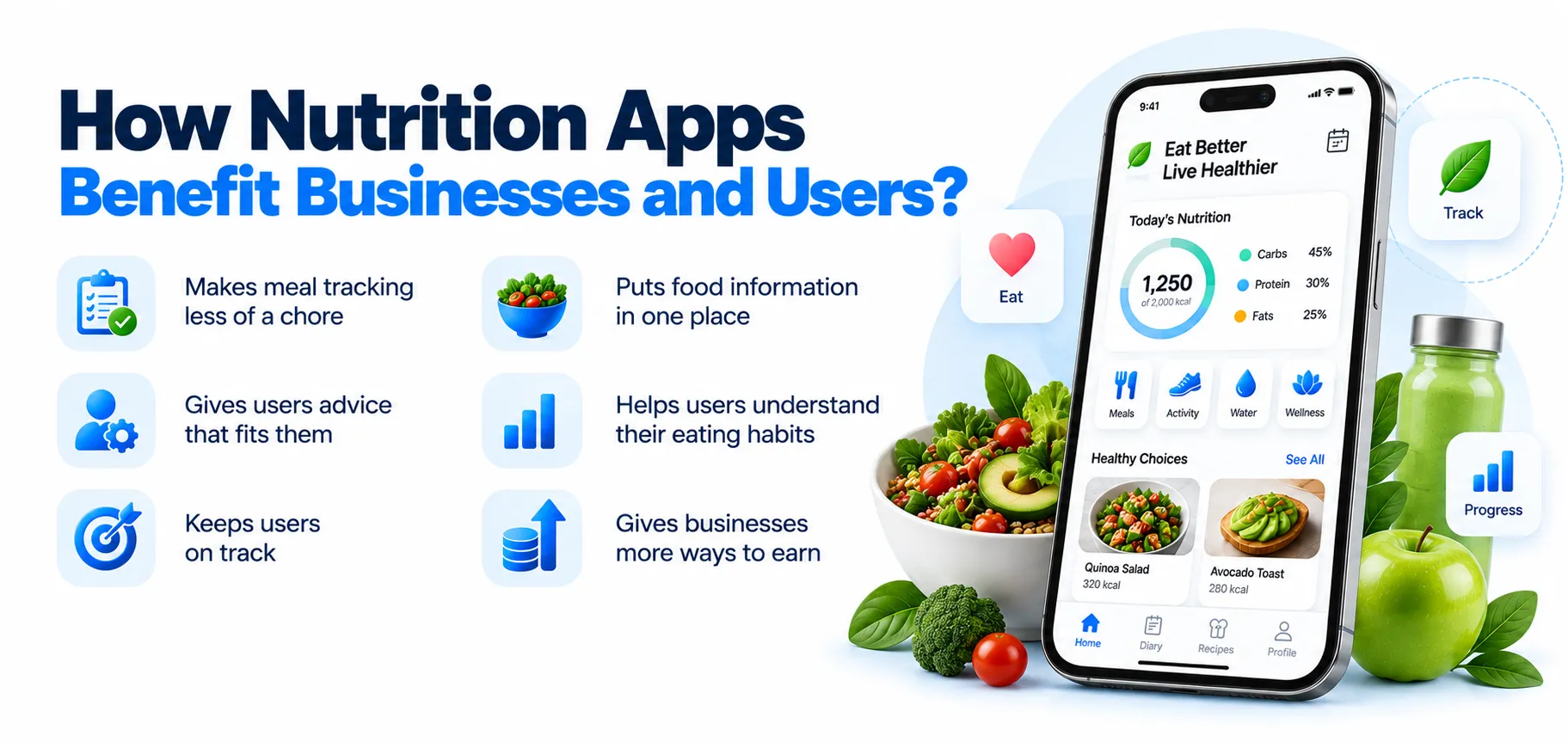
People often know they need to eat better, but keeping track of meals, calories, and nutrients every day can be a lot to manage.
This can be dealt with through diet and nutrition app development, which brings meal tracking, nutrition information, and progress updates into one place
A few benefits stand out when you look at what these apps can offer:
1. Makes meal tracking less of a chore
Recording all the meals or trying to recall what you have consumed gets exhausting. The application allows users to log meals effortlessly, examine calories and nutrients, and monitor their daily intake. As food delivery app development is a popular choice for different companies, food delivery apps can empower users to be more responsible when ordering their meals
2. Gives users advice that fits them
A diet and nutrition app can consider food preferences, dietary restrictions, activity levels – and personal goals when suggesting meals or nutrition plans.
3. Keeps users on track
After a couple of days of dieting, it’s easy to become demotivated. Reminders, progress tracking, and basic updates can provide users with a nudge to keep them on track with their eating habits.
4. Puts food information in one place
A user should not have to go online each time they desire to know how many calories or how nutritious a food is. An app is enough to provide them instant access to information on calories, nutrients, ingredients, portions, and so on. This is also an area where diet and nutrition tracking app development can make the user experience more useful.
5. Helps users understand their eating habits
Users don’t always know how their daily eating habits total up. If they habitually monitor their meals and nutrition, they will be able to identify trends in what they consume and adjust accordingly, based on what they observe.
6. Gives businesses more ways to earn
Another way to generate revenue from a diet and nutrition app is through alternative revenue streams. Depending on the needs of their users, businesses can provide their users with high-quality plans, paid meal plans or personalized consultations or subscriptions.
Must-have diet and nutrition app features
The right features can make a diet and nutrition app user-friendly and more helpful for those who are attempting to manage their diet and nutrition. Some important diet and nutrition app features to consider include:
- Track food and meals – Let users record meals and see calorie and nutrient details.
- Dietary plans – Develop meal ideas for diet choices, plans, allergies, and activity.
- Progress tracking – Enable users to see how many calories they have consumed, nutrition, weight progression and other related goals over time.
- Reminders and notifications – Remind them about eating or drinking water or other daily nutrition targets.
- Food database – Provide users with instant access to calorie, ingredient, portion and nutrient information for food.
These features can be included as part of diet and nutrition app development based on the app’s target users and goals. A knowledgeable nutrition app developer can also help determine which features are sensible for the platform.
AI features to include in diet and nutrition apps
The ability of AI does not only lie in tracking meals but it also helps in providing users the necessary advice. AI is capable of understanding the habits of its users in order to provide the right recommendations.
Check out some AI features you may want to think about.
- Personalized meal recommendations – Suggest meals based on users’ dietary preferences, goals, allergies, and eating habits.
- Food recognition – Use a camera to identify food items and estimate their calorie and nutrient content.
- Smart nutrition insights – Analyze food logs to identify eating patterns and provide useful suggestions.
- AI meal planning – Create meal plans based on users’ nutritional needs, preferences, and daily routines.
- Wearable integration – During wearable app development, apps can connect with fitness trackers and smartwatches to use activity data for more relevant nutrition recommendations.
Experts in AI nutrition app development can help you pick features that are perfect for your application. With the right approach to diet and nutrition app development, AI can make everyday nutrition tracking more useful and personal.
How to develop a diet and nutrition app: key steps to follow
If you’re looking into how to create a diet app, start by figuring out who the app is for – and what you want it to help users achieve. From there, you can plan the features, technology, and development process around those needs.
1. Define your target audience
Start by deciding whether your app will focus on weight management, fitness, a specific diet or general nutrition tracking. When you know your audience, you can select the features that meet their needs.
2. Plan the key features
Now, plan the key features. Your app can include such features as meal tracking, calorie counting, food database, meal planning, reminders, progress tracking and wearable integration. .
3. Design the app
Simplicity is the key, so your app must have a nice design that will help users plan their meals, see the nutrition information and track their progress.
4. Choose the right technology
Choose appropriate frameworks, APIs, the database – and other technologies to power your app. It is possible to use AI in healthcare to enhance the functionality of these apps with features like customized meal recommendations, food identification and nutritional insights.
5. Develop and test the app
During diet and nutrition tracking mobile app development, build the planned features and test the app across different devices to identify and fix issues.
6. Launch and improve
Once launched, collect user feedback and use it to improve the app through regular updates.
If you choose to work with a professional diet and nutrition app development team, you can get support throughout the planning, development, testing and launch stages.
Build Your Diet App With the Right Development Approach
From feature planning and technology selection to testing and launch, get the support needed at each stage.
Key technologies behind diet and nutrition apps
The technology stack is what keeps your diet and nutrition app running in the background. If you’re building nutrition analysis software for dietitians, it should also be able to handle nutrition data and analysis reliably.
Let’s break it down.
Here are some of the key technologies you may need:
| Technology | Examples | What it does |
| Mobile app framework | Flutter, React Native | Helps create the app for iOS and Android |
| Backend | Node.js, Python, .NET | Runs the core functions that keep the app working |
| Database | PostgreSQL, MySQL, MongoDB | Keeps all your app and user data in one place |
| AI and ML | TensorFlow, PyTorch, OpenAI APIs | Helps the app recognize foods and make relevant suggestions |
| Cloud services | AWS, Microsoft Azure, Google Cloud | Gives the app a place to store data and run its services |
| Nutrition APIs | Food and nutrition databases | Brings food, calorie, and nutrient information into the app |
| Health and wearable APIs | Apple HealthKit, Google Health Connect | Lets the app pull in health and activity data from other devices and apps |
| Analytics | Firebase Analytics, Google Analytics | Shows how users use the app and its different features |
| Security | OAuth 2.0, JWT, SSL/TLS | Keeps user information and accounts protected |
How much does diet and nutrition app development cost?
The cost can look very different depending on how simple or feature-rich the app is. Here’s a quick breakdown to give you a better idea.
| App type | Estimated cost | Typical development time |
| Basic diet app | $20,000–$40,000 | 2–4 months |
| Mid-level nutrition app | $40,000–$80,000 | 4–6 months |
| Advanced nutrition app | $80,000–$150,000+ | 6–10+ months |
| AI-powered nutrition app | $100,000–$200,000+ | 8–12+ months |
Notably, an app that merely helps in tracking meals will cost less than an app that includes AI, wearable technologies and advanced functionalities. The diet and nutrition app development cost not only depends on the features and functions to be included but also on other factors such as app design and required technology.
Challenges you may face when building a diet and nutrition app
Creating an app for diet and nutrition has its own challenges which must be taken care of in the initial stages. These are some of the common ones you should know about –
1. Keeping nutrition data accurate: Food information, calorie counts and nutrient values need to be reliable (and regularly updated).
2. Security and data handling of personal information: Nutrition apps deal with private and health and lifestyle details, thus security and proper information handling are crucial.
3. Making recommendations relevant: Features such as personalized meal suggestions or a healthcare chatbot need to provide useful responses based on the user’s goals and available information.
4. Connecting with other platforms: The integration with other platforms may require additional development efforts and testing – such as with other wearables, health applications and nutrition databases.
5. Keeping the app easy to use: If there are too many features, then the app can be confusing. Meal logging and other everyday tasks should remain simple.
6. Supporting app growth: As your users increase, your app will require more infrastructure to accommodate additional users, data and activity without degradation in performance.
Future trends in diet and nutrition app development
New technology makes it easier for people to monitor their food and nutrition. This has led to diet and nutrition app development becoming more personalized, connected and convenient.
Some trends to watch include:
1. AI-powered recommendations – AI can analyze users’ objectives, food preferences, activity and eating patterns to provide more personalized food and nutrition recommendations.
2. Wearable integration – Apps can connect with smartwatches and fitness trackers to utilise activity, sleep and other health data.
3. Voice-based food logging – Users can type up meals via speech-to-text, instead of typing in each detail one by one.
4. Food recognition – Using image recognition, food identification can be achieved from photos and cross-referenced with nutritional values.
5. Personalized meal plans – Apps can create meal plans around dietary preferences, budgets, health goals and daily routines.
6. Healthcare integration – Nutrition apps can work alongside healthcare systems to help users and healthcare providers stay better connected.
How to choose a diet and nutrition app development company?
1. Check their experience
Have a look at their past projects, particularly their nutrition, fitness, healthcare, or wellness-related apps. In the case of healthcare software development, they might already have experience in data security, integrations, and other essential features of health-oriented apps.
2. Look at their technical skills
Ensure that the team has experience with the technologies that your app might utilize, including AI, APIs, cloud technologies, wearable integration, and mobile app frameworks.
3. Ask about data security
Inquire about how the team will ensure the security and privacy of user information and adhere to related requirements.
4. Discuss the development process
Before beginning the project, ask these questions –
- What is the timeline?
- How will communication work?
- How will testing be handled?
- What post-launch support will be provided?
This will provide you with a better understanding of project management.
5. Consider long-term support
After your app launches you may need to make updates, bug fixes, new features and improvements to your app. Select a diet and nutrition app development company that will be able to continue supporting your app as your needs evolve.
Build your diet and nutrition app with Techugo
Are you thinking about creating a nutrition and diet app? If that’s the case, Techugo is the partner you need at every stage of the process. Our experts have extensive experience in mobile app development, AI feature implementation, API integration, wearable device connectivity and secure cloud technologies.
With our assistance, you can define the necessary features and choose the technologies that best fit your requirements. Regardless of the type of diet app you want to create, we will help you shape it in compliance with your demands and wishes.
Techugo is the mobile app development company you can count on. So, why not tell us about your app idea and let’s get started?
FAQs
1. How much does it cost to develop a diet and nutrition app?
A basic diet and nutrition app can cost around $20,000 to $40,000, while apps with AI, wearable integrations, and advanced features can cost $100,000 or more.
2. How long does it take to build a nutrition app?
A basic nutrition app can take around 2 to 4 months to build. If you’re planning something more advanced, with AI or multiple integrations, it can take 6 to 12 months or longer.
3. What features should a nutrition app have?
That depends on your target users and what you want the app to offer. Meal tracking, calorie tracking, personalized meal plans, food databases, reminders and progress tracking are some common options.
4. Can AI be used in diet and nutrition apps?
Yes. AI can be used for things like food recognition, personalized meal suggestions and nutrition insights based on a user’s goals and habits.

Get in touch
We'd love to hear from you.