


 SA
SA
 KW
KW
 IE
IE AU
AU UAE
UAE UK
UK USA
USA
 CA
CA DE
DE
 QA
QA ZA
ZA
 BH
BH NL
NL
 MU
MU FR
FR




















📌 Key Takeaways
- Digital transformation helps banks improve customer experiences, services and everyday operations.
- AI, cloud technology, automation and data analytics are becoming important parts of modern banking.
- Modernising legacy systems can make it easier for banks to add new services and technologies.
- Strong security, data protection and system integration are essential as more banking services move online.
- Digital transformation is an ongoing process, so banks need to monitor their digital services and improve them over time.
For many customers, banking now starts with a smartphone rather than a branch.
They believe that they can conduct regular financial transactions online, without having to call or stand in line. Banks are evolving by introducing mobile banking, AI, automation & digital payment platforms.
This change is driving digital transformation in banking to become a key component in remaining competitive and adapting to evolving customer expectations. Making a banking business different, however, is not all about new tools. Legacy modernization, data protection, technology integration, and future growth are also key for banks.
Here, we will examine some of the main advantages, strategies, technologies, application examples, problems, and expenses of banking transformation. We will also examine how digital transformation services can support banks in effectively planning and implementing such changes.
Looking for Digital Banking Development Support?
Get support with planning, technology selection and development to build secure and user-friendly banking solutions.
Why are banks investing in digital transformation services?
There is more pressure on banks to deliver a better digital experience than ever before.
Financial firms are focusing on digital transformation services to meet evolving customer needs and a digital financial landscape. Some of the primary reasons are:
1. Changing customer expectations: Customers want quicker and easier account management, payments, loans and support.
2. Growing fintech competition: Traditional banks are pressured to enhance their digital offerings as fintech companies offer convenient digital products. By leveraging fintech app development, banks can create and enhance their mobile financial services.
3. Need for better efficiency: Automation can improve manual processes and enable employees to work more efficiently with repetitive tasks.
4. Modernizing legacy systems: Older systems can make it harder to introduce new services, technologies and features.
5. Better use of data: AI and analytics can enhance banks’ understanding of customer behaviour to inform better decisions.
6. Staying relevant: Banks should continually update their technology to stay relevant as the digital transformation in the banking industry accelerates.
Digital transformation in banking vs digitization: What’s the difference?
Digitization is part of digital transformation, but the two terms do not mean the same thing.
Here’s a quick comparison –
| Aspect | Digitization | Digital transformation in banking |
| Focus | Converting information into digital formats | Changing processes, services and operations |
| Scope | Usually limited to specific tasks | Broader, organization-wide changes |
| Goal | Make information easier to store and access | Improve efficiency, customer experience and business operations |
| Example | Converting paper records into digital files | Using AI, cloud and automation to improve banking services |
Main benefits of digital transformation in banking
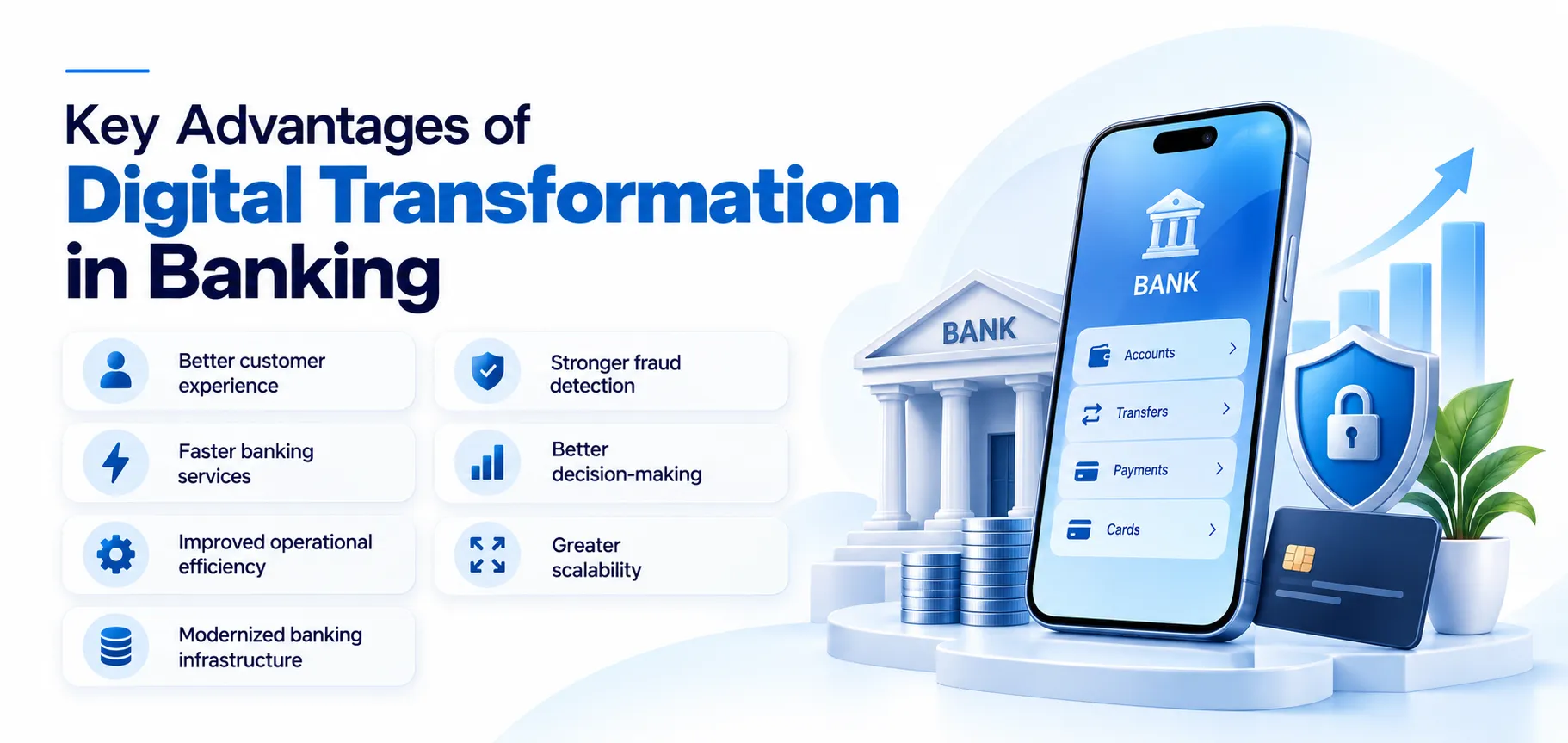
Digital transformation can enhance the customer experience and the business processes as well. The ongoing evolution of banking and digital transformation is opening opportunities for financial institutions to meet evolving customer demands.
Below are some of the main ways digital transformation can benefit banks.
1. Better customer experience
Digital banking platforms allow for easier account checking, payments, applications for financial products and support without the need to visit a branch. It’s one of the key advantages of digital transformation in financial services, as people can use more services in an easy and convenient way through digital channels.
2. Faster banking services
Digital workflows and automation can help streamline the process of account opening, verification, loan applications, and payments, among others. This can make everyday banking tasks easier (and reduce waiting times).
3. Improved operational efficiency
Automation will save time by eliminating repetitive manual tasks such as data entry, document processing, and routine customer requests. This will then allow employees to focus on what they are good at and what needs to be done.
4. Modernized banking infrastructure
For banks, legacy application modernization can be a solution to either remove or upgrade legacy systems that hinder the ability to add new services and technologies. Nowadays, banking platforms are easier to scale and maintain with modern infrastructure.
5. Stronger fraud detection
AI and machine learning can be used to monitor transaction patterns and detect any irregular activity. This informs banks when something is fraudulent and helps address suspicious transactions promptly.
6. Better decision-making
Having access to well-structured and current data can provide banks with insights into trends and customer needs – and help them make better business decisions.
7. Greater scalability
Cloud-based systems and the latest digital platforms can be instrumental in banks’ efforts to handle more customers and more transactions. This is where digital transformation in banking becomes helpful, not just for enhancing existing services, but also in the interest of banking’s future growth.
How to implement digital transformation in the banking industry
New technology alone will not transform a bank.
There needs to be a clear plan for where it fits, what it should improve and how it will affect customers and employees.
Here are some key steps banks can follow to implement digital transformation effectively.
1. Assess current systems
Start by reviewing existing systems, processes and customer experiences. This can help banks identify areas that need improvement and decide where digital transformation for banking can have the most impact.
2. Set clear goals
Banks should define what they want to achieve through digital transformation in banking, whether it is improving customer service, strengthening security or introducing new digital services.
3. Choose the right technology
The right technology will depend on the bank’s goals and existing infrastructure. AI, cloud platforms, automation, data analytics and modern banking applications can support different transformation needs. Digitalisation in financial services can also help banks improve how they deliver and manage their services.
4. Plan and monitor the implementation
The process of digital transformation ought to be implemented gradually in stages. Banks have the option to begin with areas of interest, introducing innovations and acquiring feedback on their effectiveness. After the implementation of new systems, financial institutions ought to constantly observe their performance to introduce any necessary alterations in view of customer demand.
Need Help Implementing Digital Banking Solutions?
From planning and technology selection to development, our team can support your digital banking project.
Common challenges of digital transformation in finance
Digital transformation can bring major changes to how financial institutions operate, but the process is not always simple.
As digital transformation in fintech continues to introduce new ways of delivering financial services, banks also need to deal with existing systems, security concerns and changing customer expectations.
Here are some common challenges banks may face during digital transformation.
1. Legacy systems
Older banking systems can make it difficult to introduce new technologies or connect modern applications. Replacing or upgrading these systems can also take considerable time and planning, making digital banking transformation more complex.
2. Data security and privacy
Banks manage sensitive monetary and personal data, and safeguarding it is vital. The emergence of new digital platforms can introduce new security needs; banks must have adequate security measures to protect customer information and ensure no one accesses it without permission.
3. Integration issues
The new technology should be compatible with existing banking systems and applications. The lack of integration can cause data silos, technical challenges and disruption to the day-to-day banking experience. Hence, it is essential that banks take into consideration system compatibility when planning digital transformation in banking.
4. Employee adoption
Employees may struggle to adapt to new technologies. Training and support to help employees understand new tools and processes may be required for banks.
5. Regulatory compliance
When financial institutions undergo digital transformation, they may encounter difficulties in meeting regulatory requirements. As banks develop new digital services… they must abide by the strict regulations in place.
6. Managing costs
The cost of digital transformation can also be a challenge. There’s a need to invest in technology, infrastructure, security and employee training to drive digital transformation. Banks must carefully consider these costs and ensure that the changes are aligned with their long-term business objectives.
Practical digital transformation use cases in banking
Banks are using digital technologies in different areas, from customer service and payments to lending and fraud prevention.
The impact of digital transformation in financial services can be seen in these everyday applications, which are changing how banks deliver and manage their services.
Here are some common ways digital transformation in banking is being put into practice –
1. Mobile banking: Banks can offer account management, payments, transfers and other services through mobile apps.
2. AI-powered customer support: AI chatbots can handle common questions and provide customers with quick assistance.
3. Automated loan processing: Automation can assist banks with the verification process and loan application evaluation and decrease manual work.
4. Fraud detection: AI and machine learning systems can track transactions and detect irregular activity.
5. Digital payments: Digital payment solutions enable customers to make quicker and easier transactions.
Key strategies banks can use for digital transformation
In order for banks to be successful in digital transformation – they need more than just the latest technology. They need a strategy that links technology to customer needs, business objectives and everyday banking. A digital transformation strategy consulting team can also help banks identify where they should begin and how to implement the changes necessary.
Here are some key strategies banks can consider for successful digital transformation:
1. Focus on customer needs
Start with what customers actually need from their banking experience. Faster payments, easier account management, quick support and simpler loan applications can show banks where improvements are needed. This helps keep digital transformation for banks focused on making banking easier for customers.
2. Modernize legacy systems
Older banking systems can make it harder to add new features and connect with modern applications. Updating or replacing these systems can give banks a better foundation for new digital services.
3. Make better use of data
With so much customer and transaction data available, banks can use AI and analytics to understand what the data is telling them and make more informed decisions.
4. Move to the cloud
Cloud technology can give banks more flexibility as their digital services and data grow. It can also make it easier to connect different applications and support new digital tools.
5. Automate routine work
Many banking processes still involve repetitive manual tasks. Banks can use automation for activities such as data entry, document processing, customer onboarding and loan processing to save time and reduce manual work.
6. Keep security a priority
As banks move more services online, they also have more customer data and transactions to keep safe. Strong authentication, fraud detection, encryption and other security measures can help protect this information and reduce security risks.
7. Keep improving digital services
Digital transformation in banking is not something banks finish after launching a new system. They need to see how their digital services are working, listen to what customers have to say and make changes when their needs or technology change.
Where AI fits into digital transformation in banking
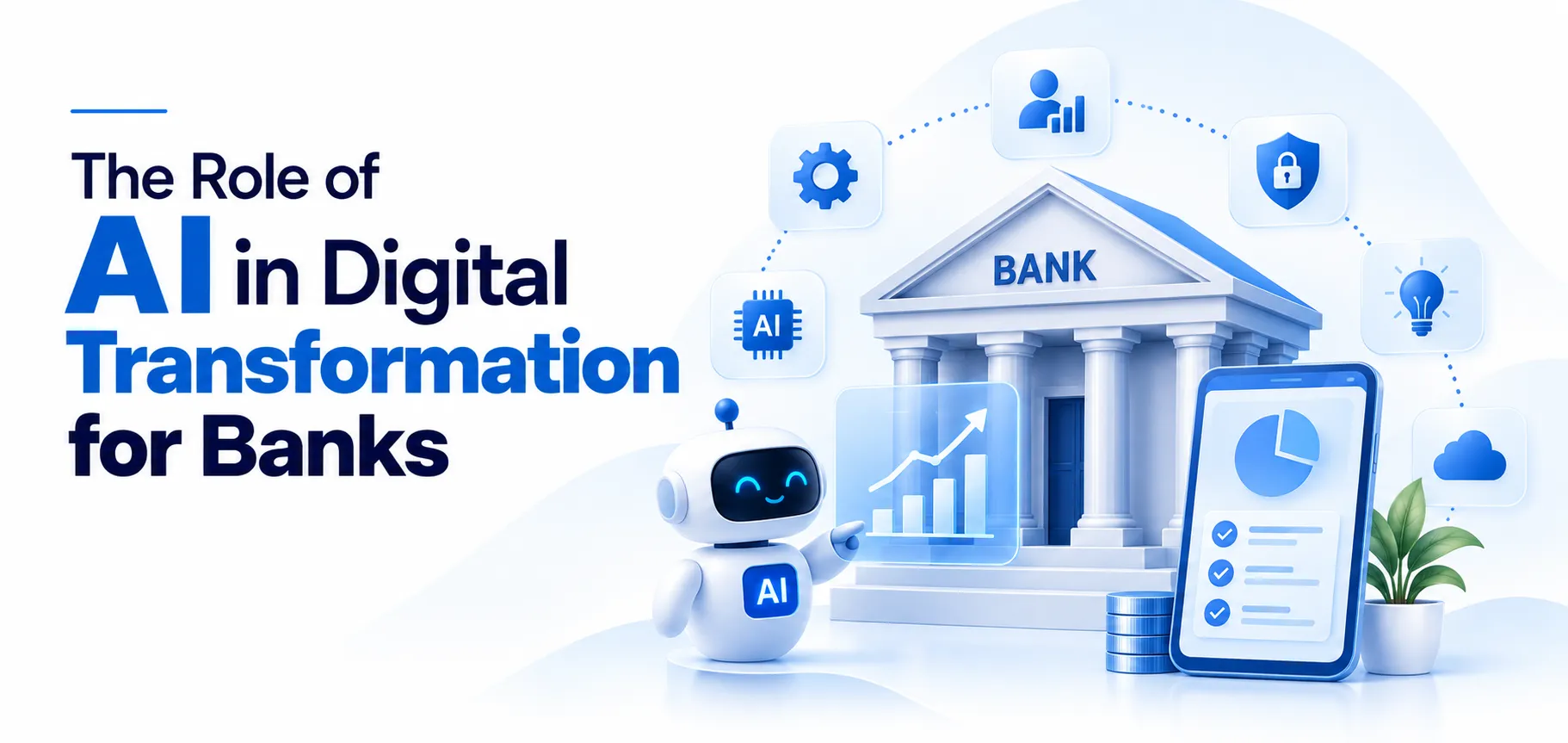
AI can be beneficial in various aspects of contemporary banking, particularly in the management of huge volumes of information or routine tasks. AI in banking can assist in customer support, fraud detection, loan processing, customer behaviour analysis and more.
For instance, AI can help banks detect suspicious activity. During the loan process, it can review text or data, while chatbots can be used to answer frequently asked customer questions. It can also assist banks in understanding their customers and provide them with more relevant services based on that understanding.
This makes AI a useful part of digital transformation in banking and finance. Banks, however, don’t have to employ AI in all aspects. The emphasis here should be on using it to solve a problem. This is what digital transformation in banking can achieve in addition to introducing new technology.
Key technologies behind modern banking transformation
Banks are using different technologies to make their services better and keep up with what customers expect.
Here’s a look at some of the key technologies behind this change.
| Technology | How it is used in banking |
| Artificial intelligence | Supports fraud detection, customer service, risk assessment & personalised services |
| Cloud computing | Helps banks manage data, scale applications and build flexible digital infrastructure |
| Automation | Automates repetitive tasks such as document processing and customer requests |
| Data analytics | Helps banks analyse customer and transaction data to make better decisions |
| Blockchain | Can support secure transactions, identity management and other financial processes |
| APIs | Allow banking systems to connect with other applications and financial services |
| Mobile technology | Enables customers to access banking services, make payments and manage accounts through mobile apps |
Digital transformation in banking: costs to consider
Well, costs can look very different from one project to another. For a basic project, banks may spend around $50,000 – $100,000. Larger digital transformation projects can easily go beyond $250,000.
Take a look at the cost breakdown below:
| Digital transformation area | Estimated cost |
| Digital banking app | $50,000–$200,000+ |
| AI-powered banking features | $30,000–$150,000+ |
| Cloud migration | $50,000–$250,000+ |
| Legacy system modernisation | $100,000–$500,000+ |
| Banking system integration | $20,000–$100,000+ |
| Cybersecurity and compliance upgrades | $30,000–$150,000+ |
Digital transformation trends in financial services shaping the future
1. AI-powered financial services
From detecting suspicious transactions to answering customer inquiries and assisting with loan applications, AI is increasingly becoming integral to financial operations. AI can be applied to analyze vast volumes of data, identify patterns, and assist in risk assessment within the banking sector.
2. Real-time data and analytics
Banks are starting to use real-time data to make decisions more quickly. They can look at transactions and customer interactions to spot anything unusual, understand customer behaviour & offer services based on what their customers need.
3. Cloud-based banking infrastructure
Banks are given more flexibility by cloud technology to design and manage their digital systems. Cloud solutions in digital transformation can also help ease the burden of scaling applications, handling large data volumes and enabling newer technologies.
4. Open banking and embedded finance
Open banking is becoming more convenient for accessing financial data and services from other platforms. Embedded finance is also expanding, with payments, lending and other financial services being integrated into non-financial apps.
5. Stronger digital security
Security is a key area of digital transformation in banking, as more and more of this industry is going online. Financial firms are making identity verification, transaction monitoring, authentication and data protection more resilient to help safeguard digital services.
6. More personalised customer experiences
Customers expect convenient and personalised financial services. Banks can leverage customer information to provide better recommendations, quicker service and customised advice.
These are some of the top digital transformation trends in financial services that are impacting customer interactions with financial institutions.
Build smarter financial solutions with Techugo
Want to take your financial services online?
As a mobile app development company, Techugo helps you develop secure and easy-to-use finance applications. We can help businesses develop such solutions, ranging from digital payments, authentication, and more to AI-driven features, based on our versatile expertise in applying technology to finance.
So, without any delay, connect with our team and start building your financial app.
FAQs
Q. What is digital transformation in banking?
It means using technologies such as AI, cloud and data analytics to improve financial services, processes and customer experiences.
Q. What are the top digital transformation trends in financial services?
Some major trends include AI, cloud banking, real-time data, open banking, embedded finance, stronger security and personalised services.
Q. How is AI used in financial services?
Banks can use AI to detect suspicious transactions, answer customer queries, analyse data and support loan processing.
Q. How does cloud technology support digital transformation in banking?
Cloud technology helps banks manage their digital systems, handle large amounts of data and scale their applications more easily.

Get in touch
We'd love to hear from you.