

 SA
 KW
 IE
 AU
 UAE
 UK
 USA
 CA
 DE
 QA
 ZA
 BH
 NL
 MU
 FR







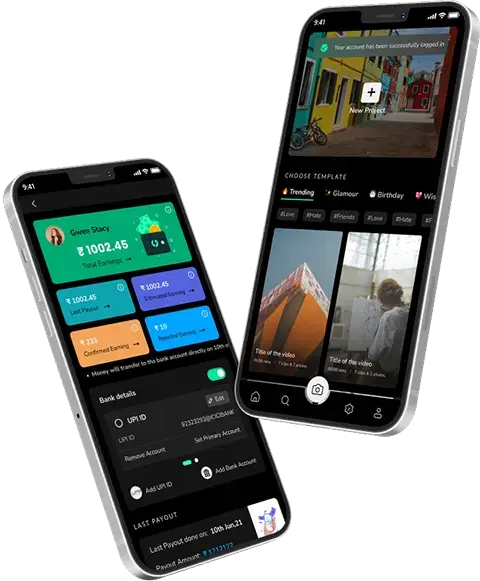



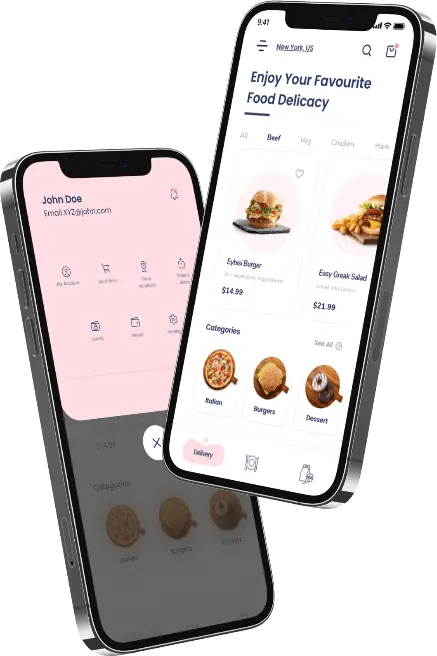

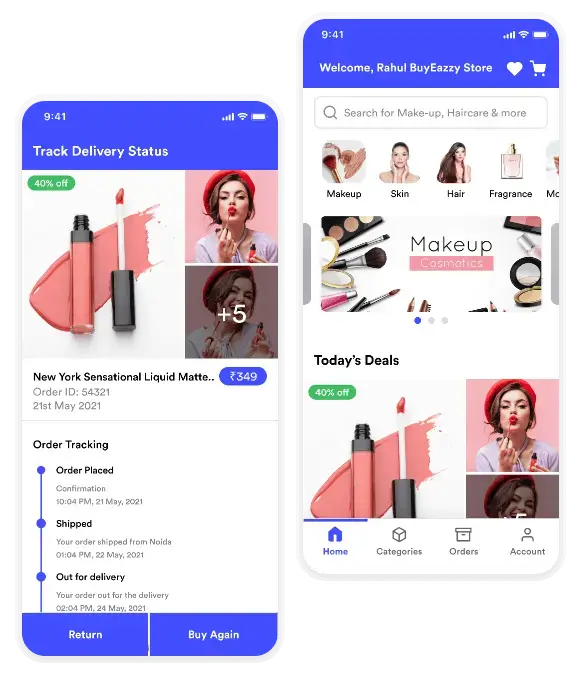


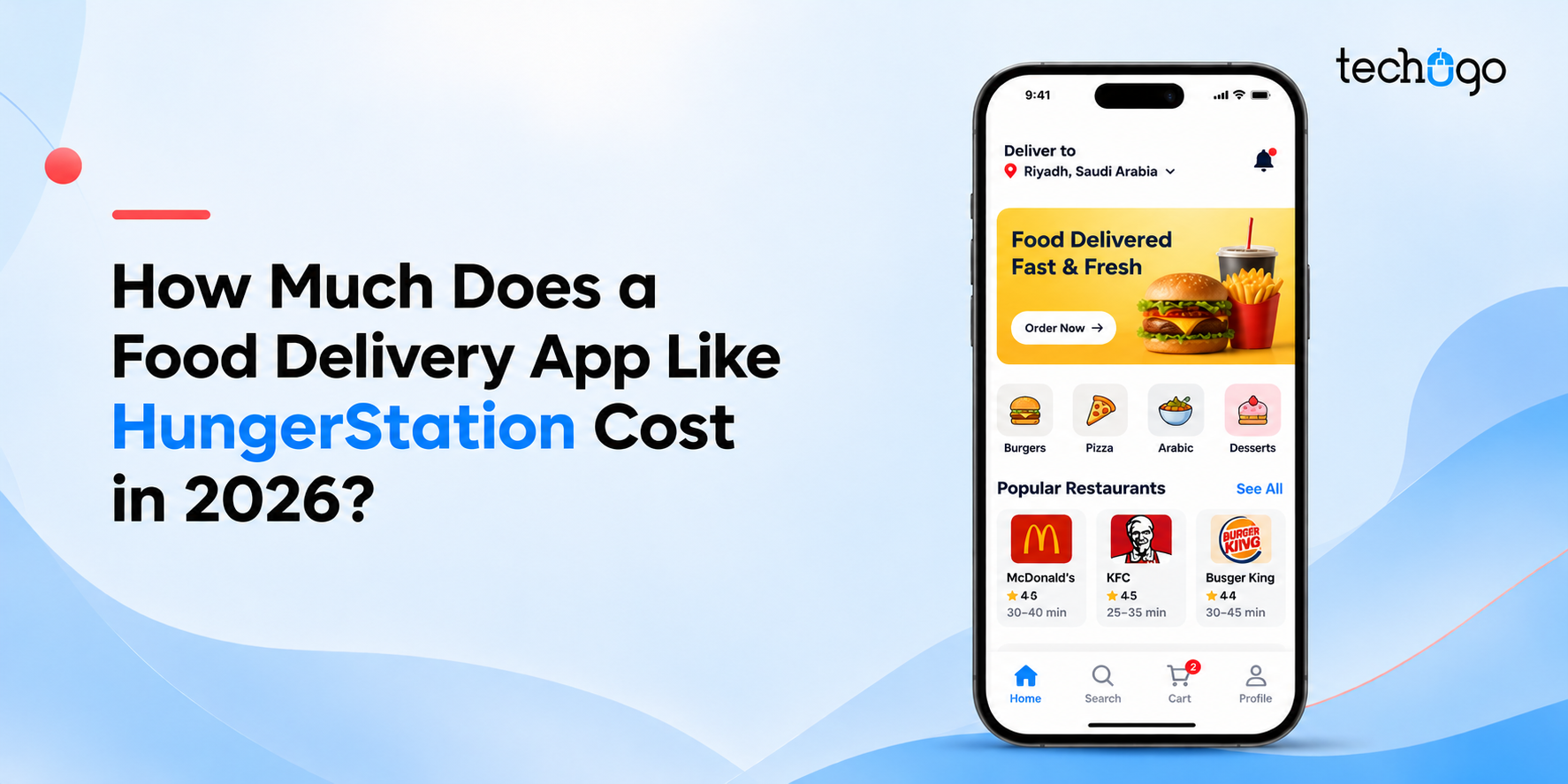


HungerStation has set the benchmark for Saudi food delivery apps, however, building a similar platform in 2026 requires more than just a great idea. It demands careful planning and research, right technology, features and a well-defined business model.
Before you start, it is crucial to understand the development cost. Depending on the scope of your project, the cost to build a food delivery app like HungerStation in Saudi Arabia ranges from SAR 112,500 to SAR 937,500+ in 2026. However, this is an indicative estimate. Factors such as food delivery app features, platform, AI capabilities, payment integrations, regulatory requirements and several other factors influence the final budget.
In this guide, we’ll break down the cost, features, compliance requirements and the process to develop a food delivery app like HungerStation in Saudi Arabia.
Planning to build a food delivery app like HungerStation?
Discuss your business model, essential features, estimated development cost, and technical requirements with Techugo's food delivery app development team.
HungerStation: One of Saudi Arabia’s leading food delivery apps
HungerStation is a renowned food delivery app in Saudi Arabia. Launched back in 2012, the app gives users access to restaurants, cafes, and grocery stores, allowing them to browse the menu, place an order, and get their food delivered very quickly. It’s grown into one of the most comprehensive on-demand marketplaces for food delivery. It is known for its friendly user interface, extensive network of restaurants, and quick delivery times.
Today, HungerStation connects customers with over 65,000 partners and merchants across the Kingdom, including restaurants, supermarkets, pharmacies, flower shops and bakeries. These diverse offerings have helped it become one of the most recognised Saudi food delivery apps in the market. This also makes it a notable example of modern grocery delivery apps in Saudi Arabia.
Since HungerStation is one of the top two dominant platforms in the KSA (alongside Jahez), it becomes important to understand HungerStation’s business model, scale and features and functionalities that can help entrepreneurs make rough calculations of how much it would cost to build a similar food delivery app in Saudi Arabia.
Why develop a food delivery app like HungerStation in Saudi Arabia?
Saudi Arabia offers considerable opportunities for businesses entering the online food delivery market. The growth of digital payments, smartphone usage, e-commerce, and on-demand services has changed how customers discover restaurants and order meals.
According to Redseer’s 2026 analysis of the Saudi food delivery market, the market reached SAR 24 billion in gross booking value (GBV) in 2025, supported by more than 60,000 restaurant locations and over 100,000 monthly active riders.
GBV represents the total value of transactions processed through the market. It shouldn’t be confused with the revenue earned by food delivery platforms.
The Transport General Authority’s Q1 2026 delivery sector figures, reported by Saudi Gazette, also recorded more than 118 million delivery orders across Saudi Arabia, representing 49% year-on-year growth. This figure covers the wider delivery sector, not food orders alone.
These developments create opportunities for businesses planning food delivery platforms. Here are some of the main benefits.
1. Increase revenue opportunities
A food delivery platform gives restaurants another channel to reach customers and receive orders. It allows them to serve people who prefer ordering meals at home or work instead of visiting a physical location. As a platform owner, you can generate revenue through restaurant commissions, delivery fees, subscriptions, and promotional placements. You can also expand into grocery and other delivery categories as your business grows.
2. Improve customer convenience
Restaurant apps like HungerStation allow users to place orders from a vast selection of eateries with just a few taps from their phones. You can search menus, create custom orders, and get accurate delivery estimates and real-time order updates. This convenience increases customer satisfaction and encourages repeat purchases.
3. Expand your customer base
With an app that delivers food, restaurant owners can expand their reach beyond their location. This will allow them to serve customers who might not have been able to come in person, reach clients in various areas, expand the customer base, and increase brand exposure. For platform owners, adding multiple restaurants and delivery partners can help expand service coverage across different neighbourhoods and cities.
4. Enhance customer loyalty & retention
A food delivery app can include features such as loyalty programs and promotional offers. These fantastic features help foster customer loyalty and encourage repeat purchases. Companies can strengthen customer relationships by providing a superior user experience, personalized deals, and timely delivery.
5. Efficient order management
Food delivery apps streamline the process of managing orders for eateries. They can take and handle orders digitally, which reduces the chance of confusion or issues. It also improves effectiveness because orders are tracked, completed quickly, and monitored. Delivery partners can also receive assignments, update delivery progress, and communicate with customers through the platform.
6. Increase brand visibility & marketing opportunities
A food delivery platform gives restaurants an additional way to showcase their menus, offers, and services. As the platform grows, you can introduce sponsored restaurant listings, promotional banners, personalised offers, and featured placements. These options can also become additional revenue sources for the platform owner.
Must-have features in a food delivery app like HungerStation
Building a food delivery app like HungerStation requires features that support customers, restaurant partners, delivery personnel, and platform administrators. Each user group needs specific tools to complete orders, manage operations, and track activities.
Here are some essential features to consider when working with a mobile app development company in Saudi Arabia.
1. User-Friendly Interface
The application should have a simple layout that allows customers to browse restaurants, explore food categories, view menus, and place orders without unnecessary steps. Clear navigation, readable menus, and an easy checkout process can improve the overall ordering experience.
2. Easy Registration Process
The app should allow signing up using an email, Facebook, or Google account. This reduces the work and time required for the onboarding process, which can be beneficial, particularly for brand-new people. Therefore, signing up should be easy.
3. Multiple Payment Options
It should support credit, debit cards, e-wallets, and cash-on-delivery payment methods as part of the application. This flexibility ensures that the app meets customers’ needs and improves the user experience.
4. Real-Time Order Tracking
Customers are also able to track an order’s progress from the moment they place it until it arrives on the doorstep of their choice. This gives the customer a clear view of their orders’ progress and makes them aware of it.
5. Ratings & Reviews
When they receive their parcels, the customers can rate the delivery service they have received and leave reviews about the store and delivery companies. Feedback systems are pivotal in maintaining high standards while constantly upgrading service delivery quality.
6. Advanced Search Filters
Specific search parameters, such as pricing and categories, let customers easily locate specific items in a particular retailer or across many stores. This can enhance the shopping experience, allowing shoppers to easily locate what they are looking for.
7. In-App Messaging
In-app messaging allows customers to communicate with restaurants or delivery partners about order-related queries. It can also help customer support teams resolve issues and share important updates.
8. Promo Codes & Discounts
Allow customers to apply promotional codes during checkout to receive discounts or other benefits. Restaurant partners and administrators should be able to create and manage offers based on campaign rules, eligibility, and validity periods.
9. GPS Integration
This is essential when you plan to develop an app like HungerStation. Incorporating your app’s GPS capabilities will make it easier for drivers, customers, and restaurant owners to use. They can verify delivery times, locate the exact spot, observe traffic congestion, and move efficiently.
10. Admin Dashboard
The admin dashboard allows platform administrators to manage customers, restaurants, delivery partners, orders, payments and customer feedback from a central interface.
11. Delivery Management System
A delivery management system helps assign orders to delivery partners based on their availability, location, and delivery requirements. It also allows businesses to monitor assignments and track delivery progress.
12. Multi-Language Support
For Saudi Arabia, consider providing Arabic and English interfaces. The application should support right-to-left layouts for Arabic, including menus, navigation, notifications, and checkout screens.
13. Analytics Dashboard
Restaurant owners get an analytics panel that provides details about customer interactions, sales orders, and other factors, assisting them in making business decisions.
14. Estimated Delivery Time
It will show the estimated time of each delivery depending on the restaurant’s location and the current traffic conditions. This allows customers to decide when to eat.
15. Customizable Menu Management
Restaurants can alter their menus to incorporate new products or eliminate out-of-stock items, update prices and upload food images at any time using an online interface in the app.
AI Features that can improve a food delivery app like HungerStation in 2026
Artificial intelligence can help food delivery businesses improve customer experiences and manage daily operations. By analysing order history, customer preferences, delivery patterns, and demand trends, AI-powered features can support better recommendations, route planning, customer service, and resource allocation.
Here are some AI features you can consider when planning your Saudi food delivery app.
1. AI-powered food recommendations
Thanks to AI algorithms, it is possible to analyze customers’ history of orders, choices of food, diets, and online activities in order to present them with tailored recommendations in terms of meals and restaurants.
2. Smart route optimisation
Routing made by AI in food delivery apps is perhaps one of the most useful things about using this technology. Algorithms of AI can analyze traffic jams, weather conditions, routing and some selected restaurants in order to provide drivers with optimal routes.
3. AI chatbots and virtual assistants
AI chatbots can answer common customer queries, track orders, address refund problems, and handle restaurant inquiries round the clock. This cuts costs for support and improves the response time as well.
4. Predictive demand forecasting
AI is capable of analyzing historical order data, seasonal trends and events that take place in the local area. So it is able to predict spikes in demand. It will help the restaurants and delivery partners with better inventory and resource preparation.
5. Dynamic pricing and promotions
AI can create specific discounts and promotional offers given the customer behavior, location, and frequency of the orders made in an automated way. This gives more chances for businesses to make a success in terms of conversions and retaining customers.
“If you plan to build a platform similar to HungerStation by 2026, it is a good idea to implement AI features in food delivery apps in advance, so you will have time to get the upper hand over the others operating in the field, and will also gain higher efficiency in your business while gaining a bigger market share.” — Ankit Singh, CEO, Techugo
How to develop a food delivery app like HungerStation
Establishing a successful food delivery app requires a systematic food delivery app development process that is aligned with the business objectives and target audience of the company. Each step must be managed diligently to ensure quick and easy operation of the app.
So, whether you develop a HungerStation clone app or on-demand restaurant food delivery app like Grubhub, here’s a structured process to be followed.
1. Define your business model and requirements
Determine your target audience and your area of service. Furthermore, choose the revenue model and what unique value your app will provide. Decide whether you want to make a restaurant aggregator, a delivery service, or a comprehensive application that also does grocery and pharmacy deliveries.
2. Finalize features and user flows
Make a list of food delivery app features and functionality required for the app users, providers and system administrators. Emphasize such important features as user registration, real-time tracking, payment, and order tracking.
3. Design an intuitive UI/UX
User-friendly design is a key to customer retention. The simple food ordering process, easy navigation, clear restaurant listings, and convenient payment method are things that you should present as your priorities. For the Saudi market, plan Arabic and English interfaces from the beginning, including right-to-left layouts for Arabic.
4. Develop and integrate key functionalities
Start your development process by implementing the front and back end of the application, APIs, and connecting several third-party services like payment gateways, maps, notifications, and delivery management system.
5. Test, launch & optimize
Extensive testing must be carried out to find bugs, performance-related problems, and vulnerabilities in your app before its launch. After the launch, user experience must be monitored constantly, improvements must be made accordingly.
Technology stack required to build a food delivery app like HungerStation
Selecting the suitable food delivery app technology stack is critical for the development of a scalable, secure, and high-performing app. The technology stack directly impacts the app’s performance and user experience.
| Component | Recommended Technologies |
| Frontend (Mobile App) | Flutter, React Native |
| Frontend (Web) | React.js, Angular |
| Backend | Node.js, .NET, Python |
| Database | PostgreSQL, MongoDB, MySQL |
| Cloud Hosting | AWS, Google Cloud, Microsoft Azure |
| Maps & Navigation | Google Maps API, Mapbox |
| Payment Gateway | HyperPay, Moyasar, Stripe, PayTabs |
| Real-Time Communication | WebSockets, Firebase |
| Push Notifications | Firebase Cloud Messaging (FCM) |
| AI & Analytics | TensorFlow, OpenAI APIs, Google Vertex AI |
| DevOps & CI/CD | Docker, Kubernetes, GitHub Actions |
Cost-saving tip – If you want to optimize costs then choose cross-platform app development frameworks (such as Flutter or React Native). This way you can launch on both Android and iOS with a single codebase. This reduces duplicated development work, although platform-specific testing and custom functionality may still require additional effort.
Payment gateway integration for food delivery apps in Saudi Arabia
Providing a smooth payment process is among the most vital aspects of a food delivery app development like HungerStation. Customers are demanding fast, secure, and easy transactions so businesses must provide several payment methods to enhance the chances of conversion and to minimize the cart abandonment rate.
For a platform like HungerStation, your payment gateway integration should support local payment preferences and the payment methods relevant to your target audience.
According to the Saudi Central Bank’s information on mada, mada is a national payment system that supports electronic transactions through different channels, including e-commerce platforms.
Common payment gateway integrations for Saudi food delivery apps:
You can evaluate the following payment providers based on their merchant eligibility, supported payment methods, pricing, settlement processes, and integration requirements:
- HyperPay
- Moyasar
- PayTabs
- Amazon Payment Services (PayFort)
- Stripe
- Checkout.com
Popular payment methods supported:
You should also consider payment authorisation, refunds, failed transactions, reconciliation, and transaction history during development.
Saudi Arabia’s legal and regulatory requirements for food delivery apps
To create a food delivery app in Saudi Arabia, it is critical to abide by applicable laws and regulations to avoid legal risks. These legal obligations may influence the timeline and budget for the project.
| Compliance area | What you need to consider |
| Commercial Registration and Licensing | Register your business and obtain the commercial licences applicable to your activities. |
| Saudi Personal Data Protection Law (PDPL) | Protect customer information, including names, phone numbers, addresses, and payment-related personal data. Follow applicable data processing and privacy requirements. |
| ZATCA E-Invoicing | Integrate an e-invoicing solution that meets applicable ZATCA requirements for generating and storing electronic invoices. |
| PCI DSS | Apply relevant payment card security requirements if your business stores, processes, or transmits cardholder data. |
| Home Delivery Permit | Obtain the applicable permit through Balady and meet requirements relating to delivery workers, vehicles, and delivery operations. |
| Food Safety Requirements | Food establishments must meet applicable registration, licensing, and food safety requirements. |
Addressing these legal and regulatory requirements during the food delivery app development process helps create a secure, compliant, and scalable platform for long-term success in the Saudi market. Consult our qualified Saudi legal and compliance professionals before launch.
Cost to develop a food delivery app like HungerStation in 2026
The cost of developing a food delivery app like HungerStation depends on the features, application panels, integrations, and technical complexity involved. A basic food ordering application requires less development work than a multi-vendor platform with separate customer, restaurant, delivery, and admin applications.
For a Saudi Arabia-focused project, the estimated development cost generally ranges from approximately SAR 112,500 to SAR 937,500+.
Below is a quick estimate of developing food delivery apps within Saudi Arabia. The cost varies because each application category involves a different level of functionality and technical complexity.
| App Complexity | Estimated Cost (SAR) | Typical Scope |
| Basic MVP App | SAR 112,500 – 187,500 | Customer registration, restaurant listings, menus, cart, basic payments, order placement, essential admin controls, basic order status updates |
| Mid-Level App | SAR 187,500 – 525,000 | Separate customer, restaurant, delivery, and admin functionality, GPS tracking, multiple payment options, promotions, analytics, third-party integrations |
| Enterprise-Grade App | SAR 525,000 – 937,500+ | Advanced order management, scalable backend, AI features, multi-category delivery, advanced analytics, automated workflows, complex integrations, high-volume transaction support |
For a more accurate estimate, you should also clarify whether the project includes:
- Android and iOS applications.
- Restaurant and delivery partner panels.
- Web-based administration.
- Arabic and English interfaces.
- Payment gateway and map integrations.
- AI-powered recommendations and automation.
- Cloud infrastructure and deployment.
- Testing, launch, and post-launch support.
Food Delivery App Development Cost by Panel
A food delivery platform like HungerStation requires multiple applications to manage customers, restaurants, delivery partners, and business operations. Each panel has different development requirements, which affect the overall cost.
Using the conversion rate of 1 USD = 3.75 SAR, here’s the table in Saudi Riyals:
| Application Panel | Estimated Development Cost (SAR) |
| Customer App | SAR 30,000–75,000 |
| Restaurant App | SAR 18,750–56,250 |
| Delivery Partner App | SAR 18,750–56,250 |
| Admin Panel | SAR 26,250–75,000 |
| Backend and API Development | SAR 18,750–56,250 |
These are indicative estimates for planning purposes, not fixed development quotes. The actual cost depends on the features, integrations, design requirements, and technical complexity of each panel. The estimates may also overlap with shared backend and infrastructure work, so they should not be added directly to the overall project estimate.
How Techugo built a food ordering platform for GCC markets
Techugo partnered with Gastronomica to develop MilkBun, a digital food ordering platform supporting dine-in and delivery experiences across 6 GCC countries.
The platform achieved:
- 10K+ users within one month of launch.
- 67% improvement in customer experience in the second month.
The project reflects Techugo’s experience in building food ordering platforms for businesses operating across GCC markets. If you’re planning a similar platform, you can explore the MilkBun case study to learn more about the project.
Need a cost estimate for your Saudi food delivery app?
Share your app requirements with Techugo. Get guidance on the development scope, essential features, technology choices and estimated project budget.
Factors influencing food delivery app development cost
Well, the cost to develop a mobile app in Saudi Arabia like HungerStation is primarily determined by various elements based on your business wants and requirements. Therefore, knowing the intricacies of every factor is essential to figuring out the budget you will need to follow. Below is an in-depth outline of the main factors involved in cost of creating apps like HungerStation:
1. Market research and planning
Market research helps you understand customer expectations, competitor offerings, restaurant requirements, and demand across your target locations. The planning stage also involves defining the business model, application scope, user journeys, and technical requirements. A well-defined project scope reduces uncertainty during development and helps prevent unnecessary changes.
2. Choice of app platform
Selecting the right app platform is also a significant factor in determining the price of developing a food delivery application such as HungerStation. Android and iOS each have their own unique set of benefits and difficulties. This can influence the cost, the time needed to develop apps, and the distribution of resources.
However, there are some silver linings. Cross-platform app development could be an excellent choice since it allows you to reach a bigger market and reduce costs. However, it’s essential to ensure that your application runs smoothly and functions effectively on various devices to ensure a smooth launch and satisfy users. It’s therefore crucial to be aware of your platform options when developing your app.
3. UI/UX design
The complexity of your app’s design also affects development costs. A basic interface with standard navigation and ordering flows generally requires less design work than a highly customised application with animations, personalised screens, and complex interactions. You should prioritise a clear ordering journey, accessible menus, convenient checkout, and consistent experiences across all application panels.
4. Backend infrastructure
Selecting the correct backend technology is vital for the app to run effectively and grow. For food delivery apps like HungerStation, the development costs can be significantly dependent on the complexity of the backend infrastructure. Important factors include effectively managing information, securely processing payments, and seamlessly connecting to other apps.
A well-designed and safe backend will help ensure the application can handle many users and operate smoothly. Effective planning and implementation of backend technology can ultimately reduce costs and enhance an app’s function, making it a crucial element of development.
5. Development team
The development team you choose can significantly influence your project cost and delivery timeline. Working with an experienced mobile app development company in the UAE or Saudi Arabia may involve different pricing structures, depending on its technical expertise, team size, and project management approach.
You can also consider an offshore development team to manage costs. However, assess its experience with multi-vendor applications, payment integrations, logistics systems, and scalable backend development before making a decision.
6. Tech Stack
The selected tech stack greatly impacts the price of creating a food-ordering application like HungerStation. Choosing high-end front-end and back-end tech, the best framework, and solid databases can make the process more complicated and costly. But the investment in a solid technology stack is well worth it since it will improve the application’s efficiency, speed, and durability over the long term.
7. Development scope & complexity
The overall scope of the project is one of the biggest cost factors. An application with basic ordering and payment functionality requires less development work than a multi-vendor platform with separate customer, restaurant, delivery, and admin panels. Custom workflows, advanced analytics, AI capabilities, and complex business rules also add to development time and cost.
8. Third-party integrations
Food delivery apps depend on several external services, including payment gateways, maps, location APIs, notifications, analytics tools, and communication services. Each integration requires implementation, testing, and ongoing maintenance. Some providers also charge setup fees, transaction fees, or recurring subscription charges. You should evaluate these costs before finalising your technology and integration choices.
9. Maintenance & updates
App development costs continue after launch. You need to budget for hosting, security updates, bug fixes, performance monitoring, operating system compatibility, customer support, and feature improvements. The actual maintenance budget depends on application complexity, usage, infrastructure, and the level of ongoing support you require.
10. Legal & compliance costs
Compliance and legal costs significantly affect food delivery app development expenses. These may include business registration, data protection, electronic invoicing, payment security, delivery permits, and applicable transport requirements. You may also need professional legal advice and technical changes to meet the requirements relevant to your business.
How long does it take to build a food delivery app like HungerStation?
The development timeline depends on the application’s complexity, features, integrations, and customisation requirements. Typically, a basic food delivery app MVP can take 3–6 months, while a fully featured HungerStation-like platform may take 6–12 months or longer to design, develop, test, and launch.
The timeline may increase if your project includes multiple application panels, advanced delivery management, complex payment integrations, AI capabilities, or extensive third-party services.
👉Get Your Development Timeline
Talk to the Techugo team to discuss your requirements and get a development timeline based on your project’s scope.
Challenges in building a food delivery app like HungerStation
Building a food delivery platform involves more than developing an ordering interface. You also need to manage restaurants, customers, delivery partners, payments, and real-time operations through a connected system.
As your platform grows, these responsibilities can become more complex. Identifying the challenges early can help you plan the architecture, manage development costs, and reduce operational risks.
1) Managing real-time order tracking
Providing customers, restaurants, and delivery personnel with accurate and up-to-date information about their location requires a functional GPS system and reliable backend infrastructure.
2) Ensuring scalability
As the number of orders grows, the system has to be able to support the large influx of simultaneous requests, users, and transactions without lagging.
3) Integrating multiple services
Modern platforms often combine restaurant delivery with grocery delivery app development, pharmacy delivery, and quick commerce services, increasing development complexity.
4) Implementing secure payments
One of the hardest parts of developing a food delivery application is integrating numerous payment methods while ensuring the safety of the transaction process and compliance with the laws.
5) Leveraging AI effectively
As AI in food delivery becomes more common, businesses must ensure that AI-powered features deliver real value without increasing operational complexity or development costs.
6) Managing delivery operations
A growing platform must coordinate restaurants, delivery partners, customer addresses, order assignments, and delivery schedules.
Poor coordination can lead to delayed orders, cancellations, and customer complaints. You need suitable delivery management workflows and operational monitoring to manage these issues.
Whether you’re planning an on-demand restaurant food delivery app like Grubhub or a multi-category app like HungerStation, working with an experienced food delivery app development company can help you address these technical challenges during the planning and development stages.
How does an app like HungerStation make money?
Businesses that invest in food delivery app development earn revenue in a variety of ways. Similar to a food delivery app like Rappi, HungerStation makes money through different ways such as commissions, delivery fees, subscriptions and number of advertising opportunities, although the right combination depends on your target market, restaurant agreements, delivery operations, and customer expectations.
Here are some common revenue streams you can consider when building a platform like HungerStation.
1. Commission on Food Orders
The platform can charge restaurants a commission for each order placed through the application. The commission structure may depend on restaurant agreements, order volume, delivery arrangements, and promotional participation.
2. Delivery Fees
You can charge customers a delivery fee based on distance, delivery arrangements, or order conditions. If you manage your own delivery fleet, the fee can contribute towards delivery-related expenses. If restaurants handle deliveries themselves, your revenue model may be structured differently.
3. Sponsored Restaurant Listings
Restaurants can pay to receive greater visibility within the application. You can offer sponsored listings, featured placements, promotional banners, and other advertising options, provided they are clearly identified.
4. Convenience Fees
You can charge a small platform or convenience fee for eligible orders. Before introducing this model, consider customer expectations, applicable regulations, and the impact of additional charges on checkout completion.
5. Subscription Models
You can introduce membership plans for customers or restaurant partners. Customer subscriptions may include reduced delivery fees, exclusive offers, and other benefits. Restaurant subscriptions can offer additional platform tools or promotional opportunities.
6. Advertising and Promotions
As your platform grows, food brands, restaurants, and other businesses may pay to promote their products. Advertising options can include sponsored banners, featured offers, and targeted promotional placements.
Payment gateway processing charges should generally be treated as an operating expense, not as a separate revenue stream. Your business may negotiate transaction rates with payment providers, but those fees are costs associated with processing payments.
Tips to reduce the cost of food delivery app development
Building a platform like HungerStation can require a significant investment. However, you can manage development costs by making sensible decisions about the initial scope, technology, and resources.
Here are some practical ways to control your budget.
Prioritise essential features
Start with the features customers, restaurants, and delivery partners need to complete the main ordering and delivery process. You can introduce advanced analytics, AI capabilities, loyalty programmes, and additional delivery categories in later releases. This MVP approach allows you to validate the business model before investing in a larger platform.
Use open-source tools
Open-source frameworks, libraries, and development tools can reduce licensing expenses. However, you should still consider maintenance, security, compatibility, and technical support when selecting them.
Choose your development partner carefully
Development rates vary across locations and companies. You can consider an offshore development team to manage costs, but assess its technical expertise, communication process, project management capabilities, and experience with similar applications. The lowest quotation may not provide the best overall value if it excludes important development or testing activities.
Start with one platform
If your target audience primarily uses one operating system, you can consider launching on Android or iOS first. Once you validate demand and gather customer feedback, you can expand to the other platform. Alternatively, cross-platform frameworks can help you launch on both platforms using a shared codebase.
Use cloud solutions
Cloud infrastructure allows you to scale computing resources based on application demand. Managed databases, cloud hosting, and serverless services can reduce the need to maintain extensive infrastructure from the beginning. You should still monitor usage and service charges to keep recurring costs under control.
Let’s wrap up
Developing a food delivery app like HungerStation is a lucrative project in the growing on-demand ecosystem in Saudi Arabia. Though the development costs vary depending on your project scope, if your Saudi food delivery app is well planned, you have an opportunity to get long-term business value and competitive advantage.
Your investment will depend on the application panels, features, integrations, delivery model, and level of customisation you choose. Starting with an MVP can help you control initial costs, validate your business model, and expand the platform as your requirements grow.
If you’re planning to enter Saudi Arabia’s food delivery market, you need a development partner who understands application architecture, payment integrations, real-time tracking, and scalable delivery operations.
Why trust Techugo for food delivery app development?
Building a food delivery platform requires experience in mobile app development, backend engineering, payment integrations, and real-time order management.
Techugo brings 11+ years of experience in developing digital products for businesses across different industries, including food ordering and delivery.
With Techugo, you can get support for:
- Product planning: Define your business model, application panels, features, and development scope.
- Mobile app development: Build customer, restaurant, and delivery partner applications for iOS and Android.
- Backend development: Develop APIs, databases, order management systems, and scalable backend infrastructure.
- Payment integrations: Integrate payment methods and gateways required for your target market.
- Third-party integrations: Connect mapping, notifications, analytics, and other essential services.
- Testing and maintenance: Test application performance, fix issues, and maintain your platform after launch.
Whether you’re planning a restaurant-owned ordering app or a multi-vendor food delivery marketplace, Techugo can help you plan and develop a platform based on your business requirements.
FAQs
1. How much does it cost to build a food delivery app like HungerStation in 2026?
The cost of developing a food delivery app like HungerStation typically ranges from $30,000 (SAR 112,500) for a basic MVP to $250,000+ (SAR 937,500+) for an enterprise-grade platform. The final cost depends on features, application panels, platforms, integrations, AI capabilities, and development resources.
2. What are the must-have features of a food delivery app like HungerStation?
Core features include a user-friendly interface, an easy registration process, restaurant listings, menu management, multiple payment options, real-time order tracking, GPS, advanced search filters, ratings & reviews and an admin dashboard. However, restaurant and delivery partner panels are also important for managing platform operations.
3. What technologies are required to build a food delivery app?
A food delivery app typically requires mobile development frameworks such as Flutter or React Native, frontend technologies such as React.js or Angular, and backend technologies such as Node.js, .NET, or Python. You may also need databases such as PostgreSQL or MongoDB, cloud infrastructure, mapping APIs, payment gateway integrations, and real-time communication tools.
4. How many panels are required to build a food delivery app like HungerStation?
A multi-vendor food delivery platform generally requires four main panels:
- Customer app: Allows customers to browse restaurants, place orders, make payments, and track deliveries.
- Restaurant panel: Helps restaurant partners manage menus, receive orders, update availability, and monitor sales.
- Delivery partner app: Allows delivery personnel to receive assignments, view routes, and update delivery statuses.
- Admin dashboard: Enables platform administrators to manage customers, restaurants, delivery partners, orders, payments, and reports.
The exact number of panels depends on your business model and operational requirements.
5. Should I launch my food delivery app on iOS, Android, or both?
Many businesses start with a single platform to manage costs, then expand to the other once the app is validated or use cross-platform frameworks to launch on both from a single codebase.
6. How can I reduce the cost of building a food delivery app?
Prioritizing core features for an initial MVP, targeting just one platform initially, using open-source tools, choosing a development team in a lower-cost region, and using cloud-based infrastructure are the most effective ways to manage cost.
7. What ongoing costs should I budget for after launch?
Beyond initial development, plan for hosting, regular maintenance, bug fixes, customer support, and compliance related costs (such as data privacy and food safety requirements).
8. Do I need a delivery management system, or can I rely on restaurant partners’ own delivery staff?
Both models are common; some platforms provide their own delivery fleet and charge a delivery fee, while others let restaurants handle their own delivery and focus purely on order/commission revenue.
9. What legal and compliance requirements apply to a food delivery app?
Depending on your business model, you may need to consider commercial registration, applicable business licences, Saudi PDPL, ZATCA e-invoicing requirements, payment security, food safety rules, home delivery permits, and delivery partner regulations. Consult qualified local professionals to confirm the obligations that apply to your business.
10. Why should I work with an experienced food delivery app development company instead of building in-house?
An experienced partner brings existing expertise in payment integrations, GPS/logistics features, and compliance requirements, which typically reduces both development risk and time-to-launch compared to building from scratch.

Get in touch
We'd love to hear from you.