


 SA
SA
 KW
KW
 IE
IE AU
AU UAE
UAE UK
UK USA
USA
 CA
CA DE
DE
 QA
QA ZA
ZA
 BH
BH NL
NL
 MU
MU FR
FR













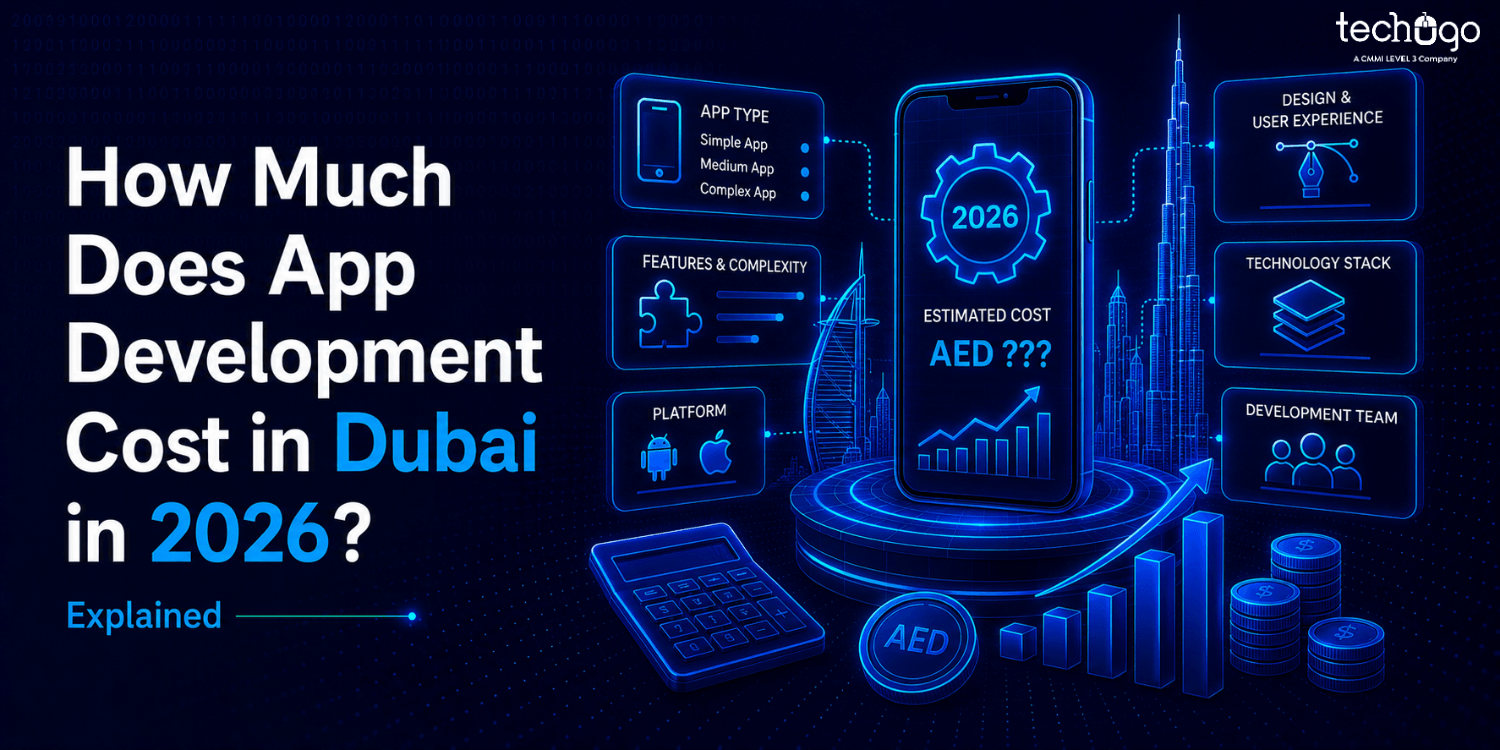


Did you know that about 99% of people in Dubai make use of internet and smartphones daily? For this reason, Dubai has recently become one the largest digital markets in the world. From ordering groceries and booking rides to shopping, banking, or even running businesses, people in the UAE do pretty much everything on mobile apps.
And that’s exactly why 2026 is the digital era to the core. Apps are no longer a business accessory tool, they are the business itself for modern companies to grow, connect with customers and generate revenue. In a place like Dubai, where users are accustomed to fast and seamless digital interactions, “being present in an app is starting to feel less like an option and more like a requirement.”
So first of all if you are planning to take your business to the internet, or build an app from an idea you have already got, then you are thinking in the right place. But one thing is for sure — before all else, there’s one question that most, if not every, founder wants to get answered first: what does it cost to make a mobile app in Dubai? In this post, We will calculate real app development costs in Dubai/UAE 2026 with the factors that really influence your spending.
Average Cost of Building an App in Dubai
Dubai is surely one of the most competitive scenes for mobile applications, and frankly that’s what makes it so good. With over 4.2 million active users and a mobile app economy valued at almost AED 2.85 billion, the region is tailor-made for digital products. And here’s the crazy part nearly 100% of the population has a smartphone, so launching an app there is basically a no-brainer if you’re a business or startup. What do you need to pay to get an app developed in Dubai, though?
In general, average development cost of an app in Dubai in 2026 could be anything from AED 30,000 to AED 300,000+ it depends upon what exactly you want. A very basic app might be at the lower end, while a complex or an enterprise-level app can be much higher. But this price is not fixed, it depends on several factors such as the features, complexity of design, choice of platform and team you hire.
Let’s break those down and see what really can drive the price up, or down.
Key Factors That Influence App Development Costs in Dubai/UAE
Here’s the thing: many new founders assume that app pricing is just a “fixed package,” like ordering from a menu. It is not. A number of behind the scene things will significantly alter the price and most newcomers neglect to consider them when they are planning their project. Don’t worry though, we’ve got you covered. Let’s break it down simply.
1. App Complexity – The Real Deal Behind Your Budget
When people talk about “app complexity,” that’s really just how large and feature-rich your app is on the inside. It’s not about how many screens or how much design — it’s how many features, user flows, and systems your app has to be able to run. Simply put, the more complex your app, the more it costs.
1. Usually, the complexity of an app can be categorized as one of the 3 following types:
2. Simple apps – With basic functionality such as info apps, calculators, or booking forms
3. Intermediate apps – Apps with user login, dashboards, payments, and APIs
4. Complex apps – Complex electronics goods like delivery apps, marketplaces, or real-time platforms
Take an app like Talabat, for example
It is much more than a food ordering app. You have orders from customers, menus from restaurants, and delivery riders managing pickups and drop-offs in real time. Live tracking, payments, and a powerful backend that makes the entire system function seamlessly ties everything together. When you think about what it is, it’s really several apps all working at the same time, and that’s exactly why it’s considered high complexity (and high cost).
Suggested Read: Food Delivery App Development like Talabat: Cost,Features,Development,Revenue model and A Lot More
App Cost Based on Complexity (Dubai/UAE 2026)
1. Simple App: AED 30,000 – AED 80,000
2. Medium Complexity App: AED 80,000 – AED 180,000
3. Advanced App (like Talabat-style platforms): AED 180,000 – AED 500,000+
2. UI/UX Design Quality
In the end, the users do judge at first sight in an app. If the application looks clean and smooth, and a little buck of visual appeal is thrown in, everyone involved is more likely to stick around and they might actually use the app. So UI/UX design is more than just “decoration” — it’s a huge factor that determines how successful your app will be.
UI/UX design encompasses elements such as:
- Layouts and screen organization
- Colors, typography, and the overall visual theme
- Navigation (How easily can users navigate through the app)
- Buttons, icons, and other interactive components
- User flow – how seamless the experience is from beginning to end
Tip: Don’t overcomplicate your design just to appear fancy. Typically, the simpler, cleaner, and easier to use an interface is, the better it performs compared to a busy or flash one. Prioritize clarity and simplicity.
3. Platform Choice (iOS, Android, or Both)
The app development cost in Dubai will be influenced by the platform you opt for. iOS, Android or both will determine how much time, testing and development needs to be spent. Developing for both platforms is always more expensive since you are essentially developing and supporting two versions of the same app.
1. If you’re building a luxury service or fintech product (a premium app), a lot of companies go with iOS first because users in this segment usually have higher spending power and better engagement.
2. If you’re making a mass-market app, such as for food delivery or classifieds, the first choice tends to be Android, simply because it has a larger user base in the UAE and you can grow faster.
3. If you are a startup trying to validate an idea or MVP, most teams opt for cross-platform development with Flutter or React Native to save cost and time to market, and then build native apps if/when the product grows.
Tip: Don’t try to launch everywhere at the same time. Pick the platform according to your target audience and budget, then scale once you have a solid understanding of user demand.
4. Backend Development & Database Structure
The backend is essentially the “invisible layer” of your app that the users don’t interact with, but everything relies on it. It processes user account, data storage, payments, notifications and all the logic that really make app work. So yeah, it’s a big chunk of your app cost, even though it’s not visible on the screen.
The selection of a tech stack similarly has a bearing on the cost. For instance, Firebase is an appropriate option for development acceleration for small apps, while stacks such as Node.js, Java or Python are ideal for large, scalable applications, but they usually demand more time and effort for building. And more time means more costs.
An average app only needs straightforward APIs and a tiny database, but a marketplace or delivery app requires real-time data flow, secure systems, multiple user roles, as well as a strong database that can handle a lot of traffic without breaking.
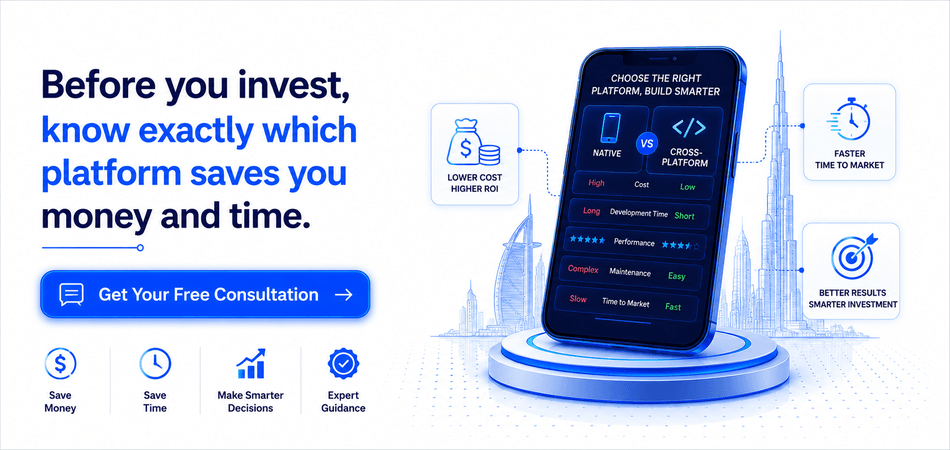
iOS App vs Android vs Cross Platform – Which is Cheaper?
Platform choice really decides how much you spend upfront and later. In Dubai, most startups don’t go for everything at once because cost can double quickly. So the real question is simple: which option saves more money?
| Option | Upfront Cost | Long-Term Cost | Overall Cheaper? |
| iOS only | Medium | Medium | Yes (short term) |
| Android only | Medium | Medium | Yes (short term) |
| Both (separate native apps) | High | High | No |
| Cross-platform (Flutter/React Native) | Medium | Low–Medium | Yes (best overall) |
Hidden Costs Nobody Talks About in App Development
Extra costs in app development are typically not considered by most people in the beginning, and they’ll start popping up soon after you release your app or begin scaling it up. Developing the app is only one thing, but making it run smoothly in the real world takes more money.
Costs for things like cloud hosting, API usage, maintenance upgrades, app-store fees, and marketing aren’t generally factored into the development cost initially. This is where many founders get surprised because they have to keep a rolling sum of money in order for the application to stay alive and to grow even after launch.
Just as your users grow, so do your costs. More traffic equals more servers, more storage, more API usage. So it’s never really a fixed cost, it increases with your app.
Likewise, the team you hire makes all the difference. A less expensive team may seem like a great deal initially, but it can cost you more to maintain the system later, whereas veteran developers tend to create systems that are more stable right out of the gate.
API Integration Costs
- Payment gateways (Stripe, Telr, PayTabs) transaction fees
- Google Maps usage charges per request
- SMS/OTP services for login verification
- Third-party tools like CRM or analytics platforms
Cloud Hosting & Server Costs
- AWS, Google Cloud, or Azure monthly server bills
- Database storage and scaling costs
- File storage for images, videos, and user data
- Extra charges when app traffic increases
Maintenance & Bug Fixing
- Regular bug fixes and performance improvements
- Updates for new iOS and Android versions
- Security patches and data protection updates
- Adding small features or improvements over time
App Store Fees (Apple & Google Play)
- Apple Developer account annual fee
- Google Play one-time registration fee
- Commission on in-app purchases or subscriptions
- Compliance updates to stay on store guidelines
Marketing & User Acquisition
- Paid ads on Google, Meta, and TikTok
- Influencer marketing campaigns
- App Store Optimization (ASO) services
- Branding, content creation, and promotional campaigns
How to Save Money on App Development in 2026 (Without Killing Quality)
Saving money on app development is not a matter of skimping on quality, it’s more a matter of making intelligent choices early on. Most budgeting issues arise from people trying to do too much too soon, or not really thinking about planning. When you do basic things well, you can cut expenses without compromising utility, or experience.
1. Start small with an MVP
Instead of developing a complete feature app right from the beginning, just go live with your core idea first. Test it on the market, monitor how your users get on, and then gradually introduce new features based upon real user feedback.
2. Don’t clutter your app with too many features
Every additional feature requires an extra dose of time, energy and money. Concentrate on what your app really requires to work rather than attempting to add everything all at once.
3. Go for cross-platform if needed
If you want to save cost, Flutter or React Native could be your best choice to develop for both iOS and Android by writing once, instead of developing two separate apps.
4. Keep the design simple to start with
Simple and good UI is far better for first version. You don’t have to do heavy animations or complicated visuals yet. You can refine the design later.
5. Choose your development team wisely
Don’t just go for the cheapest option. A good experienced team may cost more upfront, but they usually save you from costly mistakes and rework later.
6. Use existing tools instead of building everything
Wherever possible, use ready-made APIs for things like payments, maps, login, and notifications. It saves both development time and money.
Why Businesses Choose Techugo to Build High-Quality Apps at Lower Cost
Thinking of developing an app in Dubai and are concerned about the cost as well as quality? That’s exactly where we come in. Being a top mobile app development company in Dubai, Techugo enables you to transform your ideas into fully functional apps without burning a hole in your pocket or getting confused in the process.
The philosophy is straightforward and pragmatic: concentrate on what matters, don’t overbuild, and produce a product that works well right out of the box. With proven expertise in UI/UX, backend and cross-platform development, Techugo brings not only Well-Built, but also Cost-Effective Mobile App Solutions and Scalable Solutions for your future growth.
FAQ
1.How Much Does Mobile App Development Cost in Dubai in 2026?
Mobile app development cost in Dubai usually ranges from AED 30,000 to AED 300,000+ depending on app complexity, features, UI/UX design, backend systems, and platform choice.
- Simple apps: AED 30K–80K
- Medium apps: AED 80K–180K
- Advanced apps: AED 300K+
2.What Is the Cheapest Way to Build an App in Dubai?
The most cost-effective option is cross-platform app development using Flutter or React Native. A single codebase works for both iOS and Android, helping businesses reduce development time and overall costs.
3.Which Type of Mobile App Costs the Most?
Apps with real-time systems and advanced backend infrastructure are the most expensive. These include:
- Food delivery apps
- Ride-booking apps
- Marketplace apps
- Fintech apps
Such apps often cost AED 300,000 to AED 500,000+ due to complex features and scalability needs.
4.Is iOS App Development Cheaper Than Android?
iOS and Android app development costs are usually similar for single-platform apps. However, building separate native apps for both platforms increases development and maintenance costs significantly.
5.How Long Does It Take to Develop a Mobile App in Dubai?
Development timelines depend on app complexity and features:
- Simple apps: 2–4 months
- Medium apps: 4–8 months
- Complex apps: 8–12+ months
Apps with custom features, APIs, or real-time tracking generally take longer to build.

Get in touch
We'd love to hear from you.