

 SA
SA
 KW
KW
 IE
IE AU
AU UAE
UAE UK
UK USA
USA
 CA
CA DE
DE
 QA
QA ZA
ZA
 BH
BH NL
NL
 MU
MU FR
FR







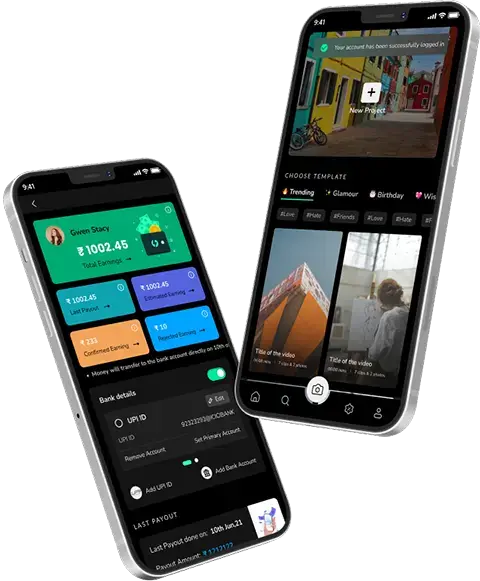







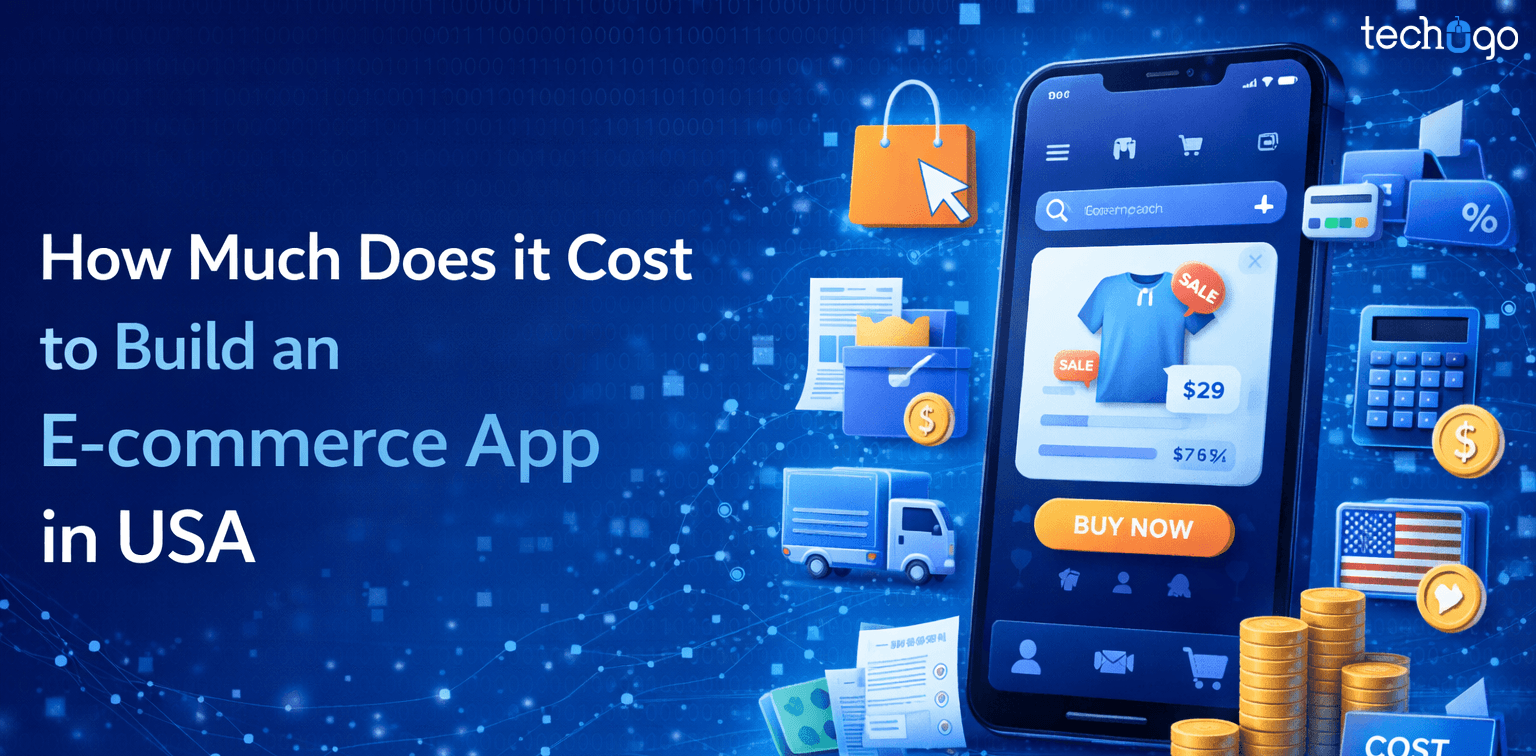


Let’s be honest. Nobody asks “how much does it cost to build an e-commerce app” just out of curiosity.
You ask it when you’re ready to build. When you’re thinking about taking your business online, scaling it, or maybe building something bigger than just a website. And that’s where things get confusing fast. Because the internet throws numbers at you like confetti. Some say $10,000. Others say $300,000. So what’s real?
Here’s how much an ecommerce app costs in USA.
The answer isn’t as straightforward as most people expect. There is no fixed price because every app is different.
The ecommerce app development cost estimate in 2026 isn’t a fixed number. It’s a range. A big one. And it depends on what you’re actually trying to build. A simple shopping app with basic features will cost far less than a fully loaded platform with real-time tracking, smart recommendations, and custom integrations.
In the United States, most businesses end up somewhere between $25,000 and $250,000, while more advanced apps can easily cross $250,000 or more. That’s the real picture. Not the “cheap and quick” version people try to sell you.
But instead of just throwing numbers at you, let’s break this down in a way that actually helps you make a decision.
What Is Ecommerce App Development and What Does It Include?
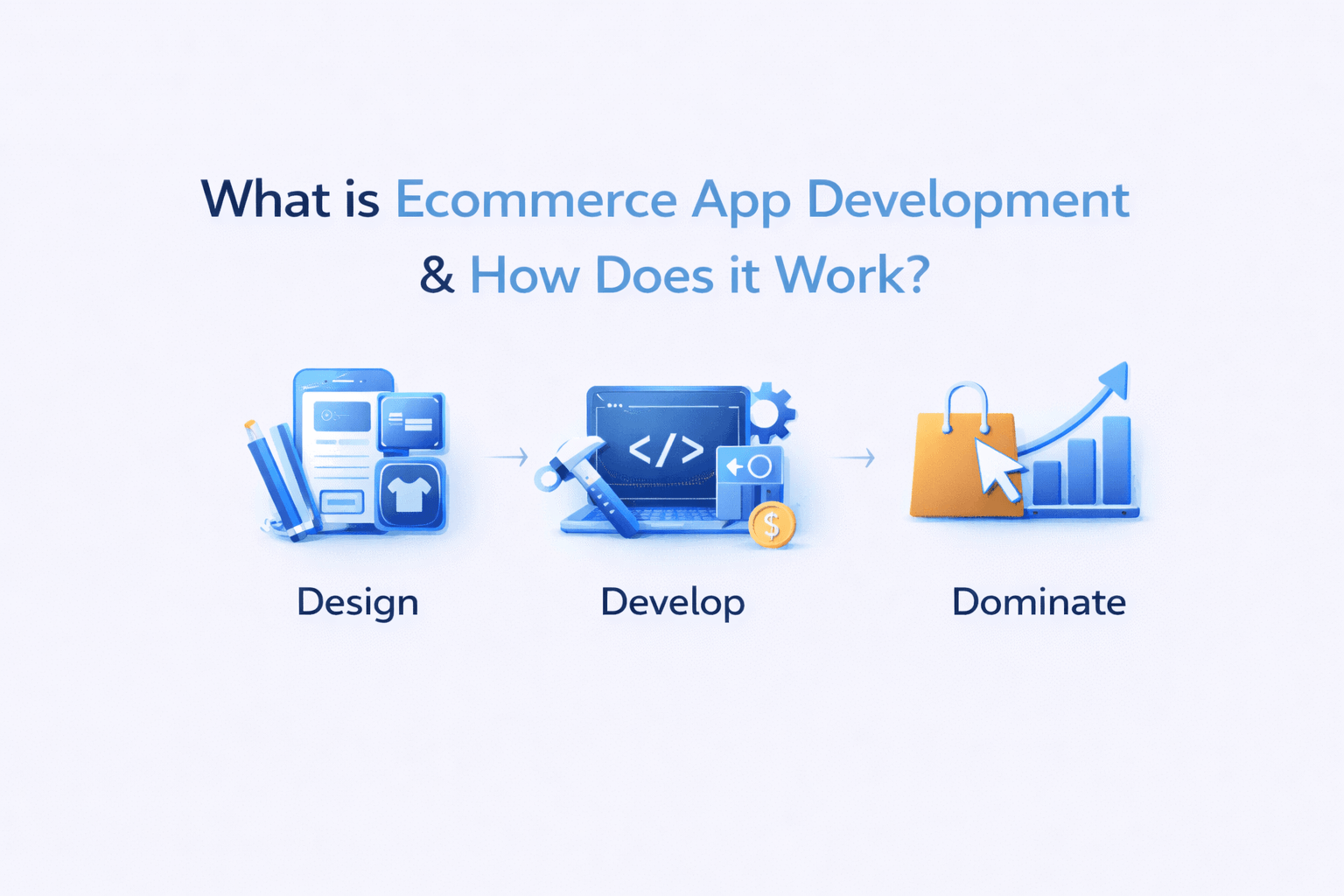
Ecommerce app development is basically the process of building a mobile app where people can browse products, add them to cart, and make purchases directly from their phone.
Sounds simple, right? But behind that simple experience, there’s a lot going on.
It’s not just code. It’s the design that guides your fingers to “buy now” without thinking. It’s the backend that handles thousands of orders in the USA at the same time without crashing. It’s the checkout that actually works the first time, every time.
Here’s the kicker: you’re not just building an app, you’re building a mini ecosystem. Product pages, search filters, cart, secure payments, push notifications, order tracking. All these pieces have to talk to each other like a well-rehearsed orchestra. Miss one note and the whole experience falls flat.
And then comes testing. Because what looks perfect in theory can fail spectacularly in real life. One tiny bug can turn a “happy shopper” into a “deleted your app” moment.
Finally, launch and maintenance. You hit “go,” and the app lives in the wild. But your job isn’t done. Updates, performance checks, security fixes, they never stop. Especially in the USA, where users won’t forgive a slow or broken app.
In short, Ecommerce app development is like building a store that sells while you sleep.
In the next section, we’ll break down the real numbers, what drives the cost, and why investing smartly in the USA market can save you headaches and actually grow your business.
Ecommerce App Cost Breakdown 2026: Where Your Money Goes
So, you know what ecommerce app development is. Now, let’s get real about where the money goes. Understanding this will help you see why the cost to develop a shopping app can vary so much in 2026, especially in the USA market.
Design (UI/UX)
Design is more than making your app look nice. It’s about making it easy to use, fast, and enjoyable. In the USA, customers expect apps to be smooth and intuitive. A bad design can scare users away. Good UI/UX usually takes around 15 to 25 percent of your budget. This is where first impressions happen. And you do not get a second chance.
Development (Frontend and Backend)
Development is the core. Frontend is what users see. Background is the unseen mechanism with which everything is made possible. Goods search, information on products, cart, checkout, safe transactions, inventory synchronisation, notifications. All of this lives here.
The cost to develop a shopping app depends on complexity. A simple app is cheaper. Add features like real-time tracking, personalized recommendations, or multi-currency payments and the price rises fast. Development is usually the biggest part of the budget.
Testing and Deployment
Testing is critical. Apps with bugs or slow performance lose users fast. Testing checks for errors and ensures everything works. Deployment gets your app on iOS and Android. In 2026, a well-tested app in the USA can make the difference between five-star reviews and angry uninstalls.
Keep It Simple
Start with the essentials. Launch the basics first. Add advanced features later. Overcomplicating from the start only blows up your ecommerce app cost breakdown 2026.
Also Read – Cost to Develop an Ecommerce App Like Xcite
Real Numbers Behind Your Ecommerce App in the USA
Here’s a clear snapshot of how your budget is spent. It shows where the money goes, which parts cost more, and why features and complexity can make the final price jump.
| Stage | % of Budget | Estimated Cost Range (USD) |
| Design (UI/UX) | 15–25% | $3,000 – $25,000 |
| Development (Frontend) | 25–35% | $5,000 – $50,000 |
| Development (Backend) | 30–40% | $10,000 – $70,000 |
| Testing & QA | 10–15% | $2,000 – $15,000 |
| Deployment & Launch | 5–10% | $1,000 – $10,000 |
| Maintenance & Updates | 5–15% | $1,000 – $15,000 yearly |
And there you have it. That’s what building an ecommerce app in the USA actually looks like. Now you can see where your money goes and how the cost to build an e-commerce app varies.
Factors Affecting Ecommerce App Development Cost
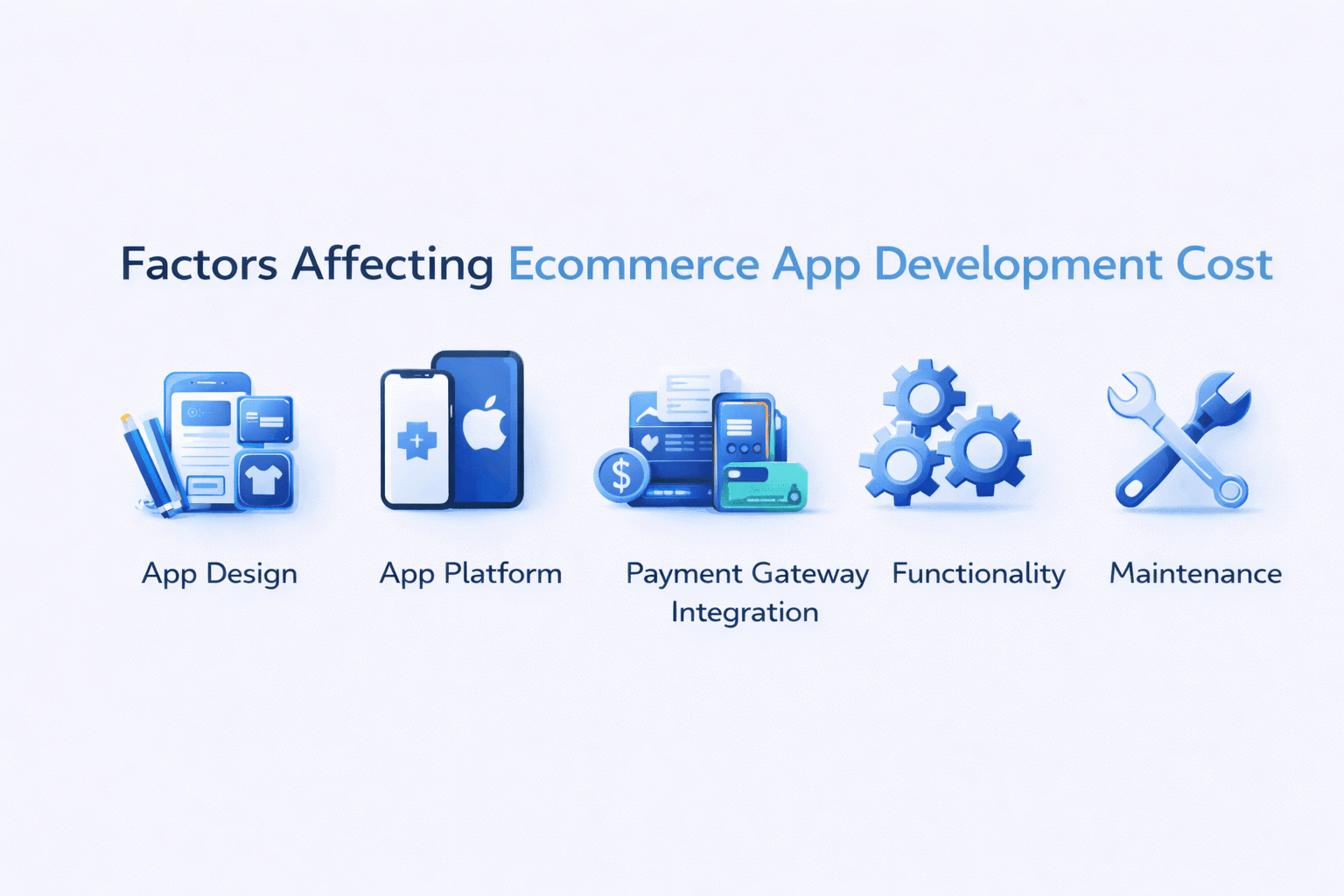
Not all ecommerce apps are created equal. The price you pay can swing widely depending on several things. Here are the main factors affecting ecommerce app development cost in 2026, especially for businesses in the USA.
1. App Complexity
Keep it simple. Because the simpler, the cheaper. A simple app with basic browsing, cart, and checkout features is cheaper. Add custom recommendation engines, multi-currency payments, or real-time tracking, and the price jumps fast. Complexity is the single biggest factor in how much your app will cost.
2. Platform Choice
Do you want iOS, Android, or both? Building for one platform is cheaper. Two platforms means double the work, more testing, and higher costs. Many US businesses prefer starting with both to reach the widest audience, but it comes at a price.
3. Custom vs Ready-Made Solutions
Custom apps let you stand out. Unique design, specialized features, total control, you will get it all. But they will cost you more. Templates and low-code solutions are cheaper, but they can hold you back if your store grows.
4. Developer or Team Location
It matters where your team is. US developers cost more per hour than offshore teams. But local teams get your market, speak your language, and often deliver faster and better.
5. Timeline
Want it done yesterday? Rush jobs mean more developers, longer hours, and bigger bills. Patience can save money and still get you a high-quality app.
These are the real factors affecting ecommerce app development cost. Know them, plan smart, and you won’t get surprised when the invoices arrive.
Ecommerce App Features and Cost Explained for US Businesses
Features are where the numbers start to add up. The overall cost of an ecommerce app is determined by its features. The higher the features the more expensive it is.
That’s why understanding ecommerce app features and cost is critical.
Core Features vs Advanced Features
Some features are non-negotiable.
You need a product catalog so users can browse items without getting lost. You need ‘search’ that actually finds what they’re looking for (fast). You need a cart and checkout that doesn’t make them scream in frustration. Basic notifications? They tell your customers what’s happening without you lifting a finger.
These core features are what make your app usable. Without them, nothing else matters. The app won’t function, and users won’t stick around.
Advanced features add convenience, engagement, and personalization. Think real-time tracking, loyalty programs, push notifications, AI-powered recommendations, multi-currency support, and social logins.
Core features keep your store running. Advanced features make it feel alive.
Each adds development time and cost. That’s what pulls people in and keeps them coming back.
Yes, all of this adds time and money. But it also makes your app unforgettable. And don’t forget the ongoing ecommerce app maintenance cost to keep it running
Examples of Features and Their Impact on Cost
- Payments: Secure integrations like Apple Pay, PayPal, or Stripe require careful coding.
- Tracking: Real-time shipment updates make your app more engaging but increase complexity.
- Notifications: Automatic alerts for order status, promotions, or cart reminders improve sales but need backend setup.
Basically, the more you want your app to wow customers in the USA, the more features you add, the higher the cost. Smart planning means balancing essentials with features that provide real value.
What About the Cost That Comes After Launch?
Here’s something most people don’t think about enough.
Building the app is just the beginning. The ecommerce app maintenance cost is ongoing. Usually around 15% to 25% of your initial development cost every year. That includes updates, bug fixes, server costs, and keeping everything secure.
Skip this, and your app won’t age well. It’ll slow down, break, or worse, become vulnerable.
Hiring the Right People Makes All the Difference
At some point, you’ll have to decide how you want to build your app.
Now here’s the good part. You don’t need to spend a fortune to build something good. You can try to piece things together yourself. Or you can hire ecommerce app developers who’ve done this before.
Are you looking to hire ecommerce app developers who actually get it?
Choose the right tech. Choose the right team. Techugo is the team that makes it happen.
As a leading mobile app development company in the USA, Techugo has delivered hundreds of apps for businesses across the globe. Large-scale apps, real-time integrations, advanced workflows, you name it, we’ve built it. Our apps aren’t just functional, they perform, scale, and grow with your business.
Want to wow your users? With Techugo, you get real-time tracking, AI recommendations, and push notifications that actually get read. And yes, we handle maintenance, so your ecommerce app maintenance cost is an investment, not a headache.
That’s why many businesses choose to work with an ecommerce app development company like Techugo.
Because the goal isn’t just to launch. It’s to last.
Conclusion
Building an ecommerce app can feel like a mountain at first. Costs, features, platforms, maintenance, it’s a lot to think about. But it doesn’t have to be scary.
You don’t need every feature on day one. Start with the basics. Get an MVP out there. Let real users test it, give feedback, and show you what really matters.
A good app is about balance. A balance between basic and hi-tech.
Money matters, of course. However, splitting the expenses up can make you realize what you really need, what is additional and how to spend it without crossing your budget line. The updates and boost in performance keep your application running, users satisfied and your e-commerce maintenance expenditure not a waste.
The users of the USA are fast, clear, and reliable app users. Apps that fulfill these attributes have greater download, increased engagement, and recurring customers. Small changes with time can bring a big change.
At the end of the day, it’s about action. Launch your app, see how users respond, and improve it along the way. But most importantly, choose the right team.
FAQs
1. How much does it cost to build an ecommerce app in the USA?
Based on real industry trends and what top app builders report, a very basic ecommerce app in the USA can start around $20,000. In the end, the cost depends on complexity, features, platforms, and the team you hire.
2. What factors affect ecommerce app development cost?
The cost of developing an e-commerce application depends on its complexity, platform used (iOS, Android, both) as well as on the type of solution to be developed (custom or ready-made), the location of the developer, and the timeline. These are the main factors which define the total cost.
3. What core features should an ecommerce app have?
Among the features are a product catalog, search, shopping cart, checkout, and simple notifications. Premium features (tracking in real time, AI-based recommendations, push notifications, etc.) make the interaction more interactive, yet increase the cost of development.
4. How much does ecommerce app maintenance cost
Maintenance is the scheduling of routine updates, bug fixes, management of server and optimization of performance. Estimate to have approximately 15-20 percent of your initial development budget annually allocated to the maintenance.
5. Should I hire an ecommerce app development company or freelance developers?
Expert, scalable, and long-term support is offered by working with a professional company on e-commerce or mobile app development, particularly in the USA, such as Techugo. Freelancers can be cheaper but they might not have the ability to produce sophisticated and consistent reliable apps.
6. Can I start with an MVP?
Absolutely. The first thing to do with the app is to launch it with basic functionality and test, learn, and improve it before incorporating more advanced features. This is a cost-saving strategy that will assist in managing the general cost of the e-commerce application in 2026.

Get in touch
We'd love to hear from you.