 SA
 KW
 IE
 AU
 UAE
 UK
 USA
 CA
 DE
 QA
 ZA
 BH
 NL
 MU
 FR


















📌 Key Takeaways
- Lending software keeps the entire loan process in one place.
- The lending software you choose has to match the needs of your organization.
- AI, cloud technology, blockchain and automated verification are the future of digital lending.
- You can expect to spend $20,000–$300,000+ on lending software development.
Borrowing money is getting easier for customers. But… managing the process behind it is becoming more demanding for lenders.
The lending industry is opening the door to new digital possibilities (and better risk management).
Grand View Research projects that the digital lending platform market will climb to $98.1 billion by 2033. This is a huge reason why businesses are exploring smarter ways to manage lending operations.
Getting approval for a loan is far more involved than it might seem.
Approval requires lenders to assess borrowers’ creditworthiness, verify documents, manage repayments – and meet regulatory requirements. As the volume of loans increases, doing all this manually becomes unmanageable. This is what lending software is designed to address. By investing in the right fintech app development services, lenders can make their processes more convenient for borrowers and easier for their teams to manage.
A closer look at lending software development
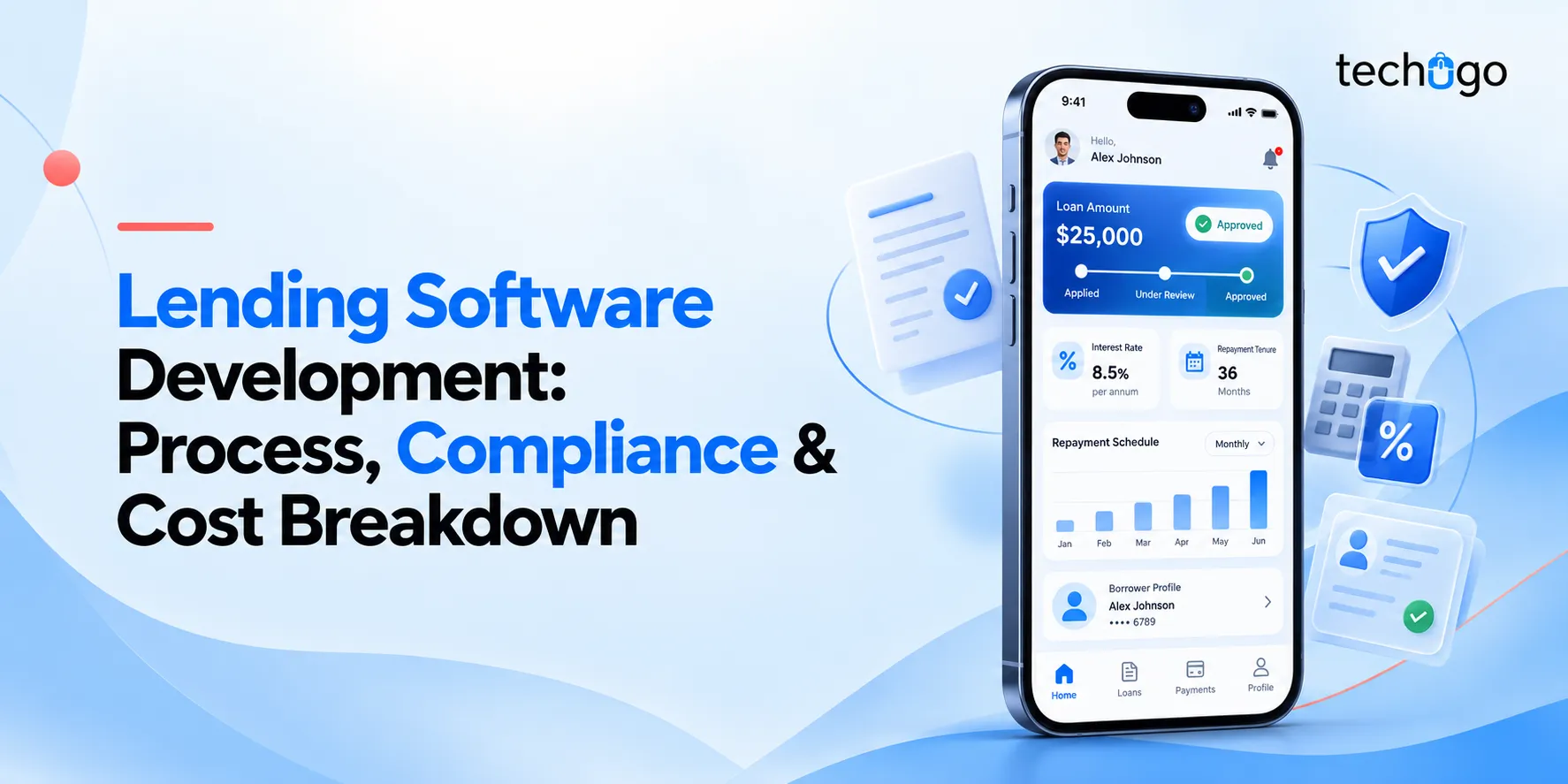
Lending software handles a loan from start to finish. It’s the one place where the entire loan process is managed. A borrower applies, the documents get checked, the loan is approved (or declined), and then the payments are tracked. Because it’s all in one system, you aren’t chasing files across email and spreadsheets anymore.
Lending software development basically means building the system for one specific lender, so that it fits the way they already work. A lending software development company can adapt the software to suit a lender’s specific needs. A bank, for example, usually needs it to connect with the systems it has been running for years; a fintech startup, on the other hand, cares more about a quick application, automatic credit checks and easy online payments. Therefore the two end up wanting very different things.
Anyway, whatever the setup is, the software should keep the loan records accurate – and it should keep customer financial data secure, because that’s not optional. Borrowers also need applying and repaying to be simple, so that they don’t give up halfway. Many lenders have been adding automatic eligibility checks, loan tracking, and payment reminders too, and you can pick the ones that suit your business.
Ready to Build Your Lending Software?
From loan applications to repayment tracking, get lending software designed to make your operations easier to manage.
Types of digital lending software solutions
Different lenders need different tools depending on how they manage loans. Here are some common digital lending software solutions –
1. Loan origination software: Covers everything from submitting loan applications to verifying details and approving loans.
2. Loan management software: Tracks repayments, interest calculations, outstanding balances and payment history.
3. Loan service software: This software communicates with loan borrowers by sending payment alerts as well as notifications about overdue loans.
4. Digital loan applications: Borrowers can apply online for loans, upload their supporting documents, and monitor their application status via loan app development.
5. P2P lending platforms: This system connects loan borrowers with their funders while supporting the loan repayment processes.
The right choice ultimately depends on the lender’s needs and how they want to manage the loan process through lending software development.
What features should lending software include?
Lending software comes with several features that help lenders manage loan operations more efficiently. Let’s look at the most important ones –
1. Loan application management
Borrowers can fill out loan applications online, upload the required documents and submit everything through the same platform.
2. Automated credit assessment
Banking software development can support automated credit checks by helping lenders assess credit scores & borrower information before making approval decisions.
3. Loan approval & disbursement
Approvals have been getting quicker because the workflows are automated. Once a loan is approved, the funds are sent out, and you don’t need to push it along by hand.
4. Repayment tracking
Lenders can monitor payment schedules, calculate interest and send repayment reminders.
5. Banking system integration
Lending software can connect the dots between loan processing and banking operations, so payments don’t have to be handled separately.
6. Data security & reporting
Financial data is sensitive, so secure login and access controls are a must. And the analytics? They show you how the loans are performing, which is useful.
With the right lending software development services, businesses can build an end-to-end lending solution that makes loan management simpler and it will be able to grow along with you.
Step-by-Step Lending Software Development Process
Step 1) Understand business requirements
First, discover what your lender needs, who their target customers are, and how they execute their current operations. From here, you can see some potential features of the software.
Step 2) Plan the features and design
Next, think about which features you want in the software platform. The software should include the loan application process together with the credit assessment, loan repayment and reporting functionality.
Step 3) Develop and integrate the software
Build the platform with the right lending software solutions and connect it with relevant banking systems, payment gateways and credit bureaus.
Step 4) Test and deploy
Run tests to identify bugs, check security and ensure the platform can handle its intended workload.
Step 5) Maintain & upgrade
Updating the software from time to time helps protect sensitive data and prevent operational issues.
Lending software compliance: Rules you can’t ignore
Software used for lending must comply with the rules and regulations established to protect the borrower data and make the transactions clear. Thus, during custom loan management software development, you will need to pay attention to the following:
1. Data security: Protect sensitive borrower information with encryption and access controls.
2. Borrower verification – Verify borrower identities & maintain accurate records.
3. Regulatory compliance – Every lending business has financial regulations it must follow (and they differ depending on where and how you operate) so check what applies to you.
Transparent loan terms – Borrowers should be told clearly what they’re signing up for: the interest rate, the fees, the repayment schedule and any other conditions.
Secure transactions – If you’re building a P2P lending app, payments between borrowers and lenders need to be secure and their financial details should stay protected the whole way through.
Technology stack for lending software development
The technology decisions you make at present will have an impact on your lending software’s performance. Everything plays a role, from the database to the cloud infrastructure.
The following table covers the core technologies you can use to build a lending platform –
| Technology layer | Common technologies | Purpose |
| Frontend development | React.js, Angular, Vue.js | Builds the user interface for borrowers and lenders |
| Backend development | Node.js, Python, Java | Handles loan processing, business logic and application workflows |
| Database | PostgreSQL, MySQL, MongoDB | Stores borrower details, loan records, payment history & other financial data |
| Cloud infrastructure | AWS, Microsoft Azure, Google Cloud | Supports hosting, scalability, data storage and system availability |
| Security | Data encryption, multi-factor authentication (MFA), role-based access control (RBAC) | Protects sensitive financial information and restricts unauthorized access |
| AI and machine learning | TensorFlow, PyTorch | Supports credit risk assessment, fraud detection and automated decision-making |
| API integration | REST APIs, Open Banking APIs | Connects lending software with banking systems, payment gateways and credit bureaus |
Lending software development cost: what to expect
The estimated cost of developing lending software starts at $20,000 and can easily exceed $500,000. Below, we have outlined the costs for basic, mid-level, advanced and enterprise-level lending software development –
| Type of lending software | Estimated development cost |
| Basic lending software | $20,000–$50,000 |
| Mid-level lending software | $50,000–$100,000 |
| Advanced lending software | $100,000–$250,000+ |
| Enterprise-level lending platform | $250,000–$300,000+ |
Factors that influence your lending software costs
The development cost of lending software is determined by a number of factors. Here are the main ones to consider.
1. Software complexity
A minimal lending platform with functionality to apply for a loan and repay it will generally be cheaper than software with complex features like automated credit checks, risk assessment and advanced analytics.
2. Features and functionality
Adding more features increases the time needed to develop the software. The same goes for loan tracking, borrower verification system, notifications and report module.
3. Third-party integrations
Incorporating the software with banks, credit bureaus and payment providers can potentially increase the overall development cost. Payment gateway software development may also involve additional work to support secure transactions (and different payment methods).
4. Security and compliance
Lending platforms oversee sensitive financial information, so data encryption, access controls and security testing are important. Meeting applicable regulatory requirements can also add to your budget.
5. Scalability and infrastructure
Given that lending platforms deal with sensitive financial data, it is mandatory to implement data encryption, access control and security testing. It’s better if you address it during the planning stage.
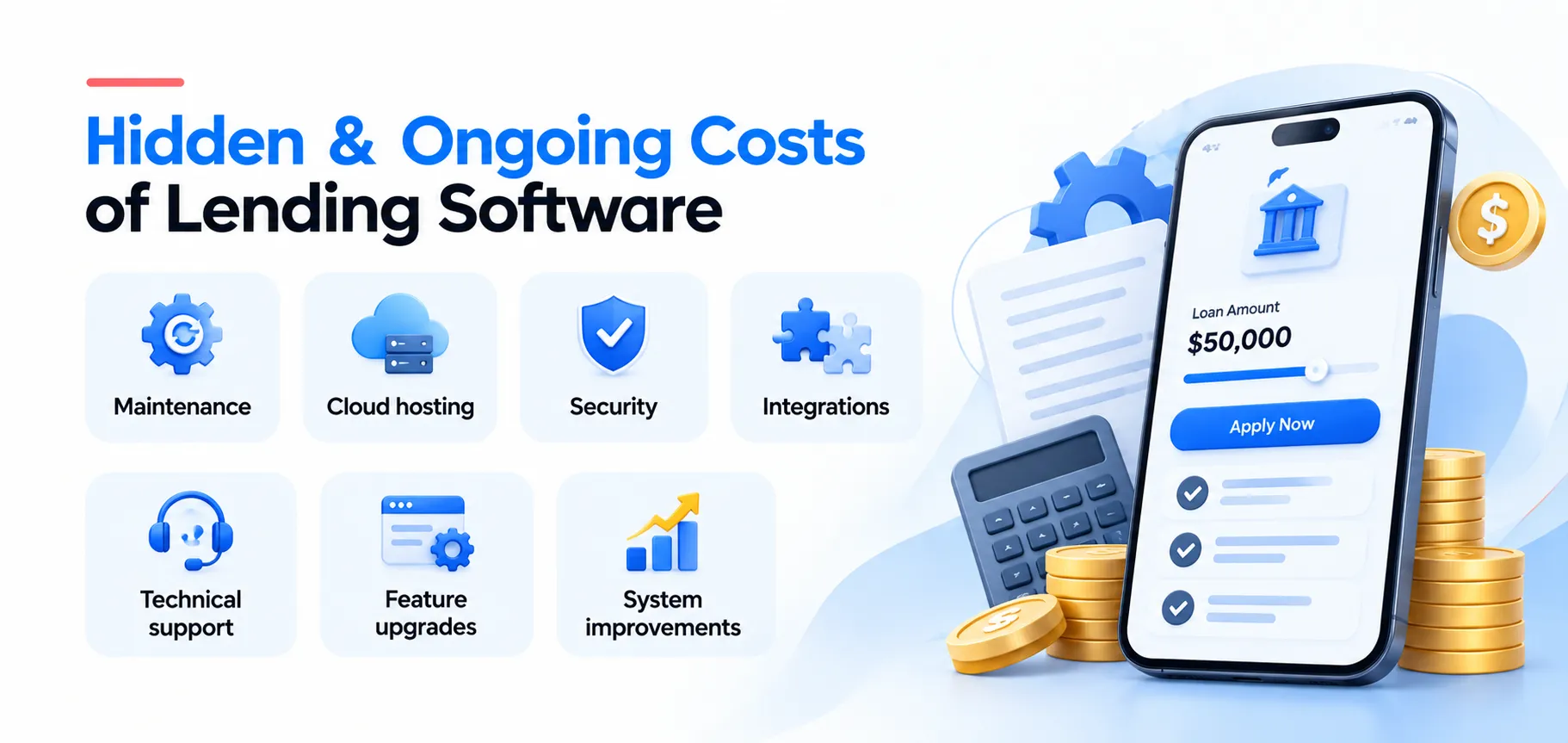
Hidden & ongoing costs of lending software
Apart from the initial development cost, lending software comes with ongoing expenses that businesses should plan for. These may include –
1. Maintenance: Implementing updates and fixing bugs on a regular basis.
2. Cloud hosting: Hosting charges as long as the platform continues to expand.
3. Security: Security checks and data protection updates.
4. Integrations: Covering fees for third-party services – such as payment providers.
5. Technical support: Solving issues and reducing downtime.
6. Feature upgrades: Adding new features via lending software development.
7. System improvements: Upgrading lending and finance software solutions to support business growth.
Custom vs. Ready-made lending software: what’s right for you?
| Factor | Custom Lending Software | Ready-Made Lending Software |
| Initial cost | Higher development cost | Lower upfront cost |
| Development time | Takes longer to build | Faster to implement |
| Customization | Tailored to business needs | Limited to available features |
| Scalability | Can grow with business needs | Depends on the provider’s plans |
| Integrations | Built around required systems | Limited to supported integrations |
| Maintenance | Requires ongoing updates and support | Often managed partly by the vendor |
| Best suited for | Businesses with specific requirements | Businesses needing a quick, standard solution |
To sum up, ready-made loan processing systems are a sensible solution for those companies that look for an efficient, low-cost solution with basic features. However, if your business has specific requirements (or plans to scale over time) – it will be wise to consider developing bespoke loan processing software.
What security challenges can lending software face?
As lending software involves the processing of sensitive financial and personal data, security is a crucial concern when developing this software through cross-platform app development services. Some common challenges include:
1. Data leaks – Unauthorized access can expose clients’ personal and financial information.
2. Fraudulent acts – Inefficient verification systems can make it easier for fraudsters to misuse the platform.
3. Access control – Faulty management of access may lead to unauthorized access to confidential information.
4. Regulatory compliance – Failing to meet applicable security requirements can lead to penalties.
5. Payment security – Inadequate protection during online transactions can put financial information at risk.
Common challenges in lending software development
1. Complex loan workflows
The variety of loan types, eligibility criteria, processing stages, and repayment requirements can make development more complex.
2. Legacy system integration
Integrating new software with existing banking systems may require additional development and testing.
4. Credit assessment accuracy
Creating reliable processes to evaluate borrowers’ creditworthiness and eligibility can be challenging.
5. User experience
Careful planning is needed to simplify loan applications while collecting all the necessary information from borrowers.
Need the Right Lending Solution for Your Business Challenges?
Struggling with complex loan workflows or legacy system integrations? Techugo can help you build lending software tailored to your business needs.
The next big trends in lending software development
Lending tech has seen considerable transformation as companies have started using advanced tech in their lending process and to enhance customer satisfaction. Below are some of the major trends observed in that sector:
1. Artificial intelligence in lending – AI can be used to automate the loan application assessment process and make loan approval faster.
2. Using cloud technology – Cloud solutions make the process of scaling lending easier for most companies.
3. Blockchain technology – Blockchain improves the clarity of transactions and recordkeeping.
4. Automation in identity verification – Automated verification makes the verification of clients easier.
5. Advanced compliance tools – Companies are increasingly adopting AML software development to automate anti-money laundering checks and identify suspicious transactions.
How to choose the right lending software development company?
1. Industry experience
Look for companies with experience in developing lending platforms and financial applications.
2. Technical expertise
Seek knowledge regarding credit assessment tools, payment integrations, and loan management systems.
3. Security & compliance
Make sure that the team is aware of the financial regulations and data protection requirements.
4. Customization
Select a company that will customize software to your company’s requirements.
5. Post-deployment assistance
Inquire about continuous maintenance, updates and technical assistance post-deployment.
Create custom lending software with Techugo
Are you looking for a lending platform that works perfectly with the needs of your business? Techugo provides lending software development services to companies willing to specialize in simplifying loan processes and repayment management, along with enhancing the customer experience related to lending. Whether you require custom lending platform building or loan app development, our team is here to assist you.
FAQs
1. What are the key features of lending software?
Most lending software solutions include features like loan application management, borrower verification, credit assessment, loan approval workflows, repayment tracking, payment processing, reporting and notifications.
2. What technologies are used to develop lending software?
Lending software can be built using technologies such as – React, Angular, Node.js, Python, Java, and databases like PostgreSQL or MySQL.
3. Is lending software development different from loan app development?
Yes! Lending software development can cover a complete loan management system for lenders, while loan app development often focuses on a mobile application that allows borrowers to apply for loans, track applications and manage repayments. Both can be part of the same solution.

Get in touch
We'd love to hear from you.