

 SA
SA
 KW
KW
 IE
IE AU
AU UAE
UAE UK
UK USA
USA
 CA
CA DE
DE
 QA
QA ZA
ZA
 BH
BH NL
NL
 MU
MU FR
FR

















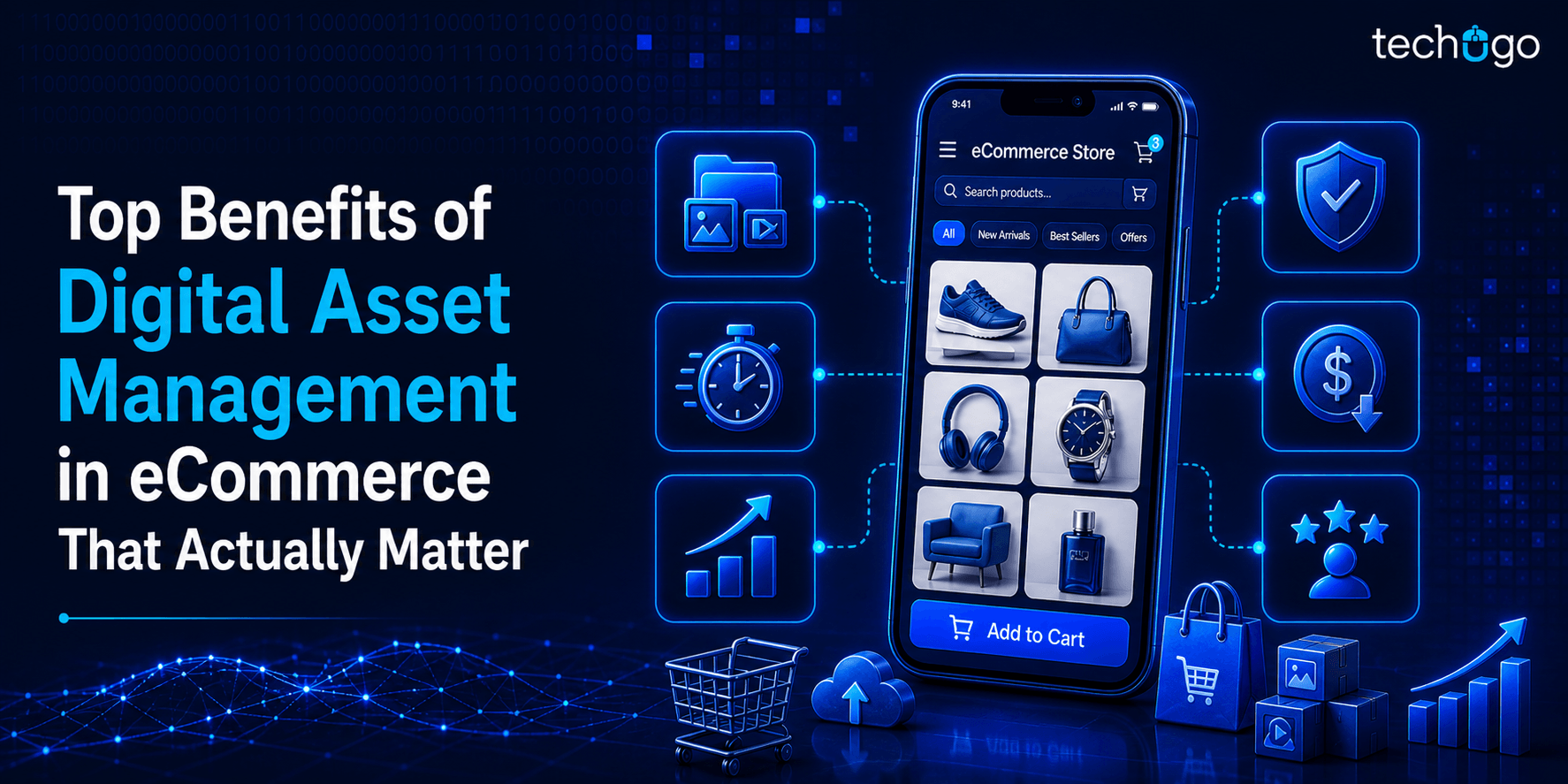


Managing an eCommerce business today means managing content, not just selling products because that is what really drives how your store looks and feels. Every product has images and then there are videos and banners, and social media creatives, and marketplace listings, and even mobile app visuals. So when you start adding everything together and multiply it across hundreds or even thousands of SKUs (stock keeping units) it becomes overwhelming and a bit chaotic too.
Teams are looking for the right file but they don’t always find it. Designers update assets, but older versions are still being used, and that creates inconsistency. Marketing campaigns go live, but the visuals are not aligned, and therefore the brand starts to feel scattered. It happens slowly, and then suddenly, everything feels disorganized.
This is where digital asset management for ecommerce enterprises comes in, and it starts to change how things are handled, because instead of everything being spread out, you now have one place where all your assets are stored and managed.
So that means your teams can access what they need, when they need it, and you are not wasting time searching or fixing mistakes. It also helps in maintaining consistency, because the right version of every asset is available, and everyone is using the same files.
And in eCommerce, where visuals are directly connected to how customers perceive your brand, and how they make buying decisions, this kind of control is not optional anymore… it is necessary.
In this blog, we will explore the benefits of digital asset management, and how it supports ecommerce digital asset management, and why businesses have been moving towards it, not just as a tool, but as something that helps them grow, and scale, in a much more structured way.
What is Digital Asset Management in eCommerce?
Digital Asset Management in eCommerce, or simply DAM for eCommerce, is a system that helps you store, organize, manage, and share all your digital content in one place. And when we say digital content, it includes everything such as product images, videos, banners, catalogs, marketing creatives… basically all the files your online store depends on.
Now the thing is, in most eCommerce businesses, these assets are not stored in one place. They are scattered across folders, drives, emails, and tools, and because of that, teams spend a lot of time just searching for the right file. Sometimes they find it, sometimes they don’t… and sometimes they end up using the wrong version.
This is where ecommerce digital asset management starts to make things easier.
It acts like a centralized hub, where all your assets are stored in an organized way, and are easy to search, access, and use. You can tag files, categorize them, and control who can view or edit them, so that everything stays structured. And because everything is in one system, teams don’t have to depend on each other again and again.
So instead of going back and forth, or digging through folders, you simply search, find, and use the asset you need quickly.
Another important part of e-commerce digital asset management is version control. It ensures that the latest and approved version of a file is always available, and older versions don’t create confusion. This is especially useful when multiple teams such as marketing, design, and product are working together.
Over time, as your product catalog grows, and your content needs increase, managing assets manually becomes difficult. And that is why digital asset management for ecommerce is not just a convenience anymore, it has become a necessary part of running a smooth and scalable eCommerce business.
Why eCommerce Businesses Struggle Without DAM
At first, things seem manageable. A few folders, some shared drives, and maybe a naming system that works… for a while. But as the business grows, and the number of products and assets increases, that simple setup starts to break and the problems don’t come all at once, they build up slowly.
- One of the biggest issues is scattered assets. Files are stored across different platforms, and teams don’t always know where to look. So they search, and ask around, and sometimes recreate assets that already exist which wastes both time and effort.
- Then there is the confusion around versions. A designer updates a product image, but the old version is still being used somewhere else. Marketing picks the wrong file and the campaign goes live with outdated visuals. It may seem small but it affects how the brand looks and how customers perceive it.
- Collaboration also becomes harder than it should be. Teams are constantly going back and forth, asking for files, approvals, or updates, and because there is no central system, everything depends on manual sharing which slows things down.
- Another challenge is inconsistency. When different teams use different versions of assets, the brand starts to look disconnected across platforms. Your website shows one version, your app shows another, and your ads show something else. And that creates confusion for customers, even if they don’t realize it immediately.
This is where the need for digital asset management for ecommerce becomes clear, because without a structured system, managing content at scale is not just difficult, it is inefficient.
And as the business grows further, these small inefficiencies turn into bigger problems – delayed product launches, slower campaigns, and missed opportunities. So while it may feel manageable in the beginning, over time, not having a proper system in place starts to hold the business back.
Key Benefits of Digital Asset Management in eCommerce
Once an eCommerce business starts growing, managing digital content is no longer a small task, and it is not something you can keep fixing manually every time. This is where digital asset management for ecommerce enterprises starts to show its real value, because it doesn’t just organize assets… it improves how the entire system works.
And the benefits, they are not just operational, they impact speed, consistency, and even conversions.
-
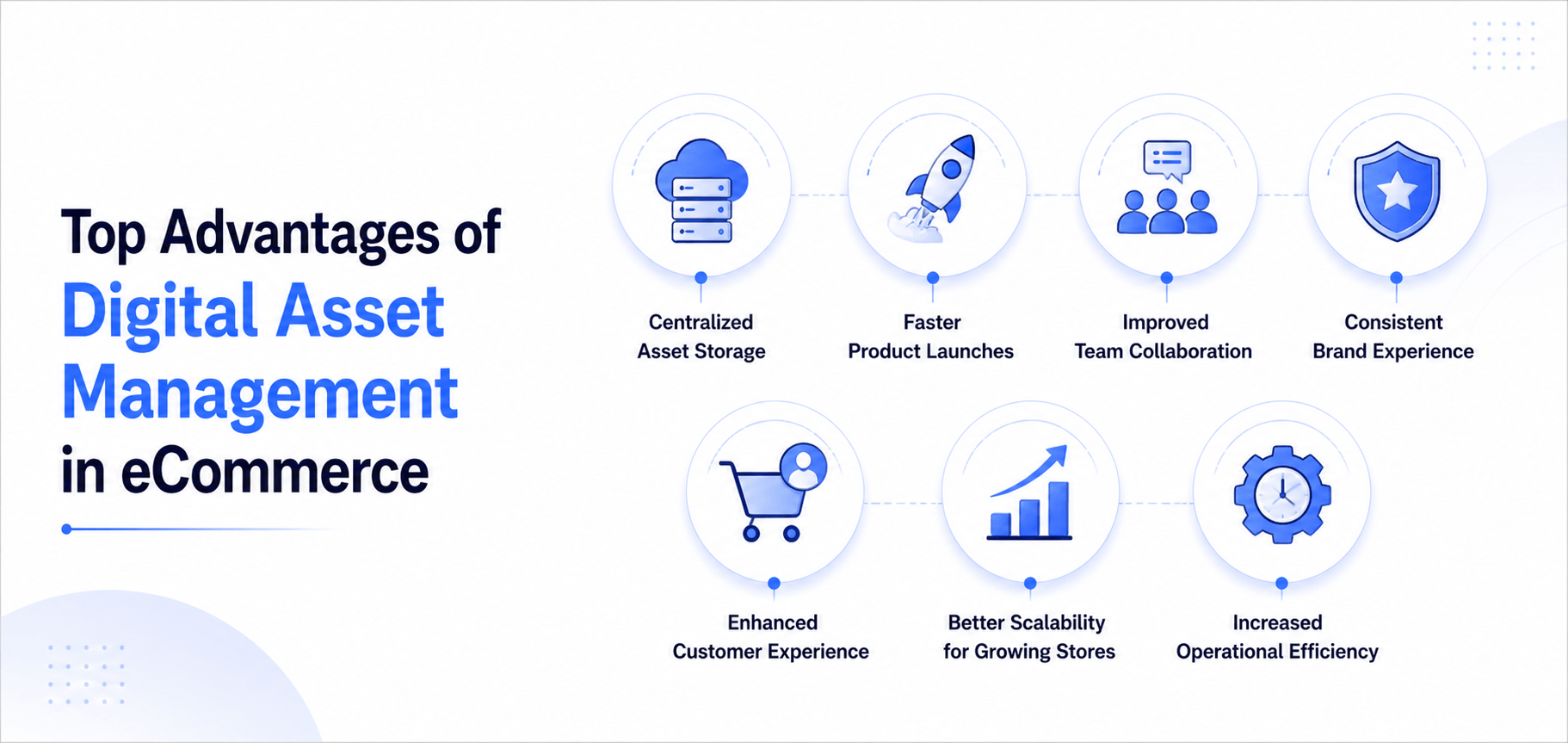
Centralized Asset Storage
One of the most immediate benefits is having everything in one place. All your images, videos, banners, and creatives are stored in a single system, and that makes access easier for every team. No more switching between tools, or asking “where is this file?” again and again… because it is all there, structured, and easy to find.
-
Faster Product Launches
In eCommerce, speed matters a lot. And when assets are easy to access, and already organized, product listings can go live much faster. Teams don’t have to wait for files, or approvals, or hunt for the right version. Everything is available, and that reduces delays… significantly.
-
Improved Team Collaboration
When multiple teams are working on the same assets (design, marketing, product), things can get confusing but with DAM for eCommerce, everyone works from the same system. So there is less back-and-forth, fewer errors, and smoother collaboration overall. Teams know what to use and when to use it.
-
Consistent Brand Experience
Consistency is often overlooked, but it matters more than it seems. When the same assets are used across your website, mobile app, ads, and marketplaces, your brand feels more reliable and professional, and with ecommerce digital asset management, maintaining that consistency becomes much easier, because the approved assets are always available.
-
Enhanced Customer Experience
Customers rely heavily on visuals when shopping online. Clear images, engaging videos, and consistent design… they all influence buying decisions. So when your assets are well-managed and optimized, it directly improves how customers interact with your store, and that often leads to better conversions.
-
Better Scalability for Growing Stores
As your product catalog expands, managing assets manually becomes difficult, and eventually unsustainable but with e-commerce digital asset management, you can handle thousands of assets without losing control. The system grows with your business, instead of slowing it down.
-
Increased Operational Efficiency
And finally, there is efficiency. Features like tagging, search, automation, and version control reduce manual work, and save time across teams so instead of spending hours managing files, teams can focus on what actually matters – creating better campaigns, improving products, and growing the business.
When you look at all these benefits together, it becomes clear that the benefits of digital asset management are not limited to just organization. It is about building a system that supports growth, reduces friction, and makes everyday operations… a lot smoother.
What’s the Role of DAM in Modern eCommerce App Development
Today, eCommerce is no longer limited to websites, and it has moved strongly towards mobile apps, because that is where most users are browsing, exploring, and buying. And because of that shift, the way digital content is managed has also changed… quite a bit.
Every mobile app relies heavily on assets. Everything you see inside the app like product images, videos, banners, UI elements, promotional creatives is a digital asset and it needs to be managed properly so that the experience feels smooth and consistent.
This is where digital asset management for ecommerce enterprises plays an important role, because it connects content with the app experience in a much more structured way.
Instead of developers and designers manually adding or updating assets again and again, a DAM system allows them to pull the latest and approved content directly into the app. So when an asset is updated in the system, it reflects across the app as well… without unnecessary delays. And that makes a big difference, especially when you are working on continuous updates, seasonal campaigns, or frequent product launches.
Another important aspect is consistency. Your website, mobile app, and marketing channels should all feel connected, and that is only possible when they are using the same set of assets. With DAM for eCommerce, this alignment becomes easier to maintain, because everything is coming from a single source.
It also supports faster development cycles. Teams don’t have to wait for files, or worry about missing assets during the development phase. Everything is accessible, organized, and ready to use, which helps in speeding up the entire eCommerce app development process.
And as apps become more dynamic with personalized content, real-time updates, and richer media, the need for structured asset management increases even more. This is where ecommerce digital asset management helps in handling large volumes of content without slowing things down.
In a way, DAM works quietly in the background, but it supports almost every visual and content-driven interaction inside the app. And without it, maintaining quality, speed, and consistency across the app experience becomes much harder than it should be.
Key Features to Look for in a DAM Solution (only names)
Here are the core features that are considered core capabilities in modern DAM systems for organizing, searching, and distributing digital assets efficiently…
- Centralized Asset Repository
- Metadata Tagging & Management
- Advanced Search & Filtering
- AI-Powered Auto-Tagging
- Version Control
- Role-Based Access Control
- Collaboration & Approval Workflows
- File Format Conversion
- Multi-Channel Publishing & Distribution
- Integration with CMS, PIM, and eCommerce Platforms
- Cloud Storage & Remote Access
- Digital Rights Management
- Workflow Automation
- Asset Analytics & Reporting
- Template Management
When Should You Invest in DAM?
At first, everything feels manageable. A few folders, shared drives, and some naming conventions… and it works. But as your eCommerce business grows, things start to slow down, and that’s where the real need for DAM begins to show. So the question is not really if, but when it starts becoming necessary.
-
When your product catalog grows
As your SKUs increase, asset volume grows with it. Once you cross 500–1,000 SKUs, managing images and content manually starts getting difficult, and beyond that, it becomes inefficient.
-
When teams spend too much time searching
Teams often spend 20–30% of their time just looking for files or recreating them. With a DAM system, asset retrieval becomes much faster, and that time is saved across teams.
-
When you expand to multiple channels
Managing assets for one platform is simple. But when you move to website, mobile app, marketplaces, and social platforms. Consistency becomes harder. And once you are handling 3–4 channels, DAM starts becoming essential.
-
When brand inconsistency appears
Using different versions of assets across platforms affects how your brand is perceived. Consistent branding can increase revenue by up to 23%. Around 60% of consumers switch brands due to inconsistent experiences. So even small inconsistencies can have a bigger impact.
-
When your team expands
As more people start working on content (internal teams, agencies, freelancers), managing access and versions becomes complex and that is where a structured system helps.
-
When you notice duplicate work
If your team is recreating assets or using outdated files, it leads to wasted effort and budget, in fact, businesses spend nearly 15% of their marketing budget on recreating lost assets.
-
When speed starts impacting growth
Delays in product launches or campaigns directly affect revenue. With DAM, businesses often see 25% faster time-to-market and reduced time spent searching for assets.
You don’t invest in DAM when things completely break, rather, you invest when growth starts creating friction. And at that point, digital asset management for ecommerce enterprises becomes less of a tool, and more of a necessity for scaling smoothly.
How to Choose the Right Technology Partner
Choosing a DAM tool is one thing… but choosing the right partner to implement it, that’s where things actually make a difference. Because the tool alone won’t solve your problems, it is how well it is integrated into your eCommerce ecosystem that decides the outcome and honestly, this is where many businesses get it slightly wrong.
1) Understand Your Business
A good partner will not just “set up” a system, they will understand how your business works, and then align the DAM accordingly because every eCommerce business is different, and a one-size-fits-all setup rarely works.
2) Check eCommerce Experience
You need someone who understands product catalogs, multi-channel selling and content-heavy workflows, and this is why working with an eCommerce app development company can be helpful because they already know how content flows across platforms like websites, apps, and marketplaces.
3) Look at Integration
Your DAM should not work in isolation, it needs to connect smoothly with CMS, PIM systems, marketing tools and mobile apps, and this is where a skilled mobile app development company adds value because they can ensure your DAM integrates well into your app ecosystem without creating friction.
4) Focus on Scalability
What works today may not work tomorrow so your technology partner should design a system that can handle more products, more users and more channels, without needing constant rework.
5) Check Customization
Every business has slightly different workflows and your DAM setup should reflect that. A good partner will customize workflows, set up proper tagging structures and define access controls, instead of forcing you to adapt to rigid systems.
6) Look for Ongoing Support
Implementation is just the beginning, you will need ongoing support, updates and optimizations and help with scaling so make sure the partner stays involved even after the system goes live because that is where long-term value comes from.
At the end of the day, the right partner doesn’t just help you manage assets better but they help you build a system that supports growth, reduces chaos, and fits naturally into your workflow and when that happens, digital asset management for ecommerce enterprises stops feeling like an extra tool and starts working like a core part of your business.
To Sum Up
Managing digital content in eCommerce is no longer a small task, and it is not something you can keep handling with scattered tools and manual processes. As your business grows, your assets grow too… and without structure, things start to slow down.
This is exactly why digital asset management for ecommerce enterprises has become so important. It brings everything together, improves efficiency, and helps teams work faster, and better. And more importantly, it creates consistency that customers notice, even if they don’t say it.
But having the right system is only one part of the equation. How it is implemented, and how well it fits into your overall ecosystem, that is what truly makes the difference, and this is where working with the right technology partner matters.
At Techugo, the focus is not just on building solutions, but on understanding how businesses operate and then creating systems that actually support growth. From building scalable platforms to integrating tools like DAM into your workflows, the approach is always practical and aligned with real business needs.
So if your eCommerce business is growing, and your content is becoming harder to manage, it might be the right time to rethink your approach… and build a system that is ready for what comes next.
Frequently Asked Questions
Q. What is digital asset management in eCommerce?
Digital asset management in eCommerce is a system that helps you store, organize, and manage all your digital content in one place. This includes product images, videos, banners, and marketing creatives. And instead of keeping files scattered across folders and tools, digital asset management for ecommerce enterprises brings everything into a single, structured system… so it is easier to find, use, and update.
Q. How does DAM improve online store performance?
DAM improves performance in multiple ways, and it often starts with better content management. Teams can access the right assets quickly, so product listings go live faster, and campaigns are executed without delays. It also improves consistency across platforms, and that builds trust with customers. And because visuals play a big role in buying decisions, better-managed assets can lead to higher engagement, and better conversions.
Q. Is DAM necessary for small eCommerce businesses?
Not always in the beginning… but it depends on how fast you are growing. If you have a small catalog and limited content, basic storage systems may work. But as your products increase, and your content needs grow, managing everything manually becomes difficult. So while DAM may not feel necessary early on, it becomes important as soon as complexity starts increasing.
Q. What types of assets can be managed using DAM?
A DAM system can manage almost every type of digital content used in eCommerce, this includes:
- Product images
- Videos
- Banners and ads
- Social media creatives
- Product catalogs
- Brand guidelines
- UI and app visuals
So basically, any file that supports your online store can be stored and managed within a DAM system.
Q. How does DAM integrate with eCommerce platforms?
DAM systems are designed to connect with other tools, and they do not work in isolation, they can integrate with:
- eCommerce platforms
- Content Management Systems (CMS)
- Product Information Management (PIM) systems
- Mobile applications
So when an asset is updated in the DAM, it can automatically reflect across all connected platforms and that reduces manual work, and ensures that the latest content is always being used everywhere.

Get in touch
We'd love to hear from you.