

 SA
SA
 KW
KW
 IE
IE AU
AU UAE
UAE UK
UK USA
USA
 CA
CA DE
DE
 QA
QA ZA
ZA
 BH
BH NL
NL
 MU
MU FR
FR


















📌 Key Takeaways
- AI agents help automate everyday development tasks like reviewing code, running tests and writing documentation.
- The right tech stack helps agents work with existing development tools.
- Common AI agents include coding agents, code review agents, testing agents, DevOps agents and documentation agents.
- Human oversight helps keep AI agents reliable and secure.
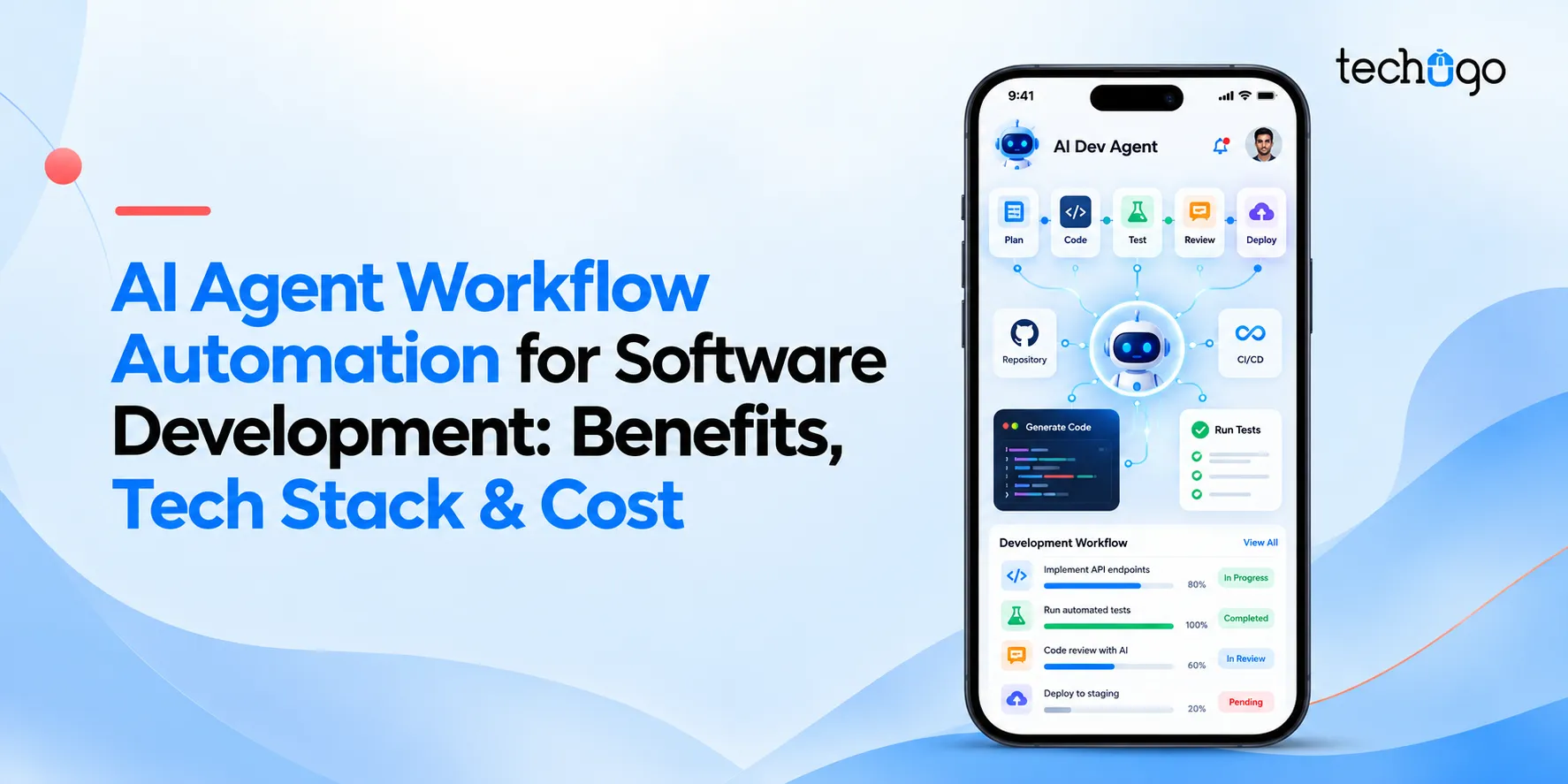
Software developers consistently seek solutions that might allow them to optimize menial tasks as well as deliver quickly. AI agents can help with different parts of software development – whether it’s reviewing code, running tests or finding bugs.
AI agent workflow automation for software development allows teams to use these capabilities in the workflows they’re already familiar with (without having to handle every task manually). But still, getting this to work takes more than picking an AI model. The system architecture, technology stack and cost of integrating it with existing tools all need to be considered. We’ll break down each of these considerations in this guide. Let’s read.
What is AI agent workflow automation software?
AI agent workflow automation refers to the use of AI agents to handle tasks during the development process with minimal manual input. AI agents can review code as well as facilitate the execution of tedious tasks by developers. Moreover, AI agents can also integrate with development tools and use data from different stages of a project.
Unlike traditional automation (which operates based on fixed rules of procedure), AI agents are able to interpret the information they receive and adapt their actions based on the requirements of a specific task. An AI agent development company can assist businesses in creating workflows according to their needs, enabling them to automate appropriate actions and combine AI agents with already existing systems.
Automate Your Development Workflows with AI Agents
Let our team help you build AI agent workflows that handle repetitive development tasks and fit your existing systems.
How does AI agent workflow automation work?
AI agents for business workflow automation work by taking a task under consideration and looking for the necessary data to effectively complete it with as little involvement as possible from humans. AI agents are also able to integrate with existing software used in a company, analyze information and execute tasks at different steps of the workflow.
For example – an AI agent can receive a customer query, check the order details in a CRM, identify the issue & prepare a response. If the task requires approval or involves sensitive information, it can pass the request to a human before proceeding.
McKinsey’s 2025 State of AI survey shows that 62% of respondents were using AI agents or expanding their use in their organisations. This is a sign of the increasing trend of using AI agents for business tasks and processes.
Typically, the workflow of an AI agent for automation consists of the following steps –
1. The first step is understanding the objective: The AI agent knows what task it needs to achieve and what its end goal is.
2. The second step is to gather the information: It collects the data it needs through various business applications and different data sources.
3. The third step is to determine what action to take: It examines the gathered information and finds out what actions need to be taken next.
4. The fourth step is to execute the task: It performs the necessary steps like making changes to documents, replying to messages, and performing task assignments.
5. The fifth step is to review the results: It checks outcomes to see if the task has been accomplished or if it needs improvement.
In essence, AI agents make it possible to automate more than individual tasks by taking care of multiple tasks in a business process.
Business benefits of AI agent workflow automation software
AI agent workflow automation tools offer several benefits for businesses looking to reduce manual work and improve productivity. Here are some of the key advantages to consider.
1. Reduced manual work
Employees don’t have to spend as much time on repetitive work like data entry, report preparation and follow-ups when AI agents can handle these tasks for them.
2. More efficient marketing operations
An AI marketing agent development company can build agents to automate tasks such as lead qualification, campaign reporting and customer follow-ups. With fewer repetitive tasks to handle, marketing teams have more time to review campaign performance and make changes where needed.
3. Faster task completion
AI agents can handle multiple tasks that are interlinked without any manual input in each step. This assists teams in avoiding delays and fulfilling their tasks early.
4. Better accuracy
AI agents have the capacity to examine data, identify possible mistakes & highlight issues for evaluation. This can enable companies to spot mistakes before they have any impact on other operations.
5. Improved workflow coordination
AI agents can connect with existing business applications and share relevant information across different stages of a workflow. This helps teams manage connected tasks more efficiently.
Tech stack for AI agent workflow automation
A variety of technologies perform different functions in the process of completing a workflow by an AI agent, including the receipt of instructions, storage of information and monitoring of results.
Let us explore the tools that support each part of the system.
| Technology layer | Tools and technologies | Use |
| Programming languages | Python, JavaScript, TypeScript | Develop AI agents and workflow logic |
| AI models | OpenAI GPT, Anthropic Claude, Google Gemini | Understand instructions and generate responses |
| AI agent frameworks | LangChain, LangGraph, CrewAI | Build and coordinate AI agents |
| Backend | FastAPI, Node.js | Handle requests and connect application components |
| Database | PostgreSQL, MongoDB, Redis | Store workflow data, outputs and session information |
| API integration | REST APIs, webhooks, GraphQL | Connect agents with existing development tools |
| Cloud platforms | AWS, Microsoft Azure, Google Cloud | Deploy and scale workflow automation systems |
| Monitoring | LangSmith, OpenTelemetry, Grafana | Track agent performance and troubleshoot issues |
| Security | OAuth 2.0, role-based access control, secrets managers | Manage permissions and protect sensitive data |
Types of agents used in agentic AI workflow automation
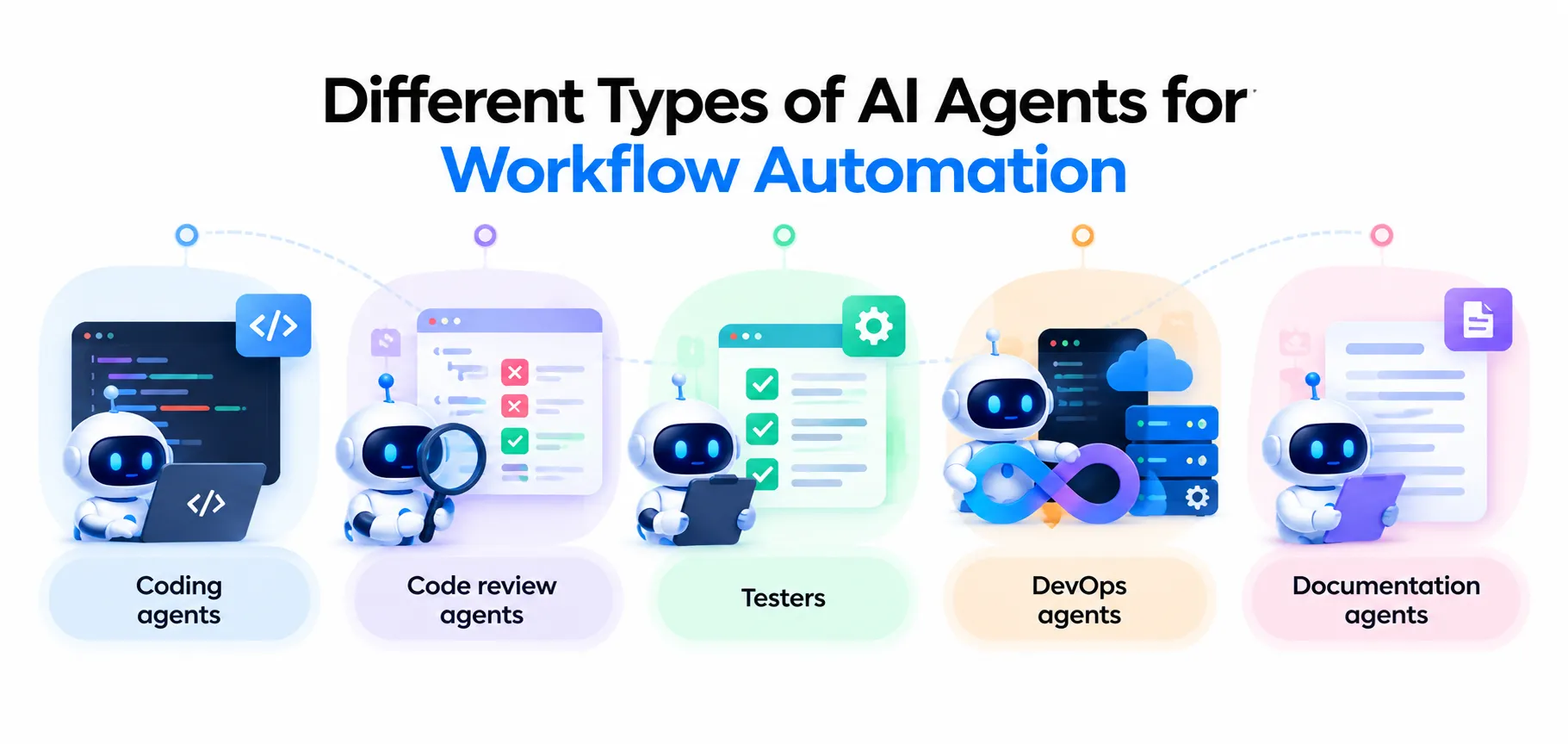
Depending on the needs of a development team, AI agent workflow automation can be used throughout the software development lifecycle. The AI agent development cost depends on the types of agents required and the tasks they need to handle. Common types of agents include –
1. Coding agents: Support developers in coding, propose changes and solve common coding problems.
2. Code review agents: Review code for possible bugs and security flaws as well as opportunities for improvement.
3. Testers: Conduct tests, identify bugs and assist software developers in validating new changes.
4. DevOps agents: Help with deployment activities, track system performance and highlight potential problems.
5. Documentation agents: Create or maintain technical documentation from code changes and project information.
Essential features of AI agent workflow automation software
1. Task planning and execution
AI agent workflow automation software must be capable of having knowledge of a task, dividing it into small steps and performing them in sequence. This allows agents to perform tasks like coding, testing as well as debugging.
2. Integration with development tools
AI agents ought to integrate with tools like code repositories, project management systems, testing tools and CI/CD pipelines. This will make it possible for them to retrieve necessary information and perform activities in the development process.
3. Human approval and oversight
Some tasks still need human oversight. The program must permit coders to take a look at the changes in the code, sanction the deployment, and step in whenever the virtual assistant runs into an issue it cannot deal with.
4. Monitoring and reporting
Teams must monitor agent activities, completed tasks and errors. Activity logs & performance reports enable developers to recognize issues and enhance processes.
5. Security and access controls
The software must have role-based access and proper data handling that safeguards source code, project data and credentials. An Enterprise AI Development Company can assist companies in implementing these controls and creating workflows that cater to the needs of the business with respect to development and security.
AI agent workflow automation use cases across industries
1. Healthcare
Healthcare teams usually contend with many forms of documentation and patient requests. AI systems can take care of many of these tasks such as scheduling appointments, answering inquiries, updating records and helping with claims processing.
2. Banking and finance
Banks deal with a mountain of transactions every day and no human can watch them all. An agent can keep an eye on things, spot a payment that looks off, pull together the details around it & hand the case to a fraud analyst to look at properly. It can also help with checking documents and answering customer questions, so the team isn’t stuck doing the routine bits.
3. Retail and eCommerce
Anyone familiar with running an online store knows that “where’s my order?” messages never stop. An agent can look up the order, notice if a delivery is running late, and let the customer know before they even ask. If it’s something it can’t sort out, it passes it on to the support team. It can also keep stock numbers updated and suggest products people might actually want.
4. Manufacturing
Manufacturers can use AI agents to monitor production data, track inventory and organise maintenance processes. An agent can detect irregular machine readings, promptly notify maintenance staff, retrieve the necessary equipment records – and assist in scheduling inspections.
5. IT & software development
IT teams can use AI agents for workflow automation to categorise support tickets, investigate system alerts, assist with code reviews and document incidents. Agents can gather information from connected tools, recommend corrective actions and escalate complex issues to developers or IT staff.
Looking to Find the Right AI Use Cases for Your Business?
Let’s identify opportunities to automate routine tasks and build AI agents that fit your business needs.
Challenges in AI agent workflow automation development & how to overcome them
1. Integrating with existing systems
AI agents typically require information from various tools and enterprise applications. Overall, integrating systems becomes challenging when some of the systems are built upon different data formats and some do not have appropriate APIs.
- How to overcome it – Make use of the right APIs and integration platforms as well as check connections before the agents are applied across the workflows.
2. Data security and privacy
AI agents developed through generative AI development can handle customer details, financial information or internal business data during AI agent workflow automation. However… this information may be exposed to unauthorised users if proper access controls are not in place.
- How to overcome it – Use role-based security, encrypt sensitive data and regularly check security. Allow agents access to only what they need.
3. Unreliable outputs and decisions
AI agents can misunderstand or provide incorrect details or actions when they face unfamiliar situations.
- How to overcome it – Establish guidelines, confirm results, establish boundaries for agent actions and add human review for big decisions.
4. Managing costs and performance
Creating and running AI agents can take a lot of resources, particularly if there are multiple agents in a workflow, lots of model calls or large amounts of data.
- How to overcome it – Begin with a small, well-defined use case. Track performance and operating costs and then scale automation up accordingly.
How much does it cost to develop AI agent workflow automation software?
If you only need to automate a few tasks, the cost will be different from building agents for your entire workflow. Agentic AI workflow automation services can help build a system around your needs, while AI consulting services can help you plan your budget.
Let’s look at how much development might cost.
| Complexity level | Estimated development cost | Estimated timeline |
| Basic | $10,000–$30,000 | 1–2 months |
| Mid-level | $30,000–$80,000 | 2–4 months |
| Advanced | $80,000–$150,000 | 4–6 months |
| Enterprise-level | $150,000–$300,000+ | 6+ months |
AI workflow automation trends in 2026 and beyond
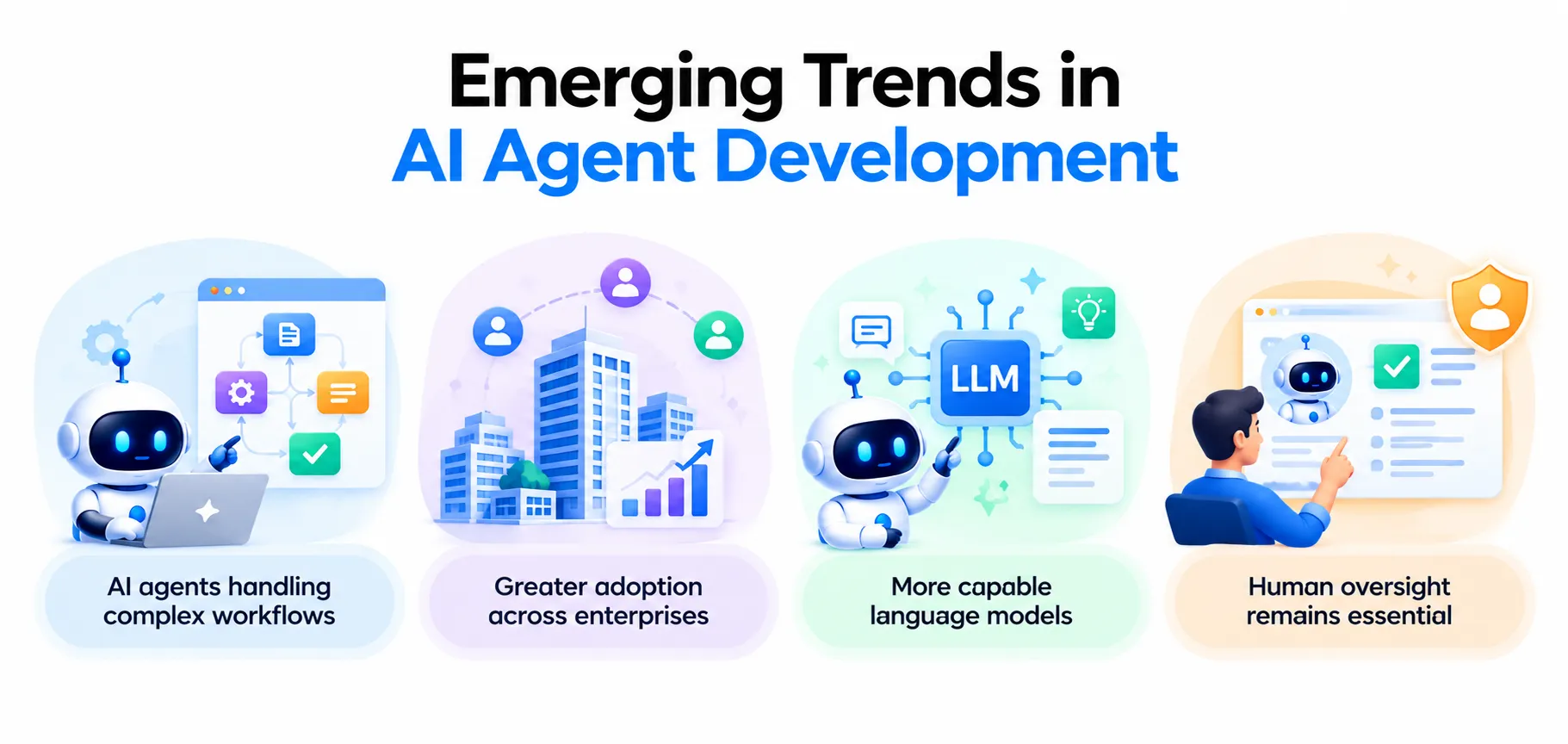
1. AI agents handling complex workflows
AI agents are not merely doing everyday tasks; they’re also handling more sophisticated workflows with several actions. Companies are exploring agentic AI workflow automation services to create agents capable of collecting and processing information as well as making decisions (and carrying out tasks with minimal human intervention).
2. Greater adoption across enterprises
In the context of business process management, more companies are eyeing AI agent enterprise automation workflow systems. These systems can integrate disparate business tools, organise tasks and help teams get through their daily tasks faster.
3. More capable language models
Advances in large language model development are helping artificial intelligence systems read commands, process data and act more optimally. Automation of business processes can be useful in cases like document analysis, customer service & in-house knowledge retrieval.
4. Human oversight remains essential
As automation expands, businesses will still need to review important decisions, monitor agent performance and maintain data security. The goal is to automate suitable tasks while keeping people involved where their judgement matters.
Bring AI agents into your business workflows with Techugo
Each organization has unique operational needs that must be met with the proper AI agents. At Techugo, we develop personalised AI agents that suit your operational needs, work alongside your current systems and help manage tasks that need to be done regularly. So talk to the Techugo team today and explore your options!
FAQs
Q. What are the benefits of AI agent workflow automation?
Automation of workflows can help eliminate redundancies, allow for time savings, make operations more productive and aid companies in dealing with complex workflows.
Q. What are the challenges of AI agent workflow automation?
Some of the major difficulties in the process are connected to system integration, security of data, inaccurate output and costs of development. Planning, implementing security systems, testing the products and using human supervision can help to overcome these problems.
Q. How does AI agent workflow automation work?
AI agents collect information, analyse it, decide what action to take and perform tasks using connected business tools and systems.
Q. How to implement AI agent workflow automation?
Businesses can implement AI agent workflow automation by identifying repetitive tasks, choosing the right AI agents, connecting existing systems, testing workflows and monitoring their performance before expanding automation across other processes.

Get in touch
We'd love to hear from you.