

 SA
SA
 KW
KW
 IE
IE AU
AU UAE
UAE UK
UK USA
USA
 CA
CA DE
DE
 QA
QA ZA
ZA
 BH
BH NL
NL
 MU
MU FR
FR




















📌 Key Takeaways
- Digital transformation helps insurers reduce manual work, improve customer service and make better use of data.
- AI, cloud computing, automation, analytics and IoT are playing an important role in modernising insurance processes.
- 88% of responding US auto insurers are using, planning to use or exploring AI and machine learning.
- Digital transformation can help insurers improve efficiency, customer experience, data use and scalability.
Insurance usually enters the picture when something has already gone wrong. Technology is changing what happens next.
In the insurance sector, organisations are taking great advantage of technology to enhance both the experience of their customers and their normal operations. Methods of digital transformation in insurance are enabling companies to modernise their infrastructure, automate repetitive processes and make better use of data.
With the right digital transformation services, insurers can also introduce new digital capabilities while improving the way existing processes work.
In this blog, we’ll explore how digital transformation is changing the insurance industry, along with its key use cases, benefits and challenges.
Planning your insurance digital transformation?
Work with a team that can help you identify the right technologies and build digital solutions for your business.
Why digital transformation matters for insurance companies
Digital transformation is becoming increasingly important for insurance companies in the US. According to the NAIC, 88% of responding auto insurers said they were already using, planning to use or exploring AI and machine learning in their operations.
For insurers, digital systems can help cut down repetitive tasks and make better use of the data they already have. Digital transformation in insurance can also help in the day-to-day functioning of the company and customer service. AI, automation and analytics can help teams process information, identify risks and make better decisions.
This is where insurance software development can be useful. Custom software solutions will let insurance companies optimize their processes or even develop innovative solutions for such functions as policy issuance, claims handling and customer support. Overall, digital transformation for insurance will ease the task of companies to update their systems and meet dynamic customer requirements.
Key technologies driving digital transformation in insurance
A number of technologies are helping insurers update their systems and improve everyday processes. Here are some of the key ones used in the insurance industry –
| Technology | Use in insurance |
| Artificial intelligence (AI) | Used for claims processing, fraud detection, customer support and risk assessment |
| Machine learning (ML) | Finds patterns in data and helps assess risks |
| Cloud computing | Gives insurers more flexibility to manage their data and applications while scaling their systems as their needs grow. |
| Data analytics | Helps insurers understand customer behaviour, assess risks and make better decisions |
| Internet of Things (IoT) | Used to collect data from connected devices for risk assessment and personalised insurance products |
| Robotic process automation | Used to automate repetitive tasks such as document processing & policy administration |
| APIs | Used to connect insurance systems and applications and exchange data |
Real-world use cases of digital transformation in insurance
1. AI-powered claims processing
AI can help automate the review of claim documents, extract key details and identify missing information. This can reduce manual work and help teams streamline claims processing. It’s one of the common applications of digital transformation in insurance.
2. Fraud detection
There are many claims and customer data to manage, making it hard to manually detect unusual activity. Cloud solutions in digital transformation can aid insurers in handling massive volumes of information, and AI and data analytics can assist in spotting trends that could suggest fraud.
3. Digital underwriting
Digital tools can bring together customer information, historical data and other risk factors to support underwriting. As part of digital transformation in the insurance industry, insurers can use these tools to make the underwriting process faster and easier to manage.
4. Personalised insurance products
Insurers can gain information on customer needs and actions from customer data. They can use this knowledge to provide targeted coverage, prices and recommendations to suit each customer accordingly rather than just a standard cover for all customers.
5. Chatbots and virtual assistants
Common questions can be answered by the chatbots; customers can search for information and avail basic support anytime. This can help customers to receive the answers they need faster without always calling an agent.
6. Telematics and usage-based insurance
Connected devices and telematics can collect information such as driving behaviour, mileage and vehicle usage. Insurers can leverage this information to gain insight into the risks of that driver, and develop insurance products to account for the manner in which the driver is using his or her vehicle.
7. Automated policy management
Digital systems can be used to complete routine policy-related tasks like issuing, updating and managing policies. Insurers can develop a tool to streamline policy management for their teams through custom software development, which allows for creating software that fits the insurer’s specific processes.
Examples of digital transformation in the insurance industry
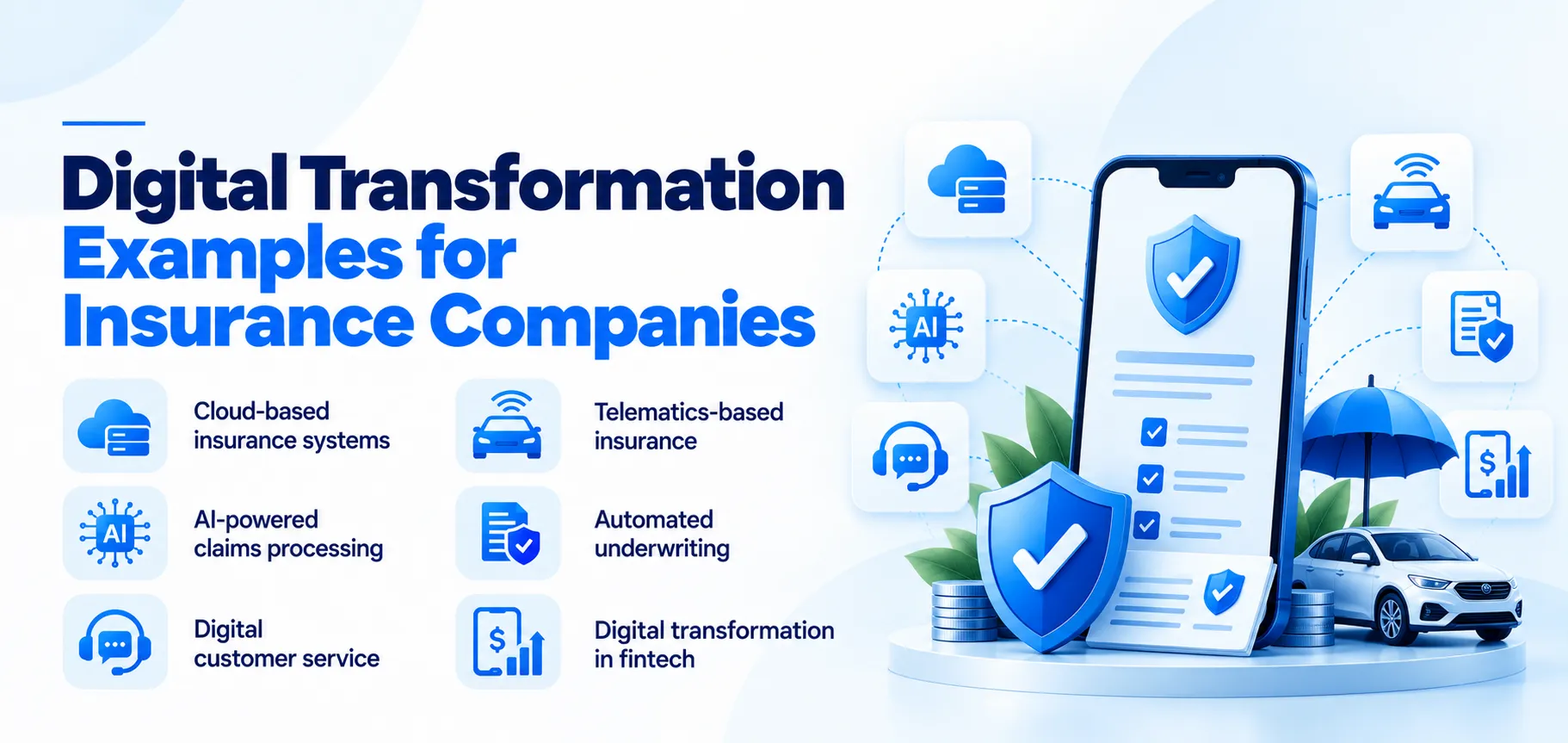
Insurance companies are using digital technologies to improve customer service, automate routine work and make better use of their data.
These examples show how digital transformation in the insurance sector is being applied in real business processes.
Cloud-based insurance systems: Insurers can use cloud technology to manage applications and data while making their systems easier to scale. Digital transformation strategy consulting can help companies identify where cloud technology and other digital tools could fit into their existing processes.
AI-powered claims processing: Insurers can use AI to review claims documents, extract relevant information and identify missing details. This can reduce manual work and help teams process claims more efficiently.
Digital customer service: Mobile apps, online portals and chatbots allow customers to check policy details, submit claims and get answers without contacting an agent for every request. These tools are a common part of digital transformation in insurance.
Telematics-based insurance: Some insurers use connected devices and telematics to collect data such as mileage and driving behaviour. This information can help insurers develop usage-based insurance products based on how a vehicle is being used.
Automated underwriting: Digital tools can bring together customer information, historical data and other risk factors to support underwriting. This can reduce manual data collection and help insurers manage the underwriting process more efficiently.
Digital transformation in fintech: Insurance is also becoming more connected to the wider fintech ecosystem. Digital payment systems, financial platforms and data-sharing technologies can help insurers improve how customers buy policies, make payments and manage their insurance services.
Benefits of digital transformation in insurance
The digital transformation of insurance can help companies improve daily processes, serve customers better and make better use of their data. Some key benefits include –
Faster processes: Automation of repetitive processes like data entry, processing documents and updating policies is possible with the application of digital tools, which reduces the time taken to do manual work.
Better customer experience: Mobile apps, online portals and chatbots give customers easier ways to check policies, submit claims & get support. When planning the insurance app development cost, companies can also consider features that improve these interactions.
Better use of data: Digital systems can organise customer and claims data, making it easier for teams to analyse information and support decisions.
More efficient operations: Automation and connected systems can help improve digital transformation in insurance operations by reducing repetitive work and making information easier to access.
Easier scalability: Cloud-based systems can help insurers manage growing data and applications while making it easier to introduce new digital services.
Need better digital solutions for your insurance business?
Improve processes, reduce repetitive work and create better ways for customers to manage their insurance.
The role of AI in insurance digital transformation
Insurance companies are using AI to make everyday tasks like claims processing and customer support easier. As part of digital transformation in insurance, companies can use AI to process large amounts of information, spot patterns and reduce the amount of manual work involved in routine processes.
For example, AI can:
- review claims documents
- extract relevant details
- flag missing information
It can also help insurers identify unusual patterns in claims data that may indicate potential fraud. In underwriting, AI can analyse customer and risk information to support the assessment process.
Lately, the advancements in generative AI development have led to many additional applications in the insurance industry. The possibilities include the use of this technology for creating summary reports and preparing communication materials for clients, as well as assisting employees in quickly retrieving the necessary information.
By combining generative artificial intelligence, cloud computing, analytics and automation technologies, insurers will be able to enhance their operations.
Common challenges when moving to digital insurance
Moving to digital insurance can make things easier for both insurers and customers, but getting there is not always simple. Companies may run into a few challenges when updating their systems and introducing new digital tools.
Older systems: Many insurers still use legacy systems that may not work well with newer technology. Updating these systems or connecting them with new tools can take time & careful planning. Enterprise application development can help when insurers need systems that fit their existing setup.
Data security: Insurers deal with a lot of sensitive customer information. Keeping this data safe becomes even more important as more services move online.
Employee adoption: New technologies may force employees to learn new working techniques. Proper education can help people cope more easily with the adjustment process.
Customer adoption: Not every customer will want to use digital channels. Insurers need to make these services simple while still supporting customers who prefer traditional options. This is an important part of planning digital transformation services for insurance.
Steps to implement digital transformation in insurance
1. Start by looking at existing systems: Identify outdated systems, repetitive tasks & processes that could be made easier with digital tools.
2. Set clear goals: Decide what you want to improve – whether it is claims processing, customer service, policy management or day-to-day operations.
3. Update older systems: Legacy systems can make it harder to introduce new technology. Legacy application modernization can help insurers update these systems and connect them with newer tools.
4. Choose the right technology: AI, cloud computing, automation and analytics can all support different areas of an insurance business. The right choice depends on what the company actually needs.
5. Make changes gradually: Digital transformation for insurance companies is an ongoing process. Introducing changes step by step allows insurers to see what works, fix issues and improve the results.
Key costs involved in transforming insurance operations
The cost can differ widely depending on what an insurer wants to change. Mobile app development may cost less, while wider digital transformation in insurance can require more investment in areas like system upgrades, cloud & AI.
Here’s a rough idea of what insurers may need to budget for different areas:
| Factor | Approximate cost range |
| Basic process automation | $10,000–$30,000 |
| Customer portal or mobile app | $30,000–$100,000 |
| Legacy system modernization | $50,000–$250,000+ |
| AI and analytics integration | $40,000–$150,000+ |
| Cloud migration | $50,000–$200,000+ |
| Enterprise-wide transformation | $250,000–$500,000+ |
Future trends that will shape digital transformation in insurance
1. More personalised insurance
Insurers can use customer and behavioural data to offer coverage and pricing that better match individual needs. Telematics and connected devices can also support more personalised insurance products.
2. More cloud-based systems
Cloud technology can make it easier for insurers to manage data, scale applications and introduce new digital services without relying entirely on older infrastructure.
3. More connected digital services
Mobile apps, online portals and chatbots are likely to work more closely together, giving customers easier ways to manage policies and submit claims. Digital transformation services for insurance can help insurers connect these digital channels.
4. More self-service options
Customers may want to handle more of their insurance themselves, from checking policies to making payments and submitting claims. With iOS app development and other mobile technologies, insurers can offer these options through their apps.
How can Techugo help?
Techugo works with insurance companies to build digital products around the way their business works. From planning and developing new apps to updating older systems, our team helps companies bring the right technology into their existing processes.
We also build mobile apps and digital platforms that make it easier for customers to manage policies, submit claims and get support. We first look at how the company handles its day-to-day work, then find areas where technology can cut down manual tasks and make things easier for both employees and customers.
Want to know what digital transformation could look like for your insurance business? Get in touch with our team.
FAQs
1. What is digital transformation in insurance?
It means using technology to make insurance processes easier, faster and more convenient for both companies and customers.
2. What are some common digital transformation use cases in insurance?
Common examples include – claims processing, fraud detection, digital underwriting, chatbots, automated policy management and telematics.
3. How can AI help insurance companies?
AI helps insurers review claims, analyse data, spot unusual activity & handle common customer queries.
4. How long does digital transformation in insurance take?
It depends on the size and complexity of the project. Smaller initiatives may take a few months, while larger transformations take longer.

Get in touch
We'd love to hear from you.