

 SA
SA
 KW
KW
 IE
IE AU
AU UAE
UAE UK
UK USA
USA
 CA
CA DE
DE
 QA
QA ZA
ZA
 BH
BH NL
NL
 MU
MU FR
FR














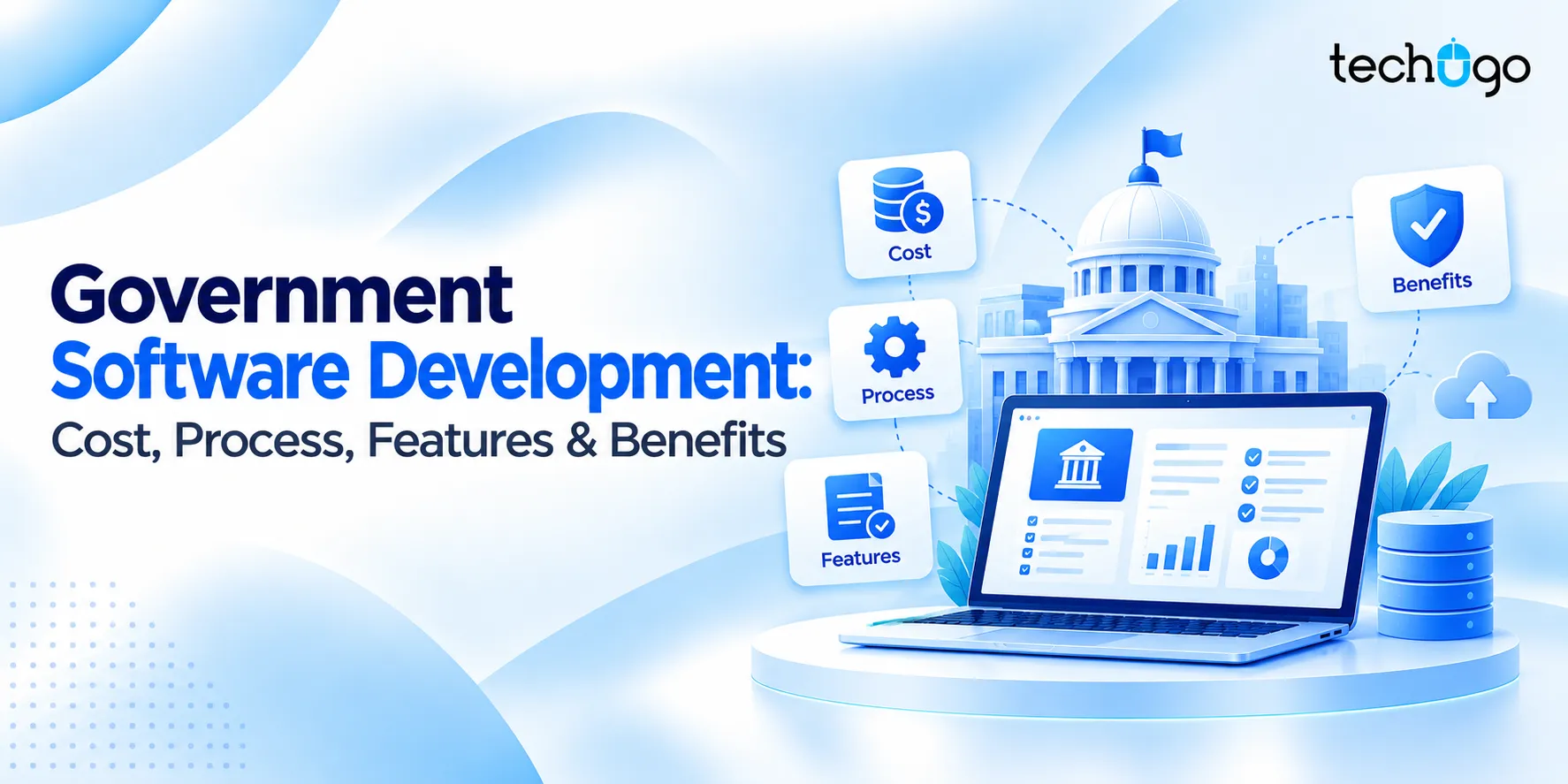


📌 Key Takeaways
- Government software development can cost around $50,000 to $500,000+
- Security, user management, data management, reporting, and integrations are common features.
- Existing government systems can be modernised and integrated instead of being replaced completely.
- Choosing the right development partner can make it easier to build software that fits your department’s needs.
One thing that can make government services difficult to manage is the amount of information and processes involved. Government departments handle everything from citizen requests and documents to payments and internal records.
Managing all of this manually can take a lot of time.
To address this, government software development helps public organizations move these processes into digital systems. It can be used for citizen portals, document management, payment platforms and internal administrative tools, making it easier for government teams to manage their work and for citizens to access services.
“So in this guide, we’ll cover the cost, development process, key features, benefits and other important considerations.”
Understanding Government Software Development
Government software development refers to creating digital systems that help government departments manage services, information and day-to-day operations. These solutions can support everything – from citizen portals and online applications to document management, payments and internal administrative tasks.
Government systems are typically developed to meet specific requirements, regulations and workflows within the public sector, as opposed to generic software. Custom software development can be useful here because it allows organizations to develop software based on their existing processes and needs. Government software can also be integrated with existing systems and databases (depending on the project) to make information easier to manage and provide services digitally.
Have a Government Software Project in Mind?!
Get the right technology and development support to turn your requirements into a practical digital system.
Different Types of Government Software Solutions
Government departments deal with different kinds of work. So they often need different types of software to handle it. Some software is built to help citizens apply for services or check information online, while other systems are used by government teams to manage their daily work.
Government software development services can help create these systems based on what each department actually needs.
Common types include –
1. Citizen service portals
These platforms allow citizens to access services, submit applications, check updates and manage requests online.
2. Administrative software
Government departments can use these tools to manage internal tasks, employee information, workflows and day-to-day operations through mobile app development.
3. Payment and billing systems
These systems can support online payments for taxes, fees, licenses and other government services.
4. Document management systems
They help government teams store, organize and access important documents and records digitally.
Must-Have Features to Include in Government Software
1. User-friendly interface
Government software should be simple to use and understandable (for those who may not be deeply immersed in digital platforms). A well-laid-out, easy-to-navigate interface with readily available information can improve the experience for citizens – and government staff.
2. Secure login and access control
Security is a vital aspect of any government software application, considering that such programs may include confidential information about citizens and the state’s activities. Various methods of secure login enable resource owners to protect their accounts while restricting access to sensitive data based on the role of a user.
3. Document management
The software should allow teams to upload, store, organize and find documents without having to search through different systems. This can be useful for departments that handle large amounts of records every day.
4. Online payments
If a department collects taxes, fees or other payments, the software can include secure online payment options. This gives citizens a convenient way to complete transactions without visiting a government office.
5. Integration with existing systems
Government departments may already use different databases and platforms. Enterprise software development can help connect the new system with existing tools, allowing information to move between systems without requiring teams to enter the same data repeatedly.
6. Reporting and analytics
Reports can help government teams keep track of applications, payments, requests and other activities. They can see what has been completed, what is still pending and where something may need attention.
7. Mobile accessibility
Government services should also work well across different devices. Government website developers can build responsive platforms that make it easier for citizens to access services and information from their phones, tablets or computers.
8. Customization
Every government department has its own processes and requirements. Custom government software development services can help build features around these specific needs instead of forcing teams to work with a standard system that may not fit their processes.
The Role of AI in Government Software Development
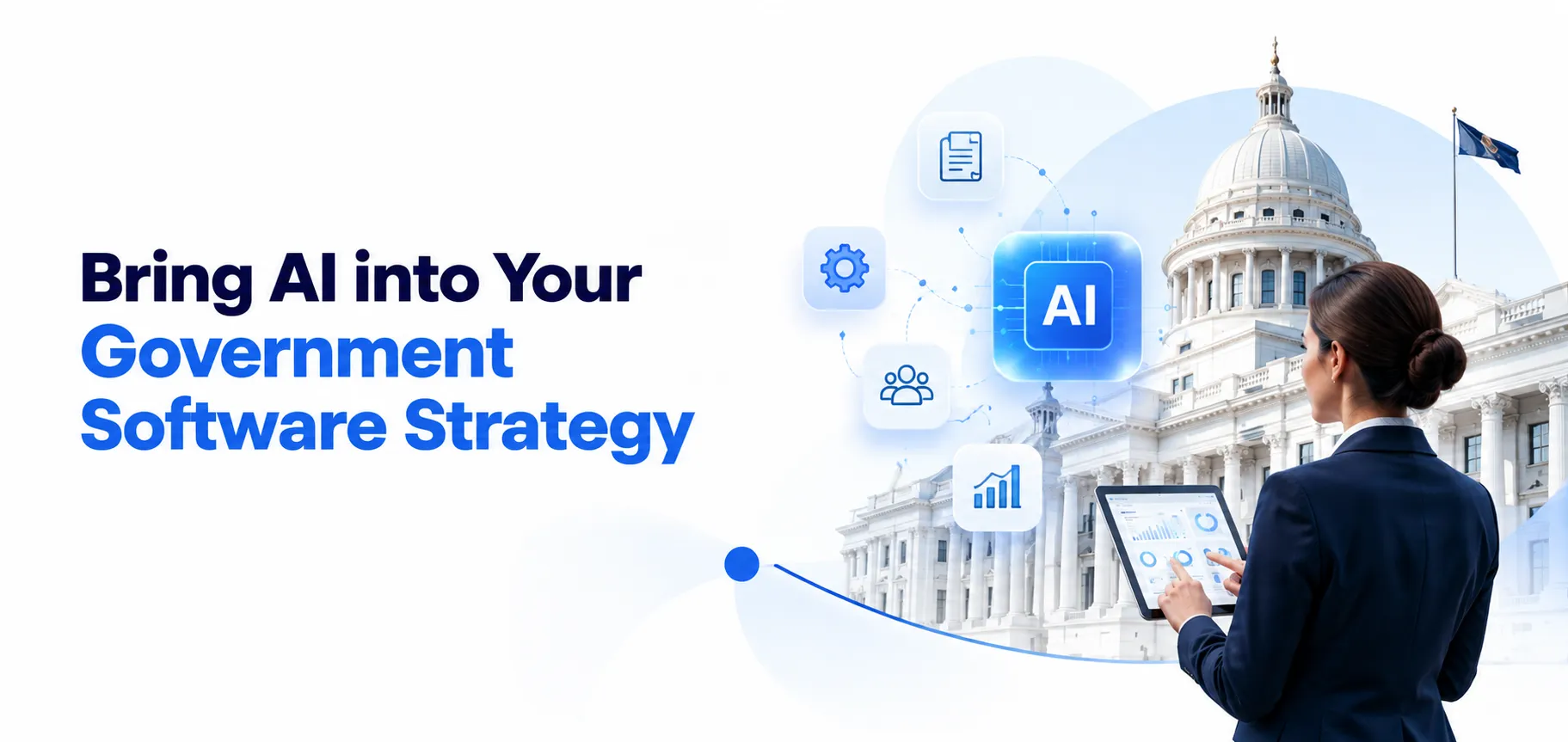
AI can make government software easier to use and easier to manage. It can help teams deal with repetitive work, handle large amounts of information and respond to citizen requests without having to do everything manually.
AI can sort documents, answer common questions, process requests and find patterns in data.
This is how AI can fit into a government software system:
“Government data & requests → AI processes the information → AI handles specific tasks → Team reviews the results → Faster services”
One common example is an AI chatbot that helps citizens find information about government services. AI can also help employees with things like document processing, data analysis and managing requests. It can even flag unusual activity so the right team can take a closer look.
Government departments can use AI development services to add these features based on what they actually need. The use of AI will look different across government departments, depending on what each one needs to manage. Since the software may contain sensitive citizen data, security and access controls should be part of the setup too.
Steps Involved in Government Software Development
Government software development usually follows a few important stages, from understanding the department’s needs to launching and maintaining the final system. The exact process can vary depending on the project but the basic steps usually look like this –
1. Understand the requirements
Everything starts with understanding the department’s requirements. The team takes a look at the existing way of working, the people who will use the software, the main challenges and the security requirements. Government software development contracts can then lay out the scope, timelines, deliverables & responsibilities.
2. Plan the software
After the requirements are sorted out, the team starts planning the software itself. In this step, they decide:
- which features to include
- what technology to use
- which systems it needs to connect with
- how the software will be structured
Larger projects may require enterprise app development to support different departments and users.
3. Design and develop
The team then designs the interface and starts developing the software. In government and public sector software development, this could include citizen portals, employee dashboards, document management, payment systems and other department-specific features.
4. Test the system
Before launch, the software is tested to check whether everything works as expected. Security, performance, accessibility and user experience are also reviewed to identify and fix issues.
5. Launch and maintain
Once testing is complete… the software can be deployed for users. Regular maintenance, updates and monitoring help keep the system secure and useful as the department’s needs change.
How Much Does Government Software Development Cost?
Every government software development project has different requirements, so the overall cost can vary quite a bit.
Here’s a rough idea of what the costs can look like:
| Type of government software | Estimated cost |
| Basic software | $30,000 – $60,000 |
| Mid-level software | $60,000 – $120,000 |
| Advanced software | $120,000 – $250,000+ |
| Enterprise software | $250,000 – $500,000+ |
There are a few other things that can push the cost up or down, such as the number of users, integrations, security needs and the time required to build the software. If you add AI agent development, the cost may go up, particularly when the AI needs to handle complex tasks or work with a lot of government data.
If the project also needs a public-facing portal, a government website development company can add to the overall cost depending on how many pages, services and integrations are needed.
This is why government software development projects are usually priced based on the actual requirements instead of following one fixed rate.
Not sure what your government software project will cost?
Talk to our team about your requirements and get a better idea of what your project may cost.
Major Benefits of Government Software Development
Government software can make everyday processes easier for both departments and citizens. When the right tasks are moved online, teams can save time while citizens get a simpler way to access services.
Here are some of the key ways it can benefit your business –
1. Faster service delivery
With government application development, departments can move tasks like applications, payments and document submissions online. This can cut down unnecessary paperwork and reduce the time people spend waiting for updates.
2. Less manual work
A lot of government work involves doing the same tasks over and over. Government software can take care of such tasks (data entry, document handling and request processing). This gives employees more time to focus on work that needs their attention.
3. Software that fits the department
A custom government software development company can build software around the department’s actual processes and requirements. This makes it easier to add or change features as those needs evolve.
4. Easier digital transformation
Digital transformation services can help departments replace older manual processes with digital systems that are easier to manage and improve over time.
Security and Compliance Considerations for Government Software
1. Data security
Government software is capable of storing a lot of sensitive details, so security is crucial. Cloud application development can help them store and manage the information while allowing access to the right users.
2. Access control
Some employees may need to view certain records while others may need to edit them. Access controls can help set these permissions based on each employee’s role.
3. Regular security checks
Keeping the software secure requires regular attention. Regular testing, monitoring and updates can help departments find issues early and keep the software protected.
4. Compliance requirements
Government software also needs to follow the rules that apply to the department and the data it handles. Government application development services can take these requirements into account during development.
What to Consider When Choosing a Government Software Development Company
Find the Right Government Software Development Partner
1. Experience with similar projects
Start by looking at the company’s previous work and experience with similar government projects. Among software development companies, those with experience in government projects will already have an idea of the security, workflows and technical requirements involved.
2. Ability to build around your needs
Every department works a little differently. Custom government agency software development can help create features around those specific processes instead of making employees adjust to a system that doesn’t fit their work.
3. Knowledge of older systems
If your department relies on older systems, check the company’s experience with application modernization. They may be able to update what you already have rather than replacing the whole system.
4. Support after launch
Getting the software live is only part of the process. You will need a team that can handle updates, fix issues and make changes when the department’s needs change.
Get Expert Government Software Development with Techugo
Government software comes with requirements that cannot be treated like those of a typical business application. It needs to fit existing workflows, protect sensitive data & remain reliable as more people use it.
Techugo helps government organisations build custom software around these requirements.
Our team provides software consulting services, along with application modernisation, cloud solutions, AI and secure web and mobile applications. Whether you are starting a new platform or improving an existing one, we can help you take it from planning and development to testing and ongoing maintenance.
With 11+ years of experience and 1,400+ apps delivered, Techugo has worked with different industries, technologies and project requirements. We understand that government software may need to support complex workflows today while also being ready for new services and changing user needs in the future. So speak with our team about your software requirements today.
FAQs
1. Is government software development different from regular software development?
Yes. It usually needs to meet specific security, compliance and workflow requirements. It may also need to connect with existing government systems.
2. Can AI be used in government software?
Yes. AI can help with things like chatbots, document processing, data analysis and request management. The exact use depends on the department and its requirements.
3. How is government software kept secure?
Since government software may store sensitive information, security needs to be considered from the start. This can include secure logins, access controls & regular security checkups.
4. Can government software integrate with existing systems?
Of course! It can connect with existing databases, APIs, payment systems, internal platforms & other tools.

Get in touch
We'd love to hear from you.