

 SA
SA
 KW
KW
 IE
IE AU
AU UAE
UAE UK
UK USA
USA
 CA
CA DE
DE
 QA
QA ZA
ZA
 BH
BH NL
NL
 MU
MU FR
FR
















📌 Key Takeaways
- Building an eCommerce app in Saudi Arabia can cost more or less depending on what you want it to do.
- Start with the basics like product listings, a shopping cart and payment options. You can always add more features later.
- Choose a tech stack that fits your app’s needs and budget.
- Include local payment methods, Arabic language support and delivery options that work for customers in Saudi Arabia.
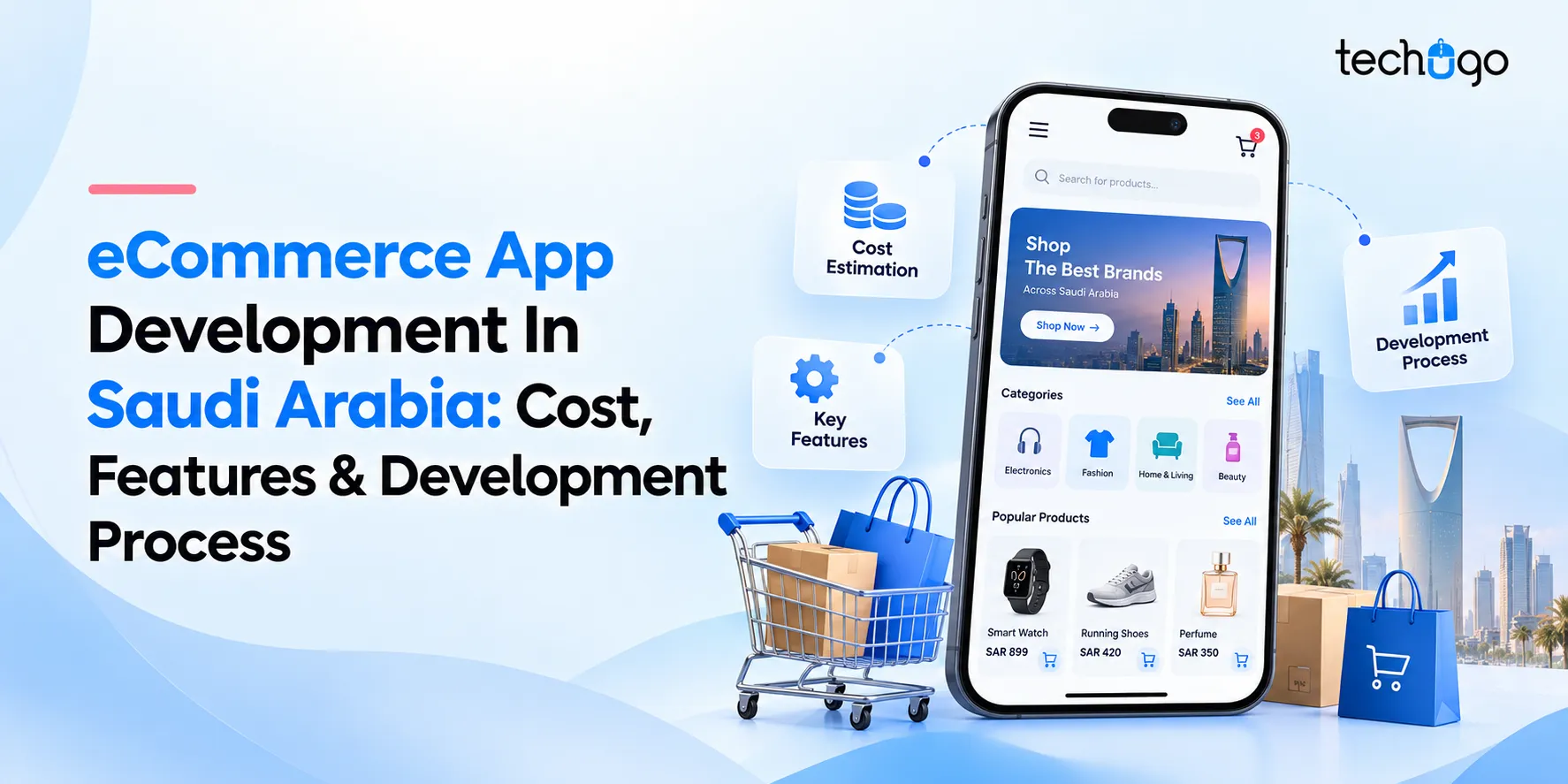
Online shopping has opened up so many new opportunities for businesses in Saudi Arabia, but setting up an online store is only one part of it. You also need to think about how customers will shop, what will make them come back, how you’ll manage orders as your business grows, etc. This is why more businesses are investing in eCommerce app development. From choosing the right features to setting a budget, there are a few things worth understanding before you start building your app.
Plan Your eCommerce App in Saudi Arabia
Let’s go over your requirements and explore the features and development approach that fit your business.
Why invest in an eCommerce app development company in Saudi Arabia
In case you’re planning to take your business online, there’s more to it than just listing products and waiting for orders. You need to make shopping easy for customers & encourage them to shop again.
Working with an eCommerce app development company in Saudi Arabia can help you build an app around your business needs and local customers. Here’s why it’s worth the investment:
1. Reach more customers
Give people an easy way to browse your products and shop from their phones, wherever they are.
2. Offer a better shopping experience
Features such as – personalised recommendations, saved items and a simple checkout – can encourage customers to return.
3. Make payments easier
Support popular local payment options, including Mada and digital wallets, to give customers convenient ways to pay.
4. Manage orders efficiently
Keep track of orders, inventory, deliveries and customer requests from a central platform.
5. Support business growth
Add new features, product categories and integrations as your customer base and sales grow.
An experienced development team can help you sort out the important details before you get started – from the features you need to the technology and budget. In this way, it would be possible to create an app that meets the existing requirements plus allows for further improvements.
Types of eCommerce apps you can build in Saudi Arabia
Before you get into features and development costs, consider how you want your online store to work. Whether you’re selling directly to customers or working with other sellers, there are a few models to consider –
1. Single-vendor app: Sell your own products through your online store.
2. Multi-vendor marketplace: Let different sellers list their products on one platform.
3. D2C app: Allows brands to sell directly to customers without relying on third-party retailers.
4. On-demand shopping app: Allows customers to order products & receive them within a short delivery window.
5. B2C app: Sell products directly to individual customers.
6. B2B app: Let other businesses place orders, including bulk purchases.
Each type comes with its own set of requirements, so it’s worth deciding on your business model before getting into the features and development costs.
How much does eCommerce app development cost in Saudi Arabia?
The eCommerce app development cost in Saudi Arabia varies based on what you have in mind for your app.
An application that allows users to see a range of products and make purchases will cost much less than one with other attributes, such as offering various payment options, tracking deliveries and giving suggestions according to users’ likes.
Here’s a quick idea of how much you might need to spend:
| App type | Estimated cost |
| Basic eCommerce app | SAR 40,000–95,000 |
| Mid-level eCommerce app | SAR 95,000–225,000 |
| Advanced eCommerce app | SAR 225,000–450,000+ |
| Enterprise eCommerce app | SAR 450,000–940,000+ |
Not surprisingly… the costs can vary based on the functionalities and integrations involved in your app. For instance, a web-based shop does not require the same level of development sophistication as a marketplace with multiple sellers selling different products.
It’s also important to keep in mind that after the app launches, the expenses don’t end. You will want to set aside some funds for hosting expenses, maintenance and security updates along the way, as well as for adding new functionalities in the future.
Key factors affecting eCommerce app development cost in Saudi Arabia
The cost of developing an eCommerce app depends on several things and even small decisions can affect your overall budget. Here are some of the main factors to consider before you get started –
1. Features you want: An app with product listings, a shopping cart and checkout is fairly straightforward. Add things like live order tracking, loyalty points and personalised product suggestions, and there’s more work involved.
2. App design: A basic design will cost less, while a custom design will come with interactive features and various layouts for shoppers.
3. Payment options: If you want customers to pay through Mada, credit cards and digital wallets, these payment methods need to be integrated and tested.
4. Third-party integrations: You might want your app to connect with delivery services, inventory software or your existing website. Each integration adds to the development work.
5. Android and iOS development: Developing for one platform might cost less than developing two different apps for both platforms. Another option to consider is cross-platform development.
6. The development team: This can vary based on the experience of the development team, geographical location and the complexity of your project.
7. Updates after launch: You will also have to spend money on hosting, maintenance, security updates and any new features that you may add later.
How long does it take to build an eCommerce app in Saudi Arabia?
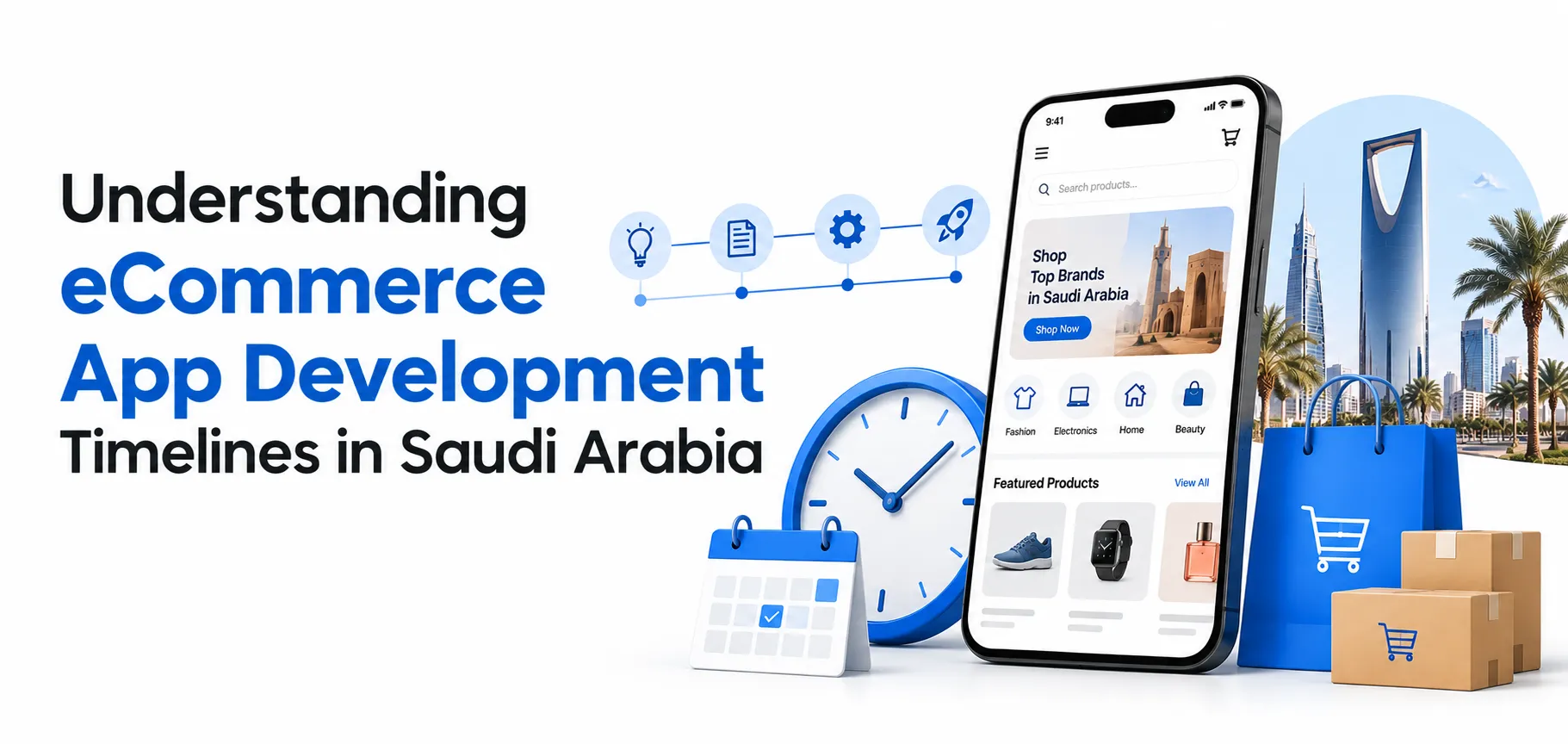
If your app only needs the basics, development will take less time. Adding more features and integrations can stretch the timeline. Below is a quick breakdown of the estimated timeline for different types of eCommerce apps.
| Type of eCommerce app | Estimated development time | Typical features |
| Basic app | 2–3 months | Product listings, shopping cart, checkout and user accounts |
| Mid-level app | 3–5 months | Multiple payment options, order tracking, push notifications and customer reviews |
| Advanced app | 5–8 months | Personalised recommendations, advanced analytics, loyalty programmes and several integrations |
| Enterprise app | 8–12+ months | Large product catalogues, complex workflows, multiple systems and support for high order volumes |
Essential features every eCommerce app should have
1. Simple sign-up and login
Ordering shouldn’t involve filling out lengthy forms. Customers should only need to enter their email (or phone number) in order to get started with the application. Keeping addresses and account details saved can also speed up the process of reordering.
2. Order tracking and notifications
Clients expect to track their orders at any stage, be it confirmation, shipping or delivery. In-app tracking and timely notifications update users on their orders and lessen their dependence on customer service for inquiries regarding their orders. An established eCommerce app development company can assist you in incorporating this feature set depending on your business needs.
3. Product search & filters
A large product catalogue is useful – but only if customers can find what they’re looking for. Include a search bar, clear product categories and filters for price, brand, size & ratings. These features help shoppers narrow down their options without scrolling through every product.
4. Shopping cart and checkout
Users should be able to add products to their cart, increase or decrease the quantity of products they have and view the total amount of products in their cart before they make a purchase. Avoid “hidden costs” at the checkout; make delivery costs clear.
5. Local payment options
Offering payment options such as Mada, credit/debit cards and digital wallets facilitates payments for consumers in Saudi Arabia. Safety during transactions is also important since customers enter their financial information.
Saudi-specific features to consider
In order to develop an eCommerce application specifically for Saudi Arabia, it is crucial to take into consideration the shopping and payment preferences of the customers in that particular region. While you may be using an eCommerce mobile app builder, it is essential to ensure that the application has the latest features in line with customer expectations instead of simply keeping the core shopping functionalities in mind.
Here are a few features worth considering –
1. Arabic and English language support
Let customers browse products and complete purchases in their preferred language.
2. VAT calculation
Display the applicable VAT clearly in product prices and at checkout, so customers know what they’re paying.
3. Delivery across Saudi Arabia
Let customers enter their addresses easily and check delivery availability before placing an order.
4. Local promotions
Support discount codes, seasonal offers and campaigns during occasions such as Ramadan and Saudi National Day.
Legal & regulatory requirements for ecommerce apps in Saudi Arabia
1. Business registration
Take some time to understand the local registration rules and get the necessary paperwork in order before you begin selling online.
2. Consumer protection
Customers should be able to find your return and refund policy, terms and conditions – and contact details without having to search for them.
3. Data privacy
In case your app collects customer details, you need to handle that information carefully and follow Saudi Arabia’s data protection rules.
4. VAT requirements
Check whether your business needs to register for VAT and make sure the applicable taxes are reflected correctly in your pricing.
5. Clear product information
Display accurate product details, prices and any additional charges before customers place an order.
Best tech stack for eCommerce app development
The choice of technology depends on what your app’s purpose is and how much you want to pay for it. There are technologies that are easier to use and those that require more time and expertise to implement.
In fact, the decisions about the technologies also affect the overall cost to develop an eCommerce app, so it is always worth making the comparison beforehand.
| App component | Recommended technologies |
| Android app development | Kotlin, Java |
| iOS app development | Swift |
| Cross-platform development | Flutter, React Native |
| Frontend development | React.js, Next.js |
| Backend development | Node.js, Python, .NET |
| Database | PostgreSQL, MySQL, MongoDB |
| Cloud hosting | AWS, Microsoft Azure, Google Cloud |
| Payment integration | Mada, payment gateway APIs |
| Security | SSL/TLS, encryption, secure authentication |
| Testing | Appium, Selenium, XCTest |
Ways to monetize your ecommerce app in Saudi Arabia
The easiest way to generate revenue from an eCommerce app is to sell products, but that’s not the only way. If you’re looking for a few other means of earning money, there are a few options to consider, depending on your business model.
1. Product sales: Make direct sales of products through your app and earn money from each sale.
2. Commission fees: If you allow other sellers to sell their products through your app, you can get a small percentage of the sales.
3. Subscription plans: Provide customers paid memberships that give them benefits such as discounted prices or free delivery.
4. Delivery charges: If users want their order to be delivered faster, then delivery charges will be a part of the fare.
5. Paid promotions: Give sellers a chance to be seen more by shoppers by paying to have their products promoted.
Common challenges in eCommerce app development & how to overcome them
1. Payment failures
Customers may abandon their carts if payments fail or their preferred payment method is unavailable. Integrate reliable payment gateways and offer popular local payment options.
2. Slow app performance
Slow-loading pages can frustrate shoppers. Optimise images, test app performance and use scalable infrastructure to handle traffic during sales.
3. Security risks
eCommerce apps handle customer details and payment information, making security essential. Use data encryption, secure authentication and regular security testing to protect sensitive information.
4. Managing high traffic
A sudden increase in visitors during promotions can affect app performance. Plan for scalability and test the app under heavy loads before launch.
5. Cart abandonment
The checkout process can be a turn-off if it’s too complicated. Simplify checkout – and make guest checkout available when possible.
How to build an eCommerce app in Saudi Arabia: step-by-step process
1. Plan your app requirements
First, you need to determine what you are selling, who your customers are and how the app will function. Also determine if you want a single vendor store or a marketplace for a variety of vendors.
2. Choose the right features
Make a list of the features your customers will need, such as product search, filters, wishlists, secure checkout and order tracking. You can add more advanced features later as your business grows.
3. Select the technology
Select technologies that support your app’s features and development. Another consideration you have is whether you should create your app for Android and iOS or go with a cross-platform development platform.
4. Design and develop the app
Finalise the app’s design, navigation and checkout flow prior to development. You can choose to have a mobile application built by a mobile app development company in Saudi Arabia in accordance with your business needs and the payment methods you are looking for.
5. Test and launch
You should verify the functionality of all elements/functions before you launch your app. Keep in mind that the work continues after launching the app. In order to create a successful eCommerce application, don’t forget to troubleshoot and listen to the users’ recommendations.
Get Your eCommerce App Ready for the Saudi Market
Our team can help you understand the development process and plan an app around your business requirements in Saudi Arabia.
How to reduce eCommerce app development costs
It’s easy to go over budget during eCommerce app development (especially when you keep adding new features). A few smart choices can help you keep costs under control –
1. Start with the basics
It’s best to start small and build your app step by step. Your app should begin with features that are essential: product listings, a cart and payment processing.
2. Pick the right platform
Decide whether you need separate Android and iOS apps or if cross-platform development would work for your business.
3. Use ready-made tools
Payment gateways and existing APIs can save time and reduce development work.
4. Plan before development
Be clear about your requirements from the start to avoid costly changes later.
5. Choose the right development team
Choosing among top ecommerce app development companies can help you manage your budget and build an app that aligns with your business goals. Look for a team with relevant eCommerce experience that can recommend the right features, technology, and integrations without adding unnecessary complexity or development costs.
Tips for choosing an eCommerce app development company in Saudi Arabia
1. Check their eCommerce experience
Look at the company’s previous projects to see whether it has built eCommerce apps with features similar to the ones you need.
2. Look for knowledge of the Saudi market
The team should understand local customer expectations, payment methods and the need for Arabic language support.
3. Discuss your technical requirements
Make sure you discuss your technical needs with the company. It is crucial to ensure that the selected firm has the capability of offering the necessary services according to your platform options.
4. Ask about support after launch
Before you finalise the deal, ask what kind of help you can expect once the app is launched, especially when updates or technical issues come up.
Partner with Techugo for eCommerce app development in Saudi Arabia
Whether you’re building an online store for Saudi customers or exploring eCommerce apps in ME, Techugo can help you plan and develop an app that fits your business needs. Our team can guide you through the entire development process.
Tell us a little about your business and what you want from your app… we will help you plan the next steps.
FAQs
1. How to create an ecommerce app?
To create an eCommerce app, define your requirements, choose the features and technology, design the app and integrate payment methods. Test everything before launch & update the app as your business expands.
2. Which payment methods should an eCommerce app support in Saudi Arabia?
In Saudi Arabia, an eCommerce application can accept Mada, credit and debit cards and digital wallets like Apple Pay. You will have to choose from the available options based on your payment gateway and business needs.
3. Can I develop an eCommerce app for both Android and iOS?
Yes. You can develop separate native apps for Android and iOS or use a cross-platform framework such as Flutter or React Native to build an app for both platforms. The right choice depends on your budget, features and performance requirements.
4. Can an eCommerce app support multiple sellers?
Yes, you can develop a multi-vendor eCommerce app that enables various sellers to sell products and handle orders and sales. Additional features may consist of seller dashboards, commission management, as well as separate payment processing in line with your business model.

Get in touch
We'd love to hear from you.