


 SA
SA
 KW
KW
 IE
IE AU
AU UAE
UAE UK
UK USA
USA
 CA
CA DE
DE
 QA
QA ZA
ZA
 BH
BH NL
NL
 MU
MU FR
FR













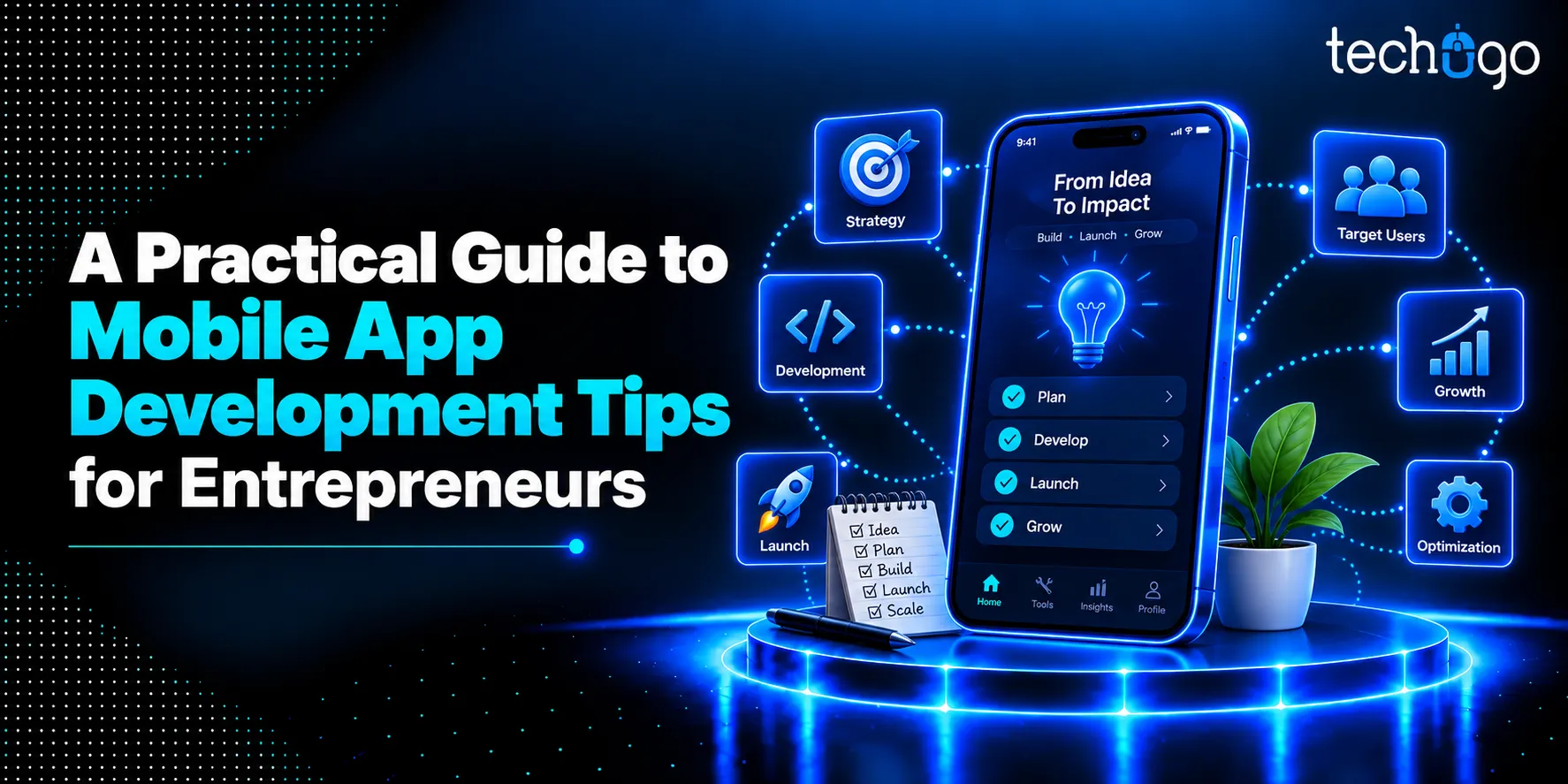


📌 Key Takeaways
- Some of the most important mobile app development tips are to start with one strong use case, plan the user journey, focus on user needs and test the app thoroughly.
- Entrepreneurs should know that choosing technology without considering the product and ignoring future growth can create problems later.
- If you’re adding AI to your app, plan for model choice, response time, ongoing costs, user corrections & future updates.
- Before hiring a mobile app development company, entrepreneurs should look at its experience, technical skills, development process, communication and post-launch support.
I wish I knew this before I started building my app.
It’s the kind of thing entrepreneurs often say after running into problems they could have planned for earlier.
The first version of your app gives you the base to build on later, so the choices you make at this stage can affect how the app performs, grows and develops over time.
For entrepreneurs, deciding what the app needs comes before deciding how to develop it.
The features, technology, user experience, security and development approach you choose at the outset can greatly impact the performance & development of the app in the future.
This is particularly important in enterprise mobile app development where apps often need to support complex workflows, integrations & a growing number of users. In this guide we’ll cover the latest mobile app development tips to help entrepreneurs make smarter decisions at every stage of the process.
Why are mobile app development tips important for businesses in 2026?
The mobile application market is growing across borders, but the opportunities are not similar in every place.
For companies, this implies that development decisions have to take into account the specific market, the users to reach and the way they expect the application to develop.
Practical mobile app development tips can help entrepreneurs make these decisions before investing heavily in development.
This becomes even more important as the mobile app market continues to expand. Grand View Research estimates that the global mobile application market will reach $885.3 billion by 2033, growing at a 15.5% CAGR from 2026 to 2033.
If a company is developing mobile apps for any of these markets – it must take the time to think about who will use the app and what they will be able to gain from using it.
The same applies to technology.
An app development platform, framework, database or API can impact the functionality of the app and its ease of future upgrades. Thus, these tips should be considered based on what the product actually requires.
Similarly, a company doesn’t always have to develop the entire product. When the concept remains in the testing phase, MVP development services can be utilized to build the preliminary version of the app with core features. In turn, businesses are able to observe the users’ reactions and determine which features to include in the next iteration.
Build Your Mobile App With the Right Strategy
Get expert guidance on planning, developing and scaling your mobile app
Security and scalability need the same kind of thought. As an app starts to grow its user base, it might also need to process more data, transactions and integrations as well. So, if these requirements are planned for early, there is less need for significant changes later.
In total, there are many decisions to make in mobile app development long before coding begins. Since every decision can impact the next, it can be helpful for businesses to know what to consider early so they can create an app that can be developed further later.
Now that you know why these tips matter, let’s explore them.
Top mobile app development tips every entrepreneur should know
If you want to build an app, you need to get a few things right from the very start. From choosing the right features and technology to planning for security and future growth – these expert mobile app development tips can help you avoid common mistakes and build a product that works for your users.
1. Start with one strong use case
When you have an app idea, it’s easy to look at all the different use cases and think they should be included right away. But you don’t have to. Start with one strong use case and make sure the app does that really well. This gives you a clearer direction because you can decide which features are needed now & which ones can be added later.
2. Define your target audience and user personas
Be sure that you know exactly who you are designing the product for before you decide on the product. Look at factors such as their needs, habits, problems and reasons for using your app.
3. Plan the user journey before the UI
Determine how the users will flow through the app prior to determining the look of the app. What are they going to do first, where will they go next and how will they finish up the main task? This way you can avoid unnecessary screens and a confusing experience. Then, with the help of custom app development services… you can create a UI that makes the app easy to navigate.
4. Find out what competitors are missing
Your competitors can tell you what works as well as what doesn’t (based on their reviews and user feedback). Identify characteristics users desire, issues they have experienced or parts of the experience that may be more streamlined. These gaps may signal what you need to do differently, rather than just copying what other apps already offer.
5. Set clear goals and KPIs for your mobile app
Have an idea of what the app needs to be before it starts being built. Your goal could be increasing bookings or supporting an existing business process. Once you know what you want to achieve, identify some measurable KPIs that can tell you whether the app is achieving the desired results or not.
6. Plan features around user needs
More functionality does not necessarily lead to more utility. Begin with what your users really need and stick to the functionality that assists them in completing the top task. This can then be followed up with additional features based on feedback. Thus, successful application development for mobile starts with understanding what your users need. So focus on the essential features first and leave the extras for later.
7. Choose the right platform and technology
Make up your mind about your requirements regarding an iOS app, Android app or both, and opt for technology accordingly. Flutter app development is one of the options to consider if you intend to design the applications for more than one platform. Also, compare mobile application development platforms based on performance, integrations, scalability and development time.
8. Start with an MVP
It’s not necessary to have all the features integrated before you release your app. An MVP allows you to test your product with customers and see how they use it with the core features, without you having to build everything yourself. This feedback may then guide you on what you should change or enhance next. This can also assist you with budget management and plan app platform development better.
9. Create a realistic mobile app development budget
The costs of your budget should not be limited to the development costs alone. Take into account the cost of design, testing, third-party services, app store fees, infrastructure, maintenance, future updates, etc.
10. Make app security a priority
Security should be taken into account at the outset, particularly if your app deals with private or sensitive data. Your app should use secure authentication, protect user data, and only request the permissions it needs. Another benefit of testing security issues prior to launch is that you can identify issues early, well before the app is used by the public.
11. Plan for scalability from the start
You might have just a few users initially, but that can change as the app grows. This is particularly crucial for startup app development where the app may need to support more users as the business takes off. So select a technology stack, database, APIs and infrastructure capable of future growth without major changes later.
12. Test the app like a real user would
Test not just to see if each feature functions. Try using the app as a real user would and observe where they face difficulties or need to take extra steps. Test the app on various devices and platforms to see any problems you might miss during normal testing. Implementing a clear mobile app development process may make the whole testing process easier and ensure that problems are dealt with before they reach people.
13. Prepare your app for App Store and Google Play guidelines
There’s also a need to get your app ready for publication, which includes making certain it satisfies the demands of the stores in which you will publish it. Read through the applicable guidelines in advance and consider issues related to privacy, permissions, content, payments, etc.
14. Choose the right app monetization strategy
Before you create features for the app, determine how it will make money. Depending on the model of your business, you can have a subscription, in-app purchases, ads, commissions or paid downloads. The monetization approach should suit the kind of app you are creating and what you wish your users to do with it.
15. Create a mobile app marketing strategy before launch
Creating the app is just a part of the launch. Before the app goes live, determine how you plan to get the word out to potential users and where you will be found. Content, social media, email, paid campaigns, partnerships or others, depending on your audience, should be included in your plan. It’s better to build awareness from the ground up than wait until the app has been released to the store.
16. Keep improving the app after launch
Initial app launch is not the last step. Your users can provide feedback and app data that can demonstrate what you need to change once users begin using it. Monitor reviews, crashes, performance & features – and use this information for future updates. These are some of the mobile app development tips that can help you improve your app after launch. The changes can be minor or major, and might result in new features or enhancements.
Know What Your App Needs? Let’s Build It
Bring your requirements to an experienced development team and start planning your app.
Common mistakes entrepreneurs make in app development & their solutions
A good app idea can still run into trouble if the wrong decisions are made during development. Entrepreneurs may add too many features, rush important choices or choose technology without considering what the app needs.
Here are some common mistakes worth avoiding when building a mobile app –
1. Trying to build everything at once
Developers can easily fall into the trap of believing that they can add all features to their first version. However, even if it seems like a great idea, developing mobile apps with every possible feature in the beginning may lead to longer development time and inflated mobile app development costs.
Instead, it is better to stick with features that map to the fundamental purpose of the app and then introduce additional functionality based on user feedback.
2. Choosing technology without considering the product
The technology used for creating an app should complement the needs of the app; for instance, React Native can be ideal for multiple-platform apps, although it cannot be applied to all projects. You must analyze features, integrations, and future plans before selecting this technology.
3. Focusing only on the initial cost
Being attracted by the lowest quotation possible does not mean you get the best offer. When evaluating mobile application development solutions, it is advisable to also consider factors like testing, support, security and future upgrades, as they affect the overall expenses associated with the implementation of the project.
4. Not planning for future growth
Your app may start with a small user base, but that can change after launch. Choose technology, databases and infrastructure that can support more users and data as the app grows.
5. Treating development as a one-time task
Custom software development does not end when the first version goes live. Bugs need fixing, operating systems change and users provide feedback. Plan for regular updates and maintenance from the beginning.
6. Choosing a team based only on price
When you build a mobile app, look beyond the development quote. Check the team’s relevant experience, previous projects, communication and ability to support the app after launch.
Tips for developing an AI-powered mobile app
Adding AI to an app comes with a few considerations that are different from regular mobile phone app development. Below are the AI-powered mobile app development tips to keep in mind:
1. Decide between an API and a custom model: You can use an existing AI API for common functions to speed things up. If your app needs highly specific results, a custom model may be a better fit.
2. Consider AI response time: AI capabilities may have a delay in response compared to other app features. Think about the acceptable time lag for users and the functionality of the feature in cases where it takes longer for users to get a response.
3. Keep AI costs in check: AI usage can add ongoing costs based on API calls, model usage and data processing. Account for these expenses when planning your app budget.
4. Give users a way to correct AI results: AI may be incorrect. Allow users to modify, reject or flag incorrect output generated by AI instead of assuming all AI-generated output is correct.
5. Plan AI updates: Models and APIs can change over time. During iOS app development and other platform development, leave room to update or replace the AI components without rebuilding the entire app.
What entrepreneurs need to know before hiring a mobile app development company
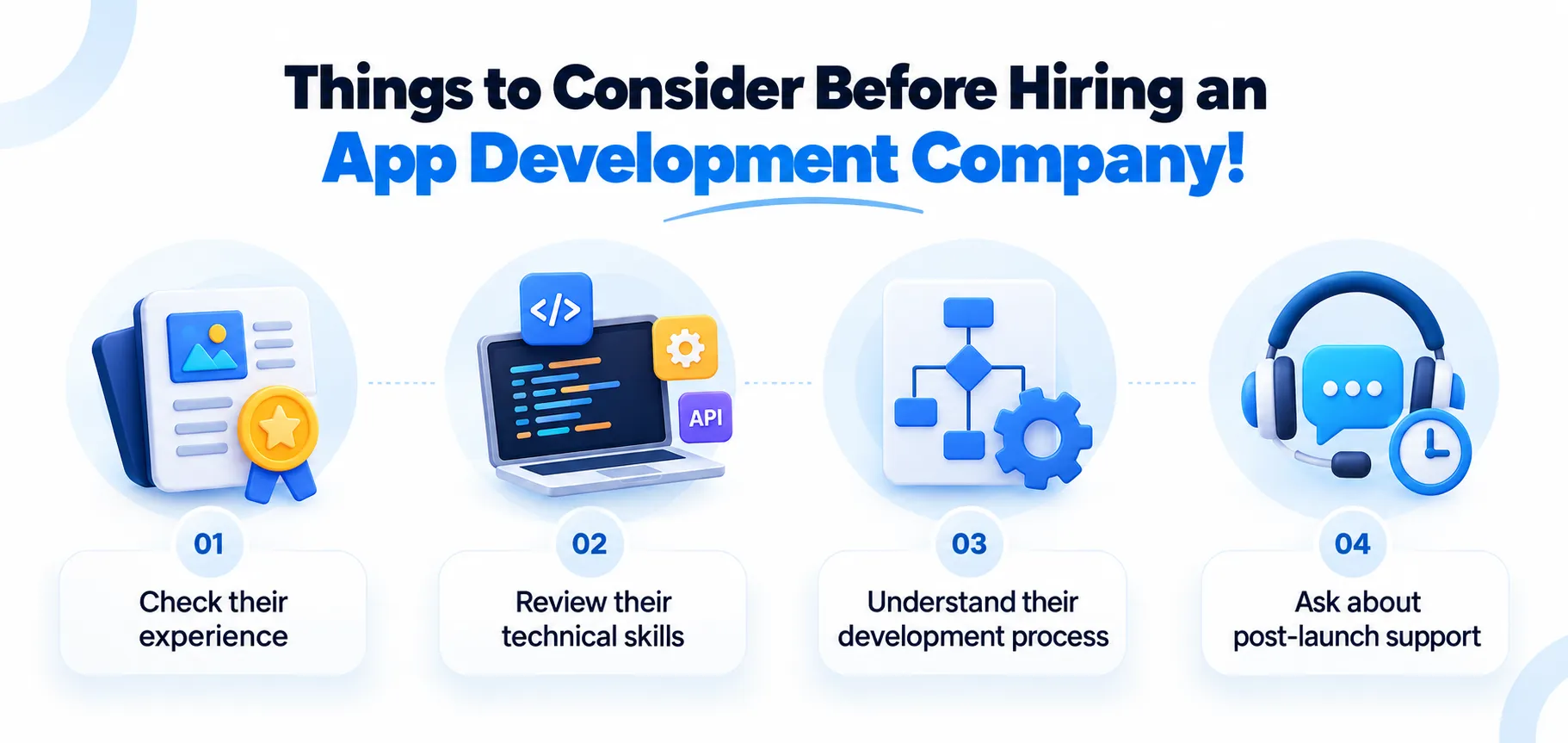
1. Check their experience
Review the company’s work and portfolio prior to selection.
Look for apps that they’ve created that are comparable to yours and know a little about your industry. These tips for mobile app development will help you to concentrate on the team’s experience rather than just on price.
2. Review their technical skills
This will vary according to the features and purpose of your app. For example – if you intend to build a cross-platform application, then look for the team’s experience with React Native app development.
Discuss APIs, databases, cloud services, security and third-party integrations as well.
3. Understand their development process
Inquire about the process they use for planning, development, testing, feedback and changes to the requirements. It’s also important to be aware of who will do the communicating and schedule when you’ll be getting updates on project progress. This information can be useful to prevent confusion down the road.
4. Ask about post-launch support
There is a possibility that after launching your app, you need to make some changes or updates, make it faster or add new functionality. Check the kind of maintenance and support that the company provides when the app is deployed. One of the practical mobile app development tips that an entrepreneur should take into consideration is planning for continuous support.
Build a mobile app tailored to your business with Techugo
Every organization has its unique aspirations, users, and needs; therefore, your app must be designed according to your needs. At Techugo, our team works with you to understand your idea, define the right features and choose the technologies that fit your project.
No matter whether you need a customer-based application, a business platform or cloud app development services, we support the development process from the initial idea up to its launch. Besides, our team provides support in terms of technical upgrades and improvements.
Want to discuss your app idea? Talk to our experts today.
FAQs
Q. What are the key tips for successful mobile app development?
The essential pointers are to know your audience, focus on the most important features, pick the right technology, test the app like a pro – and make sure it gets updates.
Q. What should be considered when choosing an app development team?
Consider the team’s experience, portfolio, technical expertise, communication process, development approach and experience with business app development.
Q. What challenges can arise during mobile app development?
Common challenges include managing development costs, choosing the right technology, maintaining app security, ensuring good performance, integrating third-party services, and meeting changing user expectations.
Q. What should entrepreneurs know before launching an app?
Entrepreneurs should ensure that the app is well-tested, fast and efficient, fulfills the needs of the user and is available on the platforms they have in mind. They should also have a marketing strategy, user feedback, updates and continuous support after launch.

Get in touch
We'd love to hear from you.