

 SA
SA  KW
KW  IE
IE AU
AU UAE
UAE UK
UK USA
USA  CA
CA DE
DE  QA
QA ZA
ZA  BH
BH NL
NL  MU
MU FR
FR [ LET’S TALK AI ]
X
Discover AI-
Powered Solutions
Get ready to explore cutting-edge AI technologies that can transform your workflow!



Get ready to explore cutting-edge AI technologies that can transform your workflow!






Suppose you are in a situation where you need to do the following in 5 minutes!
Scrolling through different apps would make you want to throw away your phone!
But imagine doing it all from one single platform! That’s welcoming micro-mobility platforms.
So let’s welcome here on the reading, ZeMaas!
What’s that? If you’ve ever wished there was one app to rule them all, ZeMaas is basically granting that wish. By blending,
All into a multi-service ecosystem, ZeMaas is reshaping the way cities move, deliver, and connect.
Keep reading to learn more about how ZeMaas exemplifies a multi-service approach that can redefine urban mobility and service delivery.
Get ready to explore:
If you leave a metro station and have 1.5 km to your office, it’s too short for a cab but too long to walk comfortably. This is where micro-mobility platforms step in to bridge the “last-mile” gap with e-scooters, bikes, e-bikes, and compact shared rides.
And it’s not just a convenience but an industry on steroids.
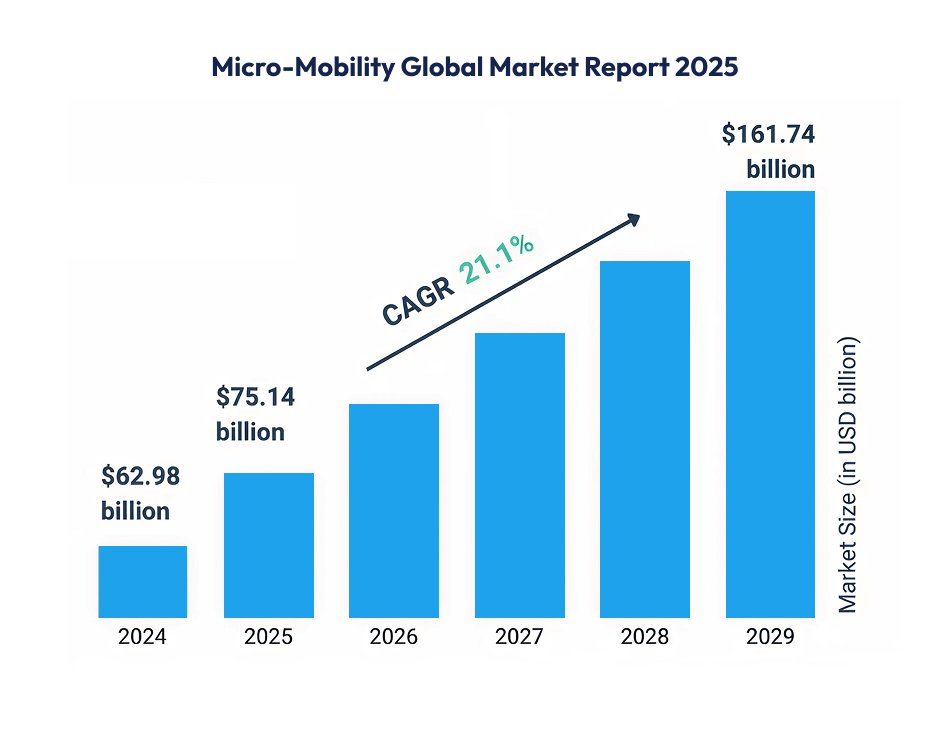
And here’s where ZeMaas shines as a real-world example:
So when you think “micro-mobility platform,” you might assume just scooters or bikes. But ZeMaas is living proof that the definition has expanded.
Here’s how ZeMaas is doing it:
Zemaas is packed with innovative tools and advanced functionalities. They offer a range of benefits:
| Criteria | ZeMaas | Careem (Middle East Super-App) | Uber (Global Multi-Vertical Giant) |
| Service Scope | ZeMaas offers:
It’s a newer entrant, so scale is smaller, but the breadth of services is ambitious. | Careem started as a ride-hailing service in 2012 in Dubai. Later added food delivery (“Careem NOW”), grocery & goods delivery, and digital payments. Now provides micro-mobility in some cities. It’s now considered a “super-app” across 70 cities in MENASA. | Uber has ride-hailing, Uber Eats (food delivery), freight/logistics, and is increasingly pushing into autonomous vehicle/robotaxi pilots. Huge global footprint. |
| User Base & Reach | Smaller, more focused markets ZeMaas is still scaling. | Over 48 million users (2023) across 100+ cities in 14 countries. | Uber had 156 million monthly active platform consumers (MAPCs) in 2024. |
| Revenue Scale | ZeMaas is still building with rapid growth. | Estimated $350 million for Careem in 2022. | Uber generated $43.9 billion in revenue in 2024, up 18% YoY. |
| Tech & Innovation | ZeMaas leverages dashboards, analytics, and business-facing tools, trying to combine modules in a unified package. | Careem has been implementing multi-vertical apps, a payment wallet (Careem Pay), possibly e-mobility, safety features, and electric vehicle fleets. | Uber is pushing robotaxi partnerships (e.g., with WeRide in UAE). Also heavy R&D in autonomous driving, EV transition, optimizing route & fleet via data. |
| Regulation, Local Adaptation & Market Strategy | Being newer, ZeMaas may have more flexibility but fewer legacy constraints. It needs to localize per market (regulation, infrastructure). | Careem often succeeds because of deep local presence, regulatory know-how, and local partnerships. Being Dubai-based gives benefits in the MENASA region. | Uber has greater regulatory challenges globally, but also greater resources to adapt. In the UAE, Uber is working toward more EVs. |
Careem started with ride-hailing, then gradually added food, payments, etc. ZeMaas’ multi-service ambition is strong, but to scale sustainably, it may help to perfect a core vertical first (e.g., logistics or mobility) before layering many services.
Careem’s success in MENASA comes not only from services but from tailoring to local preferences. ZeMaas must do the same if entering markets like the Middle East, Southeast Asia, etc.
Uber’s robotaxi push and shift to EVs in UAE show that being first in new tech builds brand, attracts users, and can improve margins in the long term. ZeMaas can consider pilot programs & strategic partnerships (e.g., with local authorities, EV / e-scooter manufacturers) to get ahead.
When one service sees slow growth (say, ride-hailing), other verticals (delivery, logistics) can buffer the business. Uber’s and Careem’s multi-streams help absorb shocks. ZeMaas should structure its offerings so that each vertical can both grow and reinforce others.
Features like route optimization, predictive maintenance, and data analytics drive down costs. Uber’s large scale gives it an advantage here. ZeMaas should invest in fleet management tools early. Both for its own operations and possibly as an offering for B2B customers.
Unlike platforms that stick to a single vertical. Say, just ride-hailing or just food delivery. ZeMaas provides all under one roof for a true multi-service ecosystem.
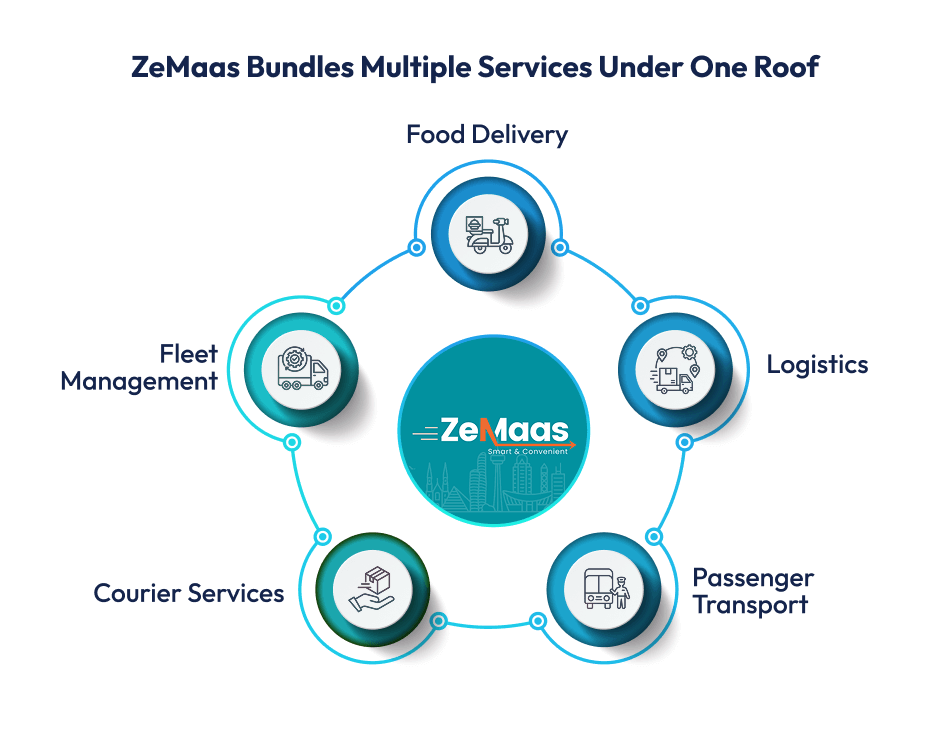
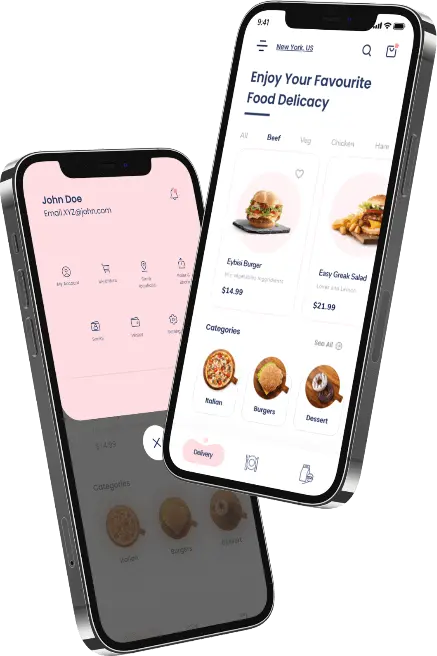
Think of the usual food delivery app. You order, it arrives, done. ZeMaas takes this further by integrating:
With food delivery revenue worldwide projected to hit $1.45 trillion by 2027 (Statista), this is a vertical that no serious player can ignore.
By embedding food delivery into its wider platform, ZeMaas avoids the “single-app trap”. It taps into cross-user demand (a courier user today may be a food delivery customer tomorrow).
Beyond consumer apps, they’ve built logistics software and business dashboards (like MaaS Business) that help companies:
This B2B edge makes ZeMaas less like Uber Eats and more like a hybrid of Uber + Shippo + DispatchTrack. This explains its 48.5% revenue growth in 2023–24.
Of course, micro-mobility wouldn’t be complete without passenger rides. ZeMaas offers:
This positions them directly in conversations happening in places like Dubai. Here, the RTA has been ramping up e-scooter and ride-sharing regulations. Creating fertile ground for multi-service apps to plug in.
Global parcel shipping volume exceeded 161 billion parcels in 2022 (Pitney Bowes). ZeMaas’ courier services step in here, giving users the ability to:
It’s the definition of convenience. No need to download three different apps for three needs.
ZeMaas didn’t design each service in isolation. Instead, they built their platform as modular and scalable, meaning businesses can:
That flexibility is what makes ZeMaas’ model attractive to business partners and city planners.
Building an all-in-one mobility app isn’t just about adding features but ensuring every piece of tech talks to each other.
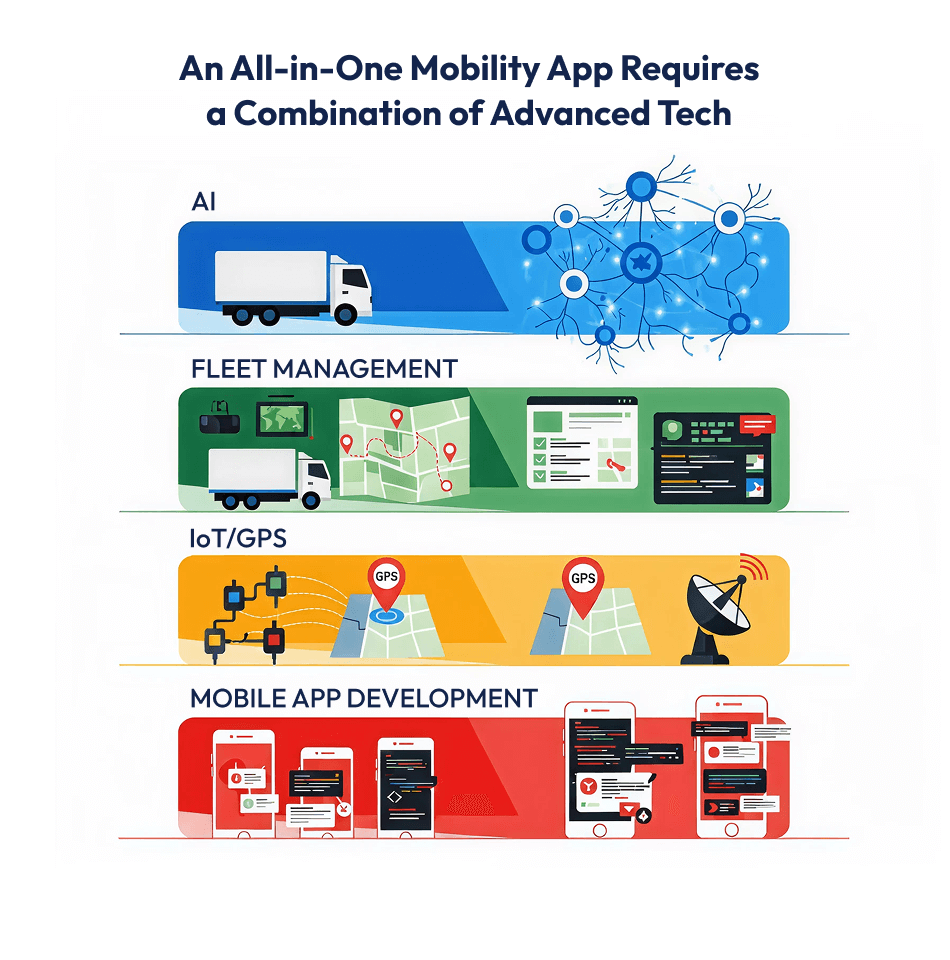
AI-Powered Routing
Up to 30% cut in operational costs plus faster food & parcel delivery.
Fleet Management App
Keeps rides, deliveries, and couriers moving seamlessly.
IoT & GPS Tracking
Transforms logistics software into a predictive system, not just reactive.
Powerful Mobile App Architecture
Enables ZeMaas to operate as a true multi-service ecosystem, not a clunky app mashup.
If you’re running a food delivery startup. Sometimes you might feel that orders are steady, but growth feels capped. Your riders have downtime between deliveries, customer churn is creeping in, and operational costs are eating away at margins.
Now flip the script.
What if those same riders could switch to courier deliveries during off-peak food hours? What if the same customers using your app for meals also booked rides or managed business logistics through you?
Suddenly, you’re not a single-service startup. You’re a multi-service powerhouse.
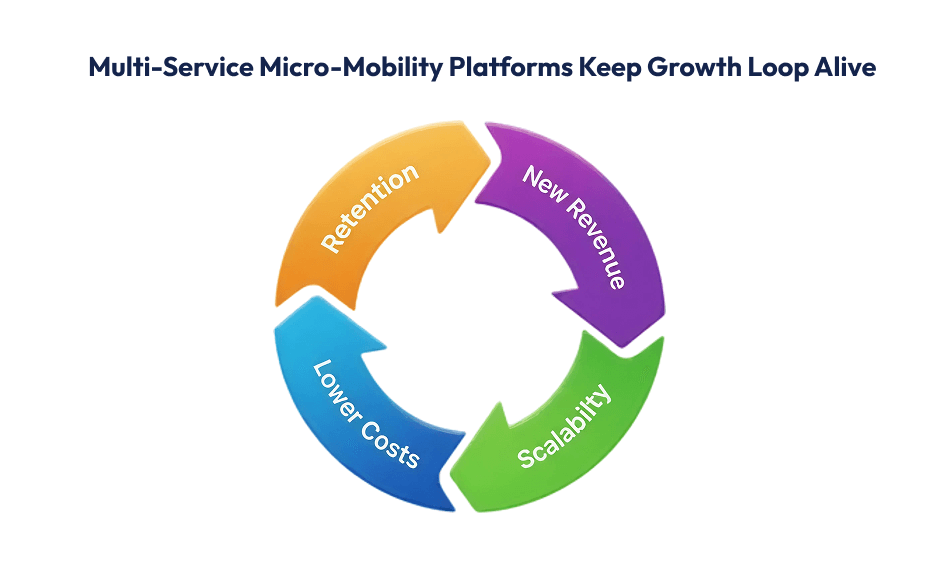
That’s exactly what micro-mobility platforms like ZeMaas unlock.
The takeaway? Going multi-service is the ideal business model transformation.
Let’s address the question every entrepreneur and business leader asks upfront:
“How much does it cost to build an app like ZeMaas?”
The truth?
There’s no one-size-fits-all number. The cost depends on:
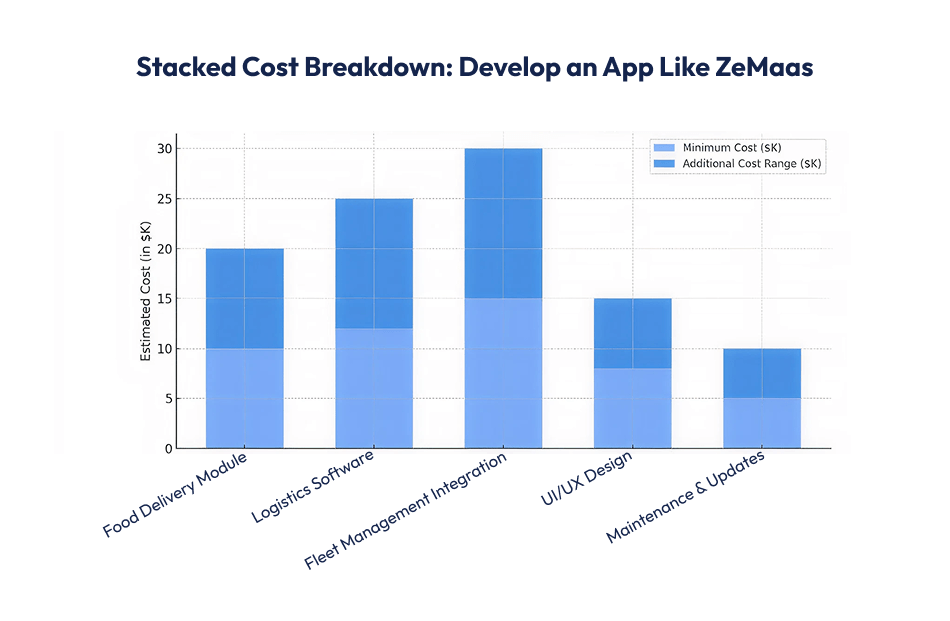
These are ballpark figures. The final cost to develop an app like ZeMaas will depend on how advanced you want the ecosystem to be.
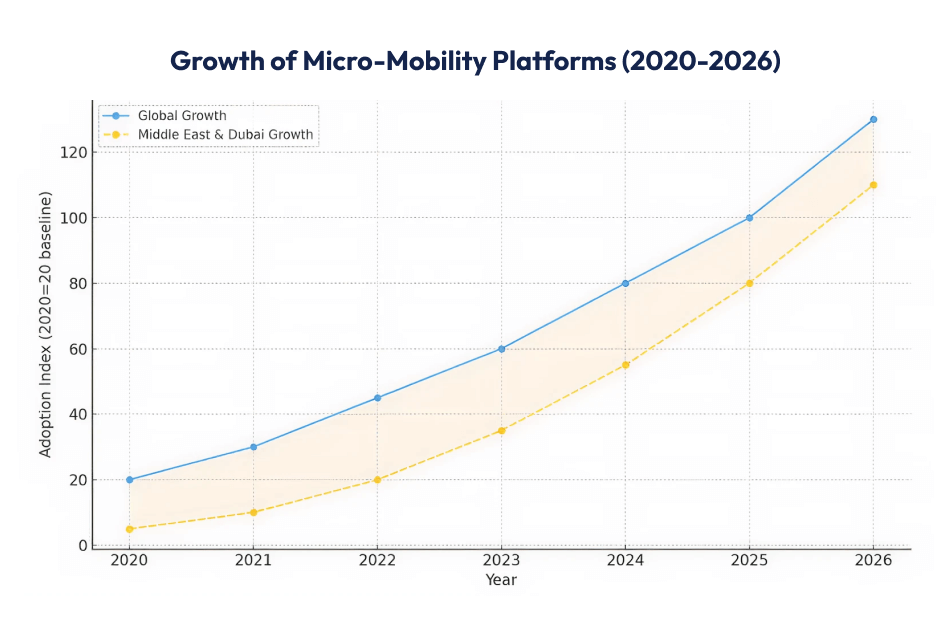
Dubai is already shaping itself as a smart city hub, with heavy investments in micro-mobility and super apps. Partnering with a mobile app development company in Dubai brings:
Governments across the globe are tightening mobility rules. EV adoption targets stricter carbon reporting. The UAE plans to have 50% of Dubai’s vehicles electric or hybrid by 2050. Cities like Singapore and London are already limiting high-emission vehicles in urban cores.
This means that micro-mobility platforms are the key holders to compliance and green innovation.
How ZeMaas is aligning with this shift:
Q1. What is a multi-service micro-mobility app?
A multi-service micro-mobility app combines services like ride-hailing, food delivery, courier, and fleet management into one platform. Instead of using multiple apps, users can access all services seamlessly in a single ecosystem.
Q2. How do micro-mobility platforms benefit businesses?
Micro-mobility platforms:
Businesses save money by using one shared fleet across lifestyle requirements while scaling services without rebuilding the app.
Q3. What features should a multi-service app include?
A successful multi-service app should offer:
Q4. How much does it cost to develop a multi-service app like ZeMaas?
The cost to develop an app like ZeMaas depends on features and scale. On average:
Q5. Why choose a mobile app development company in Dubai for micro-mobility apps?
Dubai is a hub for smart city mobility and micro-mobility adoption. A mobile app development company in Dubai brings expertise in regulations. Plus, focus on RTA integrations and regional market needs, making it ideal for building scalable multi-service apps.
Q6. What makes ZeMaas different from other mobility apps?
ZeMaas goes beyond single-service apps by offering multiple services from delivery to ride booking on one platform. Its modular architecture allows businesses to scale easily and align with sustainability goals.
The rise of micro-mobility platforms is a structural shift in how cities move, eat, and deliver. Platforms like ZeMaas prove that the future isn’t about building another food delivery app or just a fleet management solution.
The real opportunity lies in creating multi-service ecosystems that adapt, scale, and align with sustainability.
And here’s the good news! You don’t have to imagine it, but can build it.
At Techugo, we’ve helped startups and enterprises alike go beyond single-service apps into super-app territory. Whether it’s:
…our team knows how to transform your idea into a future-ready platform.
Want to know the real cost to develop an app like ZeMaas for your business goals? Let’s talk.
Connect with Techugo today and start building the mobility ecosystem your customers have been waiting for.
Each year, hundreds of horoscope and zodiac apps are released to the market, but only a few really grab attention, build trust, and keep users engaged..

Online Shopping App Like MAF Carrefour is the benchmark today. Now that online shopping is the norm, the bigger question is: how do you build an app l..


Write Us
sales@techugo.comOr fill this form