

 SA
SA  KW
KW  IE
IE AU
AU UAE
UAE UK
UK USA
USA  CA
CA DE
DE  QA
QA ZA
ZA  BH
BH NL
NL  MU
MU FR
FR [ LET’S TALK AI ]
X
Discover AI-
Powered Solutions
Get ready to explore cutting-edge AI technologies that can transform your workflow!



Get ready to explore cutting-edge AI technologies that can transform your workflow!






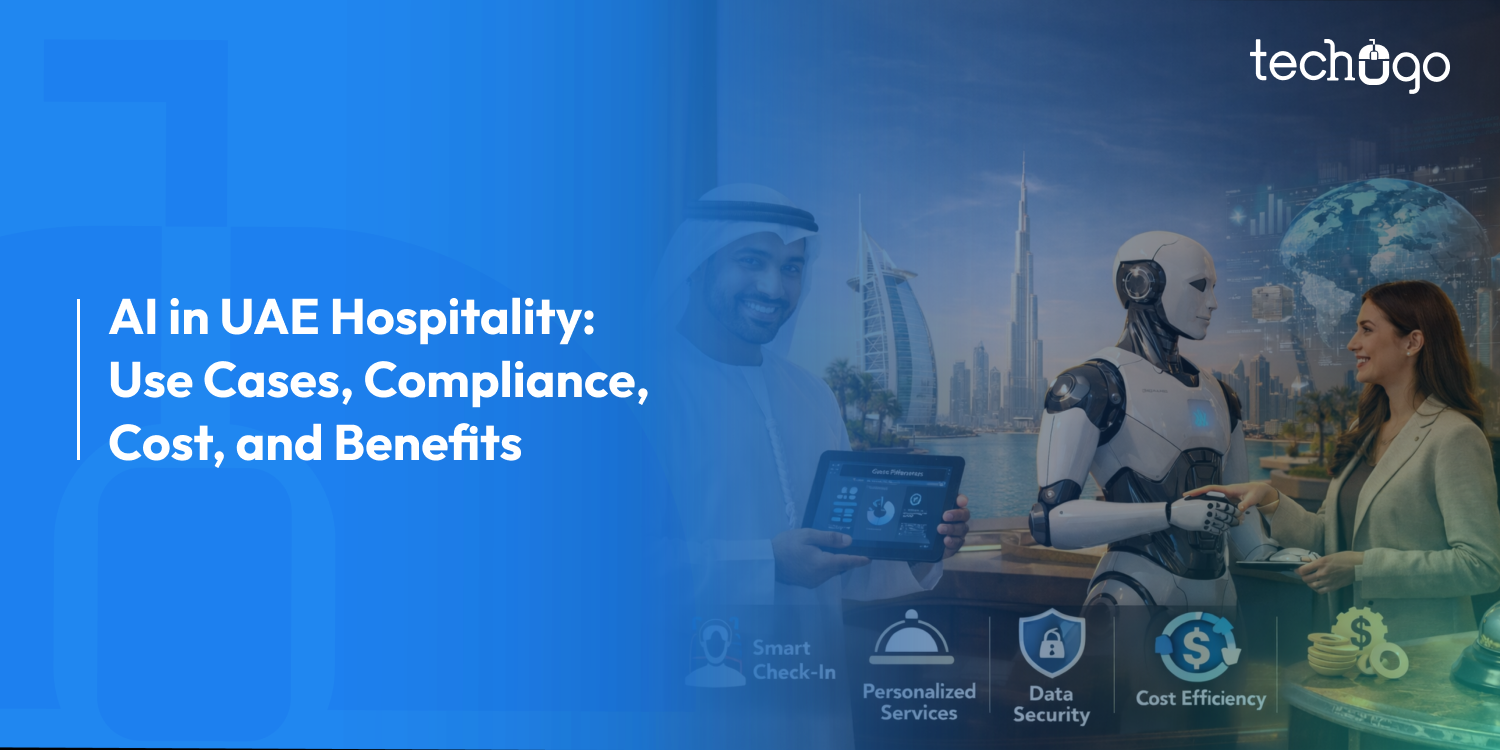
Hospitality industry succeeds on two things: guest satisfaction and smooth operations. And UAE hotels are already delivering guest satisfaction and streamlining operations by using AI in hospitality.
Travelers in UAE, now expect seamless, personalized, and tech-driven experiences, apart from luxury rooms and fine dining. Their business solutions include AI-based concierge apps & hotel AI chatbots that answer queries instantly and AI tools that study guest preferences and recommend custom dining, entertainment, or wellness experiences.
For example, Dubai’s Atlantis – The Palm already uses AI to personalize guest itineraries, while Jumeirah Group hotels rely on AI-driven chatbots to handle reservations and guest queries in seconds. In Abu Dhabi, Etihad’s partnerships with AI providers are improving travel and hotel experiences. This proves how UAE hospitality is leading this global shift.
This clearly shows that artificial intelligence in hospitality is redefining “comfort and luxury” in UAE hotels. The result? Happier guests and more efficient hotels.
Thus, if you’re part of the UAE’s hospitality industry, keep reading this blog to learn use cases of AI in hospitality in UAE that are making hotel operations more efficient and personalizing guest experiences. Also, learn the challenges related to the integration of AI in hospitality. Let’s begin!
AI in UAE hospitality is reshaping how hotels operate and how guests experience their stay. From the front desk to back-end operations, AI business solutions are making hotels smarter, faster, and more personal.
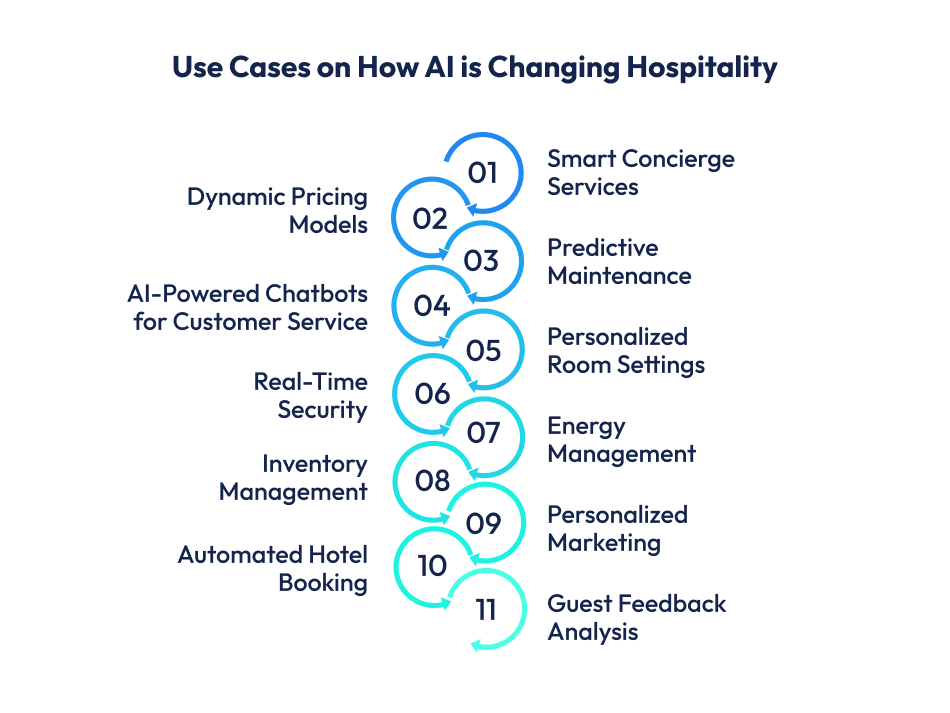
AI-based concierge apps are changing how hotels in Dubai and Abu Dhabi serve their guests. These apps give instant answers, personalized recommendations, and local insights, whether it’s the best dining spot nearby or a custom hotel service.
The more guests use them, the smarter they get. Each interaction helps the system learn, so the next recommendation feels even more accurate. For guests, it means quicker, more thoughtful service. For hotels, it means staff can focus on complex requests instead of routine questions.
AI in UAE hotels is making pricing smarter than ever. With AI-driven dynamic pricing tools, hotels can analyze occupancy rates, market demand, competitor pricing, and even weather forecasts. Based on this data, room rates adjust in real time.
This strategy helps hotels maximize revenue while staying competitive in the market. Guests also benefit from fairer, more flexible pricing.
AI in predictive maintenance allows hotels to detect issues before they disrupt operations. By analyzing data from equipment and infrastructure, AI can forecast potential problems and trigger timely repairs.
This reduces downtime, lowers maintenance costs, and keeps guest services running smoothly. It also extends the life of hotel facilities and ensures reliability.
Rotana Hotels has adopted smart building systems that use AI to monitor HVAC and energy equipment. These predictive tools flag issues early, ensuring guests enjoy uninterrupted comfort while the hotel saves on unnecessary repair costs.
Hotel AI chatbots are now a standard feature in AI in UAE hospitality. These bots handle reservations, answer guest questions, and solve common requests through text or voice – anytime, day or night.
The benefit is twofold: guests get instant support, while hotel staff focus on urgent or complex needs. This makes customer service faster and more efficient.
For example, Jumeirah Group hotels use AI-powered chatbots to manage bookings and guest queries. These tools not only improve guest satisfaction but also reduce the workload on staff during peak seasons.
Artificial intelligence for hospitality allows hotels to create truly personalized stays. With AI-powered software, rooms can automatically adjust lighting, temperature, and even entertainment options based on guest preferences.
These preferences can be learned from past visits or added during booking. When guests check in, their room is already set the way they like it, making the experience feel seamless and welcoming.
Atlantis The Royal has begun integrating smart room technologies that use AI to remember guest choices. From climate control to music preferences, every detail is tailored, giving guests a luxury experience that feels uniquely theirs.
AI in UAE hotels is also strengthening safety. With AI-powered surveillance, hotels can monitor video feeds in real time and detect unusual behavior or security risks instantly.
This technology allows staff to respond faster to potential threats, keeping both guests and employees safe. It also prevents small incidents from turning into major problems.
For example, several luxury properties in Abu Dhabi’s Saadiyat Island resorts use AI-driven security systems that combine facial recognition and behavior analysis. These tools ensure a secure environment while maintaining the smooth guest experience that UAE hospitality is known for.
Apps powered by AI in hotels are helping properties cut costs and go green. These systems adjust heating, cooling, and lighting automatically based on occupancy, weather, and past usage patterns.
The result is lower energy bills, reduced environmental impact, and sustained guest comfort.
For example, Rotana Hotels in Abu Dhabi have started adopting AI-driven energy management tools that analyze real-time data to optimize electricity and water use. This initiative aligns with the UAE’s Vision 2030 sustainability roadmap, which emphasizes eco-friendly tourism and smart city integration. By making operations greener, Rotana is not only saving costs but also actively contributing to the nation’s long-term environmental goals.
AI software helps hotels predict and manage their inventory with precision. By studying seasonal demand, booking trends, and guest preferences, it ensures resources like food, beverages, linens, and toiletries are always stocked, without overspending or wasting.
For instance, Atlantis – The Palm uses advanced AI and data-driven systems to forecast guest needs during peak seasons. Whether it’s anticipating seafood demand for its fine-dining restaurants or ensuring spa supplies are ready, AI helps streamline operations while keeping guest experiences seamless.
AI enables hotels to study guest behavior, past bookings, and preferences to design highly targeted marketing campaigns. Instead of sending generic promotions, hotels can craft personalized offers, such as – spa discounts for wellness travelers or family packages for repeat visitors with kids.
For example, Jumeirah Hotels & Resorts in Dubai leverages AI-driven CRM tools to analyze guest data across its properties. By doing so, they send tailored campaigns, such as exclusive dining experiences for food lovers or luxury suite upgrades for business travelers. This results in stronger engagement, higher bookings, and long-term brand loyalty.
AI-powered hotel booking platforms make reservations effortless by displaying real-time availability, suggesting personalized room options, and allowing modifications without the usual friction. These systems can even predict guest preferences, such as, whether someone prefers sea-facing suites, late check-outs, or family packages, and offer tailored recommendations instantly.
In Dubai, Atlantis – The Palm leverages AI-driven booking systems to handle massive demand surges during holiday seasons. Their platform not only recommends the best rooms based on guest history but also dynamically adjusts promotions, such as bundled spa treatments or waterpark tickets, to maximize occupancy.
AI tools can scan guest feedback from social media, review sites, and direct surveys in minutes. This gives hotels a clear view of what guests love and what needs fixing. By spotting patterns early, hotels can improve service before small issues turn into bigger complaints.
For example, Jumeirah Group in Dubai uses AI-powered sentiment analysis to track guest reviews across platforms. The system highlights recurring feedback such as – praise for spa services or delays in check-ins, so that managers can act fast.
|
AI is already helping some of the biggest hotel brands in the world. Here are 5 examples of how leading hospitality businesses are using AI to improve services and operations.
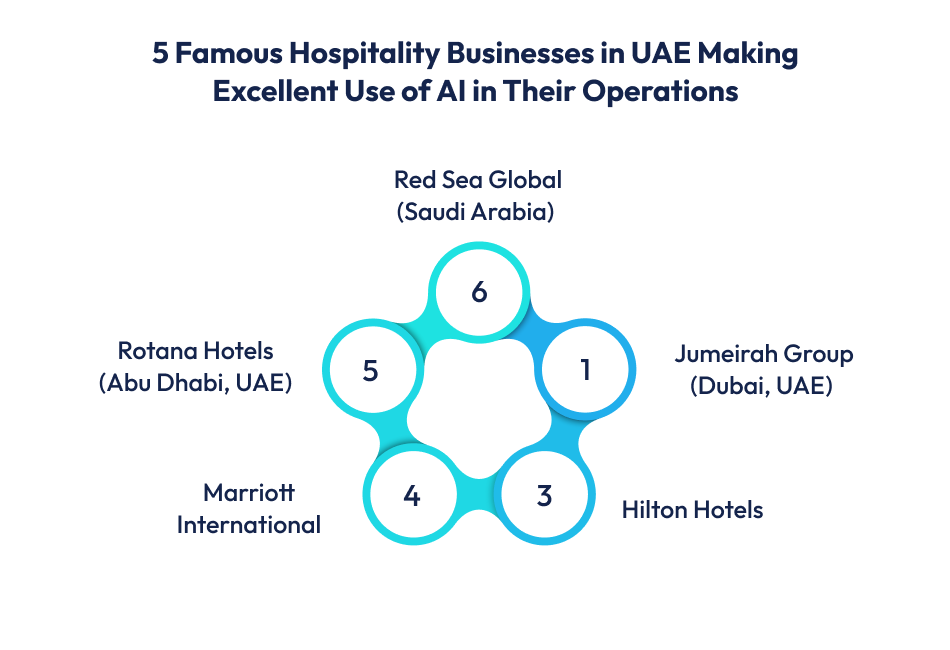
Jumeirah hotels use AI systems to manage energy and water. These systems adjust lighting, cooling, and heating in real time. The result is lower costs, reduced environmental impact, and better comfort for guests.
Hilton introduced an AI concierge called Connie. Connie answers guest questions about restaurants, attractions, and hotel services. This helps guests get quick information and improves their overall stay.
Marriott uses AI to set room prices. The system tracks occupancy, demand, and market trends. This ensures room prices stay competitive while increasing revenue for the brand.
Rotana uses AI chatbots to manage bookings and answer guest queries. The chatbots are available 24/7, making services more responsive. Rotana also applies AI in energy management to support sustainability.
Red Sea Global resorts use AI to support Saudi Arabia’s Vision 2030 goals. The technology helps with predictive maintenance, smart energy use, and personalized guest services. Guests enjoy luxury while the environment is protected.
AI is changing how hotels and resorts operate. It’s not just about fancy tech. It actually makes daily operations smoother and guest experiences better. Here’s how:
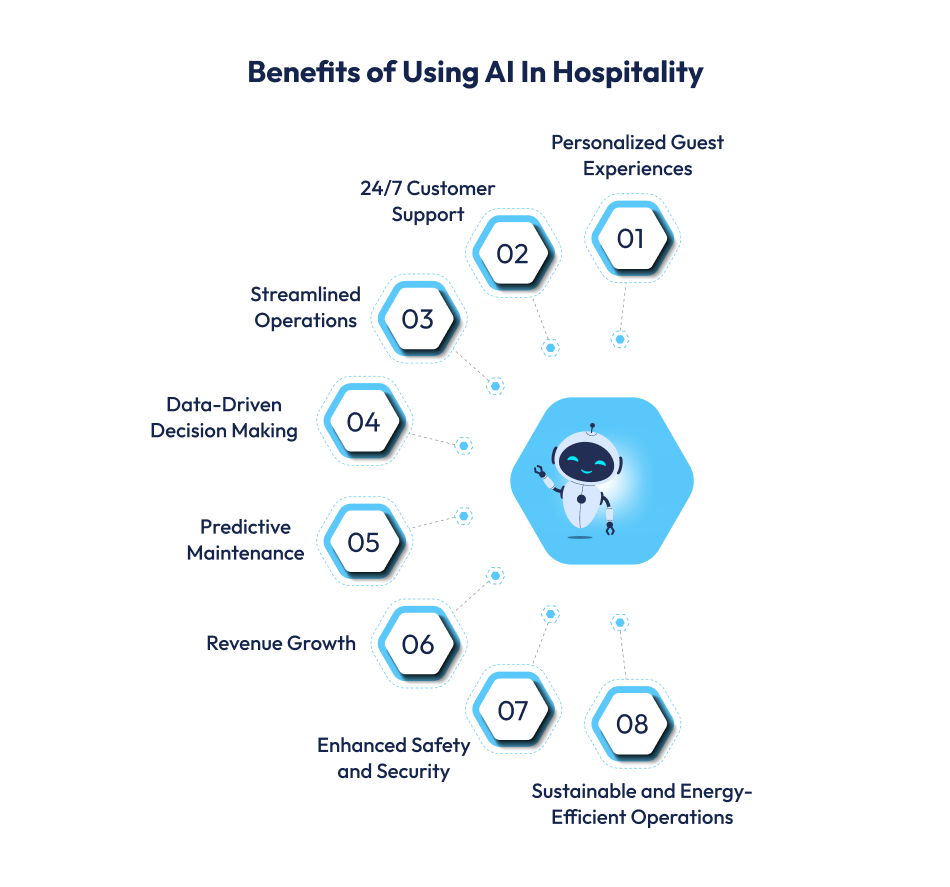
AI can remember guest preferences and predict what they might like. This could be room temperature, preferred meals, or even activity suggestions. Guests feel more valued because the hotel anticipates their needs rather than reacting to them.
Guests often have questions at odd hours. AI chatbots and virtual assistants can handle bookings, provide information, and answer common inquiries anytime. This improves guest satisfaction while freeing staff to focus on complex or urgent tasks.
AI automates repetitive tasks like scheduling staff, tracking inventory, or managing energy usage. This reduces mistakes, saves time, and lets employees focus on higher-value tasks. Over time, the hotel runs more efficiently and costs less to operate.
Hotels collect tons of data, like bookings, guest behavior, market trends, but it’s hard to analyze manually. AI in hospitality quickly identifies patterns and insights that managers can act on. For instance, it can suggest when to adjust room prices or launch promotions to fill empty rooms.
Instead of waiting for a machine or system to fail, AI can spot potential issues in advance. With AI in predictive maintenance, hotels prevent unexpected downtime, reduce repair costs, and maintain smooth operations. Guests experience fewer disruptions, and hotels save on maintenance expenses.
By using AI-powered hotel booking software and dynamic pricing tools, hotels can increase occupancy and revenue. AI analyzes demand, guest preferences, and competitor pricing to offer the right deals at the right time. This ensures smarter upselling and better returns on investment.
Apps powered by AI in hotels can use cameras, detect unusual behavior, and alert staff immediately. This proactive approach improves guest safety, protects staff, and minimizes potential risks, all while maintaining a seamless experience.
AI can optimize energy use in hotels by adjusting lighting, heating, and cooling based on occupancy or weather patterns. Many UAE hotels, like those in Dubai, are implementing AI-driven energy management systems to align with sustainability goals while reducing operational costs.
In short, integrating AI in UAE hospitality helps hotels deliver personalized experiences, operate efficiently, stay compliant, boost revenue, and maintain safety. This is all while keeping guests happy and loyal.
The above benefits show how powerful AI can be, but hotels in the UAE also need to keep an eye on compliance. New rules and regulations are shaping how AI in UAE hospitality can be deployed, making it important for operators to balance innovation with responsibility.
“Integrating cybersecurity into all business functions and establishing a solid AI framework are key to enhancing security and innovation. Collaboration among business leaders, regulators, and peers builds resilient regulations that protect economies and individuals while supporting technological progress.” — Samer Omar, Cybersecurity and Digital Trust Leader at PwC Middle East
Since hotels are adopting AI in UAE hospitality, following local rules and best practices is essential. Compliance ensures guest trust, protects business reputation, and avoids legal risks.
The UAE is updating regulations to govern AI use and data protection in hospitality. Hotels will need to follow the Personal Data Protection Law (PDPL), secure explicit consent for sensitive data, and document all AI-driven processes. These rules aim to protect guest privacy while enabling technological growth in hotels.
To stay compliant, hospitality businesses should:
Vendor contracts are crucial to maintain compliance and operational security. Hotels should ensure:
Managing AI risks is critical in UAE hospitality:
Following these steps allows UAE hotels to adopt AI in hospitality confidently while staying compliant, reducing risks, and maintaining trust with guests.
| Feature/Tool | Estimated Cost (AED) |
| AI Chatbot for Guest Services | AED 36,700 – AED 367,000 |
| Dynamic Pricing Engine | AED 183,500 – AED 367,000 |
| Predictive Maintenance System | AED 91,750 – AED 183,500 |
| Personalized Room Experience System | AED 91,750 – AED 183,500 |
| AI-Powered Booking Engine | AED 91,750 – AED 183,500 |
| Energy Management System | AED 91,750 – AED 183,500 |
| Guest Feedback Analysis Tool | AED 91,750 – AED 183,500 |
| Real-Time Security Monitoring System | AED 91,750 – AED 183,500 |
| Compliance & Legal Framework Setup | AED 91,750 – AED 183,500 |
“The new strategic planning cycle for the Federal Government prioritises artificial intelligence in process optimisation and financial efficiency.” — Sheikh Mohammed bin Rashid Al Maktoum
By 2026, AI is expected to handle the majority of guest interactions in UAE hotels, making stays smarter, seamless, and more memorable.
The future of UAE hospitality belongs to hotels that combine luxury with intelligence. And Techugo, as a trusted AI app development company in UAE, helps hospitality businesses harness the power of AI to deliver personalized guest experiences and streamline operations smoothly.
Whether it’s AI-based concierge apps that offer instant recommendations, AI-powered hotel booking software that predicts guest preferences, or dynamic pricing engines that maximize revenue, our solutions are tailored to your unique business needs.
Techugo team implements AI as well as creates systems that learn and grow with your guests. Imagine rooms that adjust automatically to each visitor’s preferences, chatbots handling 24/7 queries, and predictive maintenance tools ensuring uninterrupted comfort.
With our expertise in generative AI development, IoT integration, and advanced analytics, your hotel can operate smarter, greener, and faster than ever.
Partner with Techugo and transform your hotel into a future-ready, AI-powered destination that guests can’t stop talking about. Let’s create personalized AI experiences that elevate your hospitality business.
The overall cost to develop an AI-powered software in the hospitality sector can vary from $50,000 to $300,000 or more. There are several factors that can impact the total budget of software powered by Artificial Intelligence and machine learning for hospitality including the software complexity, features to be integrated, location of the hired development team, tech-stack used, etc. Partnering with a dedicated development team can help you get exact time and cost estimates based on your custom preferences.
Some of the vital benefits of AI in the hospitality industry include:
PDPL governs guest data including bookings, biometrics, and health info. Operators must document lawful bases, often requiring explicit consent, conduct DPIAs for AI, designate DPOs for high-risk projects, and apply technical safeguards like encryption and multi-factor authentication. Breach reporting is mandatory and free-zone jurisdictions have strict GDPR-style rules with heightened penalties.
AI powers multilingual chatbots, smart check-in, robotics, dynamic pricing, IoT, and predictive maintenance. About 60% of travellers rely on AI for trip planning. Chatbots handle 70–80% of routine queries and increase direct bookings by 15–30%. Over 70% of hotels use digital check-in. Benefits include faster responses, higher revenue per room, and lower downtime.
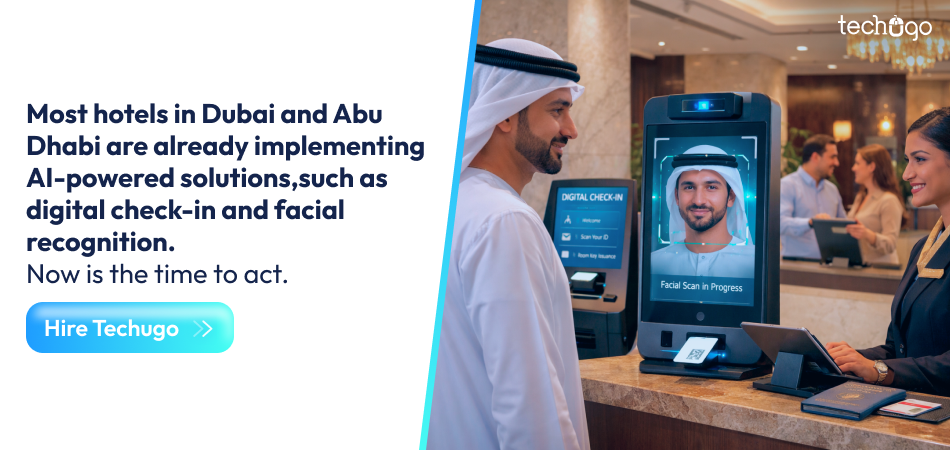
AI in UAE hospitality, now, is the standard. Personalized guest experiences, predictive maintenance, energy optimization, and smart pricing…AI is rebuilding the way hotels operate. The best part, forward-thinking hospitality operators in Dubai and Abu Dhabi are already seeing higher guest satisfaction, increased revenue, and smoother operations.
By integrating AI responsibly and staying compliant with UAE regulations, hotels can not only meet guest expectations but exceed them. In fact, they can bring experiences that are both luxurious and intelligent.
The time to act is now. Techugo can help you implement solutions that work – not just for today, but for the future of hospitality.
Transform your hotel with Techugo, where AI meets luxury.
If you think that ‘super app’ is a mobile app category, then think again. It's a complete digital ecosystem that offers multiple services in one scree..
Blockchain is one of the hot topics in the Middle East right now. Businesses there have a lot of opportunities to develop blockchain and crypto apps. ..


Write Us
sales@techugo.comOr fill this form