

 SA
SA  KW
KW  IE
IE AU
AU UAE
UAE UK
UK USA
USA  CA
CA DE
DE  QA
QA ZA
ZA  BH
BH NL
NL  MU
MU FR
FR [ LET’S TALK AI ]
X
Discover AI-
Powered Solutions
Get ready to explore cutting-edge AI technologies that can transform your workflow!



Get ready to explore cutting-edge AI technologies that can transform your workflow!


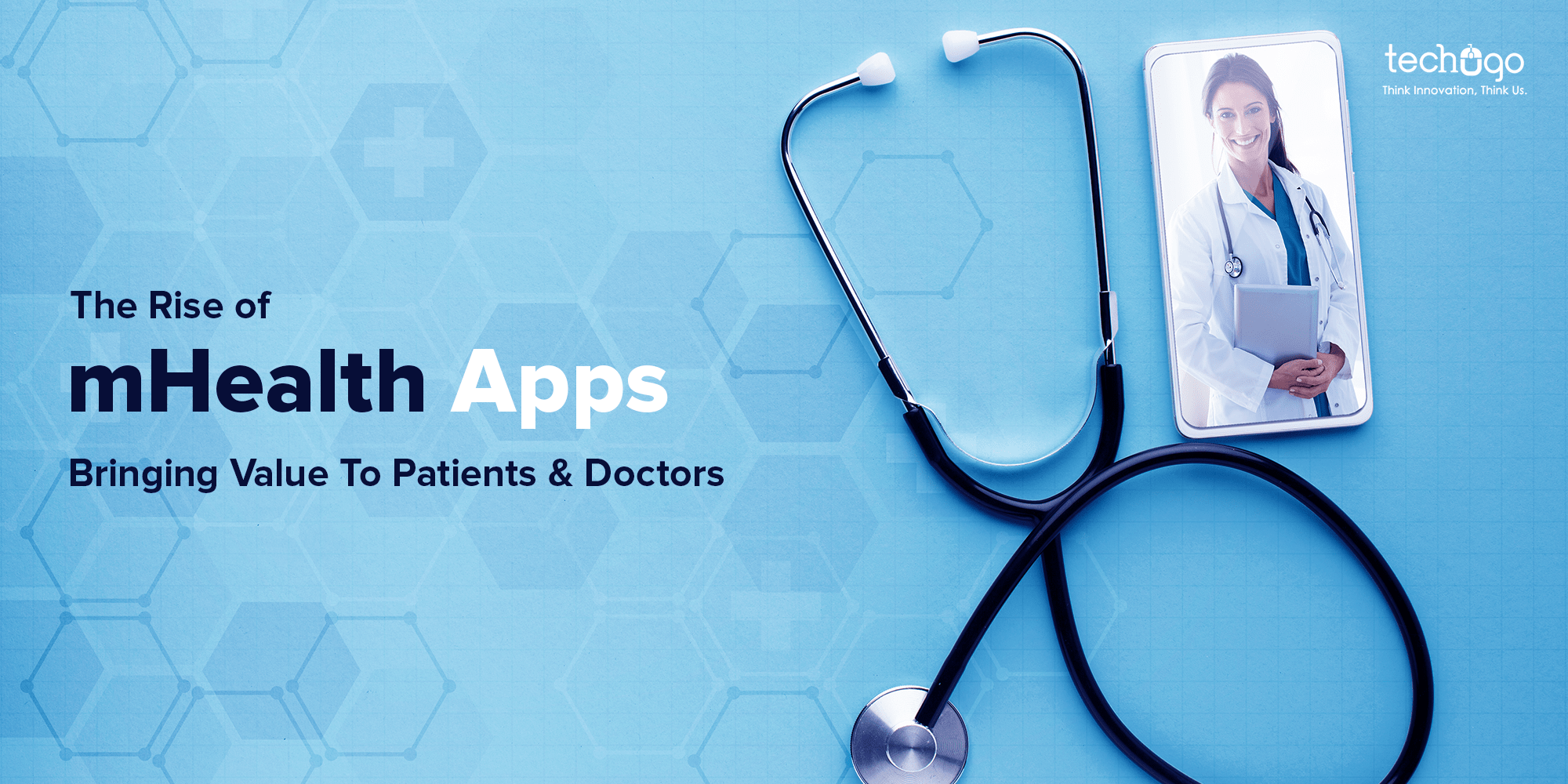
As per Grand View Research report, health care mobile app market will be valued more than 1 trillion U.S. dollars in 2030.
This figure indicates how promising the healthcare app industry is and how far technology has become a part of this flourishing sector.
If you look closely, then you will realise that medical apps have hit the market, benefitting millions of patients enormously. With the help of healthcare apps, it becomes easier for the patient to get remote consultations, fast answers to their queries, and track their general health condition.
Today, the scope of this app sector is not limited to one specific category only, but it is used for different purposes, such as emergency care, specific disease care, general hospital purposes, online consultations, progress tracking, getting medical references, and much more.
Market potential of mHealth applications
Well, there are multiple reasons behind this continuous popularity. However, one of the most prominent aspects is the convenience it brings to the patients. In total, 5.78 billion people worldwide own a mobile phone, making the huge potential for mHealth. It further facilitates unprecedented access to specialist clinical diagnostics and treatment advice.
Considering the huge demand, stakeholders are taking mHealth apps as extensions of their existing business. This helps them to compete with the current digital healthcare companies and provide a strong revenue-building platform for their business.
The market potential of mHealth applications continues to expand as healthcare systems worldwide adopt digital health solutions to improve efficiency and service delivery.
Why is the market of mhealth solutions growing so fast?
Strong adoption across major regions
According to research, countries with the best market conditions for digital health solutions are the USA, the UK, and Germany, followed by Israel, Canada, India, the Netherlands, and Denmark. They are leading the shift toward healthcare mobile apps. High smartphone usage, supportive digital health policies, and rising demand for remote care are driving adoption in these regions.
Rising need for continuous care
The increase in chronic diseases and aging populations has created a demand for long-term health monitoring outside hospitals. mHealth apps support this shift by allowing – remote patient monitoring, medication reminders, preventive healthcare programs, and lifestyle and wellness tracking
New opportunities for healthcare businesses
For investors and service providers, the mHealth app market opens doors to multiple digital healthcare models, including – telemedicine platforms, chronic care management apps, fitness and wellness solutions, and hospital and clinic management systems.
Digital healthcare is no longer limited to hospitals. It is becoming part of everyday life. As a result, the demand for mHealth applications and healthcare app development services is expected to grow steadily, creating long-term opportunities across the global healthcare industry.
With this post, we have brought the future of mHealth apps and how they will have a strong future ahead. Let’s read this post further…
Different types of mHealthcare apps
mHealthcare apps are made for different users. Each type solves a different healthcare problem.
Some apps help patients. Some help doctors. Others share health information with everyone.
Patient app
Patient apps help people take care of their health. These mHealth apps allow users to book doctor appointments. They can check medical reports anytime. They can get medicine reminders. Many apps also track heart rate, steps, or sugar levels.
These healthcare mobile apps reduce hospital visits. They make health management easier at home. They also support online doctor consultations.
Doctor app
Doctor apps are built for medical professionals. They help doctors manage patients better. Doctors can view patient history in one place. They can give online consultations. They can send digital prescriptions.
These mHealthcare apps save time for doctors. They also improve communication with patients. They help in faster and better treatment.
General healthcare info app
These apps share health and wellness information. They provide tips on fitness and nutrition. They explain common diseases in simple words. Some apps offer symptom checkers. These mHealth apps help people stay informed. They support healthy lifestyle choices. They are useful for daily health awareness.
mHealth Apps from a Consumer’s Perspective
It is evident that healthcare app users are showing a strong inclination toward digital technology, and this number is rising every year. Consumers now prefer using mHealth apps to manage their health more easily. They rely on healthcare mobile apps to store and access electronic health records and to connect with doctors online for consultations and advice.
mHealth Solutions from a Doctor’s Perspective
Doctors can use digital health tools to access patient records, receive payments, issue prescriptions, check test results, and schedule appointments. Such mHealth solutions are becoming a necessity for healthcare providers who want to offer technologically advanced services that meet patient expectations and support modern healthcare delivery.
Benefits offered by mHealth solutions
mHealth solutions bring together technology and everyday healthcare needs in a way that feels practical for both patients and providers. Instead of relying only on hospital visits and paper files, healthcare mobile apps allow medical care to move closer to daily life.
Medical records in one place
mHealth apps make it easier to store and access health information from a single platform. Prescriptions, lab reports, and treatment history can be viewed anytime without searching through physical files. This helps patients stay informed about their own health while giving doctors faster access to accurate data during consultations.
Online consultations without long waits
One of the biggest advantages of mHealth apps is remote access to doctors. Patients can consult specialists through video or chat without traveling long distances or waiting in crowded clinics. This is especially useful for routine follow-ups and minor health concerns that do not always require in-person visits.
Health condition tracking in daily life
Many healthcare mobile apps support regular monitoring of vital signs and chronic conditions. Users can track blood sugar, heart rate, physical activity, and medication schedules. Over time, this data helps doctors understand patterns and adjust treatment plans based on real usage rather than occasional checkups.
Greater control for patients
mHealth solutions give patients more involvement in their own care. Appointment scheduling, reminders, and access to personal health data encourage people to take responsibility for their treatment. This sense of control often leads to better adherence to medication and lifestyle recommendations.
Support for medical learning and reference
Doctors and healthcare staff use mHealth apps for quick access to clinical guidelines, drug information, and medical references. These tools also support continuing education by sharing updates on treatments and healthcare practices, helping professionals stay informed in a fast-changing medical environment.
Lower healthcare costs
By reducing unnecessary hospital visits and paperwork, mHealth solutions help cut operational costs for providers and travel expenses for patients. Digital consultations and automated reminders also reduce missed appointments and improve efficiency across healthcare services.
Improved diagnosis and treatment decisions
With patient data available in real time, doctors can make more informed clinical decisions. mHealth apps support better diagnostic accuracy by combining medical history, symptom tracking, and test results in one place. This leads to earlier detection of issues and more timely treatment.
Faster and clearer communication
Real-time communication is another key benefit of healthcare mobile apps. Patients can message doctors, receive test updates, and get prescription instructions without delays. This reduces confusion and builds stronger doctor patient relationships.
Healthcare access in remote areas
In regions where hospitals and specialists are limited, mHealth apps act as a bridge between patients and medical services. Remote consultations and digital monitoring make it possible for people in rural or underserved locations to receive guidance and basic care without long travel times.
Together, these benefits show how mHealth solutions are reshaping healthcare delivery. They do not replace traditional medical systems but work alongside them to make care more accessible, efficient, and patient focused.
Future of mHealth solutions
It goes without saying that the growing technological innovations will boost the mobile healthcare apps’ functionalities. Further, these mHealth solutions will be adopted by a larger number of businesses across the global healthcare industry.
Since the pandemic has made people more health-conscious, resulting in a greater number of people have become aware of the advantages of mHealth apps.
Amid virus outbreak, when every industry has adopted a new norm of the digital revolution, healthcare apps have certainly paved a successful way for doctors and patients. They can rely on these technological advancements for better outcomes and more patient-centric care.
More focus on preventive and personalized care
mHealth apps are expected to shift healthcare away from reactive treatment and toward prevention. Instead of visiting a doctor only after symptoms appear, patients will use healthcare mobile apps to track vital signs, manage chronic conditions, and receive early alerts when something feels off. This allows doctors to understand patient health patterns over time and suggest personalized care plans based on real data rather than occasional reports.
Stronger connection between devices and care systems
As wearable technology and connected medical devices become more common, mHealth solutions will play a central role in bringing this data together. Information from smartwatches, glucose monitors, and fitness trackers will feed directly into healthcare mobile apps. Doctors will be able to review this information remotely and adjust treatments without waiting for in-person visits. This level of connection supports more consistent monitoring and better long-term outcomes.
Digital healthcare as a long-term habit
The pandemic changed how people view medical care. Many patients experienced online consultations and digital prescriptions for the first time and found them convenient and reliable. That behavior is unlikely to disappear. mHealth apps are becoming part of normal healthcare routines, especially for follow-ups, basic consultations, and medication management. This growing comfort with digital health tools will continue to drive demand for mHealth solutions across different age groups.
Growing adoption by healthcare businesses
Hospitals, clinics, and wellness providers are investing more in healthcare app development to improve service delivery and patient engagement. mHealth apps are being used to reduce appointment backlogs, improve communication, and offer flexible care options outside hospital walls. For healthcare organizations, these apps are becoming part of their core digital infrastructure rather than optional add-ons.
Trust, security, and clinical reliability will matter more
As more personal health data moves through mobile platforms, users will expect higher standards of privacy and accuracy. The future of mHealth solutions will depend on strong data protection practices and clinically reliable features. When patients trust healthcare mobile apps with their information, adoption becomes easier and long-term use becomes more likely.
Together, these changes suggest that mHealth apps will continue to grow in importance across the healthcare industry. They will not replace traditional medical systems but will work alongside them to make care more accessible, continuous, and centered on the patient’s real-life needs.
Latest technology trends you cannot miss in the Healthcare App Development
- Telemedicine services help patients to get connect with doctors remotely and get their treatment done
- For the accurate diagnosis, Artificial Intelligence based healthcare apps really help in abundance
- Data security is no more prone to malicious attacks with blockchain.
- The integration of big data and analytics, help patients to get useful information and healthcare practitioners can also make a significant change in medical research and analysis.
How much does it cost to develop an mHealth app?
Well, you should know that the development cost of a healthcare mobile app depends on various factors: platform, technology integration, language to be used, the complexity of the app, features required in the app, location & size of the development team, and many more.
Henceforth, it is hard to suggest the exact cost without knowing the concept and your vision behind it. You would be surprised to know that healthcare app development cost can be anything between $10k to $100k or more, depending upon the complexity of the app.
The cost of mHealth app development does not follow a fixed price tag. It depends on what kind of healthcare mobile app you want to build and how complex the idea is. A simple wellness or appointment booking app will cost far less than a full-scale platform with remote monitoring, AI features, and system integrations.
What actually influences the cost?
Several factors shape the overall healthcare app development cost.The first is the type of platform. Building an mHealth app for Android, iOS, or both will affect the budget. Cross-platform development may reduce initial costs, while native apps often require separate builds.
Next comes feature complexity. Basic features such as user registration, appointment scheduling, and notifications are easier to develop. Advanced features like video consultations, wearable device integration, health data analytics, and electronic medical records increase development time and cost.
Technology and integrations also matter. If your healthcare mobile app needs to connect with hospital systems, payment gateways, pharmacy services, or third-party medical devices, the cost will rise. Data security measures and compliance requirements further add to the effort involved in development.
Another major factor is the size and location of the development team. Hiring an experienced healthcare app development company in regions with higher labor costs will naturally increase the budget. Smaller teams or offshore development can reduce costs, but the level of expertise still plays a big role.
So, what is the estimated range?
- For a basic mHealth app with limited features, development may start around $10,000 to $20,000.
- A moderately complex healthcare mobile app with teleconsultation and health tracking features can range between $30,000 and $60,000.
- More advanced mHealth solutions with real-time monitoring, AI support, and system integrations can easily cross $100,000 or more.
These figures are only indicative. The actual cost depends on your app concept, user scale, and long-term goals.
Why planning matters before development
Before estimating the healthcare app development cost, it is important to define your target users, required features, and growth plans. A clearly defined vision helps avoid unnecessary features and reduces development risks. It also allows mHealth app development teams to suggest better technical approaches that balance functionality and budget.
In short, the cost of building an mHealth app is not just about development. It reflects the level of care, security, and performance you want to deliver through your healthcare mobile app. Investing in the right features from the start can lead to better user trust and long-term success for your mHealth solution.
Final thoughts
Indeed, the concept of healthcare mobile apps is ever flourishing, and the pandemic has brought a clear indication of its successful future ahead.
Although there are many new and trending technologies creating a stir in the market. Henceforth, it is expected that the mHealth app industry will flourish steadily.
To get a healthcare app development solution, you must reach out to Techugo team, as we have designed and developed the most successful healthcare app solutions for global clients.
Are you ready to get an accurate numerical for the development?
Reach us today and receive a no-obligation quote for a perfect mHealth solution crafted especially for your business.
Frequently Asked Questions
Q. What is an mHealth app and how does it work in healthcare?
An mHealth app is a type of healthcare mobile app designed to support medical and wellness services through smartphones and tablets. These apps help users book appointments, consult doctors remotely, track health conditions, and access medical records from one platform. mHealth solutions work by connecting patients, doctors, and healthcare systems through digital tools, making healthcare more accessible and easier to manage outside hospital settings.
Q. What are the main benefits of mHealth apps for patients and doctors?
For patients, mHealth apps offer convenience, faster access to care, and better control over personal health data. They reduce the need for frequent hospital visits and make follow-ups simpler. For doctors, healthcare mobile apps improve record management, support remote consultations, and allow better monitoring of patient progress. Together, mHealth solutions improve communication, save time, and support more efficient healthcare delivery.
Q. How secure are healthcare mobile apps for storing medical data?
Modern healthcare mobile apps are built with strong data protection measures such as encryption, secure authentication, and access controls. mHealth solutions also follow healthcare data regulations and privacy standards to protect sensitive medical information. While no digital system is completely risk-free, professionally developed mHealth apps focus heavily on security and compliance to build trust among users and healthcare providers.
Q. What features should an mHealth app include in 2026?
In 2026, mHealth apps are expected to go beyond basic appointment booking and consultations. Common features include remote patient monitoring, integration with wearable devices, digital prescriptions, and access to electronic medical records. Many healthcare mobile apps also include symptom tracking, medication reminders, and AI-based support tools to help doctors and patients make better health decisions.
Q. What is the difference between telemedicine apps and mHealth apps?
Telemedicine apps mainly focus on remote doctor consultations through video or chat. mHealth apps cover a broader range of healthcare services. Along with virtual consultations, they support health tracking, medical records, reminders, and long-term condition management. In simple terms, telemedicine is a part of mHealth solutions, while mHealth apps provide a wider digital healthcare experience.
Mobile apps in Saudi Arabia are not just digital tools anymore, and they are no longer limited to simple tasks either. Rather, they are becoming the m..

Suppose a parent whose child develops a high fever on a weekend afternoon. It’s not serious enough for the emergency room, but waiting until Monday is..


Write Us
sales@techugo.comOr fill this form