 SA
 KW
 IE
 AU
 UAE
 UK
 USA
 CA
 DE
 QA
 ZA
 BH
 NL
 MU
 FR


















📌 Key Takeaways
- Regular feedback helps teams spot problems and improve software as they go.
- ASD works well for projects where requirements may change, such as AI applications and digital transformation projects.
- Common challenges include managing frequent changes, coordinating teams and estimating costs.
- For software teams working on AI projects, AI software development services can help explore new ideas and test what works.
Software development rarely goes exactly as planned. If requirements change, priorities change or unforeseen problems arise… teams may need to reconsider their entire approach midway through a project.
Adaptive software development (ASD) helps teams respond to these changes rather than relying on a fixed plan from start to finish.
This challenge extends beyond individual projects. As per KPMG’s
2024 U.S. Technology Survey, 81% of firms have indicated that keeping pace with the rate of technology change is a challenge for them.
Through regular feedback and shared learning, ASD helps teams decide how to move forward as development progresses. In this guide, we’ll explore how adaptive software development works, its key principles, benefits, challenges, when it works for your project and more.
An overview of adaptive software development (ASD)
Adaptive software development (ASD) is a method for software teams to adjust to changing needs, new information and unexpected problems throughout a software project. Teams operate in short cycles, collect feedback and adapt their actions accordingly, rather than operating according to a fixed sequence of actions.
ASD is a good fit for mobile app development because user needs keep changing. Teams can test ideas, learn from feedback and make changes along the way.
Building Software That Adapts to Change?
Give your software team the flexibility to respond to changing requirements and evolving user needs with Techugo’s custom software development services.
Why is adaptive software development important for modern software teams?
Between meeting deadlines, making technical decisions and meeting business expectations, software teams have plenty to manage. ASD helps them work through these demands while staying aligned with what the project needs.
To understand its value, it helps to look at how ASD supports teams throughout development.
1. Keeping up with changing needs – Adaptive system development gives teams room to adjust their plans when project requirements or priorities change.
2. Making feedback count – Teams can test ideas, learn what works and fix issues before they become bigger problems.
3. Working better together – Developers and stakeholders can provide feedback, discuss challenges and determine what’s next for them.
4. Enhancing the software development life cycle – ASD enables the team to reconsider its software development process at various stages rather than only at the initial software development process.
5. Designing around user needs – With mobile application development, teams are able to gather the features as user requirements evolve and market needs change.
Ultimately, ASD helps teams learn as they work, respond to new challenges and build software that stays relevant to both users and business goals.
The real benefits of adaptive system development
Finding out at the end that your software doesn’t meet the project requirements is the most expensive way to learn. And here we are talking about bugs, features that fail to perform, design flaws, etc. Adaptive system development can help with that by making feedback, testing and visibility part of every stage.
Let’s look at the benefits in detail.
1. Less unnecessary rework
Teams get the opportunity to see their work at various stages of development and to prevent issues from becoming larger and more costly problems. Developers can fix it during the development process, rather than at the very end of the project when they discover that something isn’t working. This saves time and reduces needless rework and keeps any small errors from having an impact on the rest of the project.
2. Better use of time & resources
When prioritising tasks, software teams learn to analyse the significance of tasks as it helps them focus on the most essential features of the project rather than devote resources to unnecessary work.
3. Improved software quality
Regular testing helps developers identify defects earlier. As a result, they can address problems during development rather than waiting until the product is ready for release.
4. More informed decisions
An adaptive software development framework helps teams use testing results, project feedback and practical insights to decide what needs attention next. This makes it easier to choose the right course of action as the project progresses.
5. Better project visibility
Getting help from a software development company that uses an adaptive approach can be beneficial for businesses as it provides them with detailed information regarding the project status (and resource usage). Furthermore, this allows them to monitor development milestones.
Challenges teams may face with adaptive software development
While adaptive software development helps teams respond to changing requirements, it can also create a few challenges during a project. Here are some common issues teams may face:
1. Managing technical complexity – Frequent code changes can make it harder to maintain code quality and keep the system performing well. Cloud consulting services can also be required for teams developing applications that run on the cloud to handle infrastructure, scalability & security concerns.
2. Changing project requirements – Requirements can undergo changes as teams get feedback and learn about user requirements. In the absence of clear communication, these changes can result in confusion, duplicate work and delays.
3. Difficulty estimating costs and timelines – As the adaptive software development methodology enables teams to alter their plans during the life cycle of a project, it can be challenging to forecast the precise budget and the delivery date. Therefore teams have to monitor their projects.
4. Communication gaps – Adaptive development only works when developers, stakeholders and the rest of the team stay in tight contact. Otherwise, misunderstandings can send the project in the wrong direction.
5. Lack of resources and skills – When teams do not have the right skills or tools… they can struggle to adapt. By seeking guidance from software development consulting experts, businesses can coordinate development activities, manage technical obstacles and choose the right course of action as the project progresses.
Adaptive software development vs. Traditional software development
Both approaches aim to build good software, but the way they work is different. Let’s compare the two.
| Basis | Adaptive Software Development | Traditional Software Development |
| Planning | Plans can change as the project progresses | Most planning happens at the beginning |
| Requirements | Requirements can evolve during development | Requirements are usually defined upfront |
| Approach | Teams work in cycles and adjust as they learn | Teams generally follow a predefined process |
| Collaboration | Developers and stakeholders work together throughout the project | Collaboration often happens at specific stages |
| Handling changes | Teams adapt to changes as they arise | Changes may require formal approval and replanning |
| Testing | Testing and feedback happen throughout development | In Waterfall, testing usually follows implementation |
| Risk management | Teams identify issues and respond as the project evolves | Teams often identify risks during the planning stage |
| Best suited for | Projects where requirements may change frequently | Projects with clear, stable requirements |
What are the key phases of adaptive software development?
ASD does not take for granted that all will go as planned, but rather invites teams to be open to change. The three cornerstones of its approach to working – speculation, collaboration and learning – are the principles by which teams plan their work, establish collaborative partnerships with other teams and respond to feedback.
1. Speculation – Teams have project objectives and develop plans that are somewhat open to changes as new requirements arise.
2. Collaboration – Developers, clients and other stakeholders share their ideas and solve problems together and ensure the software addresses business needs.
3. Learning – Teams learn from feedback, testing and the outcome of each development cycle in order to see what is successful and what is in need of improvement.
These principles enable teams to deal with uncertainty without becoming lost in the project goals. ASD does not see changes as failures and lets the teams learn from the changes and adapt to them throughout the project.
How does adaptive software development support continuous improvement?
At each development cycle, teams can measure progress against agreed targets for feature performance, delivery timelines and user requirements. These checks assist them in knowing where the project is not doing well and what they should focus on next.
On top of that, ongoing enhancement is promoted in how teams operate. The programmers are able to identify recurring mistakes, holdups and test results so that they can pinpoint ineffective practices. They can refine their practices to reduce delays and enhance productivity during future cycles.
It is necessary to deliver quality software for an extended period of time. While adding new features, the original behavior must be preserved. At the same time, regular quality checks will help spot problems and guarantee the software’s efficiency.
Adaptive software development vs. Agile software development
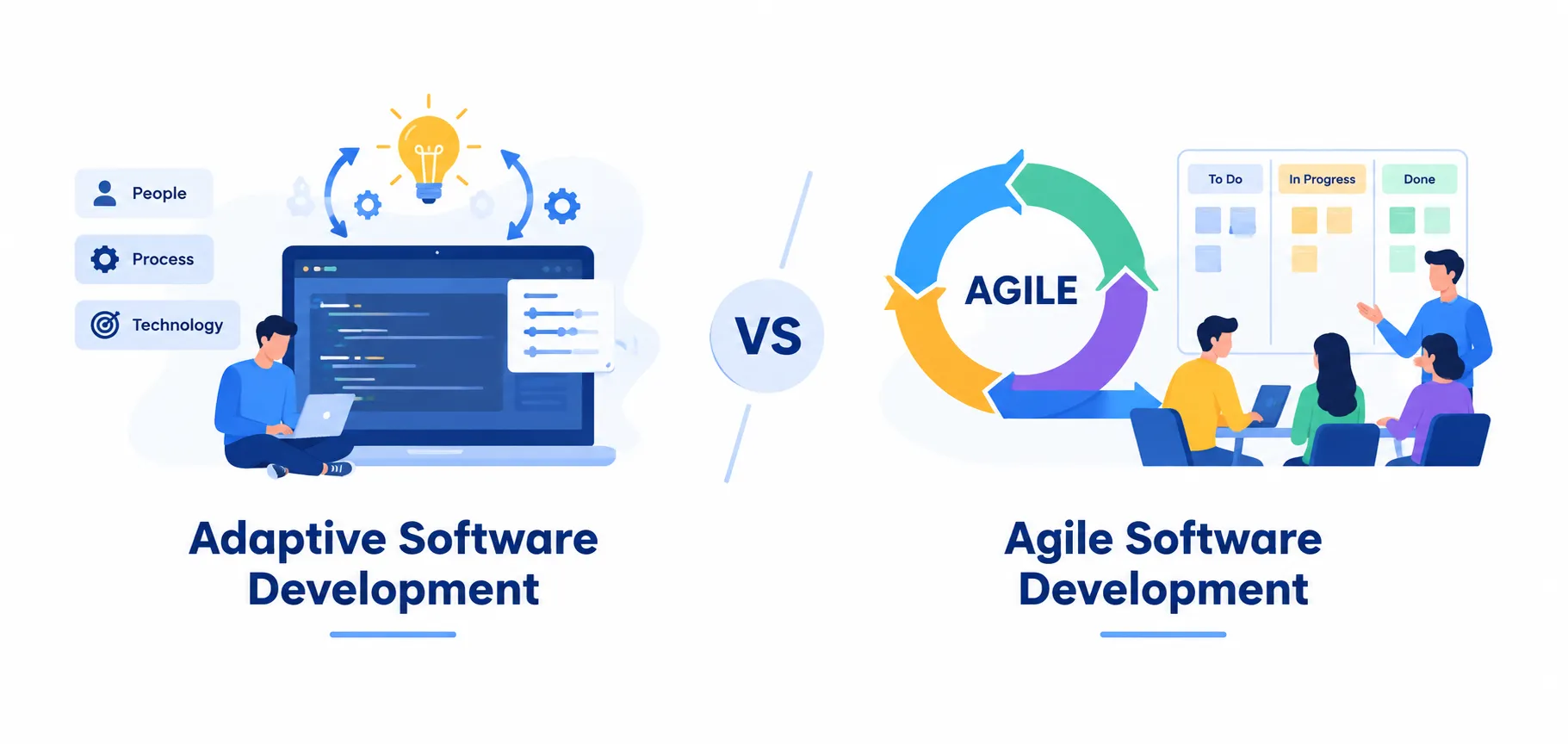
Adaptive software development and Agile software development have a LOT in common (especially when we talk about handling changing requirements). But they are definitely not the same. While the Agile methodology focuses on delivering working software in short iterations… adaptive software development puts more emphasis on learning and adjusting to uncertainty throughout the project.
Let us show you how the two approaches differ and which one might work better for your project.
| Basis | Adaptive Software Development | Agile Software Development |
| Approach | Focuses on learning from changes and adjusting the development process as needed | Focuses on building software in small steps and improving it through regular feedback |
| Planning | Plans can change as the team learns more about the project | Teams plan work in short cycles and update priorities when needed |
| Development cycle | Follows speculation, collaboration, and learning | Uses short iterations or sprints to deliver working software |
| Handling changes | Adapts to uncertainty and changing requirements throughout development | Welcomes changes, even when development is already underway |
| Team collaboration | Teams work closely, share knowledge, and learn from each stage | Developers and stakeholders communicate regularly to review progress |
| Best suited for | Projects where requirements are unclear or likely to change often | Projects that benefit from frequent releases and ongoing feedback |
| Main focus | Learning from experience and adapting to new information | Delivering working software regularly and improving it over time |
So which one is better?
You can get great results with either approach when it fits your project requirements. If your project involves a lot of uncertainty and you expect requirements to change as development progresses, adaptive software development might be a better fit. But if you prefer working in short cycles, getting regular feedback and releasing updates frequently, Agile could be the way to go.
Best practices for a successful adaptive software development process
1. Make communication a priority
Always inform, communicate and agree on priorities with developers, stakeholders and clients. This guarantees that everyone is on the same page as the demands change.
2. Break work into smaller cycles
The best way to mitigate risks is to split the entire work into different stages. If you do not plan the whole process in advance – it becomes easier for your team to test the various theories and make any necessary changes to the plans.
3. Learn from feedback
Collect feedback at the end of each development cycle and use that as the basis for further development. This allows teams to find out what is successful and what is not successful before the project is finished.
4. Be ready for requirements to change
Have flexibility built into plans to allow your team to adjust to new information but do not lose focus on the key project objectives.
5. Test throughout development
Regular testing can detect problems early and keep the software quality as it evolves. This is particularly helpful during web application development, since such updates may impact performance, security and user experience.
6. Review progress regularly
Go over the team’s progress, address any setbacks & work out what could be improved. These reviews keep the project going on the correct track and fine-tune the adaptive software development process.
Which projects are best suited for adaptive software development?
The adaptive software development model works best for projects where requirements may change during development. Rather than following a predetermined approach, teams will try their concepts, receive feedback and then adapt accordingly.
Here are some projects that can benefit from this approach –
1. Startups’ product development – Startups start with a concept and enhance their features based on the feedback from initial users. You can do this via adaptive development if this is the case, without redoing the whole project.
2. Businesses implementing digital transformation projects – The businesses that are introducing new technologies may find that there are other needs throughout the transformation process. An adaptive approach along with digital transformation services will help teams meet the changing business goals and technical requirements.
3. Projects involving the use of AI and machine learning – These tend to be experimental and involve testing and iterative changes to the model. An adaptive approach provides the freedom for developers to test out their output and make improvements.
4. Web and mobile application development – Regular testing and incremental updates are crucial for applications that have fluctuating feature needs or evolving expectations from their users.
5. Projects with emerging technologies – If the appropriate technology is not known, teams can try out a variety of technologies to see which one works best.
How can businesses measure the success of adaptive software development?
1. Development speed and delivery
Companies can see how fast their teams go through their development cycles & provide customers with finished features. Shorter delivery periods can be a good signal that the team manages its workload properly.
2. Software quality
Bug/defect tracking and follow-up monitoring are the best tools for companies to understand whether the software conforms to quality criteria and what types of improvements can be suggested.
3. Customer satisfaction
Customer reactions help teams gauge whether the software meets their requirements. Customer reviews, surveys and usage of features will help in identifying the issues that need resolution.
4. Team productivity
Businesses can assess how effectively teams complete tasks, manage workloads and handle development bottlenecks.
5. Adaptability to change
Monitoring how well teams react to shifts in requirements gives organizations insights into whether their development procedures can adjust effortlessly to a changing set of priorities.
Tools & technologies that make adaptive software development possible
| Tool/Technology | How It Supports Adaptive Software Development |
| Agile project management tools | Help teams manage changing requirements, track progress and reprioritise tasks as projects evolve |
| Version control systems | Tools like Git help developers track code changes, collaborate and roll back changes when needed |
| CI/CD tools | Help teams test and release code more frequently without handling every step manually |
| Automated testing tools | Help teams identify bugs early and check whether new changes affect existing features |
| Collaboration and communication tools | Help developers, designers and stakeholders share feedback and make decisions throughout development |
| Cloud platforms | Give teams the flexibility to scale resources up or down as project needs change |
| Prototyping and design tools | Let teams test interface ideas, collect user feedback & refine designs before full implementation |
| Monitoring & analytics tools | Help teams understand application performance and user behaviour |
Adaptive software development costs: what software teams need to know
Software teams should consider project complexity, technology requirements, and potential system upgrades when estimating adaptive development costs.
To put these costs into perspective, here’s a breakdown by project type –
| Project Type | Estimated Cost (USD) |
| Basic adaptive software development | $10,000–$30,000 |
| Mid-level adaptive software development | $30,000–$80,000 |
| Advanced software development | $80,000–$150,000 |
| Legacy software modernization | $20,000–$150,000+ |
| AI-powered software development | $30,000–$150,000+ |
| Enterprise AI development | $150,000–$300,000+ |
AI software development has a range of services that could cover the whole process, from gathering data and developing models to testing and integrating your AI, so the team knows what to expect at each stage.
What Will Your Adaptive Software Development Project Cost?
Find a suitable budget for your adaptive software development project with guidance based on its requirements, complexity and planned functionality.
The future of adaptive software development: New possibilities
1. AI-assisted software development
By taking over manual tasks and helping spot errors, AI tools give developers more time to focus on complex development work. This allows developers to spend more time on more complex problems and with more time to make better decisions as project needs evolve.
2. Cloud-based collaboration
Cloud-based development environments allow distributed teams to share updates and test changes and work on the same project easily. This can be useful if priorities change during development, to coordinate the work of the team.
3. More emphasis on ongoing testing
Teams can spot defects early on and verify that the new changes do not impact existing features with automation and continuous testing. This simplifies the maintenance of software quality when products change.
4. Quick solutions to evolving business requirements
The more businesses apply these technologies, the better they will be able to modify their priorities and satisfy new requirements. However, proper changes will still depend on clear communication, timely feedback and good decision-making.
Why choose Techugo for adaptive software development?
Techugo’s custom software development services help businesses build software that fits the way they actually work. We start by understanding what your business needs, then work with you to build software that can keep up as those needs change. Whether you’re starting from scratch, updating an existing system or adding AI features, our team focuses on making sure your software works for you now and can grow with your business.
Final words
Adaptive software development helps teams handle changing requirements & build better software through regular feedback and improvements. Instead of sticking to one fixed plan, teams can adjust as they go.
The best way forward is to choose an approach that fits your project, budget and goals, so your software adapts to future requirements.
FAQs
1. How is adaptive software development different from Agile?
Both methods are flexible and provide regular feedback. ASD, however, focuses particularly on learning, working together and how uncertainty is addressed during the development process.
2. What are the main benefits of adaptive software development?
ASD allows teams to make changes as a project moves forward, deal with problems as they come up and use feedback to make the software better.
3. How much does adaptive software development cost?
Adaptive software development can cost anywhere from $10,000 to $300,000 – starting with basic projects and going up to enterprise-level software.

Get in touch
We'd love to hear from you.