

 SA
SA  KW
KW  IE
IE AU
AU UAE
UAE UK
UK USA
USA  CA
CA DE
DE  QA
QA ZA
ZA  BH
BH NL
NL  MU
MU FR
FR [ LET’S TALK AI ]
X
Discover AI-
Powered Solutions
Get ready to explore cutting-edge AI technologies that can transform your workflow!



Get ready to explore cutting-edge AI technologies that can transform your workflow!






Did you know?
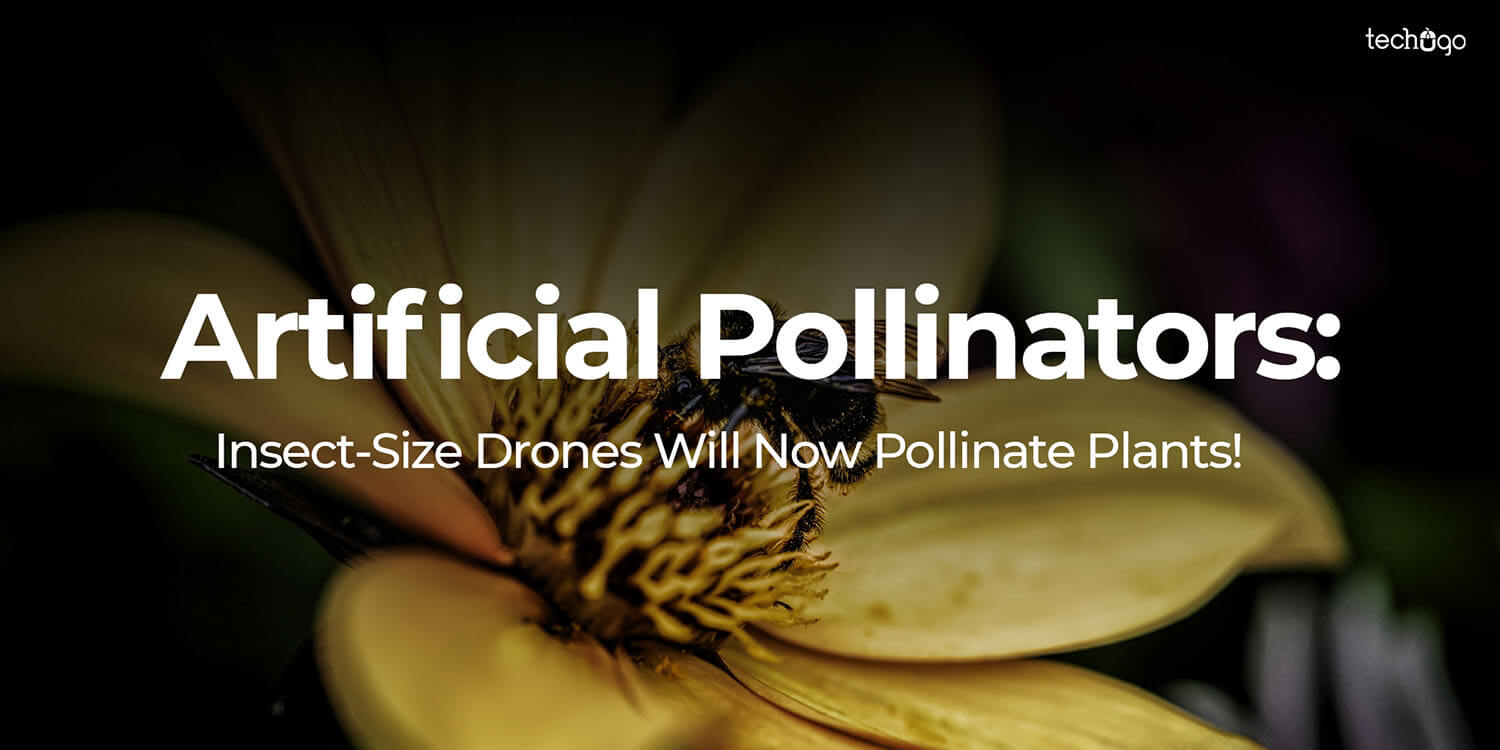
“Bees pollinate more than $15 billion worth of crops every year in the U.S.”
How is it important, you ask?
Researchers in Japan have put their sweat and blood behind the creation of insect-sized drones to replace bees in the pollination process through artificial pollinators.
The bigger question is, WHY?
Surprisingly, the bee population in the US and worldwide is rapidly declining, and there are no other reasons than climate change, pesticides, and other growing diseases. Thus, it has given rise to artificial pollinators or insect-size drones, and this article will precisely talk about the entire concept of artificial pollinators.
So, how excited are you?
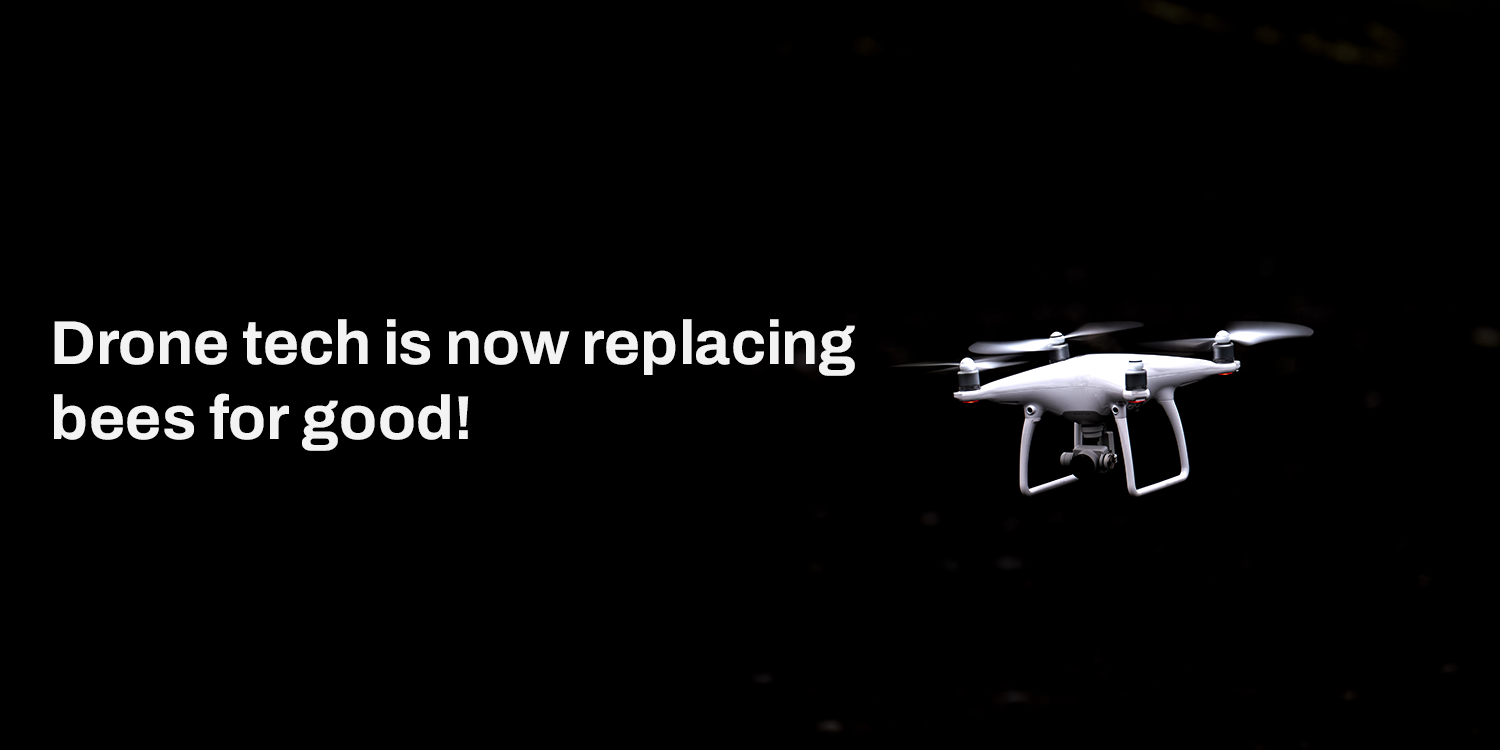
The declined population of bees is likely to impact the agriculture sector immensely, which is further going to negatively impact the economy since they act as pollinators.
Therefore, in the absence of pollinators, food production will decrease, directly impacting the demand as well.
So, what’s the alternate solution?
Stunningly, drone technology in robot pollinators works exactly like bees to accelerate the pollination process which leads to the rise of artificial pollinators. The drone pollinators developed by the researchers also have animal hair on their backs and a gel-like substance that enables them to pick and release pollen grains.
Additionally, while the artificial pollinators or insect-size drones are currently being operated with the help of remote control, researchers are looking forward to developing a mechanism that uses AI.
What’s the catch?
Since the bee-imitating drones are not autonomous, they have not been tested outdoors, and there’s still time before that finally happens. Therefore, researchers are also emphasizing drone app development for leveraging AI, GPS, and other advanced features for efficient functioning.
To understand the magic of artificial pollinators, you need to look at how they work. And it’s fascinating because they mimic bees, but in a way that is completely mechanical. These tiny insect-sized drones are designed to carry out pollination, and they do it with surprising precision. They have brushes, gel-like substances, and soft bristles on their backs so that pollen can stick, and then they move it to another flower. Just like bees, but, well, not really.
Researchers have studied bees for years, and the data they gathered was used to build insect-size drones that fly and land almost like real bees. Some drones even have sensors that detect flower color, shape, and you know, timing too, so that pollination happens efficiently. And it’s not just science fiction; it’s happening.
Right now, most insect-like drones are controlled with remotes. But the goal is to make them autonomous. AI algorithms have been developed, and the idea is that these drones will eventually navigate fields, avoid obstacles, and pollinate without humans. Imagine that drones are buzzing around a farm, like little robotic bees.
What’s even more interesting is that artificial pollinators can work in places where real bees struggle. Greenhouses, pesticide-heavy areas, or regions with low bee populations. Because of this, drones can actually help maintain food production. By combining bio-inspired design and robotics, these drones are not just a solution but they are the future of pollination, and, well, agriculture too.
You might wonder, how do these tiny drones know where to go? Well, that’s where AI comes in, and it’s actually pretty fascinating because the drones are not just flying around randomly. They are guided by AI algorithms, and these algorithms have been trained so that the drones can detect flowers, avoid obstacles, and even figure out which ones need pollination first, which is critical because the world’s bee populations have been under severe stress, for example, U.S. beekeepers reported around 62% average colony losses recently, much higher than historic norms.
Right now, many artificial pollinators still need humans to guide them, but researchers are working so that one day, these drones are completely autonomous. And the AI is smart and it can learn from its environment, adjust flight paths, and even optimize the pollination pattern over time, because traditional pollinators are disappearing fast (with projections of up to 70% bee losses in 2025 in some areas).
Because of this, some companies are also looking at integrating mobile apps to monitor and manage the drones and if you think about it, it’s like having a farm assistant in your pocket. This is where an AI app development company comes into play, which develops apps that help track drones, log pollination data, and make sure everything works smoothly.
AI in artificial pollinators doesn’t just stop at flight paths; it also helps in recognizing which flowers are ready for pollination, which plants need more attention, and even predicting crop yields. So, the combination of robotics and machine learning is not just smart but it is necessary, especially because the agricultural sector is adopting drone pollination technologies rapidly, with the global market expected to grow from hundreds of millions to over $2 billion by 2033 to help fill the gap left by declining natural pollinators.
The future? Well, imagine fleets of insect-size drones working autonomously, guided by AI, communicating with apps, and helping farms thrive, all while you just monitor progress on your phone. That’s the vision, and it’s closer than you think.
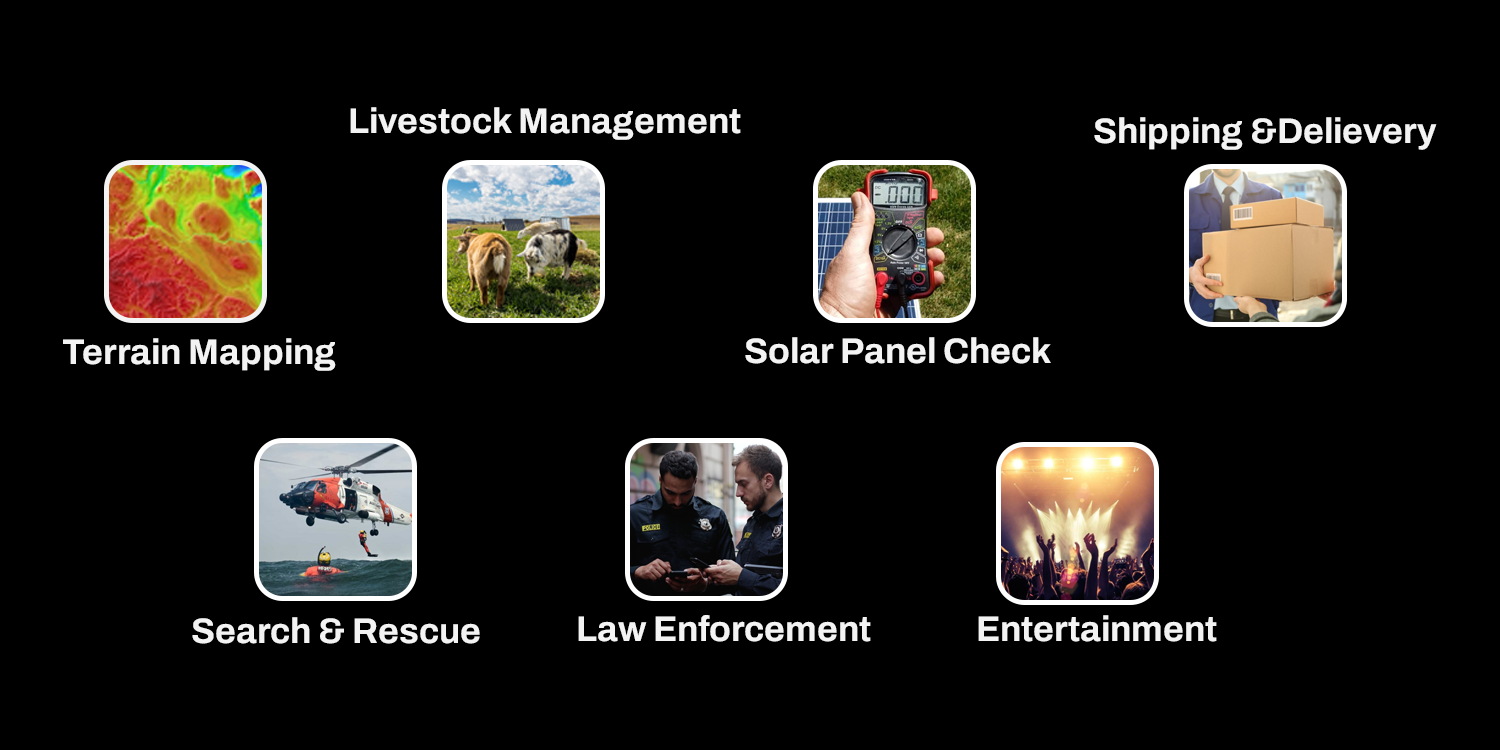
Now that you have reached this far, we assume you might also be interested in learning more about other use cases of drone technology beyond artificial pollinators.
Don’t worry; mentioned below are some real-world examples. Take a look.
Scientists are now utilizing drones leveraged with 3D cameras and LIDAR sensors that help them capture terrains. In addition, these drones work on AI mechanisms, thus, eliminating the need for human intervention.
Notably, terrain mapping primarily helps create robust Digital Elevation Models (DEMs), further used for scientific research.
Again, drone technology is amalgamated with Artificial Intelligence to keep track of livestock in the fields, giving an aerial view of the overall management.
What’s more?
Drones used for livestock management can also be incorporated with thermal sensors for nighttime surveillance.
You must be familiar that solar energy is tremendously being used by numerous industries for renewable energy. Therefore, AI drones are now being equipped for solar panel inspection and monitoring any potential issues that might decline the efficiency of the same.
The icing on the cake is its affordability, as solar panel inspection is inexpensive when compared to manual checking.
The time is not away when you’ll see drones flying on the streets carrying delivery packages for people.
Is it really?
That’s true. For instance, companies like Amazon and DHL have adopted the initiative to accelerate their delivery services.
As mentioned above, thermal sensors are leveraged with drones for easy nighttime surveillance. And its most beneficial use case is search and rescue missions.
Certain areas like mountains, forests, etc., might be challenging to reach for human beings. Therefore, drones can reach where humans can’t and can be effectively used as search and rescue tools.
What’s more?
These drones can also help deliver emergency supplies like food, water, medicines, and more.
Law enforcement agencies are widely incorporating drones to monitor a situation and keep it under control, especially during protests.
Apart from maintaining law and order, border management agencies also efficiently use drones to track down any illegal activities, like smuggling, transportation of drugs, etc.
Have you attended any concerts recently?
You must have seen equipment flying in the sky around the concert area if you have. Yes, you’ve guessed it right. These are the drones used to capture aerial shots of the event and cover the entire show.
Interesting, isn’t it?
Indeed, drone technology is amusing; however, don’t forget that it is controlled via mobile drone apps for smooth functioning. Therefore, if you’re secretly hoping to develop a drone app, now is your shot at connecting with the best drone app development company.
What are your thoughts?
So, you might ask, what does all this mean for the environment? Well, the decline in bees has already caused a ripple effect across ecosystems. Crops, wildflowers, and even other insects rely on pollinators. And because natural pollinators are disappearing, artificial pollinators are starting to play a vital role. They help farms and can also stabilize ecosystems, at least in some controlled ways.
Studies show that without pollinators, global crop yields could drop by up to 30%, affecting billions of dollars worth of produce every year. That’s huge. And the problem isn’t just in the U.S., countries all over the world are reporting bee declines. So, introducing artificial pollinators could help bridge the gap until natural populations recover, or even supplement them permanently.
But it’s not all perfect. There are questions about how these drones interact with the environment long term. Will they affect other insects? Could they disturb natural pollination cycles? Researchers are still studying that. And that’s why combining insect-like drones with smart AI and robotics is important, so they work efficiently and safely.
Looking ahead, the future of pollination is exciting. Farms might soon have fleets of artificial pollinators working alongside real bees, guided by AI apps and sensors, ensuring crops get pollinated even in harsh climates or pesticide-heavy zones. And with drones getting smarter and cheaper, small farmers could access this technology too, not just industrial farms.
So, in short, insect-size drones aren’t just a temporary solution but they could become an integral part of sustainable agriculture, helping us adapt to climate change, maintain food security, and even protect biodiversity in the long run.
While these are some of the best use cases of drone technology, artificial pollinators remain at the top, and we are really looking forward to witnessing its magic in the near future.
Without exaggerating, we can’t deny the fact that drones have revolutionized the manner of human interaction with the environment. Fortunately, the advancement will continue to happen and innovations like artificial pollinators prove that technology can help solve real-world ecological challenges. And there’s a lot more yet to be seen.
Do you have a flawless drone app idea?
Techugo, a leading mobile app development company in USA is all ears. Schedule a consultation and let’s bring your vision to life.
Artificial pollinators are small insect-like drones designed to mimic the pollination process performed by bees. They use brushes, gel-like substances, and AI-guided flight to transfer pollen from one flower to another, helping crops grow efficiently, especially where bee populations are declining.
With bee populations declining due to climate change, pesticides, and diseases, artificial pollinators help maintain crop yields. They can work in greenhouses, pesticide-heavy areas, or regions with low bee density, ensuring consistent pollination and supporting global food security.
While real bees are still essential for ecosystems, artificial pollinators are a reliable supplement. They don’t get affected by diseases or harsh weather and can work autonomously with AI guidance. However, they’re designed to complement, not replace, natural pollinators entirely.
AI allows insect-size drones to detect flowers, avoid obstacles, optimize flight paths, and learn over time for efficient pollination. Mobile apps and monitoring systems, often developed by an AI app development company, help farmers manage drone fleets and track pollination data effectively.
The future of artificial pollinators or insect-size drones looks promising. Experts predict autonomous fleets of drones working alongside real bees, guided by AI, to help farms thrive in challenging conditions. They are likely to become an integral part of sustainable agriculture, supporting both crop production and ecological balance.

A healthcare team decides to build an AI app; the goal is to detect a rare disease early because patient data already exists inside the Electronic Hea..


The idea of pharmacy app development in the UAE can feel overwhelming at first. From planning the features to understanding regulations and prepar..



Write Us
sales@techugo.comOr fill this form