


 SA
SA  KW
KW  IE
IE AU
AU UAE
UAE UK
UK USA
USA  CA
CA DE
DE  QA
QA ZA
ZA  BH
BH NL
NL  MU
MU FR
FR [ LET’S TALK AI ]
X
Discover AI-
Powered Solutions
Get ready to explore cutting-edge AI technologies that can transform your workflow!



Get ready to explore cutting-edge AI technologies that can transform your workflow!






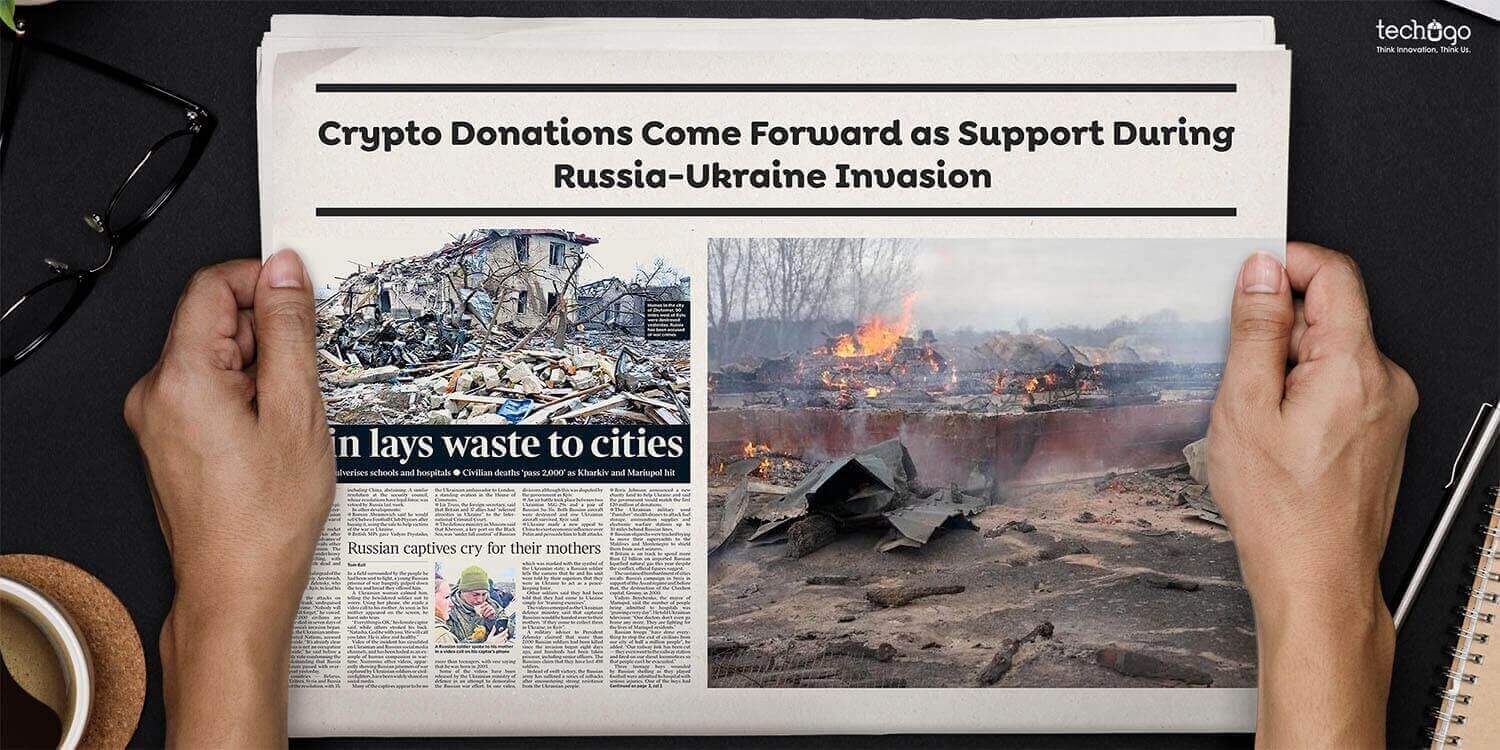
When the Russia-Ukraine conflict began in early 2022, the world watched events unfold in real time on social media. Governments were making announcements, journalists were sharing updates, and people across the globe were trying to understand what was happening next.
Amid all the uncertainty, something unexpected happened.
Ukraine turned to cryptocurrency.
Through social media posts, the country began sharing official wallet addresses and encouraged people across the world to contribute using digital currencies like Bitcoin, Ethereum, and stablecoins. Within hours, donations started pouring in. Individuals, organizations, and blockchain communities began sending funds directly through decentralized networks.
This moment quickly became historic.
For the first time, cryptocurrency was not just being discussed as an investment or speculative asset. Instead, it was being used as a rapid financial support system during a global conflict.
But how exactly did crypto donations help Ukraine during the war? And why did this moment change how governments and financial institutions view digital currencies?
This article explores what role was played by cryptocurrency or crypto donations during the Russia-Ukraine war and why many experts now refer to it as the world’s first “crypto war.”
But first, here’s what is worth knowing:
When the Russia-Ukraine conflict began in 2022, something unprecedented happened. Instead of relying only on traditional banking channels or government aid, Ukraine turned to cryptocurrency for global support.
Within hours of announcing official wallet addresses on social media, thousands of people across the world began sending crypto donations. The speed and transparency of blockchain technology allowed funds to reach the country faster than traditional international transfers.
This moment is now widely described as the first large-scale “crypto war”, where digital currencies played a visible role in funding humanitarian and defense efforts.
What initially started as a few million dollars in donations quickly turned into a massive global fundraising movement.
By 2023, Ukraine had reportedly received over $200 million in cryptocurrency donations from individuals, organizations, and blockchain communities worldwide. These donations were made in:
The funds were used for multiple purposes including humanitarian aid, protective equipment, medical supplies, and logistical support.
This demonstrated how crypto could function as a rapid-response financial system during global emergencies.
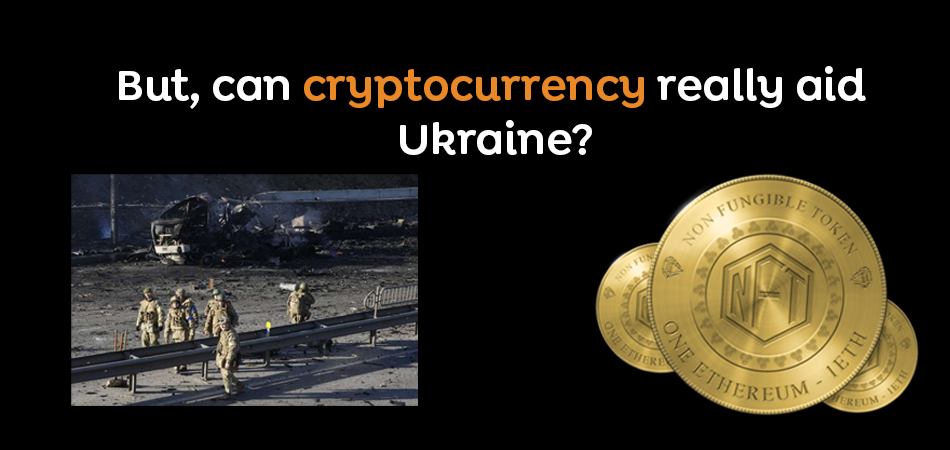
Thousands of cryptocurrency donations were made during the early stages of the conflict in the form of Ethereum, BTC, and stablecoins. Additionally, people were also donating Non-Fungible Tokens (NFTs) that were added to dedicated crypto donation wallets supporting Ukraine.
The founder of a public crypto platform mentioned that the collected cryptocurrencies are converted into fiat for purchasing food, war accessories, and other essentials.
Furthermore, Kristin Boggiano- the president of CrossTower mentioned that even if Russia tries to seize the banking system, and the scenario turns out to be similar to Afghanistan and the Taliban, people won’t be able to take out any money. Therefore, crypto would be the perfect option for the Ukrainian people.
One of the biggest advantages of crypto donations during the Russia-Ukraine war was blockchain transparency.
Unlike traditional fundraising systems, blockchain transactions are publicly visible. This meant donors could verify where their funds were going and track wallet activity in real time.
Because of this transparency:
The Russia-Ukraine conflict showed how blockchain could bring accountability and trust to international crisis funding.
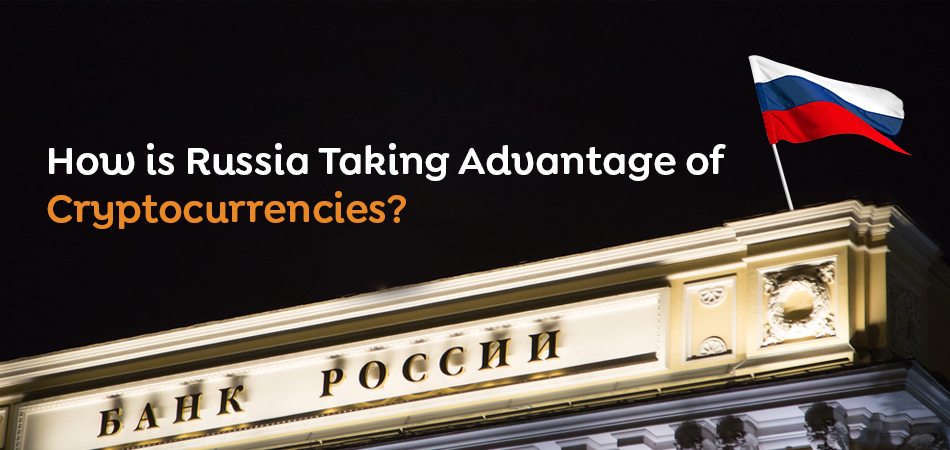
After numerous penalties placed by the US on financial institutions of Russia, speculation is that the country will have to rely on crypto for transactions.
According to one of the official documents, about 80% of the Russian banking assets are being targeted by the US. Additionally, prohibitions on debt and equity have been introduced against crucial private and state-owned institutions.
The European Union has also limited any permissions to two Russian banks, also holding any cashflows from Russia into the EU.
Not only the US and EU, but the United Kingdom has also frozen all its transactions with the Russian banks. They have also barred any Russian companies from raising funds from the UK marketplace. Additionally, people are prohibited from depositing more than $67.000 in UK banks.
Notably, the Russian government won’t be able to make use of crypto to reverse the sanctions; however, common citizens can easily utilize the same.
As per the global CEO of global crypto exchange CrossTower, cyber tracking is likely to be a part of the war, which is why crypto will be prohibited from being used as a war weapon.
Also, according to a Russia-based crypto expert, “Decentralized cryptocurrency and digital assets which can be used in all situations will help Russia in this war.”
Another interesting development during the conflict was the use of NFTs for fundraising.
Ukraine and several global crypto communities launched NFT campaigns to raise funds for the country. These digital assets often included:
NFT fundraising introduced a new digital model for humanitarian support, where art, technology, and activism merged together.
The Russia-Ukraine conflict changed how governments and organizations view digital currencies.
Some important lessons emerged from this global event.
The manner in which cryptocurrency is being used in Ukraine indicates the perks technology has got to offer. In fact, Russia’s Invasion is now being referred to as “the world’s first crypto war.”
The entire credit goes to crypto proponents who supported Ukraine and tried fitting crypto into the scenario.
Currently, there’s no knowledge and assumption about how crypto will impact international conflict or what conclusion it will derive; however, people must figure out accurate ways to utilize the same.
No matter whether crypto is good or bad during war times; it is efficiently offering people an opportunity to work outside a financial institution.
The Russia-Ukraine conflict marked a turning point in the perception of cryptocurrency.
What was once considered mostly an investment asset suddenly became a tool for humanitarian aid and emergency fundraising.
Since then, governments, financial institutions, and technology companies have started exploring how blockchain can support:
The role of cryptocurrency in the conflict proved that digital finance can extend far beyond trading and speculation.

With the influx of AI, the healthcare industry is going through a series of changes. Some of them affect cost and some benefits, but it is fair to say..


When was the last time you really stopped to appreciate just how handy it is to unlock your phone with just your face? We use facial recognition softw..



Write Us
sales@techugo.comOr fill this form