

 SA
SA  KW
KW  IE
IE AU
AU UAE
UAE UK
UK USA
USA  CA
CA DE
DE  QA
QA ZA
ZA  BH
BH NL
NL  MU
MU FR
FR [ LET’S TALK AI ]
X
Discover AI-
Powered Solutions
Get ready to explore cutting-edge AI technologies that can transform your workflow!



Get ready to explore cutting-edge AI technologies that can transform your workflow!


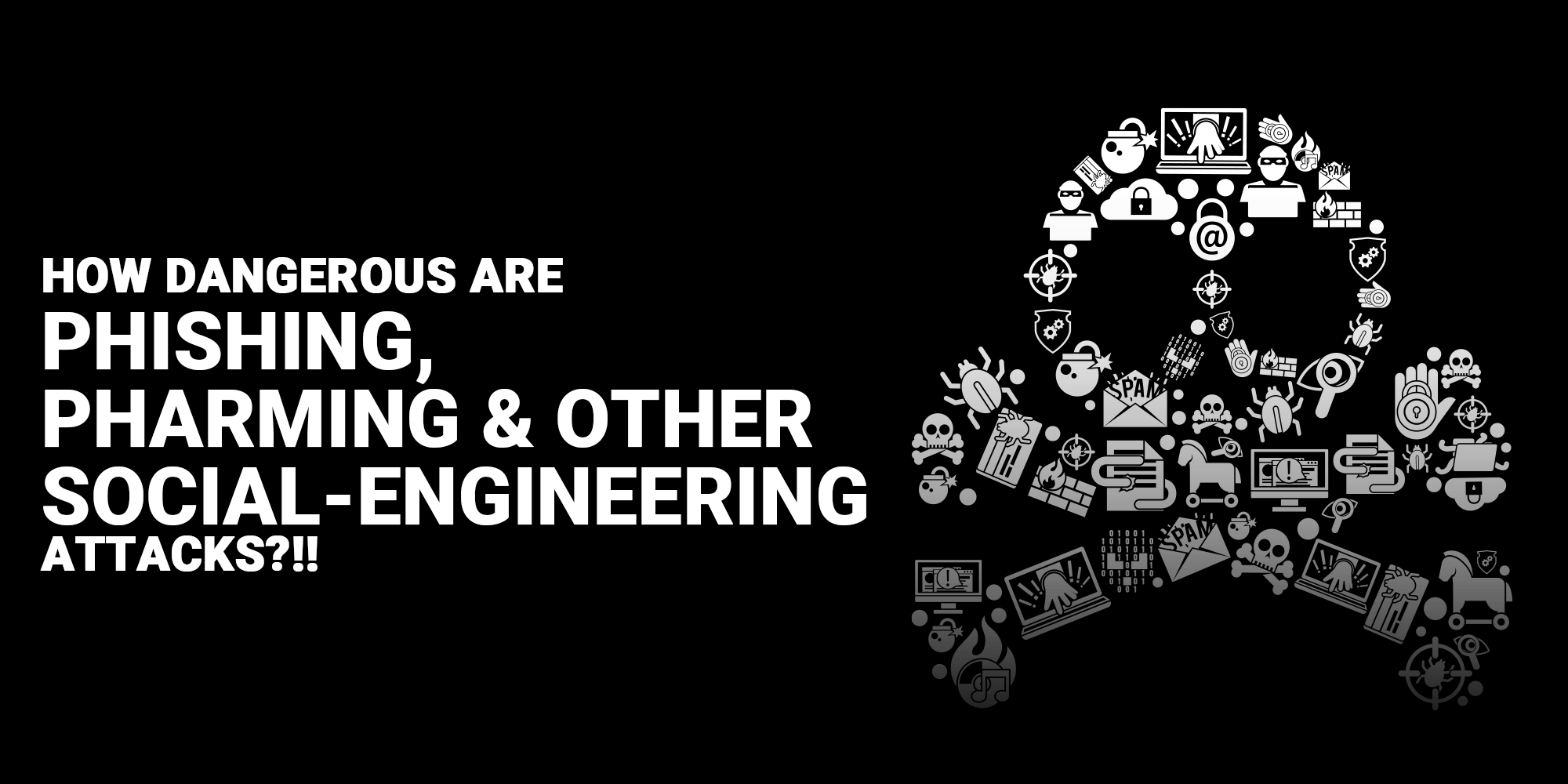
The advent of technological advancements has given rise to cybersecurity threats. These events have become so frequent that governments all across the globe are focusing on building a more secure and strengthened IT infrastructure.
We must not forget that technology isn’t evolving only for those who wish to do good but also for the notorious perpetrators online – everyone gets a piece from this cake. Attackers and hackers are now ready with better and more tactics; losing data and critical information can happen in a jiffy. It is scary, but it is true.
But it isn’t all dark and worrisome; WHY you might ask. The cybersecurity teams everywhere are coming up with stronger, improved tools and solutions to tackle this very problem. But that doesn’t mean that one should be careless about security and leave it to the security teams.
Organisations, companies, governments and business owners should also focus on their ways of communication about the related threats and possible risks.
This can help them not get trapped, especially in avoidable situations. However, the present times are challenging and we need to be more cautious and aware of what we engage with – as an individual or an organisation.
Let’s understand a few related concepts and how to identify them. Then, should we get to work – immediately.
Also Read – How US companies can manage cybersecurity during recession?
Cyberattacks are deliberate attempts by an organisation or individual or any such group, intending to breach the information system of other individuals and organisations.
These attacks are usually to seek some benefit from the victim. Many times, it is usually to extort money or to extract critical information.
Such attacks or threats are so frequent that they hit businesses every day, rather multiple times every day. Notorious elements are always on the lookout for potential victims and vulnerable enterprises.
Also Read: Enhancing Cybersecurity with Generative AI: Transforming Threat Detection & Defense
A network of devices that is infected with malicious software, like viruses, etc. is called a botnet. It is a collection of devices that are internet-connected, have a virus and allow hackers to control these devices.
To understand it better, you can see it in the light of Any Desk, where another person can do chores on your system – the main difference is, a botnet is dangerous and does not seek consent or permission.
To instigate attacks that include data theft, unauthorised access, credentials leaks, etc. cybercriminals use botnets. Such attacks are called botnet attacks. Usually, it is used for a DDoS (Distributed Denial of Service) attack.
It is crucial to differentiate between different types of IT threats and attacks. Following are some notoriously famous threats. So, let us learn about them.
This is the practice of sending fraudulent messages or emails to people in order to weed out critical information about them – personal details and sensitive data like credit/debit card numbers, etc.
Phishing attacks are one of the most common forms of social engineering attacks used today and are often designed to look like legitimate emails from banks, service providers, or trusted organisations.
It is a more advanced way of tricking users by making them enter a website. Pharming misdirects users to fake websites that appear to be official but are not.
Unlike phishing, which relies on user interaction through emails or messages, pharming attacks manipulate website traffic and redirect users without their knowledge, making them more difficult to detect.
Vishing is nothing else but phishing done through phone calls, voice messages, voice-mails, etc. These phone calls are made to make people share their personal details and information.
Hacking involves breaching networks and exploiting weaknesses in computer systems. There are three types of hackers – black hat, white hat and grey hat hackers.
Such an attack involves a person or program successfully identifying as another by falsifying data. Spoofing is done to gain an advantage over the victims and have access to their personal data.
It is the process of monitoring along with capturing all data packets that pass through a given network. This is also done to catch hold of sensitive information like passwords, pins, account information, etc.
It is exactly like the process of phishing in addition to targeting a few individuals – to access confidential information.
It refers to any malicious software, including virus, ransomware, spyware, worms, etc., that intend to breach a vulnerable network.
Here are some real-world examples of social engineering attacks:
– Fake banking emails asking users to reset passwords
– Fraudulent e-commerce websites designed to steal card details
– Phone calls pretending to be from technical support teams
– Messages posing as government authorities or service providers
These attacks continue to grow and are often combined with malware or data breach attempts to maximise damage.
Cyberattacks have been on the rise in recent years, especially from the past two years. The following are some of the reasons for the explosion of such activities:
Phishing, pharming, and other social engineering attacks are dangerous not just because they target systems, but because they exploit human behaviour and trust. Attackers use deception to get people to voluntarily reveal sensitive data — often without the victim realising it until it’s too late.
Phishing attempts are massive and rising. In 2024, security systems blocked nearly 900 million phishing attempts worldwide, which was a 26% increase over the previous year. This shows that fraudsters are launching far more phishing and scam campaigns than before.
In the first half of 2025 alone, analysts recorded over 1.13 million phishing attacks in a single quarter, the highest quarterly total in recent years, and this trend is continuing as attackers refine their methods.
Every single day, billions of phishing emails are sent globally, all designed to trick users into clicking malicious links or entering credentials on fake login sites.
These phishing attacks, along with other social engineering attacks like vishing (voice phishing), smishing (SMS phishing), and pharming, form the backbone of many modern cyber threats.
The consequences of these attacks are not abstract. They hit wallets and operations hard.
In 2024, scammers and cybercriminals stole an estimated $16.6 billion from victims globally, a significant jump from the year before.
Phishing and spoofing were among the top reported cybercrimes in that period.
The average cost to a business that suffers a phishing-related data breach, including detection, response, downtime, lost trust, and legal compliance, is around $4.8 million per incident.
This shows that even a single successful phishing attack can lead to significant financial losses, long recovery timelines, and serious operational disruption.
According to recent statistics, human error, including falling for social engineering and phishing scams, caused 68% of all data breaches.
Social engineering attacks are also overwhelmingly financially motivated, with nearly 89% of cases driven by profit-seeking fraud.
This means that even with good cyber security tools in place, people are still the weakest link because attackers specifically design phishing and pharming attacks to look trustworthy and familiar.
Credential theft. This is where attackers steal usernames, passwords, or other login details. It is now one of the most common outcomes of phishing and similar attacks. In early 2025, credential theft surged by 160%, accounting for roughly one in five major data breaches.
Once attackers obtain valid credentials, they can gain unauthorised access to business systems, customer data, cloud applications, or internal networks, making the breach far more dangerous than a simple failed login.
More sophisticated phishing attacks now use artificial intelligence to craft highly personalised fake emails that are hard to spot with traditional filters.
Human error remains the biggest contributor to breaches, even when security tools are strong.
Phishing opens the door not just to financial loss but to identity theft, credential theft, ransomware infections, and regulatory penalties.
That’s why phishing attacks, pharming attacks, and social engineering campaigns are not just nuisance threats. They are among the most dangerous cyber security threats organisations and individuals face today.
Also Read: Cybersecurity Asset Management: An Efficient Manner to Legitimize Your Security Team!
– Be aware of such happenings and spread the word further.
– Be wary of clicking on suspicious links.
– Always use strong passwords.
– Keep your software updated.
– Know that identity theft can happen anywhere and thus, be CAUTIOUS.
– Keep yourself updated about what to do in case a fraud happens – know what steps must be taken immediately.
– Enable multi-factor authentication (MFA) for email, banking, and business systems.
– Regularly verify website URLs before entering login credentials, especially for banking or payment pages (to avoid pharming attacks).
– Use anti-phishing and anti-malware security tools to detect social engineering threats early.
– Conduct basic cyber security awareness training for employees to reduce human error.
– Avoid sharing personal or financial information over calls or messages unless the source is fully verified.
– Monitor accounts and systems frequently for unusual activity or unauthorised access.
The inclusion and coordination of different digital ecosystems increase the vulnerability of computer systems and necessitate building a more robust, intact and impenetrable (to an extent) cybersecurity infrastructure. It is the need of the hour.
So, if you are thinking about IT solutions, smarter apps or anything else on similar lines – connect with us at Techugo today. Reach out to us for cyber solutions – to get stronger and better in the vulnerable digital domain.
For more such insightful pieces of information, keep following us.
Wrapping it up by hailing technology – stay creative, stay coherent and keep innovating.
With the influx of AI, the healthcare industry is going through a series of changes. Some of them affect cost and some benefits, but it is fair to say..

When was the last time you really stopped to appreciate just how handy it is to unlock your phone with just your face? We use facial recognition softw..


Write Us
sales@techugo.comOr fill this form