

 SA
SA
 KW
KW
 IE
IE AU
AU UAE
UAE UK
UK USA
USA
 CA
CA DE
DE
 QA
QA ZA
ZA
 BH
BH NL
NL
 MU
MU FR
FR















📌 Key Takeaways
-
- Cashback apps like Rakuten reward users for purchases while earning through affiliate partnerships in the background.
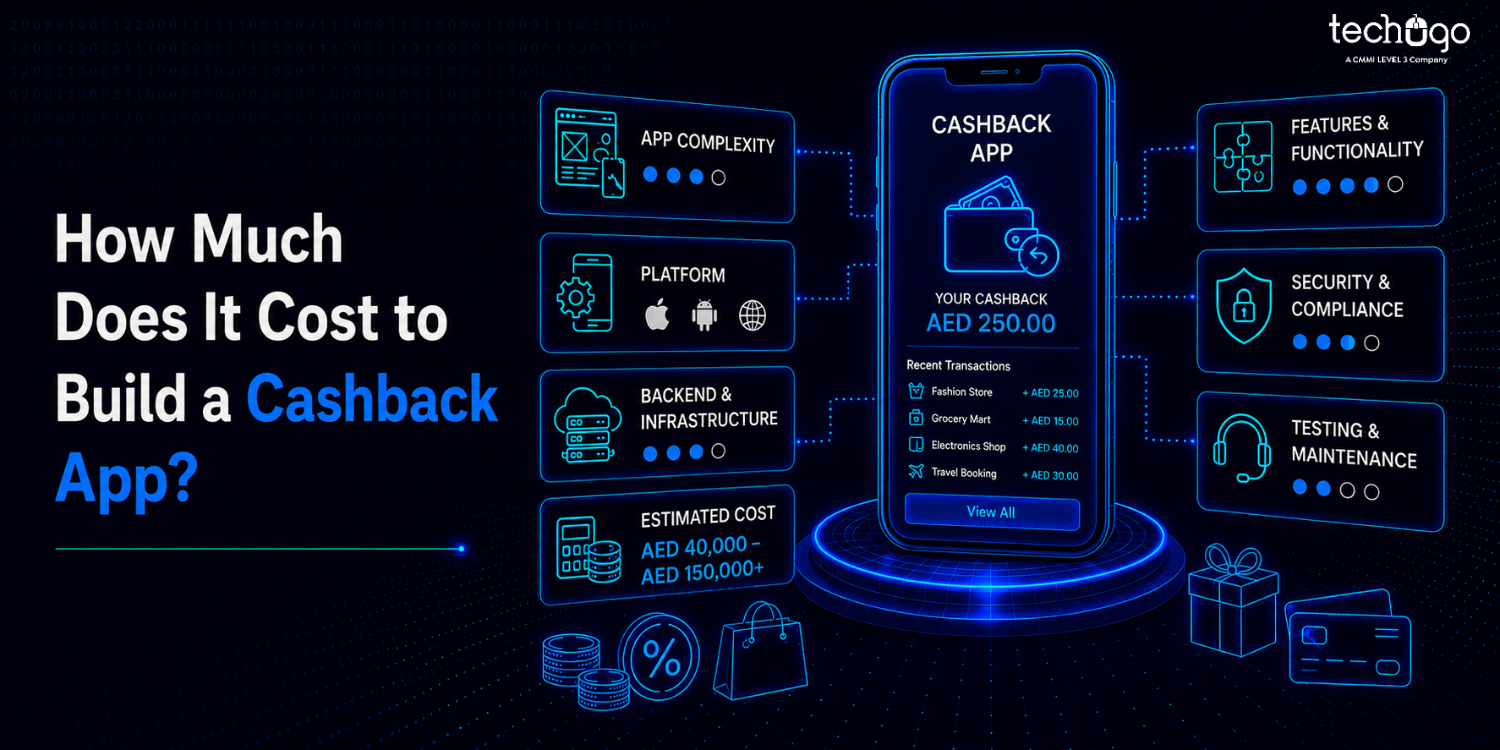
- The cost to build a cashback app usually ranges from $20,000 to $250,000+, based on features and complexity.
- Features like cashback tracking, payments, dashboards, and AI directly impact both cost and user experience.
- A strong MVP approach and the right development team help control cost and scale the app the right way.
Ever wish your shopping trips could pay you back? Well, that desire just became a billion-dollar industry.
The cashback apps are transforming how people shop. Since they can earn little by way of rewarding daily purchases, to reward loyalty to brands, the apps are rapidly becoming a favorite with both users and businesses. If you have been wondering, “How much does it cost to build an app like Rakuten?”, you’re in the right place.
Curious about the cost to build a cashback app? Cashback app development can be as inexpensive as $20,000 to develop or can soar well beyond $250,000, depending on the functionality you desire.
A simple MVP (minimum viable product)? Easily possible on the lower end. However, when you are dreaming big, and you have all the features you can dream of, the cost soars. The key? Being aware of the cost driver even before you launch.
Here’s the quick guide on building a cashback app – the features you need, how long it takes, what it costs, and the timeline for getting it done.
Cashback apps: How they work and why they matter
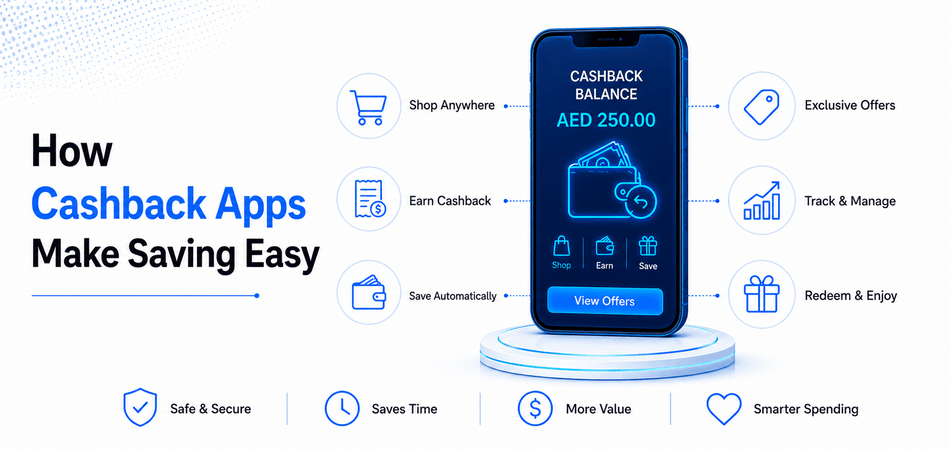
A cashback app basically allows users to receive a portion of their expenditure in the form of a refund whenever they are shopping via the application. To business, it is not merely customer perks, but it is a business tool to promote retention, repeat purchase, and revenue growth.
The industry leader is Rakuten, which provides its users with cashback at thousands of retailers and affiliate commissions. This is the foundation of a cashback app business model.
Key Points:
- Users: Get cashback on purchases.
- Businesses: Acquire dedicated customers and make sales.
- Revenue: Primarily affiliate commissions, in some cases, advertising.
Note: Cashback app features and cost will greatly depend on the functionality you wish to incorporate.
Why cashback apps matter for users and businesses
Do you feel like getting cash back is a small victory each time you go to the store? That is precisely the reason why cashback apps are important. They make mundane and ordinary purchases seem exciting: you shop what you have to, and the next moment, you find yourself earning some rewards, without even considering it.
But it’s not just about users. For businesses, these applications are gold. They bring people back and back, retain customers, and even provide brands with an idea of what people love to purchase. Essentially, a smart cashback application will make shopping rewarding to customers and profitable to companies, hence, it will be a win-win scenario.
Also Read: How Do Cashback Apps Make Money
Core features that affect app development cost
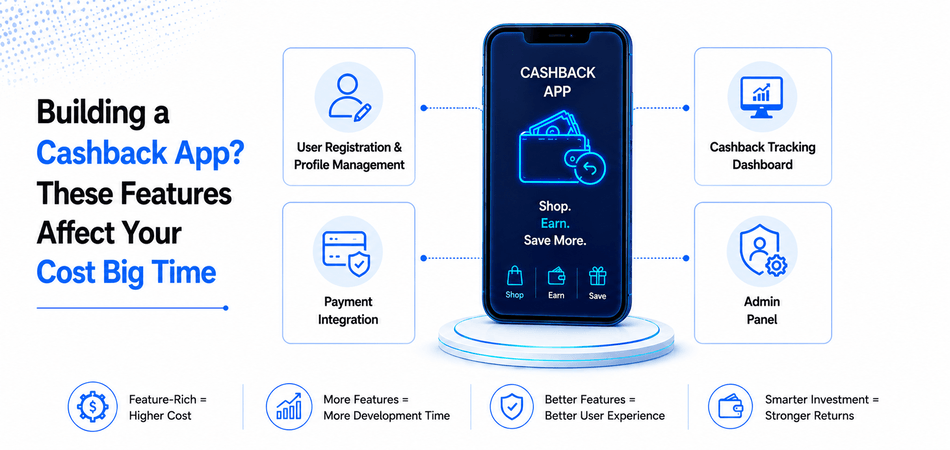
Your selection of features significantly influences the factors affecting app development cost. Here’s a breakdown:
User Registration & Profile Management
It should be easy and safe to get the users started. Social logins allow individuals to create an account within seconds, and the process is secured by authentication. An easy check-in process creates a sense of trust at the initial tap and makes the users revisit.
Cashback Tracking Dashboard
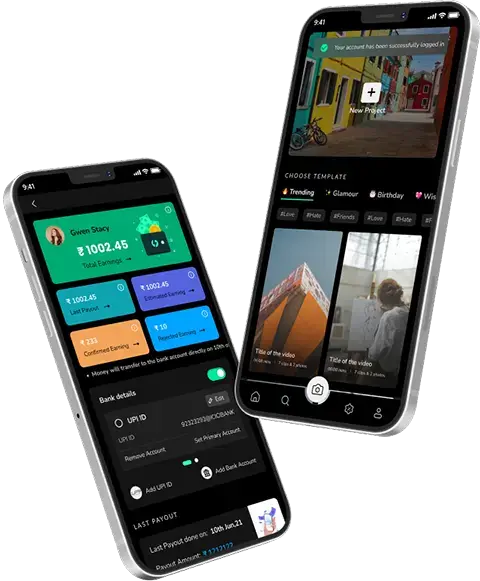
The app is centered around the cashback dashboard. Displaying the real-time earned and pending rewards encourages users to continue shopping. Feeling their money grow makes people feel they have accomplished something and will encourage them to use it again.
Payment Integration
It is important to pay users on a timely basis. Withdrawals are made easy through integrations such as PayPal, Stripe, or direct bank transfers. A stable payment system will make users satisfied, and they will be sure that the app works as promised.
Admin Panel
The control center of the app is the admin panel. Businesses are able to handle offers, track user activity, and payouts under a single roof. A properly structured backend will guarantee a positive organization of the operations, aid in streamlining campaigns, and retain customers happy.
Tip: Partnering with a mobile app development company in USA or Canada can help prioritize features and manage costs efficiently.
Budget insights: Entire cost breakdown of cashback apps
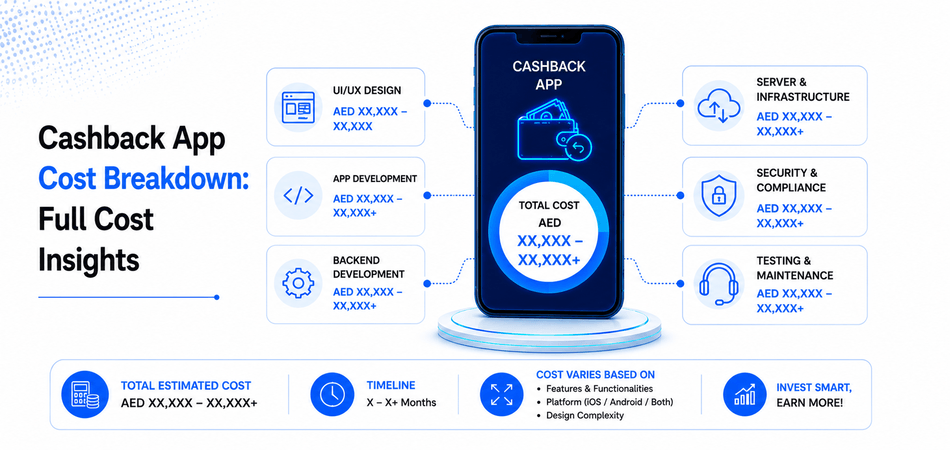
The total cost to build a cashback app depends on features, complexity, and the development team’s location. Here’s a breakdown:
| Development Module | Estimated Cost (USD) | Details |
| UI/UX Design | $5,000 – $25,000 | Clean, intuitive interfaces |
| Frontend Development | $12,000 – $60,000 | User interface screens and navigation |
| Backend Development | $20,000 – $80,000 | Cashback calculations, database, APIs |
| Payment Gateway Integration | $3,000 – $15,000 | Secure withdrawal process |
| QA & Testing | $5,000 – $20,000 | Bug-free, smooth performance |
| Third-Party Integrations | $2,000 – $10,000 | Notifications, analytics, affiliate APIs |
In total, the cost can range from $20,000 to $250,000, depending on platform, complexity, and features. For a detailed estimate, request a price quote for building an app like Rakuten.
Also Read: AI Development Cost in 2026: What Businesses Should Expect
Why your cashback app might cost more than you think
Want to know what influences your app budget?
Have a look at these factors that can increase or reduce the cost of the cashback app.
Platform choice: iOS, Android, or both?
Various factors could influence the final price significantly when planning a cashback app. One of the largest is platform choice. Developing an iOS or Android or both can alter the schedule and budget. It is more expensive to develop both platforms initially, but in this way, you will cover the largest possible audience.
Design that wows (Without breaking the bank)
The complexity of the design is also massive. A less complex interface is quicker and less expensive to develop, whereas more elaborate animations, fancy user interface components, and a highly refined experience are more costly and time-intensive. Good design does not just appear good, but also keeps the user interested and coming back.
Backend: The intelligence of your app
Another large driver is the backend features. The complexity is further complicated by multi-currency support, analytics dashboards, and complex cashback calculation logic. The more advanced the backend, the more man-hours and expertise will be demanded, which, of course, increases the costs.
Third-party APIs: Helpers that cost
Third-party APIs may be time-saving, as well as costly. Adding a payment gateway, AI-powered push notifications, or analytics can make your app run smoothly and scale, but each integration needs to be tested and can cost you a license fee.
Maintenance: Keep it running smooth
Lastly, there is maintenance, which is usually ignored. After your app is live, you need updates, bug fixes, and new features to ensure your app is running perfectly. Continuous maintenance keeps your users on a smooth sail, which has a direct influence on engagement and retention.
One thing you should know: always consider both the initial development cost and ongoing maintenance when planning a realistic budget. Skipping the maintenance part can make your app expensive and frustrating down the line.
Try these tips to reduce development costs
You can optimize costs without sacrificing quality:
- An MVP is one of the most effective methods to ensure that you keep your budget on track. Stick to the essential elements that enable your cashback app to work – consider cashback tracking, payment integration, and a user-friendly dashboard.
- This business model will allow you to go to market quickly, experiment with your business in the real world, and get some customer feedback, then invest in more capable features. You can also start small in order to prevent spending too much on what users may not necessarily require.
- The other important strategy is to focus on must-have features first. Advanced features, such as personalized recommendations that are run by AI, sophisticated analytics, or animations, can always be introduced later. Concentrating on what you need to provide to your users initially will save you time, money, and headaches. It is far simpler to climb up a notch at a time than attempt to fit everything into the initial attempt.
- It is also important to hire the right team. Expert developers and designers not only code at a faster rate, but they also commit fewer errors and have a vision of the problems even before they occur. It may be a little more expensive initially, but it will save you thousands of dollars in the revisions and bugs fixed in the future. Making an investment in a skilled workforce can pay off in much better ways than corner-cutting.
- Lastly, intelligently utilize third-party APIs. It is typically much cheaper and quicker to use established solutions to do payments and notifications, analytics, or even cashback calculations, rather than to do it directly. These integrations may enable your app to operate efficiently with the developmental expenses under control.
These strategies help manage your cost to build a cashback app while delivering a strong user experience.
Development timeline for Cashback Apps: How long does it really take
The process of creating a cashback app is not quick and easy, and being aware of the major steps will allow you to plan better, budget, and launch successfully.
It all begins with planning and requirements. This is where you specify the purpose of the app, audience, and features of the app. Your team lays out user experiences, functionality, and necessities, producing a roadmap of the app. This step is necessary, or you may end up wasting time, additional expenses, and misunderstandings in the future. This is a decisive step as it preconditions all the subsequent steps.
Well, here is how the process unfolds from start to finish:
Planning & Requirements
↓
Design & Prototyping
↓
Development & Integration
↓
Testing, Launch & Maintenance
Design and prototyping are the next steps after the plan is clear. Wireframes, mockups, and interactive prototypes: Designers make your app come to life. This demonstrates the way users will use the app and the functionality of each feature. Iterations are the norm here – early testing, feedback, refining the UI/UX can get a smooth, intuitive experience. Great design keeps the users interested, and they come back.
When the design is finished, it comes to the development and integration. Frontend developers write the screens that the users interface with, whereas backend developers work on the computation of cashback, databases, and APIs. In this stage, third-party integrations such as payment gateways, analytics, and AI-powered push notifications are also added. The tight coordination between the teams is necessary to make sure that all the parts of the app are highly compatible.
And at last, the app undergoes testing, launching, and maintenance. QA teams excavate every feature to the fullest extent in order to make it a bug-free experience. Once deployed, maintenance takes effect: frequent updates, bug fixes, and additional features make the app run perfectly. The success of an app is not a one-time event; the app keeps on developing depending on the feedback of the users.
Typical Timeline Table
Here’s how the overall timeline breaks down in a clear table, giving you a snapshot of how long each stage takes and what’s involved:
| Stage | Duration (Approx.) | Key Activities |
| Planning & Requirements | 2–4 weeks | User research, feature list, and requirement documentation |
| Design & Prototyping | 3–5 weeks | Wireframes, UI/UX design, interactive prototypes |
| Development & Integration | 8–16 weeks | Frontend, backend, API integrations, third-party tools |
| Testing, Launch & Maintenance | 2–4 weeks | QA, bug fixes, deployment, post-launch updates |
 If you are ready to bring your cashback app idea to life, get a price quote for building an app like Rakuten today.
Techugo: Your end-to-end mobile app development partner
Planning to create a cashback application that stands out in the market? Techugo can help.
Techugo is a mobile app development company with 10+ years of experience in web and mobile app development and specializes in creating apps that are user-friendly, scalable, and prepared to be used in the real world.
Our team handles all the UI/UX design, backend development, and third-party integrations so your users have a smooth and engaging experience and you have a robust and scalable platform. We make sure that all features work perfectly, whether it be cashback calculators, alerts about new deals, or analytics boards.
We have a proven background in secure and scalable technology, so that your cashback app can expand as the number of users increases without concern about performance or security concerns. On top of that, we have offices in India, Canada, USA, UAE, and the UK; therefore, you have the advantage of a global experience and local support, and updating, maintaining, and adding features are easy and reliable.
Why wait? Get in touch and start building your cashback app with Techugo.
FAQs
Q1: How much does it cost to build a cashback app like Rakuten?
Ans) The price is based on the feature and complexity of your app and the platforms you use. The minimum cost of an MVP might be in the range of $20,000, and a full-fledged, enterprise-level application may exceed $250,000. Budgeting can be contained in planning your budget and prioritizing features.
Q2: What features are essential in a cashback app?
Ans) Key attributes are the ability to register users, track cashback, pay, and a simplified dashboard. Additional functionalities such as AI-driven recommendations, referral programs, and push notifications can be implemented in the future as your application expands.
Q3: How long does it take to develop a cashback app?
Ans) The planning process usually consumes 2-4 weeks, the design process may consume 3-5 weeks, the development process may consume 8-16 weeks, and testing and launch may consume 2-4 weeks. Building or integrating across multiple platforms or complex features can increase the time frame.
Q4: Should I hire a mobile app development company in the USA or Canada?
Ans) To be honest, both regions have experienced developers. The decision to select a mobile app development company in Canada could be cost-effective, but at the same time, offer the best expertise. Your decision goes with the budget, communication inclinations, and time zone compatibility.

Get in touch
We'd love to hear from you.