

 SA
SA
 KW
KW
 IE
IE AU
AU UAE
UAE UK
UK USA
USA
 CA
CA DE
DE
 QA
QA ZA
ZA
 BH
BH NL
NL
 MU
MU FR
FR













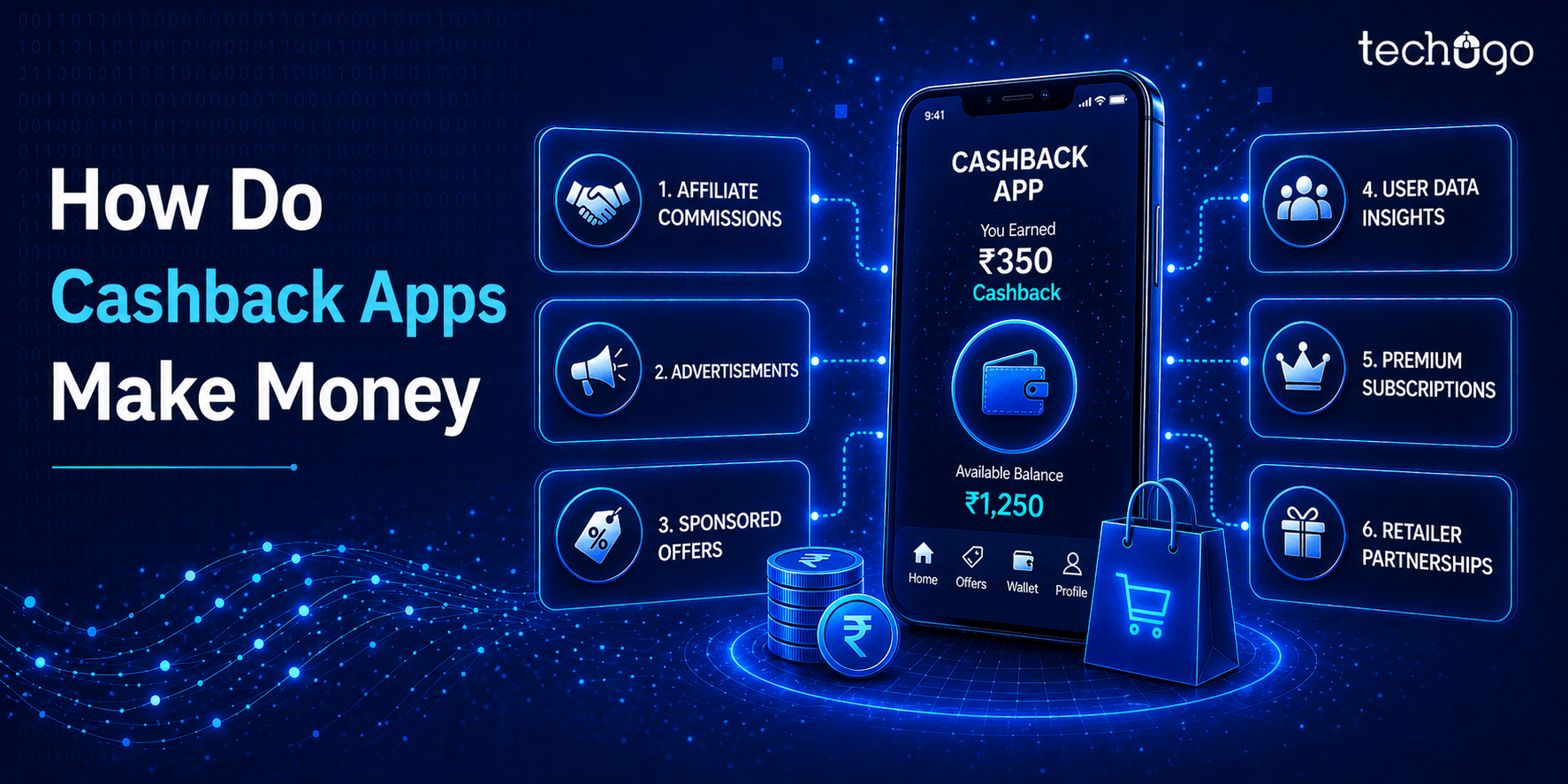


You buy something online… and then you get money back. Sounds too good to be true, right? But yes, this is true. But wait… If users are getting paid to shop, then where is the profit coming from?
Confused?
Cashback apps have quietly become a part of everyday spending. Users buy groceries, medicines, gadgets, etc and expect rewards on almost every purchase, and while it feels like free money, there’s actually a clever strategy behind the scenes.
So how do cashback apps make money and why are brands willing to give away a portion of their revenue?
To understand that, you first need to look at the cashback app business model and how it connects users, merchants, and platforms into one loop because the truth is, cashback apps are not losing money, rather, they’re earning it but in a different way.
Let’s understand what are cashback apps and how do they make money so you can see where the real profit lies.
What Are Cashback Apps?
Cashback apps are simple, but the idea behind them is quite clever.
In basic terms, cashback apps are mobile or web platforms that reward users by giving a small % of money back when they make a purchase. This could be shopping online, booking travel, paying bills, or even ordering food. This happens everytime they spend through the cashback app.
But it’s not just about giving money back… there’s a system running underneath.
Here’s how it usually works:
- You open a cashback app
- You choose a deal or store listed there
- You complete the purchase through the app
- After the transaction is confirmed, a portion of the amount is credited back to your account
This returned amount is called “cashback.”
Now it may look like the app is paying you from its own pocket but that’s not really true, and why anybody will pay from their pocket? In real, cash back apps act as a bridge between users and brands and they help businesses get more customers. In return, they earn a commission out of which a part is shared with you.
So when people ask how do cash back apps work, the answer is quite direct… they drive sales for brands, and reward users for it.
And this is exactly where the foundation of the cashback app business model begins.
How Do Cashback Apps Work?
We’ve understood what are cashback apps and their types. Now let’s understand how do cashback apps work in simple terms, so cashback apps follow a very straightforward flow.
→ You open the app and select an offer or brand
→ You make a purchase through the app’s link
→ The brand pays a commission to the app for bringing that customer
→ The app shares a part of that commission with you as cashback
So if you’re wondering how do cash back apps work, so it’s really a cycle of user → purchase → commission → reward, and this is exactly how cashback apps earn money while still giving a part of this money to users as a reward or cashback on every transaction.
What Are the Different Types of Cashback Apps?
There are mainly two types of cashback apps:
-
Card-Linked Cashback Apps
These connect directly to your debit or credit card. Cashback is tracked automatically when you shop at partner stores, without manually using the app.
-
App-Based Cashback Apps
You shop through the app or website, or click on deals before purchasing. The cashback is tracked through your account in the app.
Both types follow the same cashback app business model, but the difference is in how the user earns rewards and how the app tracks transactions.
Why Cashback Apps Are So Popular Today
Now we’ve understood what are cashback apps and how do they work… but why are they so popular?
Cashback apps didn’t just become popular randomly… the growth is backed by real numbers. And when you look at the data, the reason becomes very clear.
- Over 350 million users globally are actively using cashback apps
Cashback is a habit now and people are now conditioned to expect rewards whenever they shop online. So naturally more users keep joining these platforms.
- Around 53% of users prefer cashback as their top loyalty reward
This is important. Because cashback is simple. No points, no confusion, no complicated redemption. You spend money… you get money back. That clarity is what makes users stick to these apps.
- Users are 70% more likely to shop from brands offering cashback
Also cashback programs increase repeat purchases by 20%. So it’s not about saving money, rather, cashback actually changes buying behavior; users come back again and again which is exactly why brands love partnering with these apps.
- The cashback app market is expected to grow from $10.2 billion in 2024 to $22.7 billion by 2032
This growth clearly shows that cashback apps are becoming a core part of the digital economy.
- Cashback spending in India is growing at 13.4% CAGR
Loyalty-driven transactions are increasing rapidly across digital payments. India, in particular, is a big driver here. UPI, mobile wallets, and online shopping are rising and leading and cashback plays a key role in how users choose apps.
- 78% of users access cashback programs through mobile apps
Users want quick access, instant rewards, and a smooth experience—all from their phone.
How Do Cashback Apps Make Money?
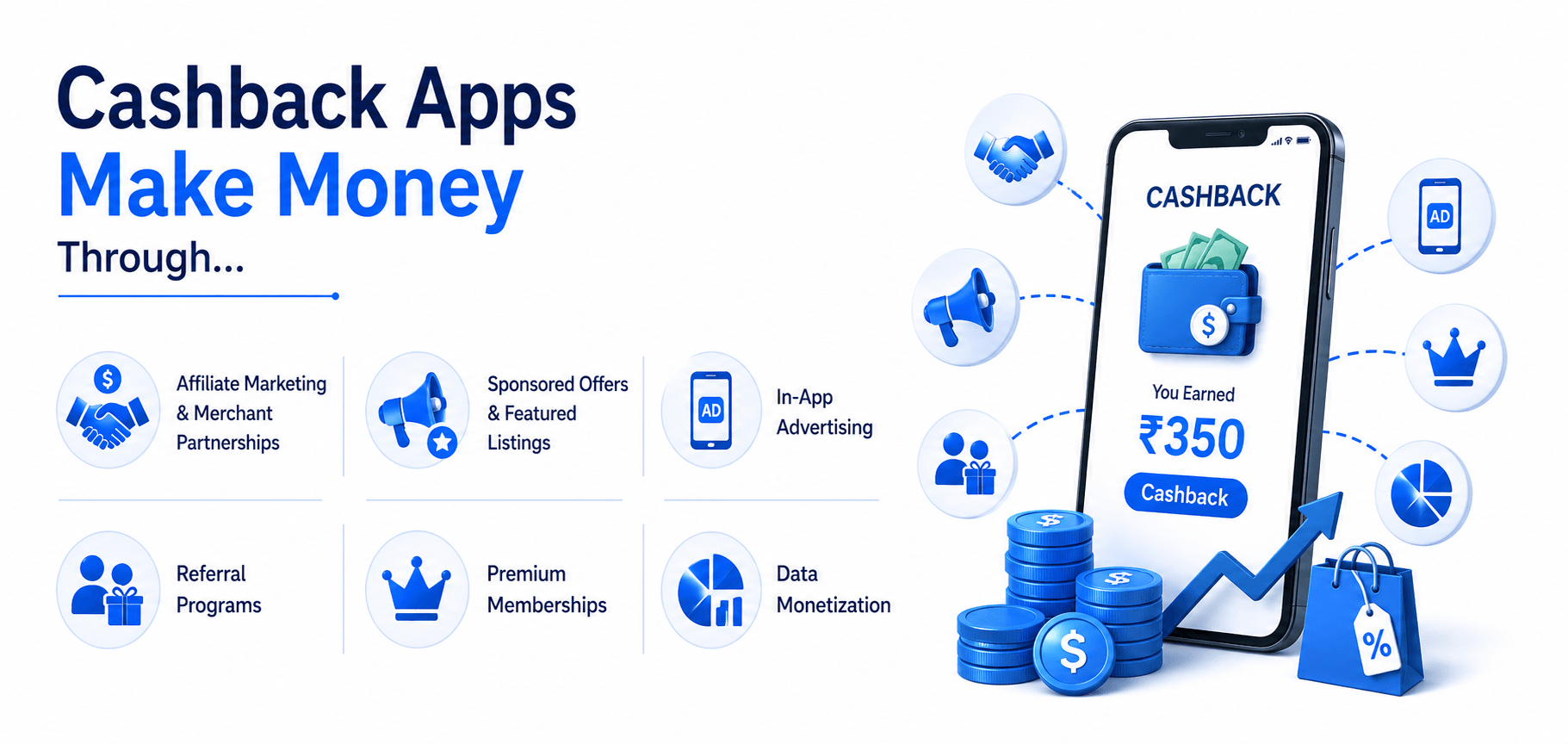
Here the top ways through which cashback apps make money –
1) Affiliate Marketing & Merchant Partnerships
The biggest chunk of revenue for cashback apps comes from affiliate marketing and merchant partnerships but it’s not as complicated as it sounds. Brands, of course, want more customers, and cashback apps bring those customers to brands. In return, the brand pays a commission for every sale generated to the cashback app.
This usually happens through special tracking links or affiliate networks, where each purchase made via the app is recorded and attributed to it, so that the commission can be calculated accurately. The cashback app keeps a part of that commission and some of it goes back to you or users as cashback.
It’s a win-win-win for the trio of them because the user saves money, the brand gets sales, and the app earns revenue, and this is why this model has been so successful for a long time.
- The best example is Rakuten (formerly Ebates)- when you shop through Rakuten at a partner store like Walmart or Best Buy, Rakuten earns a commission from the retailer. Part of that commission is credited back to you which is your cashback. Over time, Rakuten has paid out over $1 billion to its users but it’s still making money from millions of transactions so you can see how the system works.
Apps like Rakuten, TopCashback, and Swagbucks are all built on this model and it’s why they’ve been able to scale worldwide, keep users engaged, and stay profitable. It’s clever, really.
2) Sponsored Offers & Featured Listings
Another way cashback apps make money is through sponsored offers and featured listings and this is where brands really pay to stand out but it is more than just paying for visibility. When a store wants to promote a deal, they pay to the app so that their offer appears at the top of the list or gets highlighted in a special section. Since users often click on the first deals they see, this method works very well.
So this way, the app earns revenue directly from the brand and the user still gets cashback which makes it a smart system for both sides. It’s one of the key parts of the cashback apps revenue model because without these sponsored deals, apps would rely only on affiliate commissions which can limit earnings.
- Take TopCashback as an example which is a popular app worldwide. TopCashback allows brands like Apple or Nike to feature their deals prominently, and when users shop via these highlighted offers, the brands pay a fee to TopCashback for the exposure, and of course, a portion of this fee is passed back to users as cashback. That’s how the app earns extra revenue on top of regular affiliate commissions.
This method works really well because it’s both effective for merchants and keeps users engaged and therefore it’s become a standard strategy in the cashback app business model.
3) In-App Advertising
Cashback apps also make money through in-app advertising and this one is pretty simple but it’s often overlooked. Besides earning from commissions or sponsored deals, apps can show ads inside their platform and these could be banner ads, pop-ups, or even native ads that feel part of the app. And every time when a user clicks on an ad, or sometimes just sees it, the app earns money – simple.
It’s clever because it doesn’t affect the cashback you get but it adds an extra revenue layer for the app so that the business stays profitable. This is a key part of the cashback apps revenue model because even when affiliate sales slow down, advertising revenue keeps coming in.
- Let’s look at Swagbucks which is one of the most popular cashback and reward apps worldwide. It shows users targeted ads for products and services when users browse offers or complete tasks, and then these ads generate revenue for the app without reducing the cashback that users earn. Because of this, Swagbucks can keep offering rewards while making money from multiple streams which is why in-app advertising has been such a strong part of the overall cashback app business model.
4) Referral Programs
Another way cashback apps make money is through referral programs… and honestly, this one works like a charm because it turns users into promoters but in a very subtle way. The app encourages you to invite your friends and when your friends sign up and make their first purchase, both you and your friend get rewards. Simultaneously the app also gets benefit because it’s gaining new app users without spending heavily on marketing.
So, it’s not just about giving cashback for purchases. Referral programs are a clever growth tactic that reduces customer acquisition costs and increases engagement. This has become an important part of the cashback apps revenue model, because the more users join, the more transactions happen, and the more commissions the app earns.
- Rakuten again provides a great example here. They offer bonuses when you refer a friend – both of you get cashback after your friend makes a purchase. For Rakuten, each referred user generates affiliate revenue from their shopping which means the referral program is both a user incentive and a revenue driver.
It’s simple, effective, and really shows how the cashback app business model leverages users themselves to grow profits while keeping everyone happy.
5) Premium Memberships
Cashback apps also make money through premium memberships, and this method is very interesting because it gives users extra perks… but also adds a reliable revenue stream for the app. If you’ve ever noticed, some apps offer a free version with standard cashback and then they offer a paid version where users can earn higher cashback rates, get early access to special deals, or unlock exclusive offers.
So, it’s a win-win. You get better rewards if you pay a small fee, and the app earns predictable revenue every month from subscribers. This is an important part of the cashback apps revenue model, because it doesn’t depend on affiliate commissions or ad clicks—it’s direct income for the platform.
- TopCashback offers a “Plus Membership” in some regions. Users who subscribe pay a small monthly fee and, in return, they get higher cashback rates on selected offers. For the app, it’s a steady income, and for users, it’s extra savings so everyone benefits.
Premium memberships are becoming more common because they balance user rewards with app profitability, therefore, are a key element in the cashback app business model.
6) Data Monetization
This might sound tricky but actually it is not, rather it’s one of the powerful ways through which cashback apps make money. Reason? it doesn’t involve charging users directly.
You see, every time you shop through a cashback app, the platform collects anonymous data on your spending habits, preferences, and favorite stores, and you know what… brands and marketers literally pay to the app to get this insight so that they can create better-targeted offers and promotions. You may think it’s useless but it is quite helpful for them to reach their potential customers.
So while you’re earning cashback on your purchases, the app is also turning the shopping data into revenue which adds an extra layer to the cashback apps revenue model. It’s one of those subtle ways that apps stay profitable, even when commissions or ad revenue fluctuate.
- Swagbucks and other apps analyze user behavior to understand shopping trends, product popularity, and engagement patterns. They then share this insight with partner brands (in aggregated and anonymous form) for marketing purposes. This allows the app to make money without affecting the cashback you earn.
Data monetization has been an essential part of the cashback app business model, and as more users shop online, the value of these insights keeps growing. It is a smart as well as long-term revenue strategy.
Cashback App Business Model Explained
The cashback app business model might look simple from the outside, but when you break it down, it’s actually a well-oiled system that connects users, merchants, and apps in a continuous loop. And understanding it helps answer the big question: how do cashback apps make money.
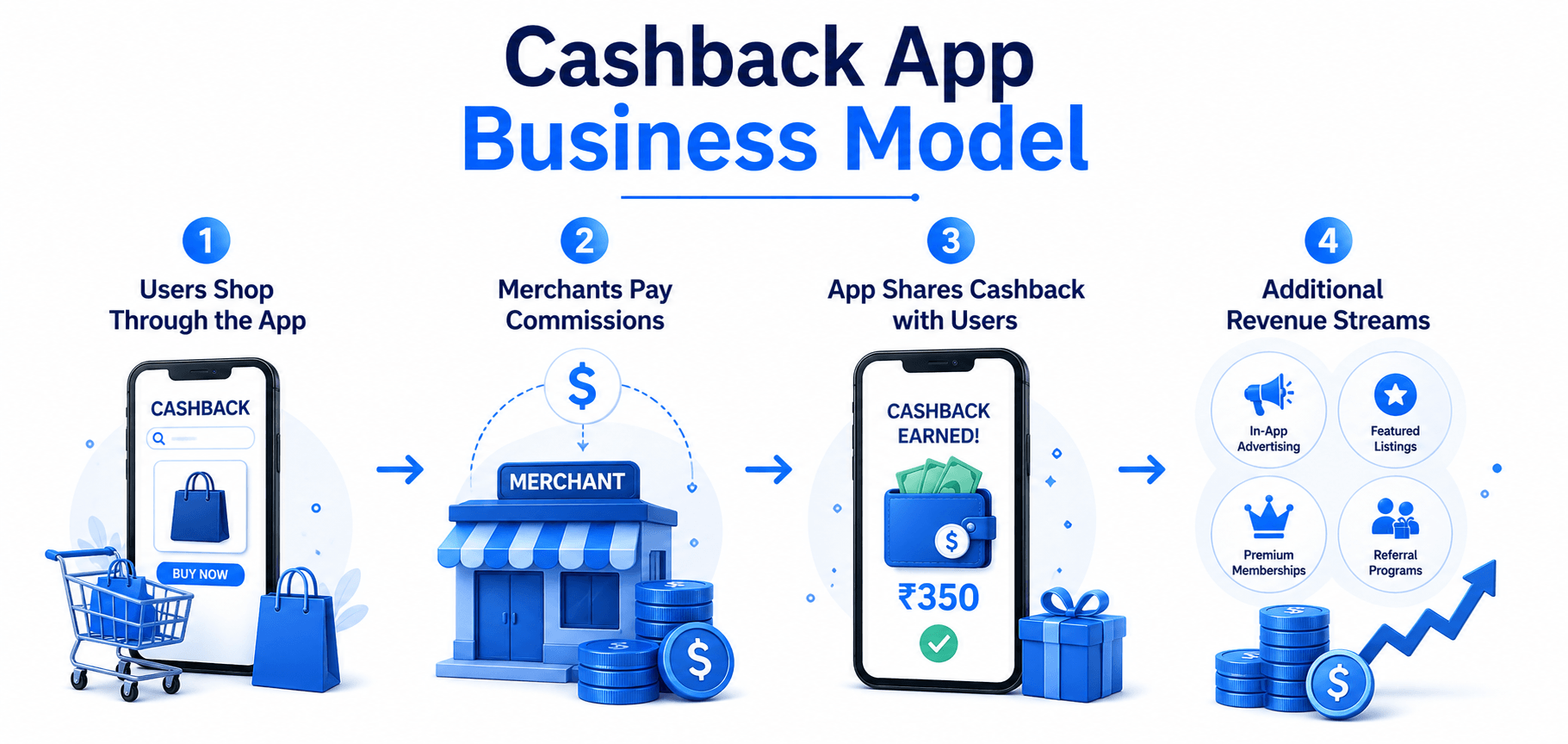
At its core, the model works like this:
-
Users Shop Through the App
You choose a store or offer inside the app and make a purchase. It could be online, in-store, or even through card-linked programs.
-
Merchants Pay Commissions
The store or brand pays the app a commission for bringing a customer. This can be a percentage of the purchase or a fixed fee.
-
App Shares Cashback with Users
A portion of that commission is given back to you, the user, as cashback. This keeps users engaged and encourages repeat purchases.
-
Additional Revenue Streams
Apps also earn from sponsored offers, in-app advertising, premium memberships, referral programs, and even aggregated data insights.
So basically, the cashback apps revenue model is all about creating value for each participant: users save money, merchants get more sales, and apps earn revenue. Because of this, cashback platforms like Rakuten, TopCashback, and Swagbucks have been able to scale globally while staying profitable.
You can think of it as a cycle, like – users shop, apps earn, users get rewards, and the loop continues. Simple! But smart.
Are Cashback Apps Profitable?
The most curious question probably – are cashback apps profitable?
And honestly, the answer is… yes, but it’s not as straightforward as you might think.
Let’s not bias because profitability depends on scale, user engagement, and smart monetization also.
You see, cashback apps give users a portion of the commission they earn from merchants. So, at first glance, it might look like the app is losing money but that’s not the case because the app combines multiple revenue streams as mentioned above so it can stay profitable while keeping users happy.
It was never just about the cashback itself. Apps like Rakuten and TopCashback have millions of active users and the sheer volume of transactions ensures that the platform earns more than it gives away. So even if individual users get rewards, the overall revenue exceeds the payouts and the business thrives.
Profitability also depends on user retention and the frequency of transactions because…
- the more users shop,
- the more commissions the app earns, and
- the more profitable it becomes.
Therefore a well-managed cashback app with strong partnerships, high engagement, and multiple revenue streams can definitely be very profitable. It is basically a cycle that works and makes profit ONLY when executed WELL.
Key Features Required to Build a Cashback App
- User Registration & Profile – Easy signup, social login, and secure account management
- Offer & Deal Listings – Display ongoing cashback offers and featured deals
- Cashback Tracking – Real-time tracking of rewards earned and redeemed
- Payment & Wallet Integration – Secure payments, card linking, and wallet management
- Push Notifications – Alerts for new offers, cashback updates, and reminders
- Referral System – Invite friends and earn bonus rewards
- Premium Membership Options – Higher cashback rates and exclusive offers
- In-App Advertising – Display targeted ads without affecting user experience
- Merchant & Partner Management – Easy integration for merchants and tracking commissions
- Analytics & Dashboard – Insights for user behavior, offer performance, and revenue tracking
These features form the backbone of a cashback app business model and are essential for both user engagement and monetization.
Cost to Build a Cashback App
The cost of developing a cashback app can vary widely depending on features, platform, and complexity. Here’s a simple breakdown:
| Version | Estimated Cost (USD) | Features Included |
| Basic / MVP | $15,000 – $30,000 | Core features: user registration, offer listings, cashback tracking, wallet integration, basic notifications. Suitable to test market and validate idea. |
| Mid-Level | $30,000 – $60,000 | Adds premium membership, referral programs, in-app advertising, analytics dashboard, improved UI/UX. Ideal for growing user base. |
| Advanced / Full-Scale | $60,000+ | Includes AI-powered personalization, advanced analytics, multiple payment gateways, card-linked cashback, cross-platform development, highly secure infrastructure. Designed for large-scale operations and global reach. |
The actual cost depends on the platform (iOS, Android, or both), integrations, and whether you choose a cashback mobile app development company in India like Techugo, which can optimize development costs while ensuring a robust, scalable app.
How to Start a Cashback App Business
Starting a cashback app business can seem overwhelming at first, but if you take it step by step, it’s actually doable—and the key is to focus on users, strategy, and revenue streams from the very beginning because that’s what makes your app profitable in the long run.
Here’s a roadmap, but also a bit of a mix because things rarely go straight:
1. Research the Market & Competitors
Look around, see what existing cashback apps are doing, and notice what users like or don’t like. Apps like Rakuten, TopCashback, or PerkPay were able to scale because they understood the gaps, and you can learn from that too.
2. Define Your Business Model
Decide how your app will actually earn money. Will it focus on affiliate marketing, sponsored offers, premium memberships, or maybe all of them? This step is important because it shapes your cashback apps revenue model, and without a clear plan, the app may struggle to generate profit.
3. Plan Key Features
You need the essentials first: cashback tracking, offer listings, wallet integration, referral programs, notifications, and analytics. And yes, you can add more later, but these are the basics to get your MVP going.
4. Partner with Merchants & Brands
Build relationships with retailers and brands, because they pay commissions or sponsor deals, and that’s what keeps the app earning while giving users rewards. The bigger your merchant network, the more attractive your app is to users.
5. Choose the Right Development Partner
Hiring a cashback mobile app development company in India like Techugo is smart, because they know how to build scalable, secure, and user-friendly apps. And since they worked on PerkPay, they understand real-world challenges of fintech and reward-based systems.
6. Launch, Test & Iterate
Start small with an MVP, gather feedback from users, track engagement, tweak, improve… repeat. Apps like Rakuten didn’t get huge overnight. They grew by learning what users liked and what they ignored.
7. Promote & Retain Users
Use referral programs, push notifications, social media, and more to attract users, and then keep them engaged. Because more transactions mean more commissions, which means more revenue for your cashback app business model, and that’s how the cycle continues.
How Techugo Can Help Build a Cashback App
If you’re thinking about building a cashback platform, and wondering who could actually deliver it end to end – Techugo is a strong choice and that becomes even clearer when you look at a real app they’ve worked on like PerkPay.
👉Take a look at PerkPay’s Case Study
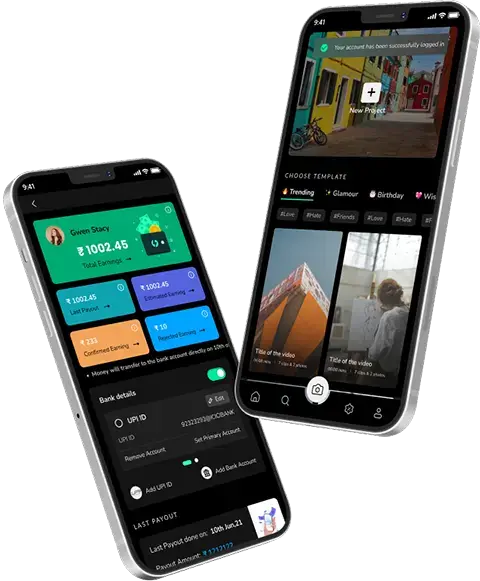
PerkPay is a live rewards and cashback‑style app that helps users find exclusive offers, make secure payments, track rewards, and earn perks every time they shop. Users link their cards, browse exclusive deals, and get cashback or perks credited instantly.
PerkPay is a functioning rewards platform that aligns closely with the core idea of how do cashback apps make money and how users expect cashback‑centric products to behave.
That means the team that helped build something like this understands the nuances of the cashback app business model, real‑time reward tracking, secure payments, merchant integrations, and user‑centric UX which are core to build any profitable cashback platform.
Techugo, as a cashback mobile app development company, brings a few clear strengths to the table:
- They’ve delivered hundreds of apps across industries, including fintech‑related solutions that handle secure payments and rewards logic.
- Their portfolio shows they can build scalable, user‑friendly products that work in real environments (not just prototypes).
- They know how to integrate key features like secure transaction flows, real‑time tracking, and personalized offers.
Beyond this, Techugo’s experience in fintech app development services also means your platform can be smarter, more personalized, and more efficient.
👉Living example is BajajFinserv – Forbes Asia’s Fab 50-listed finance giant.
So if what you want is a team that understands both the technical side and the business logic behind successful cashback apps, Techugo fits well, not because of fancy words or hype, but because they’ve done it in real products that users actually engage with.
Let’s not wait anymore, and connect on a quick call to clear all your doubts.
FAQs
Q. How do cashback apps earn money if they give money to users?
Cashback apps earn through multiple streams like affiliate marketing, merchant partnerships, sponsored offers, in-app ads, premium memberships, and referral programs. Users get a part of the revenue, while the app keeps the rest. This is how the cashback apps revenue model stays profitable.
Q. How much does it cost to build a cashback app like Rakuten or PerkPay?
Costs depend on features and complexity. A basic MVP can cost $15,000–$30,000, a mid-level app $30,000–$60,000, and an advanced app $60,000+. Hiring a cashback mobile app development company in India like Techugo can ensure a secure, scalable, and user-friendly platform at optimized costs.
Q. What are the different types of cashback apps, like card-linked vs app-based cashback?
Card-linked cashback apps connect to your debit or credit card and track rewards automatically. App-based cashback apps require you to shop through the app or website. Both follow the cashback app business model, but the tracking and earning process differs.

Get in touch
We'd love to hear from you.