

 SA
SA
 KW
KW
 IE
IE AU
AU UAE
UAE UK
UK USA
USA
 CA
CA DE
DE
 QA
QA ZA
ZA
 BH
BH NL
NL
 MU
MU FR
FR














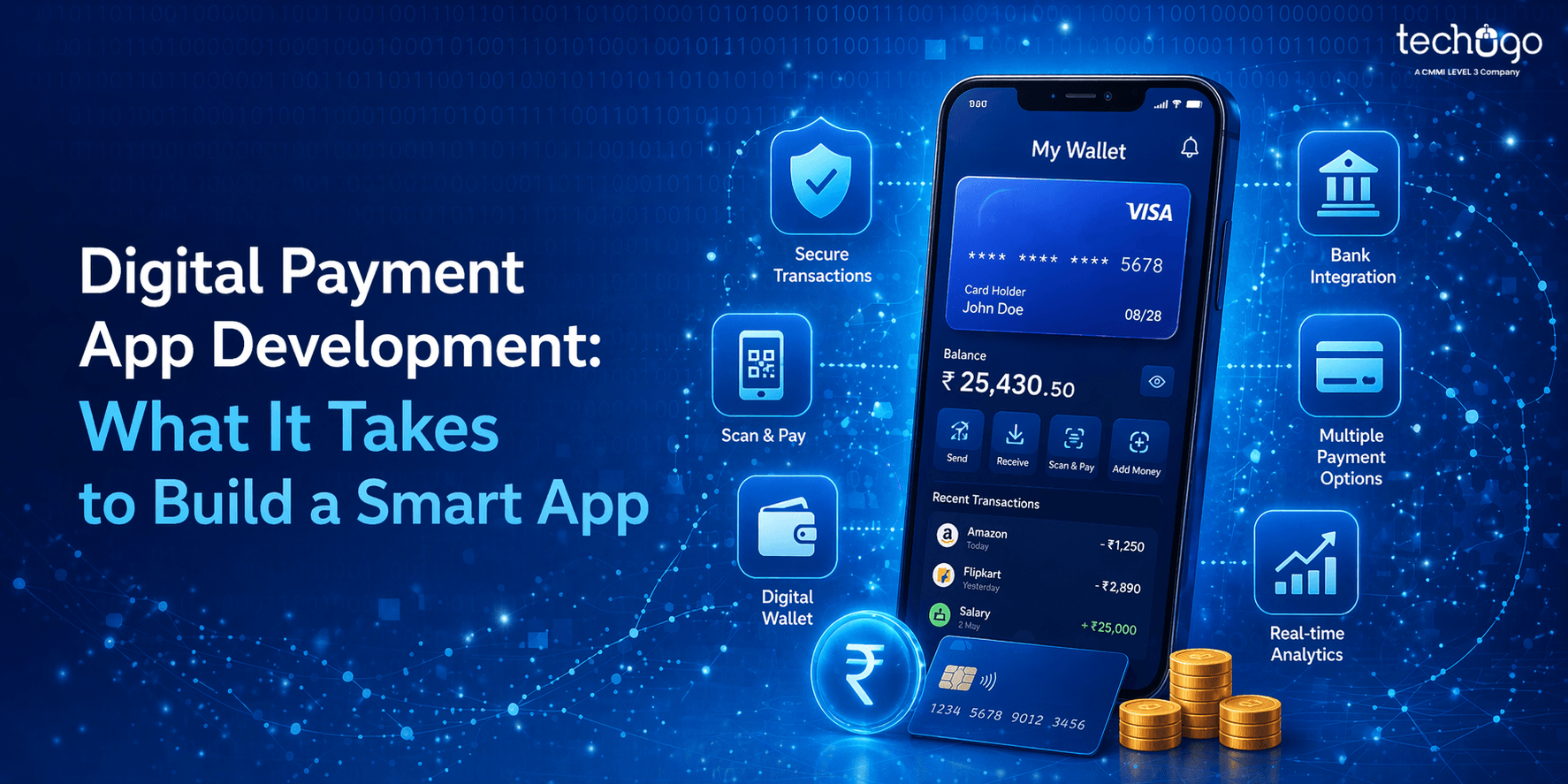


The way we handle money has changed completely. And there’s no going back.
Did you ever think about how money hardly feels like money anymore? You tap your phone. You scan a QR. You send money in seconds. No cash, no waiting, no second thoughts.
And honestly? That’s exactly where the world is heading.
Behind this smooth, almost invisible experience is something powerful: payment app development. In 2026, it’s not just about building an app. It’s about creating something that people trust with their money.
Just think about the last time you used cash. Not yesterday. Not even last week. It’s probably been a while.
That’s because payments today don’t feel like a “process” anymore. They feel instant, invisible, almost effortless. You tap your phone, scan a code, or send money in seconds, and it’s done before you even think about it. That seamless experience didn’t just happen. It’s the result of smart payment app development, where every interaction is designed to remove friction and build trust at the same time.
In this guide, we will not present difficult technology to you.
We are going to simplify it: what do you put into an app payment, what functionality is important, how security functions, and how you create one step by step.
Let’s get into it…
What is Digital Payment App Development?
Digital Payment App Development
What It Is & Types Explained
Let’s keep this simple. Payment app development is the process of building mobile applications that allow users to send, receive, or manage money digitally.
However, there is more to that mere definition. The strong aspect of these apps is the level of their integration into daily life. It may be the separation of a check, the purchase of groceries, the purchase of tickets, or subscriptions, but no matter what, payment apps are silently waiting in the background to make everything easier.
That’s the real impact of digital payment app development: it eliminates effort in the financial interaction.
Types of Digital Payment Apps You See Everywhere
Not every payment app is designed in a similar manner. Others are used in fast transfers, whereas others deal with complicated financial systems.
Let’s break them down in a way that actually makes sense.
- Peer-to-Peer (P2P) Apps
These are your everyday apps. You send money to friends, split bills, or pay rent. Simple, fast, no drama. - Mobile Wallets
These store your money digitally. You don’t need cash or even your card. Just your phone. - Banking Apps
Full control. Transfers, savings, investments, all in one place. - Buy Now, Pay Later (BNPL)
Buy now. Pay later. Sounds tempting, right? That’s why it’s growing fast. - Crypto & Blockchain-Based Apps
Still evolving, but they’re changing how people think about money and ownership.
All of them have one goal: to make transactions feel effortless. And in 2026, effortless wins.
The Features of Payment Apps in 2026
Users today don’t consciously think about features. They just expect things to work. That’s what makes the features of payment apps in 2026 so important.
The first interaction decides everything. If users feel confused or slowed down during sign-up, they are already halfway out. That is why onboarding in modern payment apps needs to feel effortless, even when KYC is involved. The process should be quick, intuitive, and clearly guided so users don’t feel like they’re filling out endless forms.
Here are the features that every modern payment app needs:
1. Instant Money Transfers
Speed is no longer a feature; it is a requirement. People do not want to see processing/pending when sending money. They want it to be instantly delivered, once again and again. It is considered to be one of the most essential characteristics of payment applications in 2026, as even the slightest delay can cast doubts. Regardless of making a payment or splitting a bill, the experience must be made to feel immediate and trustworthy. Users never question when transfers are quick and reliable; they simply have faith in the app to perform.
2. QR Code Payments
QR payments are now customary. No more people want to input the details by hand, they just want to scan and pay for a few seconds. This is what makes this feature so powerful; its simplicity. However, it is not only about possessing QR functionality, but also about ensuring that it functions correctly each time. And no mistakes, no time wastage, no misunderstanding. QR payments nowadays are an inherent aspect of digital payment app development; they eliminate any effort altogether and make transactions almost invisible.
3. Live-Time Notifications and Tracking of Transactions
Users want to feel in control of their money at all times. This is the reason why real-time notices and easy tracking of transactions are crucial. All payments, all updates, all changes must be immediately visible. No conjecturing, no doubt. A properly implemented transaction history allows users to know precisely where they are spending their money and notifications keep users informed without bombarding them. One of the characteristics of payment apps in 2026, the feature contributes significantly to confidence-building since transparency will always result in trust.
4. Built-In Security in Mobile Payment Applications
Nothing matters if users don’t feel safe. This is why mobile payment application security is entrenched in every aspect of the experience. It is never something the users can physically see, but they know it is always at work. Biometric authentication eliminates the use of passwords, sensitive information is safeguarded by encryption, and transactions are tracked by AI to identify suspicious activity before it can become an issue. The current payment applications do not respond to danger, but block it. And that is what makes users confident enough to use them on a daily basis.
All of this ties back to one thing: trust. Because at the end of the day, a payment app isn’t just about sending money. It’s about making users feel safe every single time they tap “pay.”
How to Create a Payment App Step by Step Without Overcomplicating the Process
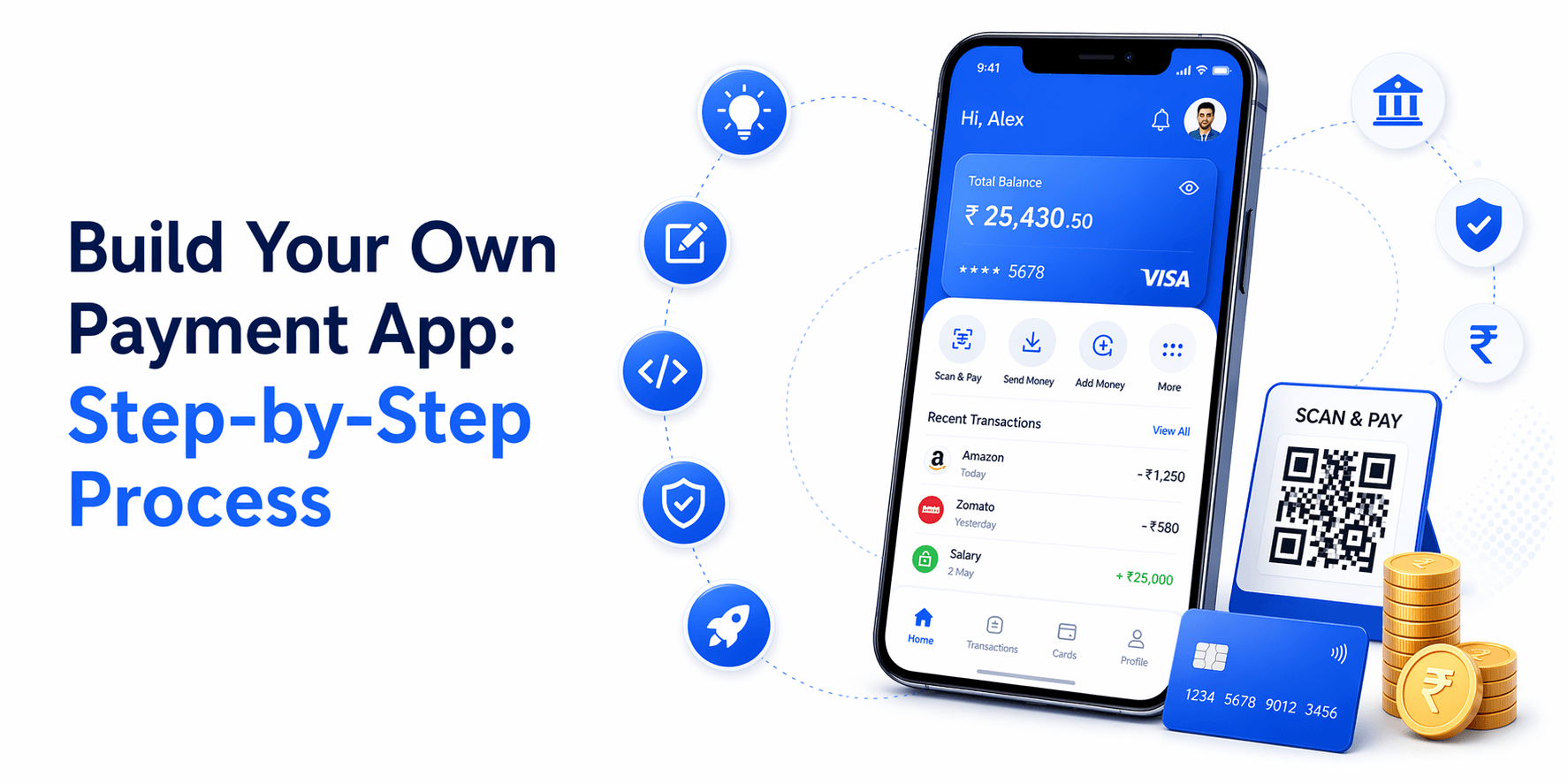
If you’re wondering how to create a payment app step by step, the answer is simpler than most people make it sound.
Here are the steps involved in the creation of a payment app in 2026:
Step 1. Start with a Clear Idea
Before anything else, you need clarity. What do you mean by the payment app solving? Is it quicker transfers, enhanced security, simpler bill splitting, or a niche, such as subscriptions or international payments? Otherwise, you will have to clean everything up later. An excellent concept helps to keep your app on track and avoid excessive features. Consider it in the following way: if you cannot describe your app in a single sentence, then it is not clear enough so far.
Step 2. Understand Your Users
You have the idea in mind. Now think about who is going to be using the app. Are they students, small businesses, freelancers, or world users? Groups act and assume various things. Others are concerned with speed, others with simplicity and others with security. Good payment app development is not the one that you think the users need, but the one that they think they need without saying it.
Step 3. Define the Right Features
This is the point at which the majority of the apps fail. Rather than attempting to cover it all, write about what is really important. Begin with essential functionalities such as onboarding, real-time transfers, QR payment, transaction history, and high security in mobile payment applications. And you can always add more afterwards, but when your basic experience is not solid, additional features won’t rescue it. Make it succinct, tidy, and meaningful.
Step 4. Choose the Right Technology Stack
Now comes the foundation. Your technologies will determine the performance and scalability of your app and security. This consists of backend systems, APIs, cloud infrastructure and tools utilized in technologies utilized in fintech app development. You need not go very far into technicalities here. All that you need to do is ensure that the stack is fast, meets scale, and is reliable.
Step 5. Design a Simple & Intuitive Experience
Design is not only about how the app looks. It is also regarding the feel of using. An effective payment application must be easy to use. The users are supposed to know what to do without necessarily thinking. Keep it simple in navigation, clean and concise in navigation. If the users feel confused, they will drop off. In digital payment app development, simplicity always wins over complexity.
Step 6. Integrate a Payment Gateway
This is where your app actually starts working. Payment gateway integration in mobile apps links your app with banks and payments, enabling transactions to occur safely. It should be easy and dependable, be it Stripe, PayPal, or Razorpay. Any failure or lag in payments will instantly lose the trust of the users.
Step 7. Concentrate on Security from Day One
Security is not something you “add later.” It should be integrated into the application at the onset. Protect the users with encryption, biometric authentication, and fraud detection systems. High security in mobile payment applications brings trust, without trust no payment app will live.
Step 8. Test Everything Thoroughly
Test all the scenarios before launch. Checks, authentication, faults, case studies, all. The smallest bug will cause loss of user confidence. Testing will help to make sure that your application can perform well in real life and that it can deal with problems in a graceful manner.
Step 9. Launch and Keep Improving
When everything is prepared, open the app, but do not leave it at that point. Real people will demonstrate what is and is not working. Continue updating, correcting, and developing, according to feedback. The most popular apps are not flawless when they are launched. They evolve over time.
That’s the real process behind payment app development.
Building a payment app in 2026 becomes so much easier when you have the right mobile app development company by your side.
Technologies Used in Fintech App Development That Actually Make a Difference
Talking about the technologies applied in the creation of fintech apps, it might appear and sound complicated, yet it does not need to be.
These are the technologies used in the creation of fintech applications:
Machine Learning (ML): These help the app stay smart. They identify fraud, monitor suspicious activity, and even learn the behavior of users to enhance the entire experience.
Blockchain: This will provide an additional level of security. It makes transactions transparent and minimizes the chances of tampering or hacking of the data.
Cloud Computing: Cloud assists in the running of the app easily, even when a large number of people are using the app at the same time. It is also easier to manage and store data.
APIs (Application Programming Interfaces): APIs are interfaces that bind your application with banks and other services. They make things like payment gateway integration in mobile apps possible.
Big Data Analytics: This assists in knowing the behavior of the user. It displays the likes of users, the way they use the app, and what they can unleash.
Such technologies are not there to be innovative. They are created in order to enhance user experience. When properly implemented, it makes the application to seem lightweight, despite much being going on in the background.
Cost of Payment App Development and What Actually Affects It
The cost of payment app development can vary quite a bit, and it really depends on what you’re trying to build. A simple app with basic features can cost somewhere between $20,000 and $50,000, while a more advanced app with added functionality can go beyond $120,000. Things like the number of features, the level of security, the technology used, and even how polished the app needs to be all play a role in the final cost.
Cost Breakdown of Payment App Development
| App Type | Estimated Cost | What’s Included |
| Basic App (MVP) | $20,000 – $50,000 | Basic features like login, transfers, simple UI |
| Mid-Level App | $50,000 – $120,000 | QR payments, notifications, better UX, integrations |
| Advanced App | $120,000+ | AI features, high security, scalability, multi-currency |
At the end of the day, it’s less about the exact number and more about what you’re aiming to achieve. A simpler app can get you started quickly, while a more advanced one is built for scale, security, and long-term growth.
Challenges in Payment App Development
Building a payment app isn’t without its challenges. There are challenges involved like:
- Security risks
- regulatory compliance
- scaling issues
- user trust
These are all factors that need careful attention. But none of these are deal-breakers.
Every challenge is solvable with the right strategy.
With the right strategy, proper planning, and experienced development support, these challenges can be managed effectively. The key is to approach them proactively instead of reacting to problems later.
How Techugo Brings Real Fintech Expertise to Payment App Development
As a global mobile app development company in USA and UAE, Techugo has built a strong reputation for delivering scalable and secure digital solutions across industries, including fintech.
- Proven Fintech Experience
As a trusted fintech app development company, Techugo has worked on transforming traditional financial systems into modern, user-friendly digital platforms.
- Focus on Security & Scalability
Payment apps require high-level security and the ability to handle large volumes of transactions. Techugo ensures this through strong architecture and reliable systems.
- Advanced Technology Integration
The team uses modern technologies like AI, cloud, and API-based systems to build smarter and future-ready fintech solutions.
- Seamless Payment Experiences
From smooth payment gateway integration in mobile apps to intuitive user interfaces, the focus is always on creating frictionless payment journeys.
- User-Centric Approach
Every solution is designed with the end user in mind, making complex financial processes feel simple and easy to use.
Apps that succeed are the ones that focus on doing the right things well. That’s the standard Techugo builds for.
If you’re thinking about building a payment app that’s fast, secure, and built for real users, now is the time to get started.
Let’s build something that works. Start your journey with Techugo.
FAQs
1. What is payment app development?
It’s the process of creating apps that allow users to send, receive, and manage money digitally.
2. How to create a payment app step by step?
Start with research, define features, design the app, develop it, test thoroughly, and then launch with continuous updates.
3. What are the key features of payment apps in 2026?
Instant transfers, QR payments, biometric login, AI fraud detection, and strong security systems.
4. What is payment gateway integration in mobile apps?
It connects your app with banks to process payments securely and efficiently.
5. Why is security important in mobile payment applications?
Because it protects user data and builds trust, which is critical for any financial app.
6. What technologies are used in fintech app development?
AI, blockchain, cloud computing, APIs, and big data are commonly used.
7. How much does payment app development cost?
It can range from $20,000 to over $120,000, depending on features and complexity.

Get in touch
We'd love to hear from you.