

 SA
SA  KW
KW  IE
IE AU
AU UAE
UAE UK
UK USA
USA  CA
CA DE
DE  QA
QA ZA
ZA  BH
BH NL
NL  MU
MU FR
FR [ LET’S TALK AI ]
X
Discover AI-
Powered Solutions
Get ready to explore cutting-edge AI technologies that can transform your workflow!



Get ready to explore cutting-edge AI technologies that can transform your workflow!






Suppose an Australian recruitment agency that is struggling to handle hundreds of job applications every day. And the manual processes of sorting resumes, scheduling interviews, and tracking candidates’ progress are taking too much time to complete. It also costs a lot in lost efficiency.
Across Australia, hiring processes have changed. Companies in sectors such as health care, mining, logistics, and retail all now require large numbers of employees from these industries. Technology firms are competing with other businesses to acquire skilled workers; however, most of these organisations are limited in their ability to do so because most of them struggle with old systems, disconnected job boards, and manual approval processes. These not just slow down decisions but also hurt candidate experience which is something that employers do not want; and consequently the candidate does not enjoy.
This is why recruitment app development in Australia is now much needed, and smart investors and businesses are now planning to invest in custom mobile apps for recruitment to streamline hiring. These apps give control over data, workflows, compliance, and costs.
So, this article is going to address the most crucial question: what’s the cost to develop a recruitment app in Australia. Continue reading this blog to also know the additional cost that people often overlook as well as the tips to reduce the overall budget of recruitment mobile app development.

At the enterprise level, a recruitment mobile app in Australia is not just a digital job board. It acts as a control layer across candidate data, recruiter workflows, approvals, and compliance requirements.
Many businesses turn to recruitment app development in Australia not as an experiment, but as a solution to repeated problems. Hiring is too slow. Candidate data is scattered across disconnected systems. Compliance teams struggle to audit decisions and consent. Recruiters spend hours on manual screening, while executives lack clear insights.
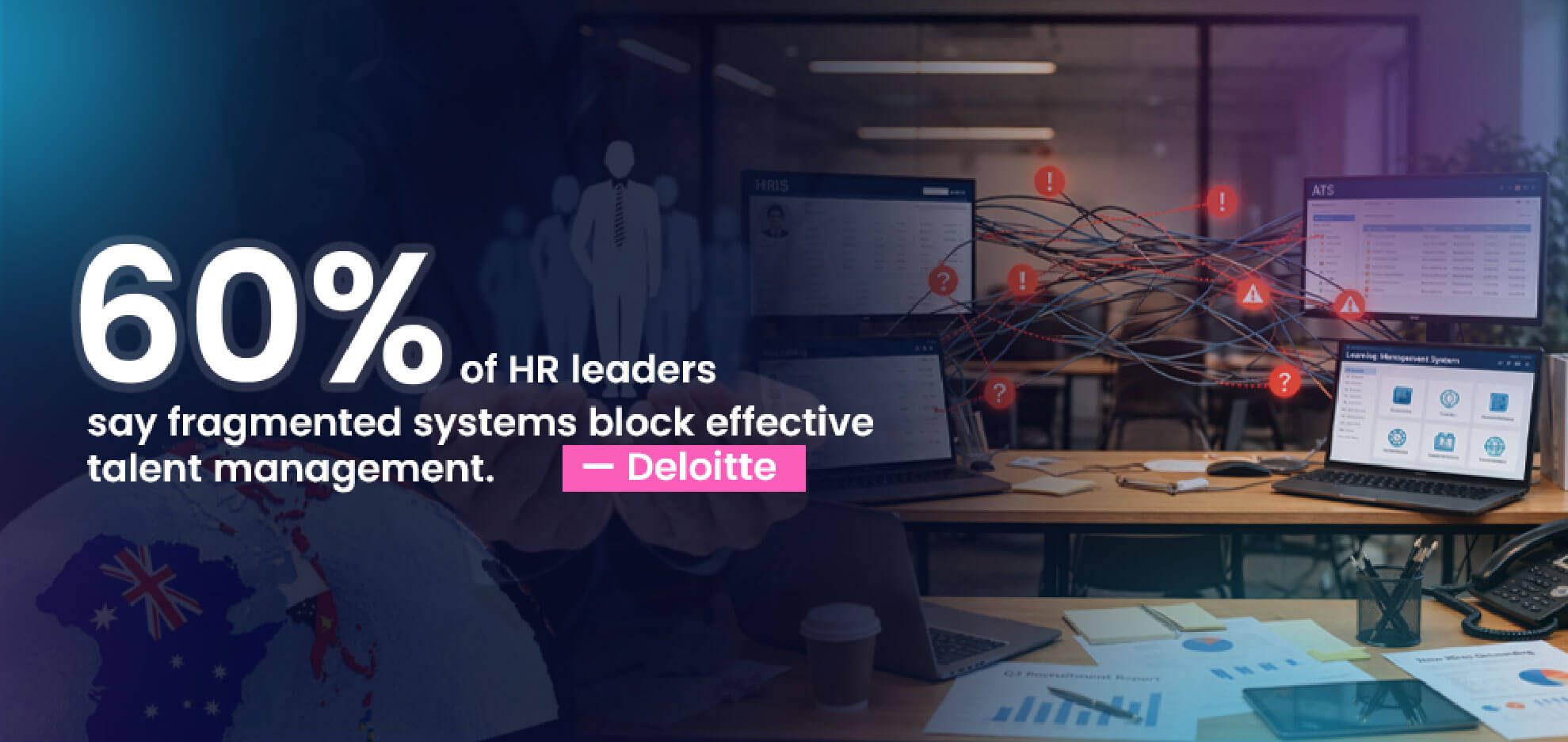
According to a report by LinkedIn Talent Solutions, 70% of companies say they face challenges with hiring speed and quality. Another study by Deloitte found that 60% of HR leaders see fragmented systems as a top obstacle to effective talent management.
For larger enterprises, generic platforms often fall short. They work for small teams but struggle with:
These pressures, like scale, risk, and regulation, make custom recruitment app development in Australia a necessity rather than a choice. Investing in a dedicated recruitment app helps businesses gain speed, improve visibility, and maintain compliance while supporting long-term growth.
Now that we know why businesses want to invest in recruitment apps, the next question is how much does it cost to build a recruitment app in Australia. The recruitment app development cost in Australia can vary widely depending on several factors, such as app complexity, features, integrations, platform choice, and compliance requirements. So, understanding these elements is key to planning a successful investment in a custom mobile app for recruitment.
Also Read: Cost to Develop an Ecommerce App Like Iconic in Australia
The cost to develop a recruitment app in Australia varies widely. On average, building a custom recruitment mobile app can range from AUD 30,000 to AUD 150,000 or more. The final cost depends on several factors, including features, platform choice, integrations, and compliance requirements.
| Complexity Level | Estimated Cost Range (AUD) | Estimated Timeline |
| Basic | 30,000 – 70,000 | 2–4 months |
| Mid-level | 70,000 – 120,000 | 4–6 months |
| Advanced | 120,000 – 150,000+ | 6–9 months |
_Basic level includes core features like job posting, candidate profiles, interview scheduling, and standard reporting.
_Mid-level adds integrations with HR/ATS systems, AI-powered candidate matching, and enhanced analytics.
_Advanced level covers full enterprise-grade apps with multiple integrations, automated workflows, compliance dashboards, AI-driven recruitment, and scalability for large organisations.
Here’s a closer look at what influences the recruitment app development cost in Australia:
When you understand these factors, you can easily and wisely plan investment. While the initial cost may seem high, a well-built recruitment app saves time, reduces errors, and improves hiring outcomes, making it a cost-effective solution in the long run.
Also Read: Build Your Own Crypto Trading App Like Swyftx in Australia: Features, Cost, & Development Roadmap
When planning recruitment app development in Australia, the base development cost is only part of the picture. As an expert in enterprise mobile solutions, I can say that these additional costs often make or break the budget. Ignoring them can lead to unexpected expenses and delayed ROI.
Here are the key factors to keep in mind:
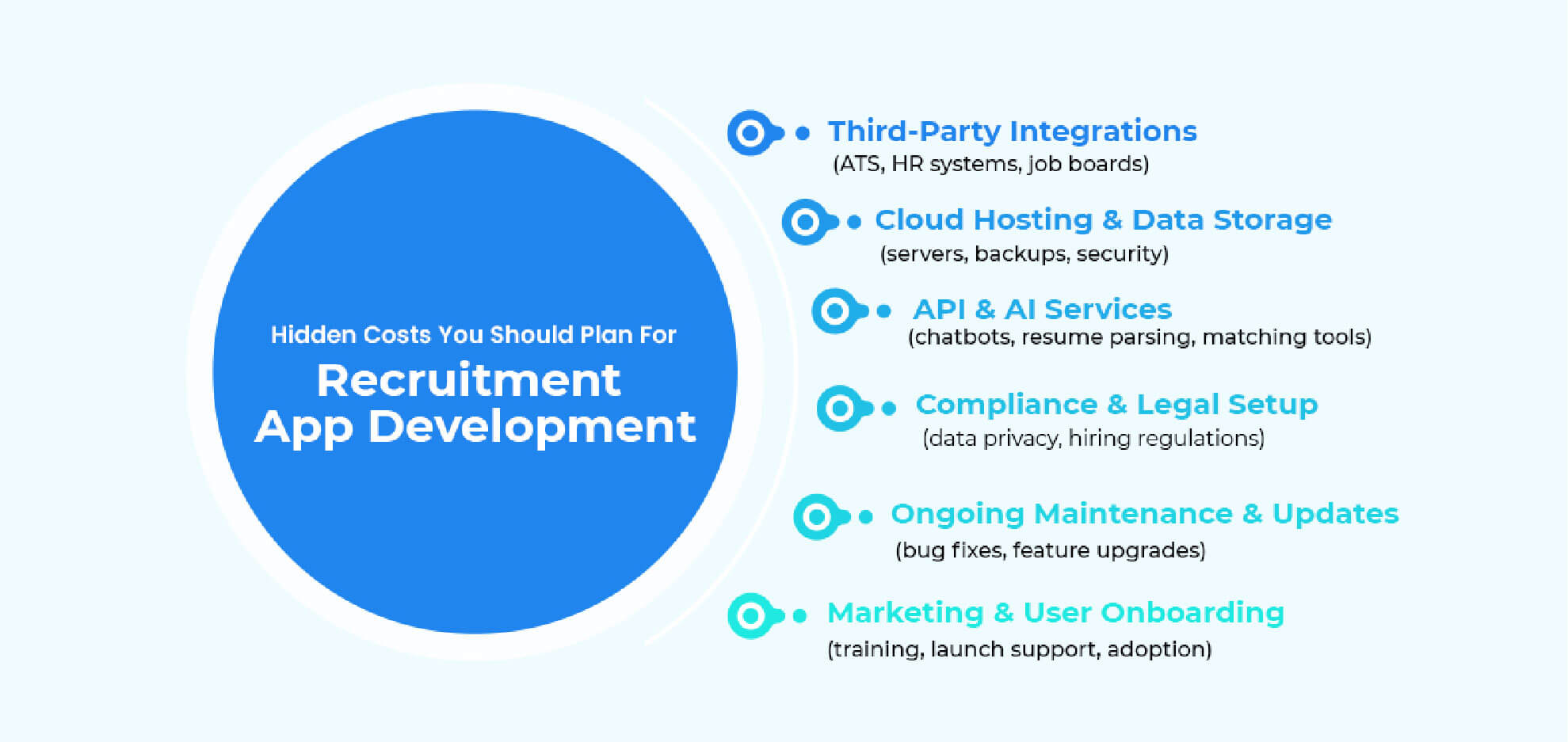
Connecting your app to HR systems, payroll platforms, or Applicant Tracking Systems (ATS) ensures smooth workflows. Integration can cost anywhere from AUD 5,000 to AUD 20,000, depending on complexity.
Securely storing resumes, candidate data, and analytics is critical. Cloud services typically cost AUD 500–AUD 2,000 per year, scaling with user volume.
Features like AI-based candidate matching, automated screening, or chatbots may require subscriptions to third-party services. This can add AUD 3,000–AUD 15,000 annually, depending on functionality.
Australian data privacy laws and audit obligations must be met. Costs for compliance checks, security audits, or legal consultations can range from AUD 2,000 to AUD 10,000.
Regular updates, bug fixes, and feature enhancements are essential for smooth performance. Expect AUD 5,000–AUD 15,000 per year.
Rolling out the app to recruiters and candidates, with guides, training, or promotional campaigns, may cost AUD 1,000–AUD 5,000.
In total, these additional costs can add 20–40% to the base recruitment app development cost in Australia. Planning for them early ensures your custom mobile app for recruitment delivers efficiency, compliance, and measurable ROI.
Building a recruitment mobile app in Australia, well, it’s an investment, and yes, it can feel expensive. But, there are ways to manage it, without cutting corners too much. You have to focus on what really matters. Every extra feature adds cost. So, start small, core features first like job posting, candidate tracking, interview scheduling. Later, add AI matching, dashboards…when you’re ready.
Platform choice also matters. iOS? Android? Both? Each adds time and cost. If your users are mostly on one platform, maybe start there, then expand. Cross-platform can save money, but sometimes it feels slow, a bit glitchy, so think carefully.
Integrations. Yes, it is critical, but every connection to HR systems or ATS tools adds complexity. Pick the essentials first. The rest can wait. And maintenance! Don’t ignore it. Plan updates early, or you’ll pay double later.
Work with the right mobile app development company. Someone who knows the Australian market, can guide you, stop you from adding unnecessary bells and whistles, and most importantly, make sure your recruitment app development in Australia actually works for your team.
In short…prioritise features, phase development, pick platforms wisely, choose the right partner, and the cost to develop a recruitment app doesn’t have to break the bank. Seriously.
Now comes the crucial question, what type of recruitment you must invest in, because not all apps are the same. The type of app you choose (basic, mid-level, or fully custom) can affect both the features you get and the overall investment. So it is necessary to take a closer look at what types of recruitment apps businesses can invest in.
When it comes to recruitment app development in Australia, not every app is built the same…far from it. Enterprises rarely go for a single, all-in-one system. Instead, they pick platforms that match their workforce reality, sometimes one app, sometimes a few…depending on need, scale, and industry.
Here are the main types of recruitment mobile apps businesses can invest in:
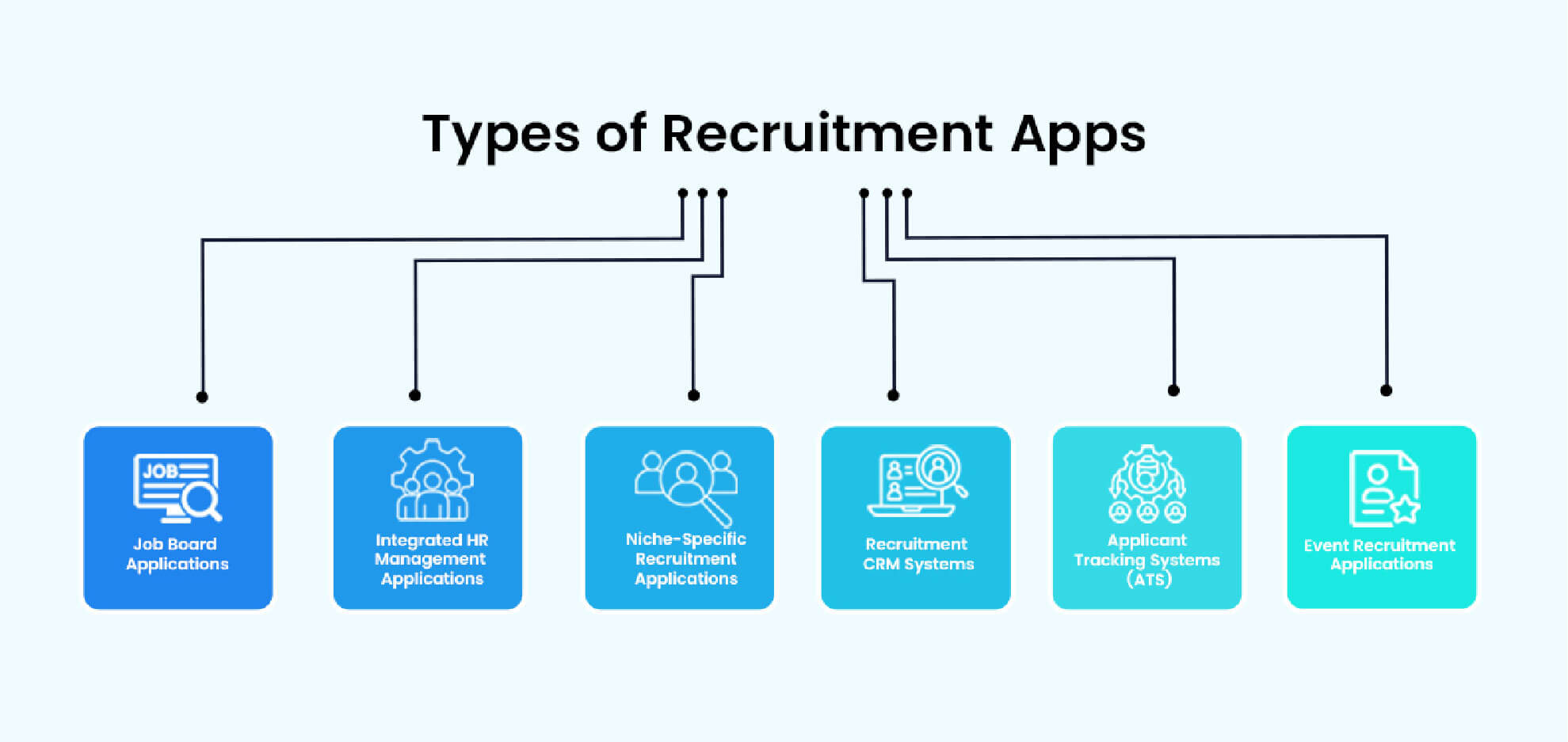
These are for high-volume hiring, think retail, hospitality, and graduate programs. Public-facing, fast application flow matters more than deep workflow control. Employer branding too…because candidates notice.
Recruitment isn’t standalone here. It flows directly into onboarding, payroll, workforce analytics. Great for healthcare networks, large service organisations. Makes reporting and compliance easier, but yeah, cost can go up.
Mining, aged care, regulated industries…you need credential verification, site checks, compliance gates before candidates even enter the pipeline. Generic platforms? They usually fall short here.
Used by enterprise talent teams and staffing arms to manage long-term candidate relationships. Historical data, redeployment intelligence, basically, know your candidates before they even apply again.
Still foundational, but many Australian enterprises now rebuild ATS capabilities inside custom recruitment apps to get flexibility, control, and reporting their way.
For career fairs, walk-ins, campus drives, big workforce pushes. Rapid intake, real-time screening, on-the-spot scheduling, centralised data capture…all to avoid post-event chaos.
So, depending on what your organisation needs, the type of recruitment app you invest in can drastically influence both the cost to develop a recruitment app and the efficiency of your hiring process.
Recruiters and HR teams in Australia use local and locally‑adopted recruitment platforms that they use to streamline hiring and support screening. These software also help improve workflow and reduce manual effort, especially when recruiting a larger number of candidates.
Sapia.ai is an Australian‑built AI hiring platform used by many businesses for screening and faster and fairer interviews. It uses chat‑based AI interviews to assess candidates, reduce bias, and automatically generate insights that help recruiters make more confident decisions, especially in high‑volume or changing hiring environments.
Another widely used solution is JobAdder, which was developed in Australia and works as a hybrid applicant tracking system and CRM. JobAdder helps recruiters and HR teams manage the entire hiring process in one place and it includes mobile access so hiring workflows are not tied to desktops.
Platforms like iSmartRecruit and 100Hires are also popular in the Australian market (even though they are used globally). These tools combine AI‑driven automation with core ATS features to help businesses source candidates and automate workflows as well. iSmartRecruit uses smart workflows and conversational agents to speed up hiring. And 100Hires offers scalable hiring pipelines and resume screening tools.
SEEK is still the most widely used recruitment marketplace in Australia, especially for organisations hiring at scale for permanent and contract roles. Its reach and brand visibility are huge, but enterprises often rely on downstream systems when they need tighter workflow control or stronger governance.
What many enterprises don’t realise, but it’s not just about having features. It’s about how they behave when things get busy…like hiring spikes, compliance checks, or board reporting. That’s when apps break. So, a good recruitment mobile app in Australia needs features that actually work under pressure.
Here are the core and advanced features to watch for:
So, when you’re planning recruitment app development in Australia, look beyond “what features exist” and focus on how they behave. That’s what separates a tool from a system that actually works.
Building a recruitment mobile app in Australia…well, it’s not just coding and hitting launch. You need a plan, a flow, so it works when hiring spikes, compliance checks hit, or leadership wants dashboards yesterday. If you’re thinking, “how to build a recruitment app?” -then here’s the way most successful enterprises do it.
Also Read: Build a Car Marketplace App like AutoScout24 in Australia
Different users need different experiences. Candidates want fast applications and transparent updates. Recruiters need structured pipelines and scoring tools. Employers need controlled approvals and visibility into compliance. Too much complexity slows adoption, too little erodes control.
Data rules first. Map candidate data flows, decide who accesses it, where it’s stored, and how long it’s retained. Think local data residency, backup strategy, role-based access, and audit trails. Setting these boundaries early saves headaches later…way before you discuss UI.
Different users need different experiences. Candidates want fast applications and transparent updates. Recruiters need structured pipelines and scoring tools. Employers need controlled approvals and visibility into compliance. Too much complexity slows adoption, too little erodes control.
Don’t pick tech just because it’s trending. Stability, security, and integration readiness are key. Use frameworks like React Native or Flutter for mobile, Node.js, Java, or .NET for backend, secure databases like PostgreSQL, and cloud hosting in AWS or Azure Australian regions. The tech should handle spikes, integrate downstream systems, and adapt to evolving regulations.
Focus on stabilising core workflows such as application intake, screening, approvals, and integrations. Automation comes later. Embedding AI into unstable workflows often backfires and slows everything down.
Add AI or automation where it makes sense. Candidate matching, shortlist ranking, and scheduling save time. But always include human oversight, explainability, and override options. Automation should help, not replace recruiters.
Testing isn’t just functional. Check access controls, consent logs, audit trails, and breach response readiness. Release only when confidence is high, not just speed.
Post-launch isn’t over. After launch, monitor adoption, performance, and regulatory alignment. Hiring needs change, and your custom recruitment app should evolve with them. Regular updates, analytics reviews, and user feedback loops keep the app relevant and effective.
So yeah…follow this process, and your recruitment app development in Australia actually delivers efficiency, compliance, and long-term ROI.
Custom mobile app development in Australia for recruitment isn’t without its hurdles. Even experienced teams run into problems. Most of the time, issues aren’t about missing features. They appear when apps scale, compliance demands increase, or day-to-day hiring pressure grows.
Integrating with old HR, payroll, and identity systems is tricky. Many enterprises have layers of these systems built over years. Direct connections can be brittle, and as data volumes grow, errors start appearing fast. Using modular APIs or middleware helps. Your custom mobile app for recruitment can grow and update gradually without breaking payroll, identity, or reporting systems. Incremental changes work better than trying to do everything at once.
Recruiter skills also affect adoption. Platforms often assume everyone can handle structured workflows or AI-assisted screening. In reality, teams vary. Some recruiters struggle, adoption slows, and hiring quality drops. Pairing the rollout with role-specific training, embedded guidance, and phased enablement helps. Recruiters can learn while active hiring continues, building confidence without slowing operations.
Data quality and reliable AI models are another challenge. Candidate data is often inconsistent, and historical bias can make automation unreliable. If AI outcomes fail, recruiters lose trust quickly. Structured data capture, human review loops, and continuous monitoring of AI models are essential. AI is never “set and forget.”
Getting recruiters and candidates on board can be difficult too. Platforms that add extra steps under hiring pressure frustrate recruiters. Candidates lose interest if the workflow isn’t clear or progress isn’t visible. Designing workflows that reduce recruiter workload and give candidates transparent updates helps. Everyone benefits when the process is simple and clear.
Finally, protecting sensitive data is critical. Recruitment apps store highly personal information, which increases risk during breaches, audits, or misuse. Enterprise-grade encryption, role-based access, detailed audit logs, and tested incident response processes should all be in place. Security must align with the organisation’s overall posture.
With proper planning, phased rollouts, and smart recruitment app development in Australia, these hurdles can be managed. App will work and will improve hiring speed, compliance, and the candidate experience as well.
If you are looking for a reliable mobile app development company in Australia, Techugo is the partner you need. Since 2015, we have delivered over 1,400 apps across industries, serving clients globally. Our team of skilled app developers in Australia specialises in creating iOS apps, Android apps, chatbots, and advanced AI-powered solutions, with 50+ AI projects already deployed.
When it comes to app development in Australia, Techugo combines deep expertise in software development with practical experience in building user-friendly platforms. We design apps that can streamline hiring workflows, and integrate with HR systems, and support compliance as well. We also integrate AI-driven candidate matching features, automated scheduling, and communication hubs.
If you need a custom recruitment mobile app, ATS integration, or chatbot development to improve candidate engagement, Techugo is there with you to ensure your solution is customised and powerful.
Signing a contract with us means faster time-to-market and a recruitment app that truly meets your business needs. Don’t forget to contact us now and talk to our experts.
A recruitment mobile app in Australia should include candidate profiles, resume upload, job matching, interview scheduling, and recruiter dashboards. Advanced features often include AI-based screening, chatbots, compliance tracking, and HR system integration. Most businesses prefer a custom mobile app for recruitment so they can control workflows and data instead of relying only on generic platforms.
For a simple version, recruitment app development in Australia can take around 3 to 4 months. A mid-level app with integrations usually needs 5 to 7 months. Large enterprise platforms with automation and reporting may take 9 months or more. The timeline depends on design complexity, approval layers, and testing needs.
Existing recruitment software works well for basic hiring. But many Australian businesses build a custom recruitment mobile app when they need better control over data, workflows, and compliance. A custom solution fits business processes more closely, especially for regulated industries or high-volume hiring environments.
Startups usually benefit from a simple recruitment mobile app focused on job posting and candidate tracking. Enterprises often invest in advanced platforms with ATS, analytics, and compliance monitoring. The best choice depends on hiring volume, industry rules, and whether the business needs a scalable custom mobile app for recruitment.

Agriculture has always been the backbone of human survival, but now modern farming is dependent on technology. Farmers and agribusinesses use digital ..

Watching a long queue build up (waiting in line) can be frustrating. Regardless of your location (New York City, Dubai, or Washington D.C.), tradition..


Write Us
sales@techugo.comOr fill this form