

 SA
SA  KW
KW  IE
IE AU
AU UAE
UAE UK
UK USA
USA  CA
CA DE
DE  QA
QA ZA
ZA  BH
BH NL
NL  MU
MU FR
FR [ LET’S TALK AI ]
X
Discover AI-
Powered Solutions
Get ready to explore cutting-edge AI technologies that can transform your workflow!



Get ready to explore cutting-edge AI technologies that can transform your workflow!






The doctor questions, “When was your last test?” and before you can respond, reports from other hospitals you’ve visited are displayed on the screen. The cloud system has all your history on file and is able to provide it instantly.
You didn’t bring any files or reports yet, he can find your data just in one click – that’s Cloud computing. Relax, that data is not stored in his computer instead it is in some government cloud storage, so every time you visit any doctor, he would see your records and prescribe accordingly.
Cloud storage is a digital storage that stores your data online instead of your computer’s hard drive. It is a secure online space where all your medical reports, lab records etc is securily stored. This makes the entire medical treatment process seamless. Think of yourself as a doctor whose one client visits often in the hospital, and every time he comes, you have to open his files and open pages to check his past data. This hustle has been solved by cloud computing systems, in which you can simply log in and check data without confusion. And now you must be thinking if its save to trust.
And I know what you’re thinking: “But is it safe to put all of my personal medical information online?” The good news is yes – cloud platforms are protected with robust encryption, backups, and secure servers, so that data is accessible only to authorized individuals, such as your doctors and hospital personnel.
The pharmaceutical industry, large global companies is using cloud technology more and more. This is because it makes running their operations smoother and more reliable. Big pharma companies have factories, research labs and distribution networks all over the world.
Managing all of this and making sure medicines reach patients on time is a challenge. With the rise of cloud computing in pharma, companies can centralize their data and manage global operations efficiently from a single digital platform. From production and supply to sales and inventory. Can be tracked and managed in real time.
Also Read – Introducing the Transformative Power of Cloud Computing for Modern Businesses
Cloud systems help companies track materials, production and deliveries at every stage. This level of visibility is one of the major reasons why the Cloud Computing in Pharma Industry has become essential for modern supply chain management. Cloud technology helps track everything.
Patient needs and medicine demand can change quickly. Through advanced pharma cloud computing platforms, companies can monitor sales trends and stock levels instantly. This way production and distribution can be adjusted quickly.
Large pharma companies often have factories in countries. The cloud allows all these sites to share information and plan production. This helps maintain quality across all sites.
Big pharma companies must follow rules in every country they operate. Cloud systems automatically store records and track changes. This makes it easier to stay compliant with regulations.
Research clinical trials and production teams often work in different locations. Cloud computing allows them to share data instantly. This helps companies make decisions faster and bring drugs to market sooner. The Cloud Computing in Pharma Industry enables secure collaboration between researchers, clinicians and manufacturers across the globe.
Pharmaceutical companies do a lot of research. Generate a huge amount of data from experiments, chemical tests and genetic studies. Cloud platforms help scientists store all this data in one place and analyze it using tools. Modern pharma cloud computing for businesses allow researchers to process huge scientific datasets faster than traditional systems.
For example, companies like Pfizer use cloud systems to speed up COVID-19 vaccine research by sharing and analyzing data from all over the world. They use cloud computing for businesses in areas like drug discovery.
Managing clinical trials is a task. It involves sites, thousands of participants and constant monitoring. Cloud computing helps collect and share data in real time making trials faster and safer. Big pharma companies like Roche use cloud-based platforms to monitor trials across countries without any delays.
This is another major use case of Cloud Computing in Pharma Industry where real-time data access improves trial efficiency.
Also Read – Build Scalable Green Cloud Apps With Techugo
Pharma companies need to track materials, production and delivery of medicines. Cloud systems let them monitor the supply chain in real time. For instance, Johnson & Johnson uses cloud platforms to manage distribution and ensure critical drugs reach hospitals on time. Many pharmaceutical companies rely on cloud computing in pharma systems to maintain full supply chain visibility.
Following FDA, EMA and HIPAA regulations requires keeping records and audit trails. Cloud platforms automatically. Track data changes, making audits easier. Many pharma companies now rely on cloud systems to securely maintain data and trial records. They use cloud for compliance.
Making new drugs requires teamwork between researchers, clinicians and production teams from locations. Cloud technology allows data sharing and collaboration. For example, Novartis uses cloud platforms so global research teams can work together in time, speeding. This collaborative environment highlights the growing importance of Cloud Computing in Pharma Industry for innovation.
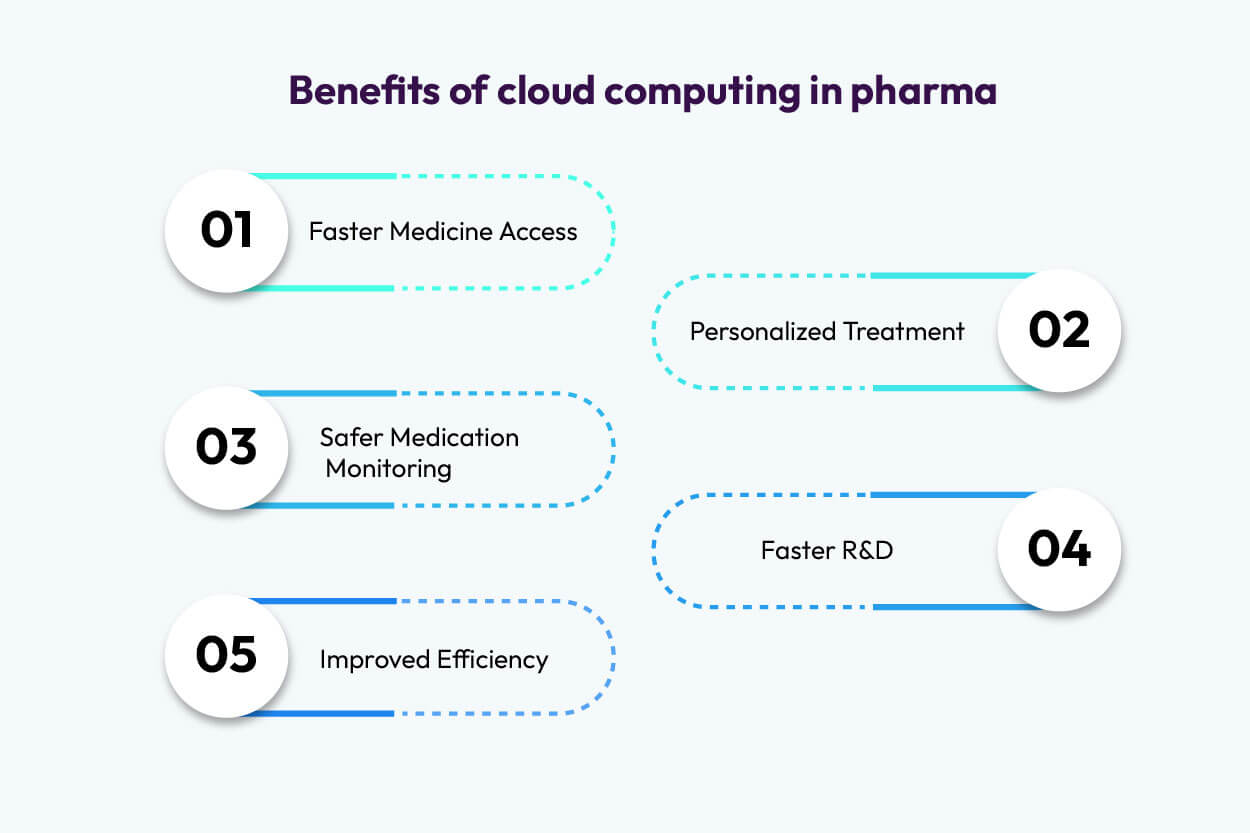
The cloud helps pharmaceutical companies keep track of how medicines are made and sent out in real time. This means that important medicines get to hospitals and pharmacies quickly, especially when people need them.
Doctors can look at a patient’s history and test results that are stored in the cloud, even if the patient goes to different hospitals. This information, combined with tools that help analyze it makes it possible for doctors to make more accurate diagnoses and create treatment plans that are just right for each patient.
The cloud is used to track when people have bad reactions to medicines all around the world. This helps to find out which medicines are not safe and get them out of circulation which keeps patients safer.
The cloud allows pharmaceutical companies to store amounts of information work with it and share it with others all around the world. This helps to speed up the process of finding medicines and testing them which gets new treatments to patients faster like what happened with the COVID-19 vaccines.
The cloud makes it possible for research teams, the people who make the medicines and the people who check to make sure everything is safe to work in real time no matter where they are in the world. This reduces delays, prevents mistakes and makes the whole system of healthcare work better and more smoothly. This efficiency is one of the biggest benefits of Cloud Computing in Pharma Industry.
Launch faster, smarter mobile apps using Techugo’s cloud consulting services.
[Book a Free Consultation]
| Cost Component | Description | Approximate Cost |
| Initial Setup / Migration | Moving data and applications to the cloud | $50,000 – $200,000 (depending on data size) |
| Cloud Subscription / Service Fees | Monthly or annual cloud service costs | $5,000 – $50,000 per month |
| Infrastructure & Storage | Storing large datasets and high-performance computing | $10,000 – $100,000 annually |
| Maintenance & Support | Monitoring, updates, and technical support | $5,000 – $20,000 annually |
| Security & Compliance | Encryption, backups, and regulatory compliance | $10,000 – $50,000 annually |
Pharmaceutical companies keep a lot of information in the cloud like patient information, clinical trial data and research that belongs to them. If the security is not good this information can be easily accessed by hackers or people can demand money to give it back or someone can look at it without permission.
Examples:
Hackers are trying to get trial results.
People are stealing ideas for medicines.
Pharma companies have to follow a lot of rules like what the FDA, EMA and HIPAA say. If they do not manage their cloud systems properly they can get in trouble with the law have to pay fines or fail audits.
Examples:
There are no records of what happened during drug trials.
Patient health records are not stored correctly when sent to other countries.
Patient records and trial information have to be kept secret. If someone gets access to this information without permission it can hurt peoples trust affect patients and result in fines.
Examples:
The cloud is not set up correctly, so patient files are visible to everyone.
Other companies are looking at information without being allowed to.
Sometimes the cloud platform is not. This can stop pharma companies from doing their work like researching, making medicines or getting them to people who need them.
Examples:
Lab data is not available for a while so it cannot be analyzed.
There are delays in updating schedules for making medicines.
It is hard to move computer systems to the cloud and make all the applications work together. If it is not done correctly it can disrupt the work that people do every day or cause mistakes.
Examples:
Old lab equipment does not work well with cloud databases.
Different systems that manage trials are not sharing information correctly.
Think about it like this: every piece of information, clinical trial data, or drug research stored in the cloud is super valuable. Not just for the company but for the people who depend on it. One small mistake can cause delays, data breaches or compliance issues. That’s why pharmaceutical companies need simple ways to keep their cloud systems secure and compliant.
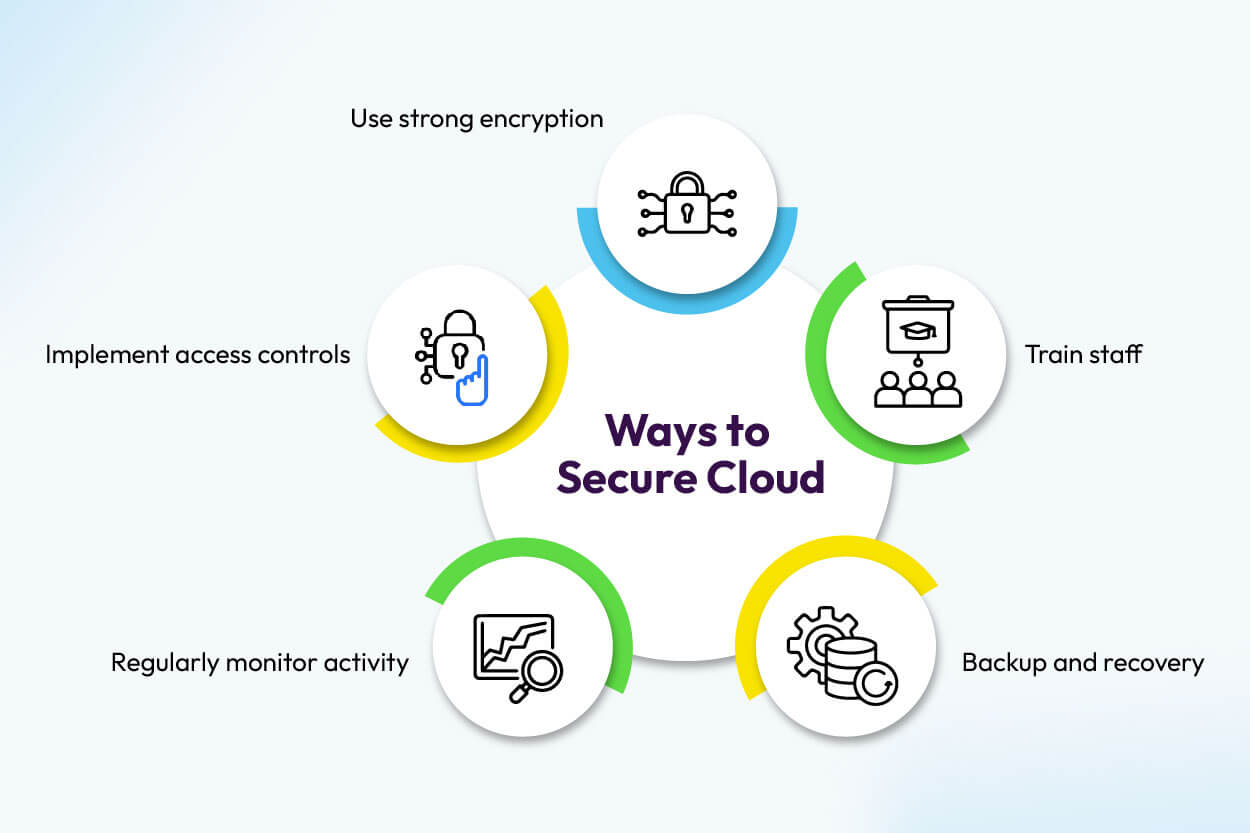
Here are some methods that really make a difference:
Treat your data like gold. Encrypt it so that even if someone tries to access it its unreadable.
To do it:
Encrypt files before uploading them to the cloud.
Use end-to-end encryption when transferring data between labs, hospitals or clinics.
Not everyone needs to see every file. Limit permissions so only the right people can view or edit data.
To do it:
Use role-based access for employees so they only see what they need to.
Implement -factor authentication for extra security.
Even the best systems can fail. Automatic backups and a disaster recovery plan ensure that critical data is never lost.
To do it:
Schedule weekly cloud backups so you’re always covered.
Test recovery systems regularly to make sure they work when needed.
Track every action in your cloud system. This prevents mistakes. Ensures compliance with regulations like FDA, EMA and HIPAA.
To do it:
Keep audit logs so you can see what’s happening.
Conduct security reviews to catch any issues.
With the best technology, human error can cause data leaks. Educate employees on cloud practices and potential threats.
To do it:
Run training sessions for clinical, IT, and administrative staff.
Provide guides on recognizing phishing or suspicious activity.
Cloud technology is already helping pharmaceutical companies work faster and smarter. In the next five years, its role will become even bigger. New tools and smarter systems will change how medicines are discovered, tested, produced, and delivered to patients. Here are some key trends we will likely see in the pharmaceutical industry. Over the next decade, Cloud Computing in Pharma Industry will continue expanding with AI-driven research and digital clinical trials.
The cloud will also make collaboration easier between pharmaceutical companies, hospitals, research institutions, and regulators. Shared platforms will allow secure data exchange and faster decision-making.
Drug discovery normally takes many years. With cloud technology, companies can store huge amounts of research data and share it instantly with global teams. Researchers in different countries can work together in real time without delays.
In the coming years, cloud systems will help companies test ideas faster, analyze clinical data quickly, and move promising drugs into trials sooner. This can help bring new treatments to patients faster than ever before.
Clinical trials will become more digital and connected through cloud platforms. Instead of relying only on hospitals or trial centers, researchers will collect data from wearable devices, mobile apps, and remote monitoring tools.
This allows patients to participate in trials from their homes. It also helps researchers collect real-time health data, which makes trials more accurate and efficient.
In the future, treatments will become more personalized. Doctors will use cloud systems to analyze patient records, genetic data, and medical history to recommend treatments that work best for each individual.
The cloud makes it easier to store and process this large amount of patient information securely. This helps doctors make better decisions and provide more precise treatment plans.
Pharmaceutical supply chains are complex. Medicines move through many stages before reaching hospitals and pharmacies. Cloud systems will make supply chains more transparent by tracking materials, production, and deliveries in real time.
Companies will be able to predict demand more accurately and avoid shortages of important medicines. This is especially important during health emergencies or sudden spikes in demand.
As more sensitive data moves to the cloud, companies will continue to invest in stronger security systems. Over the next few years, cloud platforms will offer better encryption, advanced monitoring tools, and automated compliance checks.
These systems will help pharmaceutical companies meet strict healthcare regulations in the United States and other countries while protecting patient data.
Cloud computing is transforming the pharmaceutical industry. It speeds up research, improves clinical trial management, and helps deliver medicines to patients faster. By handling large amounts of data efficiently, the cloud supports innovation and better healthcare outcomes.
Pharmaceutical companies that start using cloud technology now will be ready for what’s coming next. Companies that wait long to change the way they do things using digital technology may have a hard time keeping up with companies that are moving faster new rules and people wanting more. This is the time for pharmaceutical companies to start using solutions so they can stay ahead in the healthcare industry, which is changing really fast.
Ready to modernize your pharmaceutical systems with secure cloud technology? Partner with Techugo to build scalable healthcare solutions.
The pharmaceutical industry uses cloud computing in a few ways. Pharmaceutical companies mainly use four types of cloud computing. These are the cloud for general storage and analysis the private cloud for sensitive research or patient data, the hybrid cloud, which combines public and private options for flexibility and the community cloud that allows multiple organizations, like hospitals or research labs to collaborate securely on cloud computing.
The largest pharmaceutical companies use cloud computing a lot. These companies include Pfizer, Novartis, Johnson & Johnson and Roche. They rely on cloud computing to do things. Cloud computing helps them accelerate drug discovery, manage clinical trials and track supply chains efficiently using cloud computing.
Cloud computing supports the PCD model in some ways. Cloud systems track inventory in time using cloud computing. They also manage orders and deliveries. Analyze sales trends using cloud computing. This ensures medicines reach pharmacies quickly and reduces stockouts using cloud computing.
The major cloud providers used by companies are a few well-known companies. These companies are Amazon Web Services, Microsoft Azure, Google Cloud Platform and IBM Cloud. They offer scalable and compliant systems for research, patient data and global operations using cloud computing.

Apps like Kling AI can generate videos in seconds. But do you know the actual cost to build an app like Kling AI that runs technology this advanced? ..

With the influx of AI, the healthcare industry is going through a series of changes. Some of them affect cost and some benefits, but it is fair to say..



Write Us
sales@techugo.comOr fill this form