Mobile devices are now essential for finance. Developing a mobile banking app has moved from being just a convenience to a strategic necessity for financial institutions.
This guide is for business leaders planning to build a banking app, keeping ADCB as an inspiration. We will cut through the noise and give you a clear roadmap for fintech app development.
By the end, you’ll know:
- Essential mobile banking app features that encourage users to adopt and keep using the app.
- How to clearly outline the development journey.
- The true mobile banking app development cost and ways to optimise it.
- How to use secure solutions and online banking app security measures that build user trust.
- Necessary mobile banking tools and technologies.
- How to use emerging trends like AI and personalisation.
- How partnering with a proven banking app development company meets your business goals.
Let’s begin. Learn how your organisation can create a banking app that sets new standards for digital banking.
Why Abu Dhabi Commercial Bank’s Mobile Banking (ADBC) App Sets the Standard
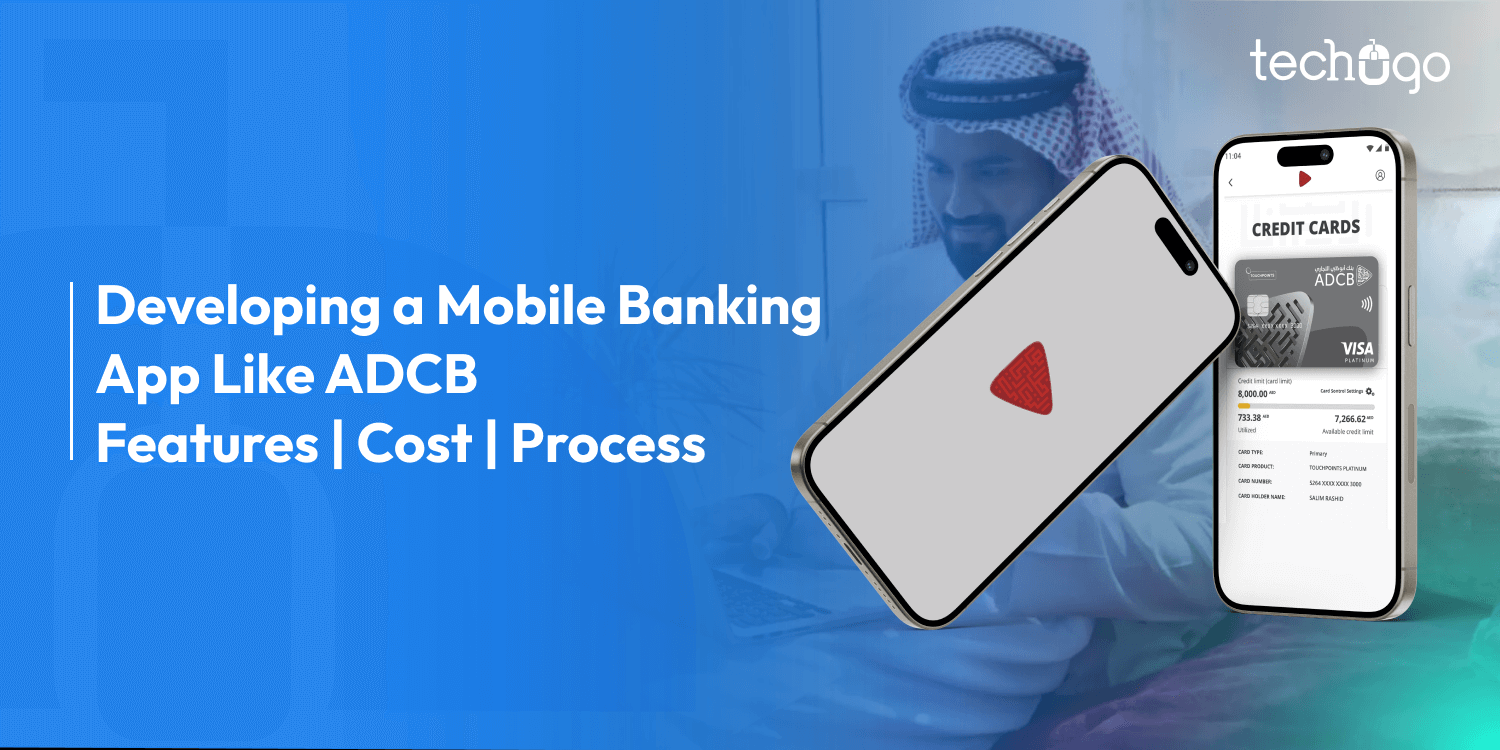
On Android, the ADCB mobile app boasts 1 million+ downloads. Around 60,000 reviews with an average rating of approximately 4.1 stars. On iOS, it registers a strong 4.7 out of 5 stars from roughly 4,500 ratings.
Feature highlights:
- “Payments & Transfers” section allows users to view beneficiaries and registered billers in a single view.
- Dual-language support (Arabic and English) for a broader regional audience.
- Balance preview capability.
- Branch and ATM locator integrated within the mobile app.

Latest highlights:
ADCB partnered strategically with Nomo Bank, a digital bank operating in the UK and Middle East. This collaboration launched the “ADCB-Nomo” (and Al Hilal-Nomo) digital banking apps.
These apps let UAE customers access UK-based multi-currency and property-finance solutions. This move shows ADCB’s evolution. It’s moving from a traditional bank to a digital-first platform. ADCB uses fintech partnerships to remain competitive.
Lessons for business decision-makers:
- High install numbers and strong user ratings signal success. They show users and stakeholders that the app has scaled and is well-received. This builds trust and lowers the perceived risk of developing your own banking app.
- The more advanced the features are, the higher engagement they lead. Resulting in a stronger lifetime value.
- These metrics and features offer concrete benchmarks for your build. If you plan to build an app like ADCB’s, look at performance (installs, ratings) and functionality (UX, service design).
- The Nomo partnership highlights a major shift. Mobile banking apps must offer more than basic functions. They need to create new value propositions, such as multi-currency accounts and global banking access. This elevates the brand.
Thus, when thinking of developing a similar app, it must include these differentiators.
Step Wise Fintech App Development Guide
First, you need to understand the difference between “How to Create a Banking App” vs “Create a Full-Blown Digital Bank”.

| Dimension | Simple Mobile Banking App | Create a Full-Blown Digital Bank |
| Scope of Services | Basic account view Balance check Funds transfer Bill payments | Deposit/loan origination Personal Finance Management Investment access Multi-currency Marketplace services |
| UI/UX | Standard transactional UI Minimal customisations | Deep custom banking software development with:- High-end UI/UX design
- Advanced flows
- Personalised dashboards
- Multilingual
- Biometrics
|
| Technology Stack | Basic backend Simple API integrations Native or cross-platform front-end | Robust mobile banking technology stack: - Cloud microservices
- Real-time analytics
- AI/ML
- Open banking APIs
- Modular plug-ins
|
| Integrations | Core banking and payment gateway | Full third-party ecosystem: - Wealth tech
- Insurtech
- Wallets
- Open-banking
- BaaS
- Digital ID/KYC
|
| Security & Compliance | Standard security | Secure banking app solutions:- Advanced fraud detection
- Biometrics
- Device binding
- Regulatory compliance
|
| Scalability & Future-Readiness | Serving current users Limited feature roadmap | Designed for scaling: - Custom banking software development
- Future-proofing
- AI-driven features
- Flexible architecture
|
| Time to Market & Cost | Shorter time Lower cost | Longer time Higher cost ( higher ROI potential) |
| Key Objective | Deliver a functional mobile app to serve existing banking users | Build a differentiated digital banking platform that drives monetisation and brand leadership. |
ADCB’s mobile banking platform offers many advanced features. This makes it a strong example of comprehensive digital banking. Furthermore, ADCB’s digital plan heavily focuses on:
- Analytics
- Cloud migration (moving 50% of its IT workload to the cloud)
- AI-driven services
How to Begin Planning?
The initial planning phase is crucial. Your decisions here will define the entire scope of your custom banking software development.
- Define Goals and Value:
- Are you launching a simple banking app?
- Or, are you positioning yourself as a comprehensive digital bank?
- Your choice determines the development scope.
- Research Market and Competition:
- Map the current landscape.
- Identify what makes top apps, like ADCB, stand out in features and UI/UX design.
- This informs your mobile banking technology stack decisions.
- Define Features and Architecture:
- Based on your required scale, choose your services.
- Ensure your platform is modular, ready for enterprise-level development.
- Choose Platform(s) and Tech Stack:
- Decide on Native vs. cross-platform.
- Select cloud or on-premise. Microservices or monolith.
- Pick a stack that supports your future roadmap without slowing your time-to-market.
- Select a Development Partner:
- Engage a trusted banking app development company.
- Ensure they have fintech expertise.
- Budgeting and Cost Planning:
- Estimate costs for simple versus full apps.
- Assess developer rates, infrastructure, licensing and maintenance.
- Risk and Compliance Planning:
- Your plan must include security and banking regulations.
- Build these into the architecture from day one.
- Roadmap and MVP Definition:
- Determine your “go-live” goal.
- Plan for iterative enhancements over time.
- KPIs:
- Define your target.
- Use ADCB’s metrics as your benchmarks.
- Change Management and Launch:
- Prepare your teams and marketing initiatives.
Select Mobile Banking Technology Stack

To start your mobile banking app development, selecting the right tech stack is foundational.
Frontend
- For mobile banking apps, you’ll typically choose:
- Swift for iOS
- Kotlin for Android
- React Native and Flutter for cross-platform
- React.js, Angular, Vue.js for web apps.
Backend
- Languages/frameworks commonly used for banks & fintech systems:
- Java and Spring Boot for enterprise-grade
- Node.js and NestJS for real-time microservices
- Python for AI and analytics modules
- Databases & storage:
- PostgreSQL and MySQL) for structured financial data
- NoSQL and caching layers (Redis) for high-volume logs
- You’ll need RESTful APIs to tie the frontend ↔ backend ↔ third-party services.
- Integration:
- Think open-banking
- Payment Gateway
- Indentity/KYC Providers
- Banking-as-a-service (Baas) platform
Cloud Infrastructure & DevOps
- The cloud is almost a given in modern mobile banking apps:
- AWS
- Google Cloud Platform
Microsoft Azure - DevOps tools:
- Containerisation (Docker)
- Orchestration (Kubernetes)
- CI/CD pipelines
- Infrastructure as code
Security Layers & Compliance
- Security is non-negotiable to build a banking app like ADCB. Your stack must include:
- Authentication/authorisation:
- Encryption in transit & at rest:
- Device binding
- Biometrics
- Role-based access control (RBAC)
- Monitoring
- Auditing
- Fraud detection (possibly AI-powered)
- Regulatory compliance:
- PCI-DSS (payments)
- GDPR/CCPA (data privacy)
- local banking regulations
Why Hiring a Banking App Development Company is Important?
When you’re preparing to build a banking app (or upgrade one), your choice of development partner is a strategic lever. Many top institutions in the region even rely on a trusted mobile app development company in UAE to ensure their product meets strict financial and technical standards. Here are key considerations and how Techugo fits the profile.

What you must evaluate in a banking app development company:
- Domain expertise in fintech/ banking
- Full-stack capabilities
- Proven technology stack knowledge
- Security and compliance mindset
- Scalability capabilities
- Transparent cost and timeline communication
- UI/UX design strength
- Post-launch support and iteration
Why partner with Techugo to successfully build a banking app like ADCB?
Techugo is positioned as the best fintech app development company. We specialise in mobile banking and digital banking app development. We understand both the technology and the banking industry context.
We offer end-to-end services. These include:
- Discovery
- Architecture
- UI/UX design
- Development
We also handle:
- Integration
- Security testing
- Post-launch maintenance
This perfectly meets your custom banking software development needs.
Techugo can help design the right mobile banking technology stack for you. We ensure your stack is scalable and secure. Partnering with our experts reduces risks like feature-scope creep and budget overruns. This is because we have proven domain credibility and delivery experience in the banking sector.
Features Users Expect in Mobile Banking Apps
A crisp checklist of features of mobile banking apps, using Abu Dhabi Commercial Bank (ADCB) as a frame of reference:
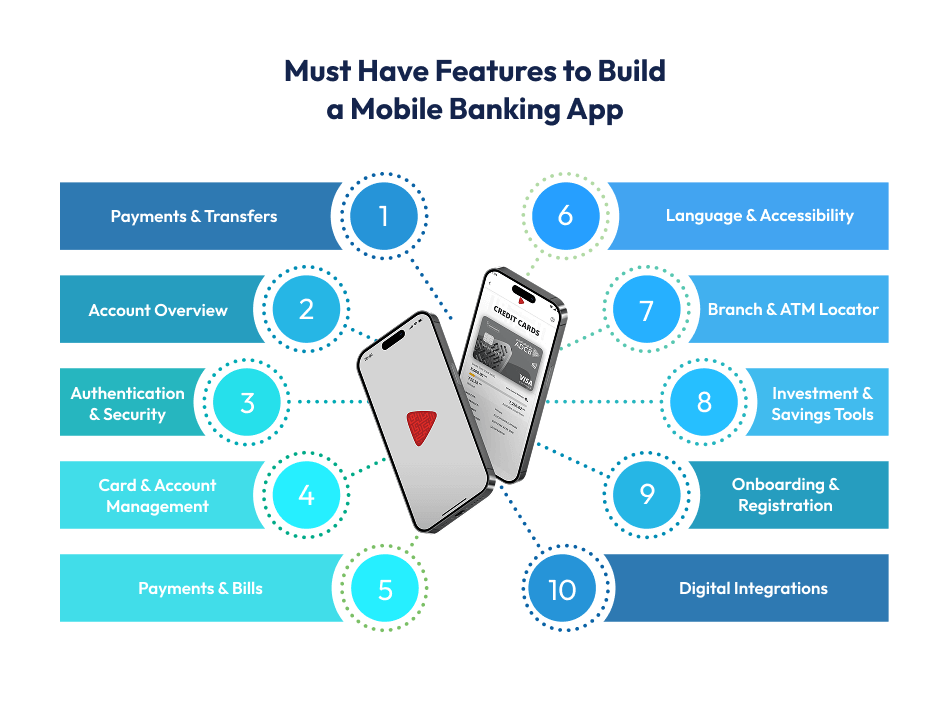
- Payments & Transfers
- Beneficiary management
- Billers and payees in one dashboard
- Search by name or transaction amount
- Instant local/international transfers
- Language & Accessibility
- Bilingual interface (Arabic / English)
- Clean design for intuitive navigation
- Accessible typography and iconography
- Account Overview
- Balance preview without login
- Multi-account summary view
- Real-time transaction tracking
- Authentication & Security
- Biometric login
- Secure OTP verification
- Device registration and activation
- End-to-end encryption
- Card & Account Management
- Card activation/deactivation
- Limit control and statement access
- View IBAN and account details
- Manage linked accounts
- Payments & Bills
- Utility
- Telecom
- Credit card bill payments
- Scheduled and recurring transfers
- Standing instructions support
- Branch & ATM Locator
- GPS-based map integration
- Filter by branch or ATM
- Investment & Savings Tools
- Savings account view and fund tracking
- Islamic banking integration
- Real-time insights on portfolio performance
- Onboarding & Registration
- Quick onboarding via card or internet banking
- Digital KYC verification flow
- “Hayyak” integration for instant account opening
- Digital Integrations
- Seamless link with ADCB’s online banking portal
- Alerts
- Push Notification
- Push Updates
- Compatibility with wearable and voice enabled devices
The Fintech App Development Process
The fintech app development process involves a sequence of insight-driven steps. They ensure seamless airtight security and long-term scalability.

1. Discovery & Requirements Gathering
- Market research and competitor analysis
- Define user personas and target audience
- Establish functional requirements and compliance goals
- Estimate banking app development cost and project timeline
2. UX/UI Design & Prototyping
- Information architecture creation
- Wireframing and low-fidelity prototypes
- High-fidelity UI mockups for banking app UI/UX design
- User testing and iteration before development
3. Technology Architecture & Backend Systems
- Select a mobile banking technology stack
- Backend development using microservices architecture
- Integration-ready APIs for custom banking software development
- Cloud deployment setup
4. Development & Iterative Sprints
- Modular code development for scalability
- Feature rollout through Agile sprints
- Regular sprint reviews with stakeholders
- Continuous integration
- Automated testing
5. Integration
- Core banking system connectivity
- Third-party integration
- Open banking APIs
- Real-time data synchronization
6. QA & Security Testing
- Penetration testing
- Vulnerability assessment
- Encryption
- Secure API handling
- SSL certificates
- Compliance with KYC/AML regulations
- PCI-DSS standards
- End-to-end test automation before launch
7. Deployment & Rollout
- App Store and Google Play deployment
- Cloud server optimisation
- Load balancing
- Version management
- Bug fixes
- Performance optimisation for launch stability
8. Support & Continuous Monitoring
- 24/7 support for downtime prevention
- Analytics-driven insights and a user feedback loop
- Regular version updates for UI improvements and security patches
Banking App Development Cost & Factors
When it comes to banking app development cost, the total investment depends on multiple moving parts. For businesses in the region, factors like the availability of skilled app developers in Abu Dhabi can also influence cost expectations.

| Cost Driver | Impact on Cost | Cost Range |
| Platform | Dual-platform raises cost by 40–60%. | $25,000 – $80,000 (single platform) $60,000 – $150,000 (cross-platform) |
| App Complexity | Each layer of complexity multiplies dev time and testing cycles. | Basic: $30,000 – $70,000 Advanced like ADCB: $100,000 – $250,000+ |
| Integrations | Every third-party API adds licensing and integration overhead. | $10,000 – $50,000+ depending on number and type of APIs |
| UI/UX Design Quality | Premium design means higher engagement but longer prototyping cycles. | $8,000 – $40,000 |
| Security & Compliance Overhead | Must-have for trust and regulatory approval. Drives both time and cost. | $20,000 – $100,000+ |
| Technology Stack & Backend | Influences performance optimisation. | $15,000 – $60,000 |
| Maintenance & Post-Launch Support | Typically 15–25% of total yearly development cost. | $10,000 – $50,000+ annually |
Based on the above, the total cost of each category would look like this:
- Simple mobile banking app starts at USD $30K to $70K.
- Mid-level banking app would be around USD $70K to $150K.
- Complex full-stack digital banking platform can range from USD $150K to $300K+.
Security & Compliance as the Critical Pillar for Banking Apps
Referencing ADCB’s own public FAQs and product standards:
- Described as a highly secure mobile banking platform
- No sensitive customer data is stored locally on the device
- Robust OTP authentication for every critical transaction
- Secure encryption standards for all mobile and backend data exchanges
Core security measures for banking apps:
- Device-level authentication and fingerprint/Face ID verification
- Encryption at rest and in transit using AES-256 and SSL/TLS
- Tokenisation for secure payment processing
- Secure API management and gateway firewalls
- Fraud detection systems powered by AI and behavioural analytics
- Session timeouts and multi-factor authentication
- Real-time anomaly detection and alerts
- Secure coding standards
- Continuous penetration testing and vulnerability assessments
- Data localisation compliance in line with national laws
- Role-based access control and identity management
- Regular third-party security audits
- Governance frameworks for KYC/AML
- Disaster recovery and backup protocols
Upcoming Financial App Development Trends
Mobile-first experiences now dominate finance. Financial app development is moving beyond basic functions. Here is a closer look at the trends transforming the sector:

1. AI-Powered Personalization
Artificial Intelligence driving:
- predictive insights
- personalized recommendations
- smarter support
- proactive fraud detection.
Machine learning helps banks understand users. Offering proactive alerts and curated financial products.
2. Rise of Open Banking Ecosystems
- Customers can securely link multiple accounts within one app for unified control.
- Developers must design secure API infrastructures for safe collaboration with fintechs and payment providers.
3. Embedded Finance & Banking-as-a-Service
- Financial services are now directly embedded into non-financial platforms.
- BaaS allows businesses to offer payments or insurance without becoming a bank.
- This drives custom software development for contextual experiences, like in-app lending.
4. Cloud-Native Banking and Microservices
- Modern apps are moving to cloud-native environments.
- Microservices architecture allows independent module scaling, improving speed and security.
- This speeds up fintech app development and enables continuous updates.
5. Blockchain for Transparency and Trust
- It offers traceability and fraud resistance via decentralised ledgers and smart contracts.
- It is a cornerstone for the future of cross-border payments and tokenised assets.
6. Hyper-Secure Authentication
- Modern mobile banking apps use biometric logins and Multi-Factor Authentication (MFA).
- Innovations like zero-knowledge proofs and AI-based anomaly detection enhance security while keeping the user experience seamless.
7. Data-Driven UI/UX and Gamification
- Banking app UI/UX design is now data-informed and responsive.
- Apps use real-time feedback to adjust dashboards and create interactive savings goals.
- Gamification keeps users engaged and promotes better financial literacy.
8. Sustainability and Green Finance Apps
- Fintech now embraces green finance applications driven by ESG (Environmental, Social, Governance) principles.
- Apps integrate impact metrics, letting users make climate-conscious choices.
9. Predictive Analytics for Proactive Decisions
- Predictive analytics tools anticipate customer needs and optimise investment strategies in real time.
- AI-driven insights transform customer engagement and retention efforts.
Why Partner with Techugo to Build a Banking App Like ADCB
Fintech app development now defines customer loyalty. Partnering with an experienced leader like Techugo ensures your product is successful.
Techugo, a leading fintech app development company, has consistently empowered financial enterprises to engineer next-gen digital ecosystems.
We have a proven track record, including fintech success stories like Bajaj Finserv. Techugo continues to redefine how financial brands connect with customers. We deliver and future-ready mobile apps. Our goal is to transform every tap into trust and every transaction into growth.
Techugo brings in:
- Proven track record
- Regulatory alignment
- Technology leadership
- UI/UX excellence
- Continuous support
Techugo x Bajaj Finserv
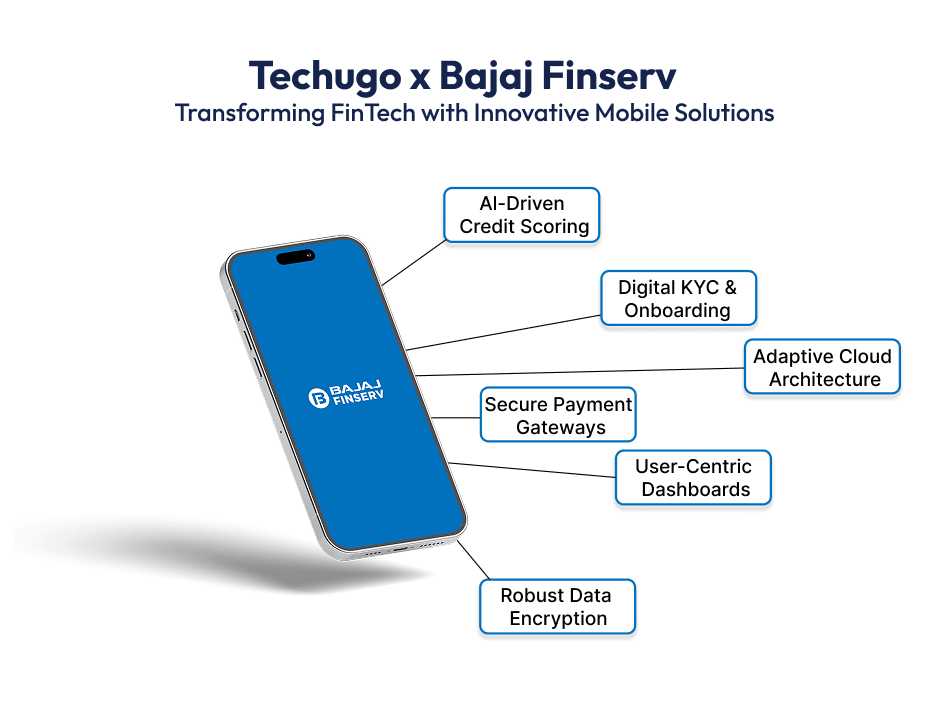
One of Techugo’s marquee fintech collaborations, Bajaj Finserv, showcases our ability to deliver at scale.
Our fintech engineers developed:
- Feature-rich finance and investment app serving millions of active users across India.
- AI-driven credit scoring
- Digital KYC
- Secure payment gateways
- Adaptive cloud architecture
- User-centric dashboards for financial management
- Delivered a robust data encryption and fraud-prevention ecosystem
Businesses trust Techugo for its:
- 200+ successful fintech deployments worldwide
- 1400+ mobile apps built across diverse domains
- Dedicated teams for custom banking software development and fintech compliance
- Proven ability to balance cost to build a fintech app with uncompromised performance
Get in touch with us to define the scope of your custom banking software development.
FAQs
1. What does it take to build a banking app like ADCB?
Building a banking app like ADCB demands fintech expertise and compliance precision. It involves end-to-end planning from use cases to designing secure data flows and integrating with core banking systems. A trusted development partner like Techugo helps streamline this process through agile execution.
2. What are the costs involved in banking app development?
The cost to build a fintech app varies based on complexity and regulatory scope.
- Simple apps start around $30K–$70K.
- Mid-level solutions range between $70K–$150K.
- Enterprise-grade digital banking ecosystems can exceed $250K–$500K.
3. What are the must-have features of mobile banking apps to stay competitive?
A successful mobile banking app combines functionality, trust, and convenience. Core features include:
- Biometric authentication and OTP-based verification
- Real-time account insights and transaction tracking
- Payments, transfers, and bill management
- Multilingual UI (Arabic/English)
- AI-powered alerts and fraud detection
- Secure API integrations with open banking systems
4. How do we ensure the app is secure and compliant?
Security is the foundation of every successful digital banking app development project. Key measures include:
- End-to-end encryption
- Biometric and device-level authentication
- Enforced KYC and AML protocols
- Encrypted API gateways and secure cloud infrastructure
- Regular audits and penetration testing
5. What are the risks if we skip compliance elements in mobile banking software?
Skipping compliance is like building a vault without a lock. The risks include:
- Data breaches and financial fraud
- Regulatory penalties and loss of banking licenses
- Reputational damage and user distrust
- Permanent brand dilution in digital markets
6. Do I need app developers in Abu Dhabi to build a banking app like ADCB?
If your target market is the UAE, working with app developers in Abu Dhabi gives you a big advantage. They already understand local banking expectations, compliance rules, user behavior, and how apps like ADCB set the benchmark. But it’s not mandatory. What you do need is a team that knows fintech, security, and the UAE regulatory landscape, whether they’re based in Abu Dhabi or partnered with a mobile app development company in UAE that already builds for this region. So the short answer – Not strictly required, but highly useful if you want a banking app that feels native to the UAE market.
Post Views: 759



 SA
SA  KW
KW  IE
IE AU
AU UAE
UAE UK
UK USA
USA  CA
CA DE
DE  QA
QA ZA
ZA  BH
BH NL
NL  MU
MU FR
FR