

 SA
SA  KW
KW  IE
IE AU
AU UAE
UAE UK
UK USA
USA  CA
CA DE
DE  QA
QA ZA
ZA  BH
BH NL
NL  MU
MU FR
FR [ LET’S TALK AI ]
X
Discover AI-
Powered Solutions
Get ready to explore cutting-edge AI technologies that can transform your workflow!



Get ready to explore cutting-edge AI technologies that can transform your workflow!





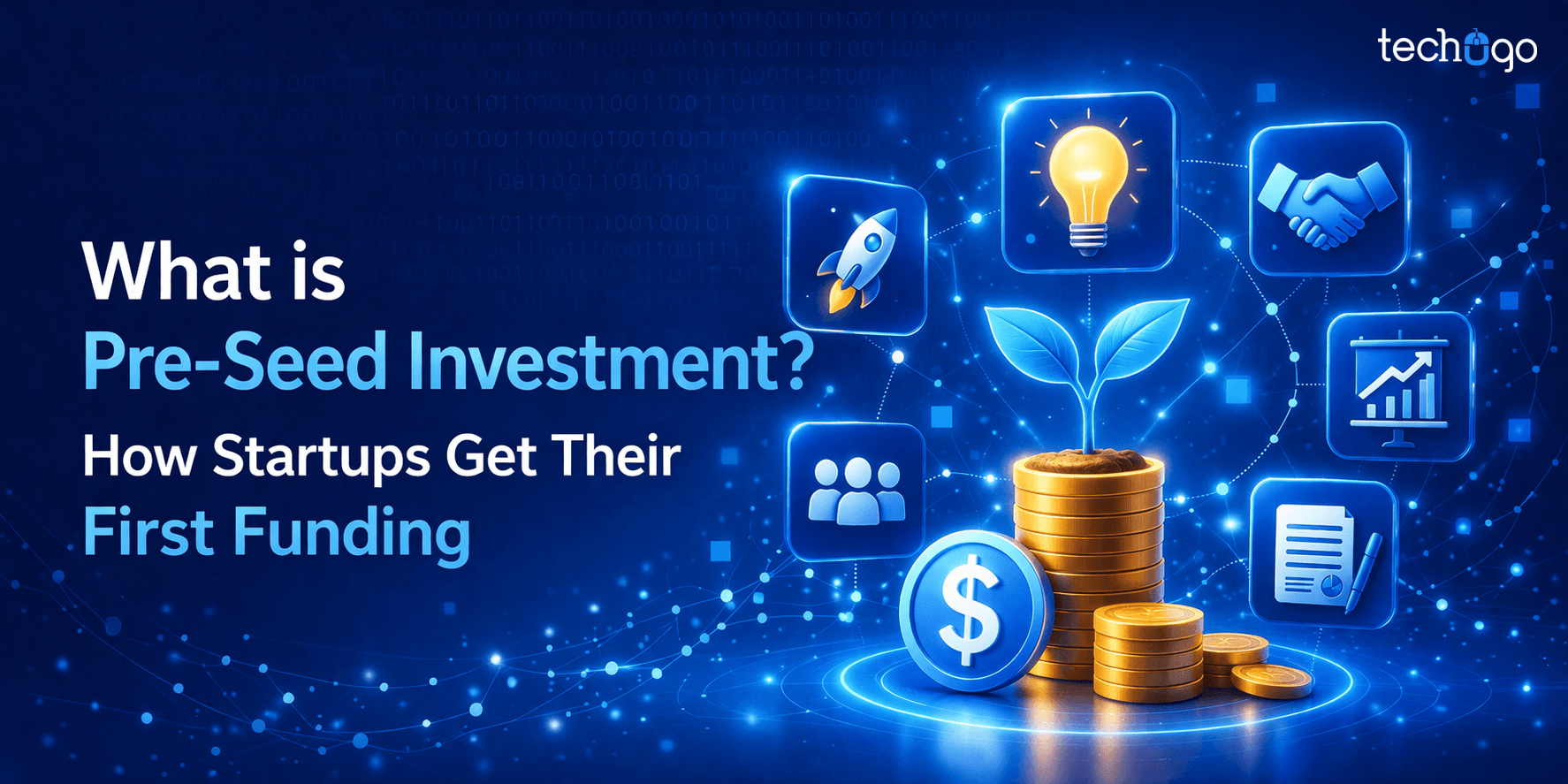
Every big startup starts with an idea. But ideas alone don’t pay the bills or build the product.
Pre-seed investment does.
So, what is pre-seed investment? In simple terms, it’s the very first money a startup raises to get started..
Pre-seed funding is increasingly sought by more early-stage startups in USA. It assists them to validate their idea, staff the correct personnel and create a working prototype.
It is something that can bring the best ideas down to a halt.
And, of course, it comes with questions: how do you get it? Who provides it? What do investors want to see before they write that first check?
Pre-seed funding isn’t just cash. It’s momentum. The difference between scribbling notes on a notebook and launching a product people actually use. It helps founders learn the market, attract talent, and prepare for bigger investments down the line.
That’s exactly what we’ll cover in this guide. By the end, you’ll know everything a startup founder in 2026 needs to get their idea off the ground with pre-seed investment.
Every big idea needs a little spark to start moving. That’s exactly what pre-seed investment does.
Pre-seed investment (also known as pre-seed funding) is basically the investment money a startup gets to turn a concept into something you can actually see, touch, or test – a prototype or a simple MVP.
Not all pre-seed funding comes from the same place. Startups can get their first dollars in a few different ways.
Where does this money come from? Often:
1. Founders’ Own Money (Bootstrapping)
Many founders start by funding themselves. It’s risky but keeps full control in their hands.
2. Friends and Family
People close to the founder who believe in the idea might chip in. Small amounts, big trust.
3. Angel Investors
These are individuals willing to take a chance on early-stage startups. They often bring advice and connections, not just cash.
4. Accelerators and Incubators
Programs that offer money, mentorship, and networking to help startups grow fast.
5. Grants and Competitions
Some governments and organizations provide cash prizes or grants that don’t take equity. And it’s perfect for founders who don’t want to give away shares.
How much money are we talking about?
Industry data from the U.S. shows that most pre-seed rounds typically range from $10,000 to $500,000.
In the end it depends on the idea and what the startup needs. This stage is for very early startups that are still testing their concept.
For investors, it’s risky. The startup might fail. But if it works, the reward can be huge.
It’s easy to mix them up, but here’s the simple way to think about it: pre-seed comes first, seed comes after.
Pre-seed funding is basically a bet on an idea. The product might not exist yet, and the market hasn’t proven it wants it. Investors are taking a leap of faith, backing a concept and the team behind it.
Seed funding, on the other hand, is for something that’s already off the ground. The product exists, there’s usually a few customers, and investors can see some proof that the idea has potential.
Because pre-seed is essentially “investing in a dream,” it’s harder to get. There’s a higher risk that the idea might never make it to market. But if it works, the payoff can be huge for both. The startups as well as the investors.
Think of it like this: pre-seed is lighting the fire, seed is adding the fuel to keep it burning.
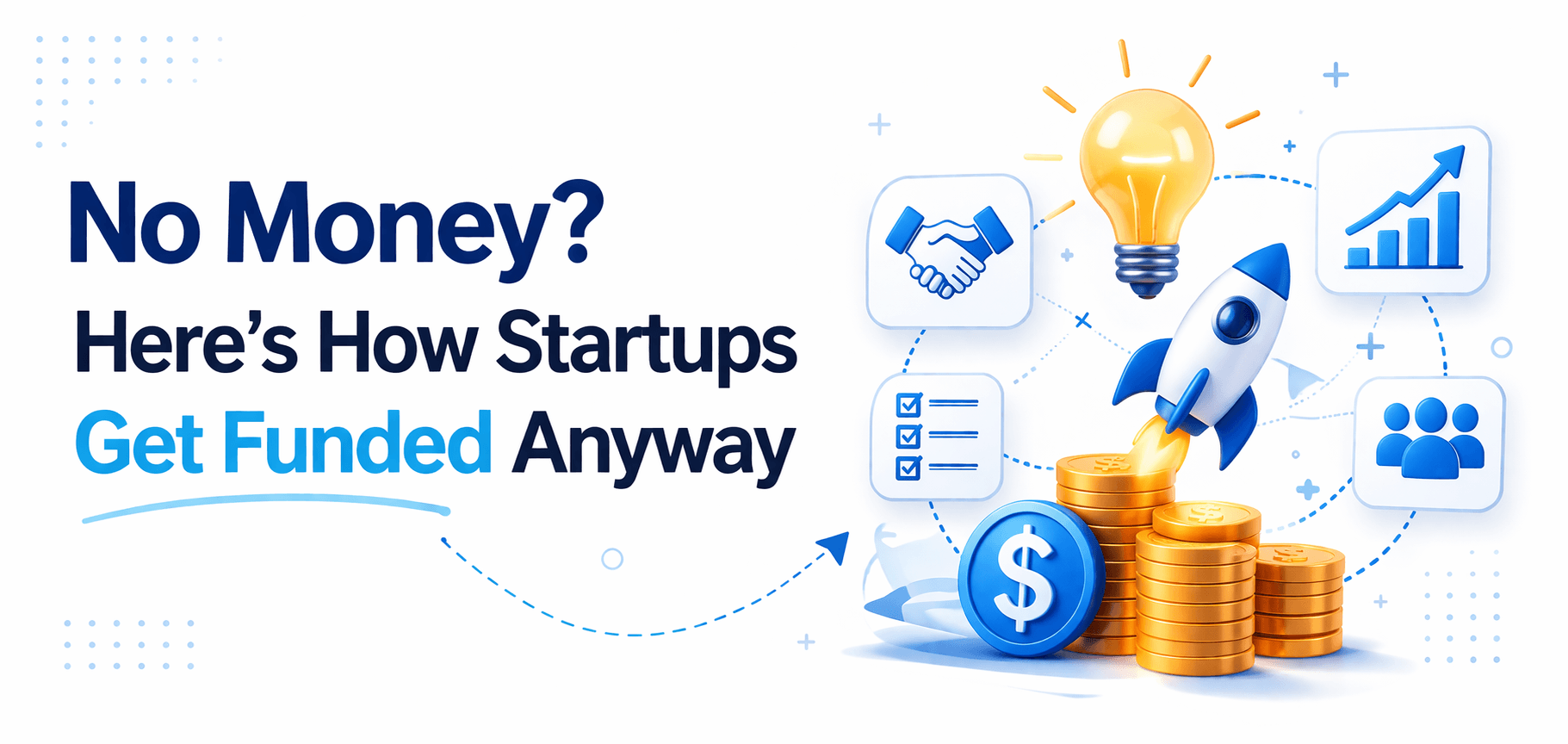
Getting pre-seed funding isn’t luck. Most startups follow a simple path to raise their first money. It’s less about chance, and more about taking the right steps at the right time.
Here are the steps most startups follow to secure their first funding:
Also Read – What Are The Best Mobile App Development Agency for Startups?
Every startup begins with a problem. Something that doesn’t work well, or something people need. The idea is simply your way of solving it.
At this stage, clarity matters more than complexity. Founders should be able to explain their idea in a few simple lines. Including what they’re building, who it’s for, and why it matters.
Before raising money, you need to know if your idea actually makes sense in the real world.
Startups accomplish this by chatting to prospective users, gathering feedback or even creating a waitlist. The strategy is straightforward, ensure that people are interested in what you are constructing.
Don’t guess – ask. As opposed to assumptions, real feedback is more important. One or two sincere talks is enough to make you know whether you are traveling in the right direction or you have to reevaluate things. The step will save you time and money in the future.
After the idea is solid the next thing that will be done is to create a rudimentary version of the product. This is referred to as MVP (Minimum Viable Product).
It doesn’t need to be perfect. It only requires to perform sufficiently to demonstrate the real concept. Investors do not want polish but they want evidence that the idea is possible.
Only the essential feature matters. This is the primary activity that your product should perform. All the rest is later. It is always preferable to a good idea that does not work.
Now time to give your story. A pitch deck is a concise presentation that describes your start up in a concise and persuasive manner.
It normally includes the problem, your solution, the market, how you will make money and your future vision. Consider it to have been your initial impression. It has to be effective and persuasive.
Be short and straight to the point. Too much text or intricate slides are to be avoided. The idea is to make your idea simple to grasp and captivating to such an extent that the investors would be interested in learning more.
In the pre-seed, networking can be the same thing as building a network.
Founders begin to contact angel investors, work in startup communities, visit events, and utilize such services as LinkedIn. A significant number of initial investments are done based on warm introductions rather than cold emails.
Start small. Talk to people. Build genuine connections. You do not have to have hundreds of contacts; you have to have a few of them. A single good introduction may open doors that a cold outreach will never do.
This is whereby it all falls into place. Founders bring their idea to investors, take them through the vision and respond to questions.
Assuming that investors believe in the idea (and more so the team) they make the decision of investing.
Be ready for questions. Shareholders will be interested in knowing how you think, what is your plan, and how committed you are. Stay clear and confident. Though all may not be fine, demonstrating the faith in your idea can be a great difference.
When Airbnb first started, the founders didn’t raise big money right away. They tested their idea by renting out air mattresses in their apartment. As shared in interviews with founders like Brian Chesky and Joe Gebbia, this early validation helped them later secure funding and grow into a global company.
That’s how startups land their first funding and move to the next stage.
Before raising pre-seed funding, startups need to get a few basics right. Investors at this stage are not looking for perfection, but they do expect clarity and direction.
Here’s what you should have in place:
Know exactly what problem you’re solving. Keep it simple and easy to explain. If people don’t understand it quickly, investors won’t either.
You should be able to explain your idea in a few lines. No jargon. No confusion. Just the problem and your solution. If you can’t explain it to a friend, it’s not clear enough yet.
You don’t need a perfect product. A simple version that shows your idea works is enough at the pre-seed stage.
Just focus on the core features. The primary activity that your product is meant to perform. Let all the rest aside then. The investors simply wish to know that your idea can be put into practice.
This is your startup story. Focus on the problem, your solution, the market, and your vision. Keep it clear, short, and compelling.
Don’t overcomplicate it. Use simple slides. Clear points. Tell a story that’s easy to follow. The goal is not to impress with design, but to make your idea easy to understand and hard to ignore.
Know your target users. Understand what other solutions exist and how you’re different. This shows investors you’ve done your homework.
You don’t need deep research reports. Just show that you know who your users are and what choices they already have. Then explain what makes you different. Even a small edge matters.
Not every investor is right for you. Look for those who invest in early-stage startups and align with your idea or industry.
Do a bit of research before reaching out. See what kind of startups they usually invest in. This saves time and increases your chances. A good match matters more than sending 100 random emails.
Pre-seed investment is where every startup journey truly begins. It’s not just about raising money, it’s about proving your idea can work. Focus on solving a real problem, keep things simple, and take the first step. The funding will follow.
Choosing the right pre-seed investor is not just about money. It’s about finding someone who fits your startup.
At the pre-seed stage, many founders don’t just need funding, they need direction. That’s where companies like Techugo step in.
Techugo, as a startup app development company USA helps turn rough ideas into real products. Instead of spending months figuring things out alone, founders get a clear path, from idea to MVP.
Our team can build everything from simple MVPs to complex mobile applications, depending on what your startup needs. That’s exactly what investors want to see. This approach is especially important in pre-seed startup app development, where speed and clarity matter more than perfection.
But it’s not just about development. As a leading mobile app development company in USA, Techugo also helps shape the platform itself. What features to build first. What to skip. What users will actually care about.
Early-stage startups don’t fail because of bad ideas. They fail because things stay stuck in “almost done.”
The right tech partner helps you cross that line,from almost built to actually working. And that’s the difference investors care about.
Pre-seed investment is where everything begins. With the right idea, the right preparation, and the right partners, startups can turn a simple concept into something real. Start small, stay clear, and keep moving forward.
That first step matters more than anything.
Pre-seed investment is the first money a startup raises to turn an idea into something real. It’s usually used to build an MVP, test the idea, and cover early costs.
Startups usually get pre-seed funding from founders’ savings, friends and family, angel investors, or early-stage programs like accelerators. Networking and pitching play a big role here.
According to the industry data, most pre-seed rounds in the USA range from $10,000 to $500,000. The amount depends on the idea, team, and what the startup needs to build.
Pre-seed funding is for ideas that are still being tested. Seed funding comes later, when the product already exists and shows some early traction or users.
At the early stage, every startup has an idea, but an idea alone isn’t enough. That’s where a mobile app development company in USA can help. They help decide which features matter most, how the app should look, and how users will interact with it. That saves time and avoids costly mistakes.
Not always, but having an MVP makes it much easier. It gives investors something real to see and increases your chances of getting funded.

What happens when artificial intelligence stops living inside screens and starts interacting with the real world? That’s where physical AI comes in..


Google’s new Google AI dictation app, called Google AI Edge Eloquent, runs fully on-device, and it works even when there is no internet connection. It..

Write Us
sales@techugo.comOr fill this form