

 SA
SA  KW
KW  IE
IE AU
AU UAE
UAE UK
UK USA
USA  CA
CA DE
DE  QA
QA ZA
ZA  BH
BH NL
NL  MU
MU FR
FR [ LET’S TALK AI ]
X
Discover AI-
Powered Solutions
Get ready to explore cutting-edge AI technologies that can transform your workflow!



Get ready to explore cutting-edge AI technologies that can transform your workflow!






Until recently, delivering water simply meant leaving bottles at someone’s doorstep. There were no mobile apps, no tracking, and no immediate updates. It was a manual process based on phone calls and coordination. But that’s changed. Although people still get their water delivered through calls and messages, online water delivery apps are quickly gaining popularity, and people are finding them more convenient and easy to use for getting water delivered to their doorsteps. Businesses that want to stay up-to-date have shifted to on-demand app development for water delivery businesses.
Building an online water delivery app is a smart move for businesses as it makes ordering and tracking easy for customers, and businesses can also keep a track of all deliveries in a day, week, or month. Apps like these make the process clear. Behind them sits a real need people feel.
Since bottled water keeps selling more every year, and some even say that the water delivery business might hit half a trillion dollars by 2030. So it’s crucial for water delivery businesses to get a good understanding of water delivery app development cost to plan budget carefully.
In 2026, cost to develop a water delivery app can start from $5,000 for a basic version and it can go above $50,000 if you want advanced tools and room to grow your water bottle delivery app.
What drives that number up? The water delivery app cost boils down to what functions you need, how intricate the look is meant to be, along with which team takes on the work.
Let’s understand…
Market numbers show bottled water hit $451 billion worldwide in 2025; a rise to over $600 billion by 2033 seems likely, thanks to wellness concerns paired with ease of access. Still, the real push comes not just from fitness fads but also daily life getting busier.
Apps for water delivery are gaining ground because people want fast orders, timing that fits their day, plus updates they can see live. A business putting effort into building such an app meets rising needs while drawing in loyal users over time.
Water now arrives fast because of hyperlocal delivery reshaping basic services. Groceries shift toward immediate drop-offs; medicine follows closely behind.
Efficiency grows when companies target only nearby neighborhoods through an online water delivery app. Cutting transport expenses becomes easier under such focused operations.
Monthly income becomes easier to count on when customers keep getting deliveries. Since people regularly run out of drinking water at home, they tend to reorder. That habit turns single buys into steady cycles. Subscriptions fit well because refills happen by routine.
One day at a time, deliveries stack up – weekly drops or once-a-month stops keep things moving. Building an online water delivery app that brings water to doors might earn more over years if it lets users lock in repeats ahead of time.
Water service providers often stick to old methods like phone orders or paper logs. Because of that, timing slips, mistakes happen, more gets overlooked.
Shifting toward a mobile app for water delivery changes how things run by building in automatic steps. With tools such as order updates, automatic payments, or set delivery times, tasks get done faster yet demand less hands-on effort.
A fresh start in the business world often means finding smarter ways to stand out. With a solid water bottle delivery app, small teams gain ground fast. Not by cutting costs but through smooth service that feels effortless.
Speed becomes an advantage when every detail works right. Convenience matters more than ever now. A clean interface helps customers stay happy without confusion. Experience shapes choices far beyond just pricing tags.
Expansion becomes possible when an online water delivery app grows alongside business needs. New zones open up, suppliers get added, different offerings appear – all without starting over.
First comes picking the correct setup when building an online water delivery app. Each company doesn’t require an identical system. Depending on who uses it, how far deliveries reach, and how income flows, the design shifts.
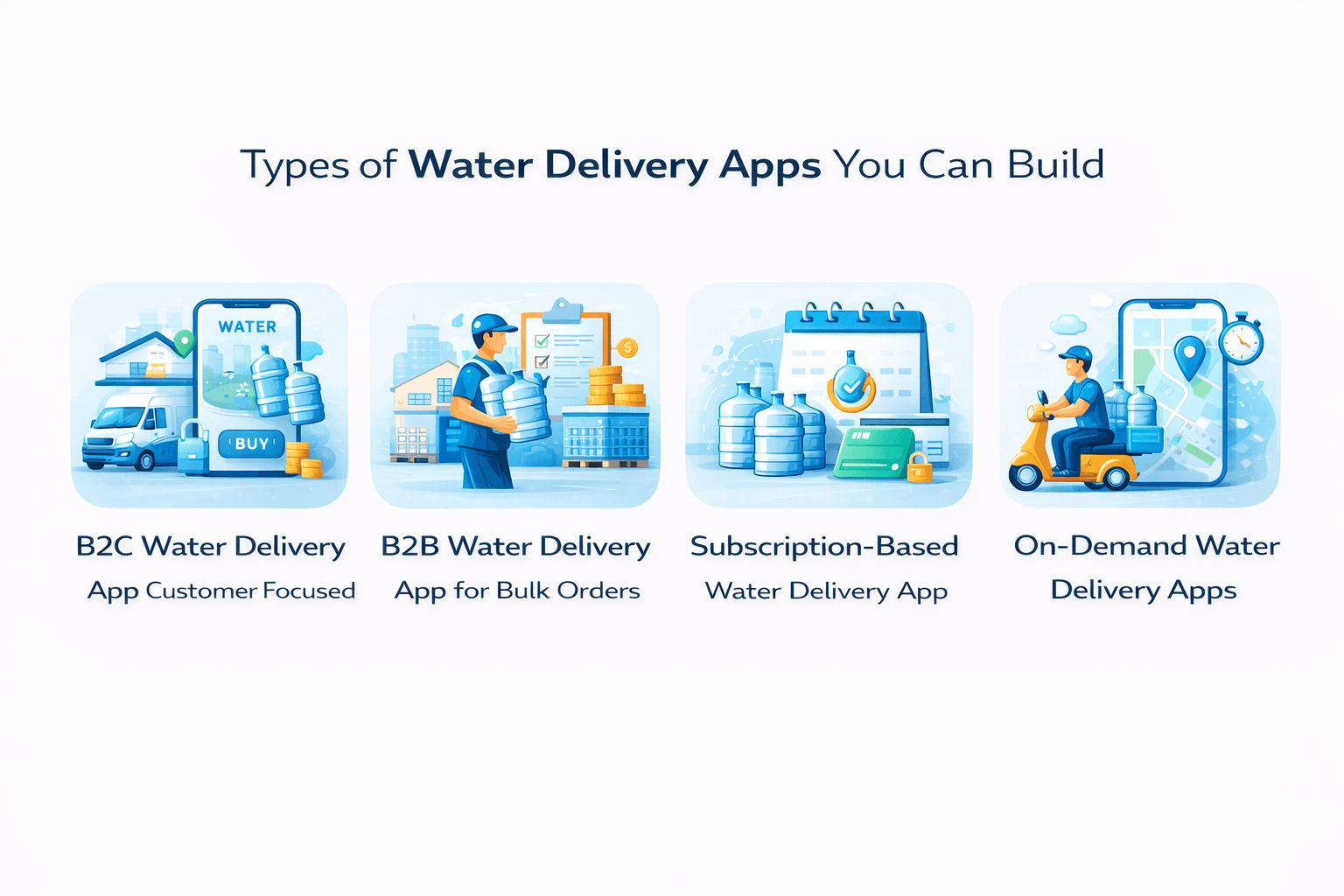
Average development cost: $5,000 – $15,000
Most people see the B2C setup when they open a water delivery app. This link goes straight from company to person needing bottles at work or home. Through the screen, picking what you need happens fast – choose how big the container, set when it arrives.
Starting with just core functions can cut down how much it costs to build a water delivery app like this.
New businesses stepping into the space often pick this version when moving online. Fewer bells and whistles at launch means spending less from the beginning.
Average development cost: $15,000 – $30,000
Businesses such as offices or eateries often need steady deliveries of large water supplies. With this kind of app, ordering happens on a bigger scale, week after week. More volume means trickier coordination behind the scenes.
Stuff such as handling large orders, special rates, billing tools, and setting up deliveries matters a lot.
The cost of developing a B2B water delivery app costs more as it handles larger volumes of data and has more sophisticated features.
Average development cost: $10,000 – $25,000
Picking a plan means getting water every day, week, or month without extra steps. That kind of setup tends to bring solid returns over time.
Starting out, building an online water delivery app means adding tools that handle repeat orders, set up automatic billing, and let users track their subscriptions easily.
Average development cost: $25,000 – $50,000+
Suppose one app pulls together many water sellers and individual customers in just one spot. Instead of hopping between stores, people see everything side by side – price tags, brand names, how fast it arrives. One place shows who offers what. Shoppers pick based on what matters most that day. Different sources, one screen, no fuss.
Building this kind of water delivery app means dealing with extra layers, almost like setting up an online store. Instead of simple features, you bring in sellers, set up payment splits, plus manage powerful backend tools.
Because there are more moving parts, the cost of developing this water delivery app is higher. Yet it opens doors to grow quicker and earn more over time. Firms often turn to specialists who focus only on crafting these detailed apps.
The water delivery app development cost depends on how complex your app is, what features you include, and which mobile app development company you choose.
On average, the cost to develop a water delivery app in 2026 ranges between $5,000 and $50,000+, depending on the scope, region, and technology stack.
| App Type | Cost Range | Timeline |
| MVP App | $5K–$15K | 1–3 months |
| Mid-Level App | $15K–$30K | 3–6 months |
| Advanced App | $30K–$50K+ | 6–9 months |
Starting off small means including just what matters most – signing up users, showing bottles available, handling orders at a basic level, while linking payments in a straightforward way.
Keeping things minimal helps hold down the cost of development of your water delivery app since there’s no extra coding beyond must-have parts, which turns out perfect when trying to see whether customers actually show interest fast.
Sometimes you see an online water delivery app that tracks orders live, sends alerts straight to phones, offers repeat deliveries, yet also makes navigation smoother.
Growing companies pick this kind because it helps people feel more supported during use. Cost of development for this water delivery app climbs here since connecting extra tools and upgrading internal systems takes effort.
Building a high-level online water delivery app means bringing together several vendors, smart suggestion tools, live data views, along with deep management settings.
Such an app grows easily, handles many users without slowing down. This cost of development for the water delivery app becomes higher since strong systems, smooth connections between services, and speed tuning are built into its core.
Several factors come into play when the total cost of building an online water delivery app is concerned. Some of the most important factors to take into account are the following:
Pricier builds come with extra tools. Features such as live tracking, payment plans, or vendor networks push the price up fast.
One reason companies go cross-platform? It skips the expense of building two distinct apps. Instead of doubling up on development, they cover both mobile markets at once.
Starts with a longer build phase when you toss in real-time location checks alongside instant drop-off alerts. Still, people using the water delivery platform tend to feel more at ease knowing where their order is. Despite extra effort during setup, clarity on arrival times makes a difference they notice.
Payment safety matters most. When different ways to pay get added, expenses go up – yet things tend to run without hiccups.
A single tap might start it, yet recurring deliveries demand deeper code layers underneath.
Automation creeps in slowly, building complexity over time instead of arriving all at once. This hidden work raises the initial cost of the water delivery app. Still, steady customer orders begin flowing later, nudging profits upward month after month.
Picking the right team shapes how much you pay. App developers in the US? They usually ask for more cash compared to mobile app developers in UAE or India.
Going for an overseas agency can save money – yet the work still hits high marks for building water delivery apps. What matters shows up in both price and performance.
Picking certain tools shapes how much you spend on making a water bottle delivery app. One that only handles orders runs cheaper compared to systems showing live updates, repeat deliveries, plus data reports. Building something strong and smooth means matching what it does with what you can pay. What works fits both need and number.
Starting off on an online water delivery app means landing right here. Signing up happens through email, by phone number, or with a social account instead.
Managing your profile lets you store where you live, pick favorite times for drop-offs, yet keeps past orders visible too. Basic as it seems, having this builds room for custom touches plus helps keep people coming back later.
Looking at what is on offer matters. Bottle sizes show up next to brand names, prices tagged along. One glance tells you nearly everything. Structure shapes how people move through choices. Decisions happen faster when things are lined up right. Filters pop in beside category tabs, small addition. That tweak asks for extra build time. Still, finding drinks gets simpler. Usability climbs without slowing anyone down.
Right off the bat, picking your water online matters most. People might want a single drop-off or something regular, depending on how they live.
When timing fits into daily life easily, it feels less like work to keep up. Building that kind of flexibility takes more time under the hood. Still, making things smooth pays off every time someone taps “order.”
Paying ahead through scheduled pickups means less effort each day. Though building this into the app takes extra time, customers stick around longer when refills happen without reminders.
Money comes in more steadily, simply because people keep using it. What looks like added expense turns out to balance over months.
Payment safety matters – methods like cards, UPI, or digital wallets help.
Though adding several gateways raises app development costs for a water delivery app, it keeps payments steady and working well.
Right now, knowing exactly where a delivery stands builds confidence. Location updates come alive through GPS hooked into solid server systems.
These tools lift the price of building an on-demand water app. Still, people feel more at ease when they watch progress unfold minute by minute.
Every time a bottle ships, a small alert reminds the user. Though cheap to send, these pings quietly strengthen habit and loyalty inside an app that brings water to doors.
From the moment an order drops into their queue, delivery people handle each task using their personal dashboard.
When updates flow both ways, everything runs without hiccups between tech and team. Though it makes building the app a bit trickier, skipping this piece would break how things work behind the scenes.
Saving time and cutting fuel use comes from smarter delivery paths. Following those paths happens when drivers stick to GPS-guided directions, hitting deadlines more reliably. Map tools raise development costs of water delivery apps at first, yet they make daily operations run smoother.
Right on schedule, agents mark orders once collected. When moving to drop off, they log it instantly. Even after leaving the bottle at the door, updates happen right away.
That way, people know exactly where things stand. Fewer mix ups pop up when info flows without delay. Any proper water delivery app simply has to include this function.
Tracking pay, finished deliveries, and personal stats lives inside a clear dashboard for drivers. Though small setups might skip it, growth pushes this tool into necessity.
Keeping track of inventory, what items are ready to ship, and storage details falls on admin teams. Without clear oversight here, deliveries stall due to missing goods, disrupting service flow. Handling these layers quietly increases how involved building the app becomes behind the scenes.
With this tool, administrators keep track of every order while handing off deliveries and fixing problems. Right at the heart of the water delivery app, it shapes how fast things run.
From behind the scenes, staff check personal details while sorting out issues people report.
When problems come up, someone steps in to fix what needs attention. Because of this, help feels quicker and things run smoother for everyone involved.
From inside the system, admins get tools to shape how subscriptions work. Pricing isn’t fixed – it can shift based on choices made during setup. One change here might lower costs there. Discount rules fit into those settings naturally.
When these pieces connect, they influence what users eventually pay. The whole model stays adjustable, which affects total water delivery app development cost.
Because analytics show how users act, what sells, plus overall results, having them matters.
Even if fancy dashboards make the cost of building an on demand water delivery app higher, they reveal patterns that guide smarter growth decisions.
Start smart when picking what your online water delivery app does. One firm focused on building apps might guide choices so each piece fits your aim, yet still holds down expenses for creating a water delivery service online. Not every detail needs space – some stay parked till later.
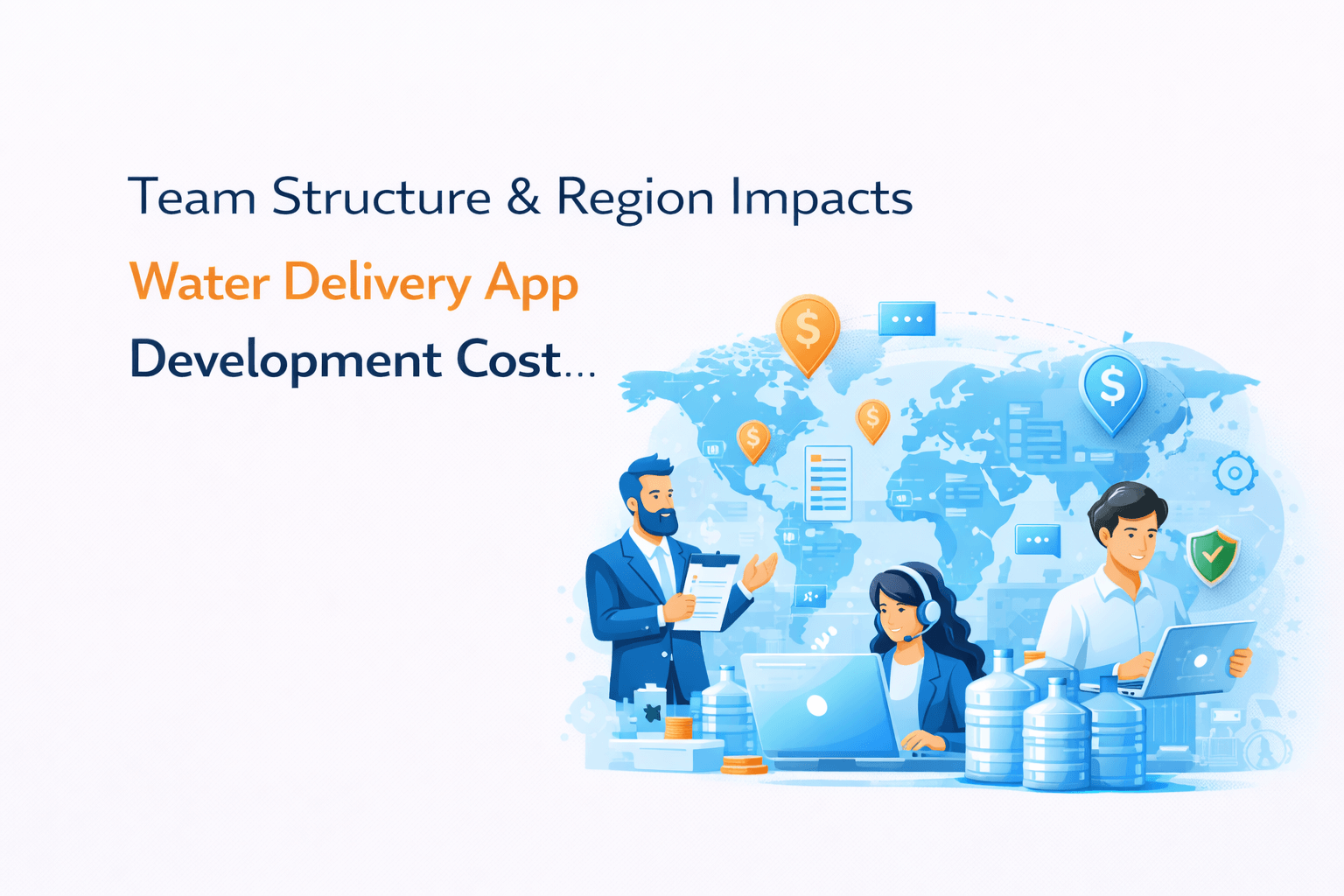
Your choice of a mobile app development company has a big impact on how much the cost of building the water delivery app will be. Features and layout matter, yet location and builders shape expenses too.
Start by hiring your own crew – suddenly every choice about the app flows through you. Oversight of coders, artists, and checkers means fewer surprises down the road. Consistency grows naturally when one group sticks with the project from day one.
Still, it hits the wallet hardest. Paying people, setting up space, plus daily costs pile on fast. Usually, building a water delivery app by an in-house team runs from $40,000 to $100,000 – team scale and where they are changes the total.
Most people go with an outsourced water delivery app service when they need an app built. Getting skilled coders becomes easier this way – no need to hire in-house staff. When it comes to water delivery apps, experts take care of all steps, start to finish.
Starting around $10,000, building a water delivery app by hiring outside teams can go up to $50,000, shaped heavily by features needed. With pace, expense, and results woven together, this path fits well when you’re launching or growing steadily.
Where a team builds an app shapes what they charge. Mobile app development companies out of the USA often ask between $80-$150 each hour. Water app development companies in India or the UAE might set rates from $20-$60 instead, doing much the same tasks.
Offshore teams often handle costs of building water delivery apps at a fraction of the price. Building one fully in India or the UAE might take $5000 up front, maybe $30,000. In the USA, on-demand app development companies may charge $60,000. Some companies go overseas simply to keep expenses lower. Quality stays steady even when budgets shrink.
A team might handle planning at home, yet send coding work elsewhere. One option: hold creative choices close, hand off building tasks to specialists who focus on on demand water delivery app development.
A different path gives more grip compared to handing everything over, yet keeps water delivery app development costs lower. Usually, building a water delivery app in a mixed setup runs between fifteen thousand and sixty thousand dollars, shaped by who does what.
Hidden charges tend to creep in after launch, stacking up without warning. Budgets slip when those extra costs aren’t mapped out ahead of time.
Monthly hosting expenses for an expanding water bottle delivery app might range from $500 to $5000.
When user numbers climb, so do the bills- this shapes how much you’ll spend down the line. A bigger audience means higher demands on infrastructure, which feeds directly into the overall costs of water development apps over time.
Outside tools keep most apps running without hiccups. Take maps – they help follow deliveries, while payments move through special channels, each one adding expense. Messages pop up using SMS systems, which also charge fees.
At first glance, these APIs look inexpensive – yet expenses grow as you use them more. Picture constant order checks or a flood of transactions; suddenly, bills climb fast. Any online water delivery app needs such connections, though they quietly inflate the total price down the line.
Just because the app ships doesn’t mean it’s done. Bugs pop up, so patches must follow – quiet fixes that keep things running.
Speed hiccups? Tweak them over time. New phones arrive constantly, each with fresh system quirks. The software adapts – or breaks. Staying current isn’t optional; it just happens.
Every year, upkeep usually runs between 15% to 20% of what it first took to build the water delivery app. Falling behind on fixes might slow things down, open up safety issues, and then push users away.
Fees come into play when putting your app on places such as Google Play or the Apple App Store. Though tiny next to the overall water delivery app price estimate, these payments show up more than once – or just once – but always demand a spot in your planning.
A few extra fees might pop up when building your water delivery app, especially if it uses outside software. Because of licenses, even minor add-ons can increase the total price tag.
When it comes to user data, solid safeguards become a must. Encrypted transactions help, yet reliable access controls matter just as much. Protection steps aren’t optional – they form the base.
On top of everything, staying within GDPR or regional data rules means more work and higher app development costs for water bottle delivery apps. Getting safety systems up and running at first might take anywhere from $2000 to $15,000. After that, constant checks keep the annual bill climbing each year.
Most people think finishing the app ends the work – truth is, that’s just step one. Getting people to actually open it? That part takes its own push.
A single startup might drop heaps just to pull in new users each month – figures shift fast depending on choices made. When outreach falls flat, top-tier apps built for hauling water orders stall out before launch.
Later down the line, surprises shrink when hidden water delivery app development costs enter the plan up front. Keeping tabs on what things actually cost means building your water delivery app won’t stall under money strain.
One way to get a water bottle delivery app right? Focus less on code, more on clear steps. Success shows up when each stage matches what users want and the company aims for.
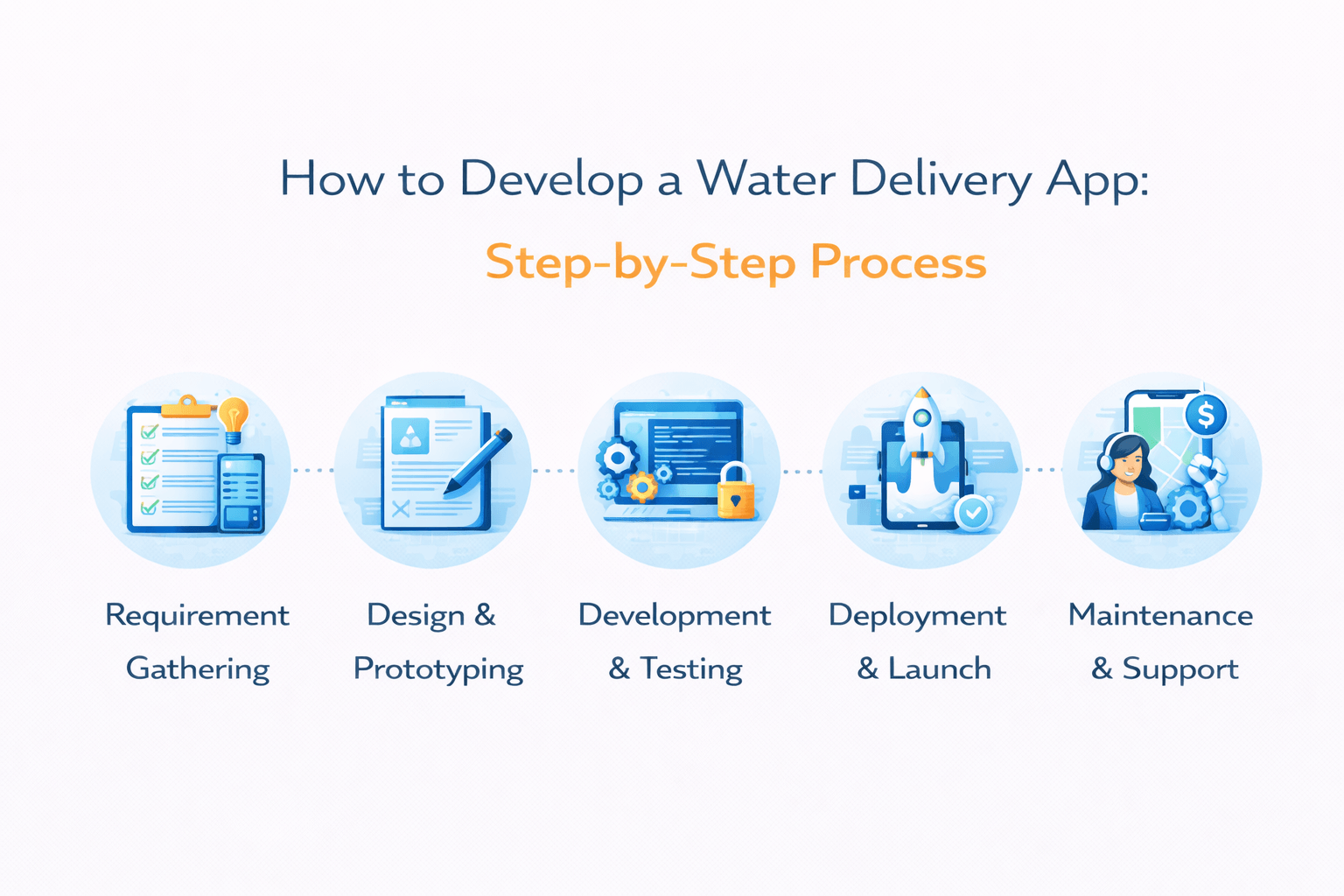
Starting a water delivery app means seeing who needs it most. Picture the people you want to reach, while checking what others already offer. Watch how rival apps succeed or stumble along the way.
Picking how your business runs matters. Whether serving customers or companies shapes what comes next. Think subscriptions or shared marketplaces – they change everything. The path chosen affects the water delivery app costs right away.
After getting clarity through research, it’s time to outline what the product will do. Rather than creating every part right away, start small.
The first version should include only essential elements – just enough to work and test. This approach means launching fast, learning quickly, leaving room to adapt later.
Fewer parts mean less time spent building before going live. Simpler design cuts early expenses on the water delivery app. Launch day arrives faster when only essentials shape the plan.
Smooth layouts help people move around fast, finding what they need without getting stuck. Clarity comes through spacing, clear labels, not clutter. Ordering feels natural when buttons sit where eyes go first.
A single test version can show how people interact with a product long before coding starts. When problems pop up fast, fixing them doesn’t drain time or money down the line. Strong layouts keep users coming back, simply because things just work.
Now comes the part when coding your water bottle delivery app kicks off. The user interface gets shaped here, while behind the scenes, logic and structure take form at the same time. What people interact with grows alongside invisible systems powering everything.
What you see and touch lives up front. Behind it, everything moves through stored information, tasks, and rules. When done right, one piece flows into the next without hiccups. How deep it goes shapes how much it takes to build. Smooth links between parts come easier with help from teams who’ve built similar things before.
Apps today lean on connections to work properly. From payments to location checks, these tools link up using special digital pathways.
Functionality improves across your online water delivery app once connections are built in. Still, expenses climb too – more so as demand grows over time. The smart pick of tech pieces shapes how well things run later on down the road.
Testing comes first if you want your app ready to go. Bugs might show up, so look closely at how everything runs. Watch out for slowdowns or weak spots that hackers could use instead.
When you test, your water delivery app runs without hiccups on different gadgets while managing live usage loads. Without testing, early savings might happen – yet hidden issues often surface down the road.
Launch comes only when every check passes. Platforms open their doors once approval arrives. Ready means no bugs found during checks. It shows up online after final sign-off.
Starting things off means getting servers ready, along with databases, while keeping an eye on performance through tracking tools. When everything runs without hiccups at go-live, people tend to like what they see right away – this shapes how fast others begin using it.
Once it’s live, effort shifts. Watch how it runs, gather what users say, then push improvements on a schedule.
When it grows, things like extra tools, wider reach, or faster systems often come into play. Growth that stays smooth usually needs support from mobile app development companies, such as in the USA. These teams handle changes without letting costs climb out of sight.
Building step by step creates stability over time. When each part connects clearly, the whole system holds up better. Thoughtful work at the start pays off later.
The cost of developing a water delivery app can go beyond thousands of dollars, but certain practices can help you understand how much it costs to develop an online water delivery app.
A first version of a water delivery app works best when stripped down. Think sign-in for users, pages showing available bottles, and ways to request delivery. Payments need to happen inside too. Nothing more shows up at this stage.
Besides piling on subscriptions, tracking features, and analytics right away, begin simply with order placement. That shift alone could drop development costs for a water delivery app to between $5000 to $10,000.
Starting from zero costs too much money – waste of effort, really. Existing tools work just fine instead.
Got payment processing? That’s an API. Need texts sent fast? There’s one for that too. Tracking stuff on a map? Already built. Skip building from scratch. Plug in what exists.
A solid tech company usually pushes for trusted tech over fresh experiments. What works often beats starting from zero.
Begin in a single town – or just part of it. Get things moving smoothly right there, making sure deliveries arrive on time while people enjoy using the service and keep coming back.
Starting tiny helped plenty of big apps grow. When your water delivery app runs smoothly in just one neighborhood, expanding feels less heavy, costs drop too. Going slow at first means spending less on the whole thing – keeps the budget tight without surprises.
Fancy tools such as AI suggestions or complex data views? Not required when beginning. These elements stretch out building time while pushing up water delivery app development costs- no promise of success tagged along. Starting simple skips that weight.
Start with what people really want. When nobody mentions a new tool, skip building it for now. Let the water bottle delivery app work well without extra parts. Simplicity comes before extras.
Building an app somewhere can shift costs fast. Mobile app development companies in India or UAE often cost much less compared to water delivery app development companies in the USA – sometimes just a third.
A solid track record matters when picking a team for your app project. Cheap doesn’t have to be poor – quality can still hold strong. What counts is knowing their past work matches what you need done.
By focusing closely here, lower costs come through without losing power or room to expand later.
A smart monetization plan pays back the overall cost of building the water delivery app while opening doors to ongoing income. Top apps skip single methods, mixing styles shaped by how people act and growth patterns.
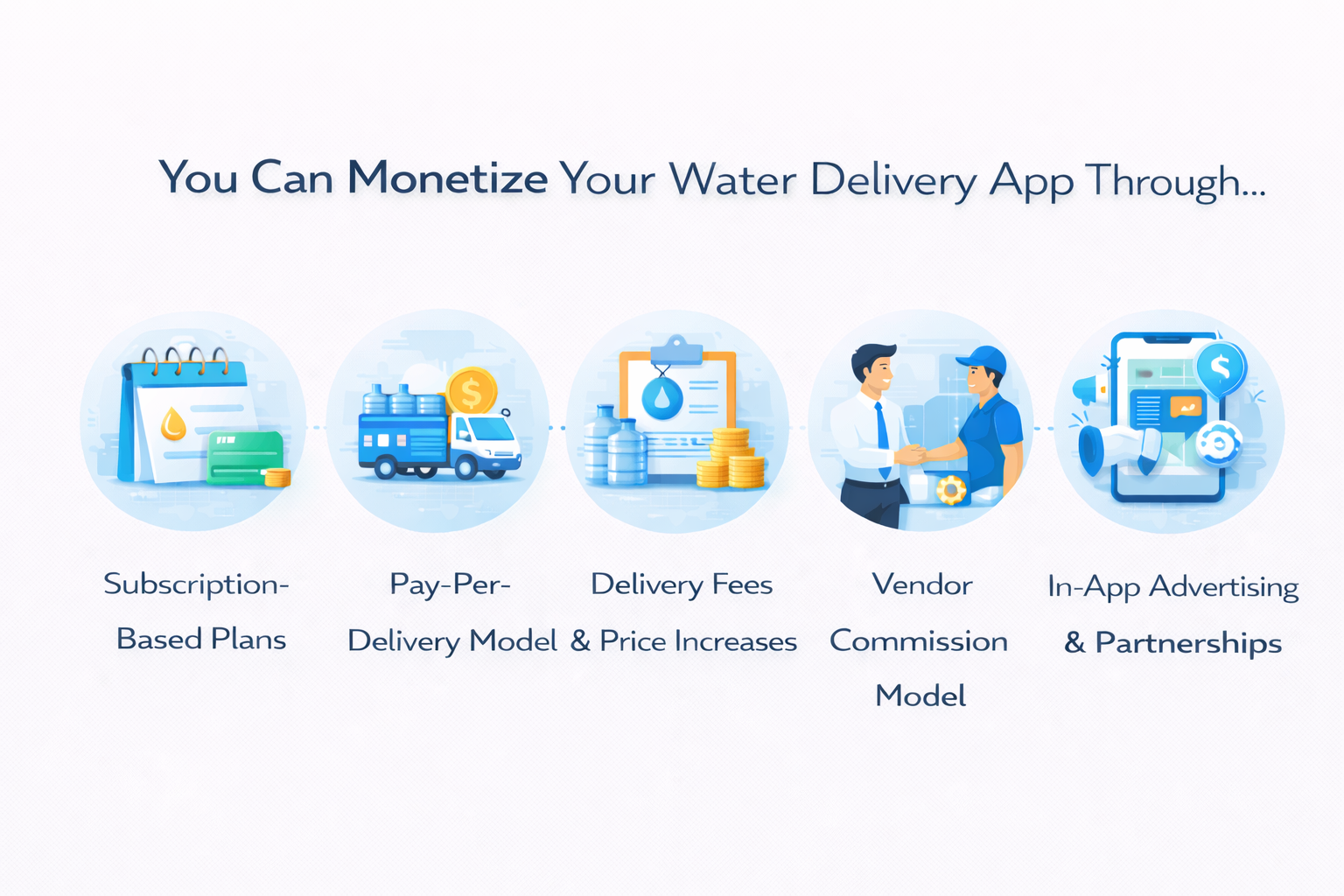
Every now and then, a steady stream comes in through subscription-based water deliveries online. Customers pick routines – daily, every week, or each month – and stick with them. That rhythm keeps money flowing without surprise gaps. Predictability shows up quietly but matters more than bursts.
A single buyer might pick a subscription where a 20-liter container arrives every 48 hours. That setup cuts down on repeated requests while keeping usage steady. Arrivals at regular intervals mean less effort in tracking supplies.
Some people skip subscriptions altogether. When they need something, they just order it then. This is how pay-per-delivery fits in. It suits those who like flexibility.
One order at a time, payment with each drop-off. Easy to set up this way – fits just fine when the water bottle delivery app first launches. Not flashy, but it keeps things moving without snags.
A few cents added to each drop-off helps cover costs. When demand jumps, prices might rise too – especially if it’s busy or needs fast handling. One way shops speed up shipping is by charging more for it. Because of that pricing shift, income grows while order flow stays under control.
A range of rates can feel natural within the service, especially since coding them in doesn’t demand major effort. Even small financial tweaks in the background make users stick around longer. Though features often get flashy, quiet changes like varied prices work just as well.
Running a marketplace means money comes in when sellers pay a cut per sale made on your app. A slice of each transaction adds up over time, filling your pocket without extra effort. Sellers handle inventory while cash flows from their activity.
Every purchase they make through your system feeds your income stream. Your role stays hands-off yet rewards keep arriving with every completed deal.
After enough people start using the app, it turns into a spot where ads make sense. Companies that sell filtered water systems might step in to show their message there. Drink makers could join too, placing promotions inside the interface. Local shops may also appear on screens through quiet partnerships built over time.
Whatever path you pick hinges on how your company runs and who shows up to buy. Thoughtful steps mean the water delivery app development cost comes back fast – growth follows without burning out.
Most people think creating a water delivery app is simple – yet it’s what happens after the idea that trips them up.
Getting water where it needs to go sits at the heart of every water delivery app. Imagine opening an app that says water arrives today – yet it never shows up. That kind of letdown keeps people away.
Tracking drops on maps while drivers take smarter paths can fix delays. Still, weaving those tools into the system pushes water delivery app development costs higher.
Fresh stock details keep things moving when orders climb. As numbers rise, mess follows if updates lag behind. Supplier chats must stay sharp – timing slips cause delays. Guessing customer needs leads to spills or shortages alike.
Pricing climbs when stock tracking gets built into the water delivery app, yet leaving it out risks heavier expenses down the road. A system like that might raise initial spending – still, ignoring inventory often backfires harder.
Grabbing people for your app feels like a breeze. Yet holding their attention? That part drags.
A glitch here, a delay there – suddenly loyalty vanishes. Yet apps that nail it often include auto-refills, alerts before delivery, and checkout without hiccups.
Improving how users feel comes first – delivering real worth matters more than ticking boxes. Worth shows up when effort meets need without fanfare.
Most applications stumble when they grow. A setup fine for a hundred people often crashes with ten thousand.
Speed changes everything in the world of online water delivery apps. Building an app without knowing future trends risks making it useless sooner than expected. Future choices shape whether your effort lasts or fades quietly.
Behind the scenes, apps are slowly shifting thanks to artificial intelligence. Rather than waiting for commands, they begin guessing what users might want – using habits, forecasts, even old receipts. A quiet change slips into place.
A customer using a water bottle delivery app might get alerts when supplies run low. Because of these timely prompts, people tend to reorder more often – making things easier while boosting retention naturally.
Water isn’t just flowing now – it’s being watched. When levels drop in a building, gadgets notice right away. These tools then start restocking without waiting. Machines handle the task before anyone thinks to check.
A single tap sets it going, no need to check levels every day. Offices rely on it quietly, just like large homes where bottles vanish fast.
Now it’s normal to deliver right in the neighborhood. Companies once covered wide zones; now they zoom into tight spots, getting things there quicker. What used to take days now happens before sunset. Smaller maps, shorter clocks – speed wins where distance shrinks.
Fewer trips mean lower expenses, since smarter routing cuts wasted effort. When an app focuses on local deliveries, it manages higher order volumes without spreading too thin – performance gains follow naturally.
Imagine subscriptions that bend instead of breaking. Tomorrow’s setups won’t just repeat – they’ll shift on their own, changing dates when life gets messy.
With automation, people and companies do less by hand. Because of that, income stays stable – which is why today’s water delivery apps lean on it heavily.
Building a water delivery app requires more than just basic coding skills. From real-time order tracking to subscription management, payment integration, and push notifications, every feature of the water delivery app needs to work seamlessly. This is why hiring a professional mobile app development company, like Techugo is crucial.
Techugo brings expertise in creating scalable and user-friendly solutions. Their experts can handle the technical complexities involved in an online water delivery app, ensuring smooth operations from order placement to delivery. Experienced developers also integrate features like automated scheduling, inventory management, and AI-powered demand prediction, which enhance user experience and improve operational efficiency.
Working with Techugo means you get access to the latest technology, best design practices, and strong backend infrastructure. They also provide guidance on reducing water delivery app development cost, selecting the right tech stack, and implementing real-time tracking and notifications.
So, without any delay, reach out to us. You can fill out our contact form and schedule a 1-on-1 call with experts. Let’s build something innovative together.
Most days, clinics face more patients than they can handle. Long waits happen often when too many people need care at once. Running things smoothly be..

Is launching an AI wellness app in 2026 really worthwhile? That's a question a lot of tech giants would ponder. Demand isn’t hiding, it’s loud and..



Write Us
sales@techugo.comOr fill this form