

 SA
SA  KW
KW  IE
IE AU
AU UAE
UAE UK
UK USA
USA  CA
CA DE
DE  QA
QA ZA
ZA  BH
BH NL
NL  MU
MU FR
FR [ LET’S TALK AI ]
X
Discover AI-
Powered Solutions
Get ready to explore cutting-edge AI technologies that can transform your workflow!



Get ready to explore cutting-edge AI technologies that can transform your workflow!






If you are planning to build an app like Rover, the first thing you need to think about is not features… but budget. A pet care platform is not just another booking app, but an app that connects pet owners with dog walkers, pet sitters, and boarding providers as well. So there are multiple features in apps like payments, tracking, etc that directly affect the pet care app development cost in USA.
In 2025, the global pet care apps market was valued at around $2.8 billion in 2025, and now it is expected to reach $4.7 Billion by 2034. In fact, over 94 million US households own at least one pet.
You might already be wondering…
Can we build something similar?
What’s the cost to develop an app like Rover in USA?
Is it even profitable anymore?
These questions are common. Startup founders ask them. Pet service companies ask them. Even investors ask them.
Because the Rover app development cost in United States is not fixed. It changes with design complexity, feature depth, security needs, and most importantly, the location of your app developers. Typically, the cost to develop an app like Rover ranges from $80,000 to $180,000+.
In this guide, we will explain how much does a pet care app cost in USA, types of pet care apps you can invest in, as well as hidden costs you must plan for before investing.
No matter if it’s a dog walking app or a full pet service booking platform, this blog will break down the cost and help you understand the real pet sitting and dog walking app development cost in USA.
Let’s begin by understanding what a pet care app actually is… and why Rover still dominates this market.
Also Read: Explore the Cost, Features, and Process of an On-Demand Dog Walking App
A pet care app is a digital platform where pet owners can find and book services like dog walking, pet sitting, boarding, grooming, and sometimes even training. Instead of calling around or relying on word-of-mouth, everything happens inside one app, such as profiles, reviews, payments, schedules, location tracking, etc happens in one place.
Think of it as a marketplace… but for pets.
Owners post what they need. Dog walkers and sitters accept jobs. The app manages trust, communication, and money. This is exactly where Rover changed the game.
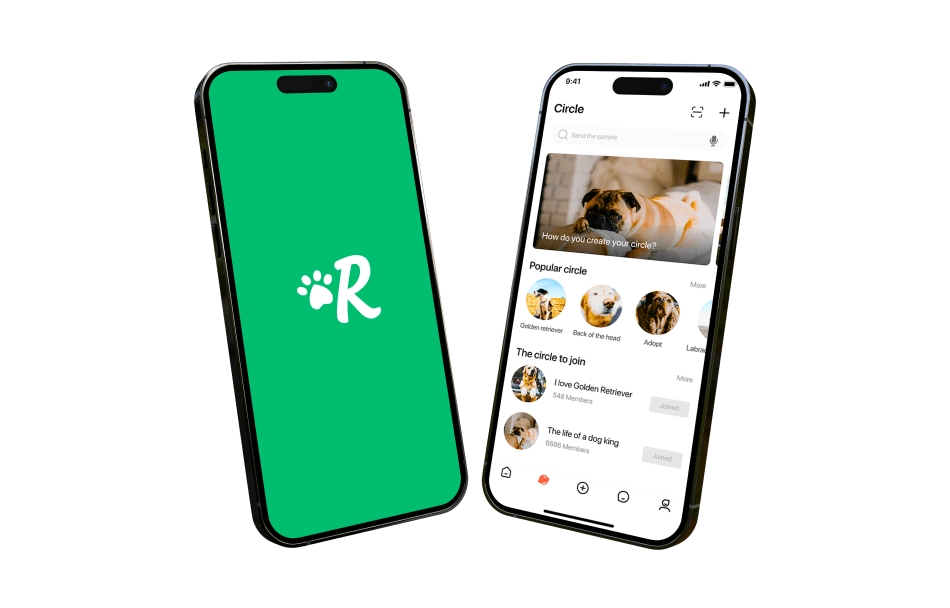
Rover is the #1 pet sitting and dog walking app in the USA. It connects pet parents with local, vetted pet sitters, dog walkers, and boarding providers and lets users to securely book services, receive photo/video updates, and track dog walks via GPS, and also make payments. Pet sitters can also manage their business with this app.
Rover didn’t just build a dog walking app. It built a trusted ecosystem for pet care. Verified caregivers. Secure payments. Real user reviews. GPS walk tracking. Emergency support. Because these things matter when someone is handing over their pet to a stranger. And that trust layer is the hardest part to copy.
Why does Rover still lead the market?
Because it solved three big problems at once.
Finding help.
Trusting help.
Paying for help.
Most early pet service apps focused only on bookings. Rover focused on safety, user experience, and scale. Over time, it expanded into dog sitting, daycare, boarding, and drop-in visits. That is why people now call it the “Uber for dog walking”, even though it is much more than that.
If we see it from a business point of view, Rover also proved one thing clearly that pet care can work as an on-demand marketplace model. And it can be profitable. Which is why more founders are now interested in building similar platforms.
Now the question is…
What type of pet care app can you build beyond Rover?
Pet care apps today go far beyond just one model like Rover because now you can invest in different types of pet apps depending on your business idea (and budget).
These apps are built for daily walks, drop-in visits, and overnight care for pets as well.
Let’s users book grooming, training, daycare, or vet visits from one place. Works well as a pet service booking app with multiple providers.
It’s a full pet care marketplace app where dog sitters, walkers, trainers, clinics, etc, list their services and pet owners choose services based on reviews and pricing.
These types of platforms are focused on vet appointments, digital records, medication reminders, and health tracking for pets. They are often paired with tele-vet features.
Designed for scheduled food delivery and monthly plans. Strong repeat usage. More logistics, less service matching.
Connects shelters and adopters through listings, profiles, and screening tools. It is a purpose-driven pet app but still works like a service platform.
Targets behavior training, video lessons, and session bookings with trainers. Works well as a niche product.
Built for specific needs like senior pets, exotic animals, or emergency services. Smaller audience… but very focused.
Each type has different feature needs, tech effort, and operational load. That is why the pet care app development cost in USA changes based on which model you choose. A simple service app costs less. A full on-demand marketplace app for pet care costs more.
Also Read: Pet Dating App Development: Market Opportunities, Features, Cost, and Business Models
If you are thinking “How much does it really cost to develop an app like Rover in USA?” the honest answer is, it depends. There is no one flat price but you can expect a wide range based on features, platform, team choice, and complexity.
In the United States, a basic dog walking and pet sitting app with core features usually starts around $80,000 to $120,000. If you want a full-fledged pet care marketplace app with advanced features such as real-time tracking, in-app chat, multiple service categories, the cost can go up to $200,000+.
To understand the cost to develop an app like Rover in USA, you have to look at how the product is built in real life. Not in theory. Real projects move through stages and each stage quietly adds to the budget.
Building a pet care app like Rover usually works like this:
This is where most people think, “Let’s just build what Rover has.” But in reality, this phase is about answering hard questions. Who is your user such as pet owners, walkers, or both?
Are you starting with dog walking only, or adding pet sitting too?
Do you need live tracking from day one or later?
Here, teams do market research, competitor analysis, and feature scoping. So the estimated cost typically ranges between $5,000 – $12,000. If you rush this phase, you pay for it later in rework. This stage quietly shapes the entire pet care app development cost in USA.
Now the app starts to look like something. Designers map how a user books a walker. How a sitter accepts a job. How payments happen. How profiles look. This is not about “making it pretty.” It’s about reducing confusion. Fewer taps. Clear trust signals. Easy booking.
Simple design = lower cost.
Custom animations, complex flows = higher cost.
So the estimated cost typically ranges between $8,000 – $18,000.
And yes… this phase saves money later, because bad UX creates support problems.
This is where the budget really wakes up. Developers build:
This is not one thing. It is many systems talking to each other. Frontend makes it visible. Backend makes it work. So the estimated cost typically ranges between $40,000 – $90,000. This phase takes the biggest share of the Rover app development cost in United States.
More features = more logic = more development hours.
This is where teams try to break the app… on purpose.
What happens if payment fails?
What if GPS drops?
What if two people book the same sitter?
Apps are tested on different phones, different OS versions, and even different user flows. Skipping this phase saves money short term but costs much more after launch. So the estimated cost typically ranges between $8,000 – $15,000.
Now the app goes live. Store listings are prepared. Builds are uploaded, and permissions and compliance are checked. Initial performance is also monitored. It looks simple but it still needs engineering time. So the estimated cost typically ranges between $1,000 – $3,000.
This is where many budgets quietly fail. Users report bugs and you fix them. Apple updates iOS and you update the app. You add features based on feedback.
Servers need monitoring and security needs patching. So the estimated cost typically ranges between $2,000 – $6,000. This is part of the long-term dog walking app development cost in USA, even though people forget to count it.
When all phases are combined, the total app typically costs:
| Development Level | Estimated Price (US) |
| Basic Rover-like pet care app | $80,000 – $120,000 |
| Mid-level with extra features | $120,000 – $180,000 |
| Advanced on-demand pet care marketplace app | $180,000+ |
So when someone asks, “How much does a pet care app cost in USA?” The real answer is hidden inside these phases.
More planning > smarter scope > controlled cost.
More features > more systems > higher budget.
Simple truth: You are not just paying for an app. You are paying for decisions, logic, testing, and long-term stability. That is how the cost of a Rover-like pet care app is actually built… step by step.
Several variables shape the cost to develop an app like Rover in USA. You don’t need to overthink them… just be aware of what moves the budget up or down.
For a platform similar to Rover, the main cost drivers are:
In short…
More features + more platforms + more complexity = higher budget.
That is what ultimately decides how much does a pet care app cost in USA.
When founders think about the cost to develop an app like Rover in USA, most of the budget goes into design and development. That part is visible. What is less visible… are the costs that start showing up after launch. And in real projects, those costs are the ones that surprise people.
We have already mentioned above that no app stays “done” forever. iOS and Android keep updating their systems, and your app has to stay compatible. Bugs appear once real users start using the platform. Small changes, regular fixes, and minor feature upgrades all need developer time. This becomes a steady monthly expense and adds quietly to the overall pet care app development cost in USA.
A Rover-like platform is not static. It handles live bookings, messages, payments, and location tracking. As your user base grows, your servers need to scale. That means higher cloud bills, more database storage, and stronger security layers. It may look small in the beginning, but infrastructure costs rise with success.
Payment gateways charge per transaction. Map and GPS services charge per request. SMS and email tools charge per message. These are essential for a dog walking and pet sitting app, but they are usage-based. More users means more API calls. And more API calls means more money.
When you manage user profiles, addresses, and payment details, you are responsible for protecting that data. Regular updates, monitoring, and sometimes audits are needed. This is not just a technical choice. It is a business requirement. Ignoring it can cost far more than building it properly.
Building the app does not bring users by itself. You will need App Store optimization, paid campaigns, partnerships, or influencer promotions. On top of that, someone has to handle user issues, booking disputes, and refund cases. These are operational costs, but they are directly tied to how your product survives in the market.
So in practice, the real Rover app development cost in United States is not just about launching the app. It is about running it. Smart teams budget for both. Because the companies that fail are usually not the ones that built a bad app… they are the ones that ran out of money keeping it alive.
To estimate the cost to develop an app like Rover in USA, you have to look closely at the features. Not just what they do… but what they demand technically. Every core feature adds logic, screens, and backend work. And that is what pushes the Rover app development cost in United States up or down.
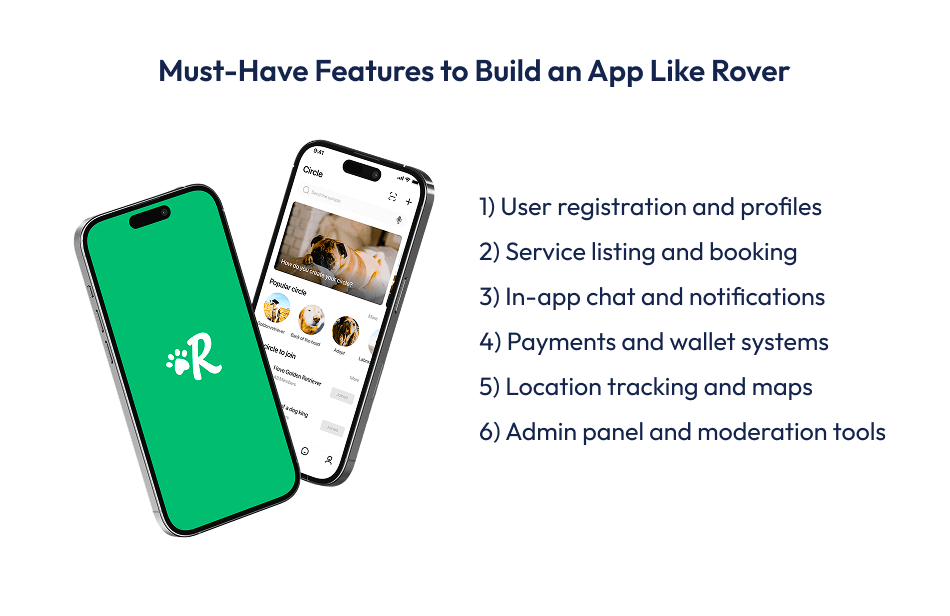
Pet owners and service providers both need accounts, profile details, service preferences, and verification. On the surface, it looks simple. In reality, it means building two user journeys and managing identity securely. This is a basic requirement, but it already adds to the pet care app development cost in USA.
This feature is the heart of a dog walking and pet sitting app because users should be able to browse services, check availability, and confirm bookings in real time. This is simple – the more flexible your booking logic is (time slots, recurring services, cancellations), the more backend rules you need. And you know already that more rules mean more development hours, which means more cost.
Owners and sitters must communicate easily. Messages, alerts, booking updates, and reminders all rely on real-time systems. These features do not just improve user experience. They increase server load and integration effort, which directly affects the dog walking app development cost in USA.
Secure checkout, service fees, refunds, and payout management for caregivers are not optional. This feature involves third-party gateways, compliance, and error handling. Any mistake here hurts trust. That is why payment systems are one of the strongest cost drivers in a Rover-like platform.
Users want to see where their pet is during a walk. This means GPS tracking, route display, and map APIs. These features require continuous data updates and external services, which increase both development and operational cost.
Someone must manage users, resolve disputes, approve caregivers, and monitor transactions. This part is invisible to users, but it is essential for running the platform safely and legally. Skipping it reduces short-term cost… but increases long-term risk.
In practice, every “core” feature is not just a checkbox. It is a system. And systems cost money. The more trust, automation, and real-time behavior you add, the higher the pet care app development cost in USA becomes. That is why feature planning is not just a product decision. It is a budget decision too.
This is also why platforms like Rover are expensive to build properly. They are not simple apps. They are full marketplaces built around safety, scheduling, and payments.
Once the core features are in place, this is where products start to separate from each other. Advanced features don’t just make your app look smarter, they make it work smarter. And yes, they also influence the cost to develop an app like Rover in USA.
The app can recommend the best match based on location, pet type, past bookings, and user ratings. No more random sitters or walkers in results. This reduces cancellations and improves trust. It also adds data processing and model logic, which increases the Rover app development cost in United States, but improves long-term retention.
The system can suggest optimal time slots, adjust pricing based on demand, or predict peak hours for services. This helps service providers earn more and keeps the platform balanced. Technically, this means more backend logic and data analysis… not just simple calendars.
With AI chatbots and assistants, there is no need to send every user to human support. The app can answer common questions, guide bookings, and handle basic complaints automatically as well. This lowers operational load over time, even though it adds to the initial pet care app development cost in USA.
For example, walk duration trends, pet activity reports, or health alerts based on user input and GPS data. These features make the app feel more premium and data-driven. But they require storage, analytics systems, and clean reporting dashboards.
Pet owners like seeing photos or short clips of their pets during walks or stays. This means media handling, compression, and secure storage. Not complex alone… but expensive when scaled.
Reward points, promo codes, and user referral tracking help growth without heavy advertising. These features are not visible on the surface, but they need careful backend tracking to avoid misuse.
AI can flag unusual behavior, fake profiles, or suspicious booking patterns. This protects both pet owners and service providers. It also protects your business reputation. These systems are harder to build… but they reduce long-term risk.
In short, advanced features are not about adding buttons. They are about adding intelligence. And intelligence costs more to build, but it also makes your platform stronger. That is why apps like Rover did not stop at basic booking. They invested in trust systems, automation, and smarter experiences.
So when planning a Rover-like app, advanced features are not just upgrades. They are strategic choices. You either compete on price… or you compete on intelligence.
When founders ask about the cost to develop an app like Rover in USA, they usually want one thing: how to keep it under control without killing quality. The good news is, cost can be managed if you make the right technical and product decisions early.
One of the smartest moves is to start with an MVP instead of a full platform. You don’t need every feature on day one. Focus only on booking, profiles, payments, and basic tracking. This reduces the initial pet care app development cost in USA and lets you validate demand before spending on advanced features. Many successful platforms scaled after launch, not before it.
Another strong strategy is to choose the right tech stack and development approach. Building separate native apps for Android and iOS increases effort and time. Using a shared or cross-platform setup can significantly lower the Rover app development cost in United States while still delivering good performance. The same logic applies to backend architecture; simple, modular systems are cheaper to build and easier to expand later.
Reuse proven third-party services instead of building everything from scratch. Payment gateways, maps, notifications, and authentication systems already exist and are reliable. Integrating them costs far less than custom-building these systems. This directly reduces the dog walking app development cost in USA and speeds up time to market.
Every extra feature adds screens, logic, and testing. If a feature does not help bookings, trust, or payments, it probably does not belong in version one. Tight scope control is one of the most effective ways to manage the Rover clone app development cost in USA, without hurting user experience.
Working with an experienced mobile app development company in USA that understands marketplace apps helps reduce cost smartly. Teams that have built booking or on-demand platforms before make fewer design mistakes, write cleaner architecture, and avoid rework. That saves both time and money over the full lifecycle of the product.
In practice, reducing cost is about building smart in stages, and that is how companies manage the cost to develop an app like Rover in USA without sacrificing stability or future growth.
Techugo is a trusted mobile app development company in USA with strong experience in building on-demand platforms. Our team understands how pet care apps work in real life, not just on paper. Our team focuses on smooth booking, real-time tracking, and secure payments.
We follow a clear process for on-demand mobile app development. First, we study your business model. Then we design simple user journeys for pet owners and service providers. The goal is to make the app easy to use from day one.
Our developers build scalable systems. This helps your app handle more users without slowing down. We also treat security and data privacy as priorities, especially for user profiles and payments.
We at Techugo also support AI features like smart matching and behavior tracking to help your app feel modern and competitive as well.
If you want a reliable tech partner in the US market, Techugo offers the right mix of strategy, design, and engineering. So, get in touch with us today.
A basic pet care mobile app usually takes 3 to 4 months to build. This covers core features like user profiles, service listings, and booking. A more advanced app with GPS tracking, in-app chat, payments, and admin dashboards can take 5 to 8 months, depending on feature complexity and testing needs.
Yes, AI can add real value. It can match pet owners with the right walkers or sitters based on location, pet type, and past behavior. AI chatbots can handle basic customer support. Predictive analytics can help flag risky bookings or no-shows. Image recognition can even verify pet photos and profiles.
Most pet care apps earn through commission on every booking made on the platform. Many also offer subscription plans for pet sitters to get more visibility or leads. Some apps add premium features for pet owners, like priority support or insurance coverage. Ads are used less often, but partnerships with pet brands can create extra revenue streams.
Suppose you bring a new dog home. You've named them, you pampered them, and now can’t wait to spend endless hours snuggled up together but the very ne..


Fashion is already one of the biggest drivers of online shopping in Australia. Mobile-first buyers. Gen Z habits. Scroll, tap, buy… repeat. Globally, ..


Write Us
sales@techugo.comOr fill this form