

 SA
SA  KW
KW  IE
IE AU
AU UAE
UAE UK
UK USA
USA  CA
CA DE
DE  QA
QA ZA
ZA  BH
BH NL
NL  MU
MU FR
FR [ LET’S TALK AI ]
X
Discover AI-
Powered Solutions
Get ready to explore cutting-edge AI technologies that can transform your workflow!



Get ready to explore cutting-edge AI technologies that can transform your workflow!


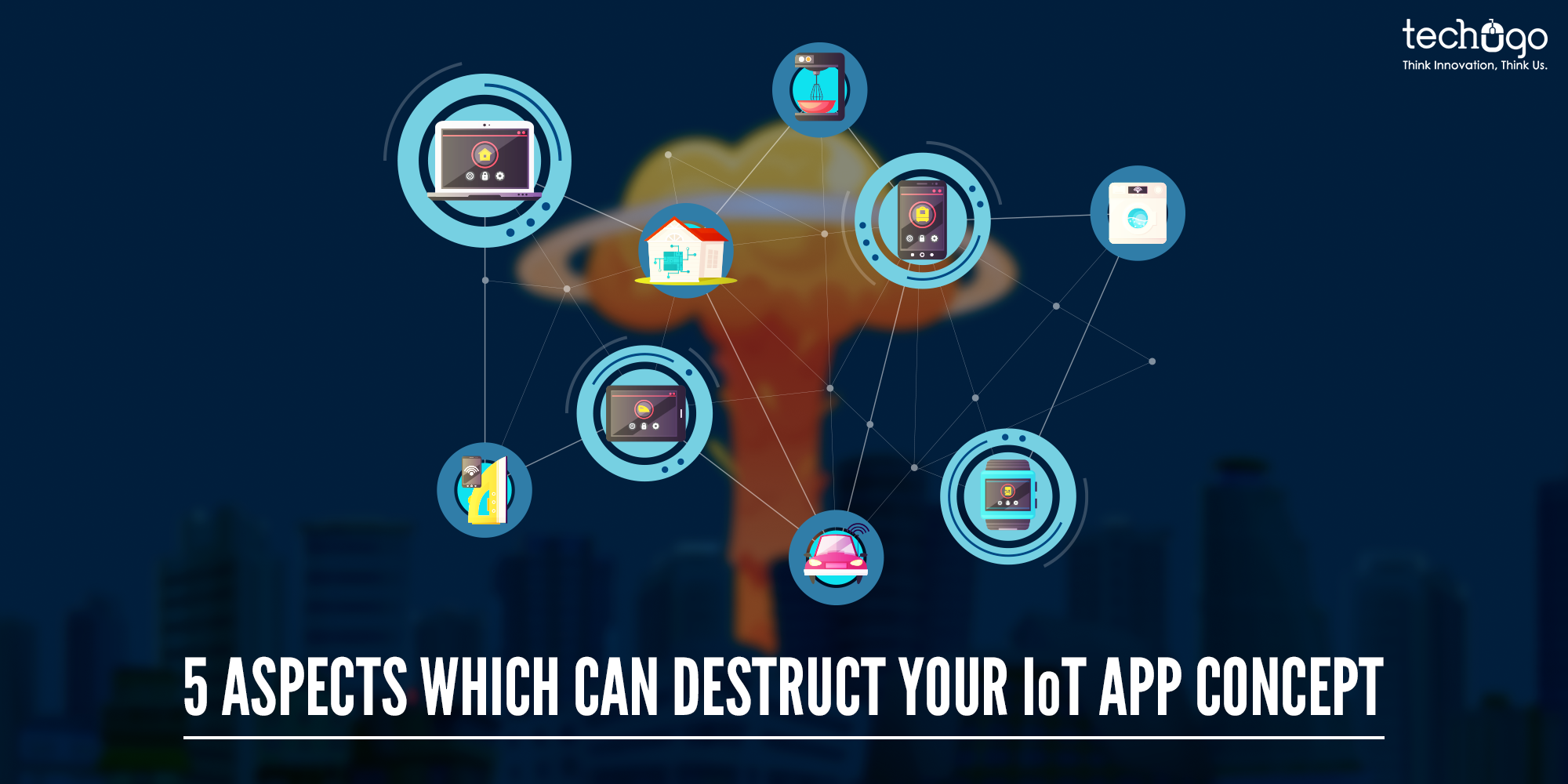
The title is self-explanatory and scary as well!
The title mentioned above is both controversial and disturbing. However, when considering a mobile app that incorporates the latest technology, such as IoT, there are a few key aspects that should not be overlooked.
Let us deal with what can annoy your journey in IoT app development?
You must not forget that every business is unique and has a distinct set of needs. But above all, what you must not deny is that there is a flood of emotions and the expectation from your users. Unless you give a thought to this, everything created is vain and futile.
Considering your users’ expectations helps you add something unique and different to your mobile app. This ultimately wins the hearts of your users.
At the same time, there are a few aspects that cannot be overlooked, because an overemphasis or underemphasis on a few things can kill your app concept entirely. Leaving you exhausted with one consequence, that is, the app rejection.
This is what happens with a maximum number of mobile apps, which make an entry and bid adieu in a while on the respective stores.
To avoid your app facing the same fate, I am here to discuss further some of the factors that you must consider to make it work.
The global demand for IoT-enabled mobile apps is on the rise, yet many projects struggle to achieve long-term success. Many businesses have innovative ideas, but often encounter unexpected roadblocks that hinder their success. This can result in app rejection and poor adoption.
The most common IoT app failure reasons are:
While the Internet of Things opens endless possibilities, the journey of IoT application development is filled with challenges. Businesses often fall into traps that seem minor during development but become major obstacles post-launch.
Let’s look at the most critical IoT app development pitfalls to avoid:
Security is the biggest concern in IoT and mobile app development. Apps that lack strong encryption and multi-factor authentication are vulnerable to breaches. Without regular security audits, users are exposed to potential risks.
Overlooking IoT app security issues is one of the top reasons apps fail.
IoT apps produce massive amounts of data, making it essential to design for efficient storage and processing. Without proper planning for real-time analysis, systems can experience crashes and underperform. Data mismanagement often leads to scalability bottlenecks.
IoT is about instant interactions, whether it’s a smart home device or an industrial IoT solution. Apps that delay data transmission or fail under high network traffic result in a poor user experience.
Moreover, every industry has specific compliance standards. Skipping compliance during development can lead to legal penalties and loss of customer trust.
Many developers overcomplicate IoT-enabled mobile apps with unnecessary features. A cluttered interface or confusing navigation discourages users. Even if the technology behind it is strong.
Partnering with a company that lacks IoT expertise can be disastrous. A reliable IoT app development company not only builds the app but also ensures it aligns with industry standards and user needs. Additionally, they focus on long-term scalability to accommodate future growth.
If you’re exploring how to develop an IoT application, here’s a practical roadmap that ensures success:
| Aspect | How AI Enhances IoT Application Development | Impact on Businesses & Users |
| Predictive Maintenance | AI algorithms analyze IoT sensor data continuously Detecting early signs of wear and tear, equipment failures, or system irregularities. | Minimizes downtime Lowers maintenance costs Ensures uninterrupted operations across industries |
| Smarter User Experience | AI personalizes IoT-enabled mobile apps by adapting features, notifications, and recommendations to individual user behavior. | Improves user engagement Boosts user retention Delivers more value through context-aware interactions. |
| Automation & Efficiency | Combining AI with IoT automates repetitive tasks. Such as monitoring and reporting without human intervention. | Streamlines workflows Increases productivity Reduces operational costs |
| Advanced Data Analytics | AI processes massive IoT datasets in real time. Applying machine learning models to uncover anomalies and actionable insights. | Enables faster decision-making Enhances business intelligence Drives smarter strategies in competitive markets. |
| Improved Security & Threat Detection | AI-driven anomaly detection monitors IoT networks for unusual activity, such as suspicious logins or unauthorized device connections. | Strengthens IoT application security Prevents cyber threats Builds user trust in sensitive areas like fintech and healthtech |
| Scalability & Flexibility | AI helps IoT ecosystems adapt as more devices and data streams are added. Ensure consistent performance across platforms. | Guarantees long-term growth Supports global expansion Prevents system bottlenecks as usage scales. |
| Real-Time Decision Support | AI analyzes incoming IoT data in real-time, enabling instant responses to environmental changes, device alerts, or user inputs. | Critical for time-sensitive applications such as:
|
| Enhanced Personalization in Commerce | AI learns from IoT consumer data, such as smart device usage patterns, to recommend products or services. | Elevates customer satisfaction Drives sales Boosts sales for e-commerce and retail businesses |
| Energy Optimization | AI models regulate IoT-connected devices to optimize energy consumption without compromising performance. | Reduces operational costs and supports sustainability goals in industries like energy and transportation. |
When it comes to IoT application development, your choice of a development partner often decides whether your app succeeds or becomes another failure statistic.
Why does this matter?
Techugo has delivered 1,400+ mobile apps globally, including IoT-powered solutions in enterprise automation. Our team blends device-level expertise with world-class mobile app engineering. From encrypted data pipelines to secure APIs, Techugo prioritizes IoT application security issues from day one. As a CMMI Level-3, processes ensure compliance with global standards like GDPR, HIPAA, and PCI DSS.
The future of IoT lies in intelligence. Techugo integrates AI and ML into IoT solutions to make apps smarter and more user-centric. We build IoT ecosystems designed to handle massive data streams and global device connectivity, ensuring apps perform consistently even as they scale. Even the most complex IoT systems are delivered with clean, intuitive interfaces, making adoption easier for businesses and end-users alike.
With offices across India, USA, Canada, and UAE, Techugo serves both startups and Fortune 2000 clients. Their apps have collectively raised $869M+ in client funding. Proving their ability to deliver high-impact solutions.
The cost depends on factors like app complexity, number of devices to be connected, required security protocols, and integration with third-party systems. On average, IoT app development costs range from $25,000 to $150,000+. Depending on features and scalability requirements.
Common tools include:
The exact stack depends on the project’s scope and performance needs.
A basic IoT-enabled mobile app may take 3–5 months. A more complex, enterprise-grade IoT solution can take 9–12 months or longer, including testing and integration phases.
IoT apps add value across industries such as:
IoT apps require end-to-end encryption, secure APIs, multi-factor authentication, and compliance with regulations like GDPR or HIPAA. Regular security audits and monitoring are essential for protecting sensitive user and device data.
Yes. AI enhances IoT by enabling:
Businesses increasingly prefer AI-powered IoT apps for smarter decision-making.
Every app has the potential to bring a pool of benefits to your business. But only when you are ready to take app development as a challenge to meet users’ demands can you help your app achieve its deserved recognition.
On the other hand, these aspects would certainly affect the success rate of your mobile app. However, apart from these factors, another equally important consideration is selecting an app development company that lacks the required experience and exposure to handle your app effectively.
Hence, you must choose a leading app development company to help your mobile app get developed and designed by industry experts.
As the rate of energy consumption in mature and emerging markets drives the new phase, it has become evident to understand the benefits that IoT is br..

Do you think that building a fintech app like Citi Mobile requires a huge investment? What if we told you that you simply need $30K to get started? Ye..


Write Us
sales@techugo.comOr fill this form