

 SA
SA  KW
KW  IE
IE AU
AU UAE
UAE UK
UK USA
USA  CA
CA DE
DE  QA
QA ZA
ZA  BH
BH NL
NL  MU
MU FR
FR [ LET’S TALK AI ]
X
Discover AI-
Powered Solutions
Get ready to explore cutting-edge AI technologies that can transform your workflow!



Get ready to explore cutting-edge AI technologies that can transform your workflow!


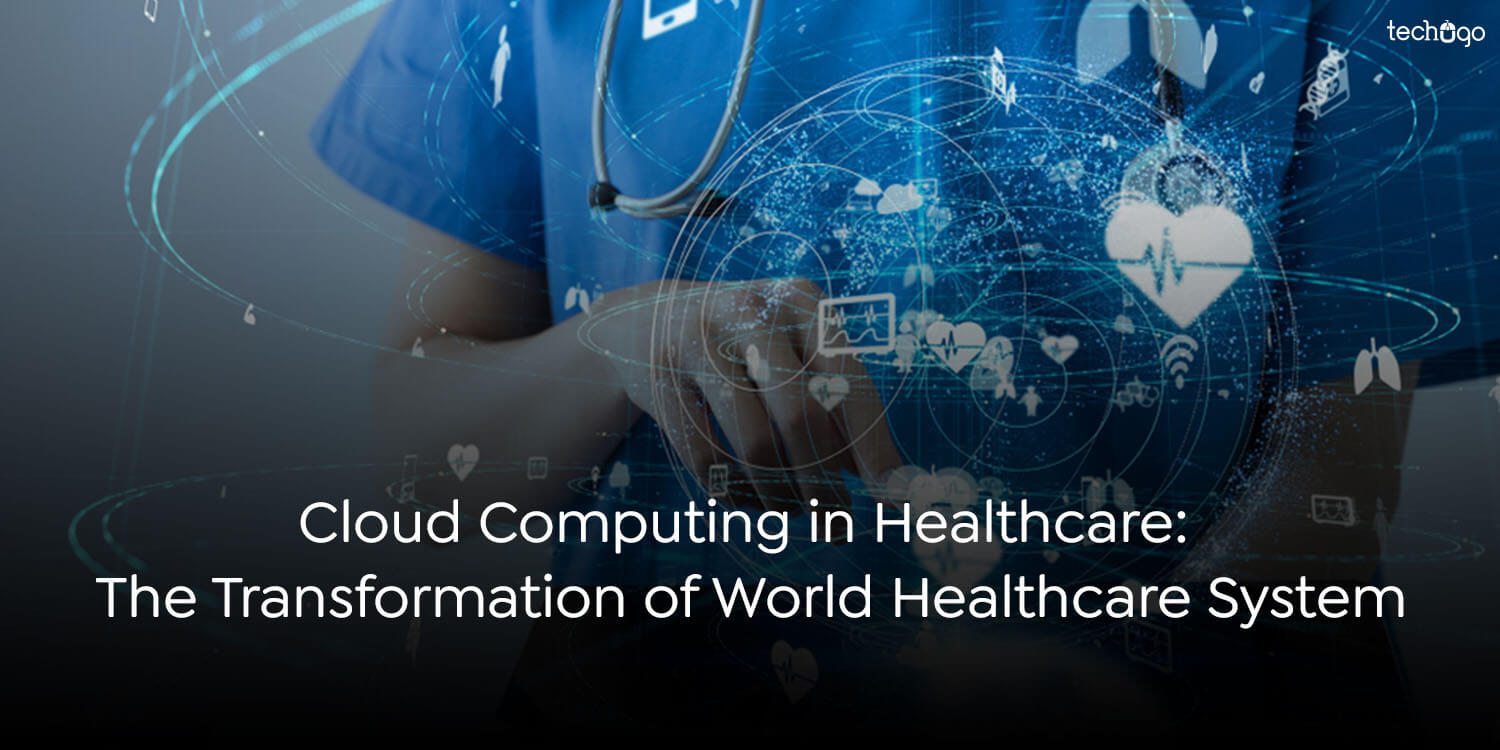
No wonder cloud solution is one of the futuristic technologies that can help us to create a better world. A world to grow and innovate new solutions to life.
Moreover, when cloud computing integrates with the healthcare industry, it advances the patient care systems. Cloud computing in healthcare lets medical professionals use a network of remotely accessible servers by breaking traditional ways of patient care and data storage.
Earlier, the healthcare sector was struggling to handle medical records and bear infrastructure costs, but, today, healthcare cloud computing solutions have made things seamless. This technology has become a natural fit for modern healthcare operations, whether it is improving operational efficiency, supporting telehealth services, or streamlining overall treatment workflows.
In addition, wondering about the importance of cloud computing in healthcare is not much to think about. We understand your concerns, and thus, we have brought you all information through this article. Here you can find all information related to the applications of cloud services in the medical field to enhance existing patient care services. Read thoroughly.
Cloud computing in healthcare is not a new topic to discuss. The healthcare industry has been using cloud-based technologies for more than a decade. However, after 2012, the focus gradually shifted toward patient-centric care models supported by analytics, real-time data access, and scalable digital infrastructure. Over time, cloud computing has continued to improve healthcare services by offering cost-effective, flexible, and data-driven solutions.
Earlier, many medical practitioners were not fully aware of the economic and operational advantages of cloud-based systems. Today, cloud computing in the medical field has become a mainstream technology, enabling hospitals, clinics, and health systems to manage patient data more efficiently and deliver improved digital healthcare services.
With new approaches focused on improving patient outcomes and operational efficiency, the healthcare sector continues to derive value from cloud technology. The introduction of cloud computing has simplified complex medical workflows and is enabling futuristic healthcare solutions powered by data, automation, and intelligent systems.
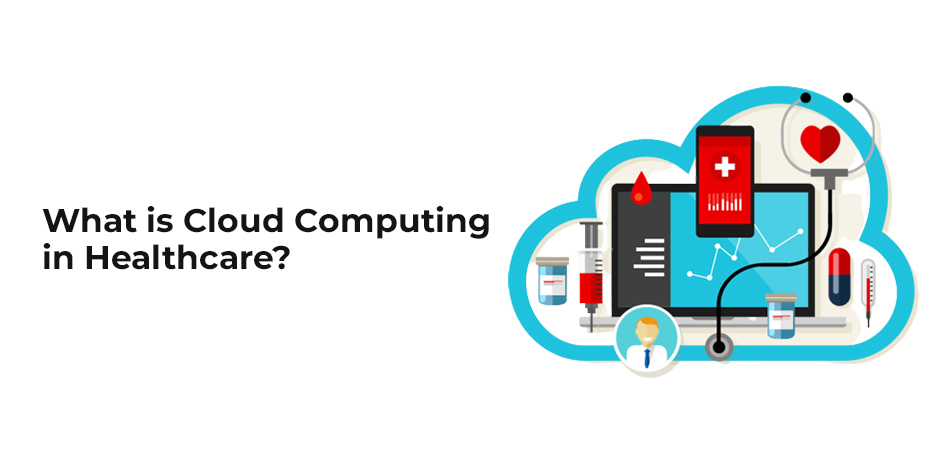
Essentially, cloud computing creates shared hardware to access over a network connection and is helpful for a variety of healthcare applications. It enables the storage, management, and processing of medical data. The biggest application of cloud computing in healthcare is easing down the process of accessing online servers to store huge amounts of data securely. It reduces the efforts of medical professionals to use such services without technical knowledge. However, IT professionals maintain such servers.
Moreover, with the EMR (Electronic Medical Records) Mandate, many healthcare organizations have implemented such services. The cloud-based solutions store and keep patient information secure. In addition, it is not necessary to shift to data centers to store your patient and other medical data. Simple adoption of cloud-based solutions is enough to scale your healthcare services.
So, let’s move further to understand what are the types of cloud services available for the healthcare industry to improve.
Now, if you plan to move to cloud computing in the medical sector and wonder what type would be best for you, here is some information you should read. Based on distribution and deployment, cloud computing can be further categorized. The given information sheds some light on the types of cloud computing in healthcare. Read along!
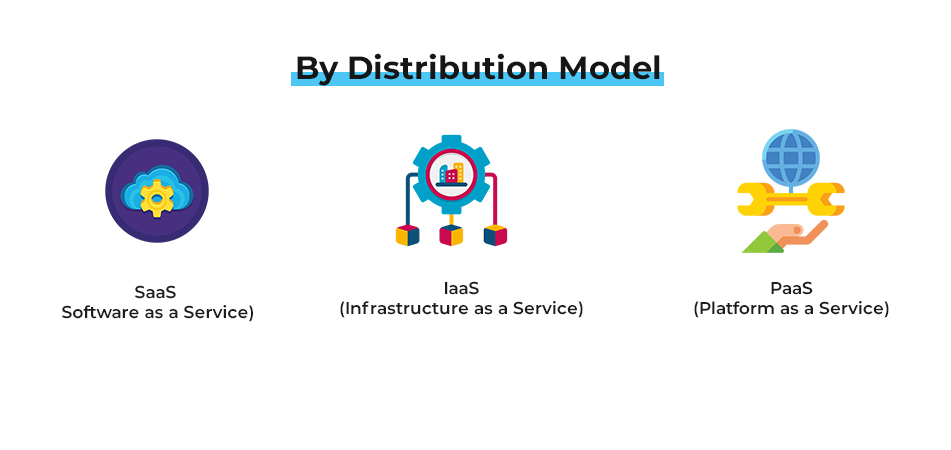
In this, SaaS providers lease the hosted software to an organization with some monthly or annual subscription. The SaaS model of cloud computing in healthcare allows users to access the services through an application or web browser. Unlike IT administration, there is no need for software installation on every individual’s workstation.
This model of cloud computing in the medical industry provides on-demand infrastructure that organizations use via the internet instead of the data center.
PaaS providers offer IT infrastructure to developers to complete an application lifecycle. Be it development, testing, deployment, or maintenance, PaaS provides you with servers, networking, storage components, and other components within a ready-to-use platform.
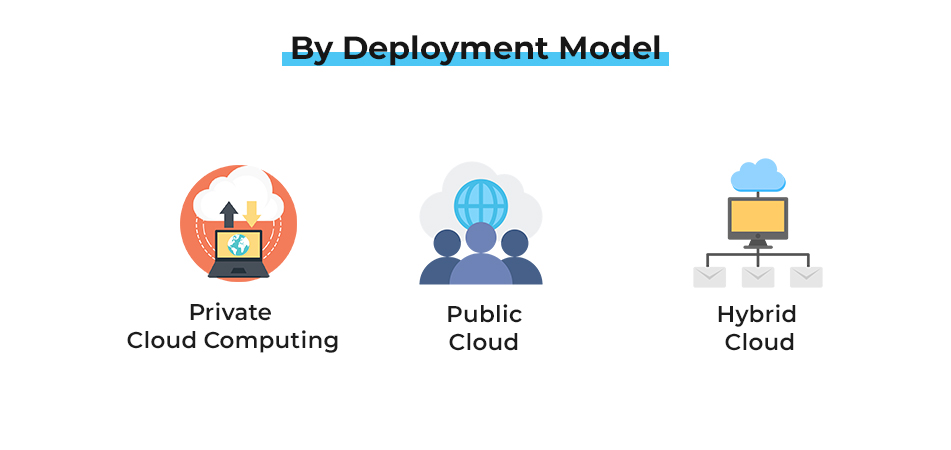
This cloud computing model for the healthcare industry consists of infrastructure owned by a single person. The owner can use the services either in-house or externally hosted. For instance, large-sized organizations use it to enhance security, customizability, and computing power.
This type of model offers the services and technology shared by all organizations. Scalability is easy in the public cloud because of the availability of space. Usually, organizations leverage this service pay-per-use basis which is good for small businesses to access such services.
It is a combination of private and public clouds. In this, organizations receive tailored solutions that allow using both platforms without hassle.
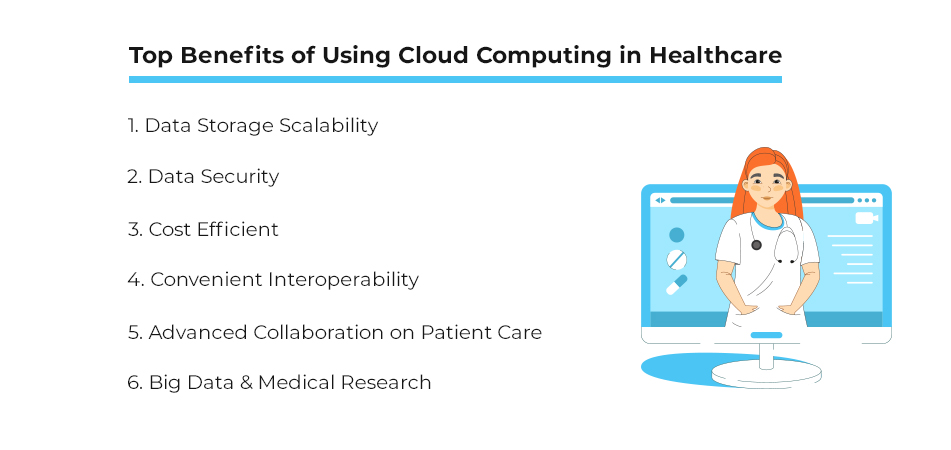
One of the best applications of cloud computing in healthcare is data storage. Since the medical industry is data-driven with tremendous data, many top-notch hardware installations may fail to handle it. Medical professionals can use cloud networks to manage all off-site data to avoid the hassle of maintaining physical servers.
Also, it enables healthcare organizations to address fluctuating demands. For example, scaling up storage capacity is easy with healthcare cloud computing systems. In addition, additional flexibility using a pay-as-you-go cost structure is another outstanding feature. And in this fast-paced world, flexibility offers you a competitive edge to stay ahead; it empowers safety and budget.
With cloud computing, you get two strongest features; security and reliability. While having a cloud computing system in a healthcare company is reliable, it strengthens security. Moreover, this feature facilitates the executives to move data and applications that are not controlled. Moreover, don’t neglect HIPAA compliance while implementing this technology to your business.
Cloud computing in the medical field also increases data redundancy and system uptime reliability. Since it enables the automation of disaster recovery and backup options, losing data won’t be a concern. With this, data theft or damage doesn’t occur; if something unfortunate happens, the backup data lets you access all previous records.
Cost plays a key role in deciding to host an application and data. Healthcare organizations bear 75% of the IT budget to maintain internal systems. However, it’s not a benchmarking system to compare the amount they spend on internal maintenance systems; there’s a significant difference.
When a healthcare company employs cloud computing, it can save the high costs of hardware and capital expenditures. Simply put, an organization pays for a subscription that is a fixed amount depending on its scale. But it helps the company to divert funds to other operational areas.
Interoperability is one of the best things using cloud computing in healthcare and creating data integrations within the healthcare system without depending on the source of data storage. You can access interoperability with the right use of cloud services in the healthcare industry. It helps you to get information more accessible with flexible distribution to get insights into improving healthcare services.
Cloud computing helps medical professionals access a patient’s medical data gathered from multiple sources. Also, utilize the collected data from primary stakeholders to deliver on-time services.
When it comes to sharing medical information between healthcare companies, cloud networks play a significant role. It makes it easy to share information. This way, anyone who needs to access the information can quickly collaborate to get healthcare solutions.
By integrating cloud storage, the healthcare industry can streamline the process of collecting data through electronic medical records, which in turn offers more collaborative patient care. In addition, cloud-based medical records ease the viewing and sharing of patient records. While traditionally, a patient has to carry a separate medical record file every time they visit a doctor, cloud computing ends this process.
The global adoption of cloud computing in the medical field has created numerous opportunities for big data. With the application of big data, the world can see enhanced patient care outcomes. In addition, Healthcare cloud computing can help medical researchers to leverage analytics at a fraction of the cost.
Going a few years back, we can see the piles of patient records in any healthcare company. Storing a huge volume of useful data can help in multiple ways. For example, having handy access to those data can help medical professionals to predict epidemics or detect correlations of illnesses that may cause fatal diseases.
Above all, one of the advantages of cloud computing in healthcare is it makes us future-ready. And now is the time to check the other side of the coin. There are some issues associated with cloud computing applications in healthcare. Check in the next segment of this article.
The real impact of cloud computing in healthcare can be best understood through practical use cases and industry examples. Across the globe, healthcare providers are adopting cloud-based healthcare solutions to improve patient outcomes, reduce operational complexity, and enable data-driven medical decisions.
Also Read: Generative AI in Healthcare: Top Applications and Use Cases
Hospitals and clinics now rely on cloud platforms to store, access, and share patient medical records in real time. This ensures better coordination between doctors, specialists, and diagnostic labs while maintaining data security and regulatory compliance.
Cloud computing allows healthcare providers to collect and analyze patient data from wearable devices and mobile health applications. These cloud-enabled systems support continuous monitoring of chronic conditions, early detection of health risks, and improved post-treatment follow-ups without requiring physical hospital visits.
Large imaging files such as CT scans, MRIs, and X-rays can be securely stored and processed using cloud platforms. With the integration of AI and cloud computing in healthcare, diagnostic tools can analyze images faster, assist radiologists in detecting abnormalities, and reduce the turnaround time for reports.
During public health emergencies, cloud-based healthcare platforms have demonstrated their ability to scale rapidly. Health organizations have used cloud infrastructure to manage vaccination records, track patient data, and support digital health services for large populations. This shows how scalable cloud computing solutions for healthcare help maintain service continuity even during peak demand.
These case studies highlight how cloud computing in the healthcare industry is no longer limited to data storage. It now supports predictive analytics, interoperability between healthcare systems, and secure access to medical information. As healthcare providers continue their digital transformation journeys, cloud technology remains central to building connected, efficient, and patient-centric healthcare ecosystems.
Since it is evident that cloud computing applications in the medical field bring lots of benefits, there’re still some issues. It would be good to consider these points to get familiar with them. Have a look!
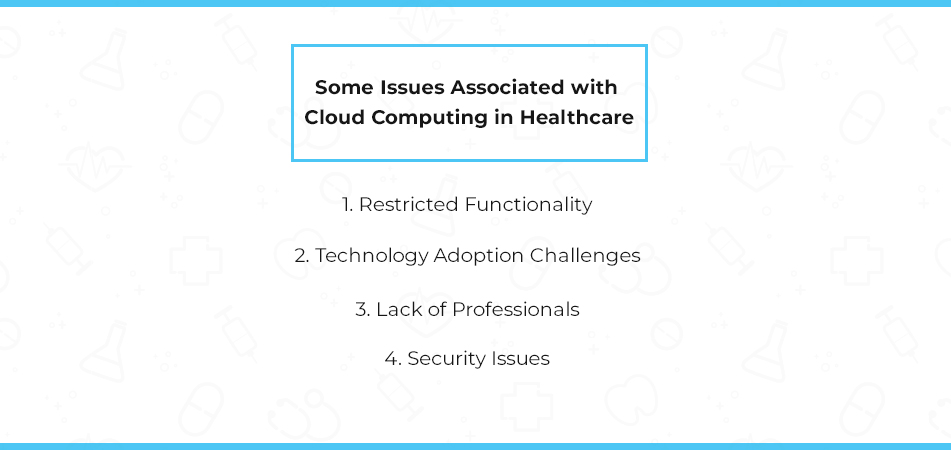
Integrating cloud computing systems into healthcare is insufficient to make the industry productive and systematic. The healthcare sector needs to incorporate IoTs, artificial intelligence, and other data management technologies to benefit from cloud computing.
The process of transforming the entire task management from a traditional framework to cloud technology is nothing but a big challenge at the beginning. Healthcare organizations should instruct everyone on how to use it in their regular responsibilities. But once the healthcare organization establishes the cloud network, everything becomes easy.
Finding expert developers to build the healthcare software domain requires additional research. Integrating cloud solutions in healthcare seems to be challenging for medical professionals to find experts. However, collaborating with the top healthcare mobile app development company reduces your issues.
In healthcare, the primary purpose of adopting cloud computing is to store data securely. Nevertheless, it is associated with some security risks as well. Since the medical data is stored on a cloud setup and the organization shares information through the servers. Sometimes, remote systems may fail to individualize the information. Though it is a safer practice to share data, it needs some improvement to utilize cloud solutions.
Adopting cloud computing in healthcare requires time, effort, and cooperation from multiple industries to empower it. Simply put, using smart technology requires a shared vision for the industry’s future among diverse stakeholders.
Healthcare institutions are unable to fully benefit from cloud computing due to implementation problems at lower levels and a careless approach to methodology.
Experts in the healthcare sector often view technology as a cure for all ills. However, success depends on selecting precise, high-value targets and developing thoughtful business plans.
You can also read: How much does it cost to develop a healthcare app?
The impact of cloud computing on healthcare is subtle in many ways to deliver world-class medical services. However, cloud computing applications require collaboration between technology partners and healthcare organizations. For instance, you can contact a healthcare app development company to develop a healthcare cloud computing system. However, you must consider some important facts to avoid risks of cloud computing in healthcare associated with cloud technology. Thus, here is some information to go through:
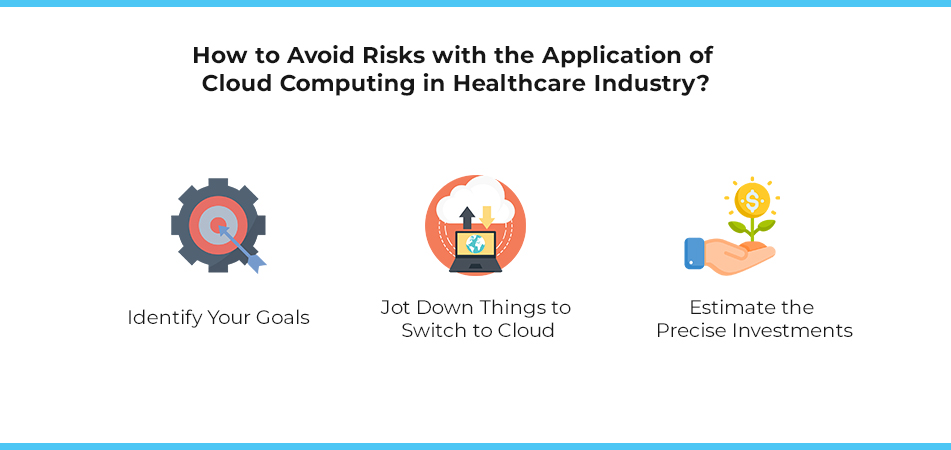
Before doing anything else, you must identify your objective to implement a cloud system in healthcare. When you know the purpose of integrating cloud services into your healthcare system, applying technology to your requirements becomes easy. Some of the purposes that cloud computing can fulfill are as follows:
Apart from these, you can consult with the technology providers about how to use cloud computing in healthcare. Also, tailoring the services as per the business needs becomes easy for a healthcare company.
There are many processes that enable you to switch to the cloud. But you need to understand which particular function or service you need to switch to the cloud. Once you write and analyze the features or services that you need to improve, you can directly work on such issues. In the meantime, you can focus on how you can improve the quality of medical delivery with cloud computing and work on it.
Once your assessment completes, you can prioritize the things to switch to the cloud to get the benefits of it. The best way to narrow down such things is by talking to the cloud technology partner. A cloud solution development company knows everything to implement things as per your business needs.
Switching to the cloud requires close monitoring of spending. Since the cloud computing market is trending and new to the healthcare industry. If you understand business, affording such investment won’t be an issue for you. However, you must first consider the amount you have to pay to experts engaged in making it happen. For this, you can consider the given points:
Outsource your project: The most trustworthy and foolproof technique to get whatever you aim for. In this, you hand over your requirement to someone who has expertise in the field. In return, you get what you pay for.
Hire an in-house team: It seems easy, but it is not. To form an in-house team, you must onboard experts in respective fields. And it may cost you a fortune to build a technically strong team for your organization.
Hire a freelancer: In this, you may save money on your project, but no guarantee of successful implementation of the cloud to your healthcare system. Sharing medical data with some freelancers doesn’t seem like a good move to make. However, it is the most cost-effective way to build cloud solutions for healthcare.
As of now, you are aware of the methods to avoid risks associated with healthcare cloud computing. Still, you wonder how to integrate cloud solutions into your healthcare company; continue reading.
Also Read: Healthcare Chatbot Like Google’s AMIE: Features, Benefits, and Development Cost Explained
The above information surely clears all your doubts. And now, you won’t be wondering how cloud computing can be used in healthcare.
Moreover, the impact of cloud solutions in the healthcare industry is massive. It reduces the cost to improve and offer top-notch patient care. The importance of cloud computing in healthcare doesn’t seem valuable until and unless one uses it. However, those healthcare organizations that have adopted their services. have witnessed massive positive responses from patients.
So, if the question haunts how to use cloud computing in healthcare, connect with the top technology partner. And Techugo is the apt place to get cloud solutions for your healthcare business. Book a call with our cloud experts to discuss your ideas and deliver top-notch patient care services.
Yes, cloud computing in healthcare is considered secure when implemented with proper compliance and security frameworks. Modern healthcare cloud computing solutions use advanced encryption, multi-factor authentication, role-based access control, and continuous monitoring to protect sensitive patient data. Cloud service providers also support healthcare regulations such as HIPAA and GDPR, ensuring that electronic health records (EHRs) are stored and transmitted securely. With regular security updates and automated backups, cloud platforms reduce the risks of data loss and unauthorized access compared to traditional on-premise systems.
Cloud computing in the healthcare industry improves patient care by enabling real-time access to medical records, faster diagnostics, and better collaboration between healthcare professionals. Doctors and specialists can securely access patient data from any location, which supports quicker decision-making and continuity of care. From an operational perspective, cloud-based healthcare systems help hospitals reduce infrastructure costs, automate administrative workflows, and manage large volumes of clinical data efficiently. This leads to shorter waiting times, improved treatment accuracy, and enhanced overall patient experience.
Cloud computing plays a critical role in telemedicine and remote patient monitoring by providing the infrastructure needed to store, process, and analyze patient data in real time. Through cloud-based telehealth platforms, healthcare providers can conduct virtual consultations, monitor vital signs from wearable devices, and track patient progress remotely. Cloud technology also supports data integration from mobile health applications, enabling continuous care for chronic patients and reducing the need for frequent hospital visits. This makes telemedicine cloud infrastructure scalable, reliable, and essential for modern digital healthcare services.

A healthcare team decides to build an AI app; the goal is to detect a rare disease early because patient data already exists inside the Electronic Hea..


The idea of pharmacy app development in the UAE can feel overwhelming at first. From planning the features to understanding regulations and prepar..



Write Us
sales@techugo.comOr fill this form