

 SA
SA  KW
KW  IE
IE AU
AU UAE
UAE UK
UK USA
USA  CA
CA DE
DE  QA
QA ZA
ZA  BH
BH NL
NL  MU
MU FR
FR [ LET’S TALK AI ]
X
Discover AI-
Powered Solutions
Get ready to explore cutting-edge AI technologies that can transform your workflow!



Get ready to explore cutting-edge AI technologies that can transform your workflow!






What if your next doctor visit didn’t involve a waiting room, traffic, or flipping through old magazines?
Telemedicine is already changing the way we access healthcare. Apps like Teladoc have turned phones into portable clinics, connecting patients to doctors right from their living rooms. Pretty neat, right?
But here the big question arises:
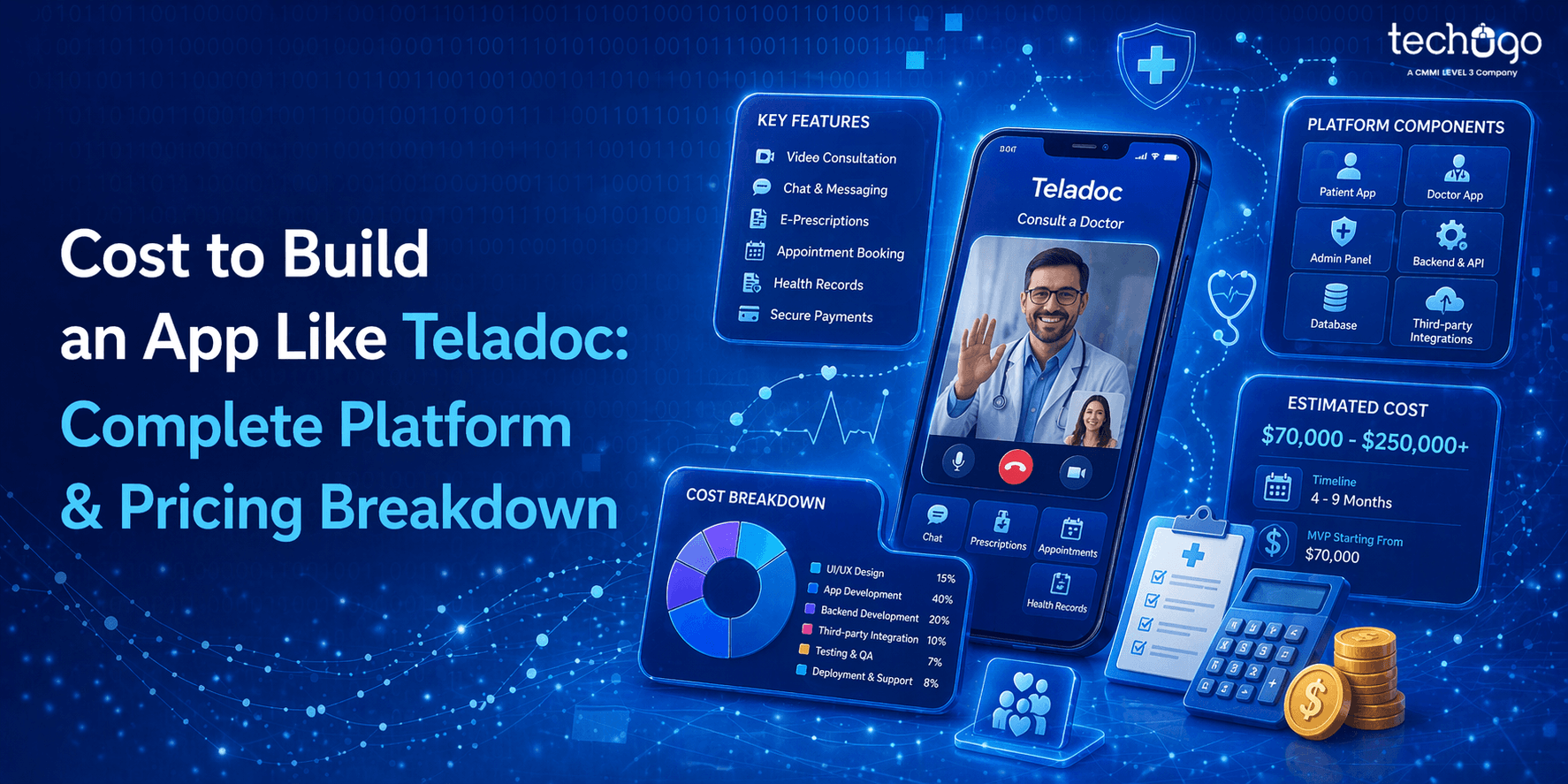
How much does it cost to build an app like Teladoc?
The answer, however, is not as simple as a one-number answer. Not even close.
The price reduces to decisions. Which features do you include? Will it be iOS, Android, or both? Do you include AI to care about patients more smartly? And the person you contract to have it built is a great deal, as well. Even minor details, such as appointment reminders or secure chat, can have an effect on your budget.
So, what’s the actual telemedicine app development cost?
It depends. A simple version with essential features might cost around $25,000. But if you want a full-featured app (that includes video calls, AI-powered tools, advanced security, and smooth payment integration), the price can easily climb past $500,000.
If you’ve ever dreamed of building a healthcare app, this is your map. In this blog, we’ll explore the cost to develop a telehealth app, the features that users actually love, industry trends, and the practical things you need to think about before starting.
Let’s get started…
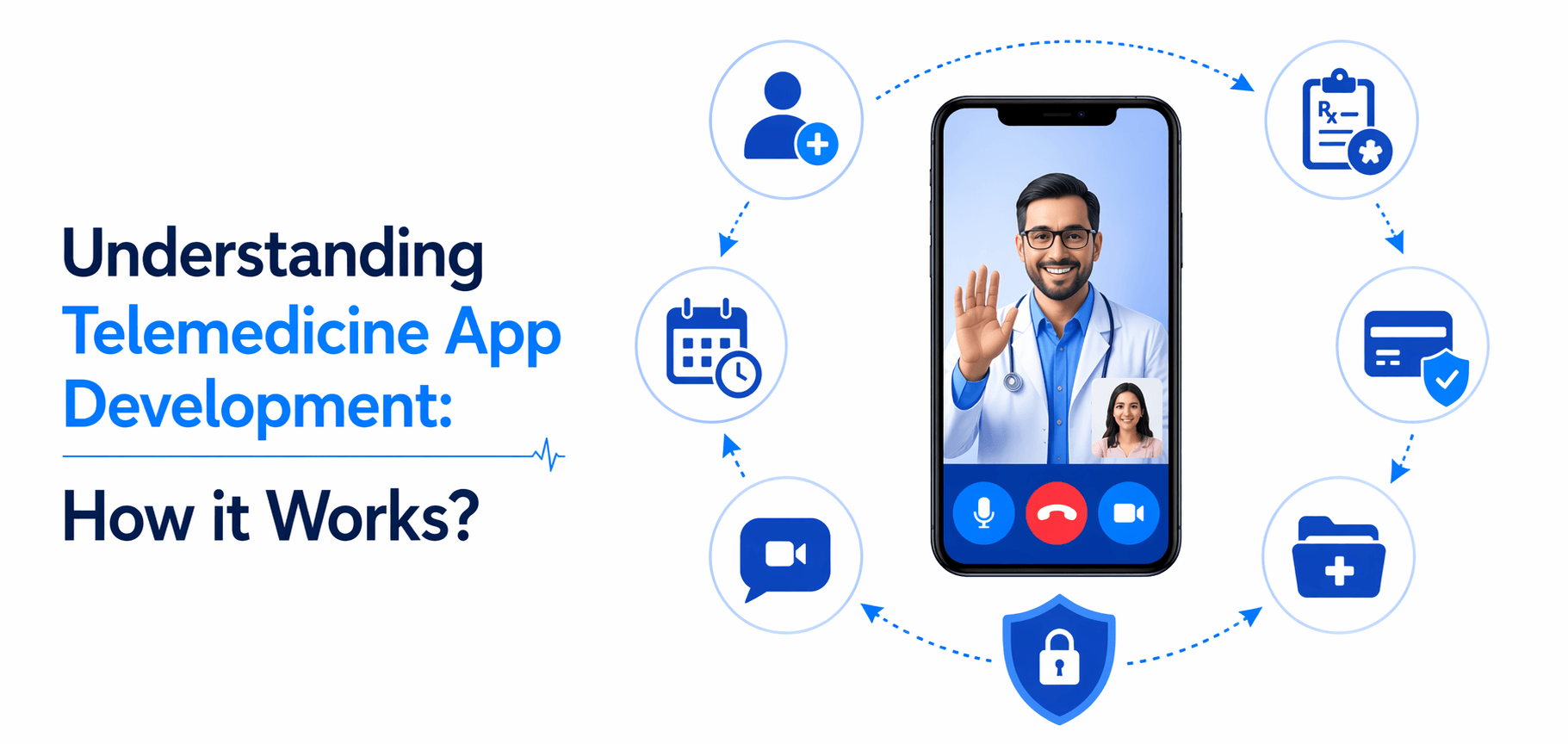
A telemedicine app is basically a phone or tablet app that lets you see a doctor without going to a clinic or hospital.
It’s like a doctor right there with you. You can see a doctor anytime, anywhere, without going to a clinic. You can video call, chat, book appointments, and even get prescriptions online. That is why telemedicine app development is growing fast. People want healthcare that is simple, fast, and always available.
A telemedicine app is made to make seeing a doctor easy for both you and the doctor.
Core Features of Telemedicine Apps:
Basically, these apps save you from long waits in clinics. They make it faster and simpler to see a doctor. Both patients and doctors can manage everything online. It’s healthcare that works for you, right from your phone.
Telemedicine or doctor consultation app development is all about making life easier.
Think about it. You don’t want to sit in a waiting room flipping through old magazines, right? With these apps, you just open your phone and instantly talk to a doctor.
They pack in everything you actually need. Video calls, audio calls, reminders for appointments, lab results, prescriptions, and even paying online. No stress. No confusion. No running around. Everything is in one place.
And the best part? Both patients and doctors win. Patients save time. Doctors save time. Everyone gets more done, without losing track of important stuff. It’s like your personal health assistant, but smarter. And that’s why apps like Teladoc are flourishing. It’s not just about technology. It’s about making healthcare simple, fast, and surprisingly accessible.
Building an app like Teladoc isn’t cheap. But it’s not impossible either. The cost to build an app like Teladoc depends on several key factors. Some choices can add thousands. Others can save you money.
Here’s a quick breakdown:
1. Features and Functionality
The features you want are the biggest cost driver. Simple things like video calls, audio consultations, and appointment scheduling cost less. Want prescription management, lab integrations, secure messaging, or AI-powered symptom checkers? That pushes the healthcare app development cost up. Features don’t just add convenience; they define how valuable your app is for users.
2. Platform Choice
Do you want the app on iOS, Android, or both? One platform is cheaper. Two platforms mean more coding, testing, and maintenance. Some apps also need a web version. Every additional platform increases the overall cost to build an app like Teladoc.
3. AI Integration
AI in telemedicine app development is a game-changer. It can predict health risks, automate reminders, answer basic questions, and improve patient engagement. Smarter apps mean happier users. But they also mean higher development costs.
4. Design and User Experience
A simple interface is cheaper to build. A polished, intuitive design that makes navigation smooth costs more. But great design improves retention, engagement, and trust, which is important in healthcare.
5. Development Team
Freelancers are budget-friendly. Agencies are pricier but bring experience. Your choice affects quality, speed, and overall healthcare app development cost.
If you’re still not sure how much it will cost to build an app like Teladoc, expect anywhere from $25,000 for a basic version to $500,000+.
Your choices at every step define the final price, so plan carefully.
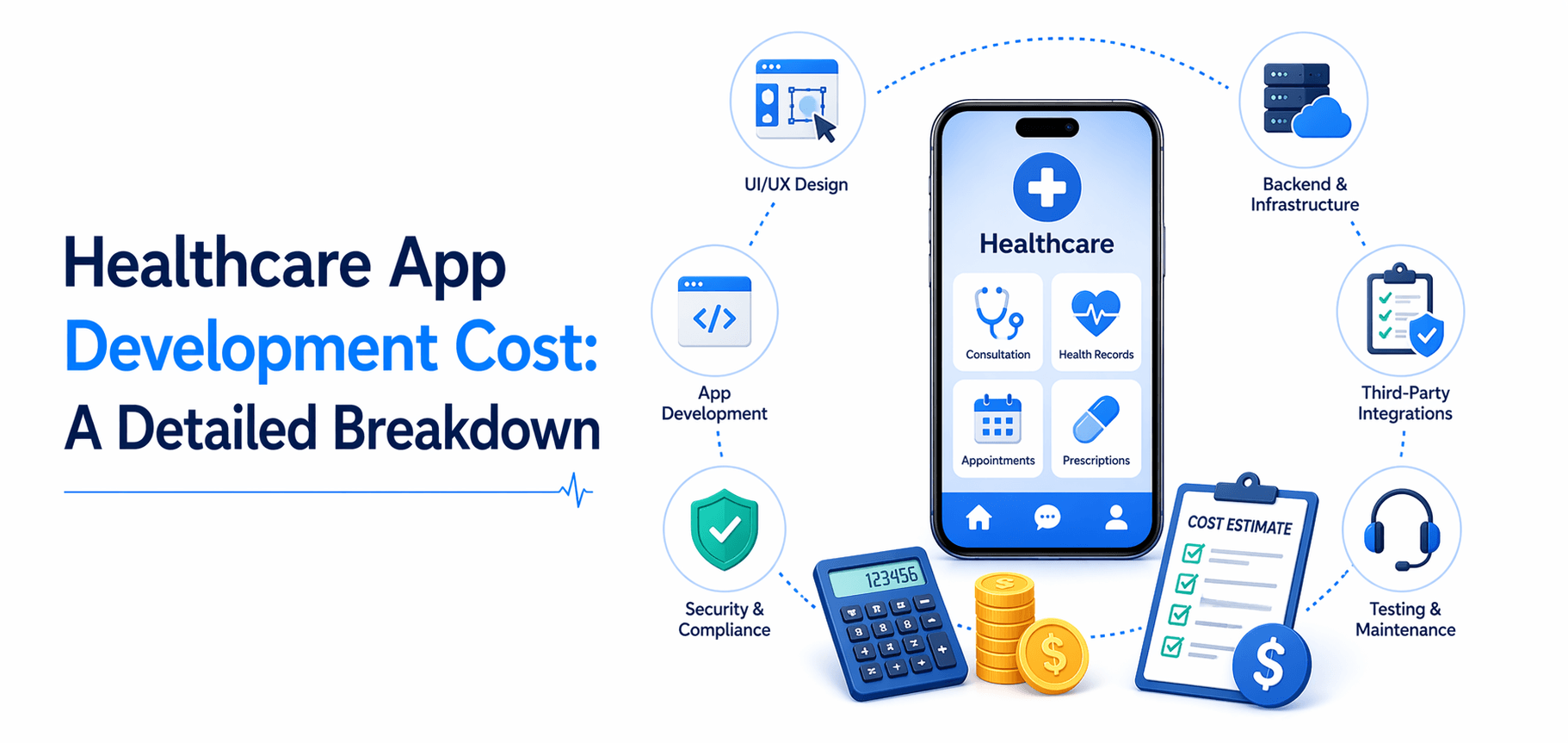
Ever wondered why some telemedicine apps cost a few tens of thousands while others hit half a million?
It’s obvious that anything that costs tens of thousands is more likely to be successful in telemedicine compared to half a million apps. It is all about the decisions that you make.
Functionalities, applications, artificial intelligence, staff, and every detail will add another dollar. Consider it as the process of creating your dream application quake by piece.
These are not random numbers. They tell a story. The final healthcare app development cost is determined by where your team is situated, what features you focus on, and how complex your app needs to be.
Wonder how your choices related to minor aspects can cost or save you tens or even hundreds of thousands? Let’s break it down…
| Component | Features Included | Estimated Cost (USD) |
| MVP Development | Core features: Video calls, patient profiles, chat, appointment scheduling | $30,000 – $50,000 |
| Full-Featured App | Advanced features: AI diagnostics, prescriptions, lab integration, analytics | $80,000 – $150,000 |
| AI Integration | Chatbots, predictive analytics, virtual assistants | $15,000 – $40,000 |
| UI/UX Design | Intuitive interfaces for patients and doctors | $10,000 – $25,000 |
| Compliance & Security | HIPAA, PIPEDA, GDPR compliance | $5,000 – $20,000 |
| Android & iOS Platforms | Dual-platform development | $15,000 – $30,000 extra |
| Ongoing Maintenance | Bug fixes, updates, server costs | $1,000 – $5,000/month |
Quick Tip: Your costs can go up if you want real-time health monitoring, wearable integrations, or fancy analytics. These extras make your app smarter, but they also mean a bigger budget.
| Region | Avg. Cost for MVP | Avg. Cost for Full App |
| US | $40,000 – $60,000 | $120,000 – $180,000 |
| Canada | $35,000 – $55,000 | $110,000 – $160,000 |
| Offshore | $20,000 – $35,000 | $70,000 – $120,000 |
Keep in mind: Offshore development is cheaper but requires careful project management to ensure quality and compliance.
The first thing that affects your cost to build an app like Teladoc is the features. Not all features are created equal. Some are simple. Others are full-on game-changers.
The platforms you choose also impact how much it costs to build an app like Teladoc.
Developing for Android and iOS ensures a wider reach but increases cost. You can start with a single platform to minimize risk or go cross-platform for simultaneous launch. Cross-platform frameworks like Flutter or React Native can reduce development time while maintaining performance.
Who builds your app and where they’re located can make a huge difference.
Ok, you want to know whether people will actually use your app without paying a fortune? That is where an MVP: a minimal viable product, comes in. Imagine that it would be like testing your idea with bare bones.
You receive the necessities: video calls with physicians, patient registration, and an appointment. That is sufficient to know whether users like it and use it.
The cost of creating this MVP in the US or Canada is typically between $30,000 and 50,000. However, when you want the whole package: AI symptom checker, laboratory analysis, analytics, you can spend up to 150,000 or more.
The cool part? An MVP to you will allow you to experiment, learn, and refine before laying down big cash. You can get the feedback of actual users, understand what works and improve what does not, and then go all the way with no doubt. It is smarter, safer, and ensures that your app really hits the nail on the head.
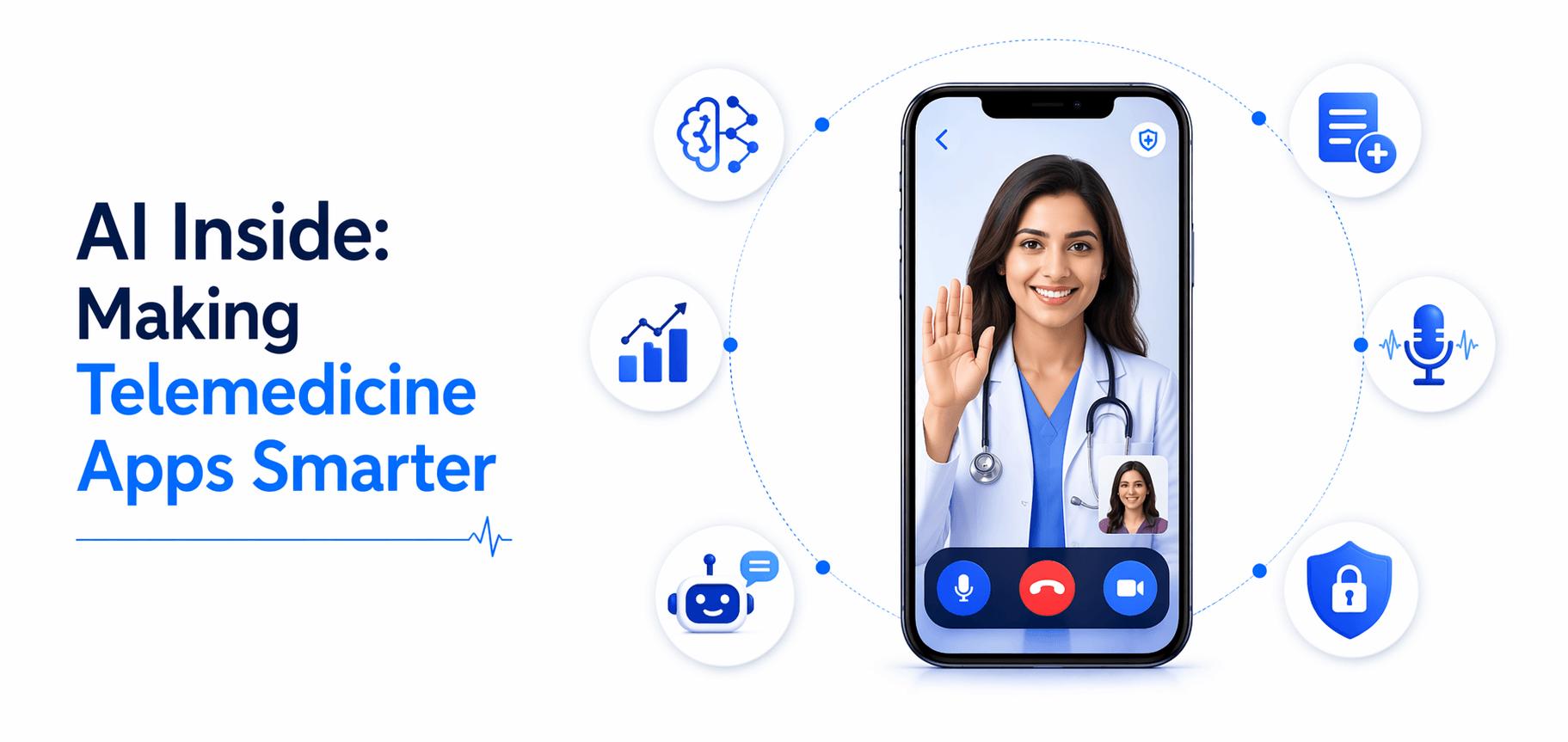
The use of AI in healthcare app development can seriously level up the experience.
The thing is that AI is not free. It is laborious to process all that data, construct machine learning models, and maintain all that in compliance.
Imagine that you are providing your app with a brain. Regardless of predicting what patients require, walking users through symptom checkers, AI introduces a certain degree of intelligence that facilitates any dialogue. It also assists physicians in making quicker choices, reduces manual labor, and keeps patients occupied.
On the budget, a reasonable amount and price of integration of AI is in the range of 15,000 to 40,000 dollars. It is an additional expense, yet a cost that will result in your app being smarter, smoother, and even more helpful to both patients and doctors.
Building a telemedicine app is complex. You need more than just developers; you need expertise, strategy, and experience.
Techugo has it all.
Techugo is a trusted healthcare app development company with a track record in the US and Canada.
As a mobile app development company in US and Canada, we’ve helped visionaries across industries turn concepts into apps people actually use. Techugo has built hundreds of custom applications over the years.
With our experience as a mobile app development company in Canada, we understand the local market, regulations, and user expectations. That means your app isn’t just functional: it feels native, reliable, and ready to scale.
Want to build a telemedicine app that actually works for patients and doctors? Partner with Techugo.
1. How much does it cost to build an app like Teladoc?
Depending on features, AI, and the platform of choice, the costs range between $30,000 to build an MVP and $150,000 and above to build a full-fledged app.
2. What features are essential for a telemedicine app?
Video visits, patient scheduling, profile, payments, notifications, and optional AI-assisted applications.
3. Can AI reduce operational costs in telemedicine apps?
Yes, AI can automate the tasks of administration, provide predictors, and enhance patient engagement, which will save expenses over time.
4. Should I develop for Android, iOS, or both?
It relies on your target audience. Revolving around a single platform might help lower the costs; cross-platform schemes can help to save time during the dual-platform releases.
5. How to choose a healthcare app development company?
Search for a team that is conversant with telemedicine apps, understands compliance regulations, and can work with the AI without issues. Techugo takes all of this to the table to assist you in developing an app that the patients and doctors go on to use.

The fast growth of food delivery app development in Qatar keeps on increasing without any signs of slowing down. People are changing (or have changed)..

Money doesn’t move the way it used to. And honestly, that’s a good thing. In Australia, shopping has shifted from crowded stores to quick taps on ..



Write Us
sales@techugo.comOr fill this form