

 SA
SA
 KW
KW
 IE
IE AU
AU UAE
UAE UK
UK USA
USA
 CA
CA DE
DE
 QA
QA ZA
ZA
 BH
BH NL
NL
 MU
MU FR
FR















📌 Key Takeaways
- In 2026, building a cross-platform app can cost anywhere from $15K to $300K+.
- Custom apps introduce higher costs due to UI/UX design, APIs, payment systems, real-time features and backend complexity.
- Enterprise apps are the most expensive because they require security, compliance, scalability, and system-level integrations (ERP/CRM, analytics, AI, etc.).
- Framework choice (Flutter vs React Native) has only a minor impact on cost: real pricing is driven by features and scale.
Two businesses can develop what seems to be the exact same software application, yet end up with significantly divergent financial outlays.
One spends $30,000. The other spends $300,000.
What creates such a massive gap?
As businesses increasingly turn to cross-platform development to launch on both iOS and Android – understanding the factors behind the cross-platform app development cost has become more important than ever. And with good reason. According to Statista… U.S. app market is projected to generate more than $50 billion in revenue by 2027 as mobile apps continue to drive customer engagement and business growth across industries.
However there is no fixed price for building a cross-platform app. The final cost depends on everything from feature complexity – and integrations to scalability requirements and the framework you choose.
In this guide we’ll break down the costs involved, compare Flutter and React Native development expenses, explore the key factors that influence your overall budget and more.
Let’s read.
Cross-platform app development cost: small budget or six-figure investment?
When businesses want to reach users on both platforms without doubling their development efforts, cross-platform app development often becomes the preferred choice. A shared codebase reduces development time, and it also streamlines resources, so that the overall iOS and Android app development cost comes down… compared to building separate native apps from scratch.
But then again, it’s not just about saving time, because you are also simplifying how things are built, and maintained, and scaled over time. So it was, and still is, one of the most practical approaches for teams that want to launch faster on both iOS and Android without splitting everything into two separate builds.
To put things into perspective, here’s what businesses typically invest.
| App type | Best for | Estimated timeline | iOS and Android app development cost |
| MVP App | Startups validating an idea | 2–4 months | $15,000 – $50,000 |
| Custom Mobile App | Businesses building a market-ready product | 4–8 months | $50,000 – $150,000+ |
| Enterprise App | Large-scale organizations and complex operations | 8–18+ months | $150,000 – $500,000+ |
As you can see, enterprise apps usually end up in the six-figure range because things become more complex there, and scale, integrations, security, all of it starts stacking up, therefore the final cross-platform app development cost goes higher.
Now let’s break down what’s actually driving those numbers.
MVP app development cost
An MVP (Minimum Viable Product) is built so that you can launch quickly, and it only includes the core features needed to test your idea in the market. You don’t really overbuild it, because the goal is validation, not perfection, and so businesses use it to understand demand before scaling further.
Typical features:
- User registration and authentication
- Basic user profiles
- Core app functionality
- Push notifications
- Admin dashboard
- Basic analytics
Estimated cost: $15,000 – $50,000
This approach is often the smartest starting point for startups, because it keeps risk low and still lets you move fast, and learn from real users.
Custom mobile app development cost
Custom apps go a step further, and they are built around specific business needs, workflows, and user experiences. These apps are more polished, more structured, and usually have integrations, APIs, and backend systems working together.
Typical features:
- Custom UI/UX design
- Payment gateway integration
- Real-time chat or messaging
- Third-party API integrations
- Advanced user management
- Cloud-based architecture
- Role-based access controls
Estimated cost: $50,000 – $150,000+
And here, custom mobile app development cost starts rising because you are not just building screens, you are building systems that talk to each other, and that takes time, logic, and testing.
Enterprise app development cost
Enterprise applications are built for scale, and they support large teams, complex workflows, and high traffic usage. They require strong security, compliance, and integrations with existing systems, because everything has to run smoothly at a bigger level.
Typical features:
- Multi-level user permissions
- ERP and CRM integrations
- Advanced analytics dashboards
- AI and automation capabilities
- Enterprise-grade security
- Compliance requirements
- Scalable cloud infrastructure
Estimated cost: $150,000 – $500,000+
While enterprise projects do require a larger investment, they are built for long-term growth, operational efficiency, and large-scale user adoption, so the cost is higher but the scope is also very different.
The surprise for most founders is this – the platform choice itself rarely decides the final cost for cross-platform software development because whether it is cross-platform or native, what really matters is what you are building. An app with AI features, custom integrations, and complex user flows will always cost more, even if it was built using a single shared codebase, and that’s where most budgets actually shift.
Factors affecting cross-platform App Development cost at a glance
Mobile app development pricing for cross-platform apps really isn’t something you can pin to a single number. It shifts from project to project, because no two apps are ever built the same way. Some are simple – just a few screens, basic functionality, done quickly. Others are a lot more layered, with custom design work, integrations, backend systems, and all the “behind-the-scenes” engineering that users don’t even see but absolutely depends on.
Alright, so what’s actually shaping the cost here? Let’s get into it.
App complexity and feature requirements
The biggest cost driver in any cross-platform app is the complexity of the features you want to build, because not every app is the same and some are simple while others are way more layered. A basic app with limited functionality will always cost less, but when you add advanced workflows, things change quickly.
Features like real-time chat, AI integration, payment systems, geolocation tracking, or multi-role user systems – they all increase development time and effort, and therefore they directly impact mobile app development pricing.
UI/UX design
Design is not just visuals. It defines how users actually interact with your app, and sometimes that is where most of the work has been happening behind the scenes. A simple UI is quicker and cheaper to build, but when you go for custom, highly interactive experiences, it requires more time, prototyping… and multiple iterations.
Backend development & integrations
Backend systems power everything behind the scenes. From data storage to APIs, and third-party integrations, and sometimes even more layers depending on what you are building. The more complex the backend architecture is, the more development effort it takes, so the cost goes up.
And integrations with CRMs, ERPs, payment gateways, or external APIs – these add extra complexity in cross-platform software development, and that significantly influences the final cost, it was always like that in most real projects.
Development team location and expertise
Where your development team is located, and how experienced they are, can heavily change pricing. Developers in North America or Western Europe usually charge more compared to teams in Asia or Eastern Europe, but that doesn’t always mean better or worse – it depends, because sometimes it’s about efficiency, and not merely the hourly rate you are looking at.
However, experienced teams from a reliable cross-platform mobile app development company can often work more efficiently, and therefore reduce long-term costs even if the hourly rates are higher, so it balances out in the long run… or at least it can, depending on how the project was structured.
Testing, deployment, and security
Testing ensures your app works smoothly across different devices and operating systems, because cross-platform apps are meant to run on both iOS and Android and that consistency matters a lot, it has to be right.
Security checks, bug fixing, and deployment processes also add to the overall mobile app development pricing, especially when the apps are handling sensitive user data or financial transactions, so everything needs to be properly validated before launch, and nothing can really be left half-done.
App development cost estimation isn’t really a fixed number – and if you were hoping for one, well… it rarely works like that. Because the moment you add “just one more feature”, the math starts shifting, and suddenly what was simple, isn’t so simple anymore.
Flutter vs react native app development cost: who wins on budget?
When it comes to flutter app development cost vs react native app development cost, both frameworks sit in a similar budget range. But depending on your app type and requirements, the pricing can shift slightly – so here’s a quick side-by-side comparison.
| App type | Flutter app development cost | React native app development cost |
| MVP App | $15,000 – $45,000 | $15,000 – $40,000 |
| Mid-Level App | $45,000 – $120,000 | $40,000 – $110,000 |
| Enterprise App | $120,000 – $300,000+ | $110,000 – $280,000+ |
So the difference isn’t really about one being cheaper than the other. In most cases, both react native and flutter app development cost stay quite close & what actually changes the budget is your app’s complexity, features, and overall scale. Sometimes React Native app development company can feel slightly more cost-efficient for faster MVP builds, while Flutter app development company can save effort later with smoother UI handling. But in the real world? The gap is usually minimal and project-driven.
Cross-platform app development trends 2026
1. Scalable architecture and future-ready builds
This is where things get interesting. Scalable mobile app development is becoming the default mindset, not a “nice-to-have.” Apps are being built to handle spikes in users, heavier traffic, and constant feature updates without needing a full rebuild every time something changes.
So instead of asking “how fast can we launch it?” the real question is shifting to: can this still survive 2 years from now when things get bigger?
2. Smarter budgeting and planning approaches
Budgeting has also stopped being guesswork. App development cost estimation is getting way more structured now. Teams are breaking everything down (like features, modules, integrations, even future scaling) before a single line of code is written.
Because no one wants that awkward moment later when the budget suddenly… doesn’t match reality.
3. AI-driven development and smarter apps
AI is becoming a core part of cross-platform development in 2026, and it’s not just something you “add” anymore, because it has already started shaping how apps are built, tested, and optimized. The way it works now is different… you have smarter code generation, and automated testing, and performance tuning, so that the entire development process becomes faster and more efficient than before.
On the product side, things are shifting too – AI chatbots are now becoming a normal part of modern apps, and they are improving user support, engagement, and real-time interaction, but also raising expectations at the same time. Apps are therefore getting more intelligent, with personalization and predictive features, and these have been turning into standard expectations rather than optional add-ons.
4. Performance-first cross-platform strategy
This one’s simple: users don’t care what framework you used. They care if the app feels smooth.
So developers are obsessing over performance now: reducing lag, improving responsiveness, making cross-platform apps feel closer to native than ever before. And the gap? It’s shrinking more every year.
5. Low-code and faster cross-platform delivery
Another trend in 2026 is the rise of low-code and no-code tools in cross-platform development. Teams are using them to speed up prototyping, reduce repetitive coding, and get products to market faster and it is working because development cycles are getting shorter and more efficient.
It doesn’t replace full development, but it supports it, and therefore helps teams move faster in early stages, especially when combined with scalable mobile app development practices built for long-term growth.
Cross-platform development in 2026 isn’t really about “build faster, launch cheaper” anymore. That phase is kind of over. Now it’s more about building apps that can actually grow without falling apart later. Smarter products. Cleaner systems. Less panic when users scale. And honestly, companies are not treating apps like one-off projects anymore. It’s more like – this is going to evolve, so let’s build it that way from day one.
How AI impacts long-term app maintenance costs
AI looks like something you add once and move on, but that’s not really how it behaves in real apps. Once it goes live, it keeps shifting in the background – learning from users, changing responses, and needing regular attention just to stay reliable.
AI keeps evolving after launch…
AI models don’t stay fixed and that’s where the ongoing effort begins. They need continuous tuning, updates, and performance checks so they keep working the way users expect. Over time, this directly adds to app maintenance cost, even if the app itself hasn’t changed much on the surface.
And as usage increases (especially with features like AI chatbots) the system load also grows. Without proper scalable mobile app development, this growth doesn’t just improve the app; it also increases the running cost behind it.
Build smarter, scale faster with Techugo
At the end of the day, building an app isn’t just about launching something quickly – it’s about creating a product that can actually grow with your business over time. And that’s exactly where Techugo steps in.
As a trusted mobile app development company in USA, Techugo helps businesses turn ideas into scalable digital products using modern frameworks, clean architecture, and future-ready development practices. Whether it’s an MVP to validate your concept, or a full-scale enterprise solution, the focus is always on performance, user experience, and long-term scalability because it was never just about launching, it is about sustaining.
Techugo has delivered several high-impact global products across industries, including:
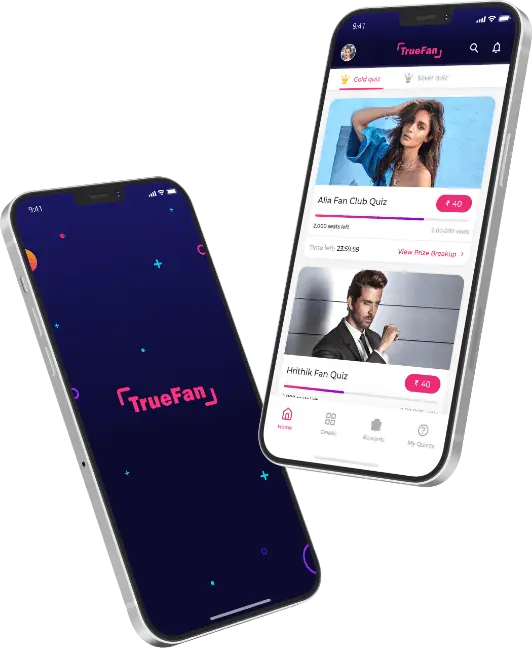
- TrueFan – a large-scale celebrity engagement platform with millions of users
- Lifology – a career guidance platform serving users across 24+ countries
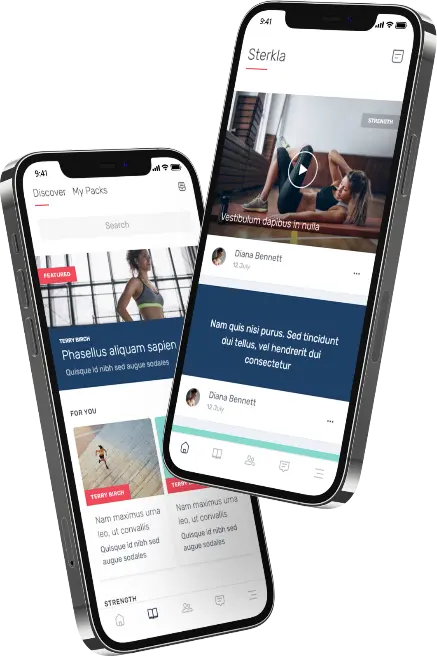
- Sterkla – a global coaching marketplace connecting users worldwide
- Milkbun – a multi-country digital ordering platform operating across the GCC region
These case studies therefore reflect how Techugo has been building applications that are not just functional, but are scalable and real-world ready across global markets, and it shows how the work was done with consistency and depth.
We work with a modern technology stack including Flutter, React Native, Kotlin, Swift, Node.js, and cloud-based architectures, and also AI-driven capabilities and third-party integrations, so that applications are robust, flexible and scalable at the same time.
From planning and development to launch and ongoing support, everything is handled with clarity and precision, and the goal is simple – build apps that don’t just work today, but continue to perform as your business grows and evolves.
So what are you waiting for? Connect with our team at Techugo and let’s start building something that actually grows with your business.
FAQs
1.What is the average cross-platform app development cost?
The cost usually ranges from $15,000 to $300,000+, depending on app complexity, features, design, backend, and scalability requirements. MVPs stay on the lower end, while enterprise apps go much higher.
2.What factors affect the cost of cross-platform app development the most?
Key factors include app complexity, UI/UX design, backend architecture, third-party integrations, team location, and testing requirements. Each of these directly impacts the final budget.
3.Is cross-platform cheaper than native app development?
In most cases, yes. Cross-platform development reduces cost by using a single codebase for iOS and Android. However, highly complex apps can still become expensive regardless of approach.
4.How does AI affect mobile app development cost?
AI increases both initial and long-term costs due to model training, API usage, maintenance, and infrastructure scaling. Features like AI chatbots also add ongoing operational expenses.

Get in touch
We'd love to hear from you.