

 SA
SA  KW
KW  IE
IE AU
AU UAE
UAE UK
UK USA
USA  CA
CA DE
DE  QA
QA ZA
ZA  BH
BH NL
NL  MU
MU FR
FR [ LET’S TALK AI ]
X
Discover AI-
Powered Solutions
Get ready to explore cutting-edge AI technologies that can transform your workflow!



Get ready to explore cutting-edge AI technologies that can transform your workflow!


With the advent of blockchain technology, there’s a technical revolution throughout the world. It has changed the world of technology by creating futuristic services. And with the evolution of blockchain, we have come across digital money, i.e. cryptocurrency.
In no time, the way cryptocurrency is gaining popularity worldwide. It won’t be wrong to believe that it has a promising future. People have been inclined to invest in cryptocurrency to explore the future of possibilities.
Now, with trading and exchanging cryptocurrency, we can face the need for crypto wallets to store funds and assets.
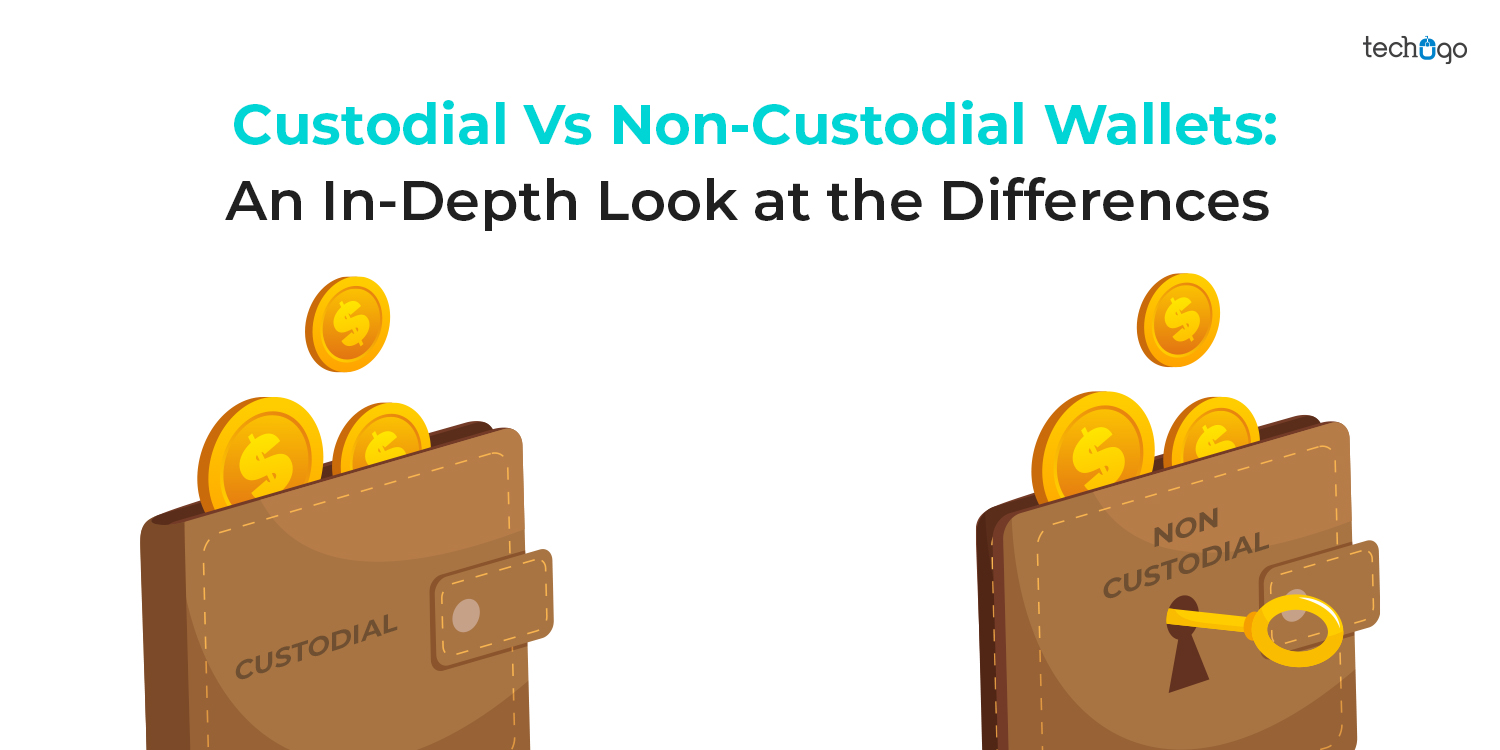
Since the talk of cryptocurrency wallets has started, custodial wallets and non-custodial wallets will be the highlight. These digital wallets store crypto. However, both have distinct features.
And being into cryptocurrency, it is imperative to understand everything about these wallets. Thus to let you know every nook and cranny of crypto wallets, this article has brought you all information.
Be it custodial or non custodial wallets, you will find each and every little detail that can help you to choose the best crypto wallet for business. There is a slight difference between custodial and non custodial wallet. So, without thinking much, start reading the information.
Also Read: Cost to Develop a Digital Wallet App Like Payit in the UAE
In any situation, the desire to participate in the rapidly developing crypto landscape is undeniable. In this tech-driven era, obtaining cryptocurrency is accessible by using various techniques, like buying it through an exchange. Additionally, people might receive cryptocurrency as remuneration for their work or as a bonus for performing tasks like mining or staking.
For instance, a centralized exchange like Binance lets you buy Bitcoin. However, as long as you have an external or decentralized crypto wallet for securely holding your crypto assets, it doesn’t matter where you got them from. A crypto wallet creates a distinctive address to find your assets on the blockchain.
Using two separate types of keys; such as public and private keys, crypto wallets secure your cryptocurrency. The public key is sharable with anyone. However, the private key functions more like a password to lock your assets securely. You must protect the private key, which grants access to all of your digital assets and tokens, must be protected at all costs.
Also Read: Blockchain & Secure Payments in Buy & Sell Mobile Apps
There are two types of wallets, custodial and non-custodial, depending on the level of security for your money. Moreover, to choose the best option for your cryptocurrency endeavors, carefully consider their distinctions.
To assist you in making the best decision for choosing a crypto wallet, here is a detailed description of each type of wallet. Consequently, you can find a comparison of custodial wallets vs non-custodial wallets based on some specific factors.
Undoubtedly, custodial wallets come into the limelight as the talk about the difference between custodial wallets and non-custodial wallets starts. The term “custodial” makes it quite clear that these wallets would take custody of something. Simply put, best crypto custodial wallets are cryptocurrency wallets that hold users’ private keys in trust. As a result, on behalf of the user, the wallet providers hold power over the latter’s funds. Custodial wallets are the most common and the first choice of newcomers like Coinbase.
One of the most important benefits of custodial wallets for novices is their simplicity. You don’t need a high level of cryptocurrency technical expertise to use a custodial wallet crypto. Enter your email and password to create an account, then sign in to the custody wallet. However, in the case of custodial wallets, you must entrust the wallet provider with the custody of your money.
It’s crucial to consider that the entire purpose of cryptocurrencies is to give you total control and ownership over your money. Contrarily, custodial cryptocurrency wallets obscure cryptocurrency’s core purpose by taking access from the wallet owners. Moreover, with a custodial wallet crypto, you don’t actually invest in a decentralized digital currency.
It is important to understand that you hand over your fund security to another entity in a custodial wallet. While renowned custodial wallet providers don’t steal users’ funds, accessing your wallet is impossible if it locks you out. It raises questions about the credibility of custodial wallets, as sometimes, wallet providers may lock out the users without prior notice.
Also Read: Build Your Own Crypto Trading App Like Swyftx in Australia
Unlike the other wallets, there is no transaction fee associated with custodial crypto wallets. It provides an entirely free-of-cost wallet ecosystem that is easy to use. With this, you can experience saving considerable money annually and make transactions without paying any charges.
Crypto custodial account wallets give you a high-end user experience to access your wallet without hassle. Regardless of experience with cryptocurrency, one can use the wallets through easy navigation. And it is a piece of cake to find whatever you anticipate in your wallet.
As mentioned earlier, a third party manages your custodial wallets that secures your fund and private key. It creates a backup option for your transaction, as the exchange authority is responsible for the transaction. It is possible to restore or undo a transaction with the help of the custodial wallet service provider.
In case you lose the private key of your wallet, the exchange authority can help you regain access. Nevertheless, custodial wallet users encounter authority problems over their wallets. Third-party is helpful to access their account as the wallet providers control your wallet.
However, it seems simple and easy to access your cryptocurrency with a custodial wallet; it snatches all your authority over your wallet. Be it good or bad for a newbie, here are some limitations that you face with your custodial wallets:
You lose control over your cryptocurrency and private keys with a custodial wallet. The custodial party oversees your every transaction. Also, the third party controls the operations of funds and can freeze your funds stored in the wallet.
To access your own funds and assets, you need to complete KYC for your custodial wallets. To start any crypto transactions, you need to verify your identity by giving the required documents. Moreover, it violates the anonymity concept if it requires proof of identity to operate.
You can’t access your custodial wallet without an active internet connection. In case of emergency, you can’t access your crypto wallet if there is no internet connection. Thus it will be challenging for you to use your custodial wallet from somewhere you can’t find proper internet connectivity.
When you use custodial wallets, it stores funds in cold and hot wallets. However, such wallets are not easy to hack, still prone to data breaching.
Also Read: How Much Does It Cost to Build a Crypto Exchange App Like BitOasis in the UAE?
The setbacks for custodial wallets turn out the advantages of non-custodial wallets. Since non-custodial crypto wallets are an alternative to custodial wallets, non custodial wallets are an apt example of decentralization. Usually represented as a decentralized wallet are crypto wallets, entrusting users with private keys. Unlike custodial wallets, in this, the user possesses control over private keys. In addition, only users have the authority to access crypto stored in the best non custodial crypto wallets. It clearly specifies the ownership of the user on the held funds and assets. This way, the wallet ensures improved security of your cryptocurrency.
While there are some advantages with non custodial wallets, it comes with a critical condition. The user must have a basic understanding of restoring and backing up wallets. Additionally, if you use the best non custodial wallet, you must take complete responsibility for the security of cryptocurrency. Since the wallet user is responsible for the security of their private keys, they must understand how to back up a wallet securely if necessary.
In most circumstances, the private key consists of a 12- to 24-word recovery phrase. And it is important for users to keep the recovery phrase in a safe place. For instance, write on paper or type in notes on your device, but make sure to keep them safe in a safe place.
The recovery phrase helps you to regain access to your wallet in situations when you lose access. Moreover, anyone can use their non-custodial crypto wallet using the recovery phrase. Therefore, it is important to consider using a non-custodial crypto wallet to store your cryptocurrency. Thus, do not share it with anyone.
You can make use of a fantastic range of benefits from Non-custodial wallets, which are as follows:
People who have begun investing in cryptocurrencies and don’t like having a third party oversee their assets must use non custodial crypto wallets. Additionally, users benefit from a non custodial wallet’s full control over the funds and private keys, providing the optimal user experience.
No intermediary implies that no one will get your information or who you are (complete anonymity). Therefore, there is no chance that the funds or other information can be exposed and misused.
The crypto non custodial wallets simplify the asset withdrawal procedure. Since a third party plays no part in carrying out the transactions, the process is quick.
With the opportunity to handle your wallet to store cryptocurrency, you face a few challenges. Here are some of the limitations you face with your non-custodial crypto wallets:
The user is in charge of everything, including keeping the keys in a secure place. A minor error can result in a larger financial loss. Whether you keep your private keys on your desktop or in a hardware wallet, theft can occur anywhere.
When it comes to providing a high-quality user interface, non custodial wallets are not the greatest. The wallet’s interface may be challenging for users.
The only method to recover your wallet is using your private keys. There is no way to acquire access if you lose your private key. Your wallet may log you out, which could lead to a financial catastrophe.
Also Read: Cost to Hire Blockchain Developers: Country-Wise Rates Explained
| Criteria | Custodial Wallets | Non-Custodial Wallets |
| Private Key Ownership | Private keys are held and managed by the wallet provider. | Private keys are fully owned and controlled by the user. |
| Fund Access | Wallet provider can technically access and control user funds. | Only the user can access and control funds. |
| Fund Recovery | Easy recovery if login credentials are lost. | No recovery possible if private keys or recovery phrase are lost. |
| Security Model | Relies on the provider’s security infrastructure and internal controls. | Security depends entirely on how well the user protects private keys. |
| Risk of Hacks | Higher risk due to centralized storage of funds. | Lower centralized risk, but vulnerable to user-side mistakes or phishing. |
| Account Creation | Requires KYC and identity verification. | No KYC required; wallet can be created anonymously. |
| Privacy | User identity and transaction data may be stored by the provider. | Greater privacy since no personal data is linked to the wallet. |
| Transaction Approval | Transactions may be delayed or restricted by the provider. | Transactions are executed directly by the user without third-party approval. |
| Fund Freezing or Censorship | Funds can be frozen or restricted by the service provider or regulators. | Funds cannot be frozen by any authority as long as the user controls the keys. |
| DeFi & Web3 Compatibility | Limited or indirect access to DeFi and dApps. | Full access to DeFi platforms and Web3 applications. |
| Regulatory Dependence | Strongly affected by regulations and government policies. | Largely independent of centralized regulations. |
| User Friendliness | Simple UI and suitable for beginners. | Requires technical understanding of wallet security and backups. |
| Responsibility | Wallet provider is responsible for safeguarding assets. | User is fully responsible for asset security and recovery. |
From a business perspective, understanding these differences is essential before building a wallet solution, as the choice between custodial and non-custodial architecture directly affects compliance, security design, and user experience when working with an eWallet app development company.
Also Read: 10 Steps to Develop an AI Crypto Trading Platform in Dubai in 2026 (With Cost & Timeline)
Crypto wallets are ideal for storing your valuables, depending on your circumstances and requirements. The crypto wallet should support the type of cryptocurrency you want to store and trade.
Additionally, the wallets must update from time to time to fit your needs. Famous non custodial wallets to hold cryptocurrency assets include MetaMask, TrustWallet, and Ledger. But always remember that a non-custodial wallet is best if you want to communicate with the DeFi applications.
Since both custodial and non-custodial wallets operate on blockchain infrastructure, consulting a reliable blockchain app development company can help in selecting the right wallet model based on transaction control, data security, and long-term scalability.
If you find it challenging to choose the right crypto wallet for your needs, Techugo is here. Techugo’s blockchain development team can help you choose the right architecture based on security, compliance, and user experience if you are planning to build a custodial or non-custodial crypto wallet.

Have you ever lost a potential enterprise deal because your SaaS platform didn’t meet their security requirements? If yes, you are on the right pa..


A busy Friday evening at a popular restaurant in Dubai. Calls are flooding in, and the staff is juggling table allocations. A single error can lead to..



Write Us
sales@techugo.comOr fill this form